Before You Publish that Book, Don’t Forget these Things

checklist2

Start a Blog – A blog can be a great way to get your feet in the door far as reaching out to an audience is concerned. The frequency to which you can publish articles on the blog can help people to become familiar with you and your writing style. I think blogs are especially important for people who aren’t necessarily known for writing (a doctor or construction worker) but they’ve decided to write a book. Starting a blog first can introduce them to the writing community (whichever community that is) and get people familiar with them as a writer. It’s one thing to enjoy doing something but it’s an entirely different thing to translate that into a language that others will understand. The immediate feedback from the blog can help writers to access not just where they are with their writing (if they can engage a group of people or not) but also help to draw out the people who are interested in what they are writing about. Blogs also provide ample opportunity to network. It is the first step in learning how to do so. By commenting on blogs, liking posts, and sharing information you are networking even if you didn’t know you were doing it.

Incorporate Blogging into Your Platform Growing Strategy – Before I move on to the next bullet point, I am not finished with blogging just yet. I think more so than starting a blog, it’s important also to make it a part of your platform growing strategy. By this I mean it may help to try to learn to blog. (Something I think we never stop learning to do!) If the blog is going to be the place where you reach and interact with people the most, make it a part of your writing schedule. Be sure to carve out a day or time where you can schedule your blog posts so that you have regularly updated content but are not neglecting your life outside the blog. You can also schedule a day where you can catch up on the blogs of others (you are following other blogs right??) and be as engaged as possible.

I like to schedule my blog posts to publish anytime around 12:00 – 1:00am CST or sometimes as late as 2:00am. This gives people on the other side of the world a chance to read the post while I’m sleeping. I can then take the rest of the day when I am up and about and read the blogs of others via my mobile. This is why I am usually re-blogging throughout the day (depending on where you are in the world). It keeps this blog updated and consistent. I am not necessarily at the computer 24/7 but by having my main blog posts (such as articles, creative pieces or poems) scheduled to go out, my time is free to browse the rest of the day. Quotes, music, reblogs, I can do all of this via my phone. As long as the long posts are drafted, edited, and then scheduled to go out, I am free.

If you’re new to this blog, go back and read How to Blog in Your Sleep, a post I wrote some time ago on scheduling your blog posts to go out when you’re sleeping. This helps your blog to work for you even when you’re not awake. Also check out How to Make Your Blog Work for You (Even When You’re Not Blogging). Don’t be distracted by the numbers if they are low. So, what. Focus on being consistent and engaging with your content and the rest will take care of itself. Celebrate every victory and measure your growth with social media not by numbers alone, but by the feedback and engagement you receive. If people are liking, sharing, and commenting, that’s a good thing and the numbers usually follow.

Website – If you have no books out or just one or two books, it’s not necessary to go all out with paying for an expensive website (especially one that that will require e-commerce when you’re not selling), but you can set up something simple to help promote yourself as an author. For more, be sure to go back and read 3 Reasons You Need an Author Website (and why it’s not the same as a blog).

Sometimes, you don’t have to spend money on a full-fledged website. Just a landing page is great for those building an email list, have no books out, have only a couple books out, or are not selling books.

Landing Pages – I forgot to mention Landing Pages in the post about author websites. I forgot all about it. Not everyone needs a full-fledged website. For some of you, a Landing Page will do instead. A landing page is just what it sounds like, a mini website or page people “land” on as a result of clicking on the link from someone’s blog or website. It is like a digital business card or mini website. Landing pages are also good for encouraging email list sign-ups.

CLICK HERE FOR 35 LANDING PAGE RESOURCES: THE ULTIMATE LIST

CLICK HERE FOR 7 BEST SERVICES FOR ONE-CLICK LANDING PAGES

Email List – I hate to beat a dead horse (poor horse) but if you are publishing a book, it’s good to have an email list. No, it’s great to have an email list! Email has been around forever and remains the best way to keep in contact with people. You would want to set up an email list the same time that you set up your blog, website, or landing pages. (You can sign-up for mines HERE. Shameless plug. Gotta love it.)

Content is a big question when it comes to the email list. I started by just sharing updates of my work (and I still do) and my writing. Other writers I know share their writing as well. Exclusives are great (everyone wants to be exclusive). So exclusive or non-published content is a great way to start. Right now I am sharing excerpts from my unpublished memoir and I am happy that my readers are enjoying it so far. We are three chapters in and I am excited to share Chapter 4. These are works that no one, not even this blog, has seen. They are just shared with my email list subscribers. You can always start by just sharing exclusives of your writings or tips you have. We all have the insight to share. You’re an expert on something I am sure.

The email list, in short, will give you an opportunity to grow your platform even more and beyond the blog. There are people on my email list who don’t follow this blog or are even online like that. The email list gives me a chance to keep them abreast of my work. The email list is also more reliable than social media accounts and blogs. In the event, you want to stop blogging, (or something goes wrong and you can’t get your subscribers back which, I’ve heard horror stories! People with thousands and thousands of followers they lost either due to transitioning to self-hosted or something else) you don’t have to lose your audience. The email list helps you to keep in contact with those who support you beyond the blog.

Social Media – Finally, once you’ve got your blog, website, and email list, set up your social media handles. Your Facebook or Twitter or IG accounts. You will feed the content of your blog to these for more exposure. As people share your content, you grow your platform even more. Choose a few where you get the most engagement and dedicate yourself to them. Don’t try and be everywhere, just find the one place your readers are at and where you get the most out of.

Summary:

  • Start a Blog
  • Build a Website / Landing Page / One Page Site
  • Build an Email List
  • Set up your Social Media Pages

These will help you to build a readership or at least start to. Of course, there are a gazillion other things, but this is a great start. I made the mistake of not starting out this way (I didn’t always be into the online scene like that. There was a time I didn’t even have a cell phone but that’s another story) but I know lots of people who did and they published their first book on a strong start. Their first books did very well just by doing the above. Remember, the foundation is everything. If the foundation is weak, so is everything else. Whether you’re Self-Publishing or publishing Traditionally it doesn’t matter. You will need a platform once the book is published. Don’t wait until you publish the book, do all of this before you publish. Start out strong and finish likewise.


renaissance-ebook

I’ve put together a Promotional Website for The Nora White Story, my soon-to-be-released novel series. CLICK HERE to discover the launch schedule and everything you need to know about this project. My email list subscribers already know about it. Wanna get first dibs too? CLICK HERE TO SIGN-UP FOR MY EMAIL LIST. I am sharing my memoir, writing updates, and more. Thanks a ton!

bitmoji-1423988791

How the WordPress Blog Subscription Works

blog

I’ve seen an increase in people who follow this blog outside of the blogosphere (*Waves!*) which basically means they aren’t active on blogs. They aren’t on WordPress, or Blogger or any other blog platform but do follow me through email. For this, I think it’s important to explain some WordPress basics. After all, it wouldn’t be fair not to show everyone around the place. Yes, please have a seat. Coffee?

When you follow someone’s blog, you do this in one of two ways. You either follow them through the Reader—your “Timeline” of sorts where you can read the posts of those you follow when you log in—or you can follow that blog through email. This means you will get an email every time they publish a new blog post. This button is usually located on the blogger’s sidebar (or slide-sidebar) and says, “Click to Follow this Blog and Receive Notifications Via Email”. (For bloggers, you can add this button to your blog by going to WP Dashboard > Appearance > Widget > Follow Button. There are two so make sure it’s the one that says under it “Add an email sign-up form to allow people to follow your blog”. Click and drag to the sidebar.)

The best place for this button is as near to the top of your sidebar as you can get it. I wouldn’t put it at the bottom. If your theme is set up that way (where most of the side-bar elements are at the bottom), I would change the theme. If people are lazy, they may not see your button and therefore you increase the chances of them not following your blog.

Adjusting Your Settings

If you opt to receive notifications of new post by email, it means you will receive an email every time that blogger publishes a new blog post.

Some of us post frequently. We are usually the bloggers who publish on the hour, every hour or every single day. Some may refer to us as “Powerbloggers”, or just those crazy people over there who spend unfathomable time blogging. You know, those people with the audacity to spend more hours blogging than you do at work.

We are also usually the bloggers who are very active and supportive of other blogs with little patience to be told when and when we should not write. Yea yea, “Quality vs. Quantity”. We get it, but we’re still going to blog like crazy. (What of both? Post valuable information often. Yea, I like that).

If you happen to stumble upon one of our blogs, it’s important that you take the time to adjust your settings once you’ve subscribed.

If you don’t want us invading your inbox, you can just adjust your blog settings so that you receive emails whenever you want. In other words, configure your blog’s subscription options.

The easiest way to do this is that when you get an email click on it and at the very bottom of the page, in the footnote area, look for Modify your Notification Settings or it will say “Manage Subscriptions”. Click that.

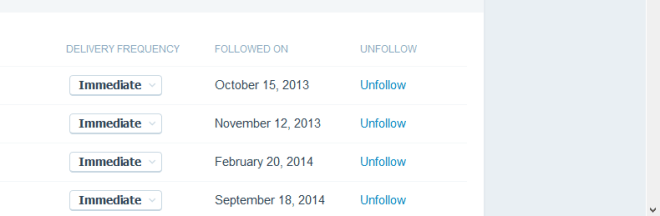
screenshot-225

A page will come up with a list of all the people you’re following. You will see something that says “Delivery Frequency”. This is the frequency to which you will receive that blogger’s blog post. Immediate means it will be delivered to your inbox immediately, in real time. If this blogger posts a lot you may not want to get their posts immediately. If this is the case, you can change your frequency to daily or weekly and get the posts once a week or once a day instead of every hour.

Blog vs. Email List Subscriptions

Some people use their blog and email list simultaneously. That is, they use their email list to inform readers of new blog posts. When they deliver a new email via their list, you will also get their latest blog posts. However, subscribing to someone’s email list / newsletter and subscribing to their blog are two different things.

When you hit that Subscribe to This Blog button in my slide-side bar, you are opting to receive emails from this blog every time I publish a new post. When you sign up for my email list or newsletter (through the pop up alert or just by clicking on the link), you are opting to receive my email newsletters. These are not blog posts and are not from WordPress. These are emails sent once or more a month to my list of email newsletter subscriptions. Usually, a person’s email list is hosted through one of these:

  • MailChimp (Most popular because the free version lets you send up-to 12, 000 emails to a maximum of 2,000 people a month before an upgrade is needed).

But MailChimp is not the only program for building an email list. There’s also:

  • Campaing Monitor
  • Infusionsoft
  • Sendinblue
  • Active Campaign
  • Zoho Campaigns
  • Pinpointe

And the list goes on and on. The point is that if you’ve subscribed via any of these, you’ve subscribed to that person’s email list, not their blog.

I hope this is helpful to those of you who are new to the blogosphere and that it will be beneficial to your navigation. I do post frequently so if you don’t want me bombarding your email, you can always adjust your settings. This goes also for those of us familiar with WordPress but who do not like getting lots of email notifications of a post from those to which we are subscribed. Lots of bloggers complain about getting lots of emails. This is unnecessary stress considering you don’t have to stay subscribed to that blog nor do you have to receive notifications immediately. You can always just modify your settings.


Yecheilyah Ysrayl is the YA, Historical Fiction author of The Stella Trilogy, Blogger, and Poet. She is currently working on her next book series “The Nora White Story” about a young black woman who dreams of being a writer in The Harlem Renaissance movement and her parent’s struggle to accept their traumatic past in the Jim Crow south. “Renaissance: The Nora White Story (Book One)” is due for release spring, 2017. For updates on this project, sneak peek of chapters, the pending book cover release, and full blurb for this series, be sure to subscribe to Yecheilyah’s email list HERE.

Newsletter, Blog, or Both?

how-to-build-an-email-marketing-list-quickly-for-your-blog

Authors, check out these articles. I totally agree with having both a blog and an email newsletter. Further, I think an email newsletter will outdate Facebook, Twitter, and also your blog! If these go down in any way, you always have an email list. Even though people can subscribe to the blog via email, there’s a deeper personal connection with someone via the email list. Most of the people who follow your blog probably barely read your posts. While this can be because they follow too many people to support every blog they are subscribed to, an email list really narrows it down. I also wouldn’t complain if your email list is small like mine. The benefit of this is that you’ll have a higher open rate because these are the people who really enjoy your work. They are, as the article elaborates on, your real supporters. The people who, when you release a book they will (wait for it) buy it!

If you do have an email list, pay attention to open and click rates. This narrows it down even further. Of the 100 subscribers to your email list, how many of them open the emails? This is your real number. Or even if you have 3,000 subscribers, how many open your emails and click on your links? These are your real numbers. Also, I would try not to be all “businessy” (Made up word) in your emails. Personally, I try to be as genuine as possible. Emails are personal and the people who are subscribed are people who have already read your posts, and probably some of your books too. This means they are subscribed because they are looking for something different. They want to get to know the real you. Again, they’ve already read your blog posts so there’s really no reason to recreate the wheel. Make your email list feel special. Oh and another thing, email lists and newsletters are excellent for people who are not into technology! They may not like your FB,  follow you on Twitter, or follow your blog BUT they will open your emails!

bitmoji1434512490

Read The Article Here: Newsletter, Blog, or Both

Here’s another good one: 5 Reasons Every Blogger Needs an Email List

AND here’s another: The Beginner’s Guide to Starting a Newsletter and Email List

Get to know the real me: Click Here.

8 Ways to Convince Book Bloggers To Review Your Book #wrtr2wrtr

Yes, yes, and yes! Be sure to familiarize yourself with that blogger’s review policy before submitting your request and FOLLOW their instructions. And yes, I do review books : )

*Comments disabled. Pls respond to original post*

Post Quote:

“Book bloggers actually do want to review your book! But we don’t have a lot of time so when you forget to include vital information or don’t follow the submission instructions, your requests end up in the trash bin.”

J.A. Stinger's avatarWords Can Inspire the World

Source

Book bloggers actually do want to review your book! But we don’t have a lot of time so when you forget to include vital information or don’t follow the submission instructions, your requests end up in the trash bin. Here are 8 ways to convince me—and other book bloggers—to review your book:

There’s no reason to pile on and make your request email an epic read – that’s your novel’s job. When approaching reviewers keep your request on point. Give each blogger exactly what they ask for – no more, no less. Remember, we get lots of emails and the easier you make it for us, the greater your chance of acceptance. Here’s what should always be included.

1. Reviewer’s name: Guess what? You may have to read through the blog a bit to find it. Check contact information. Read all the way to the bottom of submission guidelines…

View original post 706 more words

How To Choose Ebook Promotion Sites Worth Your Money.

Excellent bullet points. I especially like the point about how many books go out in each email. Lots of promo sites promise promoting to a large email list. Sounds good to have your book pushed to 55,000, but depending on the number of authors whose books are promoted in that same list, your book may not even be seen! I am still seeking to grow mine, but I also enjoy my small list. I know that the books I review and promote (I highly promote the books that I review) are actually being seen and not drowned out. Sometimes, less is more.

Before The Week Ends: Quality Connections

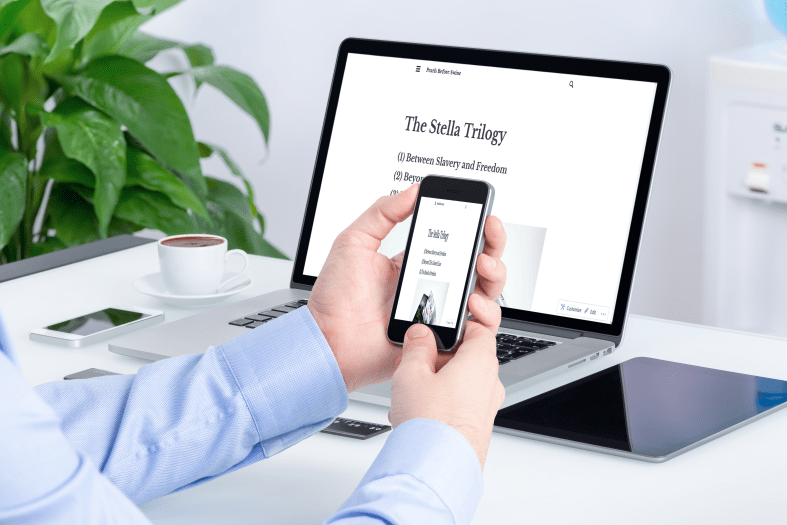
people-apple-iphone-writing

It’s no secret. I pretty much blog like a madwoman so I actually have days I take off, which is the weekend pretty much with only very few exceptions. And although I should really be cleaning right now, I’d like to share something before we dig in for the weekend. Something that is on my heart, and that I also think is very important both for Indie Authors as well as anyone running a business or trying to run a business. This subject matter is concerning social media connections. And as always there is the disclaimer that this post is based on my experience and is not necessarily professional insight. For the record.

I would be very careful playing the numbers game with social media. Obviously you want more interactions, but don’t get frustrated, embarrassed, or beg if you do not have lots of Twitter followers, IG followers (I am staunchly against that app where they promise you thousands of followers. I want my connections genuine)  or Facebook Likes. The reason I would not force these connections is because you just don’t want a whole bunch of people following you, but what you want is quality connections. By quality, I mean people who could really help you in achieving your goals. What is 4,000 Twitter followers worth when 3,000 of them are family members and friends? Don’t get me wrong, family is very supportive but they are also a conflict of interest. Since they’ve known you since forever and they love you so much you cannot count on them to really be honest about your work because they don’t want to hurt your feelings. They also want to see you make it, which is great, but you need more than mom and dad on your bandwagon to really make some noise.

You need a community of support that is more than just your family members. What is 2,000 email subscriptions worth when you only have a 2 percent open rate? Open rate, it’s the percentage of people who actually open your emails. This is easy to track using Mailchimp. I don’t have a lot of subscriptions to my email list personally and I love that. Not that I do not want it to increase, but I want it to increase with quality and value. For now, I’m OK with not having many email subscribers (by subscribers I do not mean to this blog, I mean to my personal email list). I enjoy the close knit family I have currently signed up (by family I do not mean blood related, I mean those who support me. I call them family because they are. If you signed up, you would be family too. Not shameless plugging, just saying) because the open rate of the emails is still in the 30-40 percentiles which are great for only about fifty or so subscriptions. This means that most of the people who are signed up are actually opening and reading the newsletter as opposed to 1,000 subscribers of which only ten are engaged.

This same thing can be true of social media across the board. I don’t spend a lot of time on Facebook and I don’t get overly excited about the numbers. The reason I don’t get overly excited is because though people are there and obviously find something worthy because they like the page consistently, the interaction is low. This I can compare to the email list. If my Facebook Page was an email list I would only have a few opens. For this reason, Twitter is my favorite place right now. It’s my favorite place not because I have tons of followers. It’s my favorite because the interactions are high. People are actually engaging and the people following me are either readers, authors, editors, or professional business people (Note to Authors: Careful befriending JUST authors. Authors are not going to buy your books, readers are).

We live in a world where people ravish in the idea of being Internet Famous. But  what we have to understand is that bragging is not branding. Having lots of followers and likes doesn’t mean anything if they are not coming from the right sources. What you want, more so than numbers is quality connections in an ethical / professional atmosphere. This means you want to leave what your sister in laws baby cousin Tracey did at the club last night out of your business accounts.

What’s So Special About You?

1-1254760156mOJO

Lately, I’ve been asking myself, “What is the benefit of subscribing to your blog/email list?” The answer to this question loomed over me and really got me thinking. “Is there a benefit?” What is it that I’m offering that makes subscribing to my email list or blog such a big deal? What is it about it that will make readers feel, well, special?

I was happy to discover this article: 7 Emails You Should Send Your Subscribers (But Probably Don’t). While advice is always “take it or leave it”, Will makes some great points. For instance, in this post he explains the kind of content you should include in your email newsletter. One set of questions I zoomed in on that really convicted me and got me to thinking was this one:

What sets apart all those bloggers who can rapidly build an insanely engaged audience from those who have to beg and plead just to get a handful of shares?”

This question convicted me because I’ve been thinking a lot about the content of this blog. I noticed that often bloggers receive the same support over and over again. The same five or ten people who like and comment on every post. While this is most excellent, I became concerned about the direction of this blog and whether or not I was reaching you. While I don’t intend on reaching everyone, it became a deep concern that the people who were once interested in my blog no longer were. So I thought, could it be content? But my content has not changed. Will went further with his questioning:

What sets apart all those bloggers who can rapidly build an insanely engaged audience from those who have to beg and plead just to get a handful of shares? Is the answer really just “great content?” Content is important, but plenty of bloggers put just as much time, energy and care into their content as those in the top tier, only to experience 10% of the results.

Exactly! Someone finally said it. For the record, I’m not in the business of begging, but Will’s questions did trigger something and I’m excited it did. I have long wondered if content alone was the key to a successful blog (I use successful loosely sense it is so dependent on your own definition of success).  Now, as a blogger content is something we hear a lot. But, is blogging just about content? Or is there something else that is needed to keep an audience? Well, I kept reading:

So what do the big guys have that the little ones don’t? They have a relationship with their audience.

Ahhh. There it is. The relationship. Blogging is not just about content, it is also about the relationship! This is why I have also created an email Newsletter because its more personal. Like Will, even though I know the author is speaking to a large group, getting a personal email still makes me feel special as a subscriber. Even though my blog posts are sent directly to the emails of those who follow me (via email) an email list is still more personal and, contrary to popular belief, not old fashioned. A study by McKinsey revealed that, “E-mail remains a significantly more effective way to acquire customers than social media — nearly 40 times that of Facebook and Twitter combined.” But now I had more questions. This time about Newsletters:“Is there a huge benefit to subscribing to my email newsletter?” One thing that got my confidence up is a point Will made in this article. He said to be more personal in your email list. Instead of sending links of your recently blogged post, talk to us as if we are sitting at the computer/tablet/phone reading you. This got my confidence up because it is something I’ve always done. I never just list my accomplishments and upcoming events in my email newsletter. This can be boring. Readers can follow my updates just by being on my Social Media so again,“What makes subscribing to my newsletter so special?” If someone follows my blog and social networks, why should they also follow my email list? Some people include links to their recent blog posts in their email newsletters. I do not. It doesn’t make much sense to me. I don’t really get how that can be productive when I already have followers of my blog who get the latest post in their email. You mean I should also send them additional emails with links to my recent blog posts? Is that an email newsletter or just another blog? I didn’t know, but I kept reading because I’m not blog perfect and there is still so much I need to learn. As I read on, I discovered that Will makes another great point. An alternative to providing the link in your newsletter to your recent blog post:

…. too few bloggers consider the pros and cons of each approach before making a decision. They just send a link to their posts because that’s what everyone else seems to do.

This stood out to me. It stood out to me because according to my own personal experience as well as research on clicks in a post, people do not use them much. They may click on a link once but that’s pretty much it with only a few (and I do mean a few, like probably just three of your best friends) exceptions. This means that the chances of someone clicking on multiple  links in your newsletter or blog post to go to additional sites are slim. This is one of the reasons I don’t like posting links in my blog post of other sites without some explanation of what the link is about. I don’t want you to miss out on the info just because you didn’t feel like clicking the link. Like now, at least you have some insight into Will’s article even if you didn’t click on it! (It is however, important to know that while people may not be interested in clicking links, that doesn’t have anything to do with the success or failure of the post. That’s right, we don’t care. What readers care most about is ease of navigation. Though we may not want to click on, it won’t affect us coming around unless your blog is extremely difficult to navigate. In fact, readers are probably not even thinking about clicks until you said something. The 3-Click rule is outdated. Kind of. Yes people don’t want to click on lots of links, but the number doesn’t have anything to do with it. Today its about ease of convenience. You can have one or five links and most people won’t bother to click them period, which I discovered by measuring how many opens my emails get verses clicks on any links in the actual email. There are always more opens of the email than clicks on links in the email. Common sense thus told me its better to say everything in the body of the email instead of having people follow a link). Another point to remember about just including project updates and advertisements / announcements in your email newsletter is this:

Just think about how rare and uncommon it is to receive an email that asks nothing of you. Its sole purpose is to educate, inspire, and help you.

Isn’t that the type of mailing list you’ll tell others about? Isn’t it the kind of list that survives the occasional inbox purging when you get tired of all the emails you’re receiving? Isn’t it the kind of list whose owner you’ll tend to trust?

This is why I try to keep my advertisement to a minimum. As I’ve stated before, I do think too much promotion is something that exist because it lacks the balance of the other components that can make it work. I thought also about the email lists of others I am subscribed to and how much I really enjoy the ones that offer me guidance, such as author tips and article links, without always asking me to purchase or donate something. These are the kinds of email list and blogs I want to follow, the ones that inspire and inform in addition to whatever else is being offered. But still, there is so much Will spoke about that I would like to improve on in relation to my blog and email list and it all begins with the question: “What’s so special about you?”