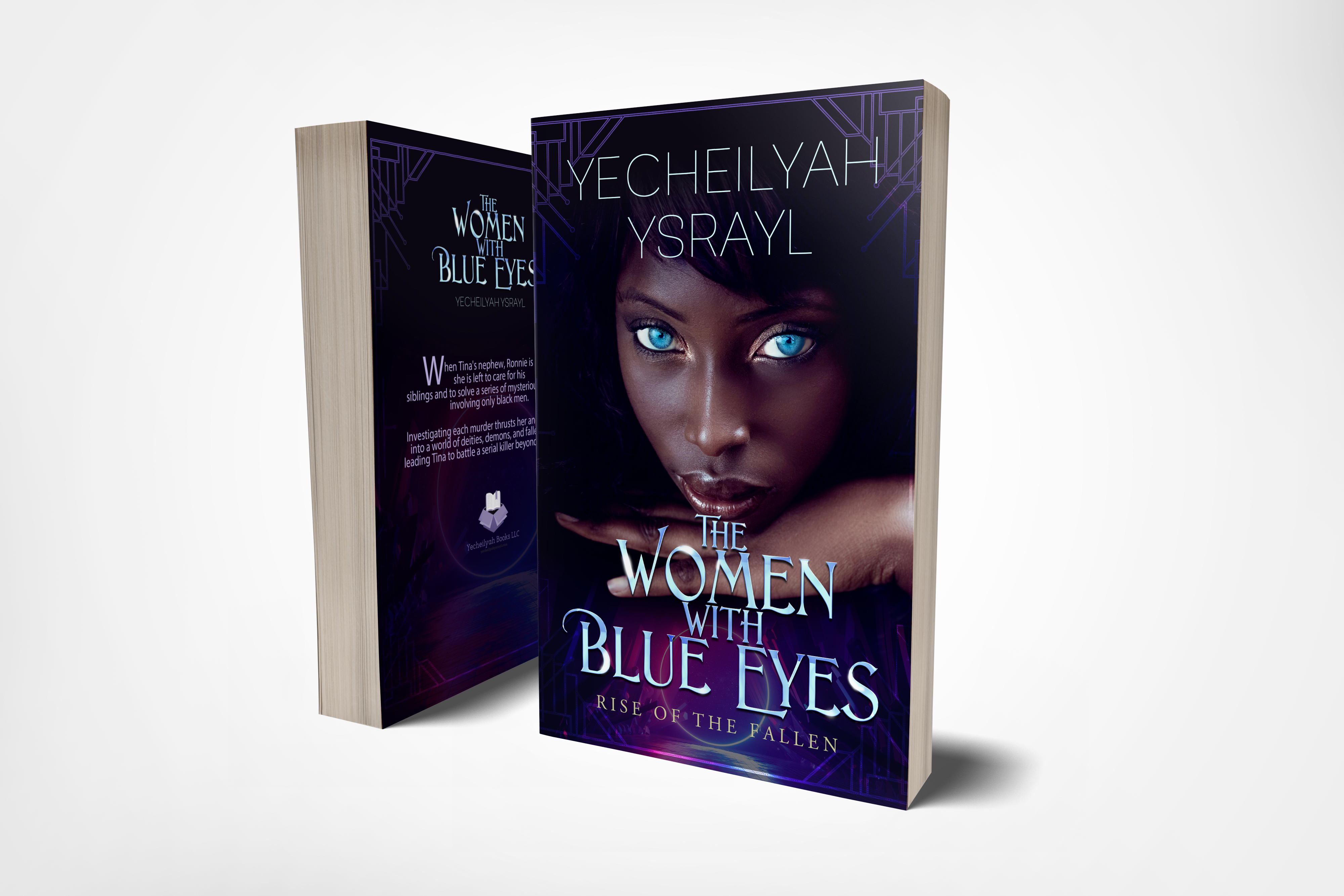
The Women with Blue Eyes: Rise of the Fallen is LIVE

The Women with Blue Eyes: Rise of the Fallen is live!

About.

When Tina’s nephew, Ronnie is killed, she is left to care for his siblings and to solve a series of mysterious murders involving only black men. Investigating each murder thrusts her and her team into a world of deities, demons, and fallen angels, leading Tina to battle a serial killer beyond this realm.


“Paschar walked with confidence and held her head high as she moved her hips from side to side. Red was her most favorite color to wear with this skin. Something about the hue against this dark body is so different from her true form and more comfortable to navigate the Earth. Who wanted to be invisible to humans when it was easier to seduce them in the skin of a beautiful black woman? Passersby, men and women alike, looked, and Paschar smiled. They always stared. Humans were fascinated by blue, crystal pupils against such brown, creamy skin. In real life, Pas thought human bodies were disgusting. She hated the soft, gooeyness of the flesh, how it bruised and bled so quickly, how it fell apart and crumbled with each passing day. She hated the rotting meat on the bone, but she did come to love dark skin tones. Other pigments didn’t make her heart beat like melanin.”

– From Chapter 7, The Women with Blue Eyes: Rise of the Fallen

“Tina walked out of the door as her body trembled. She knew Big Sam had blue eyes, and Ronnie’s death was no accident. They had murdered her nephew, were back, and killing again.”

– From Chapter 3, The Women with Blue Eyes: Rise of the Fallen

We sold out of signed paperbacks on the site, but no worries! You can still order a paperback from Amazon. The next round of signed copies will be restocked soon! Be sure to bookmark my website below so you don’t miss it!

One Way Indie Authors Leave Money On the Table

Due to how the royalties are structured, an author with a 99cent ebook on Amazon will only get about 35 cents per sale. For books priced between $2.99 and $9.99, there is a delivery cost for the ebook file (based on the size) for each book sold.

You also pay Amazon a sales commission based on your royalty rate.

  • 35% royalty: the Amazon sales commission is 65% for books priced below $2.99 and above $9.99

  • 70% royalty: the Amazon sales commission is 30% for books priced between $2.99 and $9.99

What about taxes? 

You pay that too. 

These are just a few reasons why it can benefit you to sell your book directly to readers from your website.

While I have only made a few dollars in ebook sales from my new book, my print book preorder sales from my website are doing far better, and I am close to making money back from the cover art. By the time the book releases next month, I expect to make back what I paid for editing.

I am going to make this post real short because it’s real simple.

The hard truth is that if you are not selling books through your website or worse, you don’t have an author website, you are leaving money on the table.

While some authors have chosen not to deal with Amazon at all, it’s smart to make sure your book is on Amazon for a few reasons.

To start, Amazon is a giant. To have your book available there is just good sense. People trust Amazon, so some people will look for your book there before they look anywhere else. And with the pandemic, people use Amazon regularly. It’s all about making it easy for your readers, and being able to tell them to go to Amazon isn’t only super cool, but it’s also super easy.

But while Amazon is easily accessible to your readers, the relationship between Amazon and you as the author is a bit different.

There are tons of authors making good money from Amazon, but they are not the majority.

Here is an example from an author about his Amazon royalties:

“One month, I sold 5 paperbacks at a list of 13.99 each. The report stated the manufacturing cost was 5.33 (I assume each), and I’m on the 70% royalty. I got a total of 1.30 cents. That’s 26 cents a book. The next month I sold 1 paperback at 13.99, and I got a 3.13 royalty on it.”

The 2021 Guide to Amazon Fees and Royalties for Kindle eBooks and KDP Print, 2019, Comment Section

This is where your author website comes in to pick up the slack.

What if he had sold five paperback copies of this book from his author website? Since he would have to calculate shipping, let’s just round it up to a cool fifteen dollars per book. That’s $75 in his pocket. If he sells 20 books, that’s $300.

It might not sound like much, but it adds up if he sells books at this rate daily.

Even with website transaction fees, authors can still add more to their bank accounts by having their books on their websites alongside Amazon.

In closing, if you are a Self-Publisher, you can buy your books in bulk and sell them in bulk to companies and corporations like schools and independent bookstores.

Heck, you can sell the books out of the trunk of your car if you want.

The sky is not the limit of what you can do when you control the distribution of your own work.

Considering you are not signed to a publisher or are not restricted to any outside contracts that may otherwise prohibit you, you don’t have to be exclusive to Amazon. Instead, you use Amazon as one of many options.

For digital, you can set your book up on Draft2Digital to distribute it to several digital platforms outside of Amazon. For print, you can set your book up on Amazon KDP but also Ingram Spark for distribution to bookstores and libraries.


Ready to publish that book? I can assist with that. Click here.

Enjoyed this post? Check out more Indie Author Basics Here but hurry. I am changing things up soon. Details to come.


Don’t Forget to Preorder Your Copy of The Women with Blue Eyes: Rise of the Fallen! June is right around the corner.

About.

When Tina’s nephew, Ronnie is killed, she is left to care for his siblings and to solve a series of mysterious murders involving only black men. Investigating each murder thrusts her and her team into a world of deities, demons, and fallen angels, leading Tina to battle a serial killer beyond this realm.

Preorder Now

My Favorite Instagram Hacks


Instagram is my favorite place to interact with readers outside of this blog, Twitter follows this, and then Facebook is last. If you are an author on Instagram or have ever thought of using it as a platform, here are some of my favorite hacks for increasing engagement.

Less is More: Pick a Few Kinds of Posts and Stick with It

I heard David Shands of the SleepisforSuckers brand and the Social Proof Podcast mention something like this and realized I was already doing it. This awareness encouraged me to stay consistent with this strategy, which has been working wonderfully. If you’ve been paying attention, I only post four kinds of content. 

  • Black History
  • Books I Read / Recommend
  • Author / Entrepreneur Stuff
  • Family / Travel Stuff

I have incorporated reels, but that’s more along the lines of the medium to which I present the content.

Whether it is in the form of a reel, IGTV video, or image, the core of my content is the same.

It seems like I do a lot, but when you break it down, I really don’t. Everything I post falls into one of these four categories. A poetry contest post falls into the author business category. A t-shirt promo is an entrepreneur post, too, because I am promoting someone’s brand. A post of my twin sister or hubby or doggie is a family post, and so on.

While I still struggle sometimes with what to post, knowing I only have to focus on one of these four (depending on the last time I posted about it) makes it much easier to stay consistent. 

I learned you don’t have to have a lot going on to be productive.

This is a lesson in “less is more.”

I don’t even post a lot. Some recommend posting at least 3x a day on Instagram to stay on top of the algorithm. Welp, I am behind on that. But I will say that has not affected my engagement, and I think it’s because the kinds of posts I publish are consistent. Remember, consistency is not about speed or quantity. To be consistent means something that does not vary.

Use Saves and Shares to Learn What’s Working / Not Working

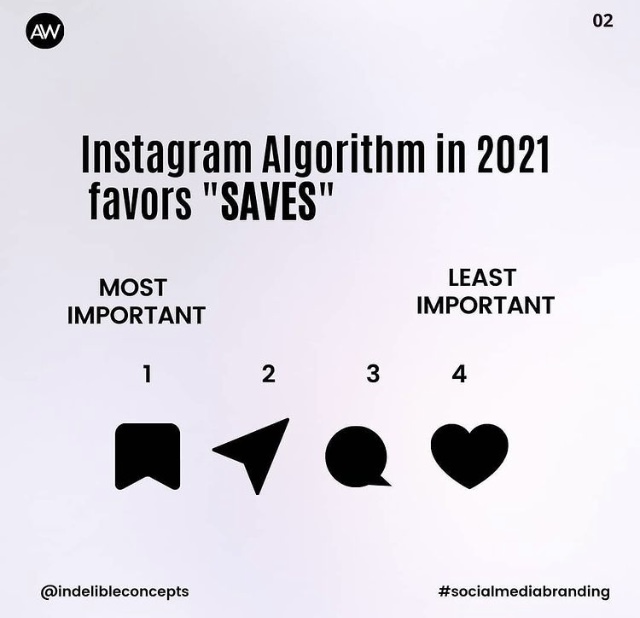
Instagram, like every other app, is constantly changing. In 2021, the platform’s algorithms favor saves and shares over comments and likes. Below is an image someone posted that sums this up perfectly.

Likes still play a role. It is just not the most important in terms of pushing the algorithm.

You can’t see how many saves someone’s post has or know who has saved your post or shared it, but the act alone helps understand the kind of content your audience engages with the most, which lets you know what types of content to post.

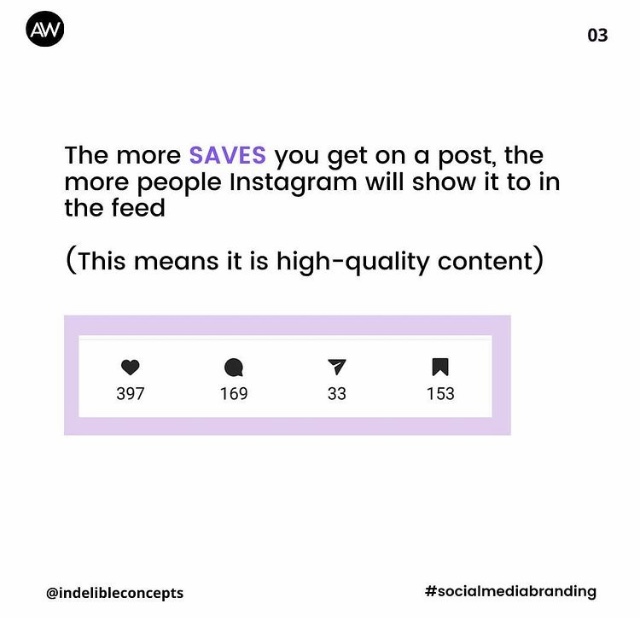
UPDATE: Below is a screenshot of how the save, share, like, and comment buttons look on IG. Saving is not reposting. It’s just clicking that ribbon looking icon on the far right and the post is saved instantly. On the left you have the like button, comment and share.

To view the insights for a post (assuming your page is a business page), click on the insights tab under your post.

It will pull up your insights…

…including the number of accounts you reached, the percentage of people who weren’t following you before, the number of people who followed you, and your impressions.

This will help you see what kinds of posts people engage with the most, which is your audience’s way of saying what types of posts are getting their attention. 

I measure the success of a post based on the number of saves, then shares, comments, and then likes. Notice likes are last, and that is because the algorithm wants to cut down on bots. Some people also buy followers for some strange reason. A bot can like a post, but true engagement is measured by more thoughtful action. Comments of five or more words are better than emojis, and shares and saves are better than likes. The Women with Blue Eyes post did far better than I thought it would, which lead to preorder sales from new people.

Create Folders for Saves

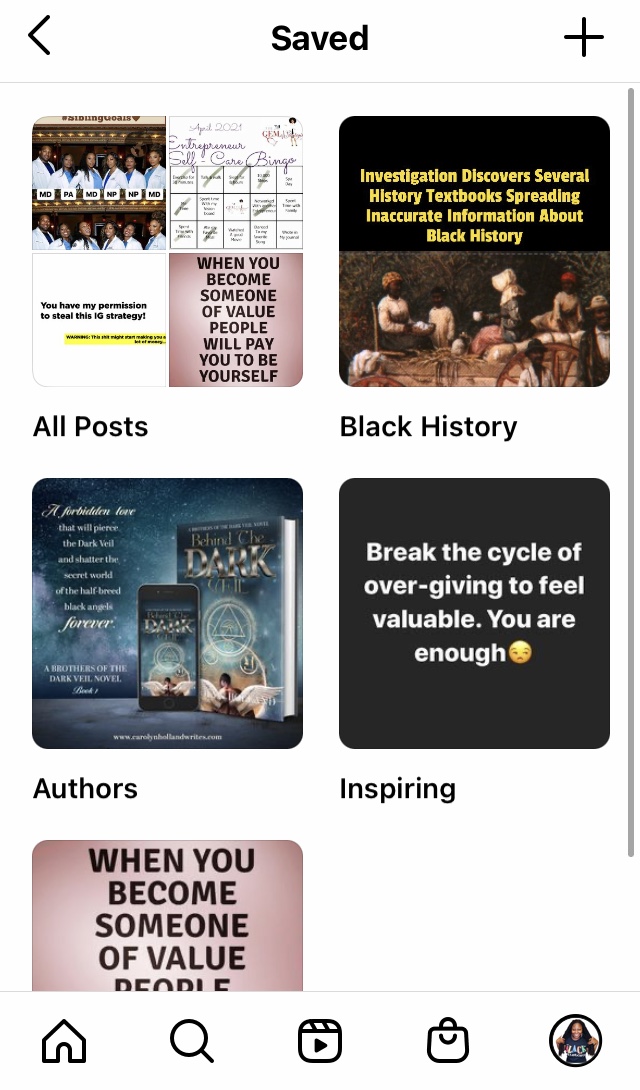
When I come across a post, I like I save it for later—especially a Black History post I may want to repost in the future. 

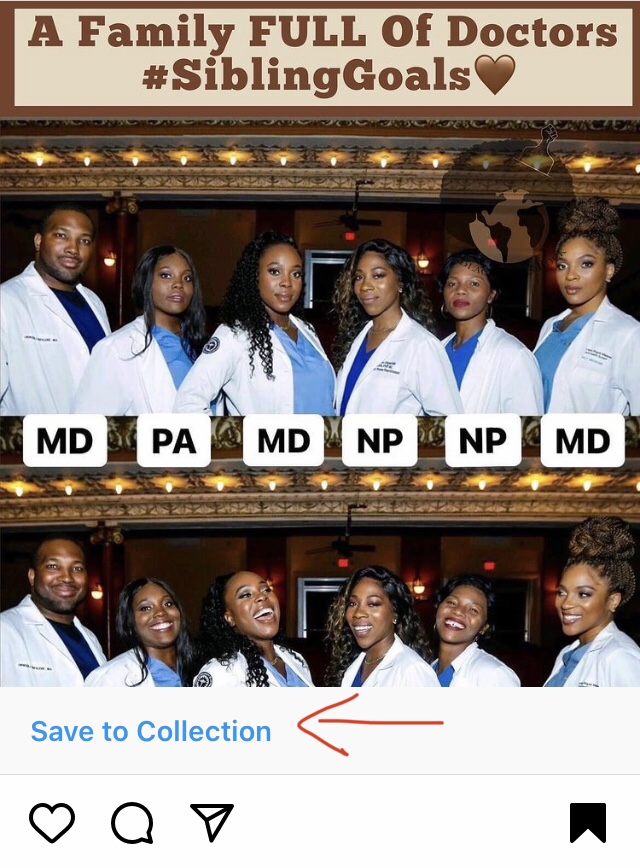
When you save a post, it will show you something like this. 

Click Save to Collection

The list of your folders will come up. If you do not have folders, click on the plus sign and create one.

To view your saves in folders, go to Saves, and there they are. This makes it easier to go back to those dope posts to share, like, or comment on them.

My folders are:

  • Black History
  • Entrepreneur
  • Inspiring
  • Authors

Separate Business Messages from Personal Messages in the DMs

I don’t know if you know, but many good business deals happen in the DMs. I’ve sold lots of books from the DM alone. Here’s how I keep up with it: I separate my business messages from personal/family messages.

Direct Messages from family and friends go under the general tab, and business messages go under the primary tab.

I also have my messages set up to limit who messages me, so I am not bombarded by spam and freaks. Here’s how to do it:

Go to Settings > Messages > Message Requests On

This means that their message comes in as a message request you can either approve or decline for anyone not following you.

You can see a preview of the message, so you can decline it if it looks weird and then block that person.

We have all heard about the other things I do before, such as always using the best picture possible, including a caption that describes the image and using relevant hashtags. For the photos, make sure they are not pixelated and that the text on the image is not hard to read. Instagram focuses on photos, so your pictures must be eye-catching.

And those are some of my hacks! Feel free to use them and tell me how it’s going. Do you have any social media strategies you use to interact with your readers and strengthen your author brand? I’d love to hear about it!

Follow me @yecheilyah on Instagram!


Update: This book is now available! Already read it? Be sure to leave an honest review on Amazon. Click here to buy or review.

Black History through Poetry

I hope you are all doing well and all that good stuff. I have not blogged much lately because I am working on The Women with Blue Eyes and tons of other projects, including our 4th Annual Poetry Contest I want to get underway next month.

If you are new here, welcome to The PBS Blog! This is a great time for you to learn more about who I am through my most recent interview

Below is a snippet of the interview and links with WRDE-TV, an affiliate of CBS. Also find links to Fox 34 and WBOC, affiliate of NBC. (If you read one, you’ve read the others cause it’s the same article, just on different platforms.)

Interview Snippet:

What’s your best piece of advice for readers who desire to find success in their life?

Y: Faith without works is dead, so my best advice is to do your work. Get on your knees and pray and then get on your feet and work. I hate to sound so overly simplistic, but sometimes things are a lot simpler than we make them out to be. We must be willing to do the work necessary to manifest all that we believe we can achieve. Belief is good, but alone it is not enough so I cannot tell you to just believe in yourself. You must prove this belief with action. What you say you believe is one thing, but what you do exposes who you really are. Whatever it is you say you want, you must act on it for it to become a reality.

Not only must we love ourselves and believe in our ability, but we must also be prepared to do the work necessary to turn the unseen into the seen. Consistency is also key because while actions speak louder than words, consistency speaks louder than both. These skills Yah has blessed us with are not intended to serve only us. They are meant for us to multiply. This is possible when we combine a steadfast belief with a compelling work ethic.

Speaking of success, what does the word mean to you?

Success to me means to genuinely enjoy what you do with your life without sacrificing your authenticity. It means to multiply your gifts to serve as many people as is destined for as long as the breath of life is in your body and you are walking this earth. To do so with as much grit and love as possible, and to do it all while staying true to your integrity.

Read more at one of these links:

FOX 34: https://www.wdfxfox34.com/story/43500189/author-and-poet-yecheilyah-ysrayl-teaches-black-history-through-powerful-poetry

WRDE: https://www.wrde.com/story/43500189/author-and-poet-yecheilyah-ysrayl-teaches-black-history-through-powerful-poetry

WBOC: https://www.wboc.com/story/43500189/author-and-poet-yecheilyah-ysrayl-teaches-black-history-through-powerful-poetry


Read I am Soul or My Soul is a Witness? Don’t forget to leave an honest review! Links below.

Click here to review (or buy for 99cents!) I am Soul

Click here to review (or buy) My Soul is a Witness

Signs You Are Not Ready to Self-Publish Part 1: Skipping Revisions

I am deep in revisions for my first fantasy novel, The Women with Blue Eyes: Rise of the Fallen. I am on the clock because I want my editor to start work on it next month. As I go over my work, I realize how horrified I would have been not going back over this. As usual, I want to share what I am learning with you. In this new Indie Author Basics series, I am sharing some signs I have noticed that indicate that you are probably not ready to Self-Publish that book.

You Skip the Revision Process

Step one in the process of Self-Publishing is to write the book. It is unnecessary to self-edit during this stage because it would be challenging to finish the book if you are editing as you are writing. Step one is like a brain dump where you are getting everything down on paper. It is the most exciting part of the journey as you let your ideas and creativity flow. Step one is creating the rough draft of your story, the version of your manuscript that is complete but not polished.

I know a writer is not ready to Self-Publish when they skip the revision process.

Revisions are rewrites of the manuscript before sending it to a professional editor.

It is AFTER the book is finished because you don’t want to edit as you write (you’ll never finish) but BEFORE the professional edit.

The rewrite is more challenging than the rough draft because you are not only putting your ideas on paper, but now you are organizing those ideas, cutting out what doesn’t work, and working with what does work. The revision stage (rewrites) strengthens your work into something worthy of publication.

If you skip this stage, you are publishing your rough draft. If you send the rough draft to an editor, you will still ultimately publish your manuscript’s rough draft version. While the editor can clean it up some, it is not the editor’s job to write the book for you. If you are looking for someone to write the book for you, you need a Ghostwriter. If you want to write your own book, it is essential not to skip the revision process when you are Self-Publishing.

The rough draft is not the final draft and will not be the best representation of your writing.

How to Know if You Have Skipped Revisions:

  • You just finished writing the book. You have made it to the end, and you are done. You take this book , create a PDF, and upload it to Amazon. You have not gone back to rewrite or make corrections, and you have not had it properly edited. If I have described you, you have skipped the revision process.


  • Technology has been your godsend. You have finished recording your book using speech-to-text technology that has translated your words to the page. You finish the book, but you don’t rewrite what you spoke into the document for comprehension. Everything is kind of all over the place. If I have described you, you have skipped the revision process.


  • You just finished writing the book. You have made it to the end, and you are done. Then, you take this version (the rough draft) and send it to an editor. If I have described you, you have also skipped the revision process. And unfortunately, for your editor they have the job of rewriting your book. If they are a quality editor, they will send the MS back to you and request a rewrite.

If you have not gone back over your rough draft to make changes, this is a sign you are not ready to Self-Publish.

Check out more Indie Author Basics Here.

Also, here are some ideas for revising!

Revisions: Self-Editing #amwriting

Revisions Part 2

The Power of Your Author Name: A Message to First Time Indie Authors

Barack Obama released another book on the seventeenth of November, 2020. It was already a Best Seller with over two-thousand book reviews on Amazon just a few days after release. Obama’s name alone skyrocketed this book to the Best Seller’s List before we had time to decide what we wanted for breakfast that morning.

And Sister Soldier’s March 2021 release, “Life After Death,” the long awaited follow up to The Coldest Winter Ever is already a Best Seller. That’s right. A Best Seller and the book is not even out yet.

The same can be said of Amanda Gorman, whose poetry book The Hill We Climb, and Children’s Book, Change Sings, is already a best seller.

These books don’t release until September!

Today, we are talking about the power of your name and the role it plays in your author branding and marketing yourself as a first-time Indie Author.

What’s in a Name?

A person’s name is a connection to their identity and individuality. It is the history of who a person is. When you think of names that have become prolific, you are not just thinking about a person’s name. You are thinking about all the things that person has done, their experiences, and contributions to the world.

Sometimes, we hear a name, and it is not a good image we see. Names like Jefferey Dahmer and John Wayne Gacy make us tremble, but even these names show a name’s power. We tremble because their names are connected with the horrific things they’ve done, and hearing those names brings to our memory those heinous acts, in the same way, hearing Maya Angelou’s name gives us hope.

When branding yourself as an author, it is good to have the same author name consistent across platforms. Your name doesn’t just tell someone who you are, but it helps build brand recognition.

This means using the same name across your author’s website, the same name in your social media handles and emails, and the same name on your book covers.

“You can show genre with cover design, blurb, logo, and many other cues, but publishing under lots of names in the digital age is a recipe for disaster.” – Anne R. Allen

The more people see your work connected with your name, the more they remember who you are.

It is why we call them “Name Brands.”

Michael Jordan is a brand name, an icon whose career has made his identity equivalent to excellence. When people buy Jordans, they know they are buying a top-quality shoe. And even if it is not a top-quality shoe, it is what the people believe. Why? How did someone whose name once meant nothing now mean everything?

Well, that’s another blog post. For now, let’s just stay on topic and keep it simple.

Michael Jordan proved himself as an exceptional basketball player, and his work ethic is connected with his nameThe more his work became recognized, so did his name.

Your work and your name are connected, whether you are a servant of good or bad. If you are doing good work (in this case, we are discussing writing) and not using your name or changing your business name every six months, you make it hard for people to connect who you are with what you do.

“It’s much easier to build brand recognition if you keep all your publishing activity under the same name and the same expression of that name.” – Jane Friedman

Nikki Giovanni, Ralph Ellison, Lorraine Hansberry, Langston Hughes, Walter Mosley, Toni Morrison, and Richard Wright.

Chances are you’ve heard these names before, and if you are like me, you will notice these names on book covers at any bookstore. You might even stop to scan or flip through the pages of a book simply because you recognize these author’s names.

Book Titles

The name of this blog started as the name of a book series I was writing.

In my Pretty Woman voice, “Big mistake. Big. Huge.”

While I have found a new purpose in this blog, it was a mistake to name this blog after a book. The problem with using the title of your book as your blog name, author website, or social media pages is you will probably write more books.

Are you going to create more websites and accounts for all the books you are writing?

Of course not.

Your name is one of the most powerful, FREE resources you have for marketing yourself as an author.

When you first meet someone you introduce yourself, and you start with your name because your name is your identity. It is more important than your job title and degrees. And when people remember our name, it makes us feel important, recognized, and valued.

What about Pen Names?

Anne R. Allen has published an excellent article on that already, so I will refer you there. While her post is about why pen names are not a good idea, Anne’s number one good reason for using a “pen” name is the one loophole.

  1. It’s the name you’re known by, even if it’s not the name on your birth certificate.

It is absolutely okay to use a name that you’ve been known by even if it’s not your birth name. The key is not to keep changing it though. Pick a name and stick with it.

Consider Maya Angelou, Ntozake Shange, Sonia Sanchez, Kwame Ture, Whoopi Goldberg, and others. None of these people were born with those names just as I was not born Yecheilyah Ysrayl. Although I was not born Yecheilyah, I do not consider it a pen name. It is more than that, it is the name for which I am now known.

Use Your Name

“Once you know what author name you’ll be using, be relentlessly consistent in the expression of that name throughout your websites and social media accounts.”

– Jane Friedman

No matter what name you choose to brand, use that name everywhere. It will help people to identify you, and when they remember you, they remember your work.

No one cares about the title of your book or your book, for that matter.

What people care about is you, the author so it is your NAME and your author photo that will stand out the most in your social media profiles and on your website.

Think about it: It’s not about “A Promised Land.” It is about the fact that Obama wrote it. He could have titled the book The First Black President and people would have bought it. People are buying him. People are buying Obama.

I am not a fan of the term, but when people say that “people buy people,” what they mean is in the beginning, readers are interested in the person more than the book. Then as they begin to trust the person, they trust anything connected to the person, including the book.

  • Who are you?
  • What do you enjoy doing outside of writing?
  • What motivates/inspires you to write?
  • What has your journey been like?
  • What’s your story?

Instead of using a lot of different names or the title of your book, focus on branding one name across platforms.

www. AuthorName . com
Facebook.com/Author Name
Twitter: @Author Name
Instagram: @Author Name
Clubhouse: @Author Name

The stronger your brand name, the easier the marketing. We all hope to get to the point where people hear our name associated with something and run out to support it without blinking.

Use your name. That is all.


Looking for more Indie Author Tips? Check out the catalog of articles here. From this point forward, Indie Author Basics posts will publish on Wednesdays.


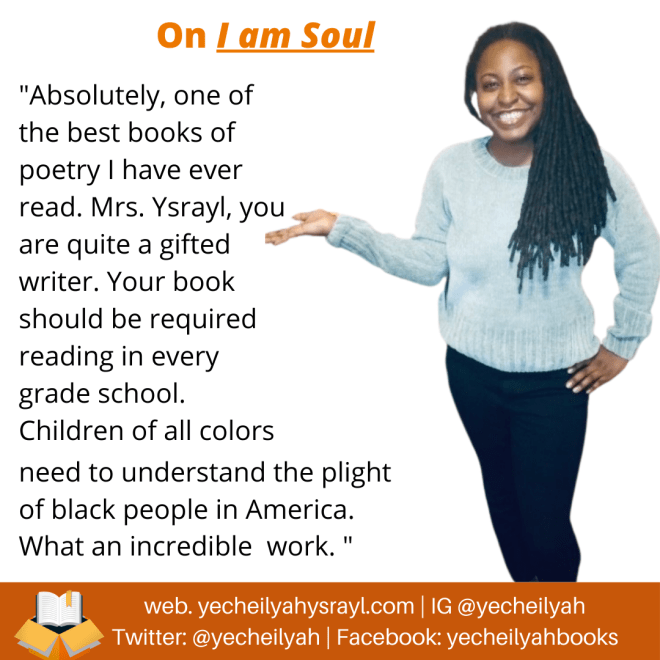
I am Soul is 99cents for a limited time. And remember, if you read it, review it!
Vote For My Soul is a Witness Book Cover

They say not to judge a book by its cover…

…but I need you to do just that!

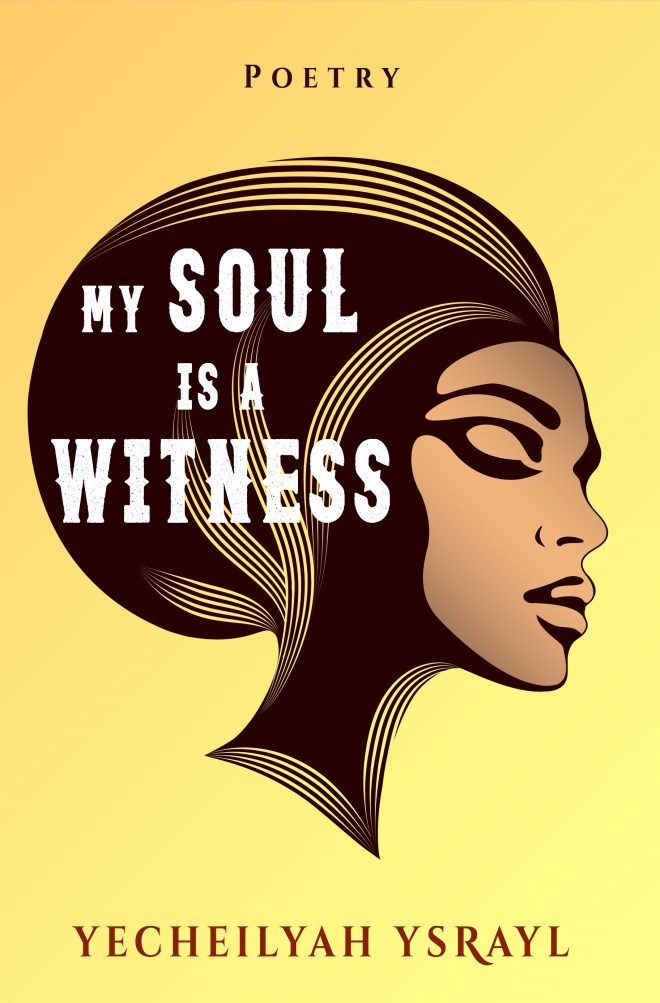
If you like the cover of my book, My Soul is a Witness, please vote for it for the cover of the Month contest on AllAuthor.com!

Here is the link:

https://allauthor.com/cover-of-the-month/10528/

Go, Go, Go!!

And thank you!!