How Blogging Is Good Practice for Book Publishing

Disclaimer: I do not think blogging is for everyone. These articles are here to help guide and encourage you to discover your own systems and practices, as each person’s journey is and will be different.


Three of my books were conceived through blogging: I am Soul, The Women with Blue Eyes, and Black History Facts You Didn’t Learn in School.

Let me be clear: I did not start this blog to write these books.

I started this blog for some other reason, and in the process of being creative, I wrote about these topics until they culminated into whole books.

After three years of writing poetry dedicated to Black people and Black womanhood, I compiled those poems into a book called I am Soul.

After sharing excerpts from an exciting short story out of my wheelhouse but fun to write, it eventually culminated into an urban fantasy novel.

After writing Black History articles every Friday for Black History Month that went beyond February, the project culminated in a full-length volume people can now enjoy anytime they pick up the book instead of waiting for Friday.

I hope you see where I am going with this.

In the same way that journaling can help us to organize our thoughts, writing about your area of expertise on a blog can be good practice for book publishing.

Posting content on social media and a blog is a form of publishing. Whenever you hit that post button on a blog article or a Facebook post, you are publishing content. Here are two powerful ways it helps to prepare you to write a book.

It Helps You to Get Used to Writing Publicly

When writers publish books, they open themselves to be judged, not just praised. When you post content online, you engage in a similar vulnerability. Your thoughts are now live for everyone to see, critique, or admire. This is similar to what happens each time an author publishes a book. Writing on a blog or posting to social media helps you to get used to hearing feedback about your writing.

It Helps You to Build an Audience / Readership

One of the significant issues new self-published authors face is publishing books with no readership. While established authors like Ashley Antoinette can pop out with a new book and surprise readers, new authors may have a hard time doing the same because they don’t have the audience for it to be successful. They can publish books on a whim, but they also run the risk of people not buying them. Blogging can help with that.

While practicing how to write publicly, you also build up a tribe of readers who like what you write! You attract people who enjoy the same things you do, not just with writing but with life. You might all like to travel, garden, or camp. You might all be married, single, or divorced. You might all be business owners, work a job you love, or retired.

These genuine connections help build bridges of commonality that eventually lead to mutual support systems. You also get instant feedback that will help you test-drive your story idea.
Click here for more Indie Author Basics to encourage you through the Self-Publishing / Indie Author Process!

Are You REALLY Promoting Your Book?

Are you really promoting your self-published book?

Or does it just look and feel like you are promoting your book?

  • If you are only telling people you wrote a book, but you are not telling them what the book is about, you are not really promoting your book.
  • If you only show us the cover of the book but do not educate us about the content and core message, you are not really promoting your book.
  • If you only post Amazon links to social media but do not discuss the book and what we can learn from it, you are not really promoting your book.

These things can be a part of book promotion. Still, alone, they do nothing to generate enough interest in people to want to buy the book, and that is what book promotion is:

A culmination of your activities and strategies to create awareness and generate interest in your book.

This includes but is not limited to:

Advertising: Paid Ads (or just ads in general), digital or print material, website or landing page, etc.

Publicity: Interviews, book reviews, media coverage, guest blog posts, podcasts, etc.

Social Media: Building engagement with readers through entertainment and educational content using any of the many social media platforms. Blogging can also fall under this and is a powerful tool for community.

Events: Conferences, Author Talks, Book Signings, Book Fairs

The purpose is to create enough buzz to interest readers to purchase the book.

  • Anytime you share a review from someone who reads your book, you ARE promoting your book.
  • Anytime you create content (graphics, excerpts, videos, etc) that educates or entertains people about your book’s message (nonfiction), characters, or plot (fiction), you ARE promoting your book.
  • Anytime you talk about the book on a podcast or in an interview, you ARE promoting your book.
  • Anytime you share your journey and what it was like writing the book, you ARE promoting it.
  • Anytime you write on a topic that is relatable to the things we can find in your book, believe it or not, you ARE also promoting the book.

We can do many things that look like book promotion on the surface but are ineffective in raising awareness among our readers about the book’s topic and why it’s important to them.

But I hope this post gets you thinking about deeper ways to connect with your audience!

If this has helped you, let me know!

Click here for more Indie Author Basics to encourage you through the Self-Publishing / Indie Author Process!

Tell Us What You Published Instead of How You Published

How often have you heard a traditionally published author say, “I’m a traditionally published author?”

They might say they are a published author but not a traditionally published one. That’s because there are millions of traditionally published authors.

In the same way, introducing yourself as a self-published author does nothing to help the person understand what you write.

It is not bad to call yourself a self-published author or to be proud of that. However, since many self-publishers have smaller budgets, we often desperately identify how we published instead of what we published to get people to take a chance on our books. But this strategy does not work well.

When I pitch schools and bookstores to carry my book, I rarely introduce myself as a self-published author. They will already know this when they look up my ISBN.

Instead, I discuss the book and why it is a good fit for their audience.

Instead of telling people, “I’m a self-published author,” and pushing your book in their face, identify your genre, book, and how it serves your target audience.

You can do this in one sentence:

Original: “I am a self-published author of three books.”

Revised: “I am the author of The Stella Trilogy, a Historical Fiction series that explores African American History, civil rights, and the struggles of Blacks in America.”

I hope this helps someone!

Click here for more Indie Author Basics to encourage you through the Self-Publishing / Indie Author Process!

Do More with Your Self-Published Book

High achieving authors (Indie, Trad, or otherwise) tend to fall into a few categories:

  • They publish high-quality books (well-edited, dope cover art, and well-formatted, to name a few).

  • They collaborate with other authors and business people. 

  • They use their book to create additional income streams through businesses and services.

Today, I want to focus on that last one, although all these are important.

No matter the route, book publishing is hard work, and most of the work happens after the book is written and published. Most of us find ourselves saying, “Dang, now what?”

Depending on what your book is about, there are so many creative things you can do to leverage your self-publishing career.

Here are a few things I do based on the kinds of books I write:

  • From writing black historical fiction, I lecture at schools.

and so on…

Some authors even have high-ticket courses based on the chapters in their books. Podcasts and workshops based on the book are also ways people leverage their books.

The key point is to look at the book not as the end but as the beginning. Let it (the book) stretch you to new heights!


Check out more Indie Author Basics articles here.

Dear Indie Author, Remember to Guide Your Readers to Your Own Platforms

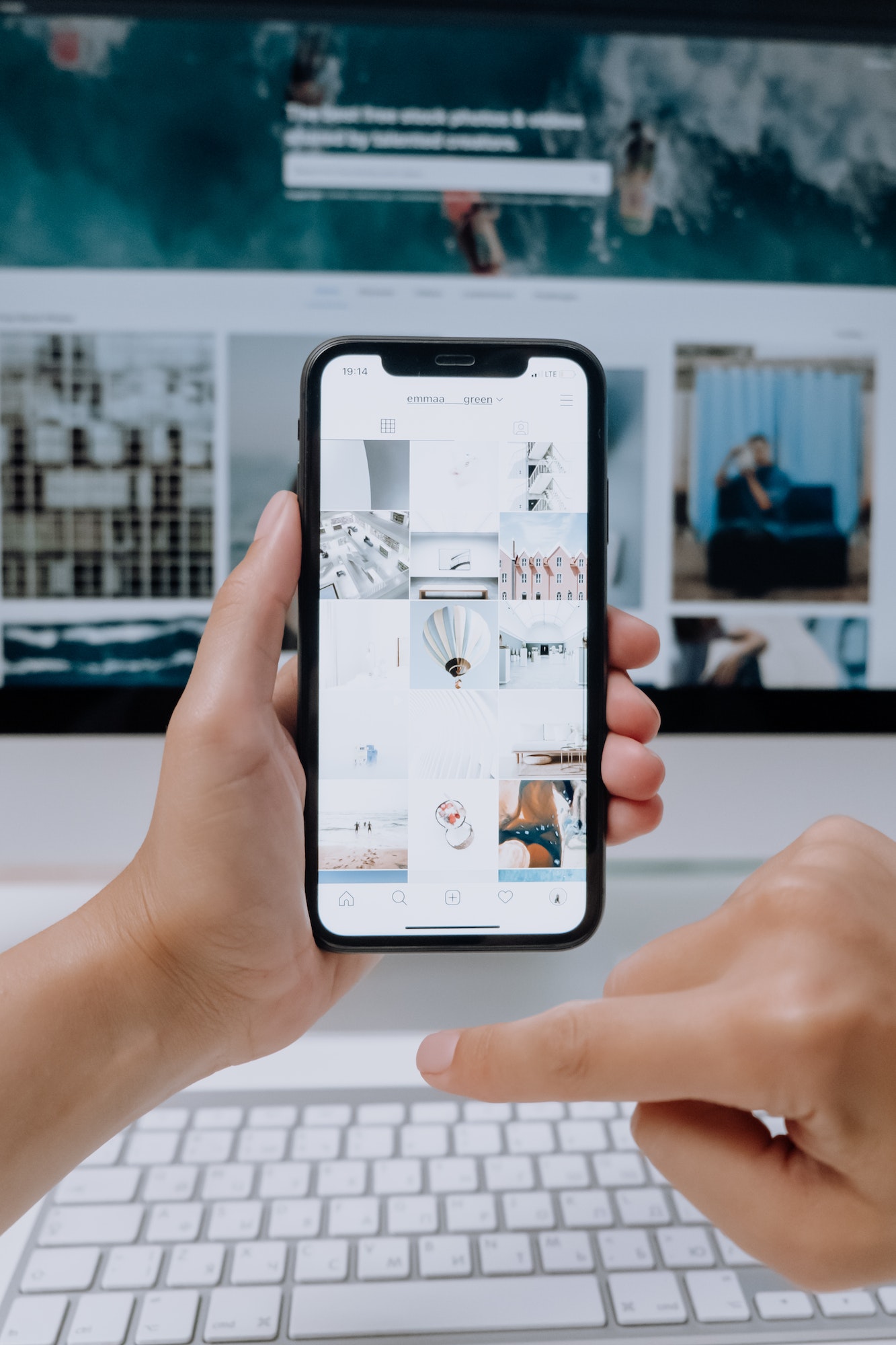
None of us can deny the power of social media to impact businesses, big and small. As we’ve seen repeatedly, what we post to our accounts can have positive and negative real-life effects, destructive and groundbreaking. With it, we can reach people worldwide without leaving the house. It is no longer just about posting family photos. People are making real money and establishing real connections.

However, an over reliance on social media to hold up the core of our business can prove disastrous since we do not own them. Lately, I have heard many complaints of Instagram pages being hacked, Facebook jail, and TikTok suspensions.

And these are not complaints from people with small accounts. People with tens of thousands of followers have had to start from zero.

People who operate systematically, moving their tribe (those genuinely interested in their content because everyone isn’t), over to their own platforms, do not lose when their accounts are hacked or when IG decides to glitch.

They do not lose because they understand a basic principle:

Social Media is the vehicle, not the destination.

Photo by cottonbro studio

Social Media is a powerful tool for socializing and networking with your target audience. Still, you want to always be moving them along your funnel.

This looks like adding them to your blog, email/text list, website, or membership site.

To do this, use a call-to-action at the end of your posts to tell people what you want them to do.

The call-to-action or CTA is when you give your people direction. What do you want us to do after seeing your post?

  • Do you want us to visit your website by clicking the link in your bio?
  • Do you want us to leave a comment? Are you asking for feedback?
  • Do you want us to buy something? Are you having a Black Friday sale?

The goal is to avoid getting too comfortable with the followers you get from these social media platforms. Only some people following you are interested in what you have to offer. You can ensure they know where to find you outside Instagram and Facebook. This allows you to nourish relationships and build stronger bonds with those who care.

In a matter of seconds, your thousands of followers can be gone if someone hacks you or your account is deleted for whatever reason.

Protect yourself by establishing an online home.


Indie Author Basics simplifies and streamlines the Self-Publishing Process so authors can Self-Publish high-quality books without pulling out their hair.

Dear Indie Author, No One Wants to Subscribe to Your Newsletter (Do this Instead)

I used to ask people to subscribe to my email list, and almost no one ever did. It was also cringy to ask.

And then I realized I was working harder than I needed to.

How people look when you say subscribe to your author newsletter.

The truth is, asking people to subscribe to your email list is boring, and no one wants to do it. We have enough emails.

And if you are a new author, no one’s ever heard of, saying we will get a free copy of your book doesn’t work either.

As I alluded to in the last post, authors must start to think like readers if they want to attract them.

Instead of asking people to subscribe to your list directly, do this instead.[mepr-show rules=”31881″ unauth=”message”] 

Photo by EKATERINA BOLOVTSOVA

Offer Something They Want

The value in giving something away is that if it’s a truly valuable piece of content, it will naturally lead to your paid stuff. At first, this wasn’t working for me. It wasn’t until I gave away my best book (the one people actually wanted to read) that I started to see a difference.

For your give, my advice would be not to throw something together. Give us something good.

Your give is also known as a lead magnet and doesn’t have to be a book. It can be a resource, guide, free tutorial, or access to exclusive content. It can be a complimentary ticket to your online class or a virtual pass to the next event.

Deliver Your Give By Requiring Email Sign-Up

Choose a platform to use to collect email addresses. I use Mailchimp, but there are tons of others. Require people to enter their email to receive the freebie.

Set Up Automation

As soon as they sign up, they should be able to instantly download the freebie. Setting up an automatic welcome email to officially introduce yourself is an excellent start to a warm welcome.

You’re done, and you didn’t have to beg, borrow, or pull teeth to get here.

Other ways to add subscribers:

  • Collaborate with other Authors
  • Host a contest

These are the two most powerful strategies I’ve seen. I get the most sign-ups through my poetry contests or when I collaborate with other authors.

  • Have a sign-up sheet at every live event.

This is probably the only time it’s okay to ask people to subscribe to your email list directly. I always have it sitting at my table. Still, the amazing thing is people will walk by and put their email addresses down without me asking! So in a way, you still don’t have to ask. All you have to do is make it available.

  • Add a pop-up on your blog and website. 

Please ensure this goes away after about 5 seconds and doesn’t take up most of the space. Pop-ups that aren’t easy to close out are annoying and distracting. This makes us feel like we are being forced to sign-up. You don’t want people leaving your site because your pop-up won’t leave them alone.

  • Use Your Blog

If email newsletters aren’t your thing, you can always use a blog. When people subscribe to your blog, they get an email notification whenever you post something new. You can use this with your third-party email list or by itself. Either way, it’s another way to stay connected with your tribe outside social media.

I can go on, but the moral of the story is there are tons of ways to collect email without spamming.[/mepr-show]

Oh, please be sure you provide a way out! It is illegal not to provide a way for people to unsubscribe if they no longer feel you. It is much easier to do this if your emails go through a third party. If people can’t unsubscribe, they will report you as spam, which can ultimately hurt you. I talk more about that here.


Couldn’t See the Full Post?

Subscribe to Indie Author Basics! Membership is Good for a Full Year.

Indie Author Basics streamlines and simplifies self-publishing so you can publish high-quality books without pulling out your hair.

What Indie Authors Can Learn from the Kyrie Irving Controversy

Kyrie Irving is in hot water for posting a link to the documentary Hebrews to Negroes: Wake Up Black America to his Twitter account. The movie is a film adaption of the Independently Published book by the same name. It is alleged that the movie has much antisemitism in it, (I disagree but that’s a different post), and Irving has since taken the tweet down and apologized to the Jewish community via an Instagram post.

This post is about how he found the documentary and what Indie Authors can learn about platforms.

Kyrie Irving found the documentary by researching Yahweh on Amazon, saying that’s what his name translates into. According to this interview, he typed the name in the search engine, and the movie came up.

Many Indie Authors have long-cut ties with Amazon, which is their business. What I hope we can gain is an understanding of how people search for information, namely books, and the role that it plays for us as authors.

Photo by Ricardo Esquive

Amazon is not a distributor or bookstore. Amazon is a retailer that sells many things but is known for books. They are known for books because, in addition to selling books, they operate a Self-Publishing arm called Kindle Direct Publishing or KDP. Amazon is so very well connected with books that bookstores hate them, and people who think of buying a book (and now movies) turn to Amazon almost instinctively.

Amazon is also the world’s second-largest search engine, with Google being the first.

“Amazon, with 54 percent of product searches taking place, is the world’s largest search engine for e-commerce. Technically, Amazon is the second largest search engine in the world excluding Google.”

Decoding the World’s Largest E-commerce Search Engine: Amazon’s A9 Algorithm 

When someone wants to search for a book and does not want to visit an offline bookstore like Barnes and Noble, where will they search first?

That’s right. Amazon.

Hebrews to Negroes was released on December 6, 2014.

Today (11/2022), it is a #1 Bestseller with tons of new reviews. Yes, he searched for the movie, but the book is a #1 Bestseller.

All because a rich and famous celebrity tweeted the link.

And this celebrity found it on the second largest search engine in the US.

The Point

When deciding what platforms to put your book on, consider not what you want but what readers want.

When your average reader wants to look up a movie, topic, or book, they are not going to Smashwords. They are not going to Draft2Digital. They are not even going to Goodreads like that. They are also not flooding B&N.com, though they’ll visit the brick-and-mortar bookstore (catch that).

When people (not necessarily people who are always on the internet and are familiar with the book world but everyday people with jobs who happen to want to buy something) want to look up information, they go to Google and Amazon.

Photo by Andrea Piacquadio

Ignoring this is just not good business sense, except that your goal is not to make money from your books or bring a whole lot of awareness to it, which is cool. Not everyone publishes a book for these reasons.

(It is also not wrong to be on the other platforms, also known in the Indie community as “going wide.” It means you are not exclusive to Amazon but have your book available at other online retailers, which is awesome. I go wide myself. At the risk of steering away from the topic, that’s a post for a different day.)

However, for those of you Self-Publishing books you want people to buy, not being on Amazon is not bad or wrong, but it is leaving a lot of money (and exposure) on the table. 

This post is a nudge to consider more strongly the platforms you wish to sell your book (if you are selling it).

It is a reminder to go to the places where your potential reader will most likely hang out. 

That is the message.

Kyrie Irving found Hebrews to Negroes and made it a bestseller by posting the Amazon link (without a caption) because the book was sitting on a platform where readers are most likely to search for books. 

Go where your readers are most likely to hang out, and search for books like yours.


Click here to access more Indie Author Basics Articles.