A Story Within a Story – Crafting Chapters

Who knew that this simple realization would come in the middle of the night, as I walked along with McFadden’s Easter on the streets of Harlem and stood shoulder to shoulder under a night sky just as dark as Garvey’s skin, who spoke just a short distance from us. Though I’ve always written in such a way, it was right here on 135th Street and Lenox Avenue when it became a conscious thought and it occurred to me that I can now  implement this revelation into my writing in a much more conscious manner. And as Easter’s future husband approached us, I knew that I had to freeze the moment and write this down. She was smitten anyhow and I doubt she’d notice my absence. Surely I can put the book down for a quick, and anxious writing fix.

The words came quickly and rushed to the tips of my fingers after the sun drifted into a heavy slumber last night and the wind whispered just as calm and peaceful as my husband’s breath heaving in and out of his nostrils. I was up, of course, reading when after thirteen straight chapters of Glorious I stumbled upon a revelation I’d be more than selfish not to share.

girl-book-light-dark-reading-collage-lying-night-grass-giantI’ve personally fallen in love with short stories. It could just be the impatience of the creative mind that’s got me savoring a quick fix, but I love the fragment of writing time as compared to a full fledged novel. It’s not easier, its just the simplicity of it all I suppose. Nonetheless, whatever the urge I’ve found it tasteful to write short and to the point; where the story is over before it’s left your palette. Not in a way that’s disappointing but too delicious not to crave. A refreshing snack of literature if you will that’s got you begging for more and at the same time offended for not having been given enough. Nonetheless, I was up reading this novel when it hit me: chapters are like short stories within a story.

Though my eyes were heavy, my mind was eager and I noticed that in the best of books we are strung along by string from one point to the next in a series of small revelations all leading to one grand finale. I was reminded in that moment that more than the first sentence, the first paragraph, or the first chapter is the need to keep the story moving in a consistent thread of mini stories wrapped into one large fabric by making sure that each chapter ends as if it alone was a short story within itself. Like a cliff hanger carefully composed to force the reader on to the next chapter. That moment right before Gillespie’s cheeks explode into handfuls of balloons.

I realized that writing is like configuring one grand puzzle by crafting the pieces and deciding which shape belongs where. It is a series of steps, body parts if you will, where each member does it’s part and yet contributes to the completion of the whole. By focusing on the purpose of each chapter, what it sets out to achieve alone and how it ties into the story as a whole, I think this may in fact help us writers to make sure that our books too move along with the same grace and elegance of a McFadden, Ellison, or McMillan.

Self-Published Authors With Thin Skin

offended

You won’t make it. And no, I’m not saying that I have made it. It’s just that, well, if you have paper thin skin just stop right now. Do not pass go and do not collection $200.

I have a lot to work on as an Author but the only reason I know this is because of what others have told me, what I have learned about this field, and what I have accepted as flaws that must be pruned and tuned to become strengths. I noticed, while reading an article about negative reviews, that there is not enough attention paid to the dark side of self-publishing. That is, the negative feedback (and reviews) you get from those who (wait for it) thought your book sucked.

You are entering a world that is a lot different from other businesses. You can’t pick up a book and drink it or rub it into your skin. It’s not a collection of diamonds or a tasty meal that will satisfy your flesh. No, the book business is a lot different than selling soap. Books require more than money, but people must be willing to invest their time into a read and that’s only if they actually enjoy reading. Even if they enjoy reading, books require lots of attention. It’s not a disgusting vegetable drink you can gulp down quickly and complain about later. No, if a book is tasteless it will be promptly put down, rejected, and possibly never tended to again. There’s just way too much to do in a day.

As a Self-Publisher, you must prepare yourself for this rejection. It will hurt initially because let’s face it, your a genius. But, not everyone will see it this way and usually when you think something is brilliant chances are it’s not so in the eyes of others. It’s an interesting thing, the work I don’t think much about is what gets the most attention. The poems I write just because I felt like writing, where I was nonchalant in the process for lack of a better word, are the poems people love the most. It may have something to do with humility: the humble will be exalted and the exalted humbled. (As a rule of thumb, the greater you become, the more humility you should have) Work we think the world of may not be as we intended. I didn’t intend on writing a book when I wrote the first chapter to Stella, nor did I intend for Book #2 to do better than Book #1! That’s just the business. It surprises you like that. And you know what? I love it.

Add onto this the stigma (though significantly fading, so much so that I feel funny writing this) of Self-Publishing and Indie Authors in general. I’ve read some Traditionally Published books that sucked but the reality is that as a Self-Published Author you have to have a much thicker coating of skin. If you can’t take constructive criticism in your everyday life and you have plans to publish a book, you may want to get started on that. Taking criticism that is. I know I have talent as a writer but I am not naive. I know that not everyone is going to enjoy my work or see the message and I don’t expect them too. Truth is, I’m not trying to save the world and neither should you. I’m just trying to reach the remnant of the world that wants to be saved. For this reason, I expect some people to dislike my work. (The bible also says something about when everyone thinks well of you, careful, for so they did the false prophets. You don’t have to believe in the bible to consider the message in that).

I also know that not every review will be a positive one. This is actually not a bad thing, it’s a good thing. Its a good thing because without knowledge of your flaws you can’t improve. For instance: A reviewer once told me to watch my POV (point of view) when I’m writing. In my mind, I write as if a camera is floating the room. I see the book playing out in my mind like a movie and I move wherever the camera takes me. If I feel like speaking from the perspective of the roof that I’ll do. It didn’t occur to me that this surveillance comes across as very confusing to the reader. When I received this tip, I became more cautious of this and began to write so that it is clear to both myself and my readers. What I would do without that tip! Now, I make sure to keep the “camera” nice and steady. No more moving from the first person to the third person because it looks good in my head.

shocked

If you plan to Self-Publish a book you must first examine your heart. If there’s thin skin there you may want to trade it in for some course material. If you desire to become an author you have to have a certain endurance for negative attention, it comes along with the territory. I have people speak badly about me all the time and I’m not even talking about my writing! People are generally not very fond of me because while I strive to be gentle and display the same respect to all persons, I’m not going to give you deception. I have to tell you the truth or I would not be the person I am today. I would be a liar.

Be thick skinned about whatever criticism that takes place in your life whether that’s in regard to your books or whatever. Understand that everything you encounter in life is to mold and shape you into the individual you were meant to be from the very foundations of the world. It hurts, yes, but its all for the greater good. I am thankful, personally, for growing up the way I did. For knowing struggle and pain and deception and humiliation because what it has done for me is to allow me to bear the burden of whatever negative vibes come my way. Don’t like me? Great, stand in line with the rest of the people waiting for me to care. That’s not being arrogant that’s just being real. In the book publishing industry, pinch your skin first and make sure its thick enough.

(There’s a lyric to Maxwell’s song “Lifetime” I think is very interesting. As the song opens he says, “I was reborn when I was broken”. You gotta be broken down to be built up. Something to think about.)

Keeping Your Word

5846032-120875522_3-v1

There is really no excuse for how late I am on some of my book reviews, but I hold my integrity near and dear and always set out to keep my word. That said I am scheduling some time next week to fulfill all of the reviews I have promised some of you. I ask for your sincere apologies and I thank you so much for your patience.

In other news, if nothing else always set out to do what you have said that you will. There is nothing more discerning of true love and support than to fulfill your word.

OK now, about this American Horror Story Episode about to come on tho…

Author Identity: Urban Fiction

Earlier this week, I had the pleasure of reading a reblog to an original post I had not seen until then. After promptly liking both the reblog, as published by Whitney of Write, Live, and Love and the original as published by Ja’da of quizoticmuses (who I do believe also has a book out on Amazon), I felt compelled to reply in a separate post so that my commentary was not limited to the comments section of her blog. I thought the post served as a great conversation starter, and I do encourage others to tune in if so inclined.

But before throwing in my two cents here’s the original (used with permission):

“As a writer, I have come to understand that in every capacity the term “urban” is synonymous with “Black people.” I don’t want to be an urban fiction writer; I want to be a writer. But I’m Black writing about Black people and not exclusively Black people drama. So I feel like I’m automatically fitted into the urban fiction slot when really, I just want to write fictional stories. Period.

How do I get there?”

There are certain words that, although can be applied to various races of people, pretty much is a reference to black people depending on the context. Words like Urban, and Minority, to name a couple. Specifically, the term “Urban” is no doubt a crafty way of saying “Black” and Urban Fiction then is used to denote black fiction.

What attracted me to the post is that as a person who speaks often concerning the state of Black America, Black history, its ancient origins, slavery, freedom, and as someone who is deeply passionate about writing about Israelites or so-called blacks, for blacks, our history, and culture, I must say my writing has never been deemed Urban Fiction. This revelation caused me to think that maybe the characterization of Urban Fiction is a bit deeper than being a black writer writing about black people in general but that it is also about the style of writing.

Writing Styles

“Style is the way writing is dressed up (or down) to fit the specific context, purpose, or audience. Word choice, sentence fluency, and the writer’s voice — all contribute to the style of a piece of writing.”– Google

As I began to think about my own reading experience with UF, I am hearkened back to books that have a certain tone and feel to it. These books tend to follow a certain writing style. Though they do tend to deal with the internal struggle of the African American experience, it’s the way that these books are written that makes them different. Personally, my characterization of Urban Fiction books is based upon the language, setting, and overall surroundings incorporated into the book.

This led me to consider that, though I do find it is exclusive to the black community, Urban Fiction is a label applied to a certain kind of writing that not everyone can do. Everybody can’t write good Urban Fiction books, especially people who have not lived the life they are creating for their characters. Urban Fiction is a unique genre. While you can research for Historical Fiction and Romance or Thriller, if you write a UF novel, you had better have lived that life or be familiar with the setting in some way or it will fall flat. It will read fake.

Black Lit or Urban Fic?

What makes Toni Morrison’s “The Bluest Eye” Black Literature and Tracy Brown’s “Snapped” Urban Fiction? Just by looking at the covers alone we can see that they are two completely different kinds of works, though they are both written by African American female writers about African Americans.

5337019 thebluesteye

Both books are relevant in black society. Both are truths concerning black family life, struggles, and both contain black central characters. So why is Brown known as an Urban Fiction writer and Morrison a Fiction writer? Both are very talented and though Morrison is most prominent, Brown is no less valid. The classification has to do, I think, with the individual writing styles. The overall message of the book itself and the direction in which it tends to expand conversation.

I often find that black writers who write with a passion that is rooted in that hardcore truth concerning black family life, if its raw, uncut, up close and personal, then it is often labeled Urban Fiction.

Believe it or not, this is a conversation that many are already having. Bernice McFadden, the very talented author of nine critically acclaimed novels including SugarLoving DonovanNowhere Is a PlaceThe Warmest DecemberGathering of Waters (a New York Times Editors’ Choice and one of the 100 Notable Books of 2012), and Glorious, has already coined the term, “seg-book-gation”. She argues that black books are lumped into an “African American Literature” category instead of typical genres like General Fiction.

Personally, I see nothing wrong with the separation and encourage Blacks to embrace being such a set-apart people. Nothing we do is going to be normal or traditional because we are not a normal people. We are unique, creative, soulful, we are the salt of the Earth.

Triangle of Sins; Alibi and Midnight: A Gangster Love Story; Diary of a Street Diva; No Disrespect, A Street Girl Named Desire; The Coldest Winter Ever, these are all titles that represent Urban Fiction or “Street Literature” because they focus on the internal struggle of growing up Black in the Hood. They are books that are written in such a way that it captures the personal truths concerning the life many African American’s live and that’s why we love them so much.

These are books about what I like to call, “The Curses” or the struggles blacks have had to endure for centuries now. It is prophecy fulfilled and the gritty reality is what makes them appealing to the Black community.

In closing, Author Identity is all dependent on the mindset and thought processes of the author and who they are. Because Black people set the trend in a host of areas, Urban Fiction and Street Lit is another spin on the norm that African American’s have contributed to. Black people have always been the creators of what is different, creative, or uniquely separated from tradition. If Black writers of fiction are labeled Urban Fiction I believe its more so because of the uniqueness of the work itself. Urban Fiction is not just a genre, but it’s a different way of writing. So whereas one person can write about Blacks and for Blacks and never be looked at as an Urban Fiction writer, the same may not be true for someone else because their styles are different.

(Also, because reading is a HUGE part of writing, people tend to write how they read, what they experienced (or experience) in everyday life, and what they’re most knowledgeable or passionate about.)

A Year in Reflection: 2015

43946478_9f969e269e

The winds are picking up steam, the clouds are filled to the brim, and another year is gone. North Louisiana is bracing itself for what is to be a major storm. Why does the moment feel symbolic right now? I tried to write earlier on this topic but it wasn’t until the skies growled that I felt compelled to try it now. The air is cooling as we speak while my nose attempts one final sniff of what is left of 2015. I love the rain, and how thoughtful of it to show up now; in the midst of my thoughts concerning change.

When I look over this blog, I suppose the biggest evolution for me has been the evolution of my writing and the changes taking place in my career in general. When The PBS Blog was born August of 2014, I did not set out to enhance my writing in such significant ways. Thinking back I’m sure I was subconsciously aware of the connection between blogging and writing but I did not specifically set out to do many of the things I’ve done. Surely, I did not anticipate giving Indie Author Tips, Author Interviews, or Book Reviews. I think that’s what makes anything new so exciting, the surprise factor of it all. Not knowing what’s going to happen next. This is what Blogging has been for me in 2015, the evolution of my writing in general.

I thought about how to present this post. Should I give links to the best of the best like last years poetry wrap up? Should I bore you with random pats on the back concerning things I’ve done the years past? Nay, I decided to just keep this simple. What do I look forward to in 2016?

Well, that just depends on what there is in store. What I’ve learned about life in general is never to overexcite anything because you do not know what the next day will be like. We can want things and we can be given those wants but it doesn’t mean they will come in the fashion in which we desire them. For that I have learned never to rush time; just let it roll in nice and gently, like rain drops sliding down the vibrant green petal of a rose. Like tiny crystals all fragile and delicate, and yet brave enough to trust the fragility of a tree leaf to hold them. A collection of bodies all too weak to do anything but uplift each other. So, for Blogging Year 2016 I’m just going to continue riding the tide of the unknown and see where it takes me. I hope that you will come along with me and that we can continue to grow together. At some point I’ll sit down to outline some  specific goals but for now I’ll take it one blog post at a time. Before you know it I’ll be drafting the post to close out 2016 and hopefully I’ll have you here to share those memories with me.

Book Trailer – Stella Book #3: The Road to Freedom: Joseph’s Story

Coming to Print, Amazon Kindle, B&N NOOK, iBooks, Google Play, Goodreads, and Kobo Friday, February 26, 2016.

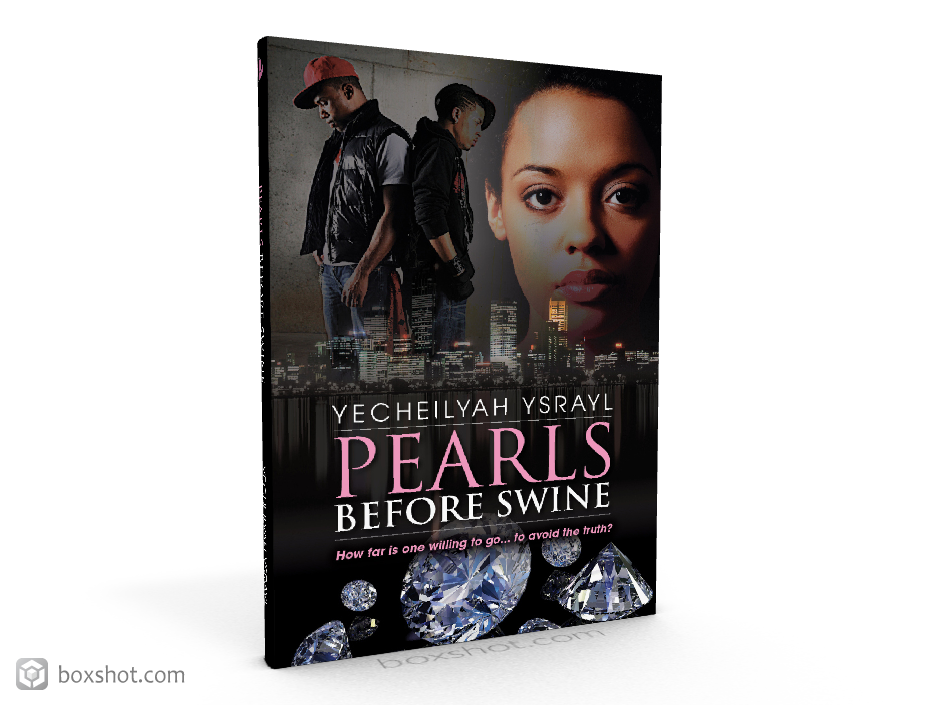
Wealthy and clueless are just some of the words Joseph uses to describe his family. Deeply concerned about the state of Black America, a fight with his brother compels a young Joseph to leave his mother’s house and join his friends for a trip to Atlanta for SNCC’s (Student Non-Violent Coordinating Committee) second conference. Excited to live life on their own, Jo and his friends have left school and the lives they were living for a chance to become part of the movement. With no money and essentially no plan the seven friends, three black and four white, set out for the road when they are stopped by a racist cop who makes them exit the car. The teens are unaware that a mob of Klansmen also awaits them at the New Orleans bus terminal.

Discover what life was like for Joseph when he left his mother’s house in the 3rd installment of the Stella Trilogy, years before a mixed race Jo knew that he was mixed race. Determined to be apart of the movement Joseph McNair, son of “Sidney McNair”, and his friends abandon their lives in search for answers in the Jim Crow south on The Road to Freedom.

Must Reads: Negro Slave Songs in The U.S.

51oVlfHmDDL._SX331_BO1,204,203,200_

This is a highly recommended book for African Americans who want to study history. “Negro Spiritual Songs” were not made up babble at random but they were songs that talked about the history of the African American in America. Massa was not just a broken dialect of the word “Master” but it is actually a Hebrew word meaning “Oppressor”. Black people were only illiterate to the extent that they did not read and write English but it doesn’t mean they could not read and write period. What if you were taken to China and dropped off, would you be able to read and write Chinese? Fluently at that?

The point is that if you do not know enough of your history to go back 300 years ago and help your people then, you will not be able to help your people today. If you couldn’t liberate them 300 years ago you cannot do it now.

Don’t allow someone to tell you your history, study your history. If they didn’t treat you right, what makes you think they taught you right?

Click Here To Buy On Amazon. Used Copies Are $0.01!