Welcome back to another episode of No Whining Wednesday! Today, you cannot whine, criticize, or complain.
If you are new to this blog or new to this segment please visit the NWW page herefor past episodes.
Today’s inspiring word is about growth:
I’ve heard growth several times this week and the one message that stuck with me is this one.
“Growth isn’t always what you can see.”
While I love that people realize the importance of self-love these days, social media can make that look like a fairy tale. People start to make money and travel, and then they post pictures of themselves living their best life and caption it something about self-love. This can give the impression loving on yourself is only luxury.
But self-love is not all glamorous. It is not manicures and pedicures and vacations to Ghana. That can be a form of self-care, but self-love includes:
Acknowledging your own crap
Setting Boundaries
Discipline
Forgiveness
Saying No
Speaking Up
Seeking therapy
and more (add them here)
People have gone so far as to say they are not humble because “humility is thinking low of oneself.” A lot of this “self-love” on the internet is really just arrogance masquerading as growth.
What I have noticed is growth is being promoted as this outward, physical thing. Growth can be outward. We do not have the same bodies as adults we had as children because our bodies grow and expand as we age.
But a twelve-year-old with a twenty-year-old body still has the mind of a twelve-year-old.
And a sixteen-year-old who reads and counts at the level of a ten-year-old would be considered for a learning disability.
These examples show growing outwardly is not enough.
Outward growth is expansion. Inward growth is depth.
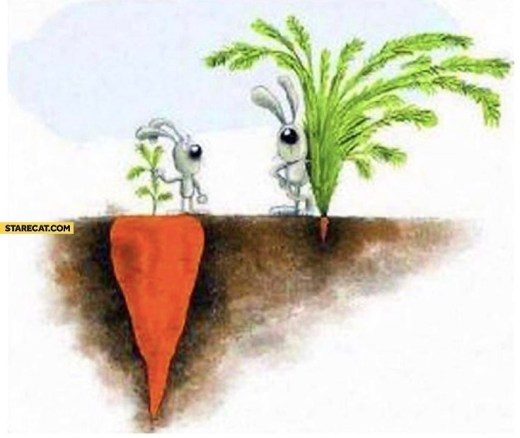
Root vegetables like carrots, potatoes, and beets don’t look like much outwardly because they grow underground. Peanuts also grow underground.
We can also see this by looking at the tree in general. Its branches stretch wide with leaves and fruit, and it’s beautiful.
But if that tree is not rooted in the soil, it will be blown away by the weakest storm.
No matter how beautiful the tree has expanded on the outside, the tree doesn’t stand a chance if its roots have not grown deep below.
Just because you do not physically see the growth does not mean it’s not happening.
Coined by Iyanla Vanzant, NWW is a segment I added to this blog a couple of years ago to help us stay motivated for the remainder of the week. You can look at it as the extra push to get over the hump on “hump day.” For the entire day on Wednesdays, you cannot whine, complain, or criticize.
No Whining Wednesday is not only a fun exercise but a gratitude practice. To keep from complaining, you have to remind yourself of all the things you are grateful for.
The hope is we can lessen the complaints we have not only on Wednesdays but every day.
Here are some definitions:
To Whine – give or make a long, high-pitched complaining cry or sound; to grumble, murmur or complain in a feeble way.
To Complain – express dissatisfaction or annoyance about a state of affairs or an event; state that one is suffering from; state of grievance.
To Criticize – indicate the faults of (someone or something) in a disapproving way; to condemn, attack, discourage.
If you are new to this blog please visit the NWW page herefor past episodes.
Today’s inspiring word to help get through your day comes from Vanzant herself.
Though I am a black movie buff and can probably quote the lines to every black movie ever made, I don’t watch much TV during the day. Most of my TV watching is in the evenings and on the weekend. If I find I am finished with work early, I am reading or listening to a YouTube video in the background while doing laundry or something. While listening to an inspirational compilation of Iyanla Vanzant’s speeches, I came across this quote.
“Never judge your clarity on how others respond.”
I am sure we can all draw our own meaning from this. For me, it means having the courage to stick with what you know is right in your heart. It means if you’ve been given divine instruction to do something, don’t change your mind because someone else rejects the idea or doesn’t understand it. It means if you’ve been given absolute clarity on something, don’t let others plant the seed of doubt in your heart despite how good their intentions. It means to hold on tight to your integrity.
Clarity – the quality of being coherent and intelligible. Clearness or lucidity as to perception or understanding; freedom from indistinctness or ambiguity.
It was hard for me to delete my email list at first because I was worried about how other people would respond. I didn’t want anyone to take it personally. Look at me, worried about how somebody else will feel about something I am absolutely clear about doing. Ain’t that crazy?
It was only when I listened and did what I knew needed to be done that I could see the freedom in the decision.
Since restarting my list, I have far fewer subscribers but more engagement. My open rate went from 30-70% because the people on my list want to be there. I am absolutely clear about that.
Your turn!
What does this quote mean to you?
Have you ever changed your mind about something you were clear about because of how someone else responded?
How do you plan to lessen your number of complaints today?
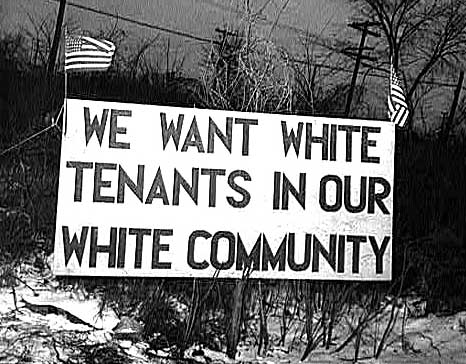
“Beginning in about 1890 and continuing until 1968, white Americans established thousands of towns across the United States for whites only. Many towns drove out their black populations, then posted sundown signs.” – James W. Lowen
When I first published this article in 2017, I got much controversy about it. I didn’t take it personally for two reasons. First, very little literature covers sundown towns, and not much is said about it in the limited topics covered during black history month.
The other reason is, although these towns were known as sundown towns, the people of the town did not call it that. It was only a well-known fact that some blacks were not allowed in some towns, and if they visited, they had better leave before the sun sets or risk lynching. Therefore, when I wrote about it, some people thought I was making it up.
Follow me on Instagram @yecheilyah
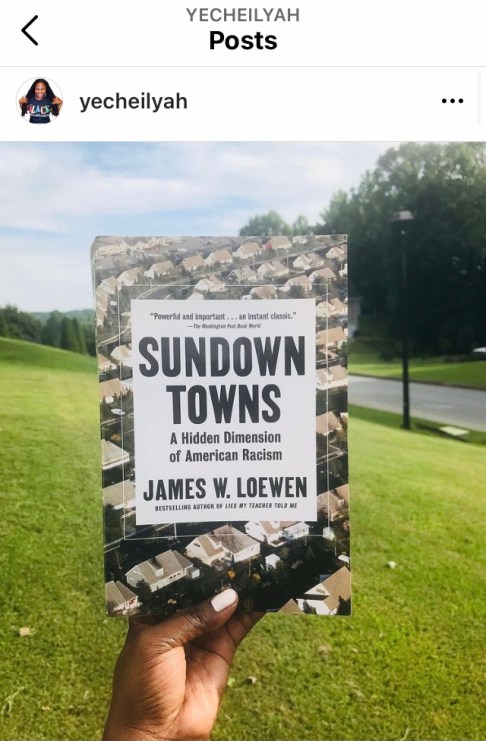
This past week, I posted this image to my Instagram, and I was surprised to see how many more people had not heard of this. For this reason, today, we are revisiting our black history fun fact on sundown towns.
“Is it true that ‘Anna’ stands for ‘Ain’t No Niggers Allowed’?” I asked at the convenience store in Anna, Illinois, where I had stopped to buy coffee. “Yes,” the clerk replied. “That’s sad, isn’t it,” she added, distancing herself from the policy. And she went on to assure me, “That all happened a long time ago.” “I understand [racial exclusion] is still going on?” I asked. “Yes,” she replied. “That’s sad.”—conversation with clerk, Anna, Illinois, October 2001.
Anna, Illinois, was named after the daughter of the town’s founder but got its more derogatory name after the 1909 lynching of a black man in Cairo, IL, and the mob of angry white citizens who drove out Anna’s 40 or so black families following the lynching. It is at this point that Anna, IL became a sundown town.
A sundown town is a town with an exclusive population of non-whites on purpose. They are towns with overwhelming populations of non-whites and are so deliberately. Sundown towns were also known as “Sunset Towns.”
“A sundown town town is an organized jurisdiction that for decades kept African Americans or other groups from living in it and was thus “all-white” on purpose.”
Side Note: In the black community, black kids are constantly warned to “come in the house when the street lights come on,” so many of us had to be in the house before the sunset. I wonder if Sundown Towns had something to do with this. Not to say black parents are the only ones with this command, but it’s food for thought.
Although signs were posted, forced exclusion was also implemented:
“There were also race riots in which white mobs attacked black neighborhoods, burning, looting, and killing. Across America, at least 50 towns, and probably many more than that, drove out their African American populations violently. At least 16 did so in Illinois alone. In the West, another 50 or more towns drove out their Chinese American populations. Many other sundown towns and suburbs used violence to keep out blacks or, sometimes, other minorities.”
– America’s Black Holocaust Museum, James W. Loewen, PhD; Fran Kaplan, EdD; and Robert Smith, PhD
The Beginning
Sundown towns began after slavery and the Civil War when blacks left the plantations and poured into every city and corner of the country. This was followed by the system we know as Jim Crow.
Jim Crow laws were state and local laws that enforced racial segregation in the southern and northern United States to keep blacks in a state of servitude. It included having to look down and step to the side when a white person walked by, drinking from separate water fountains, entering the rear of the bus, sitting in the balcony of the movie theater (which came to be known as “Nigger Heaven,”), attending separate schools, and more.
While Jim Crow and segregation are most notably known as a southern practice (“The Jim Crow South”), it also existed in the north. In fact, many parts of the north were more segregated than the south, and when it comes to Sundown Towns, these communities mainly existed in the north as the Great Migration brought floods of blacks into northern cities. Many suburbs to this day are mostly white because they were either part of redlining -the systematic denial of various services to black residents either explicitly or through the selective raising of prices – or its white residents ran its black residents out of town, and the descendants of those people kept it that way.
I’ll use Chicago as an example, still one of the most segregated cities in America. Yes, I said Chicago. Remember, we started this conversation with Anna (“Ain’t No Negroes Allowed”), Illinois.
From Time .com / Bettmann / Getty Images
Dr. Martin Luther King Jr. visited Chicago in 1966 due to the high poverty rate in black neighborhoods and rented an apartment on the west side. He was there as part of what he would call The Poor People’s Campaign and the Freedom Movement. On August 5, 1966, King led a march through Cicero, an all-white district, and was hit in the head with a rock by members of the angry mob.
Years later (the early 80s), my brother-in-law and his friends would be chased out of this same area, racial slurs hitting their backs as they rode their bikes out of Cicero.
This statue below is of Orville Hubbard, which sits outside of the City Hall in Dearborn, Michigan, was the cause of much controversy when people started to learn more about his past.
Hubbard was the mayor of the then all-white suburban town outside of Detroit from 1942 to 1978 and, in a 1969 speech acquired by the New York Times, said that “If whites didn’t want to live with N–they sure didn’t have to.” He went on to say this was a free country, and this was America.
“City police cars bore the slogan ‘Keep Dearborn Clean,’ which was a catch phrase meaning ‘Keep Dearborn White,’ ” according to David Good, a lifelong resident of the city who is the author of ‘‘Orvie: The Dictator of Dearborn,” a biography of Mayor Hubbard.
“Out here in Dearborn where some real Ku Klux Klans live. I know Dearborn, you know I’m from Detroit, used to live out there in Easten. And you had to go through Dearborn to get to Easten. Just like riding through Mississippi once you got to Dearborn.” – Malcolm X
Over time the name “Sundown-town” faded, but Sundown Suburbs still exist. A sundown suburb is a discrete way in which Sundown-towns live today when large white populations migrate to the suburban part of the city with the express purpose of separating themselves from the minority population. We can see this in our Cicero example.
I once paid $300 for a book cover. At the time, I couldn’t afford to spend that kind of money on a cover. Not only did I not have the money, but even if I did, I couldn’t afford to invest it into a book cover when there were, as I saw it, much more severe priorities in front of me. But, I was young and excited, and I wanted to publish this book, and I wanted that cover.
But I was broke, broke.
So, what did I do?
I set up a GoFundMe.
I went around to people I knew and explained my vision and why I was raising the money. I (and get this) talked to people.
And I don’t like talking to people.
Not only did I make enough to purchase the cover I wanted, but I also made that money right back at a Book Signing in Chicago.
It was 2014, and we were at the Doubletree Hilton Hotel. I had just released my first screenplay, which, interestingly enough, is the book that inspired The Women with Blue Eyes: Rise of the Fallen.
I made that $300 back and then some.
You might be thinking, “But, EC, if you couldn’t afford to pay for a book cover, how did you cover editing?”
I didn’t. I had a friend edit the book, which is why it is retired today.
Photo by Annelies Geneyn on Unsplash
Self-Publishing is an area where the term, Proper preparation prevents pissed poor performance holds much weight. We don’t talk about it enough, but financial planning is part of the basics of Self-Publishing.
Self-Publishing requires a mindset shift regarding how you feel about yourself and how you look at your finances. One of the first things I’ve noticed in my journey is that most first-time Self-Publishers haven’t decided if they are publishing this book for themselves or publishing the book for others to read.
Did I confuse you there? Read on.
Publishing for Yourself vs. Publishing a Book that Sells
Photo by Jp Valery on Unsplash
Publishing a book for yourself means you fulfill your dream of becoming a published author and want to give copies away to family and friends. It means you are not selling the book or wanting to create a business out of it; rather, you want to satisfy a desire for something you’ve always wanted to do.
In this case, it would not be necessary to put a lot of money into this project, mainly because you are not getting the money back through sales since you are not selling the book. You may decide to get your book cover made using a cover template from KDP or Lulu or a homemade cover from Canva. You might choose to have a friend edit the book for you or use free software for formatting. This would be sufficient for a book you don’t want to sell. There are tons of economical ways to publish a book for this purpose.
But, suppose you are publishing this book because you want to leverage your business, spread your message and get it into as many hands as possible. Suppose you are a speaker and want to sell copies at your event, see your book on Amazon and Barnes and Noble or get the book stocked at bookstores, libraries, and schools.
What if you are writing this book because you want other people to read it?
In this case, you must prepare for this journey from the mind of a business person and not only an author.
When you publish a book you intend to sell, you consider other factors outside of what you want from the book because this book isn’t only for you. You think about building a platform, the market, and you consider the financial obligation necessary to bring the vision forward.
This isn’t to say write a book that doesn’t speak to your soul. It means you publish a book that speaks to your soul and the soul of others. It means you are publishing a book you see is needed in your community.
“You may have a robust knowledge of quantum computing but if everything the audience wants from you is how to use Microsoft Excel, give them just that. You write no book about quantum computing until you are able to build an audience around it.
Most self-published authors don’t do this. They do the exact opposite. They write what they like and try to figure out how to shove it down people’s throats.”
-David O, Entrepreneurs Handbook
Publishing a Book You Want to Sell Requires A Financial Investment
Photo by Michael Longmire on Unsplash
Spending money on your book is only an investment if you have put a strategy in place designed to ensure how you will sell this book. This, in my experience, is the difference between publishing for yourself and publishing a book for other people to enjoy as well. Many authors who venture into Self-Publishing ignore the market, so the book doesn’t sell outside of close family and friends because they have written a book no one wants to read.
When was the last time you bought a book by an author you have NOT been following for some time, on a subject you really don’t care about?
This is called Indie Author Basics because we focus on laying a strong foundation (a well-written and packaged book) to make it easier to build everything else on top of it. Too many new Indie Books are not attractive, not well-written, poorly produced, and is about topics no one cares about. As a result, the average self-published author makes less than $1,000 per year, according to a survey by Guardian in 2015, and a third of them make less than $500 per year.
What does this have to do with preparing financially?
When authors publish books they intend to sell for reasons outside of themselves, they are mentally prepared to invest the time and money to produce a high-quality product because they know they will get a return on their investment if done right.
Again, an investment isn’t just putting your money into something. Investing is putting your money into something you know will yield a return, either financially, mentally, or spiritually. It is the act of allocating resources with the expectation of generating an income or profit.
That’s why we had to talk about if you want to even publish this book to sell it first because not everyone wants to publish a book to sell it, but for those who do, financial investment is necessary.
My dope $300 cover for my first screenplay
My books do not sit on the shelves with major traditionally published books (and sell) because I’m the best writer or because I have the best books or even the best marketing strategy. I also put good money into producing my books, among other things. I wasn’t going to say this, but it needs to be said that I practice what I preach.
It also needs to be said I am on a budget just like most of us, but I prepare early for this so that what I do invest into publishing my book isn’t coming from the money I need to grocery shop or pay bills. It is coming from the money I have saved and put away specifically for this project since I first decided I will publish the book. That’s how seriously I take my writing.
I am not saying spending lots of money on your book will guarantee sales. It won’t. You first have to publish a book people want to read. (Although I got my money back from what I spent on the cover from the screenplay, the book did not continue to sell after that.) But, after that, making sure the book is well packaged plays its part too.
I am also not telling you to sell a leg to publish your book. There is nothing wrong with finding economical ways to publish (premade covers are cheaper than custom made), but if you try to find the cheapest way possible or skim on editing because you don’t want to put in the work, it will only cost you more in the end.
I have not been as active on this blog as I need to, but know if you see me less, that’s because I’m doing more!
Although I have not published much, I have a bit I am working on, including a new potential author client preparing to release her book (throws invisible confetti), part two to #TWWBE (Yep. Surprise), the anthology for Black History Fun Fact Friday, and tons of articles sitting in my drafts, waiting to be picked to go next.
Today, I want to give you an update remixed with a lesson I’ve learned in the process.
I am starting over with my email list, and I am deleting my Business Facebook page at the close of this year.
I have had the same author email list since 2015, and hard as it was for me to accept, I don’t have the same audience. Much has changed between then and now.
I received good email opens but very little engagement. It started to feel like people were watching me, although they were no longer interested in what I had to offer. I got little feedback which made drafting and sending emails less fun. I was also getting a lot of spam sign-ups. That’s when I knew it was time for a change.
This morning, I deleted everyone from the old list* except for the two people who emailed me a reply to say they are interested in being on the new list.
*This is not my poetry list, but my general author list. If you are subscribed to the poetry list, you are good!
I started to backtrack, though. Building an author email list isn’t easy, and neither was deleting over four hundred emails I’ve worked hard to accumulate over the years. I started to send one final email asking people to reply if they are interested in being added to the new list.
Then, I realized this was an excuse to hold on a bit longer.
The truth is the interested people had already told me as such, and I had to accept that.
It is also true quality will always be better than quantity.
In the end, it didn’t matter how many people were signed up. What mattered was who was engaging. How is it only two people replied to me? I decided this was unacceptable.
I also decided to change my strategy. It is not lost on me my part in this. I’ve struggled with my list for some time, and I hope to become better at it.
And instead of deleting my email list altogether, I am starting over. I still believe in the value of the author’s email list, especially in light of how many people have their social media pages deleted.
The lesson can be summed up in the following quote:
“You get to change your mind about things that are no longer aligned with or supportive of your growth.”
– Alex Elle
Simply put, it’s okay to begin again.
How You Can Help!
For Author Updates subscribe to my Email List at the link below. This is a new list. If you did not respond to the last email, you were removed and will need to resubscribe to continue receiving updates from me.
I am from Chicago, where kids paid close attention to the shoes you were wearing after winter break.
Everybody was checking to see who was wearing something new. See, in the hood where money is scarce, you got your best clothes and shoes around Christmas, so when kids come back from break, everybody is looking to see what you got on.
I walked into my eighth-grade classroom with my all-blue suede Timbs (what we called Timberland boots), and I didn’t like the way everyone’s eyes noticed them.
The same thing happened in High School.
I grew up poor and didn’t start wearing name-brand shoes until the second round of sixth grade. While I loved Air Force Ones, I had never owned a pair of Jordans.
It wasn’t until High School I owned a pair and joined the other “cool” kids and experienced what it was like to sit on the pedestal of those who wore Jordans.
And I didn’t like it.
I wished I hadn’t worn those shoes. I liked them a lot, but I didn’t like the attention they garnered. I also didn’t like being like everyone else. I quickly realized I wasn’t a Jordan-wearing type of person. As I got older, I learned I am not all that into gym shoes (sneakers if you are not from the Chi) in general. I wear them, and I have them (and I like looking at the different styles), but my personal style is more casual.
But anyway, those Jordans were my first and only pair.
Here’s the truth:
I don’t like the spotlight. Despite what I do for a living, I am not an “out there in front” kind of person, and I get embarrassed easily because I’m shy.
Just as Moses did not want to go to the Pharaoh and tell him to let his people go at first, I do not always want to show up.
But at some point, Moses had to obey the voice that spoke to him and fulfill his purpose which is why I show up despite the quiver in my chest.
Maya Angelou said courage is the most important of all virtues because, without courage, you cannot practice any other virtue consistently.
You can’t be consistently kind or loving, or generous. You can be these things for a time, but not consistently because there is no endurance without courage.
When the threat is too much, you will quit if not for courage. So, while everyone is afraid, those who are courageous go on despite the fear.
“I do what I hate to do, but I do it like I love it. That’s discipline.” – Mike Tyson
What Tyson isn’t saying:
Settle for a life that does not bring you joy.
What Tyson is saying:
Even while doing what you love, there will be moments where you have to be disciplined to accomplish a goal, and this won’t be fun, but it will be worth it.
Quick Tips.
Stop Predicting What Other People Are Thinking
I am pretty sure we are all guilty of this!
The biggest stumbling block to showing up is thinking about what other people would think of you. We make up these stories in our head about what we expect to happen and what we think other people are thinking.
Tell yourself a different story than the one in your head.
People do love you and think about you often.
Readers do want to read your book, and they do care about your story.
People want to hear from you more than you think.
You do matter.
I mean, I know you’re a genius and all that, but you can’t predict what people are thinking. You just cannot do that to yourself.
“But I don’t want people to think…”
This is a phrase we should all work to eliminate from our vocabulary, and I admit, I have work to do myself. When we say things like this, we are expecting a response that may or may not even be real.
“I don’t want to post about my book because I don’t want people to think ________.”
If you don’t tell people about it, how are they supposed to know it exists? What about this instead:
“I am so excited to tell people about my new book!”
I notice the more I am excited about something, the more excited the people around me are. Take the smile test for example.
Look at someone and smile. I bet you they are going to smile back. If they are extra silly like me, they might even laugh. Then you will laugh, and neither of us knows what’s funny.
One of my favorite quotes is:
“What would you do if you knew you couldn’t fail?”
Anticipate the best possible outcome instead of the worst.
Release the Need to Know.
Trying to control the outcome is like trying to catch the wind. Get excited about what you don’t know and all the possibilities of a new experience. You don’t need to know the outcome to start.
You Don’t Have to Say Yes to Everything.
You don’t have to drink from every cup handed to you. That’s how you get poisoned. You are only required to accept those things that speak to your soul, nothing more and nothing less. If it does not set your soul on fire, you don’t have to do it.
Saying no is not wearing Jordans if you really don’t like them.
Another quick story.
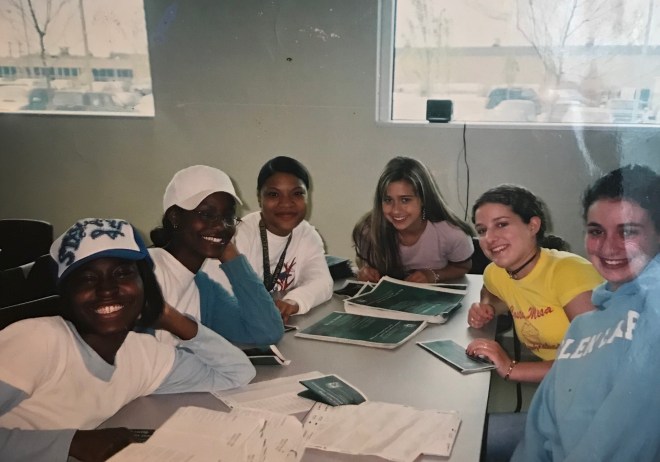
In my early teens, fifteen-sixteen-ish, my brother spray-painted hats and t-shirts for the neighborhood. He did stuff like this all the time because he’s an amazing artist. He even designed clothing for the entire cheerleading team. Anywho, my brother spray-painted my and my sisters’ and cousin hats to match our shirts. That’s how I got into wearing hats that summer. Eventually, my sisters and cousin let go of the hat thing, but I would still wear mine even at school. My twin thought I looked like a boy, but I wasn’t a tomboy. I just liked the hat.
My High School Pen Pal Program. Me in front, rocking my spray-painted hat and a blue long-sleeve underneath my short sleeve because I was cold, lol.
Saying no is also about not denying a part of yourself because of what other people think.
This means knowing ourselves well enough to know what we want and don’t want.
Sometimes, we accept things we don’t like, things that are not inherently us, and things we are not comfortable with because we don’t know ourselves, and that’s another discussion altogether.
It can be hard to show up when you are naturally more laid back and reserved, but I challenge you to push yourself. The best way to get used to doing something is to get out there and do it, and the more you do that thing, the easier it’ll be.
And being an introvert doesn’t necessarily mean that you are shy, although many shy people are introverted.
I took an online quiz before posting this. My results say I am an introvert (not surprised) with the following traits:
You crave alone time. Having time to think, private space, and quiet time helps you feel rested and whole.
People can drain you. Even the most well-meaning people can pull a lot out of you. You can absolutely do social situations; they just take a lot of energy.
When socializing, you like to observe before partaking. You like to think before you speak and have one-on-one conversations rather than speaking in groups.
“Our deepest fear is not that we are inadequate. Our deepest fear is that we are powerful beyond measure. It is our light, not our darkness that most frightens us. We ask ourselves, ‘Who am I to be brilliant, gorgeous, talented, fabulous?’ Actually, who are you not to be? Your playing small does not serve the world. There is nothing enlightened about shrinking so that other people won’t feel insecure around you. We are all meant to shine, as children do. It’s not just in some of us; it’s in everyone. And as we let our own light shine, we unconsciously give other people permission to do the same. As we are liberated from our own fear, our presence automatically liberates others.”






















 The PBS Blog