How Your Books Are Presented Matters Too – Tools You Can Use

Whitebackground

After posting my EC Quote Friday a thought struck me: “It’s not just book cover design, but even how your books are presented makes a big difference.” Here’s what I mean:

You’ve poured everything but the breath of life into your work. You’ve gotten it edited, formatted, converted, typesetting is tight, book cover is banging, everything. But what about presenting your book to the world? What about posting it online, presenting quotes, sample chapters, and all of that good stuff? Because I’m a person who strives for excellence, it can take me hours to produce just the right photo to post online. It can take me days to produce just the right image to parade up and down your social walls and timelines. Everything about writing to me, from penciling my soul into a blank piece of paper, to showing off my book cover requires the very best that I can give even if it doesn’t produce the result I want. At least then I can say that not only did I try, but I did and I did to the very best of my ability. Sometimes our books are not attractive to potential readers because we don’t take the time to put in the work that is necessary to produce our absolute best. Even sample chapters and excerpts should be presented a certain way. If you understand people, you know that we are, for the most part, lazy. A picture of a whole bunch of words on a screen is not exciting (Remember, less is always more). No, I’m not going to read your IG chapter post of 100 words screenshot from your smart phone. Boring. Below are some exclusive tips on how to increase your books online visibility by making sure the book looks as good as the writing:

  • Book Cover Design

So the most obvious thing here is to ensure you really do have an attractive book cover. If there is nothing else that you pay for in the publishing process, make sure it’s editing and book cover design. These are probably the two most important investments you’ll make. Not the only, but the most important. Plus, book cover reveals are fun!

  • Photoshop

Go to YouTube and learn how to use Photoshop to add special effects to those photos. No, seriously. I learned how to use Photoshop watching How To videos on YouTube. If I can learn, so can you. Then, go online and purchase Photoshop. This is probably your 3rd most important investment. OK well, maybe your fourth but you get the point. You don’t have to get the fancy versions either. I pay $10 a month to produce most of the images you see me posting, including the ones on this blog. Not bad for lunch money.

  • Subscribe

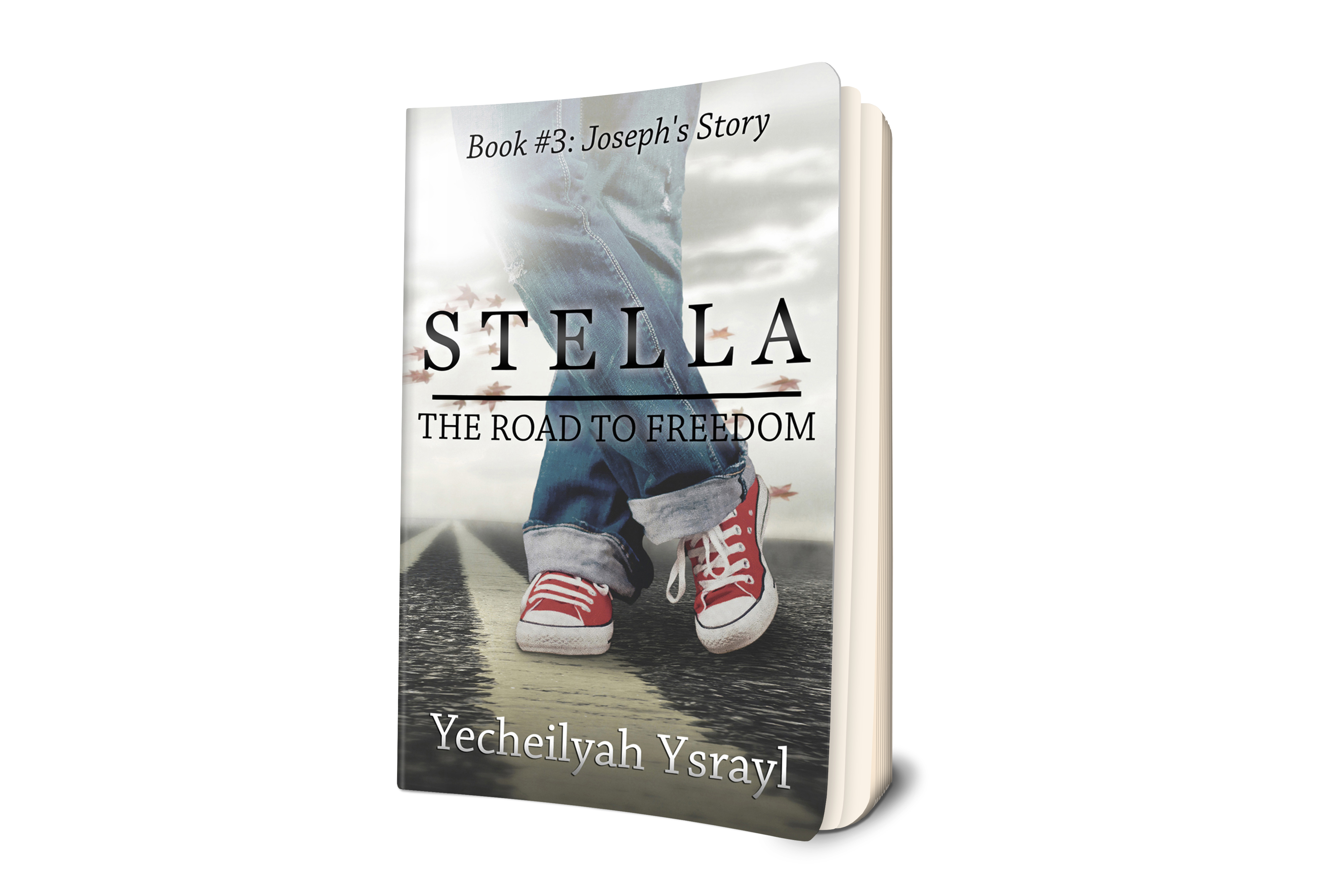
Subscribe to free mock-ups sites! What I love about technology is that you don’t have to be a professional photographer anymore. I do not, at this time, have a fancy camera. I want one but wants and needs are two different things. I’ll get one eventually. Until then, Book Mock-Ups are my best friends, especially when I find those people who are giving away free Book Mock-Ups. One person I absolutely love is Mark from Covervault. His book mock-ups are free and he always has freebies for those subscribed to his list. He also offers paid book mock-ups that are also off the chain. Because he does such excellent work, I would recommend supporting his paid mock-ups as well because he gives away so much for free. I would caution that in the editing phase, edit the mock-ups so that they’re original and uniquely you. One thing about Book Cover Designs and Mock-Ups is that, if they’re free it means lots of people are using them. To avoid having book twins, edit the mock-ups so they have your special signature. They’re editable so you don’t have to use the exact same format. However, Book Cover Mock-Ups is just a fraction of it. Subscribe to all kinds of mock-ups! Coffee, Computer, go crazy with it.

Photo Editing Websites

Don’t stop at Photoshop! Also look into photo editing websites. I like to combine more than one element to produce the best unique quality. Some you can explore are:

Remember, everything about your book, from the writing, to the editing, to the book cover design all the way down to how your baby is presented online, it all matters and shows readers the level of effort you are willing (or not willing) to put into your work.

bitmoji1214448419
This is harder in heels

Just Write the Damn Book Already #MayChallengeDay23-24

best-tips-for-writing-a-resume5-1448283080

I really debated on whether to publish this or not. I definitely wanted to, but I was not sure I wanted to hear anything else about book publishing, let alone you. Of course, this is what I do so that boat has sailed for me. I opened my email this morning and there was confirmation that I needed to indeed hit this publish button on this. In that email was this quote:

“Book writing tip: For every 1 hour you spend marketing your book, spend 100 hours writing something worthy of being marketed.” —Jon Acuff

The secret is this: Good books market themselves.

I didn’t have a plan for The Stella Trilogy. I’m not saying you shouldn’t, you definitely should. But to be honest, I didn’t! And yet, these books have turned out to sell more and to be my greatest work to date (far as reader interest is concerned). Sure, I could use more  reviews, but the big picture is that I did it and in my humble opinion, it has been successful so far. Not by way of numbers. I didn’t make Amazon’s #1 spot (I made #17 though!) let alone NYT. What I did however is make an impact on peoples lives. Don’t get it twisted, I’ve worked very hard (your not getting off that easy!), but almost everyday there’s a testimony from a reader about how the books changed them. One European woman messaged me to say that before reading Stella she didn’t know what the NAACP was (National Association for the Advancement of Colored People). The young woman doesn’t live in the United States by the way so before you judge understand that whats prevalent over here isn’t in other places. The point is that the books have touched people and that’s what has made it succeed. Though I didn’t have much of a plan, the books are genuinely good stories so they market themselves.

Everyone has an opinion on what you should be doing. Funny thing is that most of what you read about Self-Publishing is not entirely the case, no longer accurate, or just completely untrue. Advice itself is subjective. Personal. It “could” be true or maybe its not. Maybe the moon is really made of cheese.

The Industry is changing faster than you can finish writing one book, let alone several. By the time you finish that book, chances are the research you did will have a different face to it. What works for one author may never work for another. Interestingly enough, this means we really only have our experiences and expert opinions which is a fancy word for “I tried this and it worked. Maybe it will work or you too”. Like I said, there’s LOTS of advice out there, and while some of it is awesome, at the end of the day you have to write a good book. What I love about Self-Publishing is that with each new project I learn something new. This year, I am learning the value of writing a great book. Whether marketing, promotion, or whether or not there are green men on mars, at the end of it all I need a story that will keep readers reading AND keep them talking about it. (Maybe the men aren’t green. Maybe they’re grey. Or maybe they have skin suits).

Authors across the board, Indie or Traditional, simply must produce engaging content. When I review a book I read, for instance, its as if I’m a reader because I am. Meaning I’m not a grammatical geek with glasses on the tip of my nose saying a series of “Ah ha”, “Hmmms” and “Isn’t that Interesting?” I’m just a reader looking for a good story. I’ll leave the editing (OK so maybe you do have one too many sentence fragments) to the editor. For me? I just want to enjoy what I read and you know what? This is the mind of the reader as well. The sob story for Self-Publishing is not Self-Publishing. The sob story is that people are not writing good stories. It (SP) got its stigmas because with the increase in technology, people became so fascinated with the idea of book publishing than producing a good book. Everyone wanted to know what it felt like to hold a book in their hands that they wrote. Everyone forgot that writing is still a skill and we had people to enter this industry who never knew how to write but saw On Demand Publishing as an opportunity to publish a book. This can’t happen in other fields. You can’t walk into a doctors office and start to diagnose people. You don’t have the skill.

Indie Publishing is the IT thing right now. All of the cool kids are doing it but writers are driving themselves crazy with all the information out there. “What should I do?” “What should I not do?” “What’s fact?” “What’s fiction?” “Should I outline?” “Should I not?” “Should I promote this way or that way?” “Should I pay?” “Should I not pay?” “Am I doing it wrong?” Just write the damn book already!

7 Lessons I Wish Someone Had Taught Me Before I Started Writing

“If you try and learn everything in one go, you end up not learn a thing.” Love these lessons! Check it out.

Sacha Black's avatarSacha Black

lessons learntWhen I first started writing, I was worse than a kid in a toy store. I wanted it ALL…NOW. I was desperate to be ‘good’ at writing. I didn’t want to just ‘be’ a writer, I wanted to Stephen King that shit.

I was deluded. Not because of my dream, but because I was unconsciously incompetent!

I didn’t know what I didn’t know. Which frankly, at that point, was less than fuck all. So I set about rampaging my way through everything that had even the faintest whiff of ‘writing tips’ attached to it.

The problem was, I got overwhelmed, saturated with conflicting advice and utterly bewildered as to which direction to go in. I didn’t know what to learn or how to learn it.

I realised there was no avoiding the fact it really does just take time to develop your writing muscle. However… along the way, I also picked up some pretty nifty tricks that…

View original post 1,116 more words

What’s So Special About You?

1-1254760156mOJO

Lately, I’ve been asking myself, “What is the benefit of subscribing to your blog/email list?” The answer to this question loomed over me and really got me thinking. “Is there a benefit?” What is it that I’m offering that makes subscribing to my email list or blog such a big deal? What is it about it that will make readers feel, well, special?

I was happy to discover this article: 7 Emails You Should Send Your Subscribers (But Probably Don’t). While advice is always “take it or leave it”, Will makes some great points. For instance, in this post he explains the kind of content you should include in your email newsletter. One set of questions I zoomed in on that really convicted me and got me to thinking was this one:

What sets apart all those bloggers who can rapidly build an insanely engaged audience from those who have to beg and plead just to get a handful of shares?”

This question convicted me because I’ve been thinking a lot about the content of this blog. I noticed that often bloggers receive the same support over and over again. The same five or ten people who like and comment on every post. While this is most excellent, I became concerned about the direction of this blog and whether or not I was reaching you. While I don’t intend on reaching everyone, it became a deep concern that the people who were once interested in my blog no longer were. So I thought, could it be content? But my content has not changed. Will went further with his questioning:

What sets apart all those bloggers who can rapidly build an insanely engaged audience from those who have to beg and plead just to get a handful of shares? Is the answer really just “great content?” Content is important, but plenty of bloggers put just as much time, energy and care into their content as those in the top tier, only to experience 10% of the results.

Exactly! Someone finally said it. For the record, I’m not in the business of begging, but Will’s questions did trigger something and I’m excited it did. I have long wondered if content alone was the key to a successful blog (I use successful loosely sense it is so dependent on your own definition of success).  Now, as a blogger content is something we hear a lot. But, is blogging just about content? Or is there something else that is needed to keep an audience? Well, I kept reading:

So what do the big guys have that the little ones don’t? They have a relationship with their audience.

Ahhh. There it is. The relationship. Blogging is not just about content, it is also about the relationship! This is why I have also created an email Newsletter because its more personal. Like Will, even though I know the author is speaking to a large group, getting a personal email still makes me feel special as a subscriber. Even though my blog posts are sent directly to the emails of those who follow me (via email) an email list is still more personal and, contrary to popular belief, not old fashioned. A study by McKinsey revealed that, “E-mail remains a significantly more effective way to acquire customers than social media — nearly 40 times that of Facebook and Twitter combined.” But now I had more questions. This time about Newsletters:“Is there a huge benefit to subscribing to my email newsletter?” One thing that got my confidence up is a point Will made in this article. He said to be more personal in your email list. Instead of sending links of your recently blogged post, talk to us as if we are sitting at the computer/tablet/phone reading you. This got my confidence up because it is something I’ve always done. I never just list my accomplishments and upcoming events in my email newsletter. This can be boring. Readers can follow my updates just by being on my Social Media so again,“What makes subscribing to my newsletter so special?” If someone follows my blog and social networks, why should they also follow my email list? Some people include links to their recent blog posts in their email newsletters. I do not. It doesn’t make much sense to me. I don’t really get how that can be productive when I already have followers of my blog who get the latest post in their email. You mean I should also send them additional emails with links to my recent blog posts? Is that an email newsletter or just another blog? I didn’t know, but I kept reading because I’m not blog perfect and there is still so much I need to learn. As I read on, I discovered that Will makes another great point. An alternative to providing the link in your newsletter to your recent blog post:

…. too few bloggers consider the pros and cons of each approach before making a decision. They just send a link to their posts because that’s what everyone else seems to do.

This stood out to me. It stood out to me because according to my own personal experience as well as research on clicks in a post, people do not use them much. They may click on a link once but that’s pretty much it with only a few (and I do mean a few, like probably just three of your best friends) exceptions. This means that the chances of someone clicking on multiple  links in your newsletter or blog post to go to additional sites are slim. This is one of the reasons I don’t like posting links in my blog post of other sites without some explanation of what the link is about. I don’t want you to miss out on the info just because you didn’t feel like clicking the link. Like now, at least you have some insight into Will’s article even if you didn’t click on it! (It is however, important to know that while people may not be interested in clicking links, that doesn’t have anything to do with the success or failure of the post. That’s right, we don’t care. What readers care most about is ease of navigation. Though we may not want to click on, it won’t affect us coming around unless your blog is extremely difficult to navigate. In fact, readers are probably not even thinking about clicks until you said something. The 3-Click rule is outdated. Kind of. Yes people don’t want to click on lots of links, but the number doesn’t have anything to do with it. Today its about ease of convenience. You can have one or five links and most people won’t bother to click them period, which I discovered by measuring how many opens my emails get verses clicks on any links in the actual email. There are always more opens of the email than clicks on links in the email. Common sense thus told me its better to say everything in the body of the email instead of having people follow a link). Another point to remember about just including project updates and advertisements / announcements in your email newsletter is this:

Just think about how rare and uncommon it is to receive an email that asks nothing of you. Its sole purpose is to educate, inspire, and help you.

Isn’t that the type of mailing list you’ll tell others about? Isn’t it the kind of list that survives the occasional inbox purging when you get tired of all the emails you’re receiving? Isn’t it the kind of list whose owner you’ll tend to trust?

This is why I try to keep my advertisement to a minimum. As I’ve stated before, I do think too much promotion is something that exist because it lacks the balance of the other components that can make it work. I thought also about the email lists of others I am subscribed to and how much I really enjoy the ones that offer me guidance, such as author tips and article links, without always asking me to purchase or donate something. These are the kinds of email list and blogs I want to follow, the ones that inspire and inform in addition to whatever else is being offered. But still, there is so much Will spoke about that I would like to improve on in relation to my blog and email list and it all begins with the question: “What’s so special about you?”

Remember to Breathe

african-american-woman-jogging-Dec14

I’m excited to say that I started my workout again! Its been soo long and you know once you stop its extremely hard to start back up again. I’m hoping to possess enough endurance to make it a permanent part of my routine, if not everyday at least a few days a week. I really do not want to stop again, picking it back up is the worst! So anyway, about breathing.

OK so you know how when you’re exercising you get tired really fast? One thing I’ve noticed that helps me, and maybe it will help you too, is to always remember to breathe. It sounds simple but you’ll be amazed how we forget this when caught up in the moment. You see, when I get overwhelmed with a routine its mostly because I need to catch my breath. I know some of you may be thinking, “But I do breathe!” No, not like that. When I say breathe I mean breath out. Exhale and get a rhythm going. Instead of breathing regularly and trying to catch your breath, breathe to the beat. When I exhale at the end of the beat, letting all of the air out of my abs, I find myself being able to endure much longer than when I breathe normally. And by normal I mean without control. Controlling my breathing was the difference between doing twenty minutes yesterday and thirty minutes today.

5 Common Writing Mistakes That Make You Look Like An Amateur

Check out these 5 common writing mistakes! I’m so guilty of #3! Thanks to one of my dear review buddies, I was made aware of this and am now able to watch carefully of jumping into people’s heads. I mean, how does Sally know what John was thinking? lol

Check it Out Here: http://www.justinmclachlan.com/804/common-writing-mistakes/

Curiouser Editors 20 Fresh Social Media Tips for Authors

Check Out Curiouser Editors Excellent Social Media Tips! I just used one for my IG bio. Emojis does make it look way cooler lol.

  1. Pin posts to Twitter, your Facebook page, and your Facebook group (you do have your own Facebook group, right? Because I’ve only been preaching about this for a million years, give or take). Ensure the pinned post has some type of opt-in for a freebie so they’ll subscribe to your emails. If you’re pinning a post, then it should tell them to do something that somehow benefits you and them.

  2. Add emojis to your Instagram bio to catch attention. I like to use the pointing finger right above my freebie opt-in so that it’s the first thing they’re directed to. Use emojis in your posts too!

  3. Update your LinkedIn title with stronger keywords. Your title shouldn’t say, “Jane Doe, Author.” It should say, “Jane Doe, Romance Author of [Title], Part-Time Nurse, Full-Time Mother, Oil Painter.” For example, mine says, “President of Curiouser Editing, Author of the Pre-Publishing Checklist, Editor, Writer, and Coach.” If you need more help with LinkedIn, I highly recommend The Ultimate Guide to LinkedIn for Business.

  4. Like as many Instagram photos as you can under relevant hashtags (#bookstagram, #bookish, #indieauthor, #writercommunity, #writerlife, #bibliophile, #amwriting, #amreading) to gain more followers. I like to time myself for ten minutes so that I’m not spending a ton of time on it, but I’m still seeing results.

  5. Use the WordSwag app to create visually appealing photos with text for Instagram (or Twitter/Facebook). Foundr Magazine swears by this in their freebie PDF, How to Get Your First 10,000 Instagram Followers.

  6. Buy the Followers + for Instagram app to keep track of your stats as well as discover who’s unfollowing you. This is very helpful if you suddenly lose an influx of followers—why did they unfollow you? Too many posts? Ugly photos? Irrelevant photos? If you’re an author who writes paranormal novels, then posting about politics 24/7 might turn them off.

  7. Add a Hello Bar to your website. You can use this for email subscription, to announce your book’s release, or to advertise a course.  

  8. Add your blog subscription opt-in to your Facebook page. You’d be surprised how many people forget to do this.

  9. Ask questions on Facebook and Instagram for better engagement. Every time I ask a question, I get a couple dozen comments on Instagram, sometimes a few dozen. Make sure that it pertains to writing or publishing in some way.

  10. Try live streaming on Facebook to interact with your readers.

  11. Add images to your tweets to get more retweets.

  12. Try using Facebook’s carousel option to promote your book.

  13. Repost, repost, repost. Not everyone will see that you posted your book’s 99¢ sale.

  14. Tag people you talk about in your post. Tweeting a Medium article from Positive Writer about free Createspace books? That’s three tags right there: @Medium, @ADDerWorld, @Createspace. Posting an Instagram photo of three books you’re reading? Tag the authors. Posting the link to your blog on your Facebook page where you mention different writerly websites? Tag them.

  15. Add a location to Instagram posts. For example, if you’re at Barnes & Noble in Dallas, add that as a location.

  16. Add a cover photo to your Twitter account that shows off your book specifically. I’m a huge fan of The Thatchery’s cover photos, so consider hiring someone to make you one that you can use on Twitter, LinkedIn, and Facebook. Check them out here.

  17. Reply to every single person who follows you and thank them for the follow. I’ve found that this works better than sending them a direct message, as it comes off kind of spammy. Also, in your tweet, don’t be afraid to tell them about your book and engage them in conversation.

  18. Connect with authors in your field by using the Advanced Search option on LinkedIn. For example, if author Damien Taylor wanted to find more fantasy authors, all he has to do is type in “fantasy author” in his keyword advanced search to connect with them.

  19. Post at the right times, please. All it takes is a little bit of research. According to Buzzsumo’s article on Facebook engagement, posts published between 10:00 p.m. and midnight get the most engagement. I’ve also noticed that 2:00 p.m. is a great time to post on Facebook and Instagram, while author Damien Taylor has seen some serious engagement at 3:00 a.m. Wow!

  20. Directly embed videos to your Facebook page rather than posting your YouTube link. It gets better engagement. < I have also down this one in the past. She’s right, and it looks better too.