Be mindful of how you make people feel because that is what they remember most. Whenever sharing negative experiences be sure there is a lesson to be learned or something to be taught from it. Make sure there is something that you can give back as a result of having shared it. Remember that energy you feed gets stronger. If you feed vengeance, complaints, hatred, and strife, these emotions will get stronger and you will unknowingly begin to project these feelings on others and the feelings you don’t feed like love, compassion, forgiveness, and encouragement get choked out.
Listen to Be Mindful of Negative Feelings now on Soundcloud for more and be sure to subscribe for notification of new episodes.
With the success of the Black Panther movie based on the super-hero comic, I am re-posting this Black History Fun Fact from two years ago based on real-life super-heroes for those of you new to this blog (or who missed it the first time around). To understand our present, we must understand our past so that in the future we do not make the same mistakes. The Black Panther Organization actually did more community-outreach than they did protest. The protest is what we saw the most on television however it is not the bulk of their work. They were not a hate group, they were not supremacists and they were not a “black only” group. The Panthers promoted ALL POWER to ALL PEOPLE with an organization comprised of many nationalities of people.
Has history been accurate in its portrayal of the group affectionately known as The Panthers?
In Whitewashing the Black Panthers, Michael Moynihan argues that PBS’s documentary The Black Panthers: Vanguard for The Revolution, tries to excuse a “murderous and totalitarian cult” saying, “Almost anything that reflects poorly on the Panthers is ignored or dismissed and no critics of the party are included. The story is told entirely through the testimony of former Panthers and sympathetic historians.”
(Umm, so is every European, Western focused story ever made, but we won’t go there).
Often portrayed as a militant, black supremacists hate group, it’s amazing to me that this group of people wrote a ten-point program outlining the details of their belief system and there are still misconceptions about who they were and what they stood for.
For the record, I did not set out to write about The Panthers based on Michael’s article (I came across it much later), or because of the documentary. After doing some reading I decided today’s Black History Fun Fact Friday will focus on three basic principles that everyone should by now, understand about The Panthers. But first, we must cover some additional facts.
The Freedom Movement has always been portrayed as a southern only movement on television and even in some books. Mississippi, Alabama, and Georgia are states where trees no doubt bore the remnants of strange fruit. We could see it on the news, the newspapers, and from the mouths of relatives who grew up there. If we didn’t see it, the whole world did when Chicago native Emmett Till went down south and never came back and the whole world saw the ugly face of America. At that time, I am sure, we all had the same consensus on our hearts (among other things): “If only he would have stayed home, this would not have happened.”
This is because seldom did we then, and even today, hear about the racism and discrimination that took place in Northern cities like New York, Chicago, and California. Many blacks, no doubt, escaped the southern states for better opportunities in the North. Still, even this part of history is only a half-truth as not all blacks left because they did not have.
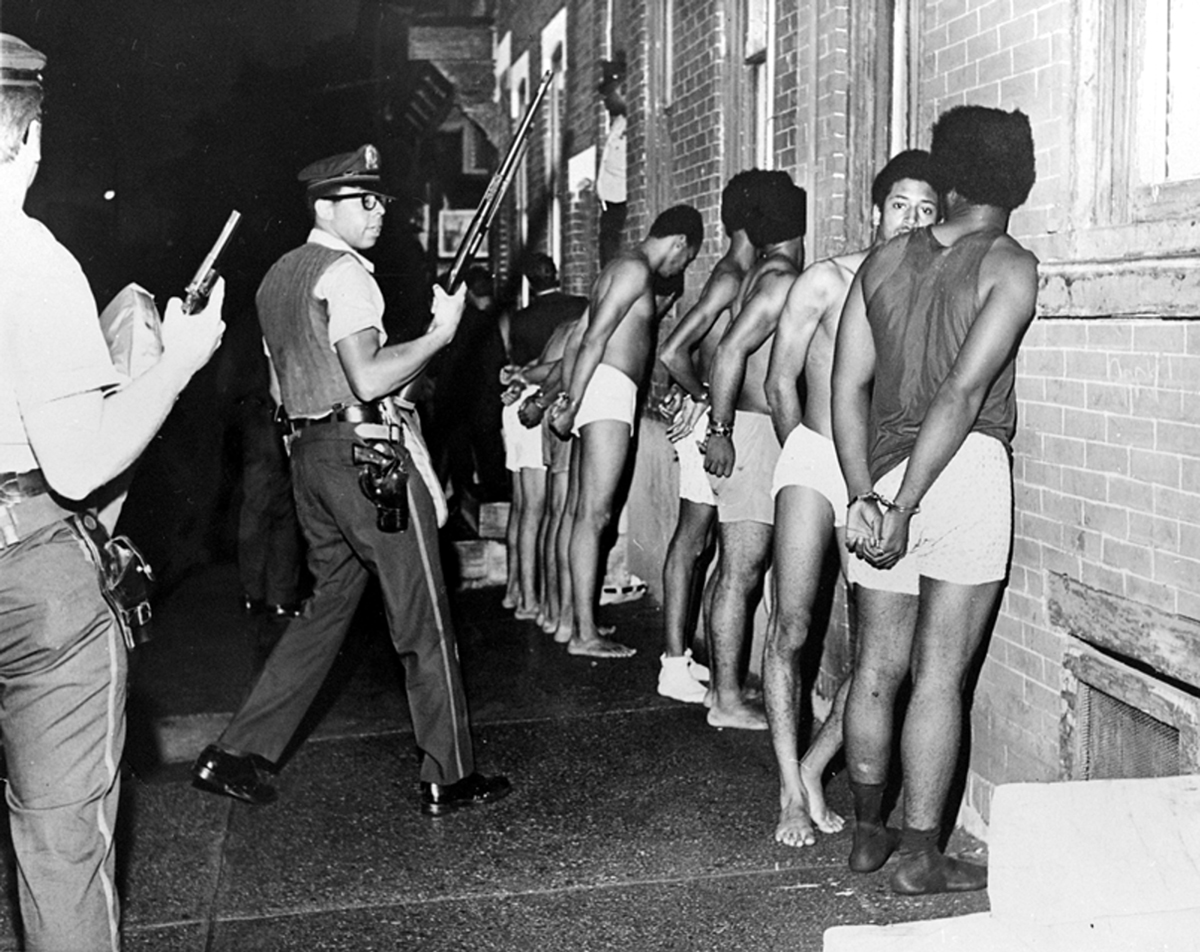
There were many African American’s who, after slavery, suffered tremendously economically but not all of them. Not every black family had to sharecrop or endure poverty. On the contrary, many families started their own businesses, educated their own people, and founded their own communities. From the Mound Bayou in Mississippi, Blackdom of New Mexico, or the famed Black Wall Street in Tulsa it is clear, not all blacks were financially incapacitated. For this, it is only a half-truth that blacks escaped the south for a better financial and economic opportunity in the North and it is only a half-truth that they all left to escape Jim Crow. In truth, many of us sold what we did have to flee North because we were told (both by whites and black elites) that it was better. Many blacks were told that the North was the land of “Milk and Honey” so we sold our land, packed up our families, and left the Jim Crow South only to run into the police brutality of the North.
Martin Luther King, Jr., is hit in the head with a brick Marching in an all white Chicago neighborhood
It was Martin Luther King Jr., who said his trip to Chicago’s segregated Cicero was worse than Alabama and Mississippi. “I have never seen, even in Mississippi and Alabama, mobs as hateful as I’ve seen here in Chicago,” King told reporters. That statement is saying a lot considering what we know about the brutality of these states and had I not been born and raised in the city (Chicago), I’d doubt King’s words were true. But as I was born in Chicago and spent the first nine years of my life in the concentrated poverty-stricken projects of The Robert Taylor Homes on Federal Street, the most segregated and poorest urban city in the United States at the time, I can tell you that what King said was no exaggeration.
The truth is that while many segregationist laws were abolished in the South, poverty increased in the North. Black unemployment was higher in 1966 than in 1954, 32% of Black people were living below the poverty line, 71% of the poor living in metropolitan areas were Black, and by 1968, two-thirds of the Black population lived in ghettos, or impoverished communities, also known as slums. And so, it was for this hushed truth concerning the brutality of northern cities that two young men from Oakland California founded what would one day become the most hated black revolutionary organization of its time.
Founded in 1966 by Huey Newton and Bobby Seale in Oakland California, The Panthers took notice of the police brutality taking place in their own lives and the lives of members of the black community. They saw black men, and women, being beaten (some of them to their deaths) and nothing being done about it. They saw children who were malnourished because they didn’t have food at home and families denied access to proper medical care and education. Having met at The Meritt Junior College and is active in political movements there, Seale and Newton came together to form the Panthers. Following the passion of men like Malcolm X, and Stokely Carmichael, who were against the passive resistance movements of men like King, Newton, and Seale set out to be examples of what they saw was needed.
This leads me to three basic truths concerning why The Black Panthers were started and while I am not a black panther or black nationalist enthusiast (nor do I agree with their beliefs), I thought this would be a great way to re-introduce to you what this organization was initially built on and the things that they did that rarely made, and rarely make, the news:
Community Protection
One of the first reasons for the organizing of this group was to assist in the protection of members of the black community. Specifically, the Panthers wanted to protect blacks from police brutality, whether it was helping the elderly across the street, being human traffic signals, or standing between police and civilians to ensure the laws of California, of the time, were being adhered to. Being students of history and discipline, The Panthers were aware of the laws governing where they lived and they made sure both civilians and the police understood those laws and acted accordingly. Bobby Seale recounts, in Seize The Time: The Story of the Black Panther Party:
“He (Huey) defended himself in court and had beaten a petty theft case, and he was running it down how he got Olsen. Olsen was the dean of Merritt College. Dean Olsen had got up on the stand and testified to the fact that he had called the police in to have Huey P. Newton arrested, and had the police bring Huey to his office because some paddy boy over in the store had accused Huey of stealing a book. Huey explained to me that Olsen had asked him if those were his books. Huey said:
“Yes, this is my property.”
Olsen: “Well, I’ll just keep these books.”
Huey: “No, you won’t keep those books. That’s my property and I’ll keep them myself. You called me in the office for something. I don’t know what you want me for, but I’ll keep my property.” And Huey snatched the books back out of his hand and said, “If you want to arrest me, you’ll have to arrest me, but I’m not going to stand here talking.” And he walked right on out of the office. So, the same thing came up on the stand, and Huey asked Olsen on the stand, “Dean Olsen, why didn’t you have me placed under arrest if you thought I had stolen the books?”
Olsen: “Well, at that time, I just didn’t know my rights as to whether or not I had the right to arrest you.”
Huey: “Mr. Olsen, you’re a dean at a college; have a Ph.D. in education. Here I am a student in the college, learning my rights, and you’ve got a Ph.D., and you tell me you didn’t know your rights?”
(Caution. I post this excerpt as an example that The Panthers were aware of the laws of their state, not for anyone to mimic. With the number of black men gunned down for nothing, I do not advocate for anyone to try this at home. This was in 1966, this is 2016. I would not want anyone to be hurt for trying to mimic the actions of Huey as stated above. It’s important to obey the governing authorities, diffusing the situation if it is at all in your power to do so).
Free Breakfast Program and Medical Care
In 1966, students were not given free lunch as they are given today. Part of that revolution was due to the free breakfast program set in place by The Panthers where they fed children who would otherwise not have anything to eat. The Panthers had a lot to do with why the Public schools offer free lunches to students today. In addition, they implemented their own schools and system of medical care. The Panthers were, in short, of service to their community for no one knows the trouble we see and no one knows our sorrows. Preaching can only go so far, for if a man is hungry physically he won’t hear you spiritually. There must be physical action to accompany the spiritual and that is what The Panthers instilled in their communities: Physical and practical action.
All Power to All People
I do not want this article to be too long as I believe I’ve said enough, but I don’t want to leave without reiterating that despite all the black, The Panthers were not a black-only organization. Having recruited members of all nations they recounted repeatedly that they stood for restoring “All power, to all people”. In fact, they were separate from the black nationalist groups often associated with them and conflicted often with them. In his own words, Bobby Seale states:
“Cultural nationalists and Black Panthers are in conflict in many areas. Basically, cultural nationalism sees the white man as the oppressor and makes no distinction between racist whites and non-racist whites, as the Panthers do…Although the Black Panther Party believes in Black nationalism and Black culture, it does not believe that either will lead to Black liberation or the overthrow of the capitalist system and are therefore ineffective.”
– Bobby Seale
The truth is indeed stranger than fiction and for that most conscious grassroots organizations are deemed cults and militant to prevent, what Cointel pro deems, “the rise of a black messiah.” The Black Panthers were seeking to empower black people and that in itself is dangerous, for in the words of the poet Brook Yung, “They used to put to death people like me.”
Finances are a big deal when it comes to Indie Book Publishing. For those who want to do it right, it pays in more ways than one to have a budget for every book you intend to publish. Check out this article from Angela Ford on ways to break it down and later, I’ll publish a separate post on how I break down the costs for my very own books. Until then, enjoy:
“Can you afford to be an indie author? As independent authors, we have to be aware of the way cost plays into self-publishing. Cost can mean the difference between turning book publishing into a business versus having a very expensive hobby. The question is, how much is too much? When do you know if your books are bringing in a positive return on investment?” – Angela J. Ford
Keep reading through to the original article here.
The PBS Blog Podcast is now available on Itunes. Click Here.
Inspired by Maya Angelou who said that love liberates, today’s podcast speaks about how freeing it is when you know yourself enough to love yourself and to be yourself. In this, you are not just liberated from your own personal demons but also the negativity around you as well.
Listen to Love Liberates and be sure to subscribe for notification of new episodes.
For some reason the track is not showing up in the player. You’ll have to CLICK HERE.
Also I’d like to thank everyone who have been actually clicking on the links and listening. Thank you.
I am finally settled and have some much needed catching up to do. I don’t even want to look at my TBR pile but reviews will start trickling in here again pretty soon.
Instead of having to search all your wonderful blog posts, I thought I’d open the opportunity for you to share them with me. Help me to catch up with you by sending me your post links. Just comment on this post with a link to your most recent post or the one you’d like me to see. Now, I know Halloween just passed but I don’t do Holidays. I think I should put that on out there. I am not particularly interested in that but anything else you’ve been up to is cool. If you have a new book out, send me the link to that too so I can tweet you out. Just as long as you’re patient, I should be able to touch base with most of you (depending on how many links there are.) Let’s have some fun.
I look forward to seeing what you all have been up to in this crazy world we live in. Chat soon.
Peace
-EC
Yecheilyah (e-see-lee-yah) is an Author, Blogger, and Poet of nine published works including her soon-to-be released short inspirational guide “Keep Yourself Full.” Learn more by exploring Yecheilyah’s writing on this blog and her website at yecheilyahysrayl.com. Renaissance: The Nora White Story (Book One) is her latest novel and is available now on Amazon.com.
What a pleasant surprise. Just found out this blog is listed on Reedsy’s Best Book Review Blogs of 2017. Neat. ☺
Important:
If you would like me to consider reviewing your book, please register your book through my Book Review Registry HERE. I do not accept unsolicited submissions.
(I always use a disclaimer at the front end of any review to books in which I have not bought / given as gifts. Bought books that show as reviewed on this blog, of course, does not have the disclaimer and does not count toward the ‘unsolicited submission’. I know, this is obvious information but you never know.)
Failure to register will automatically disqualify you from consideration. You must register your book if you want me to consider reviewing it. Emailing me your book does not count.
“It’s not just because she reviewed my novelette, All Good Stories, and gave it 5 stars, I’m writing about her because she gives great (and helpful) reviews. In a market, so full, it’s hard to choose what to read, isn’t it? We really need reviews these days that go beyond the minimalistic, “I liked it,” to know what we’re investing our money in. Because money doesn’t grow on trees. Neither do books anymore, for that matter.”
(To support the authors featured on this blog (or those who have been featured in my email), go to my Indie Author page here. All reviewed books are listed there. Introduce Yourself Interview Authors will be listed soon.)
There are 50 questions to choose from. MIX THEM UP and remember that they do not have to be in order. (..because I’m gonna like, mix them up anyway)
When asked what skill you WOULD LIKE to master, be creative. For instance, I would love to learn to play the piano. Stuff like that. (I really would like to learn to play the piano)
Do put some thought into your answers. Give us something interesting and write in complete, detailed sentences. Remember that you’re a storyteller so showcase your personality. I had the opportunity of being interviewed by Best Selling author Dan Alatorre recently. If you are unfamiliar with how text interviews are structured, you can check it outHERE for an example of the format.
RESPOND TO COMMENTS. As a guest on this blog you are only going to get out of it what you put in. Be sure to check back in for comments and questions left for you on the page. When leaving a comment, check the “notify me of new comments” box. It will subscribe you to the comment thread. You’ll get an email every time a new comment comes in. (You can unsubscribe from the thread at any time if it gets overwhelming.)
Share Your Post. Re-blog, pingback, or post it to your blog however fits you and share it on social media. (I think re-blogging is best but any kind of sharing is appreciated.) Again, you are only going to get out of this what you put into it. I can only do so much. (*rewind*) I CAN ONLY DO SO MUCH. Be sure to look out for my emails with the post link BUT DON’T DEPEND ON IT ENTIRELY. Be sure to FOLLOW THIS BLOG and to check in for when your post is published according to the day we have agreed upon. Check in also periodically both on the day of and throughout the week for any commentary left for you on the table. At the end of the day the success of your interview is up to you.
Send high resolution book covers and author photos you’d like me to include in the post. *Send images that belong to you, are of your books or are of you personally*. Google Images or Unsplash images will not be accepted for this feature. We want to see you or your books. I can also not include images if you’d like.
Once you’ve sent your questions in for the interview follow this blog. That will help you to not only see when your interview comes up (aside from me sending you the link) but you can also support the interviews of the other authors.
Support the interviews of other authors. Its not just about you. That said, support the other authors who are featured here. Like and comment on their interviews, share their post, purchase their books if they interest you and follow their blogs. If you support another blogger they may also support you.
What is Introduce Yourself? How can you get involved? New author? Learn more HERE.











 The PBS Blog