Who Are You?

Business man pointing the text: Who are You?

I’ve been gone for a minute and I loved every second of it! Silence is my place of rejuvenation and reflection in a world that never stops talking. If I could, I would never say a word and in that muteness, soak up all the wisdom I could emanating from others. Watching in solitude at their actions, and reading their thoughts. In this time, I’ve had the opportunity to sit back and listen. Listen with my eyes. Watching and reading new year’s resolution posts, plans, goals, and aspirations for the new year.  I’ve seen many authors jump for joy over new projects and ideas, and silently I rejoiced with them. I’ve watched my emails and opened to find those I’m subscribed to talking about how to write better for 2017 and to overall be a better version of your author self. I’ve seen everything pretty much except for one thing and let me begin with a little bit about myself before I tell you what that thing is.

I grew up on the south side of Chicago and spent the first nine years of my life growing up in one of the poorest neighborhoods in the Unites States. I’ve been homeless. I’ve been hungry. I’ve had to wipe myself with newspaper and clothing because there was no tissue. I’ve, at times, had to feed myself by stealing candy bars from Walgreen’s, clothe myself by stealing just the same. I’ve been jumped on so badly I had to get staples in my head. I’ve been hit by a car and had to get staples in my leg. I’ve been hospitalized, psychologized and the list goes on.

I tell you this because people often ask me if this is the reason that I write. While every experience has its influence I am sure, it is not the reason that I write because without the overcoming, the struggle is nothing. I did not start writing because I’ve had a not-so-pleasant life. It is not the life itself, it is what has been drawn from that experience. Human thought, emotion, trial, and triumph. It is as Maya Angelou described as facing evil or the good that comes out of evil. Though the rape she suffered as a child drove her to silence it was what came out of that silence that made the difference. The reading of every book in both the black and white libraries and the memorizing of whole plays.

Who Are You?

While I too have goals and plans for this year, I decided my first post of 2017 won’t be about any of that. Writing is much more than a series of goals, plans, and even passion. It is the purpose. A written monument of who you are and why your contribution to the world is significant.

Purpose. It is a word that’s been thrown around so much that perhaps it lost its flavor, became tasteless. Maybe we’ve underestimated the power of purpose. That drive that compels you to do something not just because you want to do it but because if you don’t do it then others will suffer. As Will Smith once said, it is when you wake up in the mornings and your life means something to someone other than you. It is when you know in your hearts that your work is special, not for yourself alone but special because of how your influence makes people feel. In that if you didn’t exist or if you gave up today then there are people who will suffer.

Who Are You?

I’m not asking about your occupation. You’re not a writer and neither am I. Writing is what we do but it is not who we are. Do not misunderstand me. Who you are drives the writing and thus, it is more important than the writing itself and you will not write until that foundation of self-awareness is solidified, least you crumble under the pen of imitation. Trying to mimic the latest trends, writing what you think a writer should write, and doing what the majority is doing instead of being an individual and doing what the majority are not doing. Before plans and goals, writers need to discover who they are because the energy of who you are and what you put out into the world always comes back to you, drip feeding itself into your relationships and your work.

Who we are drives our writing. Moves it. Pushes it forward. Who you are will dictate what you write and how you write it. Who you are is made up of what you value, what’s important to you. Who you are represent what matters to you. It is that thing that wakes you in the mornings and sends you to the keyboard whether you get paid or not. Who are you? The answer to this question will compel you to push on despite opposition, never allowing your clarity to be fueled by how others respond because trust there will be days. Days where the business of writing will strangle your love for it. Yes, it’s true. You will get tired. You will get overwhelmed, and you will question if you’ve done the right thing, made the right move, or are on the right track. This is when purpose steps in, that thing that far exceeds talent or passion and even skill but reminds you why you do what it is that you do because trust, there are days when you will forget.

Who you are is much deeper than the blank page and your pen will give birth to not a single word until you are first capable of answering this question. Further, the words on the page won’t have a heartbeat until you are first capable of answering this question honestly. For the heart, will determine the direction of your life since out of it is the sources of life. The heart will lead and guide and be there even when we think it is not. The heart is ever present, and yes, even in your writing your heart is there. It speaks and it dictates every single word. It is your purpose for being. Not just for writing, but for being. It is you.

Who you are is important because who you are will always be right. In the words of Maya Angelou, what is right may not be expedient and it may not be profitable but it will save your soul. It is the why in why you write and until you understand exactly what it is (not what you think it is or hope it can be but what it actually is) then writing itself will never make sense.


Yecheilyah Ysrayl is the YA, Historical Fiction author of eight books most notably, The Stella Trilogy, Blogger, and Poet. She is currently working on her next book series “The Nora White Story” about a young black woman writer who dreams of taking part in The Harlem Renaissance movement and her parents struggle to accept their traumatic past in the Jim Crow south. “Renaissance: The Nora White Story (Book One)” is due for release July, 2017. For updates on this project, sneak peeks of other projects, nuggets and tidbits, video tutorials, writing inspiration, and more, be sure to follow this blog and to subscribe to Yecheilyah’s email list HERE.

Race and Rights

Malcolm-X-about-men

When did race and rights become separate entities? Since when has the black problem in America not have to do with both race and rights? Dare you to walk the streets of the 1920s and 40s and 50s with your prophet scented blood and expect to transgress the law of separatist signage. That “Whites Only” sign ain’t there by mistake. The one that says Negroes like you must order from the back door. Yo money may be colored like your skin but green has always been worth more than brown. I don’t like to have to go back to slavery. After all, it ain’t like I lived it and yet I can never forget what it feels like. But since we on the subject of feeling, I’m feeling like the same blood pulsing underneath my ancestor’s skin now pulses through mine so what they felt I feel it too. Perhaps I too was a slave long ago and its just taken me this long to find my voice. So, therefore, let me tell you something about what it means to be a slave. A slave is never granted the same rights as a free man, not a physical slave or a psychological one. An inferior race is never granted the same rights as a superior one. Thus anything that’s got to do with rights has also got to do with race. For the Black problem in America has always been centered around identity and always will be. Rights would have never been a problem if the problem wasn’t race. If the hierarchy of the superior and the less superior didn’t exist. If black people never walked around with bywords and proverbs tattooed on their skins there wouldn’t have been a need for them to watch movies in the Nigger Heaven1 of southern movie theaters. Would have been no need of me taking my seat alongside Miss Parks or Miss Morgan all them years ago. A Black Man’s rights and his race are always connected here, like the careful structure of his bones before he emerges from his mother’s womb. It’s the yearning for freedom written in his DNA. Black America’s rights have always and always will be centered around their identity because their problem is not physical it is spiritual. And because a spiritual problem has been long fought with physical weapons the condition of black people in America continues. And so their fight has always been and always will be centered around their freedom.

1. Nigger heaven, n. a designated place, usually the balcony, where blacks were forced to sit, for example, in an integrated movie theater or church as part of Jim Crow Laws.

They Don’t Know Who They Are

There’s a rumor taking place among African Americans in America. A rumor that has always been there but that is now being echoed from the mouths of others. We heard it first from Raven-Symoné and then Whoopi Goldberg, and now Stacey Dash.

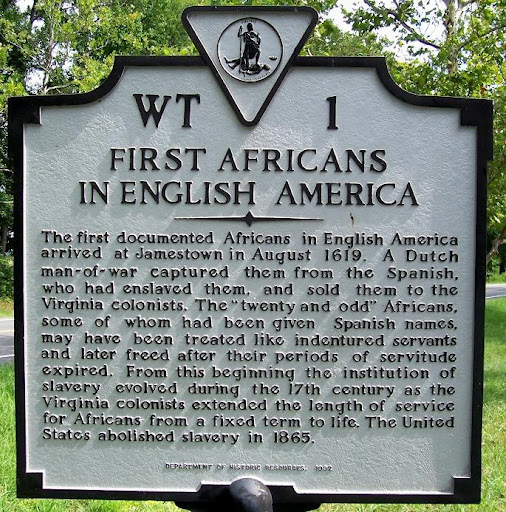
jamestownvasign

Let us start by saying that The United States has been drunk off the blood of the African American for 397 years now–that is from 1619 to the present, when blacks were first brought here in a servitude capacity on the banks of the James River in Jamestown Virginia. Since then blacks have fought in every American war and contributed to every major American architectural structure. Blacks have single handily been the backbone to American wealth and prosperity. Their slave labor is the reason many people are still wealthy today. It is no coincidence that they succeeded in the cotton fields where the Native did not. They were not brought to America by mere chance, but their captors understood their farming history as a people and their capacity to flourish. It is because of this that many African Americans feel that there is no one more American than they. This is when things get weird.

The servant is not invited to the party as a guest. The servant is invited as a servant. His job is not to mingle or even to sit at the masters table. The servant is not prohibited to kick his shoes off, go upstairs and rest. The servant is not there to get comfortable. The servant’s job is to serve. The black man and woman didn’t come to America on a plane. The black man and woman came to America in shackles. We’re not talking about the blacks who arrived here prior to 1619, we’re talking about the blacks who began what is infamously known as The Trans-Atlantic Slave Trade. These blacks, it is clear, have no idea who they are as a people. They have been robbed and spoiled and hidden into prison houses. They have no idea what’s going on around them or in front of them. They are wild bulls in a net and filled with the fury of the Almighty. Mistake it not that they are blessed. Any contribution from them is prosperity. The blood in their veins is still a covenanted one. They sing songs about redemption and have built communities out of nothing.

1619Image

However, at what point has American become synonymous with ethnicity, or rather, nationality? Were not your ancestors considered less than human beings when this country was built? If given the chance do you think the founding fathers would not have signed the constitution in your blood? You cannot align yourself with the Native because he too had you as slaves. Did your rights not have to be amended or added on like a button to a shirt? What to the slave is the 4th of July?

The Mexican American is American. The Canadian American is American. The European American is American. The Irish American is American. All of these people are Americans because they live in America, but when we talk about the nationality, which refers to a country, who are you? Every other people in America can still point in the direction of their natural heritage except the African American in America. This perpetual state of ignorance has caused many of them to settle for being Americans. They don’t know who they are. Just because I help build someone’s house, this does not make it mine.

Author Identity: Urban Fiction

Earlier this week, I had the pleasure of reading a reblog to an original post I had not seen until then. After promptly liking both the reblog, as published by Whitney of Write, Live, and Love and the original as published by Ja’da of quizoticmuses (who I do believe also has a book out on Amazon), I felt compelled to reply in a separate post so that my commentary was not limited to the comments section of her blog. I thought the post served as a great conversation starter, and I do encourage others to tune in if so inclined.

But before throwing in my two cents here’s the original (used with permission):

“As a writer, I have come to understand that in every capacity the term “urban” is synonymous with “Black people.” I don’t want to be an urban fiction writer; I want to be a writer. But I’m Black writing about Black people and not exclusively Black people drama. So I feel like I’m automatically fitted into the urban fiction slot when really, I just want to write fictional stories. Period.

How do I get there?”

There are certain words that, although can be applied to various races of people, pretty much is a reference to black people depending on the context. Words like Urban, and Minority, to name a couple. Specifically, the term “Urban” is no doubt a crafty way of saying “Black” and Urban Fiction then is used to denote black fiction.

What attracted me to the post is that as a person who speaks often concerning the state of Black America, Black history, its ancient origins, slavery, freedom, and as someone who is deeply passionate about writing about Israelites or so-called blacks, for blacks, our history, and culture, I must say my writing has never been deemed Urban Fiction. This revelation caused me to think that maybe the characterization of Urban Fiction is a bit deeper than being a black writer writing about black people in general but that it is also about the style of writing.

Writing Styles

“Style is the way writing is dressed up (or down) to fit the specific context, purpose, or audience. Word choice, sentence fluency, and the writer’s voice — all contribute to the style of a piece of writing.”– Google

As I began to think about my own reading experience with UF, I am hearkened back to books that have a certain tone and feel to it. These books tend to follow a certain writing style. Though they do tend to deal with the internal struggle of the African American experience, it’s the way that these books are written that makes them different. Personally, my characterization of Urban Fiction books is based upon the language, setting, and overall surroundings incorporated into the book.

This led me to consider that, though I do find it is exclusive to the black community, Urban Fiction is a label applied to a certain kind of writing that not everyone can do. Everybody can’t write good Urban Fiction books, especially people who have not lived the life they are creating for their characters. Urban Fiction is a unique genre. While you can research for Historical Fiction and Romance or Thriller, if you write a UF novel, you had better have lived that life or be familiar with the setting in some way or it will fall flat. It will read fake.

Black Lit or Urban Fic?

What makes Toni Morrison’s “The Bluest Eye” Black Literature and Tracy Brown’s “Snapped” Urban Fiction? Just by looking at the covers alone we can see that they are two completely different kinds of works, though they are both written by African American female writers about African Americans.

5337019 thebluesteye

Both books are relevant in black society. Both are truths concerning black family life, struggles, and both contain black central characters. So why is Brown known as an Urban Fiction writer and Morrison a Fiction writer? Both are very talented and though Morrison is most prominent, Brown is no less valid. The classification has to do, I think, with the individual writing styles. The overall message of the book itself and the direction in which it tends to expand conversation.

I often find that black writers who write with a passion that is rooted in that hardcore truth concerning black family life, if its raw, uncut, up close and personal, then it is often labeled Urban Fiction.

Believe it or not, this is a conversation that many are already having. Bernice McFadden, the very talented author of nine critically acclaimed novels including SugarLoving DonovanNowhere Is a PlaceThe Warmest DecemberGathering of Waters (a New York Times Editors’ Choice and one of the 100 Notable Books of 2012), and Glorious, has already coined the term, “seg-book-gation”. She argues that black books are lumped into an “African American Literature” category instead of typical genres like General Fiction.

Personally, I see nothing wrong with the separation and encourage Blacks to embrace being such a set-apart people. Nothing we do is going to be normal or traditional because we are not a normal people. We are unique, creative, soulful, we are the salt of the Earth.

Triangle of Sins; Alibi and Midnight: A Gangster Love Story; Diary of a Street Diva; No Disrespect, A Street Girl Named Desire; The Coldest Winter Ever, these are all titles that represent Urban Fiction or “Street Literature” because they focus on the internal struggle of growing up Black in the Hood. They are books that are written in such a way that it captures the personal truths concerning the life many African American’s live and that’s why we love them so much.

These are books about what I like to call, “The Curses” or the struggles blacks have had to endure for centuries now. It is prophecy fulfilled and the gritty reality is what makes them appealing to the Black community.

In closing, Author Identity is all dependent on the mindset and thought processes of the author and who they are. Because Black people set the trend in a host of areas, Urban Fiction and Street Lit is another spin on the norm that African American’s have contributed to. Black people have always been the creators of what is different, creative, or uniquely separated from tradition. If Black writers of fiction are labeled Urban Fiction I believe its more so because of the uniqueness of the work itself. Urban Fiction is not just a genre, but it’s a different way of writing. So whereas one person can write about Blacks and for Blacks and never be looked at as an Urban Fiction writer, the same may not be true for someone else because their styles are different.

(Also, because reading is a HUGE part of writing, people tend to write how they read, what they experienced (or experience) in everyday life, and what they’re most knowledgeable or passionate about.)

Gabrielle Gorman’s “Dear America”: When You Don’t Love the Skin You’re In

Touching. Thank you Shannon for sharing.

Shannon Luders-Manuel's avatar(not) Mixed (up)

On December 8th, I attended the 2015 My Hero Awards, in order to watch my dear friend Kayla Briet win the Emerging Artist Award for her work in film, music and technology.

While Kayla’s work always mesmerizes me, another award recipient named Gabrielle Gorman brought me and many others to tears with her experimental film “Dear America,” for which she won the title of 2015 Student Honoree.

CTkPzWWVEAEKub8 Photo courtesy of the My Hero Project

I just watched the live stream of Kayla’s film screening at the National Young Arts Foundation in Miami, and Gabrielle’s film screened shortly before hers. Watching it again made me question why this film touched me so personally. After all, Gabrielle’s film is about not loving herself as a dark-skinned black youth. She candidly discusses how she wanted to bleach her skin and lessen her large lips–how she wanted plastic surgery to look more…

View original post 339 more words

Writing 101: Assignment #5 – Hook ‘em with a Quote: Natural Revolution

In a time of deceit telling the truth is a revolutionary act.
― George Orwell

I remember the first year I got my hair loc’d. It was 2009, about three months before Chris Rock’s debut film “Good Hair”. There are moments in your life where people speak and you never forget what they say. When I read Orwell’s quote it reminded me of something I heard in that movie. One of the women interviewed said, “It’s like wearing natural hair is seen as revolutionary”. She didn’t say it as if she agreed, she said it from the perspective of why? Why is Natural Hair seen as being revolutionary? Why do we attribute people with natural hair as being part of some kind of Afrocentric movement? Those are good questions. Especially since I think we all have the common sense to know that every black person with dred loc’s is not necessarily positive or conscious for that matter.

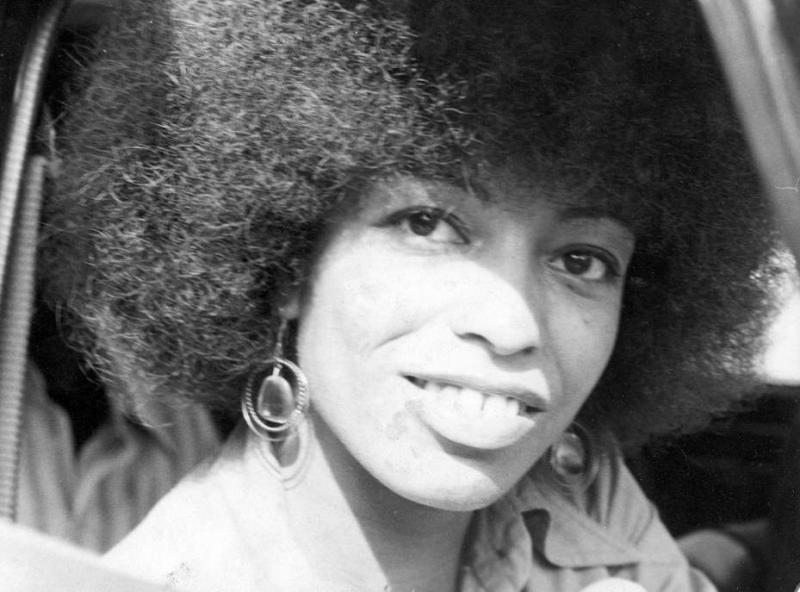
Angela Davis
Angela Davis

To use the word “Revolution” for many black people is to hearken back to the days of black fists, panthers, pride and Afro’s. It is to wear hair that is natural, to welcome skin the color of coal, African garments, medallions, and to be at ease with the urban tongue. The word ceases to mean “to change” but also “to become” or “to transform”. Whenever black people get to a point where they want to embrace the truth concerning themselves one of the first signs of consciousness is natural hair and it stems from many of these movements where African Americans sought to do away with the pretentious manner in which we carried ourselves. Most importantly however, it stems from our welcoming of the truth concerning ourselves and this is why, whether conscious or not, natural hair is often seen as a revolutionary act because natural hair involves embracing the true state of ones hair and thus ones identity.

cutebaby
Random super cute baby I found on the internet

I should not be placed in the same category with Afrocentricity or Rastafarianism because I use the word “revolution”. At the same time, we cannot throw the baby out with the bath water and in this case the baby is Natural Hair and it is a form of revolution or change. Revolution is change and it is truth and because it, the truth, is so absent in this society the word “change” morphs into something that’s deeper. To change becomes more than to adjust or to amend, but to change becomes a movement and revolution then becomes simply a movement to change. This is why, in my opinion, Natural hair is seen as revolutionary because it is a change in perception and in thought. It is a movement back to the original state not just of a hair style, but of a way of thought and a way of life. My hair is not naturally straight so by wearing locs I am exposing a truth concerning myself; that truth being that I was born with thick and kinky hair.

cropped-seal_v2-03***

I rest on Saturdays so this is my last assignment until Sunday.

In Case You Missed It: This Week’s Assignments:

Assignment #1: Why I Write

Assignment #2: Write a List

Assignment #3: One Word Inspiration

Assignment #4: A Story in a Single Image