

Tag: google
Blog Award Free – 1/20/2016
I am thankful to have produced content on this blog that others enjoy, share, and find worthy of blog awards. While I’ve been blogging in general for a few years, I am still a newbie at this address and have only been blogging for a little over a year. In that time, I have come to truly understand how to write for a variety of people (The Versatile Blog Award was truly an honor because I strive to produce content that has mixture) and meet some amazing men and women. While blogging and writing can be separate entities, I often do not separate the two. Having this blog has helped me to understand how to take what I know and understand and translate it into a language others can relate to and understand on a public platform which is important for an author. I have also learned how to better blog in ways that are not connected to writing.
I’ve gone back and forth with this for a long time and I am finally at peace with my decision. I have never completely followed the rules anyway and while I laugh about it, I actually do not like to half do stuff. I don’t have the kind of time to nominate the wonderful bloggers my heart desires to. This year is going to be very busy and so for these reasons, as of today 1/20/16, I have come to the decision to no longer participate in the beloved Blog Awards. It’s been a good run, but The PBS Blog is now officially Blog Award Free.
Don’t Leave yet!
I am still accepting your Blog Award Nominations! I just won’t be participating in the practice of nominating, posting, etc. If you want to nominate The PBS Blog for an award you still can. I will publish it under my “PBS Blog Awards” tab. Please check the page and if you have nominated me for an award that is not there, please give me a heads up and I will post it.
A Story Within a Story – Crafting Chapters
Who knew that this simple realization would come in the middle of the night, as I walked along with McFadden’s Easter on the streets of Harlem and stood shoulder to shoulder under a night sky just as dark as Garvey’s skin, who spoke just a short distance from us. Though I’ve always written in such a way, it was right here on 135th Street and Lenox Avenue when it became a conscious thought and it occurred to me that I can now implement this revelation into my writing in a much more conscious manner. And as Easter’s future husband approached us, I knew that I had to freeze the moment and write this down. She was smitten anyhow and I doubt she’d notice my absence. Surely I can put the book down for a quick, and anxious writing fix.
The words came quickly and rushed to the tips of my fingers after the sun drifted into a heavy slumber last night and the wind whispered just as calm and peaceful as my husband’s breath heaving in and out of his nostrils. I was up, of course, reading when after thirteen straight chapters of Glorious I stumbled upon a revelation I’d be more than selfish not to share.
 I’ve personally fallen in love with short stories. It could just be the impatience of the creative mind that’s got me savoring a quick fix, but I love the fragment of writing time as compared to a full fledged novel. It’s not easier, its just the simplicity of it all I suppose. Nonetheless, whatever the urge I’ve found it tasteful to write short and to the point; where the story is over before it’s left your palette. Not in a way that’s disappointing but too delicious not to crave. A refreshing snack of literature if you will that’s got you begging for more and at the same time offended for not having been given enough. Nonetheless, I was up reading this novel when it hit me: chapters are like short stories within a story.
Though my eyes were heavy, my mind was eager and I noticed that in the best of books we are strung along by string from one point to the next in a series of small revelations all leading to one grand finale. I was reminded in that moment that more than the first sentence, the first paragraph, or the first chapter is the need to keep the story moving in a consistent thread of mini stories wrapped into one large fabric by making sure that each chapter ends as if it alone was a short story within itself. Like a cliff hanger carefully composed to force the reader on to the next chapter. That moment right before Gillespie’s cheeks explode into handfuls of balloons.
I realized that writing is like configuring one grand puzzle by crafting the pieces and deciding which shape belongs where. It is a series of steps, body parts if you will, where each member does it’s part and yet contributes to the completion of the whole. By focusing on the purpose of each chapter, what it sets out to achieve alone and how it ties into the story as a whole, I think this may in fact help us writers to make sure that our books too move along with the same grace and elegance of a McFadden, Ellison, or McMillan.
Re-post: Author Tips on Writing Historical Fiction
This is a re-post from M.K. Tod who writes historical fiction and blogs about all aspects of the genre at A Writer of History. Her recent post included a list of tips on writing Historical Fiction as acquired from around the web. Instead of re-blogging I decided to re-post some of those tips here, they are just too good to let pass us by so I organized them in the list below so we can see them all. Please visit A Writer of History for author source and to comment on her blog. I would also suggest you follow her (especially if your a historical fiction writer), she is always on point with her guest authors, links, and advice:
- Let the characters engage with the historical details – a variation on show don’t tell
- Allow your characters to question and explore their place in society – doing so reveals the context of the times
- Love the process, because readers will still find errors
- Sweat the Small Stuff – small details allow readers to engage all senses in the past world you are building
- Dump the Ballast – too much detail is a killer
- Read historical fiction – sounds obvious doesn’t it but you have to appreciate excellent historical fiction in order to be successful
- Know when to stop researching – cautions about falling down the proverbial rabbit hole
- Research comes before writing – get the facts right to ensure a good foundation for your novel
- Inhabit the mind and skin of your characters – you have to understand the sensibilities of the time so your readers can feel immersed in it
- Pick a universal theme if you can – the concerns of your novel need to resonate with modern readers
- Choose a time and place that really intrigues you – passion will make your story more compelling
Self-Published Authors With Thin Skin

You won’t make it. And no, I’m not saying that I have made it. It’s just that, well, if you have paper thin skin just stop right now. Do not pass go and do not collection $200.
I have a lot to work on as an Author but the only reason I know this is because of what others have told me, what I have learned about this field, and what I have accepted as flaws that must be pruned and tuned to become strengths. I noticed, while reading an article about negative reviews, that there is not enough attention paid to the dark side of self-publishing. That is, the negative feedback (and reviews) you get from those who (wait for it) thought your book sucked.
You are entering a world that is a lot different from other businesses. You can’t pick up a book and drink it or rub it into your skin. It’s not a collection of diamonds or a tasty meal that will satisfy your flesh. No, the book business is a lot different than selling soap. Books require more than money, but people must be willing to invest their time into a read and that’s only if they actually enjoy reading. Even if they enjoy reading, books require lots of attention. It’s not a disgusting vegetable drink you can gulp down quickly and complain about later. No, if a book is tasteless it will be promptly put down, rejected, and possibly never tended to again. There’s just way too much to do in a day.
As a Self-Publisher, you must prepare yourself for this rejection. It will hurt initially because let’s face it, your a genius. But, not everyone will see it this way and usually when you think something is brilliant chances are it’s not so in the eyes of others. It’s an interesting thing, the work I don’t think much about is what gets the most attention. The poems I write just because I felt like writing, where I was nonchalant in the process for lack of a better word, are the poems people love the most. It may have something to do with humility: the humble will be exalted and the exalted humbled. (As a rule of thumb, the greater you become, the more humility you should have) Work we think the world of may not be as we intended. I didn’t intend on writing a book when I wrote the first chapter to Stella, nor did I intend for Book #2 to do better than Book #1! That’s just the business. It surprises you like that. And you know what? I love it.
Add onto this the stigma (though significantly fading, so much so that I feel funny writing this) of Self-Publishing and Indie Authors in general. I’ve read some Traditionally Published books that sucked but the reality is that as a Self-Published Author you have to have a much thicker coating of skin. If you can’t take constructive criticism in your everyday life and you have plans to publish a book, you may want to get started on that. Taking criticism that is. I know I have talent as a writer but I am not naive. I know that not everyone is going to enjoy my work or see the message and I don’t expect them too. Truth is, I’m not trying to save the world and neither should you. I’m just trying to reach the remnant of the world that wants to be saved. For this reason, I expect some people to dislike my work. (The bible also says something about when everyone thinks well of you, careful, for so they did the false prophets. You don’t have to believe in the bible to consider the message in that).
I also know that not every review will be a positive one. This is actually not a bad thing, it’s a good thing. Its a good thing because without knowledge of your flaws you can’t improve. For instance: A reviewer once told me to watch my POV (point of view) when I’m writing. In my mind, I write as if a camera is floating the room. I see the book playing out in my mind like a movie and I move wherever the camera takes me. If I feel like speaking from the perspective of the roof that I’ll do. It didn’t occur to me that this surveillance comes across as very confusing to the reader. When I received this tip, I became more cautious of this and began to write so that it is clear to both myself and my readers. What I would do without that tip! Now, I make sure to keep the “camera” nice and steady. No more moving from the first person to the third person because it looks good in my head.

If you plan to Self-Publish a book you must first examine your heart. If there’s thin skin there you may want to trade it in for some course material. If you desire to become an author you have to have a certain endurance for negative attention, it comes along with the territory. I have people speak badly about me all the time and I’m not even talking about my writing! People are generally not very fond of me because while I strive to be gentle and display the same respect to all persons, I’m not going to give you deception. I have to tell you the truth or I would not be the person I am today. I would be a liar.
Be thick skinned about whatever criticism that takes place in your life whether that’s in regard to your books or whatever. Understand that everything you encounter in life is to mold and shape you into the individual you were meant to be from the very foundations of the world. It hurts, yes, but its all for the greater good. I am thankful, personally, for growing up the way I did. For knowing struggle and pain and deception and humiliation because what it has done for me is to allow me to bear the burden of whatever negative vibes come my way. Don’t like me? Great, stand in line with the rest of the people waiting for me to care. That’s not being arrogant that’s just being real. In the book publishing industry, pinch your skin first and make sure its thick enough.
(There’s a lyric to Maxwell’s song “Lifetime” I think is very interesting. As the song opens he says, “I was reborn when I was broken”. You gotta be broken down to be built up. Something to think about.)
No Wonder Your Post Only Got 5 Likes

Before I shut down for the weekend I have to share this. I’m sitting here going through some of my older posts (the ones with 0-5 likes) and my tagging is just sad. Like, it doesn’t even make any sense. I love looking back on my work and seeing where I can improve. So, here’s 7 tips on tagging I acquired from some friends in the blogging world as well as somewhere in this brain of mine. I caution I am not an expert and these tips are just based on my prior knowledge and experience (so far) with blogging:
1. Try to mix your original tags with some general tags. General tags are tags that are often used such as: Blog, Blogger, Blogging, WordPress, Google, General, Poetry, and Writing (for book promo also use Amazon, eBook, and Self-Publishing). Original Tags are any tags you want to use or tags that are unique to your blog such as your blog name (I often use pbs for Pearls Before Swine).
2. Don’t be afraid to step outside the box. Make sure your tags have something to do with the post BUT this doesn’t mean you can’t get creative and add tags you think may drive more traffic since its mentioned in your post. For instance, one of the tags I chose for this post is: “Spelling”. This post is not going to teach you how to spell, but it does say something about spelling. I could have also used “Grammar” or “Grammatically Correct”, or “Punctuation”. I also tagged this post “Follows” and “Support” because they are similar in theme to “Likes”
3. Make sure your spelling is correct in the tags! LOL
4. If you’re going to use less than 15 tags, make them count. It will be best to use commonly used tags, such as Blog, General, and WordPress. Otherwise, it’s best to stick to at least 15 -17 tags. I think any more than that is overkill because…well, just because.
5. Remember that categories count as tags.
6. Keep your tags short and simple! Remember that old saying that if you sell books the way you buy them you’re more likely to increase profit? If you go to Amazon to buy a book, then your book should probably be on Amazon as well. Or, if you are more than likely to purchase an ebook, your book should probably have an ebook version as well. The logic is that you’re a reader first and if you have certain buying habits as a reader then chances are other readers have the same habits and so you use your reader habits in your marketing strategies. Well, if you tag the way you browse the net it may help in the same way. People google the way that they think and have a tendency to use the same keywords over and over again. This means some tags are just taking up space because no one is going to use them. What’s the chances of someone finding “Ilovemymothersomuch”? That’s a tag that doesn’t make any sense. I would tag it “Mothers” instead because if I needed to google articles about a mother’s love that is what I would type in.
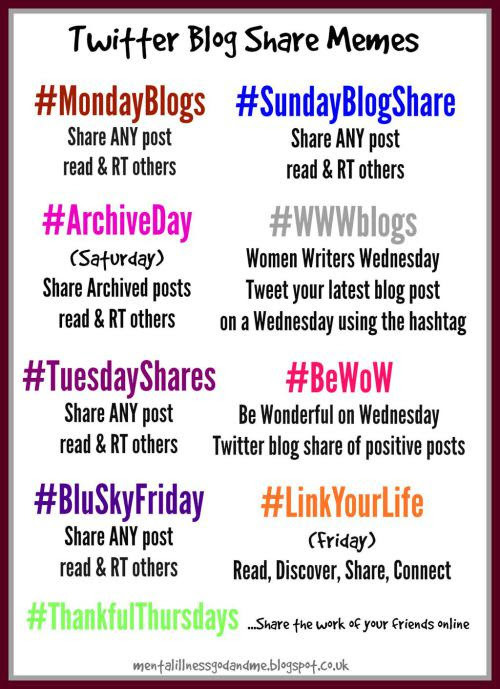
7. As a bonus, here’s a Tag Support Chart I acquired some time ago from a fellow blogger. It displays some commonly used tags separated by days. I don’t always follow the suggested actions that go along with the tags but I do use them. I’m still learning how to tag properly but this chart has been VERY helpful in that process (Tags I often use are: Blog, Blogging, Blogger, General, Writing, Google, WordPress, and I add one of the tags in the chart along with some that have to do with the post itself):
You Have the Right to Write
Attention: You Have the Right to Write or anything you don’t say will drive you crazy by intense desire. Creative ideas will overheat until they melt themselves into fragmented descriptions of confused thought and drip like perspiration from your brow. Words will escape your mouth in an explosion of writer’s language. Soon, you’ll start bringing up the names of books to four year olds and correcting sentences fresh out your neighbors mouth, “..not a eraser, an eraser..” you’ll blurt out uncontrollably. Your lips are so bone dry they have wrinkles, and you trip over your tongue as if it does not belong in your mouth. You can’t even blame Writer’s Block for the frustration since you keep missing your periods at the end of sentences. Poor words, left to run on in a string of thought; breathlessly pulsating through veins hoping to make it to the end of your never ending consciousness. The least you can do is appoint a capital letter to keep everyone in check, a comma won’t hurt you either. If you find yourself in this condition, you have the WRITE to consult inspiration before speaking anything into existence, and to have a pen and pad ready for any glint of light amidst the darkness, now or in the future.

 The PBS Blog