Revising The Stella Trilogy: A Behind the Scenes Look

Tomorrow will mark five years since I released the first book in The Stella Trilogy. Wowzers! I am celebrating by introducing the new cover to book one and two. If you haven’t heard, I removed the books from amazon for some much needed polish and am re-publishing them. To learn why check out the blog post “Quality Over Quantity: Why I Pulled My Trilogy from Amazon.”

While I changed the cover toĀ I am SoulĀ after its release and got a new cover toĀ The Aftermath, my first novel (2012), I’ve never wholly revised my backlist before. The Stella Trilogy is getting an entirely new makeover, which includes editing, covers, formatting, and ISBNs. Why go through all the work for an old book?

Books do not expire. Every book is new to people who have never read it which is why it benefits Indie Authors to go back and update “older” works every now and again. Here are some things I saw needed work on Stella:

Editing – It wasn’t enough to slap a new cover on the books. I knew these books had to be revamped altogether. Like most newbie Indie Authors, I had a friend to edit the first version of these books because I didn’t have the money to pay someone. This time around, I am getting the books professionally edited.

Song Lyrics – The first book had song lyrics in it—rookie mistake. You need permission to include the words to a song in your books. I promptly removed those lyrics. I can’t afford to get sued.

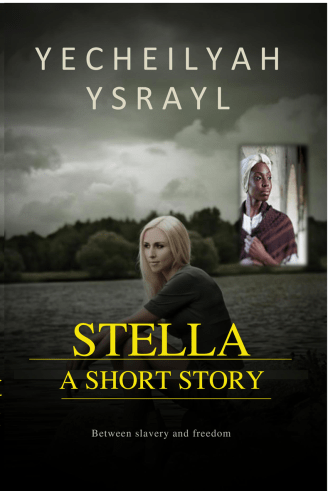
DIY Covers – I like the cover to book one, but it was a DIY premade from Derek Murphy’s website, offered freely to authors. I added the image of the black woman, but the rest was unoriginal. I cringed every time I saw it on his site. Book two was more original as I purchased the winter lady image, but it was still poorly applied to the cover. I did everything in Microsoft Word, and since I didn’t know that super-thin books don’t need a spine (if there aren’t enough pages to warrant one) when the books printed the spine folded over to the front. Yuck. For this reason, new covers were something I knew I needed to get done.

Free ISBN – I am done with the free ISBN game. Listen, if you don’t include the cost of the ISBN in your book budget, you are still a beginner. Have I always purchased my own ISBN? No. ISBNs are expensive, but having your own is worth it. They (ISBNs) are also cheaper if you buy them in bulk. 10 ISBNs can cover ten different books. Applying your own ISBN number to the book ensures that your imprint name will be applied to the book. In other words,Ā youĀ are the publisher, not KDP, and not Lulu. This time around, all books inĀ The Stella TrilogyĀ will have its own ISBN so I can register the books toĀ me.

BONUS: Alternate Ending – I am excited about adding an alternate ending to excite Stella fans who have already read the books. The conclusion to book one is not the ending of the original book one. Why the change? It is to tighten the link between all the stories for a smooth transition from one book to the next.

Lessons I learned so far:

Work with what you have until you can do better.

You don’t have to know everything to start. I didn’t. Work with what you have until you can do better. (If a free ISBN is all you have to work with right now, use it until you are able to move up. I did.) I do not regret putting Stella or my first books out there, even though they weren’t properly edited, and the covers were DIY. These books gave me my start, and the courage and the freedom to step out on my own. These books gave me my beginning, and I am forever thankful to Yah for them.

Then, when you can do better, please do it.Ā 

The other part of this, though, is doing better once I knew better. If I produce mediocrity, I will only get mediocre results. Once you’ve stepped out there, it is okay to go back and change what you see needs work. We may not be perfect, but this doesn’t mean we cannot strive to maintain a level of excellence in all we do, even if the best we can do still falls short. We don’t have to stay at the same levels in the latter part of the journey as the first. We can tweak and correct and improve with time. We have that freedom, to sharpen, and to elevate.


About The Stella Trilogy
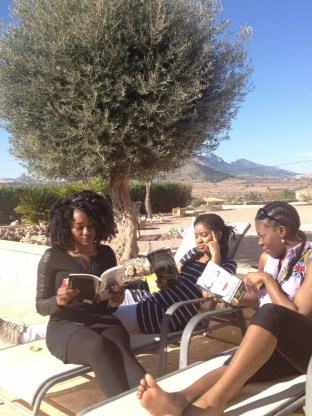
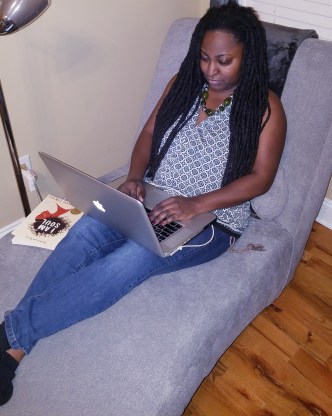
Readers reading Stella. Circa, 2015.

Stella is a work of Historical Fiction and is distinctive in its focus on one woman’s road to self-discovery, against the backdrop of the African American fight for justice, racial equality, and freedom. We discover how three individuals living in separate periods strive to overcome the same struggle, carefully knit together by one blood. The three-part series features elements of enslavement, Jim Crow, Passing, and the Civil Rights Movement.

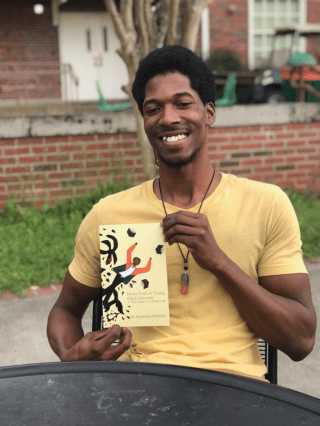
Black History Fun Fact Friday – Benjamin Banneker: Time Well Spent by Keyshawn McMiller

Today’s Black History Fun Fact Friday is from our special guest writer, Keyshawn McMiller. McMiller is a Senior Social Work major at Florida A&M University, and a current two-time published author (Ideals From A Young Black Introvert).Ā Keyshawn aspires to one day, become a licensed counselor and ultimately, open the minds of traditional minority communities to the advantages of professional self-help.


The next time you ponder the great polymaths of the world such as Leonardo da Vinci, Thomas Jefferson, and Abraham Lincoln, be sure to include another prominent Renaissance Man in Benjamin Banneker. A free-status African American raised on a Maryland farm that would eventually be bequeathed to him, Banneker was fortunate enough to attend a Quaker school. Though, he was primarily self-educated, relying on loaned books to learn the bulk of his skills. While in his 20’s, his knack for mathematics was demonstrated as he constructed a working wooden clock based on studying pocket watches. This accomplishment would only be the beginning of Banneker’s successes, as an interest in astronomy brought on by Quaker Astronomer, George Elliott, led him to predict a 1789 solar eclipse accurately.

As he matured, the Black Excellence of Benjamin Banneker was only magnified as he eventually became a prominent abolitionist and land surveyor near the end of his life. During this period, Banneker wrote future U.S. President, Thomas Jefferson, a letter in 1791 asking for improved living conditions for his people. In this same letter, he also sent drafts of various almanacs for the states of Pennsylvania, Delaware, Maryland, and Virginia. Amazingly, this draft would eventually be published thanks in part to Thomas Jefferson’s approval. Perhaps Banneker’s most significant achievement came about as he surveyed the land that would eventually become the current domain for the United States’ capital in Washington, D.C.

Despite Benjamin Banneker passing on in 1806, approximately 57 years before Lincoln’s Emancipation Proclamation, his legacy lives on. His name is included in several institutions, including The Benjamin Banneker buildings housed at Florida A&M University. At the notice of his passing, an obituary was published in the Federal Gazette with the quote, ā€œMr. Banneker is a prominent instance to prove that a descendant of Africa is susceptible of as great mental improvement and deep knowledge into the mysteries of nature as that of any other nation.ā€

Sources Cited

https://www.encyclopedia.com/people/science-and-technology/mathematics- Ā Ā Ā Ā Ā Ā Ā Ā  biographies/benjamin-banneker

https://www.britannica.com/biography/Benjamin-Banneker

https://www.biography.com/scientist/benjamin-banneker

https://www.famu.edu/index.cfm?blackhistory&BenjaminBanneker


Copyright Ā© 2020. Keyshawn Miller

Keyshawn McMiller is a Senior Social Work major at Florida A&M University. A current two-time published author with “Ideals From A Young Black Introvert” and “Winnas, Not N*ggas,” Keyshawn is on a mission to use his gifts of writing to inspire the next generation to trade who they are for what they can become.

Instagram: @youngblack_introvert

LinkedIn: Keyshawn McMiller

Other Literary Works

  • Ideals From A Young Black Introvert: A Mini-Guide to a Better Life (available on Amazon)
  • Winnas, Not N*ggas: A Black Male’s Path to a King’s Mentality
  • King’s Mentality (poem)
  • Individual (poem)

What Are You Sacrificing?

Last week, I planned on introducing a new Black History Fun Fact Friday. I also planned on revealing the cover to the poetry contest magazine to my social media (which I will do tomorrow, time permitting). This was a busy week for me (more than usual). This isn’t to say that ā€œbusyā€ is a measure of importance, but last week was a hectic one for both my personal and professional life. But also, it was a good busy (more like a focused busy). I got a lot done and gained some clarity. And although I still have emails, I haven’t responded to and travel to prepare for I am sitting down in the few hours I have here before running errands to talk to you guys and send an important message to my email list.

I find that how we direct our focus determines what will show up based on how we have prioritized. Those things we put first or last will naturally manifest in our life and align based on what we give more or less attention. If I know I have coursework due on Wednesday, for example, but I scroll social media until the final hour of when the work is due, chances are I won’t do well, and it won’t be because I am ignorant or incompetent. It will be because I did not set my coursework as a priority this week and give myself time to think through the assignment. Instead, I scrolled social media, which means I have set it as a priority over my coursework and are thus reaping the consequences of that choice. It doesn’t make it social media’s fault, and it doesn’t make social media an evil entity, but it was not the proper decision on this day.

I use social media because it’s an easy example, but I believe this can apply to anything from business practices to relationships and friendships.

What are you sacrificing?

I realized that whatever we pay attention to means sacrificing something else in its place. If we focus too much time on gossip and negativity, we are sacrificing something else in its place. If we spend too much time on social media, we are sacrificing something else in its place. Sometimes the sacrifice is not all bad; it makes sense depending on what is a priority at the moment. Sacrificing an hour of work to sleep and refresh is not a bad thing because, with rest, we can have better clarity to do the job. Surrendering a TV show to post something of value and substance to social media that will help someone else is not a bad thing. You see, I also learned this week that our priorities might change from day to day. What was most crucial yesterday may not be most important today.

From this point forward, I will be more conscious of what I am sacrificing when I am spending my time doing something because I know that whatever I focus my attention will manifest based on those things of which I have set as a priority.

Instead of saying, “I don’t have time,” I will say, “what am I willing to sacrifice to get this done? What am I willing to give up to do this?”

Those are the real questions.

Behind The Original “Friends”

Note: Due to the content of this post I am filing it under Black History Fun Fact Friday.Ā 

Erika Alexander (Max/Maxine Shaw/Pam, Living Single) did an interview with The Breakfast Club (I want to say it aired yesterday?? 1/29) that brought out some interesting facts. (Funny because she was not supposed to be a regular on Living Single but…). Like I tell people, Black History INCLUDES music, television, film, art, and much more.

Yvette Lee Bowser created Living Single for Warner Bros and it debuted in 1993. One of the original suggested titles was Friends. Asked if he could have any show on TV, NBC’s President said Living Single. Queen Latifah’s show’s suggested title was called My Girls when they first did their pilot according to Erika Alexander, but it didn’t do well. The networks then chose Living Single, and then the next year they named a separate show Friends. But you got that much from The Breakfast Club. Let’s go a little deeper.

To go further, I wonder why it was decided to call the black show Living Single? Did it have anything to do with black families being largely headed by single women at the time? I am still researching the specifics for 1993 ( the year Living SingleĀ debuted) but so far the numbers continue to increase for single-family households in the Black community at the time. In 1991, 68% of Black children were born outside of marriage. In 2011, 72% of Black babies were born to unmarried mothers. In 2015, 77% of Black babies were born to unmarried mothers.

What was really behind the networks naming this show ā€œLiving Single?ā€

Was it the stereotype or assumption that Black men weren’t present that led them to the decision that the black show should be called Living Single? (“We are living Single…”)Ā instead of Friends? (Because I mean, the sistas on Living Single were Besties, you hear me? They were reallyĀ Friends. Sooo I got questions…)

I know ya’ll probably think I’m reaching so …if you think this is too far-fetched, consider Good Times.

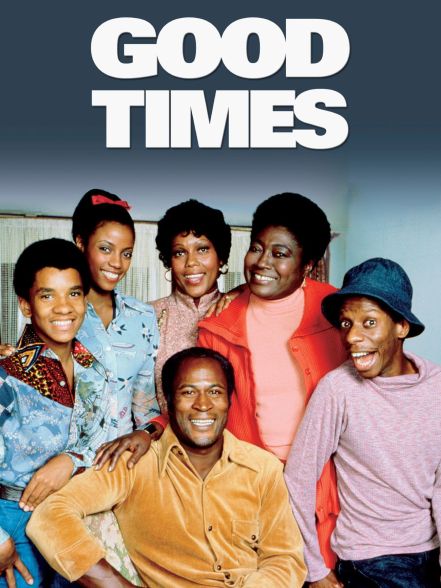
Good Times only had a father figure because Esther Rolle fought for one.Ā 

Originally, the show would be based on a single woman raising her kids in the projects in Chicago (I am from Chicago AND I grew up in the projects, trust… we know these things). Rolle said no, she wanted a father for her children and she became a pioneer in fighting for a black father on TV: George Jefferson (played by Sherman Hemsley) on The Jeffersons, Cliff Huxtable (played by Bill Cosby) onĀ The Cosby Show, Phillip Banks (played by James Avery) on The Fresh Prince of Bel-Air. The list goes on and on but one woman opened the door for a complete black family to be shown on television and her name is Esther Rolle.Ā 

Good Times was revolutionary because it broke ground not only by showing a low-income family on television but also, a COMPLETE black family. The list of shows Good TimesĀ inspired is too numerous to mention, including NBC’s 227 in 1985, Regina King’s first breakout role. Then, in 1989, ABC launched Family Matters as their answer to 227. UPN sought to create the magic of the Cosby Show with Moesha in 1996. It goes on and on and down hill from here…

“I just thought it was a poor representation of what Black women were being able to do. And frankly, if you didn’t fit in that mold, there was nothing you could do. It was like watching a train wreck. I actually didn’t think it was real at first. Took me a long time to sort of Ā get that, no this is real, and yet, it’s not real.”Ā 

– Erika Alexander on the Reality TV Shows, The Breakfast Club

The black father was the hardest legacy Rolle fought for. She grew up with one and an intact family; she wanted that to be shown on television. ā€œI had a wonderful father,ā€ said Esther Rolle, ā€œand I couldn’t bear that television virtually ignored black fathers. I could not compound the lie that black fathers don’t care about their children,ā€ she said previously in media reports. ā€œI ruffle a lot of feathers. And I’m also selective–that makes you a troublemaker, but so be it. I laid a cornerstone for black actors, and that makes me happy.ā€

Although Rolle worked hard for a black father, they still eventually killed James off. So, I ask, what was theĀ realĀ reason behind naming the “Black” show,Ā Living SingleĀ Hmm? That is the question.

Quality over Quantity: Why I Pulled My Trilogy from Amazon

These books may still show up but they will be completely removed (out of print) soon. They will be relaunched with new edits and covers.

The Stella Trilogy put me on in more ways than one. It was the first time I got reviews on amazon for my books (I knew nothing about amazon when I started) and the Stella Trilogy book signing made me enough money to pay my bills and then some. It was the first time I saw real money from my writing and it was all from selling paperbacks (I always sell more paperbacks than ebooks. Unconventional for some, but this is how it has been for me). I also won my first award, an appreciation award given to me by my readers.

The Stella Trilogy changed lives.
The Stella Trilogy changed minds.
The Stella Trilogy is how I widened my readership.
The Stella Trilogy helped me to level up and step outside of the box.

The Stella Trilogy was groundbreaking for me and it is precisely for this reason that I am pulling her from Amazon and my website… for further editing.

The books are undergoing makeovers, a fresh edit, and new covers. For those of you who’ve read it, you know the books are short and as my #1 priority outside of the coming poetry book and Lit Mag Magazine; I hope to have them back up by the end of this year. I am not slacking on this. Stella made a big impact, and she needs to be back up soon.

The year is 1864 in Louisiana and the story slips back in time introducing Grandma Stella’s Great grandmother, Stella Mae, age nineteen years. Stella Mae begins her story with a memory of how as a child she was forced to use the facilities designated for ā€œniggras only.ā€ Young Stella Mae tries to reason out why her Mama can’t walk into the front door of the general store and why they can’t use the restroom everyone else uses. Even at a young age, Stella Mae could sense the inequality in her existence. – Colleen Chesebro

I have come a long way since 2015 when the first Stella book released. As a historical series it’s important to me that the bookĀ is as superior as I can afford to make it. Now that I have my foot into the schools, I hope to one day have the series taught as part of the curriculum. I have so much hope for these books and so many visions for what they can become.

The sky is not the limit. There are no limits.

I was different. It might give you a slow start but being different is gonna carry you a long way.” – Master P

I am not a fan of most rap music and never was. I like a few old school tracks from Talib Kweli and Common, but I’ve never really been into rap marketed to my age group (although I danced to it in my teens at parties lol). I was always an R&B type of person. I still remember the days my sisters and cousins used to record music videos on VHS and fall asleep watching them. We also recorded songs from the radio on cassette tapes so we can listen to it repeatedly. Despite not being a fan of the music, I admire Percy Miller aka Master P more than any other rapper. I admire him because I think people underestimate him which is precisely why I think he does so well in his business endeavors. I admire him for his commitment to being Independent and using his faith as a catalyst to propel him forward.

Indie Authors, Don’t Be Afraid to Revise Your Backlist

With great authority comes greater responsibility. As we grow and mature in our understanding of this publishing thing, more will be required of us. I know that a poorly edited book could damage my reputation not only as a writer with influence for excellence but also as a teacher and as a lecturer.

I published the first book I ever sold in 2010 and I knew nothing. The book was not edited and had never been available on Amazon. This taught me two lessons:

  • Begin where you are. Take the first step “even if you can’t see the whole staircase” (MLK).


  • After you have taken the first step and put yourself out there, make changes as you see them. If your first book was poorly edited, take it down and get it edited.Ā You didn’t know better at first and that’s okay. But then, once you know better, do better. Do the best you can, until you know better, to quote Maya Angelou. “Then when you know better, do better.ā€

Do not think for a second that we are not responsible for the knowledge we have. Do not think we are not responsible for changing our behavior as we learn and grow. The quality of the books we put out shows readers what we think of ourselves and also what we think of them. Quality must always supersede quantity. I temporarily removed these books because the quality of the work I put out is more important to me than feeding my own ego of having “published x amount of books.”

It was exciting at first to publish book after book. Like anything we do for the first time it was fresh. As I have grown and as I grow, I value more where these books are going and how they are influencing the world much more than how many of them there are.

Now, for my Stella fans:

I am not changing the core of the story. I am editing the books for better readability and understanding. I am also changing the covers so all the books in the series look the same.

About.

Stella is a work of Historical FictionĀ and is distinctive in its focus on one woman’s road to self-discovery, against the backdrop of the African American fight for justice, racial equality, and freedom.

The 3-Part series focuses on the history of one family in their struggle for racial identity. Discover in this Trilogy how three individuals living in separate time periods strive to overcome the same struggle, carefully knit together by one blood.

  • Between Slavery and Freedom (1)

We deal with enslavement and freedom both physically and psychologically.

  • Beyond the Colored Line (2)

We deal with passing, self-love, and racial identity. If you were a Black woman living in the Jim Crow era and light enough to pass for white, would you?Ā 

  • The Road to Freedom (3)

We deal with the Civil Rights Movement, Freedom Rides, and the impact our choices make on the next generation.

Coming (Back) Soon

“But My Family Don’t Support my Writing”

Popular Complaint: “My family don’t support my writing.”šŸ¤·šŸ¾ā€ā™€ļø

Umm. How can I put this, your family and friends will be the least supportive of your writing (as is the case for most businesses). That’s not a bad thing entirely because they are not really your targeted audience.

New Writer:Ā  *Smacks lips, rolls eyes.* “Okay, so what that mean?” šŸ™„

It means you have to find those people who are most likely to read the kinds of books you write and often, they are not family members. This specific group of people is called a targeted audience. You are not targeting everyone but focusing on one specific kind of reader. Here’s an example from words from Tyler Perry:

ā€œI clearly believe that I’m ignored in Hollywood for sure and that’s fine. I get it. My audience and the stories that I tell are African American stories specific to a certain audience, specific to a certain group of people that I know that I grew up with and we speak a language.” – Tyler Perry

Say what you want about Perry but he has a keen understanding of his Target Audience. That’s what he is speaking of here. A specific group of people who his films/movies/TV shows are specifically for. That’s why his movies are all along the same lines in the theme. We can see that Tyler Perry makes the same movies because he is targeting a specific audience.

Personally, I am not much of a Tyler Perry fan. There are only a few of his movies I like but that’s not the point.

We can agree or disagree with his movies, but he is an excellent example of someone with knowledge of his Target Market.

When you are targeting a specific group, you are not trying to reach everyone or garner everyone’s support. Your purpose is to appeal to that specific group.

(Feel like I’m saying “specific” a lot but that’s kinda important).Ā 

How many people at Michelle Obama’s book signing were related to her?

New Writer: “What? But those was her fans tho.” 🧐

And you have fans too if you look beyond the praise of family members who will probably never buy.

New Writer: “So you saying my mama can’t buy my book?” šŸ’šŸ¾ā€ā™€ļø

Your mom will probably buy your book first, but she’s not the seventeen-year-old black boy with peer pressure issues you wrote it for is she?

New Writer: “I mean naw but…”🤨

…and she’s probably not gonna leave a book review on Amazon, follow you on Goodreads, Twitter, Instagram, or subscribe to your email list and if she does, she probably won’t remember to read it.

New Writer: *smacks lips* “Dang why you gotta be all negative for?” šŸ˜’

Because the truth will set a lot of writers free from unrealistic expectations about what it means to be an author.

Loyal family/relatives may buy a book or two and they may be there to cheer you on, lift you, and support you in various ways. Families are good at heaping praises.

They love to like your posts, root you on and tell you repeatedly how they intend to buy your book and how proud they are of you. This is helpful from an encouraging point of view and it feeds the ego, but praise doesn’t sell books. How many of these people follow up? Every year the same family member asks, “where can I buy yo book?” But they never buy.

It is those non-relative readers who your book is specifically written for who will buy with consistency and read your every release, becoming avid readers and fans.

(…and I hate to use the word “fan,” by the way. *Shudders* Be a fanatic for no one.)

šŸ‘‰šŸ¾How many of your genetic relatives have bought your book?

New Writer: “Lemme see, my mama got one, my cousin, boo boo nem, lil Chris…”

So what, all five of them..?

New Writer: “Oh, so you being funny?”šŸ¤”

No. I’m being real. Put it this way, would a company whose buyers don’t watch TV, make a commercial to push their product?

New Writer: “Naw that’s stupid.”šŸ™„

šŸ¤·šŸ¾ā€ā™€ļø So why would authors focus the bulk of their efforts on trying to sell to people who don’t read the books they write?

New Writer: “I guess I see what you saying.”😩

Now, take out some paper. You’re gonna have to write this down.

…wait, what are you doing? Put your phone down this is important. šŸ¤¦šŸ¾ā€ā™€ļø

New Writer: “Imma type it in my notepad.”

Okay but don’t be on Instagram this is important.

New Writer: I’m not dang. 🤳Go. I’m ready.”

Okay, here are a few questions you can ask yourself to help you find your readers.Ā 

  • Who are my current readers/Who am I trying to reach? How old are they? What do they like? Where do they hang out?
  • What’s the #1 thing my readers love/need the most?
  • What problem does my book solve? What are my readers’ pains/issues/struggles/challenges?
  • What do readers gain from reading my book? What do I have to offer?
  • Who would benefit most from reading my book?
  • What makes my book unique?

My Responses to Common ComplaintsĀ from New Writers is something new I am adding to this blog based on common writing and publishing questions from new Indie Writers. I thought it would be fun to answer them here in the form of dialogue. You will know the posts by the quotation marks around the complaint to differentiate it from other posts.

Did you like this first post? Do you have a common complaint I should address?

Find more articles under the Writing Tips and Resources page here.

Nourish Your Offline Relationships

Photo by Priscilla Du Preez on Unsplash

Would you know if your friend is feeling down if he/she didn’t post about it? Would you know when his/her birthday was if Facebook didn’t tell you? Would you have the information necessary to congratulate those you love on their achievements, like weddings, and graduations if they didn’t post about it?

How well do we know the people we call friends?

Yesterday was my husband’s birthday and birthdays always have me thinking about relationships and social media. A few years back I had deactivated my Facebook a few days before my birthday. I didn’t feel like being bothered with accolades from people who hadn’t spoken to me since my last birthday. An interesting thing happens when I do this: The people who know me most will call or text me. Then, at the conclusion of the day I’ll post something on social and out of the woods will come those who thought they knew me and yet didn’t know something as basic as the date of my birth.

I had one person I considered a sister call me three days after my thirtieth birthday. There’s no harm in this. I’m not that sensitive. People don’t have to stop their lives for me. Reach out when you can. What I found odd is not that she called three days later. What was odd is that she thought she had called on my actual birthday. I found this odd because I thought we were closer than that. I had known the woman over ten years. We had lived with one another at some point, interacted with one another’s children, dined together, laughed, and had deep conversations. This wasn’t just any sister, this was someone I thought knew me well. Well enough to know my birthday is not May 29th. It doesn’t surprise me that today, we are no longer in touch.

But don’t get distracted. This is not about birthdays.

This is about the work we put or do not put into relationships now that Social Media automates our lives. Now that there is ā€œan app for thatā€ some of us have become lazy in our interactions with one another.

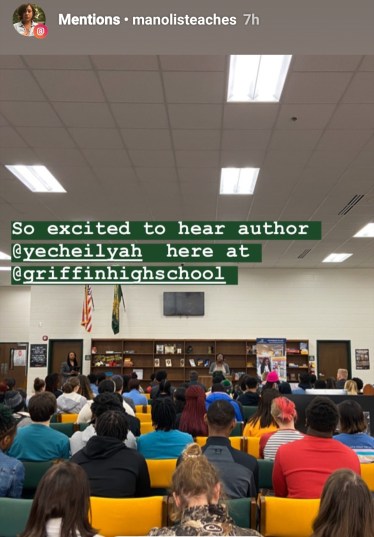
I had the pleasure of visiting Griffin High School last weekend. I spoke to four classes of tenth and eleventh graders about writing, publishing, and my journey as an author. I love young people. I love their innocence and straightforwardness. I love their non-sugarcoating questions. Many of them asked me if I ā€œmade a lot of money,ā€ and ā€œhow do I deal with criticism?ā€ It swelled my heart to have the pleasure of being there with them. One student asked me if I thought the ebooks would overtake paperbacks. I told him that while digital has enhanced writing in many ways, I think the paperback is here to stay.

Digital books are convenient when I am eagerly expecting reading a book and I don’t want to wait for the paperback to come in the mail. It’s fast and quickly satisfying. Buying a paperback book costs more and takes patience but when it comes there is something immensely gratifying about holding the book in my hands and turning the pages. A feeling I do not get when I read digitally. When I can look in someone’s eyes and talk with them as I did last week, answer their questions, hear their concerns, sign their books organically, hug them and take pictures with them, nothing online can compare to that experience. That human experience.

Let’s say digital books represent social media and paperbacks represent real life. While it may be easier to wait for a notification to tell you that your loved ones are ā€œfeeling sadā€ it is much more productive to hear their voice on the other end of the phone or to give them an inspiring word through text. It is even more fruitful to see them face-to-face, to hear their voices, and look into their eyes. Some things you will never know about a person from their social media pages. If they are like me, quiet, reserved and private, you will only get the basics. Facebook may tell you when it’s my birthday or notify you when I am traveling or checking into a restaurant but for those personal, heartfelt thoughts? There’s no app for that.

Nourish your offline relationships. To nourish someone is to feed them deeply with something good for them. It means to give them something that will encourage them to live well. When you do this, you do not make assumptions about anything you see in the virtual reality. You are not easily offended because someone ā€œdidn’t tell youā€ they were traveling or gathering or graduating. You already know these things because you have built a real-life relationship with the people you love and that bond is stronger than any post, tag, or ā€œFriendversaryā€ that pops up in your Facebook memories.