American Hypocrisy

Photo by Paul Weaver on Unsplash

About a week ago, a reader notified me that a review I published to this blog was from a book written by a woman who took part in the insurrection of January 6th. I did not know, as I had published the review months ago. I enjoyed the book, but I have since removed the review and deleted the read’s promotional tweets.

What happened at the Capitol was wild, but America’s hypocrisy amazes me.

Where was this energy when Tulsa and Rosewood’s black people had their homes raided, their communities bombed and their family killed? I have yet to hear the Ku Klux Klan declared a terrorist organization.

When black homes, businesses, and communities were bombed, the people who attacked them were not considered terrorists.

It wasn’t terrorism when strange fruit hung from trees.

Attacks on Black Americans are not considered “an attack on our democracy.”

When they dragged fourteen-year-old Emmett Till from his family’s home, shot him with a 45 caliber pistol, beat him to a pulp, and drowned him in a lake with a 75-pound cotton gin and barbed wire around his neck, his murderers were not deemed, terrorists.

They were acquitted.

When unarmed black men, women, and children are killed, the murderers are not considered terrorists.

Showing pictures of Malcolm X and Fred Hampton’s deceased body all over the newspapers was not “shocking,” nor was it “an attack on our democracy.”

On June 17, 2015, Dylan Roof walked into a church, killed nine black people, and injured one more person. Later, he confessed that he committed the shooting in hopes of igniting a race war.

But when he was caught after the search, police did not “fear for their lives.” He was not shot dead.

On May 2, 1967, 30 Black Panthers walked into the California State Capitol building with rifles and shotguns (it was legal to carry back then openly) that catapult them into the national spotlight and made national headlines. From this point on, The Black Panthers were terrorists.

  • Their headquarter offices were bombed and raided.
  • Their members were shot and killed.
  • The laws were changed, making it illegal to open carry.

Where is the outrage, America, when black people are attacked like your beloved Capitol? Where is this energy?

Americans are admonished never to forget 9/11.

Jewish Americans are admonished never to forget the holocaust.

But it is often stressed that Black American’s forget slavery and centuries of oppression.

We are not the same.

Malcolm X said, “If you’re not careful, the newspapers will have you hating the people who are being oppressed, and loving the people who are doing the oppressing.”

Today, social media and mainstream media are the newspaper, and if we are not careful, it would have us believe the same system that works for the oppressor is the same system that works for the oppressed.

No way was the Panthers politely told to leave the Capitol in California.

No way did the police stand by and calmly escort members of BLM off the streets during protests.

What happened on January 6th was wild, but it should not be surprising.

We are seeing only the beginnings of the “chickens coming home to roost” (to quote Malcolm) for America.

It is what it is.

“It was horrendous,” a CNN commentator called the January 6th events.

But so was watching a police officer put his knee on the neck of a black woman in 1963. And so was watching a police officer put his knee on George Floyd’s neck in 2020.

Let me make this a bit more plain: You watched a man die on TV.

But this was not considered an act of terrorism. Why? Because the same system that works for America is not the same system that works for black people.

Joe Biden said, “The scenes of chaos at the Capitol do not reflect the true America. This is not who we are.”

Respectfully, I disagree.

This is America and always has been America.


Movie Night Friday is back with my review of these two movies coming to you in February.
The Power of Your Author Name: A Message to First Time Indie Authors

Barack Obama released another book on the seventeenth of November, 2020. It was already a Best Seller with over two-thousand book reviews on Amazon just a few days after release. Obama’s name alone skyrocketed this book to the Best Seller’s List before we had time to decide what we wanted for breakfast that morning.

And Sister Soldier’s March 2021 release, “Life After Death,” the long awaited follow up to The Coldest Winter Ever is already a Best Seller. That’s right. A Best Seller and the book is not even out yet.

The same can be said of Amanda Gorman, whose poetry book The Hill We Climb, and Children’s Book, Change Sings, is already a best seller.

These books don’t release until September!

Today, we are talking about the power of your name and the role it plays in your author branding and marketing yourself as a first-time Indie Author.

What’s in a Name?

A person’s name is a connection to their identity and individuality. It is the history of who a person is. When you think of names that have become prolific, you are not just thinking about a person’s name. You are thinking about all the things that person has done, their experiences, and contributions to the world.

Sometimes, we hear a name, and it is not a good image we see. Names like Jefferey Dahmer and John Wayne Gacy make us tremble, but even these names show a name’s power. We tremble because their names are connected with the horrific things they’ve done, and hearing those names brings to our memory those heinous acts, in the same way, hearing Maya Angelou’s name gives us hope.

When branding yourself as an author, it is good to have the same author name consistent across platforms. Your name doesn’t just tell someone who you are, but it helps build brand recognition.

This means using the same name across your author’s website, the same name in your social media handles and emails, and the same name on your book covers.

“You can show genre with cover design, blurb, logo, and many other cues, but publishing under lots of names in the digital age is a recipe for disaster.” – Anne R. Allen

The more people see your work connected with your name, the more they remember who you are.

It is why we call them “Name Brands.”

Michael Jordan is a brand name, an icon whose career has made his identity equivalent to excellence. When people buy Jordans, they know they are buying a top-quality shoe. And even if it is not a top-quality shoe, it is what the people believe. Why? How did someone whose name once meant nothing now mean everything?

Well, that’s another blog post. For now, let’s just stay on topic and keep it simple.

Michael Jordan proved himself as an exceptional basketball player, and his work ethic is connected with his nameThe more his work became recognized, so did his name.

Your work and your name are connected, whether you are a servant of good or bad. If you are doing good work (in this case, we are discussing writing) and not using your name or changing your business name every six months, you make it hard for people to connect who you are with what you do.

“It’s much easier to build brand recognition if you keep all your publishing activity under the same name and the same expression of that name.” – Jane Friedman

Nikki Giovanni, Ralph Ellison, Lorraine Hansberry, Langston Hughes, Walter Mosley, Toni Morrison, and Richard Wright.

Chances are you’ve heard these names before, and if you are like me, you will notice these names on book covers at any bookstore. You might even stop to scan or flip through the pages of a book simply because you recognize these author’s names.

Book Titles

The name of this blog started as the name of a book series I was writing.

In my Pretty Woman voice, “Big mistake. Big. Huge.”

While I have found a new purpose in this blog, it was a mistake to name this blog after a book. The problem with using the title of your book as your blog name, author website, or social media pages is you will probably write more books.

Are you going to create more websites and accounts for all the books you are writing?

Of course not.

Your name is one of the most powerful, FREE resources you have for marketing yourself as an author.

When you first meet someone you introduce yourself, and you start with your name because your name is your identity. It is more important than your job title and degrees. And when people remember our name, it makes us feel important, recognized, and valued.

What about Pen Names?

Anne R. Allen has published an excellent article on that already, so I will refer you there. While her post is about why pen names are not a good idea, Anne’s number one good reason for using a “pen” name is the one loophole.

  1. It’s the name you’re known by, even if it’s not the name on your birth certificate.

It is absolutely okay to use a name that you’ve been known by even if it’s not your birth name. The key is not to keep changing it though. Pick a name and stick with it.

Consider Maya Angelou, Ntozake Shange, Sonia Sanchez, Kwame Ture, Whoopi Goldberg, and others. None of these people were born with those names just as I was not born Yecheilyah Ysrayl. Although I was not born Yecheilyah, I do not consider it a pen name. It is more than that, it is the name for which I am now known.

Use Your Name

“Once you know what author name you’ll be using, be relentlessly consistent in the expression of that name throughout your websites and social media accounts.”

– Jane Friedman

No matter what name you choose to brand, use that name everywhere. It will help people to identify you, and when they remember you, they remember your work.

No one cares about the title of your book or your book, for that matter.

What people care about is you, the author so it is your NAME and your author photo that will stand out the most in your social media profiles and on your website.

Think about it: It’s not about “A Promised Land.” It is about the fact that Obama wrote it. He could have titled the book The First Black President and people would have bought it. People are buying him. People are buying Obama.

I am not a fan of the term, but when people say that “people buy people,” what they mean is in the beginning, readers are interested in the person more than the book. Then as they begin to trust the person, they trust anything connected to the person, including the book.

  • Who are you?
  • What do you enjoy doing outside of writing?
  • What motivates/inspires you to write?
  • What has your journey been like?
  • What’s your story?

Instead of using a lot of different names or the title of your book, focus on branding one name across platforms.

www. AuthorName . com
Facebook.com/Author Name
Twitter: @Author Name
Instagram: @Author Name
Clubhouse: @Author Name

The stronger your brand name, the easier the marketing. We all hope to get to the point where people hear our name associated with something and run out to support it without blinking.

Use your name. That is all.


Looking for more Indie Author Tips? Check out the catalog of articles here. From this point forward, Indie Author Basics posts will publish on Wednesdays.


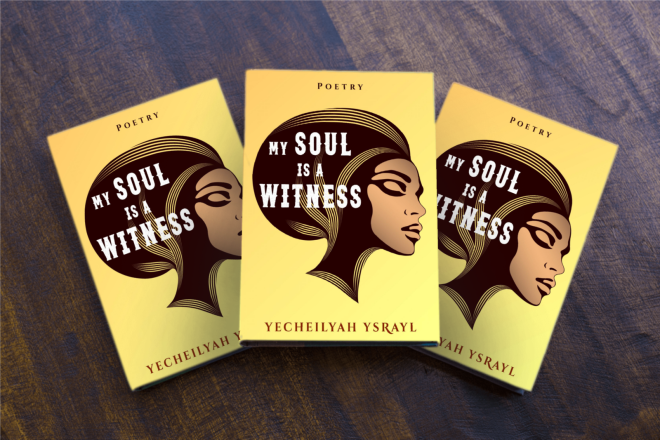
I am Soul is 99cents for a limited time. And remember, if you read it, review it!

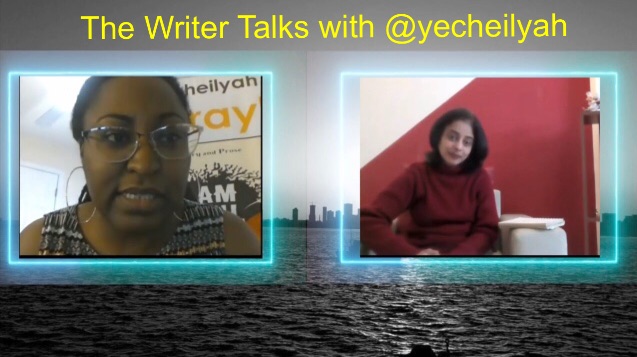
The Writer Talks with Asha G. Kumar Part One

Thank you to Asha G. Kumar, host of The Writer Talks, for having me on!

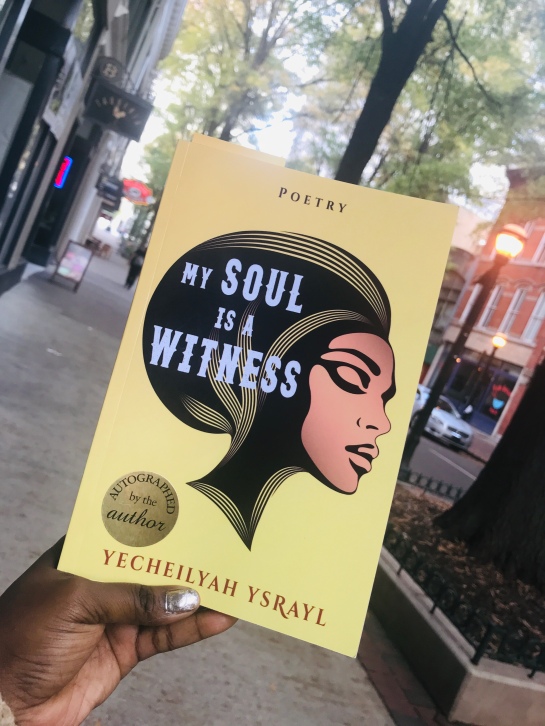
Check out Part One of this two-part interview with yours truly. In this first part, we talk about the inspiration behind my first forthcoming Urban Fantasy/SciFi/Speculative Fiction novel, The Women with Blue Eyesmy belief in aliens lol, and my latest poetry collection, My Soul is a Witness. In part two, we dig deeper into my journey as a writer, my advice to other writers, Black History, and you know I had to recite some poetry!

Part 1 is available now on YouTube.

Link below!

Subscribe | Like | Share |Save

Stepping Outside the Genre Box

Once upon a time, back in 2017, I shared the first chapter of a crazy fantasy story about fallen angels disguised as women with blue eyes killing black men for their power and one woman’s mission to stop them. I had no intentions of ever publishing it. My purpose was to share a free story on the blog that readers could enjoy. I played around using some of the same characters and background from another book I had written but have since retired.

To my surprise, so many people enjoyed the first chapter, so I came back the next week and wrote another chapter and then another and then another until I had written eighteen chapters of a book I never intended to write.

The more I shared, the more readers loved it. This got me excited!

In 2020, while we were all bored in the house and in the house bored, I worked on finishing the book. It is now a full-length novel I will release later this year.

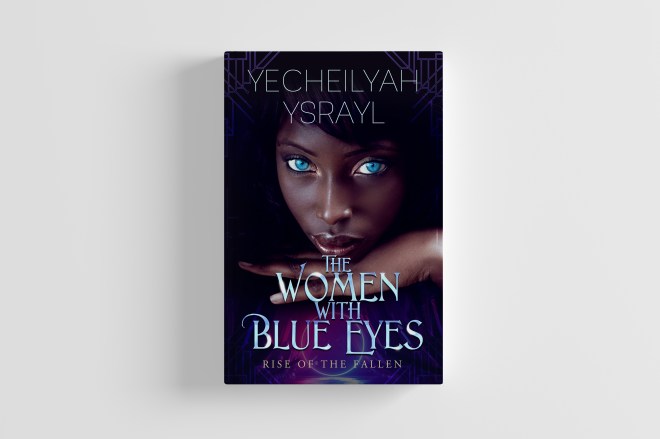
If you have been following this blog over the years, you are already familiar with The Women with Blue Eyes (now titled The Women with Blue Eyes: Rise of the Fallen) and I am so excited to finish it for you.

Moral of the Story


It’s okay to step outside the box and write something different, especially if it’s something you know readers would enjoy. Master P is not just a rapper, he is also a full-blown businessman with several products. He has everything from cereal to oodles and noodles, to potato chips to fish fry.

As I was drafting this post, I tried to think of how to explain that it’s okay to write in a genre you are not typically known for without sacrificing your author brand.

My first thought was to remind you that you are the brand, not the book. It is less about the genre and more about how you stay true to your message.

This is still true, but last week I came across a post by Phyllis Zimbler Miller where she was given some advice that really put it into perspective for me.

Recently I was advised to “stay in my lane” of military and espionage writing so that I could be considered for that niche. This is especially so because my background supports this lane.

Yet when I mentioned staying in my lane to an entertainment industry exec, she had an interesting POV about branding oneself as a writer.

She didn’t agree with staying in one’s lane in terms of specific genres. Instead, her advice to me was to remain the same lens and perspective across genres.

“Remain the same lens and perspective across genres.”

I love this because it frees the writer from the genre box. In my own words, I would say to write in whatever genre you want, but keep your message consistent. While Master P does many different things he wasn’t known for before, his “No Limit” message stayed the same.

Since I usually write Black Historical Fiction, my story will incorporate black history, all the way down to how I represent the characters. In Greek Mythology, Paschar is the angel of vision and is a white male. In my version, Paschar is still a fallen angel, but she operates in the skin of a black woman.

I’ve also infused black history into the narrative with my character’s background and dialogue. If you’ve been following the series on this blog, Miss Vicky is a new character you haven’t met yet. She is a member of the renovation committee at the new Altgeld Projects and former cook for the Chicago Chapter of the Black Panther Party’s Free Breakfast Program. Here is an excerpt from her giving black history to a couple of corner boys working for Big Sam’s organization:

Closer to the buildings, girls jumped double-dutch on the sidewalk, and young boys stood up on their bikes, riding them back and forth. The boys wore no shirt, and yellow headscarves hung out of their back pants pockets. Their pants were always sagging, revealing their boxers underneath. They knew they will be scolded by Miss Vicky if caught. She was always telling them to pull their pants up and giving the history of Buck Breaking. It was the practice of slave owners raping black men as a form of punishment on the plantations and then forcing them to sag their pants in the fields, so everyone knew the cost of disobedience.

“Nuh, uh,” the boys would protest, “I heard that started in the jails Miss Vicky.”

“You heard wrong,” the middle-aged woman would protest, “that’s not to say it didn’t circulate in the jails, but that ain’t where it started. Buck Breaking was popular in the Caribbean ya see, and it involved white supremacists and slave owners raping a male slave in front of the public to embarrass him and make him feel less of a man. Buck Breaking became popular when slave rebellions went up. Enslaved men were first stripped naked and flogged.”

“What’s flogged Miss Vicky?”

“Boy, don’t they teach you nothing in school?”

The boy would laugh, holding onto the handles of his bicycle.

“He don’t go, Miss Vicky,” another boy would chide, laughing at his friend.

“You remember how ya mama beat you for stealing car parts last year? That’s flogging. Whippings. Beatings.”

“She flogged ya ass,” the boys’ friend would tease.

Vicky would hide her laughter and continue her lesson. “Like I said, they would flog—whoop the man in front of a crowd after they raped him to serve as a warning to other slaves. Sometimes enslaved men with families were forced to have sex with each other in front of their family, or they were raped in front of their sons…”

“Dang,” the boy would say, doing wheelies on his bike.

“Hmm hmm, sure did. Lot of ’em who had gone through the process of buck breaking killed themselves afterward or ran away and never returned. Better learn ya history.”

“Aiight,” the boys would say, smiling and riding off. Miss Vicky would go on to finish her laundry, and the boys would ride off and play. Secretly, they enjoyed listening to her black history stories and would ask her questions just to get her talking. Though, they still did not pull up their pants.

The boys were not regular teens. They were corner boys for Big Sam’s crew. The yellow bandanas that hung from their back pocket was proof that they belonged to the organization. Miss Vicky liked talking to them because they were innocent during these conversations. When she spoke to them, she saw their youthfulness peaking out from behind their eyes. It was hard trying to get a fourteen-year-old boy who paid all his mama’s bills with drug money and had already decided he was a man to listen to you, but when Miss Vicky told her stories, they listened. At these times, she could see them like she used to when they were just four and five years old before Scar recruited them.

How does a Black Historical Fiction writer write Fantasy? By infusing black history into the narrative. You will learn how it all ties in when you read the book.

Read. Read. Read.

Another tip I would add is to read books in that genre. No matter how deep your message, nothing will free you from not following the basic elements associated with that genre, so read, read, read. Otherwise, nothing is wrong with stepping outside the genre box.

Share Your Work

Next, don’t be afraid to share your work. I don’t know if I would have been as confident in this story as I am if not for my freedom readers and their feedback! Thank you all for helping me pick a subtitle. The winner (as you can see) is Rise of the Fallen!

Try It Out on the Blog

And finally, blogging is another great way to write your book! It gives you the chance to get instant feedback that could help you to stay motivated along the way.

“I don’t think Byron stands a chance from falling.”
“Wow wow wow. I am enjoying this story. I’m all invested. I can’t wait for the next installment. This story has some interesting characters. Keep up the excellent penmanship!!!!”

“I’m truly enjoying this :-). I’m glad I can click on episode 3 😛 Thank you EC. Much love from Spain.”

“More please!”

“Loved this and wanted to read more. Is there more?”

“You are an excellent writer.”

“Hi Yecheilyah! I’m new to this series. I will need to go back and catch up! Chapter ten is captivating.”

About.

When Tina’s nephew Ronnie died, it traumatized her. It wasn’t just that he died. It was the way he died. After taking custody of Ronnie’s sisters and brother, Tina experienced supernatural phenomenons that eventually led to therapy and hallucinogenic suppressants. This didn’t help.

She meets Azbuga, an Archangel sent to tie the missing pieces together, still connecting her to Ronnie’s death.

Paschar is the angel of vision. She once saw the beauty of visions from the Almighty and projected these into human consciousness. Now, she is limited, capable only of seeing physical beauty, extracting energy from mortal man, and projecting illusions.

Paschar has fallen, and in a jealous rage, she attacks black men for their power. How dare he choose them over her?

Can Tina, Jason, and Az defeat Paschar and her legion once and for all? More black men are dying, and you can’t fight spiritual warfare with physical weapons.

Coming 2021

Dear Indie Authors, Please Identify Your Target Audience in 2021


Entrepreneurship has been the talk of 2020. With the COVID-19 virus sweeping the world, many new businesses have been born. It is a delight to see people take something as detrimental as a deadly global pandemic and use it as the catalyst for stepping outside their comfort zones. Every day someone is beaming about their new business endeavor, and I am here for it.

Self-Publishing a book is a business, too, so if you published a book this year, congratulations! This is a fantastic accomplishment that deserves recognition and celebration.

But Self-Publishing a book is not a business for every author.

There are two kinds of authors. We must identify them before going into it:

  • Authors who publish books for themselves
  • Authors who publish books for an audience

If you publish a book for yourself, you are not necessarily interested in creating a writing business from the book or making money. You might have published this book as a primary teaching tool to awaken the lost sheep, or you may have published this book as a lifetime goal you always wanted to achieve. You might want to print a few copies for family and friends, but you aren’t interested in creating a business out of it.

You are doing this for yourself, and there is nothing wrong with that, but also, in this case, you don’t have to continue to read this post.

You probably should though. Ya know, in case you change your mind.

If you are Self-Publishing a book that’s important to you AND appeals to a particular audience, you want to keep reading this post.

The Problem.

You write a book for yourself and then try to sell it to everyone.

“Most self-published books are vanity projects, which means, the author paid for the privilege of having them published, and spent money getting professionals to help them edit, design and produce it, but they earn less than they cost.” -Derek Murphy

The mistake is you wrote this book and did not think about who you want to read it so you try to appeal to everyone.


“It’s easy to fall into the habit of writing what you love or writing to impress your peers or your editor. That might make for good writing… but it won’t necessarily attract readers. To do that, you have to write for, well, readers.” – Writer’s Digest

The Problem.

Who are these readers? Hint: They are not everyone you know.

Dear Indie Authors, Please Identify Your Target Audience in 2021.

Identifying your target audience means identifying your customer demographics and then figuring out which tools will best attract them.

Rather than targeting everyone, you are focusing on the ideal customer for your business. “That means, stop beggingasking for help and support. Stop desperate, useless marketing tactics like spamming Facebook or blasting Twitter.” (Murphy)

You are not only identifying the ideal reader, you are thinking about real, actual people who would like to read your book.

“A lot of writing advice encourages you to define this ideal reader… but forgets to mention they need to be actual readers. If your ideal reader isn’t real, no one will read what you write. Instead of deciding what to write and defining a reader for it, start by defining your reader and writing for them.” – Dana Sitar

When you know your target audience it makes it easier to find your tribe. Your focus is on the people who are there instead of those who aren’t because you know you can’t please everyone.

But that’s what selling to everyone is like: trying to please everyone.

Instead of saying your book is for women, think about who these women are in more specific terms.

“My book targets women history buffs, aged 25-45, who love black history but are tired of the same white male-dominated narratives.”

Ask yourself: “Who am I writing this book for? What real people do I know would read a book like this? Maybe there is a black woman I know who is always talking about Ta-Nehisi Coates and happens to be reading Colson Whitehead’s Underground Railroad. She might enjoy my Stella Trilogy.

Not so Good Example:

“My book targets women 20-70, suffering, that want to feel better.”

This one is too broad. Every woman you know is suffering from something and want to feel better, and it will be hard to market a book to this wide of an age group. You got millennials and senior citizens in the same club.

Why Does It Matter?

Once you know your target audience and what they want, you can give it to them by being of authentic service to your tribe, which means offering exceptional value consistently. Consistency builds trust, and people buy from brands they trust.

Understanding our target audience doesn’t mean our family and friends won’t support us. It means we are not targeting them in our marketing. To target is to direct an action or message to someone or something. Pookie and Ray-Ray may know you, but are you trying to direct your message to them?

How many family members have bought your book?

I’ll wait.

But this doesn’t only apply to Self-Publishers but entrepreneurs in general, especially in the age of social media. Most people have not even done the basic work of securing a website. You appear out of nowhere with something to sell. You then tell people to cash app you the money and expect them to trust you enough to do it. You can have all the faith in the world, but it still doesn’t exempt you from following a basic business practice.

It’s easy to become frustrated and exhausted about the lack of support for a company without much to show for your efforts when you are trying to appeal to the broadest possible audience. If you start a business and then spam all your Facebook and Instagram friends hoping they will support you, your message may seem inauthentic and doesn’t really resonate with anyone in particular. – Tucker Max, How to Write For and Target the Right Audience for Your Book

Another benefit to knowing your target audience is knowing you don’t have to be everywhere to be seen. If your audience does not hang out on Facebook, you do not have to be on Facebook. If they are not on Instagram, you do not have to be on Instagram. It is easier to be consistent when your attention is focused instead of divided. Go where your people are and build.

Indie Authors, and new entrepreneurs in general, would be a lot happier if we focused on serving our targeted audience instead of everyone we knew. Everyone does not care about you or your business, and it’s a waste of time, energy, and resources trying to appeal to everyone. No one is obligated to support you. People do not care about your product, book, or service. They only care about what it can do for them. Please understand this.

“If you aren’t writing for an audience and carefully considering the commercial viability of your project, if you aren’t expecting and planning to make more money than you spend, and learning exactly what it takes to achieve that, then you’re publishing for yourself, and it’s a big risk and gamble.”

Are You Building a Book Business or a Hustle?

Self-Publishing a book is expensive without a return on investment. As Murphy explains, it just becomes a gamble. I like to call it a hustle. When I think of that word hustle, I think of someone doing anything and everything to make it instead of aligning oneself with a strategic plan and purpose. If you are continually spending money to produce something that doesn’t give anything in return, it can quickly get frustrating.

Excellent cover design, editing, ISBN, and all that is basic; we should all know the importance of this in 2021. The self-publishing service providers, coaches, vanity presses, and assisted self-publishers rarely talk about how authors can make money from that book they just paid five thousand dollars to produce. Launching a #1 Amazon Best Seller is great, but that doesn’t mean the author is earning money. Being on the Amazon Best Sellers list is cool but what’s even more neat is having a faithful readership because a loyal audience will bring consistent book sales.

This isn’t to say you shouldn’t pay to publish a high-quality product. It is to say that without an audience to buy it, it will feel like a waste of money.

Identifying a target audience is the key to any business’s success, and I mean success outside of personal gratification. In 2021, I hope we can all do better (myself included) in focusing on those who best fit the people we want to serve.

Looking for more Indie Author Basics? Click Here.


Don’t forget that if you have read My Soul is a Witness I am trying to reach 20 Book Reviews before this year closes and we are almost there! If you have the book (and have read it), do consider leaving an honest review on Amazon.

Why It Matters:

It’s a real challenge for Indie Authors to market books without Amazon reviews because reviews act as social proof and establish credibility and competence in the publishing marketplace. Are you an author? In need of reviews? Be sure you RSVP for my 2021 list. Click Here.

How to Review on Amazon:

Click this link. Scroll down to ‘Write a Customer Review,’ rate and leave your thoughts on the book.

Also, I am Soul is 99cents on Kindle for a limited time.

No One is You And That is Your Power

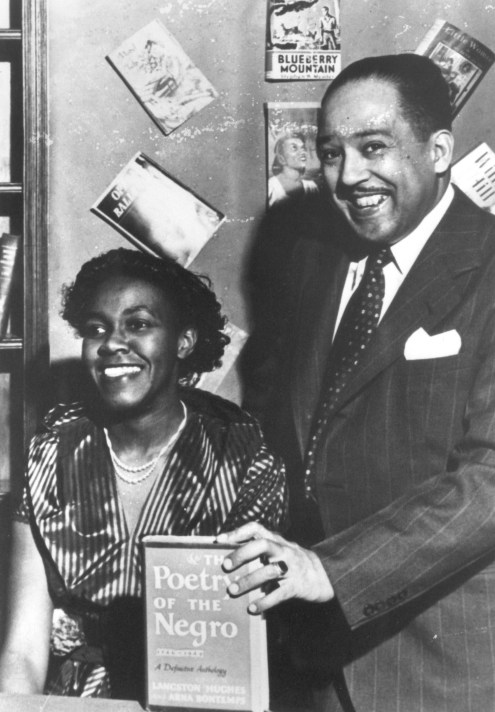
Langston Hughes and Gwendolyn Brooks at Hall Branch Library, Chicago, IL, 1949. Credit: George Cleveland Hall Branch Archives, photo 146, Vivian G. Harsh Research Collection.

I still go to libraries.

I got my first library card at the Hall Branch Library on 48th in Michigan on Chicago’s south side. I was thirteen years old and still needed my mother’s signature. I wasn’t into Black History back then. I chose this library because I wanted to check out books, and it was down the street from my grandmother’s house.

Here’s where it gets interesting.

Dr. George Cleveland Hall

Yesterday, I discovered Hall Branch was named for the renowned African American surgeon, social activist, and civic leader Dr. George Cleveland Hall (1864-1930). It was the first Chicago Public Library location with a Black branch manager, Vivian G. Harsh, who served as its first manager. We will get deeper into Hall’s background on this Friday’s Black History Fun Fact, the last one of the year.

In 1949, Langston Hughes and Gwendolyn Brooks visited the Hall Branch to celebrate the publication of The Poetry of the Negro Anthology.

On July 7, 2000, the Friends of Libraries USA (now United for Libraries) and Illinois Center for the Books designated Hall Branch as a literary landmark. This was in recognition of its promotion of African American literary culture by serving as a meeting place for such writers as Arna Bontemps, Gwendolyn Brooks, Lorraine Hansberry, Langston Hughes, Zora Neale Hurston, Claude McKay, and Richard Wright. (Learn more about the Chicago Renaissance of the Black Belt Here).

I thought I had picked this library at random and for no particular reason. I had no idea it was so rich with Black History or that it was this hub for Black writers.

This helped me to see how unique each of our journeys are. No one has walked in your shoes or experienced what you’ve experienced. No one is you, and that is your power.

Everything is a stepping stone to get us to the place Yah has destined for us, every path like a thread weaving and connecting everything together.

It would be years before I learned who Langston Hughes and Gwendolyn Brooks were, and many more years before I would publish a collection of poetry of my own.

Little did I know I was building on the same foundation as those who came before me.

Talk about the power of purpose!

Also, I still got that library card!


Have you read My Soul is a Witness? I am striving for 20 book reviews at minimum before the year is out. If you read this book, I would appreciate so much if you reviewed it! Go to the page here. Scroll down to Write Customer Review, click that, rate and review. Boom. Done.

Thanks!!

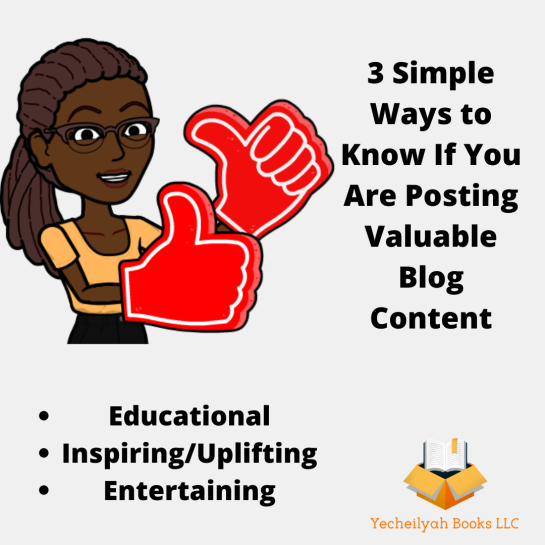
3 Simple Ways to Know If You Are Posting Valuable Blog Content

It’s time for another blogging tip!

We have already talked about one cool strategy for busy bloggers. I want to extend that conversation by making it easier for those new to blogging to discern if what you are posting is valuable and high quality.

For the record, I am not one of those who think you have to post every day, not on social media and not to the blog. Wasted time is like wasted money, so I will not post or recommend posting just for the sake of posting.

We are not doing all of that.

What we are doing is posting consistently enough to be present enough to serve our audience.

Whenever we post, we want to add value, and adding value only means educating, inspiring, or entertaining your people.

  • Educational
  • Inspirational/Uplifting
  • Entertaining

A fourth category could be Edutainment – Educating through entertainment. Thank me later.

To do this would mean that you must be deliberate about the content you publish.

What does this mean for blogging?

To be deliberate means to have an intentional and purposeful focus. It is the opposite of being fake and posting just to post. It means posting what is important to you and what is helpful, inspiring, or educational to others while somehow making sure it ties into your brand.

I published I am Soul on December 20, 2017. This was intentional, as December 20 is my late mother’s birthday. She was alive then, and I wanted the book to be a dedication because she had been through a lot that year.

I know value is a big buzzword these days, and sometimes it can sound so complicated, but it’s really not all that deep. Posting content of value means you are posting what will uplift, educate, or entertain. Some examples include:

  • Creative writing (poetry, short stories)
  • Promotion for Indie Authors
  • Posting a think piece on a hot topic
  • Sharing some life lessons and experiences (as it is relatable to your brand)
  • Posting a review of a book you read
  • Posting something funny

Blogging doesn’t have to be a waste of time, especially if you are not getting paid to be here. Suppose you are making money from your blog or using it as an author platform to connect with readers. In that case, you definitely don’t want to waste your time publishing ten posts a week that doesn’t add value to your life or the life of others.

Choose a few days a week you want to post and make sure you are entertaining, educating, or inspiring us.

That’s it.


For More Blog Tips Click Here.

Don’t forget to vote for the My Soul is a Witness Book Cover!

PS. This book is 99cents on Kindle! This is your chance to grab it if you don’t have it. Click the title linked above. 

>>Vote Here<<