I don’t know which new Indie Author needs to hear this, but it shows in your writing if you don’t read.
It is said that writers write, which is true, but writers also read. It is through reading that we learn the basics of how to write. This means that reading and writing are a partnership, and one cannot exist without the other.
This is not to say that someone who was never into reading can’t write a book. They absolutely can, but only if they are willing to start reading. There is no way around this. Aspiring writers need to consume books like aspiring doctors need to go to medical school.
“If you want to be a writer, you must do two things above all others: read a lot and write a lot. There’s no way around these two things that I’m aware of, no shortcut.”
Stephen King
There is no such thing as loving to write but hating to read.
This is one of the biggest issues I see in the Self-Publishing community. It is not the act of Self-Publishing that gives it a bad reputation. It is the audacity of people who never enjoyed reading and writing in the first place who suddenly want to write a book.
“It’s hard for me to believe that people who read very little (or not at all in some cases) should presume to write and expect people to like what they have written, but I know it’s true. If I had a nickel for every person who ever told me he/she wanted to become a writer but didn’t have time to read, I could buy myself a pretty good steak dinner. Can I be blunt on this subject? If you don’t have time to read, you don’t have the time (or the tools) to write. Simple as that.”
Stephen King
The first red flag that someone doesn’t read is when I am sent a manuscript so badly formatted that it does not resemble a novel or book or anything. It is just letters on a page with weird spacing and no chapter headings.
This is because the writer isn’t familiar with the story structure, which comes from reading books. They are hoping I can take their scrambled notes and turn them into something legible. They want me to write the book for them. (If you want someone to write the book for you, you’ll have to hire a ghostwriter.) The same issue arises when new authors are choosing genres. I can’t tell if this is supposed to be a cookbook or a romance novel.
How the book is published is not the problem, weak writing is.
If you want to publish a book but you’ve never been into reading, that’s an easy fix: Just start reading. The more you read, the more you will write, and the better you will be at it.
Reading books in the genres you want to write in to familiarize yourself with them is also a good idea. Want to write a poetry book? Read poetry. Memoir? Read memoirs, and understand they are not the same as autobiography. Wanna write historical fiction? Read historical fiction, and so on.
Ready to publish your book but not sure where to start? Click Here.
Please help me extend a warm welcome to D.L. Heather.
Welcome to the PBS Blog!
What is your name and where are you from?
Hi, my name is Debra, and I was born in Canada, but I live in Detroit now.
Oh, cool. Detroit in the house.Are you employed outside of writing?
No, writing is my life. Before writing books, I was a contributor and columnist for various magazine outlets.
Awesome! What was your childhood dream?
To walk into a bookstore and see my books on the shelves. As a child, all I wanted was to write. I was never without a pen and a notebook.
That’s so cool because I have a similar story. Always had me a notebook or journal.
Let’s talk about writing. Tell us about publishing your first book. What was that like?
My first book, Metamorphosis, was published in 2018. Indescribable – it’s not a word we writers like to admit to. Surely, there is an adjective or simile for every eventuality, and yet here I am using it to describe the feeling of holding my book for the first time. The writing process is a long journey of transformation, from a single idea to months of writing, innumerable coffees, countless revisions. And now it’s a physical thing I can hold in my hands. Like I said – indescribable.
I love how you described that process!
Debra, what takes up too much of your time?
I find building my brand on social media platforms the biggest time-consumer. I’d rather be writing, haha.
For sure. What’s your favorite TV Show? Movie?
My favorite TV show is Sons of Anarchy. Movie, hmm, that’s a tough one, I have many but I would say Training Day is up there at the top of the list.
What’s the most difficult thing about being a writer? The most exciting thing?
The most difficult thing about being a writer is the fact that everyone in your life thinks whatever you’re writing is about them (sometimes they’re right but not always). That’s the truth–and as the artist, it’s a hard pill to swallow. Be prepared–before you’ve even finished the story, even, you can see it in their eyes that they are full of wonder. It’s about them, isn’t it. Yes! It is! It has to be! There’s no way it’s not!
The most exciting thing about being a writer to me is it doesn’t matter if it’s a novel, poem, or a journal entry, writing helps let the demons out. We have to deal with complex emotions and a good way to understand them (in a healthy way) is to have a creative outlet—like, writing, music, or art. Writing is great because you can literally put down on paper how you feel. It’s cathartic at the time, and in my experience, later on when you read it. It’s a reminder of how you felt and what you thought at a point in time and how you dealt with it.
What genre do you write in, why?
Poetry and nonfiction. I’ve used my writing not just for my personal creative gain but in the hopes that maybe I could write something someday that would help people get through tough times. Maybe I could write something that would make a difference in another person’s life.
I knew you were a poet by how you answered that one question!
In your own words, what is love?
To me, love is just a word and one I don’t use that freely. Because love is scary, it’s basically giving someone a map of all your flaws and imperfections and putting faith in them to not abuse that power. And that can be so beautiful, but it can also be brutal! Love can make you do the hardest thing a human could ever do, be vulnerable.
That is a very interesting way of putting it.
Why is writing important to you?
Writing keeps me whole. Writing keeps me sane. I’m not that great at expressing myself in person. Still, when I write, I feel like I can get all of my ideas down without interruption, without influence from someone’s body language, without fear of what someone will think of me if I stumble over my words while I’m forming a thought (which happens more than I would like to admit). Writing has always been my outlet. My writing is so closely linked to my personal experiences, regardless of what it is that I’m writing. It’s a way for me to process things and understand myself. It’s a way for me to escape the restrictions of my own life (such as grief, heartbreak, and childhood trauma). It allows me to feel free again.
Thank you, Debra, for spending this time with us.We enjoyed you!
D.L. Heather is the pen name for poet, writer, and former music journalist Debra Heather. She has a B.A. in English and is the author of the inspirational poetry collections Life Interrupted and Metamorphosis.
Writing came into her life in her teens through therapy and the exploration of healing through journaling. Her writing is motivated by her experiences with childhood trauma, love, loss, healing, heartbreak, and self-discovery.
She prefers to let her work speak for itself, a private person by nature, in the way poetry allows her to. She hopes to inspire others and reinforce the fact that you are not alone.
When she isn’t writing in her studio, she enjoys traveling, reading, movies and gardening. Her book, Petals of Healing, will be available in December 2021.
This is nothing new. Facebook and Instagram have had outages before. I have no doubt everyone will be back online soon.
That linked article said this happened this morning, but I was on Instagram and Facebook, and it was working fine, so the outage is relatively recent. (I noticed it afternoon-ish.)
The interesting thing about all of this is it wasn’t until I sent my fourth quarter email out to my list that I noticed these platforms were down. I got an alert from the news app on my phone just as soon as I pressed send.
“Oh. Okay.”
Short story: I wasn’t panicked.
This message is simple:
It would be best to have other ways of engaging with your readers outside of these two major platforms. Instagram and Facebook might be the most popular, but they are not the only social networking sites available, nor are they the only places authors should look to when engaging an audience.
If anything permanent happened to these social media sites, I’d like people to know they can still visit me online at yecheilyahysrayl.com, contact me using my contact form and sign up to my email list and blog for updates.
Many Indie Authors depend solely on Instagram and Facebook for sharing content. This isn’t even just for Authors. Many new entrepreneurs operate solely by way of Facebook pages and Cash App.
Not good.
If Instagram and Facebook were to be down indefinitely, people would lose contact with most of their audience.
How so?
Well, my language is poetry so to quote Najwa Zebian: “The biggest mistake that we make is that we build our homes in other people.”
Indie Authors and new entrepreneurs make a mistake when they build their businesses solely on temporary social media platforms with no means of staying in contact with people beyond that social media site.
Consider:
You have 8,000 Instagram followers, but someone hacks you or Instagram dies. You have 12,000 Facebook followers, but FB’s dead too. Now thousands of potentially eager clients no longer exist. Well, they exist, but they have no idea how to contact you because:
You don’t have a website they can visit to support you.
You don’t have an email marketing strategy for them to keep up with you.
You don’t have a blog to continue to share your content. You know, the content you usually share on the Instagram that no longer exists.
Heartbreaking stuff.
Other Ways of Connecting / Interacting with Your Readers Outside of Facebook and Instagram
Every Author Should Have a Website
Not to beat a dead horse here, but you should really have an author website. We’ve talked about this guys. Your website is your home.It is where people can go to learn more about you, buy your books/services, and contact you. This is your main hub, a summary of all things you, the author. Websites demonstrate professionalism, and every professional business has one. Serious Indie Authors should have one too.
Blog
Your blog (which should be easily accessible from your website) is where you provide content. Blogs perform better traffic-wise than static websites because they are updated regularly with new material. I think having a blog and static website is a great balance.
Email
Your email list (which should be easily accessible from your website) is a way of nurturing relationships with new readerswho aren’t following your blog but bought your book and providing updates to loyal readers who want to engage with you more deeply.
Collecting emails to a list is important for Indie Authors because POD services like Amazon’s KDP do not tell you who the people are who bought your book. You see the sale, but not the name or anything else about the customer. This means if I buy your book from Amazon, you won’t know unless I tell you. This makes it challenging to keep track of me as a new reader and build a stronger relationship with me.
This is also why you should be pushing book sales from your author website too because you have a better connection to the people buying your books. Oh, wait, you don’t have a website. See how that works?
Some readers will do you the favor of posting about your book on Facebook and Instagram. But, wait, there is no FB and IG in this scenario.
Other Social Sites
Believe it or not, other social media sites exist. Places like Twitter, Pinterest, YouTube for video, and maybe even LinkedIn can be good alternatives to communicate with your audience if the others are gone.
The point is, there are other ways of being visible online outside of Facebook and Instagram.
I hope this outage helps us to rethink our social media strategy and develop ways of moving those loyal Insta-friends over to our own platforms.
Update: All those random emails ya’ll sent out the blue yesterday to people who probably forgot they signed up to your list is like rushing out to the grocery store to buy food during a shortage rather than just stocking up before the shortage happens.
Moral: Just having an email list is not enough if you don’t use it. It can hurt you more than help you.
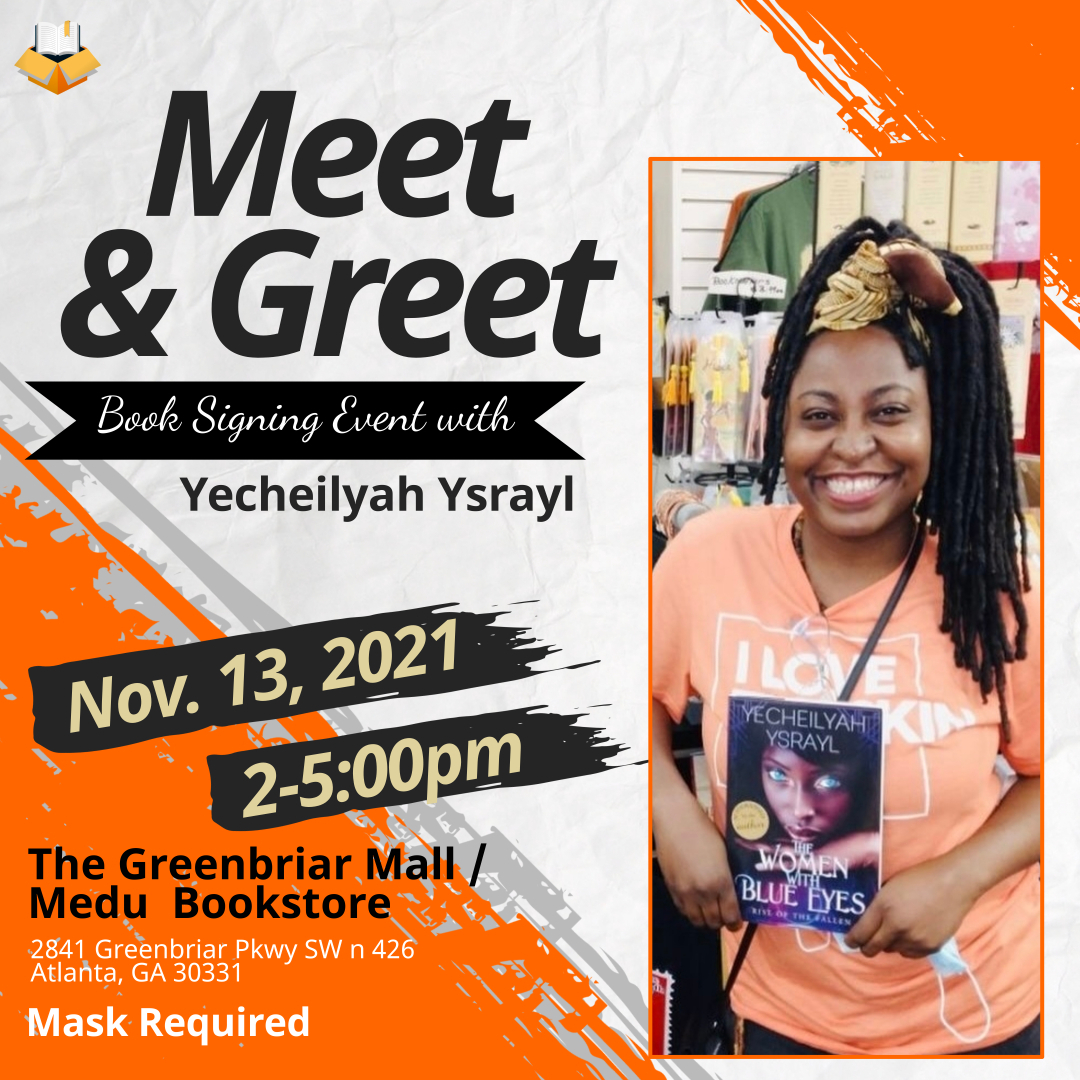
Meet and Greet Book Signing 11/13
On 11/13, I am hosting my first book signing since Covid. My last signing was in 2019, so I am nervous and excited to be around people again.
Please be advised we are still fighting this virus, so there is very limited space and vaccinated or not, you must wear your mask. I am also not putting in a large order of books, so first come, first served. COME EARLY.
At its core, businesses are built on the foundation of relationships. This is especially true in the Self-Publishing world, where authors do not always have access to the exposure traditionally published authors receive.
When it comes to social media, it’s about being social and making connections with others, so it’s okay to talk about things outside of your books. It helps people get to know you on a deeper level and feel comfortable shopping with you.
Some basics to start with is sharing a little about you and maybe throwing in your thoughts on current events.
What are some things you like to do when you are not writing? What’s your favorite color? What are you passionate about in life? What do you think about the Covid-19 pandemic and the vax/non vax wars? What about what’s going on in Haiti? When is your birthday? What exciting things did you get into this weekend?
And so on…
I’m going to make this short because the message is pretty straightforward. No one wants to be inundated with “Buy My Book” messages all day, not on social media and not in their inboxes. I know it sounds kinda funny, but people only care about how what you are saying is relatable to their lives. You really do have to care about people, which sometimes means stepping outside your comfort zone and opening up a little about other things that may have nothing to do with your books. The great thing about this is you can still come back around and tie it into your brand.
So, every now and again, I will accidentally publish a post from my phone. This is because the preview and publish buttons are right next to each other in the WordPress app. I always preview my posts at least a thousand times before posting.
I removed the last post with the title “Why Are People So Hard on Self-Publishers,” because I published it by mistake. I would let it slide, but it’s not even halfway finished.
I realize these posts are going to your emails, and it can be frustrating to get that error message. If you tried clicking on the link and you received an error message, I apologize for the inconvenience. Those links are broken because I have removed the posts.
That author post will be ready soon, and I appreciate your patience.
Independent Authors have become obsessed with rankings, reviews, and becoming an Amazon Best Seller over the years. While there is proof book reviews carry weight (social proof, credibility, increased visibility), there are many myths surrounding rankings.
According to Amazon, “the better the sales rank, the more sales it’s getting on Amazon.”
But, is this true?
Yes, selling books will naturally raise your book ranking, but your Amazon ranking can also be high for other reasons.
When I released I am Soul back in 2017, I set it up for preorders and, on release, it made it to #7 on Amazon’s Best Seller’s List.
How I thought I was doing it
To the untrained eye, this can look like I sold tons of books. And by the “untrained” eye, I mean everyday people who are not Self-Publishers or are not familiar with how the system works like family and friends.
But then…
According to my sales report for December 2017, I sold five preorders between December 16-19 (the book was released on the 20th).
Yes, I said five.
Five books sold, and I was #7 on Amazon’s Best Seller’s List.
Just so you know I am not BS-ing you, here’s a screenshot:
How is this possible? Shouldn’t the book that sold more copies rank better? Yes, but as many people have already said, no one knows exactly how Amazon’s algorithm works. What we do know is books sold aren’t the only thing that determines a book’s ranking.
There is nothing wrong with pushing your book to sell tons of copies on release day and to make that Best Sellers list, but your book’s success is not contingent upon how well it does in the first few days or even weeks. A book that continues to sell over time does better than a book that does well all at once and then stops selling.
In the long run, steady, organic growth will always outperform sudden bursts of activity.
“At the end of two weeks, a book that sells five copies a day will rank significantly higher than a book that sells 3,000 copies on its launch day.” (Doppler, J)
It’s like book reviews, in a way. The newer the review, the better.
Book A gets about twenty reviews out of the gate. Your review team showed up and showed out. But, over the next few days, weeks, and months, there is no new activity.
Book B gets a couple of reviews out of the gate, a few more a week later, a few more the following week, and several more over the next few months.
Because Book B has newer reviews, it tells Amazon’s algorithms people are still interested in this book.
The Moral
A book that gets reviews slowly but consistently over time does better than a book that gets tons of reviews at once, but then the reviews stop coming in.
But what does this have to do with the sales ranking?
The book that continues to get new reviews is likely also the book that is continuing to sell. It might not be a #1 Best Seller or rank in Amazon’s top 100, but the author is selling books consistently.
And this is what authors should focus more of their attention on.
Most indie books that take off running, in the beginning, stop selling after the release date because so much energy is directed at the launch that authors forget they need to continue to sell books AFTER that.
It is not to say being an Amazon Best Seller is not a cool thing. It is to say it doesn’t carry as much weight as people have made it out to be. Being an Amazon Best Seller is great, but it doesn’t really mean anything if the author is not making sales in the grand scheme of things.
There is no need for Indie Authors to stalk their Amazon ranking because a high ranking doesn’t always mean they are selling books. In the same way, a low ranking doesn’t always mean they are not selling books.
Sales rank plays a minor role in determining the order of Amazon search results. Other factors such as relevance, keywords, sales history, product listing quality, and available inventory may influence Amazon’s algorithms. Therefore, a book with a high sales rank may appear later in search results than lower-ranked books.
How do you tell if your sales rank on Amazon is reflective of books sold or just a bump in Amazon’s algorithm because of other influences?
Consistency
Besides monitoring your sales report through your KDP account, consistency is the best determinate that your book ranking on Amazon is legit. By legit, you are a best seller because you are selling books. If you are a #1, #2, #3 (and so on) best seller in your category for weeks, months, or even years at a time, the chances are that is because you are selling books regularly, getting reviews, and doing the dango thang. Congratulations, you are an actual bestseller.
Suppose you are only a #1 Amazon Best Seller for five minutes. In that case, it could be a combination of things influencing the algorithm, causing the numbers to fluctuate where one minute you are number one (let’s say because tons of people looking at your book page), and the next you are #512.
You should certainly be proud of yourself for making it to #1, whether you were there for five minutes or five months. However, don’t allow yourself to be deceived by Amazon’s ambiguous system. Ya’ll are out here going crazy and being scammed over something that doesn’t even matter.
This isn’t about Amazon. This is about Indie Authors and how we’ve allowed our writing self-esteem to be determined by numbers and rankings. Just because you are not an Amazon Best Seller does not mean you are not selling books. Period.
And, for clarity, I did not say you should ignore your book ranking, just that there’s no need to stalk it, as in repeatedly going back to refresh the page every five minutes.
Please help me extend a warm welcome to Hugh C.N. Miller.
Welcome to the PBS Blog!
What is your name and where are you from?
My name is Hugh C.N. Miller and I am from Johannesburg, South Africa
Okay. South Africa in the house.
My Uncle’s name was Hugh! What kind of music do you like?
Ava Max, Julia Michaels and loved Prince and the revolution.
Are you employed outside of writing?
Yes. I own my own design and web development studio for past ten years.
Cool!
Do you design your own book covers? What’s that like?
I design my own book covers, website and book typesetting, since I am a graphic designer and web developer. I have also designed book covers for other people over the years. Love the control of knowing what I have seen in my mind as the cover and being able to achieve that myself and not having to hope a designer gets the picture in his.
Very nice! Are you married? Kids?
Yes. I’ve been married for twenty-seven years. I have one daughter, Samantha, 20 years old.
Wow. 27 years? That’s awesome! Let’s talk about writing. How did you get into Science Fiction?
Always have had a passion for Sci-Fi and prefer futuristic novels to everyday life events, also a nicer escape from reality.
I feel you. Is this your first book? How was the process of publishing?
This is my first book to be published, have written various stories in the last 30years, but remained only in my drawer. Thought it was time to pursue this dream with more energy and accomplish something I always wanted to be, an Author.
What do you think of the world we live in?
Think it needs love, tolerance between races. We need to understand that we all humans, on same sinful level in front of an almighty God to one day judge us on love.
Since you write about robots, I have to ask, religious or nah?
Yes, I believe in a creator and savior above all the superheroes, the real one who came to save humanity, Jesus Christ. There is so much evidence for design vs evolution, never mind the peace and joy that comes from believing in a God who is in control, and that includes covid19. My book is all about a case for the creator as seen by an Android robot.
What’s your favorite TV Show? Movie?
All time favorite move is The Matrix. TV Show: Lost
Okay, The Matrix is definitely a dope movie.
If you had one superpower that could change the world, what would it be?
A superpower to ensure every human has a little home and food every day.
I love that.
Thank you, Hugh, for spending this time with us. We enjoyed you!
Hugh Miller
Hugh C.N. Miller is a South African Science Fiction Author, with his latest novel published and available on Amazon: “Interview with Things” He is a Graphic Designer and Web Developer at his own agency: HM Studio since 2011. He has over 30 years of extensive design and advertising experience.
…and if you are a fan of Science Fiction, check out his book. It’s giving me iRobot vibes!
In the year 2047, artificial intelligence with Androids segregated in massive domes manages a seemingly perfect world. In an apparent glitch in the Dome software, an Android discovers the essence of who he is was set for termination, a dark hidden secret that would threaten the stability of the entire human race as his relentless mission to find life, purpose, and freedom begins, plummeting David, a human journalist’s life into turmoil. In his quest to understand creation, evolution, free will, death, and faith, an unexpected new threat to humanity greater than the Androids emerge as the Federal Robotic Bureau hunts down this rogue robot in a breakneck chase.
Are you an author? Looking for more exposure? Learn more about my Introduce Yourself Feature HERE.







 I thought I was big time.


 The PBS Blog