Welcome back to another episode of No Whining Wednesday! Today, you cannot whine, criticize, or complain.
If you are new to this blog or new to this segment please visit the NWW page herefor past episodes.
Today’s inspiring word came to me earlier this week:
Often when we are seeking clarity on something, we are looking for something we need to do. Rarely does it occur to us that maybe not moving is the “move” we need to make. I know it’s hard to realize from a social media point of view, but you don’t always have to be “doing” something.
Have you ever truly sat in silence? No TV, no music, no talking, just quiet. Do you know what your own heartbeat sounds like? Have you ever took the time to listen to your own breath?
Every year my husband and I grow tomatoes, lettuce, bell peppers, and several herbs in our garden, including basil, oregano, and rosemary. There is a time between sowing and reaping where you don’t have to do anything. It is not time to sow, and it is not time to reap. It is time to be still and allow what was planted to flourish. And yes, there is such a thing as overwatering your plants.
The story of the Chinese Bamboo tree is my favorite.
It takes this tree five years to grow, and it doesn’t break through the ground until the fifth year. What happens is it looks like you are wasting your time watering the ground because nothing materializes. But once it does break through, it grows ninety feet tall.
“Like any plant, growth of the Chinese Bamboo Tree requires nurturing – water, fertile soil, sunshine. In its first year, we see no visible signs of activity. In the second year, again, no growth above the soil. The third, the fourth, still nothing. Our patience is tested, and we begin to wonder if our efforts (caring, water, etc.) will ever be rewarded. And finally, in the fifth year – behold, a miracle! We experience growth. And what growth it is! The Chinese Bamboo Tree grows 80 feet in just six weeks!”
-Matt Morris
The deep thing about this is not that it grows so tall. The deep thing is although it does not seem like anything is happening, there is movement the whole time. The tree did not grow tall overnight. It was growing all along:
“Did the Chinese Bamboo Tree lie dormant for four years only to grow exponentially in the fifth? Or, was the little tree growing underground, developing a root system strong enough to support its potential for outward growth in the fifth year and beyond?”
Stop trying to force things to happen by looking for stuff to do. It is wise to know when to move, but it is also wise to know when not to move. Ya’ll know the word. There’s a time to gather and a time not to gather. The consequence of acting when you should have been still (like talking when you should be silent) is stunting your own growth:
“Had the Chinese Bamboo Tree farmer dug up his little seed every year to see if it was growing, he would have stunted the Chinese Bamboo tree’s growth as surely as a caterpillar is doomed to a life on the ground if it is freed from its struggle inside a cocoon prematurely. The struggle in the cocoon is what gives the future butterfly the wing power to fly.”
Independent Authors have become obsessed with rankings, reviews, and becoming an Amazon Best Seller over the years. While there is proof book reviews carry weight (social proof, credibility, increased visibility), there are many myths surrounding rankings.
According to Amazon, “the better the sales rank, the more sales it’s getting on Amazon.”
But, is this true?
Yes, selling books will naturally raise your book ranking, but your Amazon ranking can also be high for other reasons.
When I released I am Soul back in 2017, I set it up for preorders and, on release, it made it to #7 on Amazon’s Best Seller’s List.
How I thought I was doing it
To the untrained eye, this can look like I sold tons of books. And by the “untrained” eye, I mean everyday people who are not Self-Publishers or are not familiar with how the system works like family and friends.
But then…
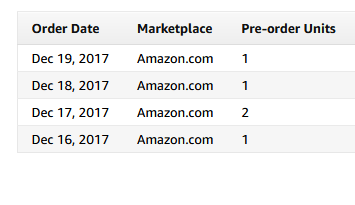
According to my sales report for December 2017, I sold five preorders between December 16-19 (the book was released on the 20th).
Yes, I said five.
Five books sold, and I was #7 on Amazon’s Best Seller’s List.
Just so you know I am not BS-ing you, here’s a screenshot:
How is this possible? Shouldn’t the book that sold more copies rank better? Yes, but as many people have already said, no one knows exactly how Amazon’s algorithm works. What we do know is books sold aren’t the only thing that determines a book’s ranking.
There is nothing wrong with pushing your book to sell tons of copies on release day and to make that Best Sellers list, but your book’s success is not contingent upon how well it does in the first few days or even weeks. A book that continues to sell over time does better than a book that does well all at once and then stops selling.
In the long run, steady, organic growth will always outperform sudden bursts of activity.
“At the end of two weeks, a book that sells five copies a day will rank significantly higher than a book that sells 3,000 copies on its launch day.” (Doppler, J)
It’s like book reviews, in a way. The newer the review, the better.
Book A gets about twenty reviews out of the gate. Your review team showed up and showed out. But, over the next few days, weeks, and months, there is no new activity.
Book B gets a couple of reviews out of the gate, a few more a week later, a few more the following week, and several more over the next few months.
Because Book B has newer reviews, it tells Amazon’s algorithms people are still interested in this book.
The Moral
A book that gets reviews slowly but consistently over time does better than a book that gets tons of reviews at once, but then the reviews stop coming in.
But what does this have to do with the sales ranking?
The book that continues to get new reviews is likely also the book that is continuing to sell. It might not be a #1 Best Seller or rank in Amazon’s top 100, but the author is selling books consistently.
And this is what authors should focus more of their attention on.
Most indie books that take off running, in the beginning, stop selling after the release date because so much energy is directed at the launch that authors forget they need to continue to sell books AFTER that.
It is not to say being an Amazon Best Seller is not a cool thing. It is to say it doesn’t carry as much weight as people have made it out to be. Being an Amazon Best Seller is great, but it doesn’t really mean anything if the author is not making sales in the grand scheme of things.
There is no need for Indie Authors to stalk their Amazon ranking because a high ranking doesn’t always mean they are selling books. In the same way, a low ranking doesn’t always mean they are not selling books.
Sales rank plays a minor role in determining the order of Amazon search results. Other factors such as relevance, keywords, sales history, product listing quality, and available inventory may influence Amazon’s algorithms. Therefore, a book with a high sales rank may appear later in search results than lower-ranked books.
How do you tell if your sales rank on Amazon is reflective of books sold or just a bump in Amazon’s algorithm because of other influences?
Consistency
Besides monitoring your sales report through your KDP account, consistency is the best determinate that your book ranking on Amazon is legit. By legit, you are a best seller because you are selling books. If you are a #1, #2, #3 (and so on) best seller in your category for weeks, months, or even years at a time, the chances are that is because you are selling books regularly, getting reviews, and doing the dango thang. Congratulations, you are an actual bestseller.
Suppose you are only a #1 Amazon Best Seller for five minutes. In that case, it could be a combination of things influencing the algorithm, causing the numbers to fluctuate where one minute you are number one (let’s say because tons of people looking at your book page), and the next you are #512.
You should certainly be proud of yourself for making it to #1, whether you were there for five minutes or five months. However, don’t allow yourself to be deceived by Amazon’s ambiguous system. Ya’ll are out here going crazy and being scammed over something that doesn’t even matter.
This isn’t about Amazon. This is about Indie Authors and how we’ve allowed our writing self-esteem to be determined by numbers and rankings. Just because you are not an Amazon Best Seller does not mean you are not selling books. Period.
And, for clarity, I did not say you should ignore your book ranking, just that there’s no need to stalk it, as in repeatedly going back to refresh the page every five minutes.
Please help me extend a warm welcome to Hugh C.N. Miller.
Welcome to the PBS Blog!
What is your name and where are you from?
My name is Hugh C.N. Miller and I am from Johannesburg, South Africa
Okay. South Africa in the house.
My Uncle’s name was Hugh! What kind of music do you like?
Ava Max, Julia Michaels and loved Prince and the revolution.
Are you employed outside of writing?
Yes. I own my own design and web development studio for past ten years.
Cool!
Do you design your own book covers? What’s that like?
I design my own book covers, website and book typesetting, since I am a graphic designer and web developer. I have also designed book covers for other people over the years. Love the control of knowing what I have seen in my mind as the cover and being able to achieve that myself and not having to hope a designer gets the picture in his.
Very nice! Are you married? Kids?
Yes. I’ve been married for twenty-seven years. I have one daughter, Samantha, 20 years old.
Wow. 27 years? That’s awesome! Let’s talk about writing. How did you get into Science Fiction?
Always have had a passion for Sci-Fi and prefer futuristic novels to everyday life events, also a nicer escape from reality.
I feel you. Is this your first book? How was the process of publishing?
This is my first book to be published, have written various stories in the last 30years, but remained only in my drawer. Thought it was time to pursue this dream with more energy and accomplish something I always wanted to be, an Author.
What do you think of the world we live in?
Think it needs love, tolerance between races. We need to understand that we all humans, on same sinful level in front of an almighty God to one day judge us on love.
Since you write about robots, I have to ask, religious or nah?
Yes, I believe in a creator and savior above all the superheroes, the real one who came to save humanity, Jesus Christ. There is so much evidence for design vs evolution, never mind the peace and joy that comes from believing in a God who is in control, and that includes covid19. My book is all about a case for the creator as seen by an Android robot.
What’s your favorite TV Show? Movie?
All time favorite move is The Matrix. TV Show: Lost
Okay, The Matrix is definitely a dope movie.
If you had one superpower that could change the world, what would it be?
A superpower to ensure every human has a little home and food every day.
I love that.
Thank you, Hugh, for spending this time with us. We enjoyed you!
Hugh Miller
Hugh C.N. Miller is a South African Science Fiction Author, with his latest novel published and available on Amazon: “Interview with Things” He is a Graphic Designer and Web Developer at his own agency: HM Studio since 2011. He has over 30 years of extensive design and advertising experience.
…and if you are a fan of Science Fiction, check out his book. It’s giving me iRobot vibes!
In the year 2047, artificial intelligence with Androids segregated in massive domes manages a seemingly perfect world. In an apparent glitch in the Dome software, an Android discovers the essence of who he is was set for termination, a dark hidden secret that would threaten the stability of the entire human race as his relentless mission to find life, purpose, and freedom begins, plummeting David, a human journalist’s life into turmoil. In his quest to understand creation, evolution, free will, death, and faith, an unexpected new threat to humanity greater than the Androids emerge as the Federal Robotic Bureau hunts down this rogue robot in a breakneck chase.
Are you an author? Looking for more exposure? Learn more about my Introduce Yourself Feature HERE.
On July 20, 1969, the world watched as America walked on the moon. In Black America, something very different was happening. We were in the middle of the Harlem Cultural Festival, a series of music concerts held in Harlem, Manhattan, and New York City during the summer of 1969 to celebrate black music, culture, and black pride.
Also known as Black Woodstock, it is the subject of the Hulu documentary Summer of Soul, appropriately named and highly recommended. Some call it “The Revolution that Could Not Be Televised,” because the footage has been unseen until now.
Why hide film showing a sea of beautiful black people having fun? Nevermind.
Also, in July of this year, Black America mourned the loss of another Civil Rights Activist. Just fifteen months after the death of Dr. King, we saw the death of his baby brother Rev. A.D. King.
Note:
In this post, I will occasionally refer to Dr. King as Martin to distinguish him from the other King. This informal approach is in no way intended to be disrespectful to either man.
Who Was A.D. King
Alfred Daniel “A.D.” King, the father of Alveda King, was born on July 30, 1930, in Atlanta, Georgia. On June 17, 1950, he married Naomi Barber, with whom he had five children.
Like his brother, A.D. graduated from Morehouse College, but he was less interested in academics. Although he eventually yielded to the calling of a pastor, he initially strongly resisted that as well. A.D.’s grassroots connections would come in handy later in life when he would help to recruit people for Civil Rights Demonstrations.
While Dr. King knew the boardroom and could maneuver his way around intellectuals, A.D. knew the streets (street smart if you will) and was responsible for organizing and strategizing many of the marches King is famous for, becoming known as a master strategist. He had a gift for leading the youth and had his ear to the ground about what the people wanted, and Martin depended on him heavily.
A.D. faced many of the same struggles as Martin and several other civil rights leaders during the 1950s and 60s, including being arrested in an October 1960 lunch counter sit-in in Atlanta. A.D. and his wife also escaped a bombing to their home.*
*Bombings were so often in the black community during that time that Birmingham had been nicknamed Bombmingham.
Rev. A.D. and Dr. King did not only look alike, but they also sounded alike and were nicknamed “Sons of Thunder” by King. Sr.
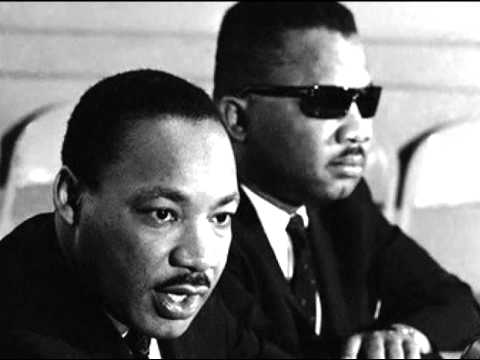
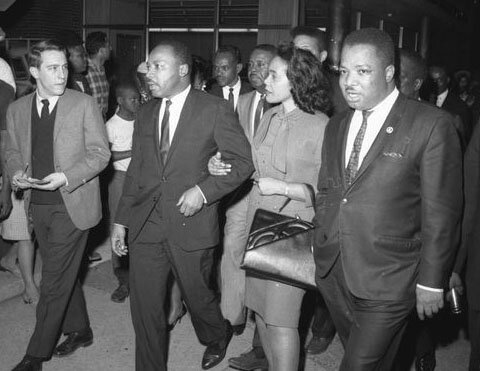
Rev A.D. King, younger brother of Martin Luther King (first from left). Photo: Pinterest
A.D.’s personality is said to have been relaxing with a sense of humor.
Cause why he got them glasses on? Brother did not want the spotlight.
Although his activism mirrored Martin’s, A.D. did not like the limelight and had no intentions of usurping that authority from his brother. Friends and family say A.D. King was humble and was not worried about walking in his brother’s shadow. Instead, he played his part and let Martin play his. A.D. supported his brother one-hundred-percent and was in the middle of every movement:
When Dr. Martin Luther King, Jr., was murdered on April 4, 1968, it hurt A.D. deeply, and he never recovered, as he felt it was his responsibility to protect his brother, A.D.’s widow, Naomi King, once recalled.
On July 21, 1969, at the age of 38, a year and a half after Martin’s death, A.D. mysteriously drowned in the family swimming pool.
It is a mysterious death because A.D. King was a “very good swimmer,” according to his niece, Bernice King, Martin’s daughter. According to Derek King, A.D. King’s son, emergency workers noted there was no water in his lungs. “Ain’t no water in his lungs,” one of them said, “he was dead before he hit the water.”
Why is the legacy of little-known Civil Rights icons like A.D. King important?
I am sure you’ve heard the news.
“The Texas Senate has voted to pass a bill that would remove a requirement for public school teachers to teach that the Ku Klux Klan is “morally wrong.”
“The Texas Senate on Friday passed legislation that would end requirements that public schools include writings on women’s suffrage and the civil rights movement in social studies classes. Among the figures whose works would be dropped: Susan B. Anthony, Cesar Chavez, and Martin Luther King Jr., whose “I Have a Dream” speech and “Letter from a Birmingham Jail” would no longer make the curriculum cut.”
It used to be Dr. Martin Luther King Jr. was the only name we knew and were taught in history class. Now they are doing away with him, too, it seems.
As more is revealed about the truth of who Dr. King was beyond the “I Have A Dream” speech (including that when he was born, Martin Luther King Jr.’s name was Michael…read more about that here), it is no surprise to me that systems are now trying to limit the already limited information we have on him.
Thus, it is also no surprise little is known of his brother, although he was so prominently involved in everything Dr. King stood for. Their mother, Alberta King, was also killed.
There is definitely something strange about this.
Family matriarch Alberta Williams King is flanked by her sons, the Rev. Martin Luther King Jr. on her right and Rev. A.D. King on her left. Isaac Newton Farris, the husband of her daughter, Christine, stands behind them. (AJC file photo) Credit: contributed
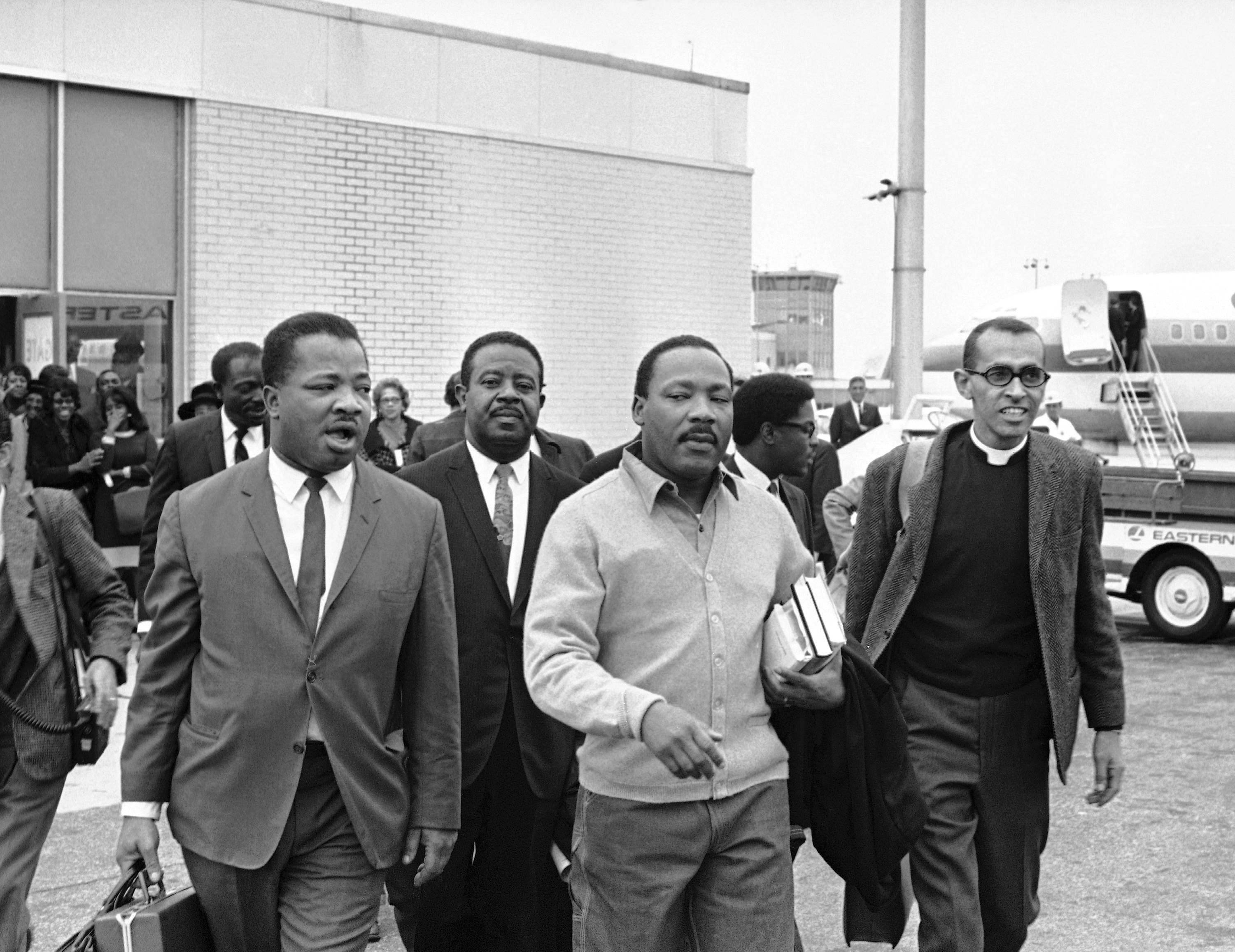
Now that you know A.D. King existed, the next time you see a photo of Dr. Martin King, also look for Rev. A.D. King. Chances are he was right there, hiding in plain sight.
Welcome back to another episode of No Whining Wednesday! Today, you cannot whine, criticize, or complain.
If you are new to this blog or new to this segment please visit the NWW page herefor past episodes.
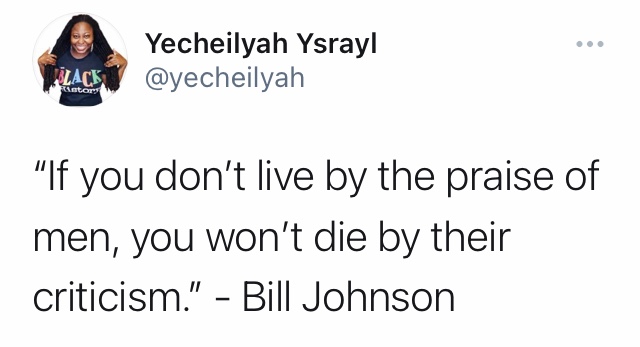
Today’s inspiring word is about praise and criticism. There are many variations of this quote, and challenging to track down the first person who said it. The one I found most fitting for this feature is this one:
Another variation is this one:
“If you live off a man’s compliments, you’ll die from his criticism.”—Cornelius Lindsey.”
There are many reasons we whine and complain. One of them is because we are not getting enough attention. Some of us have no real issues in our lives except we want to be seen, acknowledged, and praised. This is not entirely a bad thing, but it could be if we are dependent on it.
Sometimes when we are frustrated, we want to vent to others. This can be a good thing and feel like a warm hug from that one trustworthy friend, much like a child who falls and hurts themselves and gets a kiss on the boo-boo from mom. But, too many kisses from mom will have the child purposely hurting themselves to get that validation.
I am no psychologist, and I am certainly not your therapist, but in my thirty-four years on this earth, I’ve learned we do this as adults too. We might not run to our mothers for hugs and kisses, but we run to other people for validation when we do not recognize our own potential or when we want to be coddled. The danger in this is we end up living off the praises of men and dying from their criticisms.
And how do we die?
We cannot function without praise, and we do not understand how to discern negative feedback.
We have invested so much of ourselves into what other people think and how other people feel, and what other people think we should do with our lives that we become like little children who cannot be told no. If you don’t have the support of the group, you are out here throwing temper tantrums. You’ve become an ‘energy vampire’ who desperately needs to feed.
No matter how good of a person you are, you are still the villain in someone’s story because you simply cannot please everyone. Once you stop caring what people think of your decisions and whether or not they like you, you step into your most authentic self.
Problems need solutions, and complaining to others can be good when we need to be heard or are looking for answers. After all, it is wise to listen to advice, especially when coming from people who have been where we want to go or experienced the troubles we are currently experiencing.
Giving and receiving genuine praise and compliments is a good thing, and we all need it, but balance is necessary. Without balance, we depend on the feedback from others more than on our own souls. We open ourselves up to everyone else’s input and everyone else’s solutions despite our own intuition, and we seek to be validated because we do not recognize our own value.
Not only do we want to cut down on complaining, but we also want to cut down on letting other people’s complaints negatively influence us.
You matter, and your presence is necessary to the world—the end.
Please help me extend a warm welcome to Natasha Thomas.
Welcome to the PBS Blog!
What is your name and where are you from?
My name is Natasha and I’m from Daytona Beach, Florida. I’ve been living in the metro Atlanta area for the past 11 years.
Cool beans.Are you employed outside of writing?
I am! I have worked as a psychiatrist for eleven years. I treat depression, anxiety, bipolar disorder, ADHD, and psychotic disorders. But my specialty areas are posttraumatic stress disorder (PTSD) and peripartum mood and anxiety disorders. Those are disturbances in mood that happen during pregnancy or in the postpartum period.
Over the course of doing this work, I’ve learned the postpartum period is much longer than the six weeks women are usually taught to consider postpartum. I walk with women through their entire pregnancies and at least the first year of their baby’s life to make sure they adjust well and their mental health is supported.
I start treating people at age 15 and have patients in their eighties!
Wow! You are doing such important work.
Now, I just finished binge-watching this (I’m late to the party), so you know I gotta ask, with you being in Atlanta and in the medical space…
…are you a fan of Married to Medicine, and have you met any of the women from the show?
So funny you asked about Married to Medicine! I’ve never met any of the ladies. But being a psychiatrist, I have met and share patients with Dr. Lunceford (Quad’s husband). He works at a local inpatient facility. So at times when patients aren’t doing well and have to be hospitalized, they’ve been under his care. During those times, he typically reaches out to me so we can collaborate on their outpatient treatment after their hospital discharge.
In addition, Dr. Damon Kimes (Dr. Heavenly’s husband) is an absolute joy to share patients with. He is extremely compassionate to the mental health needs of his patients that also have issues with pain management. Having the opportunity to collaborate with local docs is one of my favorite things about building a medical network here!
That is so cool! See, I knew I was watching that show for a reason, lol. And Chile, they fight like real sisters, and the shade!
Any siblings Natasha?
I technically am an only child. I have a very close cousin and very close friend. They have been my “sister” and “brother” since I was two years old. They were both raised as only children, too. So, though I grew up without siblings at my home, I have never really felt alone.
That’s precious. Speaking of growing up, what was your childhood dream?
When I was six years old, I developed a strong interest in biology. And this came from reading the children’s encyclopedia series my parents ordered for me. The last book was a guide for parents to understand their children’s health. It was the most interesting part of the entire series to me. But interestingly, I decided in fourth grade that I would attend Yale Law School. I have no idea where that aspiration came from. That lasted a few years, but science just continued to interest me so much that I began to consider medicine around age twelve if memory serves me correctly. By the time I was getting ready to attend college, I started feeling the pull to write. My mother and father encouraged both – but medicine first!
I was a very daydreamy and quirky child. So, from that angle, I had dreamt of doing everything from finding Smurfs in the tree in my backyard to oddly wanting to become a maternity model in the JC Penney’s catalog. That’s the most bizarre realization I’ve ever had about my childhood dreams! Oh goodness.
Lol. That’s what we want to hear! We want you to dig deep. What’s your favorite color?
Green. Kelly green to be exact!
Nice! Favorite food?
I am a true seafood lover. Fish, shrimp, scallops, lobster, crab – I mean, I could just go on and on. My favorite meal, altogether, would be white rice, with fish and collard greens. Interestingly, I was told that was the exact favorite meal of my grandfather, who passed away before I had the chance to meet him.
I love that about genetics. How we could inherit a trait from family outside of our mothers and fathers.
You mentioned the pull to write, so let’s go there. What genre do you write and why?
I write psychological suspense. I guess, with what I do for a living, it’s not all that mysterious why I have chosen that genre. I’m fascinated by the human mind. Absolutely. What happens to the psyche through one’s life story is incredible, and nothing intrigues me as much. Whether I’m reading, writing, or watching movies or TV, suspense and thrillers with a psychological component are always my favorites. I think we learn a lot about ourselves that we may not want to express when we consume thrillers and suspense. They give us an opportunity to look at our moral compasses and question what, if any, absolute truths we hold.
I love the education your are giving us right now. Do you blog? Does blogging help with writing?
I actually feel like it’s the reverse for me; writing helps me blog. I started a mental health blog called Hope Grove in 2018. It was inspired by the cool work I get to do with my patients, and many of the questions they ask me. I figured if they had these questions, others would as well. That’s especially true for those who, for whatever reason, do not have access to mental health care. And even though the questions drive my blog postings, sometimes I would feel it required a real push to finish a topic.
I have found that writing a post has flowed much easier since I’ve been working on my novel. I think that’s because I’ve been working with a different part of my brain, my imagination, and that tends to mobilize me in general. I also am an intermediate level Haitian Kreyol speaker. I have found my use of the language drastically improved since I’ve been writing my novel. It makes sense but I wasn’t expecting that to happen!
Why is writing important to you?
Oh, that’s a big question. Writing is my outlet. But it is also the way that I take all my life’s experiences and distill them down into bite-sized pieces that I can process and understand. Just like everyone else, I have pain, regrets, doubt, successes, joy – so many emotions to turn over and over in my head. Writing helps me do that in a healthy way. And to turn some of my life lessons into a story that benefits myself and my readers is a gift. The writing of others is also massively important to me. Through the work of greats like Toni Morrison, Maya Angelou, Edwidge Danticat, and Nikki Giovanni, I started to see writing as a window and a healer. Can you imagine a world without it? I’d certainly rather not!
I love it.
In your own words, what is love?
Love is honesty – honesty that allows you to see yourself and grow into your highest potential.
Thank you, Natasha, for spending this time with us.We enjoyed you!
Natasha Thomas, 2021
Natasha Jeneen Thomas is a Florida-born psychiatrist and psychological suspense writer. She has spent the past eleven years in private psychiatric practice exploring the individual and collective story and the power of perception. Witnessing life from the vantage point of the human psyche’s inner workings, Natasha sees the state of the world as a reflection of the stories we tell ourselves – and allow ourselves to believe.
Natasha earned a Bachelor of Science from Spelman College, studied medicine at the University of Miami Miller School of Medicine, and completed residency training in psychiatry at the University of Maryland and Sheppard & Enoch Pratt hospitals. In 2010, she moved to Metro Atlanta to work as an outpatient psychiatrist and has the continued honor of providing clinical care as owner & CEO of Hope Grove Psychiatry, PC. When she is not doctoring or writing, she enjoys her family, home, or corner of the couch.
Therese Hughes-Baldwin arrives in Boca Raton with hopes of joining the most prestigious dance company in South Florida. But instead of finding ballet success, she suffers an embarrassing heartbreak and takes a boring barista job. She also inadvertently gains the attention of the woman who stalks her on every train ride she takes.
When Therese’s favorite café customer, Dr. Dara Clemens, offers an escape to her beachside mansion, Therese can hardly say “yes” quickly enough. With her suitcase in hand and best friend Phoebe by her side, she heads to the Clemens’ oceanfront getaway. The home is gorgeous. The beach is, too. So is the stranger Therese gives her number to at the bar.
But there are voices in the vents. And there are people who stare. And Therese faces a sinking feeling that something is hauntingly off about Phoebe’s behavior. As Therese questions the motivations of those around her, she opens the door to a reality she never thought she’d find.
Are you an author? Looking for more exposure? Learn more about my Introduce Yourself Feature HERE.





 I thought I was big time.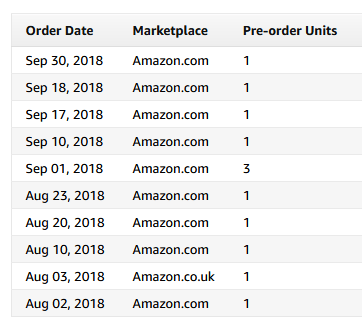







 The PBS Blog