Dear Indie Author, No One Wants to Subscribe to Your Newsletter (Do this Instead)

I used to ask people to subscribe to my email list, and almost no one ever did. It was also cringy to ask.

And then I realized I was working harder than I needed to.

How people look when you say subscribe to your author newsletter.

The truth is, asking people to subscribe to your email list is boring, and no one wants to do it. We have enough emails.

And if you are a new author, no one’s ever heard of, saying we will get a free copy of your book doesn’t work either.

As I alluded to in the last post, authors must start to think like readers if they want to attract them.

Instead of asking people to subscribe to your list directly, do this instead.[mepr-show rules=”31881″ unauth=”message”] 

Photo by EKATERINA BOLOVTSOVA

Offer Something They Want

The value in giving something away is that if it’s a truly valuable piece of content, it will naturally lead to your paid stuff. At first, this wasn’t working for me. It wasn’t until I gave away my best book (the one people actually wanted to read) that I started to see a difference.

For your give, my advice would be not to throw something together. Give us something good.

Your give is also known as a lead magnet and doesn’t have to be a book. It can be a resource, guide, free tutorial, or access to exclusive content. It can be a complimentary ticket to your online class or a virtual pass to the next event.

Deliver Your Give By Requiring Email Sign-Up

Choose a platform to use to collect email addresses. I use Mailchimp, but there are tons of others. Require people to enter their email to receive the freebie.

Set Up Automation

As soon as they sign up, they should be able to instantly download the freebie. Setting up an automatic welcome email to officially introduce yourself is an excellent start to a warm welcome.

You’re done, and you didn’t have to beg, borrow, or pull teeth to get here.
Other ways to add subscribers:

  • Collaborate with other Authors
  • Host a contest

These are the two most powerful strategies I’ve seen. I get the most sign-ups through my poetry contests or when I collaborate with other authors.

  • Have a sign-up sheet at every live event.

This is probably the only time it’s okay to ask people to subscribe to your email list directly. I always have it sitting at my table. Still, the amazing thing is people will walk by and put their email addresses down without me asking! So in a way, you still don’t have to ask. All you have to do is make it available.

  • Add a pop-up on your blog and website. 

Please ensure this goes away after about 5 seconds and doesn’t take up most of the space. Pop-ups that aren’t easy to close out are annoying and distracting. This makes us feel like we are being forced to sign-up. You don’t want people leaving your site because your pop-up won’t leave them alone.

  • Use Your Blog

If email newsletters aren’t your thing, you can always use a blog. When people subscribe to your blog, they get an email notification whenever you post something new. You can use this with your third-party email list or by itself. Either way, it’s another way to stay connected with your tribe outside social media.

I can go on, but the moral of the story is there are tons of ways to collect email without spamming.[/mepr-show]

Oh, please be sure you provide a way out! It is illegal not to provide a way for people to unsubscribe if they no longer feel you. It is much easier to do this if your emails go through a third party. If people can’t unsubscribe, they will report you as spam, which can ultimately hurt you. I talk more about that here.

Couldn’t See the Full Post?

Subscribe to Indie Author Basics! Membership is Good for a Full Year.

Indie Author Basics streamlines and simplifies self-publishing so you can publish high-quality books without pulling out your hair.

What Indie Authors Can Learn from the Kyrie Irving Controversy

Kyrie Irving is in hot water for posting a link to the documentary Hebrews to Negroes: Wake Up Black America to his Twitter account. The movie is a film adaption of the Independently Published book by the same name. It is alleged that the movie has much antisemitism in it, (I disagree but that’s a different post), and Irving has since taken the tweet down and apologized to the Jewish community via an Instagram post.

This post is about how he found the documentary and what Indie Authors can learn about platforms.

Kyrie Irving found the documentary by researching Yahweh on Amazon, saying that’s what his name translates into. According to this interview, he typed the name in the search engine, and the movie came up.

Many Indie Authors have long-cut ties with Amazon, which is their business. What I hope we can gain is an understanding of how people search for information, namely books, and the role that it plays for us as authors.

Photo by Ricardo Esquive

Amazon is not a distributor or bookstore. Amazon is a retailer that sells many things but is known for books. They are known for books because, in addition to selling books, they operate a Self-Publishing arm called Kindle Direct Publishing or KDP. Amazon is so very well connected with books that bookstores hate them, and people who think of buying a book (and now movies) turn to Amazon almost instinctively.

Amazon is also the world’s second-largest search engine, with Google being the first.

“Amazon, with 54 percent of product searches taking place, is the world’s largest search engine for e-commerce. Technically, Amazon is the second largest search engine in the world excluding Google.”

Decoding the World’s Largest E-commerce Search Engine: Amazon’s A9 Algorithm 

When someone wants to search for a book and does not want to visit an offline bookstore like Barnes and Noble, where will they search first?

That’s right. Amazon.

Hebrews to Negroes was released on December 6, 2014.

Today (11/2022), it is a #1 Bestseller with tons of new reviews. Yes, he searched for the movie, but the book is a #1 Bestseller.

All because a rich and famous celebrity tweeted the link.

And this celebrity found it on the second largest search engine in the US.

The Point

When deciding what platforms to put your book on, consider not what you want but what readers want.

When your average reader wants to look up a movie, topic, or book, they are not going to Smashwords. They are not going to Draft2Digital. They are not even going to Goodreads like that. They are also not flooding B&N.com, though they’ll visit the brick-and-mortar bookstore (catch that).

When people (not necessarily people who are always on the internet and are familiar with the book world but everyday people with jobs who happen to want to buy something) want to look up information, they go to Google and Amazon.

Photo by Andrea Piacquadio

Ignoring this is just not good business sense, except that your goal is not to make money from your books or bring a whole lot of awareness to it, which is cool. Not everyone publishes a book for these reasons.

(It is also not wrong to be on the other platforms, also known in the Indie community as “going wide.” It means you are not exclusive to Amazon but have your book available at other online retailers, which is awesome. I go wide myself. At the risk of steering away from the topic, that’s a post for a different day.)

However, for those of you Self-Publishing books you want people to buy, not being on Amazon is not bad or wrong, but it is leaving a lot of money (and exposure) on the table. 

This post is a nudge to consider more strongly the platforms you wish to sell your book (if you are selling it).

It is a reminder to go to the places where your potential reader will most likely hang out. 

That is the message.

Kyrie Irving found Hebrews to Negroes and made it a bestseller by posting the Amazon link (without a caption) because the book was sitting on a platform where readers are most likely to search for books. 

Go where your readers are most likely to hang out, and search for books like yours.


Click here to access more Indie Author Basics Articles.

Protecting Your Digital Space

Photo by Monstera

After going back and forth with someone on TikTok who tried to come for me and didn’t know what she was talking about, I eventually concluded she was a troll and shall be blocked.

And then I thought, why don’t we do this more often? Why do we sit in fruitless debates with people who have proven themselves unworthy of our time?

And then I thought, why aren’t we more protective of our space in the digital world? Would you let someone come into your house, sit down and disrespect you to your face? So why do we allow people to come on our pages and blogs, sit in the comment section, and talk to us crazy?

I don’t know where we got this idea that we have to accept all the energy that comes our way on these social media sites, but that block button is there for a reason. That unfriend/delete button is there for a reason, and it is not only okay but necessary to make good use of them.

Protecting our digital space means establishing boundaries around our online presence. You don’t have to tolerate trolls and people who just want some attention.

“My platforms are my digital real estate, and I try to take the trash out on my properties. I block, report as spam, and mute as I deem necessary.”

Luvvie Ajayi Jones

These social media platforms might not be 100% in our control, but those things we can control, we should. We can turn off notifications if they become too much. We can block people for disrespecting us. We can even ask for certain content to be censored. We have the power to moderate what we want to occupy our energy fields.

Healthy debates are welcomed, where both parties are mature enough to listen to different perspectives to bring clarity. But online things go left quickly because people hide behind keyboards. Much of what people say here, they wouldn’t say, looking you in the eye. For that, we have to be even more diligent about establishing boundaries.

No, people cannot talk to you any way they want, and you do not have to keep them around so they can suck up all your energy.

As we go into the new month, remember that trees shed their leaves for a reason. Everything in nature is getting rid of the old to embrace the new. We should too.

Bless those who shall be blessed and block those who shall be blocked.

Don’t Throw It Away: How Short Stories from My Teenage Years Became An Urban Fantasy Fiction Novel

Photo by Suzy Hazelwood

When I was about seventeen and eighteen, I wrote stories about my sisters and our friends in this red notebook. Then, we would all sit on the porch, and I would read it to the neighborhood. Everyone had nicknames but also knew who they were so it was hilarious, and they loved it.

When I moved out of my mother’s house a couple of years later, I carried that notebook. One day, while reading it, I decided I wanted to turn it into a play. There was only one problem:

I was not the teenager who wrote it.

By now, I was deeply biblical, had loc’d my hair, and changed my name. This hood tale didn’t fit the newer version of me.

I decided to keep the characters but change their names and give them more dignity. They were successful Black men and women instead of whores and hustlers. In the original story, Tina was a lawyer because when we were younger, that’s what my twin sister Tracey wanted to be when she grew up. In the red notebook, Tina was Tracey.

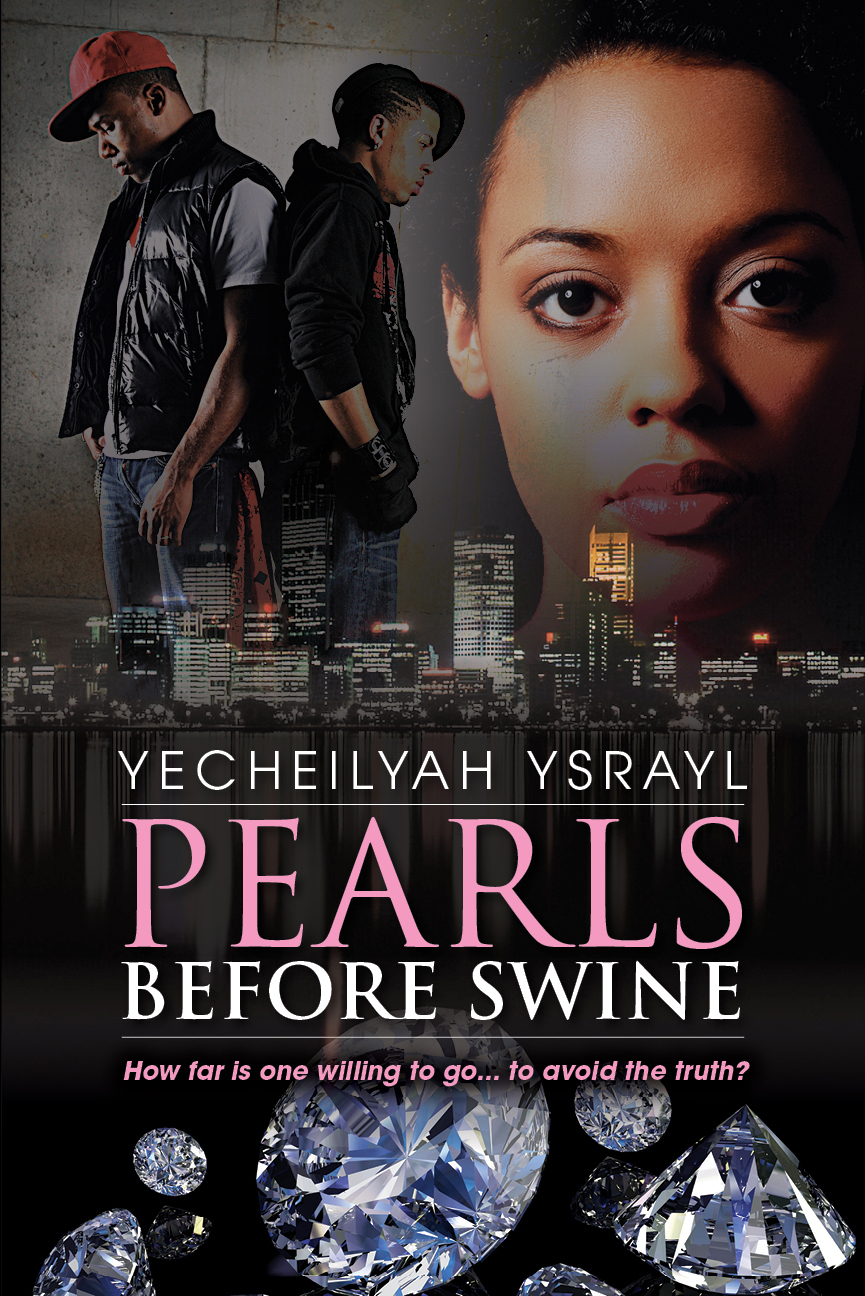
This dope cover for my first screenplay was designed by Black graphic artist Andre Hawkins of Kenosis Design Innovations

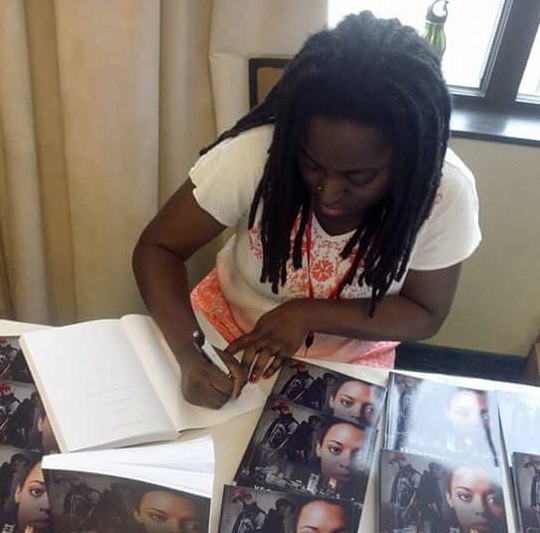
I published Pearls Before Swine in 2014, registered it with the Screen Writer’s Guild, and participated in my first book signing at the Doubletree Hilton Hotel in Chicago, which went well. 

And then, I started this blog!

I made the mistake* of naming this blog after the book hence why it’s called thepbsblog. Over time, I decided to keep the name for a few reasons. You can read about that here.

*I don’t recommend authors start blogs and name them after the title of their book any more than I would advise authors to create websites with the name of their books. You will write more books. Are you going to create a new website for every book? It is easier to brand yourself using your name.

Although it did okay when first released, and I love the cover, I better understood how to use my voice and messaging after The Stella Trilogy. I had grown again and vowed to be more relatable. The story was also not properly edited and the plot was confusing to people outside of my immediate circle.

But instead of throwing it away, I reworked the first chapter and shared it on this blog.

Then, I shared another chapter.

And another and another until I was ten chapters into this crazy fantasy world that, to my surprise, ya’ll loved!

And that’s when it hit me.

The story would evolve again.

I would turn Pearls Before Swine into The Men with Blue Eyes. And then, for the last change, I decided I wanted these angels to be women, which is how The Women with Blue Eyes was born. I used the backstory and characters of PBS with a fresh plot.

TWWBE is still heavily spiritual, but in a way where even if you are not religious, you could still relate to it. This was intentional.

I would love for this story to take on another evolution: for Shonda Rhimes to turn it into a TV series. (Somebody tell her people to call my people.)

I am also considering sharing more of the backstory of PBS in another installment of The Women with Blue Eyes. The details about Ronnie and Big Sam and how it all went down was in the first book. This is material I can still use.

When Tina’s nephew, Ronnie is killed, she is left to care for his siblings and to solve a series of mysterious murders involving only Black men. Investigating each murder thrusts her and her team into a world of deities, demons, and fallen angels, leading Tina to battle a serial killer beyond this realm.

The moral of this story is don’t throw anything away! Just repurpose it.

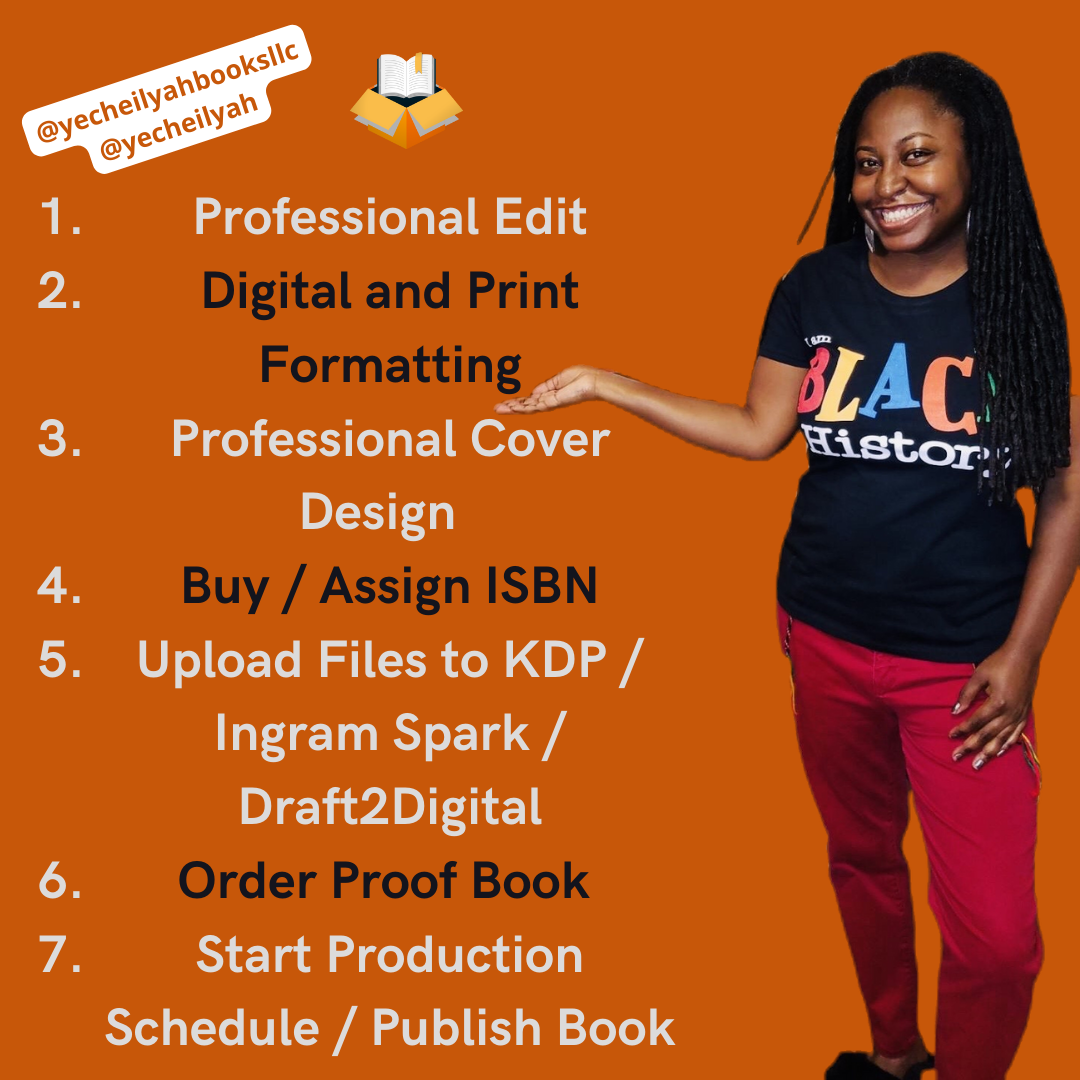
Yecheilyah’s Self-Publishing Checklist

You are gonna wanna bookmark this one!

1. Professional Edit

Editing is first for several reasons, one being that I can’t get the book formatted before it has been properly edited. I determine my production schedule on the date the book comes back from editing.

2. Digital and Print Formatting

Now that the book has been edited, it can be formatted for digital and print. Formatting for digital ensures that it flows properly when you read it on your kindle, phone, and other e-devices. 

Print formatting is vital to ensure the intended finished size of the book is how I want it. The most common size is 6×9 for a standard paperback. Poetry books tend to be smaller, 5×8, and workbooks are larger, maybe 8×10.

When I published my first poetry book, I chose 8×10. Imagine a poetry book the size of the 8×10 picture on your wall. Yes, it was a mess.

Oh, and Microsoft Word will not take care of your book formatting for you. Converting an MS word document to PDF and uploading it as is, is why many Self-Published books look messy and all over the place on digital devices. It can also make the printed book look poorly done, such as having too much spacing that makes your novel look like a College Essay. Ya’ll know what I’m talking about.

Don’t skip on formatting. How your book looks inside is important.

3. Professional Cover Design 

Technically, the cover can be worked on as the book is being edited. A finished cover can be used to help promote the book if it’s done early and even kick off early preorders.

However, there’s a reason cover art is not right under editing. 

To complete the entire cover (front, back, and spine), the artist needs the exact number of pages and the book’s trim size. Usually, the number of pages changes after formatting. Also, some books are too thin for a spine. If I give him/her the wrong size, it can affect how the book prints, and then I’ll have to get it redone, which can cost more money.

While I can get away with a finished cover, I cannot complete the full artwork before steps one and two are accomplished.

As you can see, I have a strategic reason for publishing in this order.

4. Buy / Assign ISBN

I buy ISBNs in bulk, so this part is usually already done. If it’s not, this is around the time I get them.

5. Upload Files to KDP / Ingram Spark / Draft2Digital

This part requires its own post to fully explain. I’ll do my best to keep it short but clear. 

I publish with Kindle Direct Publishing and Ingram. KDP for Amazon and Ingram for wholesale distribution to bookstores and libraries.

How it works is I upload my files to KDP per usual, but I DO NOT select expanded distribution. The reason is that if you are making your title available in both self-publishing systems, that makes the title available to Ingram and will cause a conflict with the ISBN when you upload it into IngramSpark.

Although Amazon works with Ingram, publishing with Ingram separately makes it easier for your book to be ordered by bookstores. And bookstores hate Amazon, by the way. The thought of carrying a book published by Amazon gets their blood boiling. That’s another reason it’s good to have your own ISBN. It can make it easier for the store to carry your print-on-demand title without being distracted by the fact it was published independently by Amazon.

After publishing with Amazon, I go through the process of uploading my files to Ingram Spark.

If step three was not done properly, this is the part I can get stuck on. The cover must match the size of the book and the artist must provide a single PDF file that includes the back cover, spine, and front cover as one image.

Lastly, I upload my files to draft2digital for distribution to all online retailers, from B&N, to Kobo, to iTunes. 

6. Order Proof Book 

Order the proof copy of the book from Amazon and Ingram. Check for errors. 

7. Start Production Schedule / Publish Book

Now that the book is complete, I can kick off the production schedule. 


Wanna Use this System for Your Book? Click Here to Schedule a Personal Consult with Me


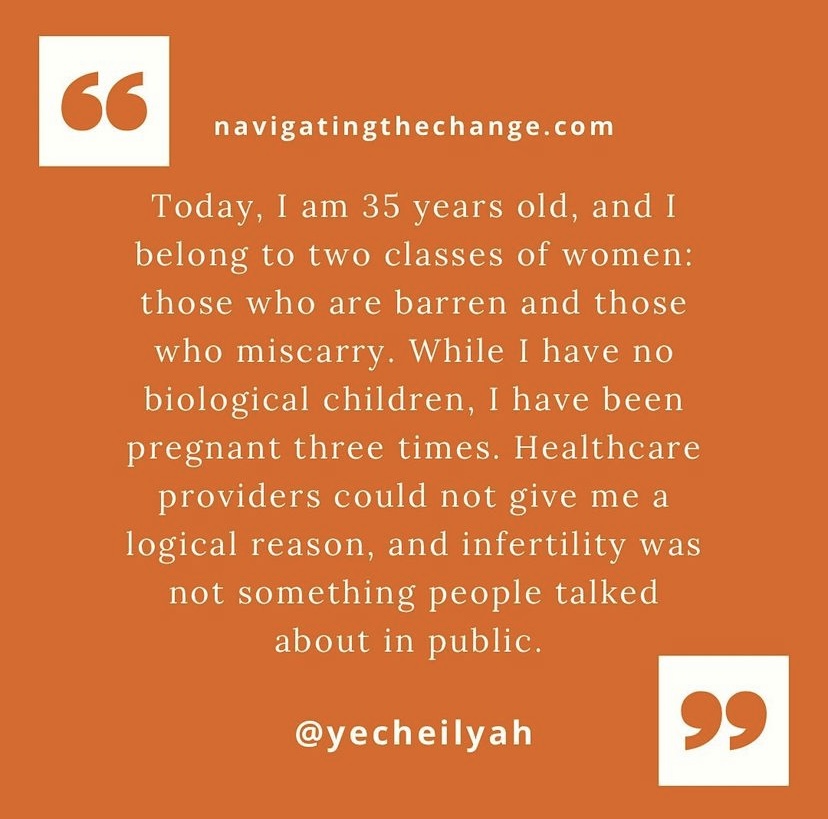
Takeover Tuesday: The Invisible Woman: Black Women and Infertility by Yecheilyah Ysrayl

The number of women coming forward about how they can relate to this is truly humbling. Check out my guest post on Navigating the Change blog and if you can relate, be sure to drop a comment on the post (if you feel obliged), so other women can see they are not alone. 

Click the link below to read the article.

Stigmas die when we speak up about the things that matter.

The Invisible Woman: Black Women and Infertility

Dear Self-Published Author, Reinvest in Yourself

The financial part of Self-Publishing is not talked about enough. Lack of funding can get in the way of an author producing a high-quality book which can get in the way of that author selling that book.

One solution you can employ is to reinvest in yourself by taking the money you make from your book to publish more books!

I’m a slow writer. By slow, I mean I only publish 1-2 books yearly. I have no plans of publishing a book this year. But here’s the twist:

The money I made and saved in 2022 will help me to publish in 2023.

I have the privilege of speaking at Griffin High School again this year. As you know, teaching, children, and writing are all passions of mine, so whenever I can combine them is a plus. This will pay for editing my black history book. The money I made from book signings will help to cover the cost of the cover and other things.

See where I’m going with this? I knew you would.

If you think about it, by reinvesting, you are not spending your own money!

It’s about changing your perspective and putting those creative skills to work.

No. I did not publish a book this year.

I’ve been stacking my coins so I can publish two books next year.


Need more Indie Author Tips?

Check out the IAB archive here.

Need deeper guidance? Schedule a free discovery call.