So I’m releasing my baby to the world at last! Two years and a lot of hardwork, sweat and tears have got me here and now I’m looking for reviews on Goodreads and (when the time comes) Amazon! ☺️
So if you love YA fantasy and would like to read and review Creeping Shadow (The Rise of Isaac, #1) before anyone else please comment below with your email address and prefered file format (epub / pdf) or email me directly at caroline_peckham@hotmail.co.uk
Creeping Shadow will be released 10th December 2015 on Amazon Kindle.
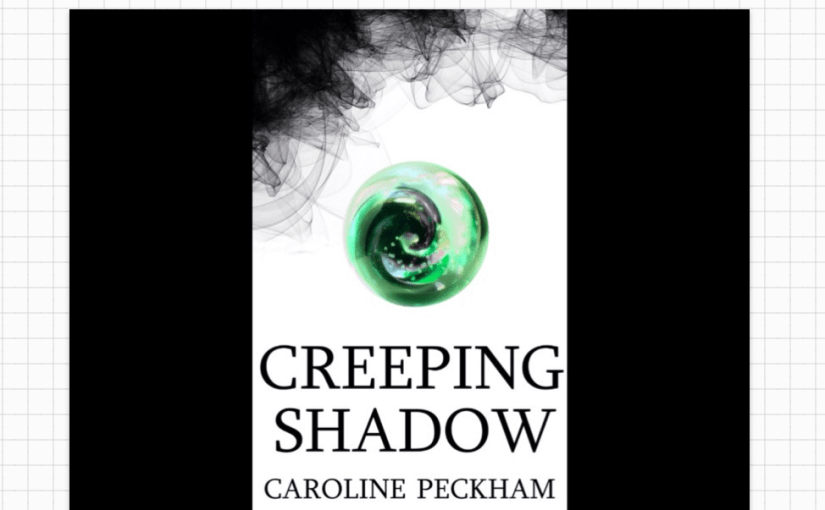
Here’s the cover and blurb:
A man waits in Vale, a world void of humanity.
A mother vanishes, her disappearance concealed by the police.
A girl collapses, black magic invading her blood.
And a boy linked to them all must fight to save his family.
Earth is just one of seven worlds. Gateways divide the realms and…
Just want to remind you to join me tomorrow for another interview on the topic of Interracial Relationships. As you know, for the rest of this month I will be posting interviews I have conducted with some individuals on their thoughts on the topic of Interracial Marriages and the role race plays in relationships in general. This feature was inspired by the release of book two in my Stella Trilogy, “Beyond The Colored Line” this summer and will post every Thursday. Join me tomorrow at 8:00a CST to meet a good friend of mine and fellow WordPress blogger. You don’t want to miss this one!
Put your stones back in your pocket, there’s nothing freaky going on here. Minds out the gutters please. Great, now we can begin.
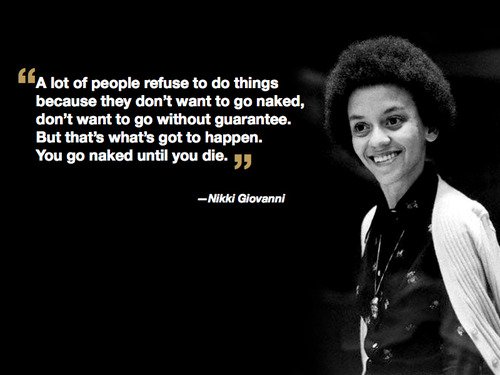
For today’s episode of Writer’s Quote Wednesday, Colleen has asked us to appreciate a few poets. Initially, I was going to share something from Melvin B. Tolson but I have instead chosen this one from Nikki Giovanni for a few reasons:
The reason I went with this quote is because I look for quotes that instantly speak to me. This is when I know I have selected the appropriate one for the week. So anyway, as soon as I read this quote I was put into the mind of poetry. Nakedness reminds me of writing poetry because to write poems is to do so in a way that communicates, that bridges gaps, and that builds and to do this properly, at least in my opinion, is to get naked. By getting naked I just mean to be transparent. It is to strip yourself down to complete humility so that you can share poems that actually speak to people. Sometimes poems seem so extremely personal that it seems like it’s too much, an over share if you will. And while I will never tell you to just tell all your business, I will say that if you enjoy poetry you will hear some pretty personal stuff. It’s the poets’ way of getting naked because the fact of the matter is that transparency speaks. You don’t necessarily have to be all deep in the over intellectualized kind of way no, but poets should have something to say that will help others to cling onto that testimony like a bond. This is why poetry is so emotionally charged because people will always be able to relate to the real and poetry is that real. Good poetry is the whole experience. It’s the taste, the touch, the sight, and the feel.
About the Author:
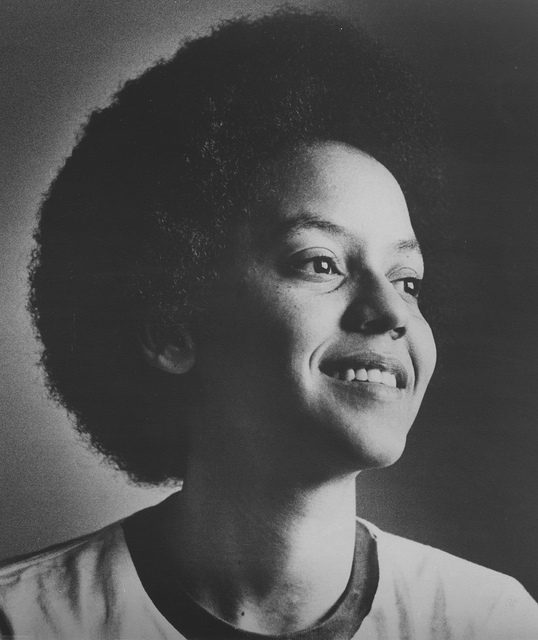
Born Yolande Cornelia on June 7, 1943, Nikki Giovanni is a writer, commentator, activist, and educator. One of the world’s most well-known African American poets, her work includes poetry anthologies, poetry recordings, and nonfiction essays, and covers topics ranging from race and social issues to children’s literature. She has won numerous awards, including the Langston Hughes Medal, the NAACP Image Award, and has been nominated for a Grammy Award for her Nikki Giovanni Poetry Collection. – Wikipedia
****************************************
“Maybe I’ll use poetry to C-Section my insides besides I’ve got to have some kinda gut to stand up here and strip for you”- Yecheilyah
It doesn’t take a rocket scientist to see that your words flutter nervously across the page in anxious anticipation of acceptance. I can see the dilating pupil of uncertainty starring back at me, for you have let others define you. It’s not enough that you wear societies clothing, listen to its music, read its books and regurgitate its ignorance, but you even let it define who you are. When you do gather the courage to be yourself it is not long before you are already planning on how to take your words back, erase them into the dungeon of nothingness. Some of you climb inside of yourself and turn off the lights, over there praying for invisibility and trying not to be you. Why do you cloak yourself in darkness? Always skating timidly through life as if the next step will be the one to shatter the ground. Always apologetic for the way in which you see the world as if your purpose in life is one big mistake. If you have passion, stand by it. You owe no one an explanation. It doesn’t matter what we struggle with on a daily, it always helps when we are ourselves. Despite the mistakes we make being transparent is the only way to transcend and to overcome. In that process, remind yourself that you don’t have to do what everyone else is doing. Besides, “if you don’t define yourself for yourself you’ll be crushed into other people’s fantasies of you and eaten alive.” – Andre Lorde
A lot of people tend to speak on subjects in which they know nothing about. We want to peg ourselves as experts, yet haven’t done the edtensive research behind those aspects; or better yet, they just have not lived in them. I like to believe that there is always a life twin; a person who has gone through things exactly as you have and can give you the wisdom of their experiences.
For those of us, who are looking for the answers to life’s struggles, who long to find their twin; they are out there.
And for those of you, who disguise yourselves as those who have been here before and done that more than once, but truthfully haven’t the slightest idea how to help those who long for support through their struggle; know your place in this world, know your lane. And stay there.
Last week I published a post called “Unfamiliar Faces – Lost to History” where I listed a few people who were affiliated with major historical events in some way but whom we do not hear much about. I stated that I will attempt to list a few every Thursday. This is not a promise. I will do my best, but most of the faces of the truly unknown are not on Google but are hidden inside the pages of books I’d have to revisit, articles and documentaries. Below are four more faces of the unknown I found this week:
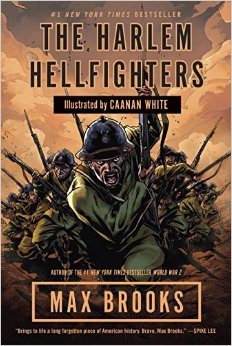
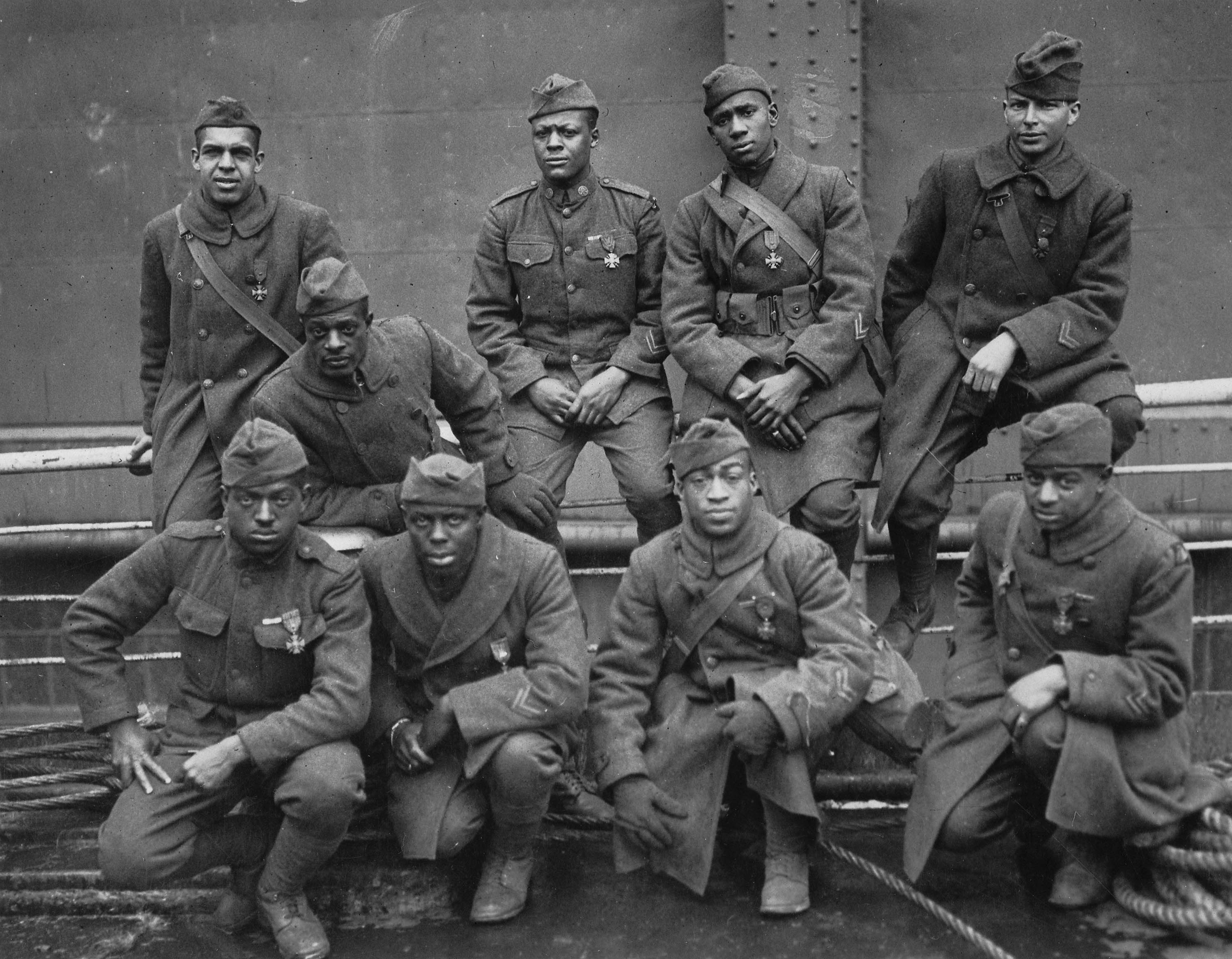
#1: The Harlem Hellfighters
For those who didn’t already know, African Americans have fought in every major war. Little is known of one of the few black combat regiments of World War I. Nicknamed “The Harlem Hellfighters”, February 17th, the day of their battle, became an unofficial holiday. On February 18th of 1919, 3,000 veterans of the 369th Infantry (formerly known as the 15th Colored Regiment) paraded up Fifth Avenue at 23rd Street to 145th and Lenox for the prestigious Croix de Guerre from the French army.
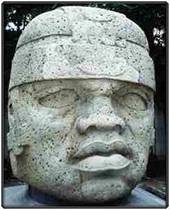
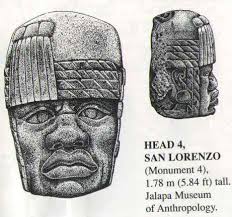
#2: The Olmecs
The Olmecs, whose features are similar to that of the African and Asian, are another part of black history we do not often hear about. They, The Olmecs, carved about twenty-two colossal stone heads in the southern parts of Mexico with their likeness and their influence have been found in Guatemala and further south. Olmec type sculptures have also been found in parts of the U.S. In fact, I am not sure if its still there, but there was an Olmec head on the property of The Field Museum in Chicago. If its still there, it should be somewhere near the back for those of you who are in the city.
The Olmecs and other pre-columbian Blacks of the Americas were part of a prehistoric trade network that began in Africa and spread worldwide over 100,000 years ago and at various periods afterwards. To learn more about them, read They Came Before Columbus by Ivan Van Sertima and Susu Economics: The History of Pan-African Trade, Commerce, Money and Wealth.
#3: Cpl. Roman Ducksworth Jr
A military police officer stationed in Maryland, was on leave to visit his sick wife when he was ordered off a bus by a police officer and shot dead. The police officer may have mistaken Ducksworth for a “freedom rider” who was testing bus desegregation laws.
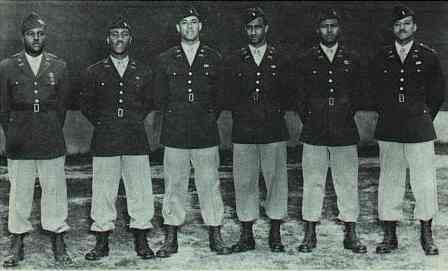
#4. Triple Nickles
When my husband and I went to the movies about a month ago, a man had on a shirt displaying The Triple Nickle. My husband, former military, stopped and sparked up a conversation with the man. He was surprised to see it since no one really knew who they were. To our surprise, neither did the man. He was just wearing the shirt.
In 1944, 16 black men completed jump training and became parachute-qualified. The Triple Nickles Battalion was the first black airborne unit. Historians suggest the unit paved the way for a more integrated military.
It’s kind of hard to believe this today, but as recent as 1967, there was actually state laws that banned interracial marriage. These laws weren’t overturned until the Supreme Court case, Loving vs. Virginia in 1967. In that case, the Supreme Court found that it was unconstitutional for the state of Virginia to ban interracial marriage.
Although there are no longer any laws banning relationships, interracial dating remains a controversial subject for some people. The Interracial Blog Feature was inspired by my new book, “Beyond The Colored Line”, and was created as a means to foster a better understanding of diverse relationships. Today, we welcome a good friend of mine, Misty Thomas. Misty is the director of a privately owned Montessori School in Houston Texas for children ages 6 – 12 years.
EC: Thank you Misty for spending time with us today. Can you give the racial background of you and your husband for the record and how long you’ve been together?
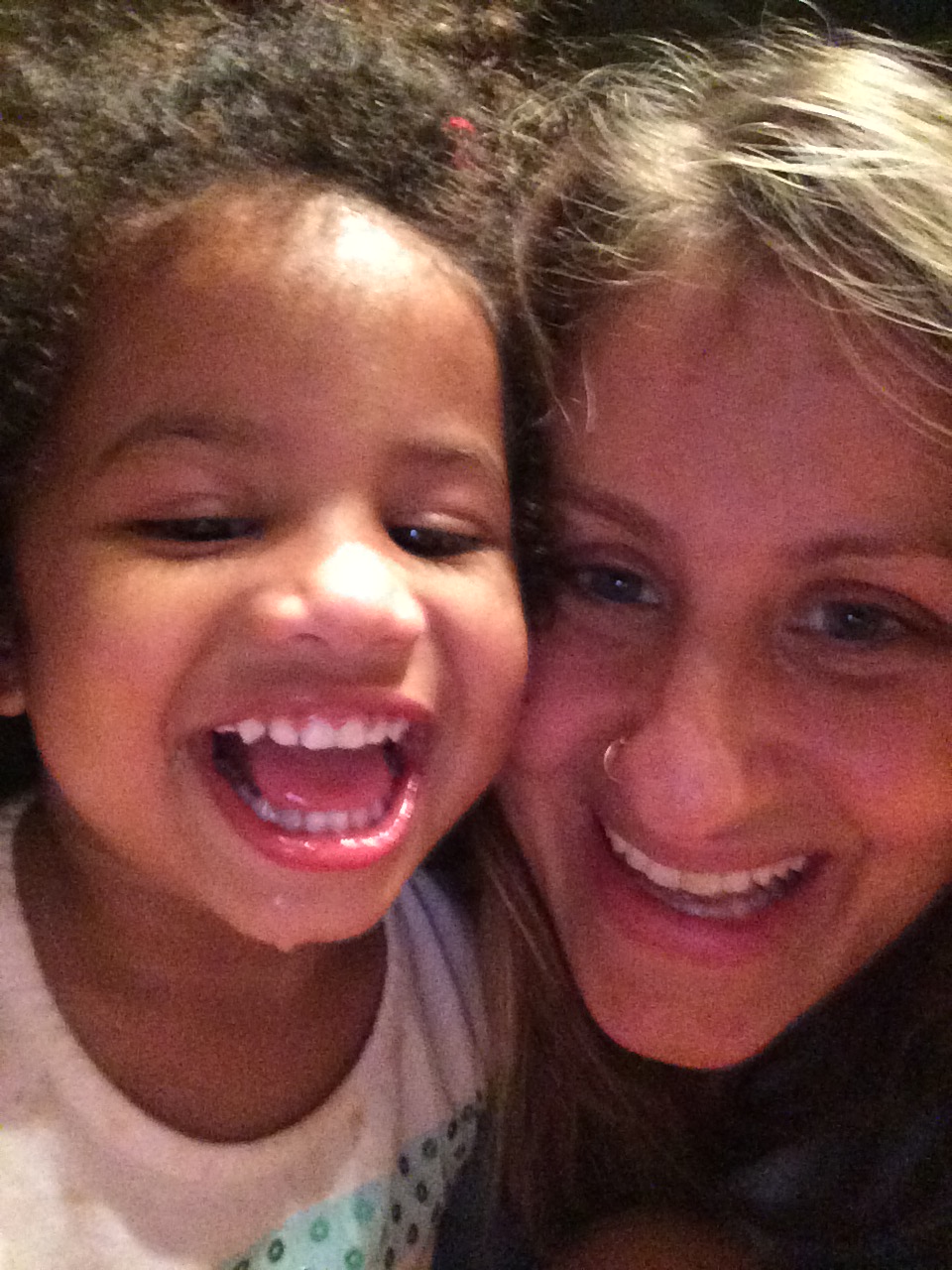
MT: Hello Yecheilyah. Thanks for inviting me to your blog. I am of mixed nationalities, but I guess most people would call me white. My husband is mixed, his mother is black and his father is black, Mexican, and native Indian.
Photo Credit: Misty and LeYah. Used with permission.
EC: Wow, I love it. Now, the character in my book, Stella May, is what the people of her era deem a “mulatto” that is, she is of mixed ancestry. You have children who are biracial. What advice would you give to mothers of mixed children on how to deal with the stigmas that are often placed to them?
MT: My advice for that question would be to just raise your children as you would if they weren’t of mixed races. I have not yet come into contact with any issues with my children being mixed and anyone giving us any troubles or acting racist.
EC: I love that. Speaking of racism, what are some challenges that interracial couples deal with that couples of the same race may not have to deal with?
MT: This one we have definitely dealt with from people in passing and within our own families when we first started dating. Most of the time if people should look at us in any hateful way it comes from us either being at a place where there is mostly African American people or somewhere where there are mostly white people. People sometimes make faces or just stare and you can feel what they must be thinking. It doesn’t bother us though. With our families in the beginning…I think it was them worrying what others would think.
EC: That is interesting that you say that the looks usually come from an exclusive black group or white group, makes me think about the racial divide still present in America. Now, from observation, when African-Americans and Whites marry, there is more likely to be an African-American husband and a white wife. In fact, 73 percent of all Black and White marriages have this setup. In your opinion and your experience with Interracial Relationships as a white woman, what attracts you to black men?
MT: I do see this is more common that you see white women with African American men. Me personally…I don’t think I have only been attracted to African American men for any particular reason and I have been one to date men of all races. I grew up in a diverse city.
EC: I’m glad you put that out there. Speaking of diversity, I have to bring up this point. I hear a lot of black people, black women in particular, accusing other blacks of being “sell outs” when they date outside their race. Have you or your husband ever had the misfortune of the title and why do you think this is?
MT: I have only had one person or woman hate on me for being with “their” men. We have never had anyone call my husband a sell out or speak out against us being together though anywhere else.
Photo Credit: Chris, Misty, and LeYah. Used with permission.
EC: Shame on that one person, smh. Now, a lot of people discern that blacks who speak with a professional tongue are trying to sound white. I speak from experience. My husband is not white but he’s very educated and he too grew up in a diverse city where the majority of people in the town were white. Of the blacks present, he was teased by them a lot for his speech. They said that he sounded, “White”. As a white woman, what are your thoughts on this? Is there such a thing?
MT: I think that is ridiculous and people just stereo type black people. My husband and everyone in his family are well spoken. There are plenty of people of all colors of skin that speak improper.
EC: I’ve always wondered about the conversations between interracial couples concerning the ongoing racial tensions surrounding blacks and whites. Are there any moments where you and your husband disagree with a subject that is race related? If so, how do you deal with that?
MT: Lol, actually we have never had any disagreements in any racial conversations. We know that racism was created by man and we don’t see each other as being different.
EC: Whew, you said something there, “we know that racism was created by men”. Can I quote you on that? LOL. Seriously, that is such a great point. Now, we’re almost done here. Any time before 1967 your relationship would technically be illegal. How does that make you feel today with the knowledge that you’ve chosen to be with someone outside of your race?
MT: Doesn’t surprise me, I have never been one to care what others think or one to follow. I might be one that some would of called a rebel….lol. I don’t like the hatred from the past history, but it is what it is.
EC: Misty, I want to thank you again for being part of this series. If there is one form of advice you would give to people still struggling to accept Interracial Relationships, what would it be?
MT: Your welcome, any time. One thing I would like to share with people who struggle with interracial relationships is that I feel it is a form of being colorblind. You could be blocking yourself of growth as a person for being blinded by color.
EC: Wow, blocking your own growth, that’s deep. As someone who has been married for some time, name one thing that has kept your relationship going.
Photo Credit: Misty and the whole family! Misty, Chris, LeYah Gianni, and Moshe. Used with permission.
MT: Love.
***************************
(These shades tho)
And that’s Misty Thomas on Interracial Marriages, thanks Misty! As you can see, the purpose of this series is to shed light on some of the racial biases that still exist here in America. It is easy to become offended at such topics and say that “a relationship is a relationship” and while this is true, it doesn’t change the fact that these biases still exist. That said, mankind was created to be compatible with one another regardless of race. Thank you Misty for helping me to shed light on that reality. Your interview was insightful, educational and I sure did learn a lot.
In the meantime, tune into next weeks segment on Beyond The Colored Line: Interracial Blog Feature. You don’t want to miss next weeks interview!











 The PBS Blog