Preparing Your Self-Published Book for Bookstores (Part 1)

Contrary to popular belief, self-published books can get into brick-and-mortar bookstores.

Ask me how I know…

Here Are Three Easy Ways to Prepare Your Self-Published / Indie Book for a Store:

1. Have a professionally designed cover with your name and title on the spine.

Usually, I will tell you to ensure it’s edited first (do that, please), but I want to highlight book covers here because they become even more important offline.

Imagine you are in Barnes and Noble (or anywhere) looking for your next read. The cover is going to attract you first.

Also, because you see it from that point of view, the book becomes easier to notice if the name and title are on the spine.

Some bookstores also take your book through a review process, where their team has to vote on the book. If the cover is poor and the editing is not up to standard, they’ll reject stocking your book.

2. Buy Your ISBN from Bowker

You can get your book into Independent stores with a free ISBN on consignment. However, having your book registered under your or your company’s name is a plus if your target is larger chains.

It’s a plus because bookstores hate Amazon’s guts. As soon as they see you are published with Amazon, they are judging you and already trying to come up with a way to let you down easy. It’s almost an instant no.

There are also tons of benefits to having your own ISBN. I go into depth about that here.

3. Use both Amazon and Ingram Spark.

Publish with Kindle Direct Publishing for Amazon only. Do not choose the expanded distribution. This option puts your book into Ingram Spark’s system but under Amazon.

Instead, you will opt out of this and create your own Ingram account.

Then, you are going to publish your book there as well.

This will allow bookstores to order your book directly from Ingram Spark through you instead of Amazon should they decide to carry your title. It also prevents you from bringing copies in yourself, which you would do under consignment.

More on this in part two…


Check out more Indie Author Basics articles here.

Do More with Your Self-Published Book

High achieving authors (Indie, Trad, or otherwise) tend to fall into a few categories:

  • They publish high-quality books (well-edited, dope cover art, and well-formatted, to name a few).

  • They collaborate with other authors and business people. 

  • They use their book to create additional income streams through businesses and services.

Today, I want to focus on that last one, although all these are important.

No matter the route, book publishing is hard work, and most of the work happens after the book is written and published. Most of us find ourselves saying, “Dang, now what?”

Depending on what your book is about, there are so many creative things you can do to leverage your self-publishing career.

Here are a few things I do based on the kinds of books I write:

  • From writing black historical fiction, I lecture at schools.

and so on…

Some authors even have high-ticket courses based on the chapters in their books. Podcasts and workshops based on the book are also ways people leverage their books.

The key point is to look at the book not as the end but as the beginning. Let it (the book) stretch you to new heights!


Check out more Indie Author Basics articles here.

New: Book Review Directory

Photo by George Milton

I have created a page on the blog listing all the books reviewed so far to make it easier for you to access them.

Browse the directory and meet your next favorite author!

These are the authors whose books received a score of 3* or more. Support the author by purchasing the book if it resonates with you.

If I’ve reviewed your book in the past or will in the future, your review can be found on this list!

Wanna get in?

Apply for a review today by clicking on this link to get started.

But hurry! The 2023 registry is only open for a limited time.

Avoiding Plagiarism

There is a reason why you cannot edit your own book, even if you are an editor. This is because quality editing involves more than fixing spelling and grammar mistakes.

These days, there’s an AI for that.

Professional editors also help you to avoid plagiarism.

Plagiarism – to steal and pass off (the ideas or words of another) as one’s own use (another’s production) without crediting the source; to commit literary theftpresent as new and original an idea or product derived from an existing source.

Most people don’t purposefully copy others works. They do not intend to use another person’s ideas or words as their own.

But this is exactly what occurs without mentioning the source of your material.

You are in danger of plagiarism anytime you present an idea, words, or quotes you got from someone else without citing them.

Suppose your work becomes popular—what we all hope for—and someone discovers that you have purposefully or carelessly used their words without their consent or crediting them. In that case, you could be subject to legal action, ruining your image as a writer.

A professional editor protects against this by noting where a citation is needed in your work.

On social media, this frequently occurs and without repercussion. However, if you do this in your book and then publish it, you can suffer grave consequences.

Solutions

  • Use end notes or footnotes to guide the reader to the back of the book, where you would have a notes section. In this notes section are your sources.
  • Remember that some sources require you to get permission before you print them. If you cannot get permission, consider removing the source altogether.
  • Also remember that nonfiction books intended to teach are not about personal opinion. It is about facts, proving and supporting those facts.

Just because self-publishing makes book publication quicker than traditional publishing, it does not absolve the self-publisher from the penalties associated with committing such literary violations.

Be sure to employ a qualified editor to prevent you from publishing a work rife with typographical, grammatical, and plagiarism errors.

Check Out More Indie Author Basics Here

Indie Author Basics streamlines and simplifies self-publishing so you can publish high-quality books without pulling out your hair.

How Much Time Do You Spend with Your Book Before You Self-Publish It?

Denzel Washington stopped eating pork, read the Quran, and went to Fruit of Islam lessons to get ready for his part in Spike Lee’s 1992 biopic Malcolm X. He was in character to the point where he even recognized the specific pair of glasses that Malcolm X was wearing on any given day.

Photo by Lara Jameson

Being on your own timeline is one of the tremendous benefits of self-publishing. The days of waiting ten years for a major publishing house to approve your work are long gone.

But how much time do you spend on your book before you Self-Publish it?

Sure. You can self-publish a book you wrote in two weeks, but is this wise? Has anyone seen the manuscript outside of yourself? Has it been properly edited? Formatted? And how’s that cover looking?

Remember, writing and publishing books are two separate processes.

There’s a reason books take a long time to release in traditional publishing, and while we self-publishers have the privilege of not having to wait as long, we should take our time.

I’m sorry to tell you, but being published on Amazon is not the flex it used to be. The platform is oversaturated with mediocrity. You don’t want your book swimming in this sea.

We can all agree Washington is a phenomenal actor, but exceptional people don’t just happen. Extraordinary people are birthed from hard work, practice, and study.

This is your reminder that you are not running late or behind in today’s immediate gratification society. You don’t have to publish your book right away just to be able to say you did.


Check out more Indie Author Basics Here

Indie Author Basics streamlines and simplifies self-publishing so you can publish high-quality books without pulling out your hair.

Dear Self-Publisher, How Your Book Looks Inside Matters Too: Don’t Forget Typesetting

By now, we know how important it is to have a dope book cover for our Self-Published book.

But it’s not always the book cover that gives a book away that it’s Self-Published. Sometimes, how the book looks inside makes it look homemade.

Typesetting: the spacing between words and letters, the font type & size, the page’s trim size, margin, and overall layout.

Grab a book that has been traditionally published (or professionally Self-Published!) and look over the pages. Take note of how it appears on the inside. Look at how tidy the words are! How are the left and right edges aligned, the typefaces are the same, and the paragraph spacing is perfect?

This is the result of expert typesetting.

Many Self-Publishers skip this stage. We don’t realize it because we submit the Word or PDF file we used to compose the book to our preferred print-on-demand.

But what’s wrong with that?

There is nothing wrong with that, except our manuscripts do not print exactly as we type them in Word, Google Docs, or Scrivener. The document requires proper typesetting and formatting for print and digital devices like Kindles and Tablets.

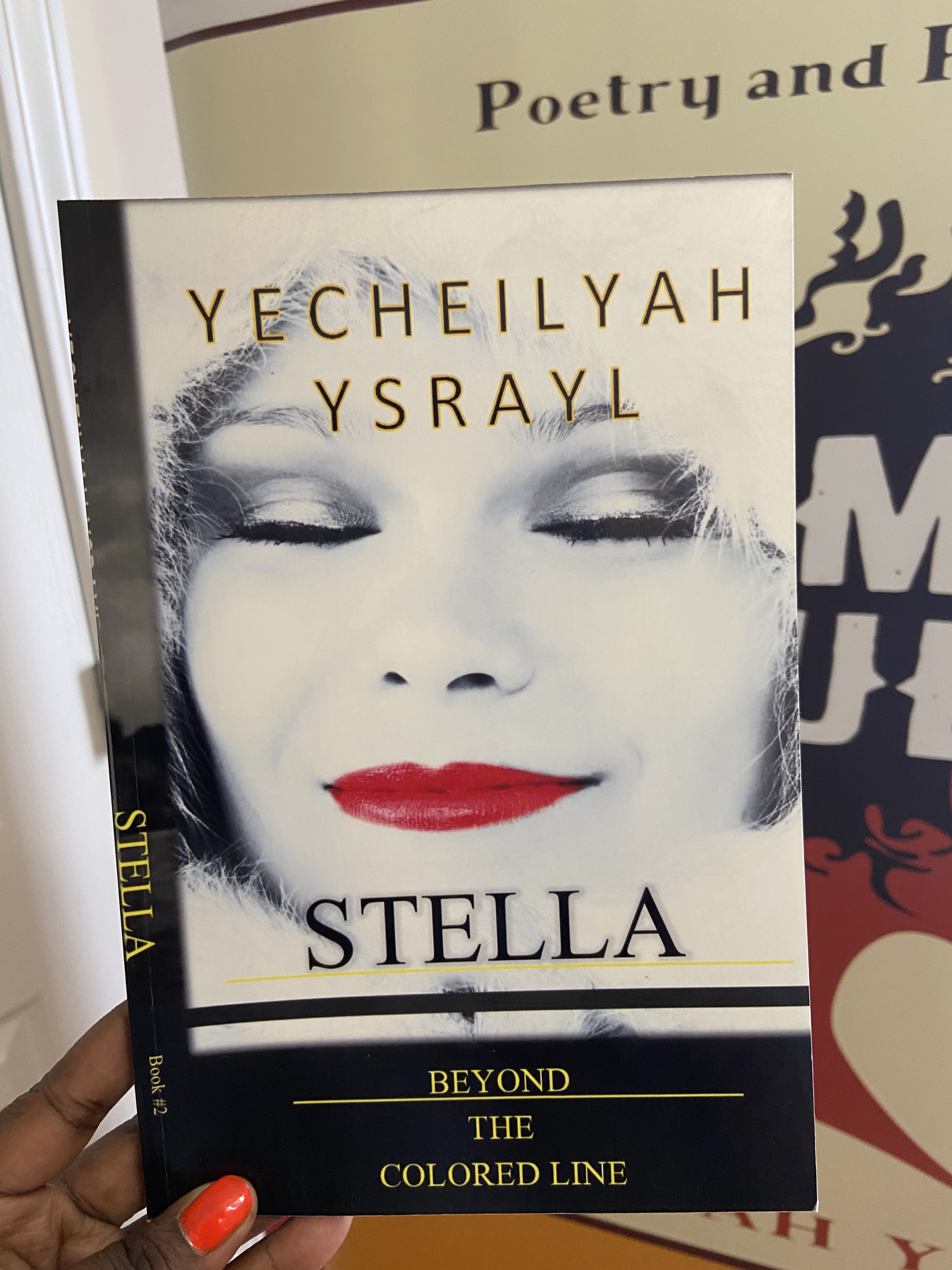
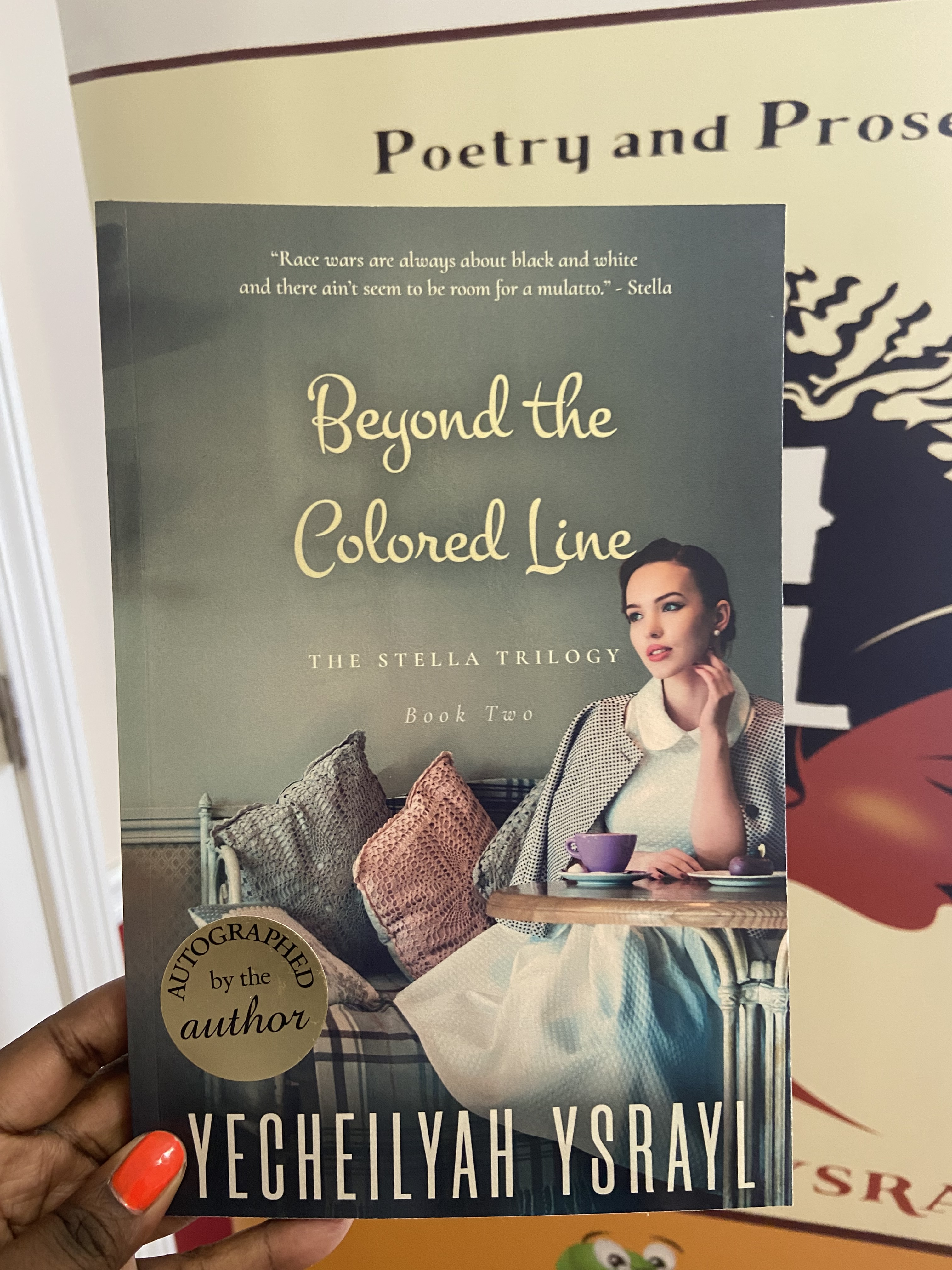
The cover of your book may suffer from a poorly formatted book. Take a look at book two in The Stella Trilogy, first edition.

I actually like the initial cover image. The problem is with the rest of the book.

Do you notice how the spine is twisted? Because the book was too short to have a spine, this occurred. Giving it one, nonetheless caused it to wrap around and face the front.

I didn’t realize the book needed more pages for a full spine because I’m not a graphic artist or skilled book cover designer.

While this cover image doesn’t pop as well as the first (IMO), the book is professionally bound. The alternate ending made the book long enough for a spine in the revised edition. The book features a more professional cover, professional formatting, and professional editing.

Recommendation. Before having your entire cover designed, wait until your book has been edited and properly typeset. Your graphic artist will require the precise number of pages and trim size to create a cover, back, and spine that perfectly matches the book.

Moral. Before hitting publish, make sure to hire a skilled typesetter to correct the placement of your text on the page.

If you want to try it yourself, here are some sources:

  • Reedsy Book Editor
  • Adobe In-Design
  • Microsoft Publisher
  • Vellum
    *Fiverr. Note: Professional typesetters can be found on websites like Fiverr. Make sure they are typesetting rather than just typography, though. Typefaces and other decorative elements make up typography. That’s not typesetting. Additionally, if they are only using Vellum, you can do it on your own by simply purchasing it.

Click Here to Check out More Indie Author Basics

Indie Author Basics streamlines and simplifies self-publishing so you can publish high-quality books without pulling out your hair.

Genuine Connections Will Take You Places Money Won’t

Since we live in a capitalist society, money is the first thing we think about when wanting to go places or do something, and if we don’t have the money, we become hopeless.

And I get it. You need money for everything. Not even a charity can run without funding. What kind of society makes it so you can’t even help people without money?

However, there are two other things we have that can make things easier:

  • Our mind
  • Our connections

Many people ask me about my self-publishing journey, and I can tell you it has been challenging. Nothing about self-publishing is easy, even now. However, what has made it easier is my connections with other people.

December, 30, 2017

When we first moved to Georgia, my husband and I visited the Nubian bookstore in Morrow. Every two weeks or so, we would buy books until we developed a relationship with the owner Marcus. As two nerds, we had no other agenda but to buy as many books as our wallets could afford and our arms could carry.

Two months later, I asked Marcus how I could get my own books into his store. (It had not occurred to me before then.)

To my surprise, we worked out a consignment deal on the spot and put my books on the shelf.

Then, he told me about the Medu Bookstore in Atlanta and referred me to Nia. I submitted I am Soul, which had to go through a review process. 

This is why…editing.

June 13, 2018

A couple weeks later, I got the call that I had passed the review board, and just like that, I was in two bookstores.

While hosting a book signing, I met a guy who told me there was a Barnes and Noble that accepts self-published books. He said I should check it out. I did, and a few moves later, I was in B&N.

Of all the advice I’ve ever given, this is probably the most important:

Building genuine connections and relationships with people can take you places money won’t.

It will allow you to skip steps you would otherwise have taken.

June 16, 2021

Once I am Soul passed the review board, The Women with Blue Eyes didn’t have to go through them to get on the shelves because they trusted me to deliver high-quality work.

In this season, instead of mindlessly scrolling social media, consider ways of leveraging your connections for more growth.

Something to think about.

Check out more Indie Author Basics Here