The Best Way for Writers to Use Amazon’s Preorder Feature

Great info over at Live.Write.Thrive on how to use Amazon’s PreOrder feature. Here are some key bullet points in the article that can help you to make wise preordering decisions (please visit the site for the entire article). Penny C. Sansevieri, Founder and CEO Author Marketing Experts, and best-selling author says:

  • First Time Published Author: If you’re a newly published author, the idea of a preorder probably seems exciting, right? Your book is up on the Amazon site as time ticks down to its release. And while it seems exciting, it’s not advisable to spend a ton of marketing time on the book because you can’t get reviews (though there is a workaround for that), but using this to build a fan base may not be the best idea. 
  • Already Published Author: If you have a book out there (or several), and you’ve built a mailing list of fans, then preorder may be a fun thing to do to build excitement for your upcoming book. 

I would still caution that the lion’s share of your work should only begin when the book is actually ready for purchase. Why? Because unless you are some mega-bestselling author, it’s hard to drive significant numbers to a preorder page.

The other issue is immediacy. If a reader wants something now, they may not want to wait for your book to be ready and will, instead, buy another Amazon-recommended book. Also, this is another reason to keep your preorder time short—which I’ll explain next.

<<<I only gave about 2 weeks for my preorders. Penny explains why you should keep your Preorder time short>>>

  • Timing of Your Preorder: Though I know there are folks who are fans of long preorders, I am not one of them. Amazon allows you up to ninety days, but when I’ve done this, I have found that a month is just about right. That way you can promote it to family, friends, and even your e-mail list, and still build some momentum for it without spending a ton of time pushing a book that no one can read.
  • Promoting a Preorder: Along the lines of what we discussed earlier, I would share this with your followers and your e-mail or newsletter list. If this is your second, third, or fourth book, the interest is going to be stronger than if it’s your first. But even a newbie author should not be discouraged from pushing this to folks who know you to let them know it’s coming. You can do this through images, blog posts, Facebook posts, and Twitter updates.

<<<Don’t Forget The Road to Freedom is available now for preorder at $0.99>>>

  • Pricing Your Preorder: For reasons I mentioned earlier, I would keep your pricing low— even if you plan on raising it later. Why? Well, you’re competing with millions of titles on Amazon and your book isn’t ready (yet), so the immediacy isn’t there. If you want to entice an impulse buy, keep the pricing lower at first, then once the book is live, you can always raise it.

Social Media Automation – Why I Don’t Use It

file(6)

It probably would make life much easier if I posted to one account and it automatically posted to all of my other social media accounts. There is a way this can be done by enabling social media automation and I am sure the busier I get the more I would be willing. But for right now there are some key reasons I am just not attracted to this strategy.

They Are Different Platforms

I’m probably the only person in the world who does not want to link her social media accounts (including this blog). Those of you who follow me on IG, FB, and Twitter have probably already noticed that I use them as separate entities. I’m not into linking them at this moment. That would be slightly annoying to me actually. This is because for me, Facebook, Twitter, and Instagram may be the top 3 Social Media sites active right now, but they are three totally different platforms. This means they require similar but slightly different navigation techniques. Let’s start with Instagram.

Instagram

file(5)

Instagram is all about the image. This, in my opinion, gives it advantages over Facebook and Twitter in the promotional area when it comes to pictures. When you scroll through Instagram, each picture is shown one by one according to your followers most recent uploads. As you scroll through, you cannot help but see them even if you skip through the ones that are not interesting to you. This means there is less distraction here than on the other platforms. Instagram is a go-getter for attention because there is not enough space to browse through anything else outside of that timeline. People can also upload videos, another major attention keeping strategy. While Instagram allows room for wording and descriptions of the pictures, the most important thing is the photo itself. Bold and bright colors that capture and keep people’s attention is a must for IG which makes Book Cover designs and promotional flyers very attractive for authors and they garner lots of attention. Quotes and Meme’s have also become a favorite. Authors can upload pictures of books they are reading, screenshot Amazon reviews, or post quotes from the authors they love. Lots of wording in the form of an Image is not something I would want to upload to IG. Instead, I would much rather use images with wording that stand out. Far as IG is concerned, the most important thing to remember for me is the strategic use of the image.

Twitter

file(4)

Twitter’s restriction on word count is a plus for me. In fact, it is what attracted me to this platform in the first place. It is a fun way to post constant updates and does not take up a lot of time. Twitter is the hub for short promotional shout outs and gives me the opportunity to be creative with words. People’s attention spans are short so its not necessary to be long winded. Instead, authors can boost the visibility of posts using the #hashtag, a social discovery mechanism that is actually taken from the tagging strategy of using keywords that others are also using and networking through those words. Twitter gives you the opportunity to upload photos as well, but it is not the platform for pictures in my opinion. When I scroll through my IG timeline I can instantly see the pictures. When I scroll through my Twitter timeline however, I will either see half of the picture or (via automation) I’ll see a link to the picture file that is uploaded. This is not very attractive or important to me in the moment I am browsing the Twitter timeline. I’d much rather read a short quote or click on a link to an article. Articles, this is another major plus with Twitter. It is so much easier to click on news articles and blog posts from Twitter. In fact, Twitter is the biggest hub for sharing news and taking advantage of real time information. Is there a crisis happening? You are sure to get real time updates through your Twitter feed. Re-tweets also make it easy to share and promote the work of others.

Facebook

8043979-120875522_3-122095019_13-v1

Facebook is the place to be for a combination of all of these things: pictures, family, friends, quotes, news articles, etc. Facebook also does not have a word count limit which gives posts the opportunity to have a longer shelf life, meaning more people are likely to see your post last week on your Facebook profile than your Twitter timeline. Twitter is “What’s Happening Now?” and Facebook is just “What’s Happening?” For authors, Facebook is the place for storytelling, poetry, etc. Because you can write longer posts, you can really go in on showcasing your writing skills because FB is really great when it comes to longer conversations (You can give everyone a taste of your skills 🙂 ). When you publish a popular post (lots of likes, commentary, views) it will stay at the top of the timeline more which will give it lots of attention. In addition, old posts that have new comments will make their way back to the top which means new people will get to see it. Facebook’s major negative is that it is too crowded, or at least to me. There is a lot going on. People are chatting, playing games, watching videos, looking at pictures, and even listening to music through Facebook. Facebook is a large platform by which to expand a network and garner attention for a product but it can also be a show off. Because its such a large platform, people are sometimes less genuine than they should be. Everyone wants to prove that their lives are the best thing since sliced bread even if its not really this way in reality. People also tend to confide in Facebook more than they should, venting thoughts, actions, and family issues that should never be put on display for the world to see. For this reason, I find myself neglecting Facebook a lot unless I really have something important to share. However, I will not completely neglect it as a social media marketing strategy because together, with the use of Twitter, and Instagram, it can create one strong marketing dynamic if used correctly. Facebook is also great for connecting with family and friends whereas Twitter and Instagram opens the door for networking more with professionals and strangers. You are more likely to connect with a family member or someone you know by way of Facebook than the other platforms.

socialab-infographic

Social Media Automation combines these accounts into one, making everything you post on one automatically post to the others and this is cool (for well established businesses it may just be very cool) but right now its just not for me. It may save me time, but it doesn’t give the impression that a real person is behind the computer if every post is automatically generated. It can also get boring at times (at least to me). Right now I would like to continue to use my social media platforms separately. Why? Because they are separate platforms.

Marketing is Farming, Not Hunting

Very informative post. I love the Farming analogy. Most excellent article.

Chris's avatarChris Fox Writes

Writing a novel is an immense undertaking, and before you finish it you think it’s the most daunting thing you’ll ever do. Then you DO finish it, and suddenly you need to figure out how to get people to read it.

Before long you realize you need to learn this strange sorcery called marketing, so you start asking around, reading blog posts, and digesting anything else you think will help. Then you start posting ‘look I wrote a book’ to Facebook, Twitter, and anywhere else you think people might see it.

People throw rotten tomatoes, and you quickly retreat back into your introvert shell. You realize that all the Facebook groups you joined are full of other people like you who are also yelling BUY MY BOOK as loudly as possible.

The method described above is the hunting approach. Your prey are readers, and you are stalking them through the…

View original post 1,721 more words

Social Media: Balancing Off / Online Book Promo.

Close up of a social media results report with pen and calculator

Social Media is a different world from offline. As such, I think interaction on and offline must apply to book promotion and be fitting for each. I’m learning, and trying to better implement, a well-balanced combination of both off and online tools because each is so different, yet similar too. Now the following are just my personal thoughts and opinions and are by no means that of an expert. These thoughts are not supported by any advanced data or statistic aside from my own experience; they are just my thoughts because, well, I was thinking about some stuff.

IMG_20140725_140547 IMG_20140725_134307
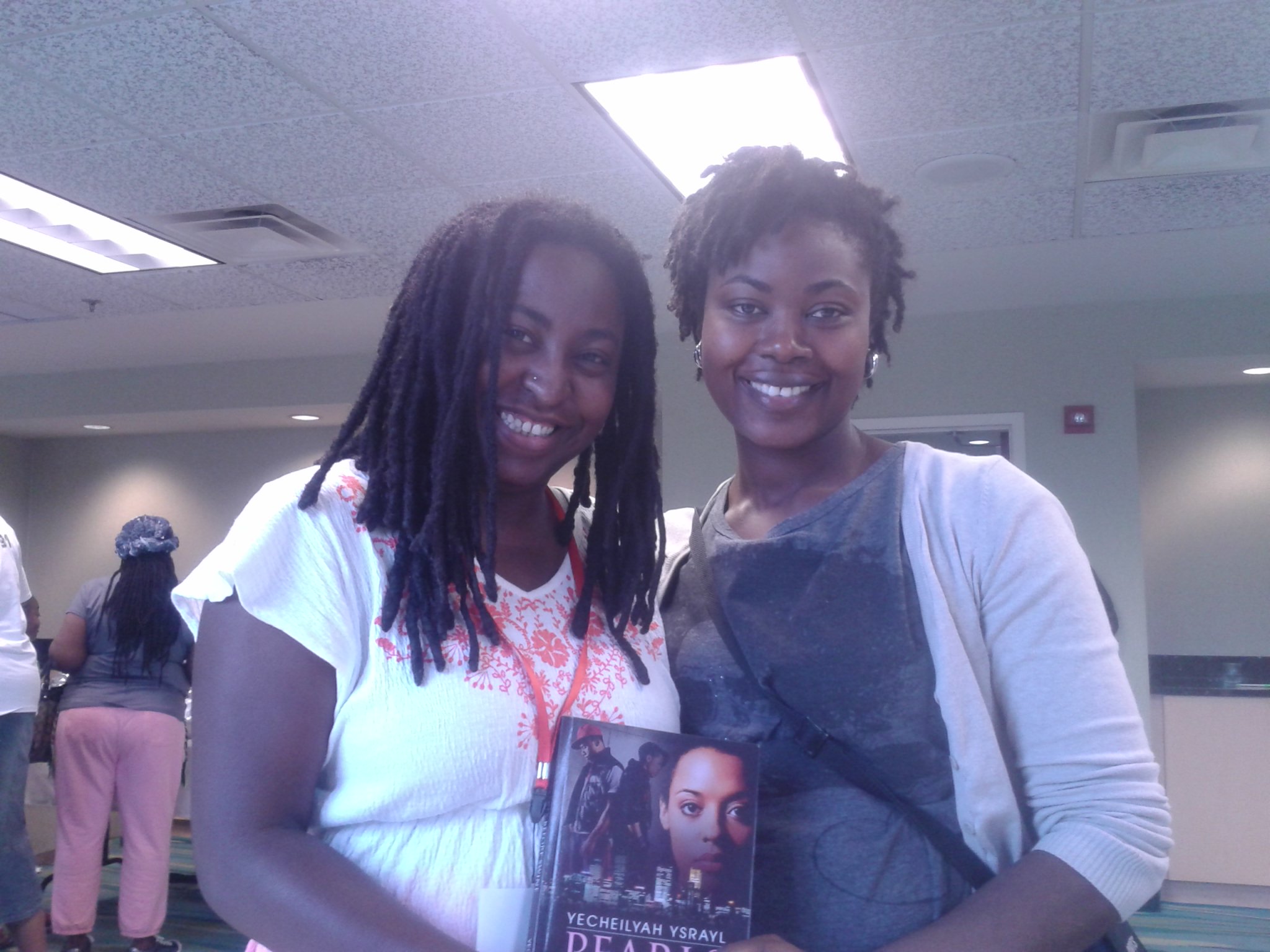
Me and Offline supporters from Canada and Philadelphia at The Pearls Before Swine release, The Double Tree Hilton Hotel, Chicago IL 2014

In my opinion, offline offers opportunities not always present online and online offer its benefits as well that are not always present offline. There are things I would do online as to appeal to this community that may not be required offline. Or that may not attract as much attention to offline supporters. For instance, I think offline activities are great to share with your online friends in the form of pictures. It’s always exciting to see photos of book signings, public speaking engagements, and varying social engagements with offline supporters. I think these, pictures, are far more engaging to your online supporters than ads and constant promos concerning updates of what is done offline because it gets boring after a while.

Online communities want to engage online whereas offline communities who are not as into “internet-ting” want to engage offline. Offline supporters and readers want to hear your voice and see your face. They can care less about how many Facebook Likes you have. As such, I believe balance of both on and offline activity is good but that there also need to be a limit to merging the two. Its OK for them to be separate. I believe, for instance, that a social media presence should rightly fit the online community.

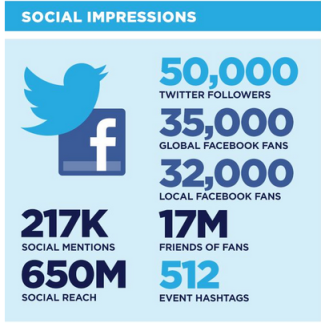
social-media-week-impressionsI know this looks good, but Social Media is very deceiving. While numbers such as is in this photo is exciting it can mean absolutely nothing or it can mean everything. You will probably never know for sure. This is where offline activities come into play. Offline book promotion handles much of the foot work. It is the physical act of pushing the book.

Social Media on the other hand, in my opinion, is not necessarily about selling books as much as it is about building; though through building come sales, social media is best utilized to help generate buzz about a book without blatantly asking people to buy it. Its purpose is to serve as a networking platform that helps connect writers to other writers, readers to writers, digital marketers and professional experts, editors, book groups and workshops, reviewers, beta readers, and gives authors room to connect with readers who enjoy the genre in which the writer writes by way of a platform. What I hope to accomplish as an author in general but especially online, is to show my support for the books content itself. I aim to raise awareness concerning the social or political message behind the writing. Why is this topic relevant today? How does it help people to grow? What value does my subject hold and can it start conversations that lead to greater understanding? By striving to answer these questions, it will help garner offline attention and lead to radio interviews and social engagements. In short,  I try to forget for a moment literally selling the book, and to instead focus on why my book is different from the next and thus why it is even worth your time in the first place.

9249053_l-550x358

Social media is about connections and should be used to reach the people you can’t reach offline (because they will become offline supporters). It should be, not merely an advertisement of the book, but a presentation of the books message and an introduction of the author on a personal level. By focusing on the content of the book and getting to know the author, I believe readers become interested in the book itself because of their passion for the topic and their trust of the author. In this way, I think we Indies have the potential to reach lots of readers and to be more productive in our service to the online literary community.


What Do You Want?

author-quote-3Everyone has their own set of ideas about what makes good writing and marketing. But the key to it all, I think, is individuality. No one does a better job at being you than you, and no one knows the intricate details of your story like you. For this reason, it is important to stick to those methods that best fit your vision, values, and taste.

I think the most important question then for a writer is, “What do you want?” Everything else is extra.

Self-Publishing: Do Your Research!

When a writer sits down to write, he does not fully understand the capacity of that in which he seeks to embark. When he runs his fingers across the keyboard, or scribbles his heart into ink, he does not fully realize the power of his actions. Who would have thought a single chapter could change the world? The life of a Self-Publisher does not fully evolve until after the book is done. He does not see the many hats that must be worn in order writerwalksintothat the world may feel his voice, or sniff out his vision. What Self-Publishers are doing today is very powerful. Just by writing one book we are becoming professionals in fields that people have gone years studying in schools. People have invested in years of schooling in that they may understand how to properly market, promote, and format documents and here you understand this thing just by publishing a book alone. If that is not power, I do not know what is.

writers-block21The first book I published was a collection of essays that none of you would probably read. It started as an assignment from my English Professor in College “Does Racism in America Still Exist?” I wrote so much I could not stop writing. I wrote and read, and wrote and read, until the paper became a book, a 3 part  book to be exact. Then I had a brilliant idea: “I’m going to publish it!” When this thought entered my mental space it wasn’t occupied with much else. I didn’t even see it as Self-Publishing in particular. I did not say to myself, “Self, we’re going to Self-Publish a book.” For me it was simply, “I’m going to publish these papers.” And that was the extent of my brilliant idea. I had no intention of sharing it and no other ambition beyond that. In the end, I gave copies to some family members and college buddies but that was it. I was not interested at the time in Self-Publishing nor did I even know what it was. I always wanted to be a published author, but Self-Publishing in particular was not part of the plan. It would be years later before I actually took the concept  seriously and before I understood what it was in it’s full capacity.

selfpublishingWhen I first started out, The Self-Publishing Industry was not like it is today. In fact, it wasn’t really an industry at all. Of course, in 2007 Self-Publishing existed, but there was not the same amount of information available to Self-Publishers that there is now. We are in the age of information and in just a few short years Self-Publishing ballooned into a plethora of opportunity for authors. Self-Publishing blogs are going viral and men and women alike are making thousands, some millions, of dollars from the expertise they are able to provide on the topic. Regular, ordinary people are making something of themselves by being a part of what they were told only those with Master Degrees and PhD’s could do. But, to aspiring writers who wish to Self-Publish, I beg of you, please, do your research!

relaxed-writer_1I know we do not live in a fair world, but nothing is more unfair to me than a teenager who decides he or she will write a book and publish it and yet have no idea what is necessary to do this. There is nothing more aggravating than for me to hear a young person say that they are publishing a book, and when I ask them what POD company they are going to choose, or if they are going to purchase their own ISBN number, or their marketing plan, they have no idea what I am asking of them. All of this work, and someone’s kid is just going to write a book because its fun. How can you write a book and not understand the basics of print book formatting? Do you even know what that is? Do you even know what POD stands for? Most importantly, do you know there are tons of resources available to help you to find the answers to these questions? I am not talking about places that require hundreds of dollars of investment; I am talking about places that require only pennies. And if you do not have the penny, there are tons of free resources as well. In fact, you need to make sure that Self-Publishing is even a route you want to take. Self-Publishing is hated enough as is because big publishing houses are not making as much money. People are not forced to Self-Publish, people are choosing  to Self-Publish. The problem however, is that people are not researching this industry and making sure they understand what it means to be a part of it. Mediocrity in Self-Published books is not just because of poor editing, book cover design, etc. No, mediocrity is rooted in writers who do not research their field. This is how poor cover design and poor editing is even born.

But times are changing and the industry is not like it was in 2007. No longer can Self-Publishing be stigmatized as a field of nonprofessionals. With the amount of information out today, a nonprofessional product can only be the fault of the author and the author alone, not the industry in general. Being a Self-Publisher alone does not automatically degrade the quality of work, but the lazy work of the Self-Publisher can. I am not saying I have it all together but please research what you want to be apart of. Today, there is a host of information available to help us to get started or to sharpen our skills. So to those who are currently writing books and are seeking to be a part of the Self-Publishing field for the first time, stay encouraged. And please, I cannot stress this enough, do your research. You’ll be thankful for it in the end. You can start off with something as simple as a Google Search. And because blogs are doing so well these days, a lot of the information you’re looking for can be found right here in the blogosphere. One blogger who is always on her game with research for Self-Publishing is my good friend Colleen Chesebro. Colleen is writing her first book and is always on point with her research. She is a great example of what to do as you are writing. You don’t wait until you are about to publish a book to find out how to do it. Ttake some time out of your day and walk around the neighborhood. You’ll be amazed at what you’ll find.