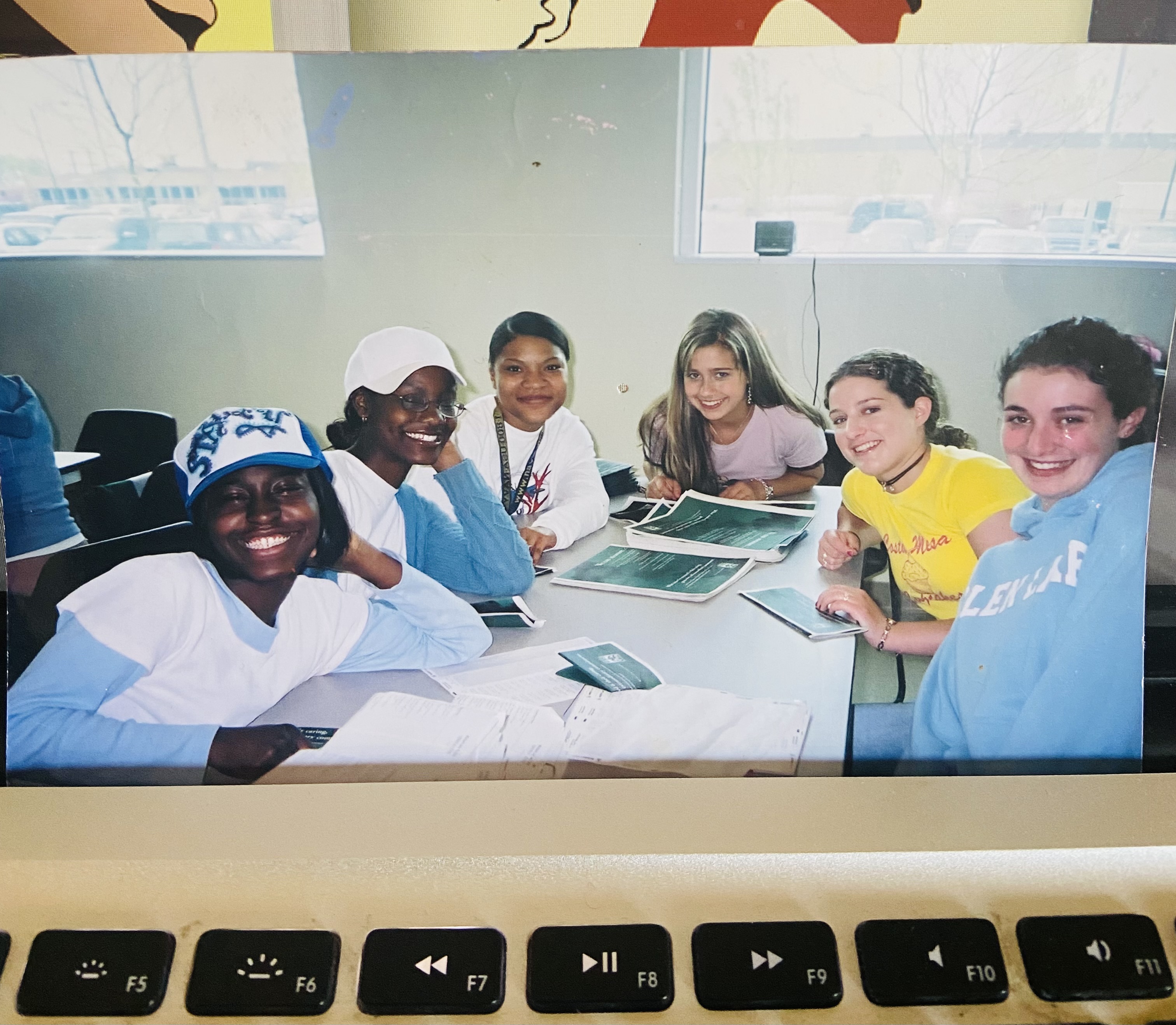
Harper High School Pen Pal Program, circa 2005-ish, Locale: Downtown Chicago
Although I tried out once, I was not a cheerleader in high school. I had danced before as part of a community program at Hamilton Park on Chicago’s south side with my twin sister and our cousin. We were taught handstands, traditional African dances (I am not sure of the tribe), and tap dancing. We traveled to put on shows and everything.
But dancing was not for me.
Over the years, as my twin and cousin got deeper into it (joining Pom-Pom teams and creating dances from the latest hits), I grew out of it.
Instead, I read books, wrote in my diary, and joined all the “boring” programs at school.
It didn’t take long to realize I was not like everyone else. The things my peers found exciting did not move me.
What I didn’t realize at the time was how these seemingly boring activities were stepping stones to sharpening my writing skills and preparing me for a career as a writer.
Writing School Plays:During my Sophomore and Junior years, the school employed a group of other students and me to participate in a program where we had to write and perform plays for the school. I do not remember the program’s name, but this was my first official writing job.
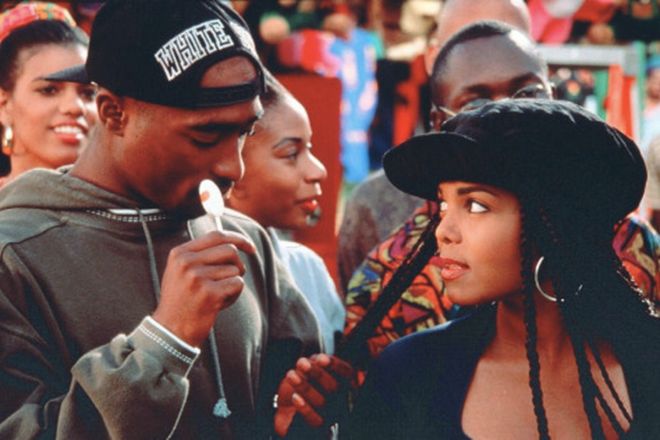
Pen Pal Program:The photo above is from a pen pal program between our High School on the south side and a school on the north side. We wrote letters to our pals and introduced ourselves. Next, they filmed us introducing ourselves on camera and swapped it with the other school. And then, finally, we all met up in person in downtown Chicago. This was the first day we all met, and the event concluded with a camping trip in Wisconsin.
The Yearbook Team: I was actually the only member of the yearbook team that year, lol. Everyone thought it would be boring, but I thought it would be fun, and it was. Not only did I get out of class to film assemblies, but I got to follow Arnie Duncan (then the CEO of Chicago Public Schools) and Jessie Jackson around with the camera, snapping pictures that would be featured in the book.
UMOJA Spoken Word Poetry Group: I was part of a poetry group called UMOJA Spoken Word my Sophomore year. (UMOJA is the Swahili word for unity.) I was already writing poetry, but this group taught me how to go deeper by introducing the mechanics of the craft.
When I found this photo, I realized that everything I did led to this moment and that everything I do today is also leading somewhere greater.
I don’t know about you, but the fact that our past has shaped us for today and our today is shaping us for our tomorrow is fascinating to me. It is one of the reasons I love history.
The next time you feel inadequate or frustrated with your journey, whatever journey that may be, I hope this inspires you to look back at those special moments in your life. Remember that you are only stepping stones away from where you are destined be.
Check out my latest interview with Mack Tight Radio. Be Sure to Like and Share!
This year, I decided to participate in National Novel Writing Month for the first time. With Black History Month around the corner for many (it’s always black history for me), I am pushing to finish the first draft by February. Because it requires a lot of research, this is one of those books with a source page that will probably be thick enough for its own mini book. The discipline required to get this done made #NaNoWriMo more attractive this year to hold myself accountable.
My goal was to write every day and have 50K words down by the end of the month. Let’s see how I did.
Word Count as of 11/30/2021: 30,168. Chapters: 23 Pages: 113 Sources Page: 3,747 words, 15 pages
While I did not cross the 50K threshold, I am proud of making it this far because I wanted to get 25K down if I could not do the fifty.
I did not write every day. I spent days traveling, and even on returning, I did not get right back to writing immediately. The interesting thing is that I rested a lot, which helped me do more when I was writing. Taking days off actually helped, not hinder me. To quote the Nap Ministry on Twitter: “This idea that you gotta grind yourself into exhaustion and make work the center of your entire existence is not liberating.”
I found the word count ticker and badges (I won 7) on the website motivating. I would look at it and compete to see if I could beat the previous day’s count.
The most significant thing, though, has been ghosting social media for much of November. I am not a good multitasker. If I am to focus on completing something, I have to give it my full attention, and right now, that’s this black history book. I was not posting as much or blogging. I will probably continue being missing in action, except the remaining book review posts and NWW, until the draft is complete.
I’m not gonna lie; I looked at National Novel Writing Month sideways a couple of times. I didn’t think it was for me. I am not for the whole “write a book in ten or thirty days” kind of thing. And while it’s not something I would do every year, having participated, I can say that I enjoyed the push it has given me.
If there is one thing I would do differently, it would be to set my own word count goal and try to stick to writing a little every day instead of sitting at the computer for hours. That ain’t healthy.
This bitmoji is way more excited than I am about this, lol.
Who else participated in NaNoWriMo? How was your experience?
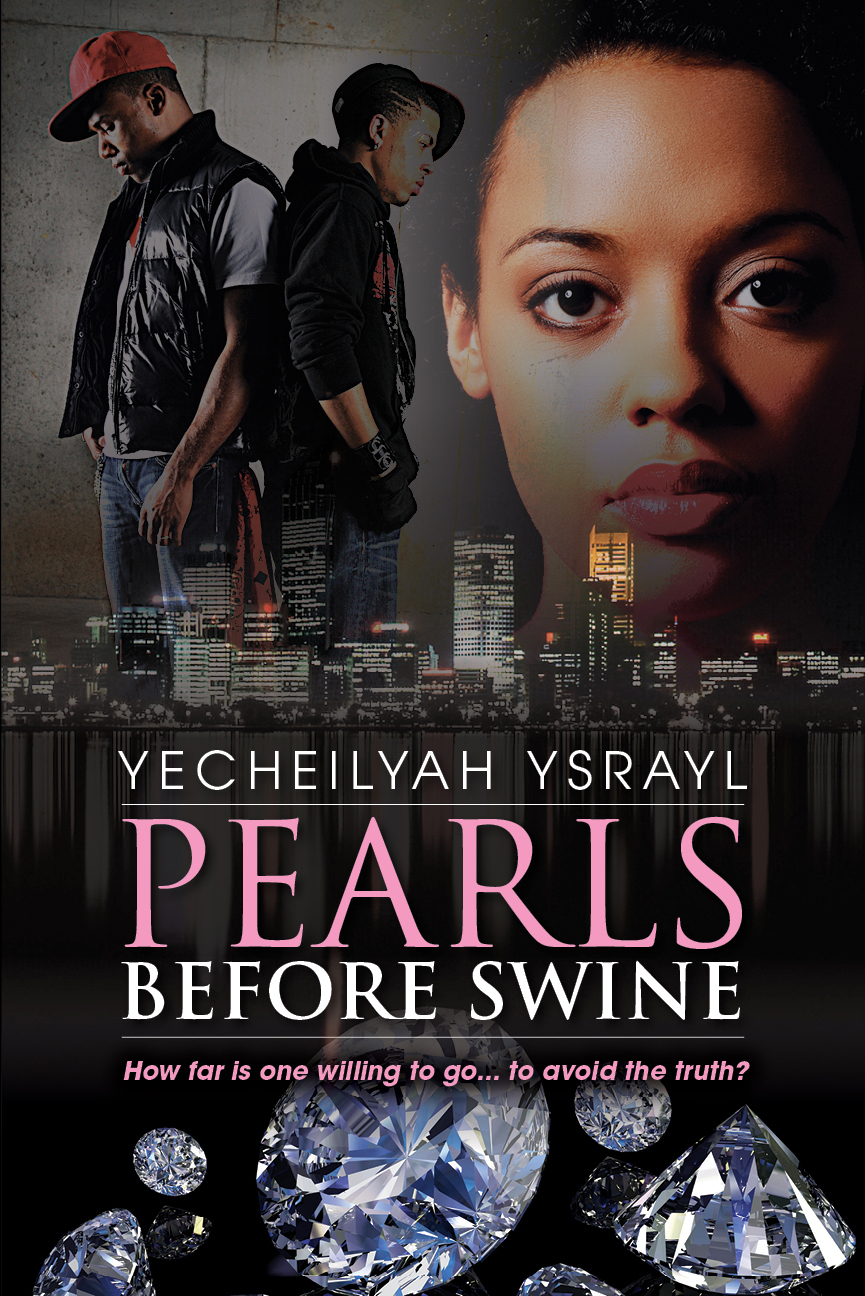
I once paid $300 for a book cover. At the time, I couldn’t afford to spend that kind of money on a cover. Not only did I not have the money, but even if I did, I couldn’t afford to invest it into a book cover when there were, as I saw it, much more severe priorities in front of me. But, I was young and excited, and I wanted to publish this book, and I wanted that cover.
But I was broke, broke.
So, what did I do?
I set up a GoFundMe.
I went around to people I knew and explained my vision and why I was raising the money. I (and get this) talked to people.
And I don’t like talking to people.
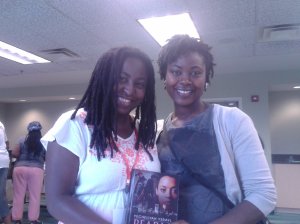
Not only did I make enough to purchase the cover I wanted, but I also made that money right back at a Book Signing in Chicago.
It was 2014, and we were at the Doubletree Hilton Hotel. I had just released my first screenplay, which, interestingly enough, is the book that inspired The Women with Blue Eyes: Rise of the Fallen.
I made that $300 back and then some.
You might be thinking, “But, EC, if you couldn’t afford to pay for a book cover, how did you cover editing?”
I didn’t. I had a friend edit the book, which is why it is retired today.
Photo by Annelies Geneyn on Unsplash
Self-Publishing is an area where the term, Proper preparation prevents pissed poor performance holds much weight. We don’t talk about it enough, but financial planning is part of the basics of Self-Publishing.
Self-Publishing requires a mindset shift regarding how you feel about yourself and how you look at your finances. One of the first things I’ve noticed in my journey is that most first-time Self-Publishers haven’t decided if they are publishing this book for themselves or publishing the book for others to read.
Did I confuse you there? Read on.
Publishing for Yourself vs. Publishing a Book that Sells
Photo by Jp Valery on Unsplash
Publishing a book for yourself means you fulfill your dream of becoming a published author and want to give copies away to family and friends. It means you are not selling the book or wanting to create a business out of it; rather, you want to satisfy a desire for something you’ve always wanted to do.
In this case, it would not be necessary to put a lot of money into this project, mainly because you are not getting the money back through sales since you are not selling the book. You may decide to get your book cover made using a cover template from KDP or Lulu or a homemade cover from Canva. You might choose to have a friend edit the book for you or use free software for formatting. This would be sufficient for a book you don’t want to sell. There are tons of economical ways to publish a book for this purpose.
But, suppose you are publishing this book because you want to leverage your business, spread your message and get it into as many hands as possible. Suppose you are a speaker and want to sell copies at your event, see your book on Amazon and Barnes and Noble or get the book stocked at bookstores, libraries, and schools.
What if you are writing this book because you want other people to read it?
In this case, you must prepare for this journey from the mind of a business person and not only an author.
When you publish a book you intend to sell, you consider other factors outside of what you want from the book because this book isn’t only for you. You think about building a platform, the market, and you consider the financial obligation necessary to bring the vision forward.
This isn’t to say write a book that doesn’t speak to your soul. It means you publish a book that speaks to your soul and the soul of others. It means you are publishing a book you see is needed in your community.
“You may have a robust knowledge of quantum computing but if everything the audience wants from you is how to use Microsoft Excel, give them just that. You write no book about quantum computing until you are able to build an audience around it.
Most self-published authors don’t do this. They do the exact opposite. They write what they like and try to figure out how to shove it down people’s throats.”
-David O, Entrepreneurs Handbook
Publishing a Book You Want to Sell Requires A Financial Investment
Photo by Michael Longmire on Unsplash
Spending money on your book is only an investment if you have put a strategy in place designed to ensure how you will sell this book. This, in my experience, is the difference between publishing for yourself and publishing a book for other people to enjoy as well. Many authors who venture into Self-Publishing ignore the market, so the book doesn’t sell outside of close family and friends because they have written a book no one wants to read.
When was the last time you bought a book by an author you have NOT been following for some time, on a subject you really don’t care about?
This is called Indie Author Basics because we focus on laying a strong foundation (a well-written and packaged book) to make it easier to build everything else on top of it. Too many new Indie Books are not attractive, not well-written, poorly produced, and is about topics no one cares about. As a result, the average self-published author makes less than $1,000 per year, according to a survey by Guardian in 2015, and a third of them make less than $500 per year.
What does this have to do with preparing financially?
When authors publish books they intend to sell for reasons outside of themselves, they are mentally prepared to invest the time and money to produce a high-quality product because they know they will get a return on their investment if done right.
Again, an investment isn’t just putting your money into something. Investing is putting your money into something you know will yield a return, either financially, mentally, or spiritually. It is the act of allocating resources with the expectation of generating an income or profit.
That’s why we had to talk about if you want to even publish this book to sell it first because not everyone wants to publish a book to sell it, but for those who do, financial investment is necessary.
My dope $300 cover for my first screenplay
My books do not sit on the shelves with major traditionally published books (and sell) because I’m the best writer or because I have the best books or even the best marketing strategy. I also put good money into producing my books, among other things. I wasn’t going to say this, but it needs to be said that I practice what I preach.
It also needs to be said I am on a budget just like most of us, but I prepare early for this so that what I do invest into publishing my book isn’t coming from the money I need to grocery shop or pay bills. It is coming from the money I have saved and put away specifically for this project since I first decided I will publish the book. That’s how seriously I take my writing.
I am not saying spending lots of money on your book will guarantee sales. It won’t. You first have to publish a book people want to read. (Although I got my money back from what I spent on the cover from the screenplay, the book did not continue to sell after that.) But, after that, making sure the book is well packaged plays its part too.
I am also not telling you to sell a leg to publish your book. There is nothing wrong with finding economical ways to publish (premade covers are cheaper than custom made), but if you try to find the cheapest way possible or skim on editing because you don’t want to put in the work, it will only cost you more in the end.
I am not at all surprised I am enjoying Cicely Tyson’s memoir, Just as I am. While I am not an actor,* I try to learn as much as I can from others. Even if it’s reading a book, I want to know what brought us together and what purpose I might piece together that we are intended to serve to each other.
I have had this post sitting in my drafts since the beginning of May. It wasn’t until I read this chapter last night I could finish it and feel comfortable publishing it.
In Chapter Ten, Center Stage, Miss Cicely is recounting her training with Vinnette Carroll, playwright, actress, theater director, and the first black woman to direct on Broadway, with her 1972 production of the musical Don’t Bother Me, I Can’t Cope.
In discussing art, Miss Cicely (I like saying that) explains in just a few short sentences everything I want to convey in this post.
“Vinnette taught me to learn technique and then to forget it–and to resurrect it only if it served my portrayal. Technique is important, to the extent that it is undergirded by emotion. I once knew an actress who was a brilliant technician, but her portrayal fell flat. She could create a moment and bring it to fruition, yet it was apparent she wasn’t feeling anything, and as a result, neither was her audience.”
Cicely Tyson, Just as I am, Chapter Ten, pg. 156-57
“Technique is important, to the extent that it is undergirded by emotion.”
I never consider myself an expert on anything. I will say what I have come to know in my experience, both as a writer and listener of poetry, is to watch out for intellect. By intellect, I mean the need to be so fancy you confuse the reader. It is, in my opinion, similar to using technique and forgetting emotion.
That is why I often feel that intellect, if not used in balance with emotion, passion, and heart, is the enemy of sound poetry.
“Watch out for intellect, because it knows so much it knows nothing and leaves you hanging upside down, mouthing knowledge as your heart falls out of your mouth.”
I have read poetry so over my head I could not possibly relate to it. Metaphors and similes were so puzzling I am not even sure Maya Angelou could decipher what the poet meant if she were alive. I once read a poem that ended with the author saying he or she had eaten a bird. I do not know who or what the bird symbolized. All I know is a bird at the beginning that ended up eaten by the end of the poem.
Poor bird.
I did feel sorry for the bird to this poet’s credit, so I was not without emotion completely. It is not lost on me that readers can discover their own meanings and interpretations of poems, which is part of the fun. We learn what the author intended for the poem to communicate and what we got from it based on our personal experiences and feelings. I love hearing how a poem I’ve written resonated with readers, even if what they got from it was different from what I thought as I wrote it.
But, I like to think reading and writing is a partnership. While the first person our writing serves is ourselves, I would hope there is something to be gained by the reader too. I don’t want to get so wrapped up in the beauty of language that there is no substance, just pretty words. I expressed this in the poem Give Me Life.
To me, this would be similar to the woman Tyson references, who was a brilliant technician when acting but could not move her audience.
If you know anything about me by now, you know I am a Black Movie Buff. It’s like Justice said in Poetic Justice about having something deep to say, about having a voice.
Lucky: “What you write about in that notebook?”
Justice: “That’s my poetry.”
Lucky: “You trying to say my cousin’s shit ain’t poetry?”
Justice: “It ain’t if he ain’t got nothing deep to say. Gotta have a voice. A perspective.”
Intellect can be a strength or it can be a weakness.
If there is an easier way to say something, write it plainly, and it will reveal its own depth. I like to write the poem as it comes to me and then come back later to dress it up. Ain’t nothing wrong with a little icing once you have the cake.
Here is another quote I picked up from the quote of the day from author and editor Shayla Raquel’s newsletter, which I also just read yesterday.
“Your writing voice is the deepest possible reflection of who you are. The job of your voice is not to seduce or flatter or make well-shaped sentences. In your voice, your readers should be able to hear the contents of your mind, your heart, your soul.”
— Meg Rosof
*I said at the beginning of this post I was not an actor. I should say I am not a professional actor, as I do have some experience with it. In High School, I was part of a special program to write and perform plays. I cannot remember the program’s name or what the aim was, but this was my first official summer job. I did this for the summer of my Sophomore and Junior year, taking an official drama class my senior year, where I would also perform my poetry live for the first time as a monologue. In 2015, I was featured in a stage play at the DuSable Museum.
But as I reflect, fun as it was, I prefer to write the screenplay. Ya’ll can do the acting.
Have you entered this year’s poetry contest? I hope I gave you some inspiration! Take your time but keep your eyes on the clock. June will be here before you know it.
The rain gives me the permission to slow down. As the sky darkens, I feel safe to retreat under the covers and do nothing without guilt. The growl of thunder speaks a language it knows I understand. “Rest,” it says and just like the water falling from heaven nourishes the ground, I too am recharged by laying my burdens down. I love it most when the sky darkens. It’s like the earth turned off its lights. Giggling at the revelation, I turn my lights off too and listen to the thundering command my next move. I am a kid again thinking of things to do before the grownups come back. The body is such a beautiful creation, releasing melatonin to induce drowsiness when natural light disappears in the evening. When this happens in the middle of the day, it is a special treat. I sit down to write something to match the energy bursting forth from the sky before the sun returns from its sabbatical, and my body releases the cortisone that will get us up and going again. I sit in the darkness with only a lamp of light to write before the tranquility of the moment passes, taking with it these words.
I hope you are all doing well and all that good stuff. I have not blogged much lately because I am working on The Women with Blue Eyes and tons of other projects, including our 4th Annual Poetry Contest I want to get underway next month.
If you are new here, welcome to The PBS Blog! This is a great time for you to learn more about who I am through my most recent interview.
Below is a snippet of the interview and links with WRDE-TV, an affiliate of CBS. Also find links to Fox 34 and WBOC, affiliate of NBC. (If you read one, you’ve read the others cause it’s the same article, just on different platforms.)
Interview Snippet:
What’s your best piece of advice for readers who desire to find success in their life?
Y: Faith without works is dead, so my best advice is to do your work. Get on your knees and pray and then get on your feet and work. I hate to sound so overly simplistic, but sometimes things are a lot simpler than we make them out to be. We must be willing to do the work necessary to manifest all that we believe we can achieve. Belief is good, but alone it is not enough so I cannot tell you to just believe in yourself. You must prove this belief with action. What you say you believe is one thing, but what you do exposes who you really are. Whatever it is you say you want, you must act on it for it to become a reality.
Not only must we love ourselves and believe in our ability, but we must also be prepared to do the work necessary to turn the unseen into the seen. Consistency is also key because while actions speak louder than words, consistency speaks louder than both. These skills Yah has blessed us with are not intended to serve only us. They are meant for us to multiply. This is possible when we combine a steadfast belief with a compelling work ethic.
Speaking of success, what does the word mean to you?
Success to me means to genuinely enjoy what you do with your life without sacrificing your authenticity. It means to multiply your gifts to serve as many people as is destined for as long as the breath of life is in your body and you are walking this earth. To do so with as much grit and love as possible, and to do it all while staying true to your integrity.
I am deep in revisions for my first fantasy novel, The Women with Blue Eyes: Rise of the Fallen. I am on the clock because I want my editor to start work on it next month. As I go over my work, I realize how horrified I would have been not going back over this. As usual, I want to share what I am learning with you. In this new Indie Author Basics series, I am sharing some signs I have noticed that indicate that you are probably not ready to Self-Publish that book.
You Skip the Revision Process
Step one in the process of Self-Publishing is to write the book. It is unnecessary to self-edit during this stage because it would be challenging to finish the book if you are editing as you are writing. Step one is like a brain dump where you are getting everything down on paper. It is the most exciting part of the journey as you let your ideas and creativity flow. Step one is creating the rough draft of your story, the version of your manuscript that is complete but not polished.
I know a writer is not ready to Self-Publish when they skip the revision process.
Revisions are rewrites of the manuscript before sending it to a professional editor.
It is AFTER the book is finished because you don’t want to edit as you write (you’ll never finish) but BEFORE the professional edit.
The rewrite is more challenging than the rough draft because you are not only putting your ideas on paper, but now you are organizing those ideas, cutting out what doesn’t work, and working with what does work. The revision stage (rewrites) strengthens your work into something worthy of publication.
If you skip this stage, you are publishing your rough draft. If you send the rough draft to an editor, you will still ultimately publish your manuscript’s rough draft version. While the editor can clean it up some, it is not the editor’s job to write the book for you. If you are looking for someone to write the book for you, you need a Ghostwriter. If you want to write your own book, it is essential not to skip the revision process when you are Self-Publishing.
The rough draft is not the final draft and will not be the best representation of your writing.
How to Know if You Have Skipped Revisions:
You just finished writing the book. You have made it to the end, and you are done. You take this book , create a PDF, and upload it to Amazon. You have not gone back to rewrite or make corrections, and you have not had it properly edited. If I have described you, you have skipped the revision process.
Technology has been your godsend. You have finished recording your book using speech-to-text technology that has translated your words to the page. You finish the book, but you don’t rewrite what you spoke into the document for comprehension. Everything is kind of all over the place. If I have described you, you have skipped the revision process.
You just finished writing the book. You have made it to the end, and you are done. Then, you take this version (the rough draft) and send it to an editor. If I have described you, you have also skipped the revision process. And unfortunately, for your editor they have the job of rewriting your book. If they are a quality editor, they will send the MS back to you and request a rewrite.
If you have not gone back over your rough draft to make changes, this is a sign you are not ready to Self-Publish.












 The PBS Blog