Yecheilyah’s 2nd Annual Poetry Contest Rules, Entry Criteria, Prizes and Guidelines

Guys!!

Don’t forget about the poetry contest! I don’t want to have to keep these prizes to myself. Because, ya know, I will.

But I don’t want to guys. I don’t wanna.

To learn more about how to enter, visit the ORIGINAL POST HERE.

It has already been shared and I don’t want to break the link of the original post so I am not going to repost it. Just CLICK THAT LINK to learn how to enter.

May the best poet win!

Please share THE ORIGINAL post with all the information on it. Please don’t reblog THIS post. Reblog the ORIGINAL. Comments disabled here.

Black Indie Readers: African American Historical Fiction is Important Too

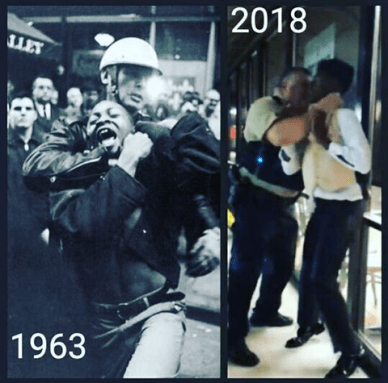
Kanye West, Waffle-House, Childish Gambino, Roseanne, and elderly Black women being manhandled by police is but a snippet of what’s going on. I can turn on my television or more precisely, open my computer, and see a similar scene as a 1960s protest march. I see people sitting in again at restaurants, I see people marching down the streets, I see cops fighting young black boys, and I hear of black bodies being found hanging from trees again (often ruled as suicides.)

This is America.

They say a people without knowledge of its past are doomed to repeat it. I wonder how many of us realize that the past is repeating itself? And I am reminded this is why I write the kinds of stories that I write and why I think Black Historical Fiction is important (and also maybe a tad bit underrated). Often, I see Romance, Urban Fiction and Street Lit praised as the epitome of Black Literature among many Self-Publishers / Indie Authors and Indie readers. But let’s not forget that black history is important too, and should not be left out of the Indie Author revolution.

After my most recent book release, I was amazed at how many people (Israelites, so-called African Americans, Blacks) didn’t know who Marcus Garvey was, what the Universal Negro Improvement Association was, or could make the Marcus and Malcolm connection in the book. (More on this later but briefly, Malcolm X father was a follower of Marcus Garvey and Malcolm’s nickname was Red among other names. I named Nora’s boyfriend after Malcolm X in his honor and gave him some of his characteristics.)

I know that many of us have been awakened to the true knowledge of who we are and have reclaimed parts of our lost, ancient and biblical heritage. We are waking up in droves and understanding the important role that identity plays in the state of Black America today. I am talking about the Hebrew Israelite movement and the number of people returning to the bible as a source, not of religion, but of black history and instruction on how to live on the earth. But that does mean we should toss aside our history in this land as unimportant since it has all played a role in who we are and where we stand today.

To be a true educator, you must first be educated and with extensive knowledge of what you’re teaching and if this is history, it’s even more critical to understand it all. (I am no one special and I don’t know everything. I am only repeating what I have already told myself about how important it is that I study history. All of it.)

Yes, it’s important to know who Moses was, King Solomon, Queen Esther, King David, and all the prophets, prophetesses and servants (who were all Black). But, it’s also important to know who Mansa Musa was and his influence in Timbuktu, Queen Yaa Asantewaa (Phonetic spelling Yah asante wah), Haitian Revolutionary, Toussaint L’Ouverture, Hannibal, Nat Turner, Marcus Garvey, Ida B. Wells and so on. These are the people whose shoulders we stand on and knowing their stories are still important. As well as other facts. If we talk about the European Slave Trade let’s also talk about Islamic slavery. If we talk about white slave owners, let’s also discuss Jewish and Native American slave owners as well.

History is important in general because if you don’t know what happened before, how can you properly arm yourself against ensuring that the bad things do not happen again? You cannot focus on repeating only the good things if you don’t know what is good.

Dear Black Indie Readers, African American Historical Fiction is important too.

“Once you change your philosophy you change your thought pattern. Once you change your thought pattern, you change your attitude. Once you change your attitude, it changes your behavior pattern. And then you go on into some action.” – Malcolm X

“A people without the knowledge of their past history, origin and culture is like a tree without roots.” – Marcus Garvey
———————————————————————————————————–
For more Black History Fun Facts, be sure to visit the Black History Fun Fact Friday page and to follow this blog for Black History all year around! Revolution, part 2 in The Nora White Story is also now available on Amazon. Free with Kindle Unlimited.

Book Marketing for Introverts with Shayla Raquel

I had the honor of writing a guest blog post alongside some amazing writers on the subject of marketing books as an introvert for Shayla Raquel’s most informative blog. Shy writer? Nervous? Don’t want to put yourself out there? Check us out for tips below!

“How does an introverted author handle book marketing? Well, I don’t know because I’m an extravert. So for the first time ever on this blog, I have asked not one but five introverted, outstanding authors to help you with your book marketing. If you’re shy or not into self-promotion or just feel like, “I literally cannot do this,” then you need to hear what these women have to say. Take it away, ladies!”

READ THROUGH TO THE ORIGINAL POST HERE!


REMINDER: Part 2 of The Nora White Story is now available on Amazon. Free with Kindle Unlimited CLICK HERE.

Black History Fun Fact Friday – Black Wall Street and the Power of Community

On June 1, 1921, the systematic destruction of years of building was made manifest in less than 24 hours. Also known as “Little Africa,” the black business district of north Tulsa, Oklahoma lay fuming—a model community destroyed, mansions melted down to the ground, hope stretching its mournful arms forward in a desperate attempt to hold on to its dear Greenwood.

It began the same way it always has, with a black man accused of accosting a white woman. On May 31, 1921, “the Tulsa Tribune reported that a black man, Dick Rowland, attempted to rape a white woman, Sarah Page. Whites in the area refused to wait for the investigative process to play out, sparking two days of unprecedented racial violence. Thirty-five city blocks went up in flames, 300 people died, and 800 were injured.” (Fain, Kimberly, 2017)

This was the beginning of what culminated in the destruction of the Greenwood community.

Greenwood is a neighborhood in Tulsa, Oklahoma. It was one of the most successful and wealthiest black communities in the United States during the early 20th Century. It was popularly known as America’s “Black Wall Street” because its financial success mirrored Wall Street. During the oil boom of the 1910s, which gained the town such titles as “Oil Capital of the World,” the area of northeast Oklahoma around Tulsa flourished, including the Greenwood neighborhood. Home to several prominent Black business people, the community held many multimillionaires.

Greenwood boasted a variety of thriving businesses that were very successful up until the Tulsa Race Massacre. Not only did blacks want to contribute to the success of their own shops, but also the racial segregation laws prevented us from shopping anywhere other than Greenwood, forcing us to be in support of our own people and thus contribute to the success of our own people.

300px-Cdm15020.contentdm.oclc.org

Greenwood became the mecca of opportunity to build up what Black people had been denied access to. Instead of complaining, we were not included in the all-white Newspaper we created our own (two). Blacks were discouraged from using the new Carnegie Library downtown for whites, so they built their own smaller all Black branch libraries. Not stressing over being left out of restaurants, grocery stores, and public schools, they made their own on the backs of a drive toward honest entrepreneurship.

Clothes bought at Elliot & Hooker’s clothing at 124 N. Greenwood could be fitted across the street at H.L. Byars tailor shop at 105 N Greenwood, and then cleaned around the corner at Hope Watson’s cleaners at 322 E. Archer. The dollar in this community rotated 36-100 times, taking as long as a year before it left the community (today, the dollar leaves the black community in less than 15mins).

These were not people who started wealthy; they were neither businessmen nor businesswomen, but being locked out the whole of society (stripped from employment in the oil industry and from most of Tulsa’s manufacturing facilities), these men and women toiled at troublesome, often dirty, jobs. They worked long hours under trying conditions, but their paychecks built Greenwood, and their hard work helped build Tulsa.

Following the massacre, the area was rebuilt and continued to thrive until the 1960s, when integration allowed blacks to shop in once restricted areas.

“By the 1940s, the Greenwood District was rebuilt, but due to integration during the Civil Rights era, never regained as much prominence.” – Kimberly Fain, 2017

This community is one example of the power of support, not just for black businesses but for entrepreneurship in general. While liking social media posts is beautiful, it is financial support, dedication, and consistency that ultimately helps small businesses grow into larger companies, support and hire their own, thrive, and empower a community.


Check out more black history fun facts here!

3 Life Lessons from the Story of Creation

#1: Celebrate Along the Way

After everything Yah created, he stopped to praise the work he had done. When he created the lights, it was good. When he created the expanse, it was good. When he created the land and the waters and the sun and the stars and so on, Yah stopped to acknowledge that what he had just created was good. In our own lives, we must learn to celebrate our success along the way and not just what we consider great successes but small ones too. And when I say small I am talking about being able to get out of the bed in the morning. When I say small I mean getting your children ready for school. When I say small I mean cooking for your family. When I say small I mean being able to have a warm cup of coffee in the morning or a cool glass of wine in the evenings. This is surplus. Anytime we can have more than the bare minimum, it’s surplus. Its extra. So when I say small I mean being successful at just getting through the day without going insane.

Miserable people will try to criticize your joy. They will say things like, “ain’t nobody happy all the time.” While you certainly won’t be happy all the time, you don’t have to be happy to be thankful. We must learn not to just promote praise among those finished projects but to also see the good in the unfinished. We must learn to be grateful during the bad times, the tired times, the frustrating times, and the sad times because these are the most important times. In fact, these hard times are probably even more important than the good times because the hard times are cultivating something in you. You are being prepared for something. You are being strengthened for a work. Additionally, being grateful for what you have and celebrating on the way to where you are going builds healthy self-esteem. When you stop and give praise for everything that you have, even if you don’t have what you want, you begin to feel better about yourself, about your life and about who you are.

#2: It’s a Process

Certainly, the Almighty Power could have created everything in one day. Certainly, he is powerful enough and more than capable of doing it but instead, Yah took six days. He took his time making sure that the world was perfect for those who would inhabit it. In our own lives, we must understand that everything is a process. You cannot expect to have everything figured out at one time and you can’t expect to have everything you need at one time. You may find one piece of the puzzle today and the next piece may not come until next month or next year. The next piece may not come until you are mature enough to receive that piece. It may not come until you are in a place mentally to receive it.

Greatness doesn’t just happen. It is a result of years of work, of trial, of failure, and of learning. It is a culmination of experiences and setbacks. It is a process. We must learn to allow ourselves to be nurtured and to be prepared for our destiny and our purpose.

#3: Rest

The creator of everything certainly does not need to rest in the way that we do and as previously stated, certainly he could have created everything in one day and be done with it. But he didn’t and I believe it was to show us something. After six days Yah rested on the seventh day and set this day apart. In our own lives, we must understand that there’s no such thing as this 24-hour working life we see on social media and television. You cannot expect to work until you are exhausted and still expect to have enough energy to be productive. Rest and vacation have become a privilege in this world and that’s a shame. Rest is not some privilege. Rest is a necessity. We cannot expect to be 100 every single day. That’s not realistic. Rest is just as important as work is.

Sleep plays an important role in your physical health and is involved in healing and repair of your heart and blood vessels. Going without sleep or rest is linked to an increased risk of heart disease, kidney disease, high blood pressure, diabetes, and stroke. This is because our bodies are designed to refuel during rest. This is when we get our wind back. You can run non-stop until you are out of breath and falling over or you can walk and pace yourself so that you have enough endurance to make it to the end. We can try and mimic the “hustle” and “grind” of everyone else and run our health into the ground. Or we can take some time to rest our bodies, our hearts, and our minds.

4 Lessons I Learned from the Movie American Gangster

CEVWBh1UkAIumVq

American Gangster is based on the true story of real-life drug kingpin Frank Lucas, who, by the 1960s, constructed an international drug ring that spanned from New York to Southeast Asia. The film features Denzel Washington as Lucas and a New York City cop (Russell Crowe) who busted a big-time heroin ring.

I have a love-hate relationship with this movie. I love the many lessons the movie provides but dislike how the message can be perceived. The movie can easily cause young people to admire drug dealing. Frank takes care of his family, runs the show, and even works with the cop to lessen his sentence at the end.

However, if we can get past the drug part, there are many good and bad lessons throughout the film. A young person with the proper guidance can also easily see how this life only leads to one of three places: Death, jail, or that old drunk on the corner at fifty telling the teenagers how you used to run the block as you beg them for some change. There is no in-between. Drug dealers don’t get pensions.

Lesson #1: Influence Can Be Good and Bad

“I want what you got Uncle Frank. I wanna be you.”

In the film, Frank’s nephew, Stevie Lucas, is an excellent baseball player who has played since childhood. Now, at the prominent financial level to do so, Frank schedules a meeting for his nephew Stevie (T.I.) with the Dodgers. This is an amazing opportunity for Stevie to fulfill his dream of playing baseball, but he does not show up for the meeting. Even worse, he doesn’t want to play baseball anymore. Now that he is a part of his Uncle’s multimillion-dollar drug enterprise, he desires to be a drug kingpin just like Frank.

In an age where people can choose to become social media influencers, it often gets underscored that being influential is not only about persuading people to do the right things. Being an influencer can also mean influencing people to do wrong morally or in a way that dramatically changes their lives for the worse. Influence is also not only verbal. You don’t have to say a word to influence someone to do something; your actions alone are enough.

“You know Frank, quitting while you are ahead is not the same as quitting.”

Another example of using influence negatively is Frank moving his entire family to New York to participate in his drug enterprise.

Social influence occurs when someone’s emotions, opinions, or behaviors are affected by others.

Frank played a significant role in his brothers lives. You can tell (at least in the movie) that they looked up to him and already admired him. Frank did not have to travel to North Carolina and recruit them into his drug empire. He already had their love. However, Frank used his influence to charm his country family to come to the city and become part of his drug business, directly or indirectly. Frank is responsible for his part in taking advantage of his brother’s innocence. Even his mother in the film said: “If you were a preacher, they would have all been preachers.” They would have followed their big brother anywhere. We all have people who watch and look up to us, even if we don’t know it. Frank could have used his money to invest in legitimate companies for his brothers, leaving them out of his shenanigans and out of jail.

Lesson #2: Say Less and Follow Your Own Advice

“The loudest one in the room, is the weakest one in the room.”

Nicky Barnes, one of the biggest heroin dealers, was known by the New York Times as “Mister Untouchable” because the cops couldn’t touch him. He was also known for his arrogant demeanor and flashy dress. When Frank’s brother Huey adopts the same colorful look, Frank gives his brother some critical advice: “The loudest one in the room is the weakest one in the room.”

The quote is self-explanatory and goes hand in hand with other quotes like, “The more you talk, the less you know.” It speaks to how, when people talk a lot, it is usually nothing but talk.

However, another lesson the movie shows from the quote is how we should follow our advice. Later in the film, when his wife buys him expensive fur, Frank wears it to the Ali/Fraizer fight, causing him to stick out like a sore thumb among his peers, many of them fellow drug kingpins and some cops.

The same “clown suit” he warned his brother not to wear he was now symbolically wearing with that loud fur coat. It is the same coat that made the police take notice and pay attention to him. From this one mistake, they learned of Frank’s every move.

Lesson #3: Be the CEO of Your Life / The Business Mind

“Nobody owns me though. That’s ’cause I own my own company and my company sells a product that’s better than the competition, at a price that’s lower than the competition.”

We have already established that selling drugs only leads to a future of death and despair, so this point doesn’t justify Lucas’s actions. However, despite the kind of business he ran, people with a business mind can still learn from the movie. You can learn a lesson from anything if you pay enough attention to it.

One of Frank’s many experiences had to do with launching a new product that was cheap but still held quality. In the 1970s, heroin was often diluted with sugars, chalk, flour, or powdered milk to stretch it so addicts understood that the drug would have a lower potency. Frank stepped outside of this established heroin supply chain by cutting out the middleman and not diluting the heroine.

To create his one-of-a-kind product, Frank went directly to the source, a heroin producer in Saigon, Vietnam. In the movie, Frank didn’t dilute his heroin, which made it more potent. He also sold the undiluted, more powerful drug at a lower price.

The lesson is not that you should run your own drug empire. The lesson is that when building a business, you sometimes have to step outside your comfort zone and take risks to reach new levels. It also speaks to the power of authenticity. You don’t have to dilute your self-worth to be accepted. Give people the raw, unadulterated you; it will be more powerful than any filter you could have come up with.

Lesson #4: Not Everything Is As It Seems

Lucas_Brothers

Finally, I learned not to believe everything I see. Upon researching the film, I learned that much of the movie is made up to achieve the dramatic effect that movies do. Denzel is an even more exaggerated version of what the real Frank Lucas was like.

In real life, Frank Lucas was also not Bumpy Johnson’s driver for fifteen years, and he was not with Bumpy when he died. The real Frank also diluted his heroin, though not as much as other dealers. Frank also collected numerous mink and chinchillas aside from the one his wife bought him and was just as flashy as Nicky Barnes. This is partly why undercover cops could catch him with the fur on because he wore them. Denzel Washington’s version in the movie is also much wiser and more strategic than Frank, who is rumored to have been illiterate.

The persona of the cop, Richie Roberts, was also exaggerated in the movie. Roberts did not have a child and was not in a custody battle with his ex-wife. He also had a much smaller role in capturing Frank Lucas.

As I’ve said since starting this post, selling drugs is never something to aspire to, and the lessons I learned in the movie should not be perceived as implying that I advocate selling drugs. This last lesson proves that what young people see on TV is not always true. People are looking up to a Frank Lucas who did not exist in the same way he is portrayed on film.

The movie’s role is to entertain, even if that means embellishing a character’s role. If you are a young person reading this, don’t believe everything you see. Even salt looks like sugar, and spoiled milk is still white.

Yecheilyah’s 2nd Annual Poetry Contest 2018: Rules, Guidelines, Entrance and Prizes

Yess people! It’s that time! Time to reveal the guidelines to this year’s contest and our amazing prizes! Read on…


Yecheilyah’s 2nd Annual Poetry Contest 2018

Theme: Self-Care, Self-Love – Our theme this year is on self-care and self-love!

Submissions Accepted: Thursday, July 12th NOW– Tuesday, July 31st

*If your poem is ready, go ahead and submit it!*

Winners Announced: Wednesday, August 22, 2018

Guidelines

bitmoji-20180507070950

  • The poems submitted must be original work. This means that the poems must be written by you. If we find a poem that resembles any previously published poem in any way that poet will be disqualified from the competition. Poems must be your own work.


  • The poem must not be previously published in a book or anywhere online (including your blog)


  • The contest will be judged based on writing, style and how closely the poem adheres to the theme.


  • We are judges of the competition only. All poets are welcomed to enter regardless of race, religion, political views or location. All poems must be written in English and there will be no shipments outside of the U.S. In the event a poet wins this competition and their residence is outside of the U.S., any prize requiring shipping (if any) will be awarded in digital form. Ex. Ebooks instead of paperbacks.


  • All poets must be at least 18 years of age to submit.


  • There are no entry fees for this competition. Simply subscribe to Yecheilyah’s email list HERE and email your poem to enter. Anyone who subscribes only to unsubscribe before the competition is complete (any time before the winners are announced) will be disqualified for the win. Any subscription that has not been made before 11:59pm EST on July 31st will be disqualified.


  • Authors of the winning poems grant Yecheilyah of The PBS Blog and Literary Korner Publishing the right to publish the poems on her blog located at www.thepbsblog.com  as the winning poem. Permission is granted upon entry of the contest for publishing to The PBS Blog. The poets retain all rights and copyrights of their own work.


  • Upon submission, poets grant Yecheilyah of The PBS Blog and Literary Korner Publishing the right to publish the poem in the Literary Korner Publishing’s debut online magazine. The poets retain all rights and copyrights of their own work.


  • Multiple entries to this contest are allowed. If submitting multiple poems there is a 3 poem max.


  • Entry is taken as acceptance of ALL of these guidelines.

Submission Instructions:

bitmoji-20180426025707

  • Click on THIS link and subscribe to Yecheilyah’s email list. This will automatically give us your name and email address. Be sure to confirm your subscription is due to this contest by checking ‘yes’ next to “Is this a poetry contest entry?” on the form. *If you are already subscribed to my list you are halfway there! Just email me your poem*


  • Once you’ve subscribed to the list, please send your poem(s) to yecheilyah@yecheilyahysrayl.com.


  • Both of the above steps are needed for a poem to be considered submitted.


  • Submissions are accepted July 12th NOW – through July 31st 2018.


  • Winners are announced August 22, 2018 on The PBS Blog and across social media.

Prizes:

The grand prize winner of this contest will receive:

bitmoji-20180507070555

  • One $50 Amazon Giftcard (this will be a hard-copy gift card mailed to the winner within the U.S. Winners outside the U.S. will receive an ecard.)
  • Gift Card is nested inside a specialty gift box
  • Gift Card has no fees and no expiration date
  • Gift Card is redeemable towards millions of items storewide at Amazon.com

Why Hardcopy Giftcards:

For authors getting reviews, Amazon is strict about assuming manipulation when it comes to amazon e-cards, usually given away at contests. “If the author has ever given the reviewer a gift card, anywhere in the past, then all the reader’s reviews are considered “paid for” and deleted.” (Source: https://tracycooperposey.com/amazon-reviews-being-deleted/)

To help to protect any authors entering this contest, our gift-cards will be hard-copy and mailed, except in the case of winners outside of the United States.

  • Signed paperback copy of I am Soul poetry book by Yecheilyah Ysrayl (Winners outside the U.S. will receive a digital copy of this book)
  • 1 Writing Custom Designed Journal and matching pen to encourage your writing journey!
  • Front page feature and publication to Literary Korner Publishing’s exclusive online magazine designed specifically for this contest, debuting this summer.
  • Promotion on The PBS Blog and social media (over 700+views weekly)

Runner-ups!

We will be choosing some runner-ups!

All Entrants

All entrants have the opportunity to be featured in our first online magazine publication designed specifically for this contest so put forth your best! Only a select few will be chosen!


Don’t forget to support the contributors to this year’s contest.

Follow Tehilayah’s Blog HERE
Follow Lisa’s Blog HERE
Follow Kathy’s Blog HERE
Follow Tinzley’s Blog HERE


These rules will be re-posted again as we get closer to the contest so go ahead and write those poems! Hurry. Deadline is 7/31