Start a business that is not only dependent on the people you know to be Successful

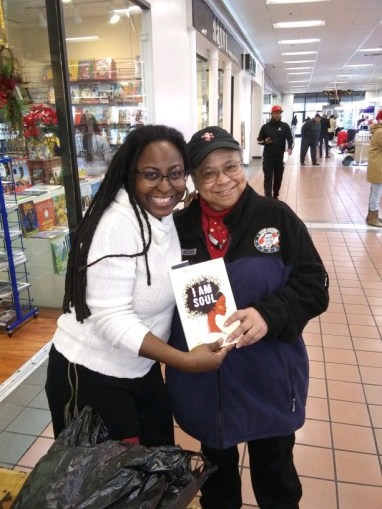
Tbt. Greenbriar Mall. ATL. Book Signing, 12/22/18.

If you are a new entrepreneur, if you are just publishing your books or starting your own business, I want to congratulate you! I want to tell you; you will do well and go far. I want to tell you; you are brave and beautiful.

But I also want to warn you:

start a business that is not dependent only on the people you know personally to be successful.

One of the best decisions I made in the past 2yrs was to go out and network with people face to face without worrying whether they believed exactly as I did or worrying about what people would think of me.

Only depending on the people who know you personally to support your business can leave you doubtful and broke because there are people who will project their fears and limitations onto you. This means that once you’ve moved beyond those limitations, once you’ve elevated, these people abandon you because you no longer fit within the box they mentally created for you.

‍There’s a meme circulating that says:

This is all the truth. Most of the people who will continuously support you will eventually become like family. They will be all the wonderful people you meet along the way who will root for you harder than anyone you’ve known personally. Social media is cool, but there’s an entire world outside of the internet.

When you are running a business, the people you know, including relatives, are the icing on the cake. They are the ones in your corner cheering you on and going “Yaass, sis yaass,” or “yams bro!” They are the people there to support you no matter what and we all need some of that encouragement! But we also need longevity in our business which can only come from consistent financial support and there are so many people in the world willing to pay you for your knowledge not just like your posts.

Author Tip: Take the time to discover who your book or business is for specifically and target your content to those people. This is called a target audience, and it helps you to focus on the group of people most interested in your content so that your book, product, or service doesn’t stop selling after your family and friends have bought it.

My 7 Instagram Tips for New Authors

I think Instagram is a great place for writers because there is a prodigious reader and writing community there.

Below, you will find seven tips I put together for new writers who also enjoy using the gram. Hope it helps.

  • Tip #1: Private Page to Business Page

If you’re an author using Instagram, it’s a good idea that your author page is a business page. This will allow you to use insights and other metrics that can help you post quality content by looking beyond the number of likes and tracking things like saves, shares, demographics, and the best times to post based on when your audience is online. (You can find this under insights)

Business pages are also automatically public, which is what you want. If you are trying to build readership and engagement, your author pages should not be private. That is like having a closed sign hanging off the door of your new business. To be clear, this isn’t your personal page (unless you have turned your personal page into a business page, but we will touch on that in a second). This is your business page, and business pages should be public.

Get out of thinking anything you post on the internet is private. It’s not, and if it’s any consolation, making your profile private does not necessarily make it “safe.”

Switching to Business Account

  • Although I am not a big fan of Facebook, you will need to connect it to a Facebook page to create an Instagram business page (at this writing). I know, it sucks. But IG is owned by Facebook so, go figure.

    This page cannot be your personal page but a Facebook business page. If you have not already, head over to Facebook and create a Facebook page for your author business. This will make it easier when you switch over. Then, come back to your IG, click on the three bars in the upper right-hand corner and go to settings. Click on account, then scroll down until you see the option to create a business page.

Changing a Personal Page to a Business Page

If you are going to turn your personal page into a business page, there are some things you will need to do first. Some people say not to do this and to create a separate business page, but I agree with both ways with a few exceptions.

To turn your personal page into a business page, you will want to make sure you delete everything that is not in some way relatable to your business. This means you might want to delete those nudes and all fifteen pictures of your cat.

Another option is to delete everyone who is not part of your readership and unfollow people who aren’t right for your business. While it is best to create a separate business page, turning your personal page into a business page could work if you are willing to make a few adjustments.

You will also have a lot of family and friends on your personal page, and family and friends are not your target audience. The chances are that’s why you are complaining so much about not getting the support you deserve. You are trying to sell to the family instead of the strangers who want to buy from you.

Family is family, but they are not your customers. Even those who buy from you aren’t doing it for the same reasons your readers are. A family who buys from you is just trying to be supportive because they are related to you, not because they actually like to read your books. It’s a hard pill to swallow, I know, and it doesn’t apply to all family members (some of them do like your work), but the quicker you move out of the mentality that your family must support you to be successful, the more successful you will actually be because you will have embraced the strangers who are readers passionate about the kinds of books you write.

Just as author blogs differ from business blogs, I believe author social media pages differ from other business social media pages in some ways. One way is that for writers, showing off our likes, interest, and personality is all part of author branding. People buy from people they know, like, trust, and getting personal (though, not too personal…keep it clean) helps build trust.

  • Tip #2: Track Progress by Using Instagram’s Insights So You Know What’s Working and What’s Not

One of the hardest things I have found as an introvert is figuring out what other people want. The only way to know is to ask, track behavior, and pay attention to actions.

Once you’ve decided you are ready, making the switch from a private to a business page will help you track your audience’s actions and see which posts are reaching people. 

When your IG page is a business page, you get to see things you won’t see on personal pages. Below are screenshots of posts from my page.

If you click on the insights (which you can see under your post on business accounts), you can see not just how many likes you got but how many people shared your post, saved your post, viewed your profile, or clicked on your website link.

This helps you to see which posts have high engagement and which posts do not.

The thing about any business social media page is that it differs from pages that you are only using to connect with family members, friends, or just hang out. On those pages, likes, shares, and follows don’t mean anything except maybe to boost your ego. On business pages, though, likes and shares are important to you understanding how your content performs – by tracking metrics over time – and is the key to developing a content strategy that works best for your audience.

As a business page on social media, the formula is typically:

Engagement =

Likes + Comments / Followers

You also see things like the number of people who viewed your profile, clicks to your website, where the people are coming from (what city/state), age range, gender, and more to consider in terms of what’s working other than counting likes, which is actually the least important form of engagement.

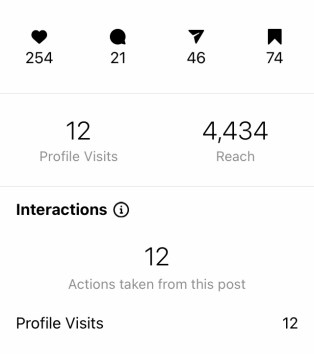
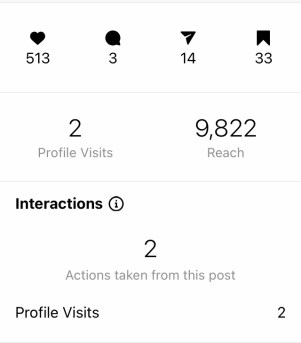
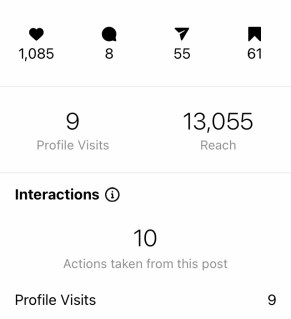
Let’s look at some examples of my high performing Instagram posts and how I determine they are high performing. Try not to look at the number of likes. Although that plays a part, you can see likes on everyone’s post. In this example, we are looking at what you can only see on a business page and how to increase posts’ quality.

Example #1
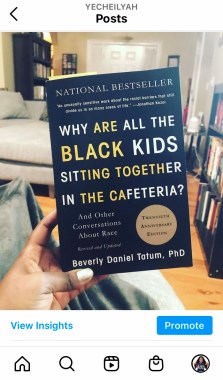
Here, the winner is the number of shares (46) and saves (74). The number of comments is next (20) and then, lastly, number of likes. Also, you will notice the number of people I reached and the number of people who clicked on my profile. Although there are more likes than saves, liking a post is last in terms of engagement.

Example #2
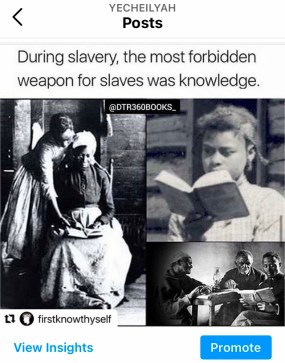
Here, there were only two profile visits but the reach was huge and so were the saves. A lot of people enjoyed this post. But I want you to notice something else.

While this post has the most likes and a higher reach, example number one is still a better post to me because it’s my own original content.

This is important.

In example two, I was reposting a black history meme from another page (you can see my credit at the bottom left…always give people credit when you share their post. You can do this easily using a repost app). The posts that are yours are always the best!

Never share more of someone else content than you do your own.

Example #3
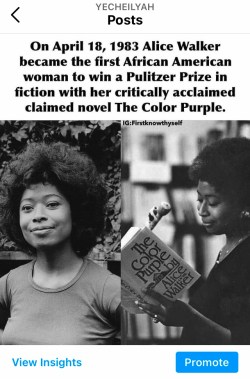
 

Example number three was lit. The reach is impressive, the shares and saves are outstanding, and the likes even got up there a bit. Here, everything outshined the number of comments, so while people loved the post, they didn’t have too much to say about it. I guess we all know Alice Walker by now lol.
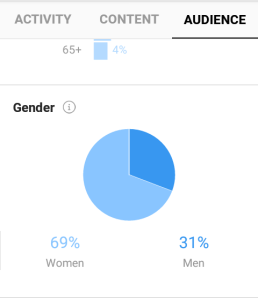
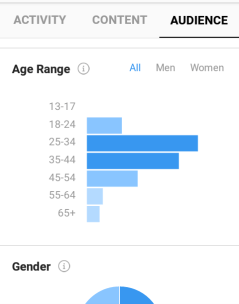
Chicago (my hometown), Atlanta, New York, Houston, and Charlotte are where the bulk of my support comes from (at this writing). I am happy to see ATL at the top since I live in Georgia and see the Chi representing. My biggest audience is made up of women, which is always good since I am a woman, and the age group is between 25-44. Let’s move on.

  • Tip #3 Use Sharp, HQ Images

Instagram’s focus is on photos, so uploading pictures that are grainy, pixelated, or include text that’s hard to read is like the IG cardinal sin. If your images look like crap, you won’t get much engagement. Trust.

Use sharp, high-quality images in all your posts. You can brand yourself by creating lovely images using Canva or PosterMyWall

It’s also good if the images have something to do with your books or show off your personality in some way. A good practice is something I saw someone post about looking at your last nine posts. Can someone understand who you are and what you offer by these posts alone? I have been doing this (looking at my previous nine posts), and it has been a helpful reminder to pay attention to the kinds of content I post. People will see the image before seeing the caption, so the image must speak first.

  • Tip #4: Include Text/Caption with Images

Speaking of seeing the image first, people pay attention to the caption! Add some context to the image by adding a caption. Now, I have noticed many celebrities don’t do this. They often post a selfie, and leave it at that, but that’s because they are celebrities who already have a strong audience and platform. David Banner doesn’t have to include text on his images, and he will still get over a thousand likes and hundreds of comments and shares.

But you are not David Banner.

You are a new author at the beginning of an exciting journey, and you are introducing people to who you are for the first time. Use the caption to explain the images you post. It doesn’t have to be uber long and fancy, but something is better than leaving it blank.
  • Tip #5 Hashtags

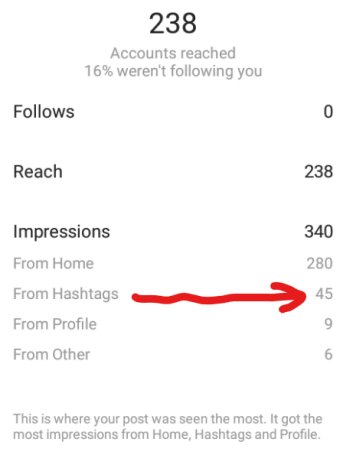
Going back to this screenshot, it appears my hashtags are working on this post, reaching 45 people alone. Hashtags don’t exist just so you can be cute but they work just like the tags you’ll use on a blog post. They are searchable on social media. If you click on your hashtag, it will take you to all the posts relevant to that hashtag. They help categorize content and track discussion topics based on keywords. You can Google the hashtags that are best for your business. It may even be necessary to research your hashtags (I did because I’m a nerd lol). There are tools available like Hashtags.org or HashtagDirectory.com that can help you. You don’t really need 50 hashtags. The most important thing is that the hashtags you use are trending and apply to your business.

Tip #6: Clean Up Your IG Bio
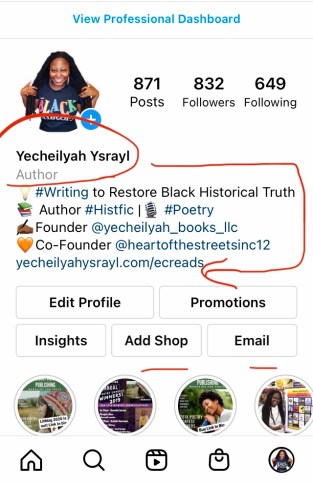
I just changed my bio again because I wanted it to reflect what I do and offer. This is one of the most critical parts of your account. Since you are limited on characters, you must quickly tell people what you have to offer in as few words as possible. As you can see, I don’t have tons of followers, so don’t think because you have less or even more, that’s the most important thing because it’s not. The number of followers doesn’t determine quality.

  • Author – Make sure you let people know you are an author. Don’t be afraid. If your an author, say that.
  • Tell us what you do or offer. If you’re an author, tell us the kinds of books you write.
  • Be sure your website or Linktree link is in the bio.

Tip #7 Website Link in Bio

What do you want people to do once when they visit your profile? Do you want them to like, comment, and then move on with their lives? Do you want them to research something? Do you want them to buy something? What do you want people to do when they come across your page? That answer is the link you promote in your bio.

If you are using Social media for business, the end of the road isn’t your Instagram/Facebook/Twitter page. You need an author website/blog/email list and should be directing people to these sources to learn more about who you are, what you offer, and how it is beneficial to their lives.

In your bio, you may also want to include a special website link. This link is special because it can be created specifically for Instagram. Instead of posting the link to your website alone, you can create a landing page with buttons specific to where you want people to go. Instagram only allows one link, but you can post several when you:

  • Set up a Linktree account where you can house several buttons, accessible through one link

Even if you don’t have a website yet, Linktree is excellent because it allows you to list more than one thing at a time. You can add buttons to your social media sites, for example. When people visit your link, they can choose where they want to go. You can also see how often people are visiting your sites. I used linktree for a while, and it’s excellent.

  • You can create your own linktree-like link through your website

To get the best out of Linktree would mean using the paid version so you can customize it, but if you have your own website (that you are already paying for), you can also opt to create a page on your website that mimics the Linktree platform. This is a special page specifically for Instagram, so you don’t have to make it visible from your home page, but add the link to your IG bio. (Click here to see my page for an example)

This saves money, points people directly to your website, and promotes you and not Linktree.

Website Link + Call to action button helps direct potential readers to your books, blog, or wherever you want them to go. Remember, social media is not the end of the road. If you want people to do more than like a post, be sure to lead them somewhere they can learn more.


To Summarize:

  • Make your profile public, and create a business page. Be sure to shake up your content to reflect your business profile


  • Use the insights and metrics you see over time to improve your strategy and increase clicks to your website.


  • Write a bio that targets what it is that you do and what you offer.


  • Use sharp, high-quality images


  • Use caption/text to describe images


  • Use hashtags strategically, researching the ones that best apply to the kind of content you post.


  • Include the link to your website in your bio or use linktr.ee for multiple links


Be Authentic: Message to New Indie Authors

In, building connections as a writer on social media, it’s important that you are authentic in those interactions. What does this mean? It means to be genuine and true, to be real but what does this mean? To be genuine and true is to be yourself in a way that does not force others to accept you, but brings together those who share the same passion as you do. People can tell if you are sharing something just to sell your books or sharing something because you deeply love it and you care about sharing that love with others for their benefit. You genuinely want to educate people, inspire people, empower people, or you want to make them laugh, or help them to heal or evolve. What people get out of getting to know more about you? What value do you offer that helps to make their lives better? This is what building relationships are about. It’s not so much about the book itself, it’s more who you are, who we all are and how your book seeks to make us better. It doesn’t matter if you write fiction or non-fiction, in what way are we better from reading your book? This answer is revealed in your genuine interactions with others. People can tell if the information you are sharing is not authentic. We can tell if you’re sharing something just to sell your book versus sharing something because you want us to be better.

The problem is not that “artistry” doesn’t sell. There is no debate to be had about writing as an art and as a business. It is both. Integrity is everything and I personally believe no one should ever compromise that. Even more so, I believe it is this very integrity that makes us interested in an artist in the first place whether that artist is an author or musician or painter. There’s this debate about wanting to make real money from writing or treating it as an art I do not understand. There is no competition to be had. It is possible to be a serious businessperson and artist at the same time. The problem is too many new Indie authors aren’t authentic about the art enough to build trust among readers to the extent that we care about supporting that author’s work.

This isn’t about trying to find anyone to read our books. You are in search of people who share your passions, goals, and belief system. You aren’t here to force people to share those passions and beliefs but to connect with those who do. This isn’t about trying to make people like you. This is about genuinely connecting with those who do. These are authentic connections. It doesn’t matter how many times you talk about your book if I know nothing about you or share your vision or if I don’t care about what you are bringing to the table, I am not buying the book and I am not the reader you want. You don’t want me. You want the reader interested in the value you are bringing. To get here is to start with offering value where being yourself is not a gimmick.


If you would like to take the step toward helping your potential readers to get to know more about you and your passions and how you can help to make us better through your writing, be sure to take part in my Author Introduce Yourself Feature, specifically designed to help us to get to know you better. Learn how to do so HERE and stay tuned for tomorrow’s featured author.

Also, don’t forget that FOUR of my books are on sale for the month of February. If you are into Black Historical Fiction, Women’s Fiction or poetry, choose your favorite book by clicking HERE and pay just 99cents from now through 2/28. 

What to Do When People Unsubscribe from Your Author Email List and Why it is OKAY

Please check out this repost from 2019 below. It is about email list, but can apply to blogs and social media just the same.

Let’s address the elephant in the room.

Email Unsubscribes / Unfollows.

pexels-pixabay-53125

They can feel like silent rejections and sometimes confusing because you don’t always know why the person left. Unsubscribes can leave authors feeling abandoned, especially if the person was a long-time member of the list. All kinds of thoughts go through your head.

“What did I do wrong?”

“Am I providing value?”

“Does my writing suck?”

“Do I suck?”

“Did I email too much? Too little? What happened?”

The good news is that it is okay whether someone leaves your email list or your blog. In 2019, we were not taking losses, only lessons, and there are tons of lessons we can learn from email unsubscribes.

This list encourages and motivates you to push past that feeling of confusion and rejection.

  • Don’t subscribe people to your list without their permission.

Please don’t do this.

There are laws against doing things like this. Never, ever add anyone to anything without that person’s permission. I don’t care if it’s a Facebook group or email list. Get permission first. When you let people subscribe on their own, they can unsubscribe whenever they want and do it all without you being sued.

However, if you subscribe someone without their approval, you can be sure they will unsubscribe.

While there’s nothing wrong with compiling a list of supporters and emailing the old-school way (directly), we live in a different time. You need a track record that shows proof this person agreed to get emails from you. You need permission. Do not grab emails from blogs and websites. Choose an opt-in email form and let people subscribe on their own, or create an opt-in form of your own using google docs but just get permission. Don’t get sued.

  • Mailchimp
  • Mailerlite
  • Convertkit
  • Don’t take it personally.

If the subscriber was legal, and the person decided to leave, the most important lesson you can learn from this is not to take it personally. It could be because they did it to enter your contest and are no longer interested. It could be because they thought they signed up for something that turned out to be different from their expectations.

People have reasons for subscribing to a list/blog, and only some are clear about that reason. If someone mistakenly thought your list would offer something that it doesn’t, they may unsubscribe because it’s different from what they thought it would be.

It does not mean they are disinterested in you or that you do not have value. Don’t take unsubscribes personally. They are not rejecting you.

  • Never respond to an unsubscribe.

Resist the inclination to ask people why they left. Do not send them follow-up emails unless they have reached out to you. If they unsubscribed from your main list, they probably want to stop receiving emails from you. Again, don’t take the unsubscribe personally. One apple doesn’t stop no show (and that’s grammatically incorrect on purpose). Just keep grinding.

  • Quality over Quantity: You don’t have to have a gazillion email list subscribers to be Relevant.

With email lists, remember it’s more about the quality of your team. It’s better to have 30 or 40 committed people who are eager to support your work and read your books than 2,000 who won’t lift a finger to give you so much as a piece of advice. You ask a question and hear crickets. I have only about 172 subscribers to my list, and I am more than okay with this. Of course, I’d like to grow (who wouldn’t?), but I am in no rush. It’s challenging enough managing the people I already have. I’ll wait patiently. Always remember quality over quantity. It’s easier to manage 30 or 50 subscribers than to manage 200 or 300 starting out.

  • Resist the urge to vent your rage on your favorite social media Platform

Again, don’t take it personally. Email unsubscribes are like bad reviews that only you see. Just as it is not recommended to discuss the bad review, it is also not recommended to discuss the unsubscribe. We are all human but venting about these things on social media makes you look like an amateur. Accept this person has decided they are no longer interested in your content (for whatever reason) and move on. People come in and out of our lives for a reason, and we just have to accept when that season is over. Don‘t make it bigger than it is.

  • Remove and Renew

Don’t be afraid to lose people. You need to unsubscribe people you see who are no longer interested because there will also be people who won’t unsubscribe. They’ll just ignore you and delete your emails, or they may just ignore it without acting.

In pop culture, we call this Ghosting when someone disappears from your life without a word, leaving you to wonder what happened. It is a form of passive aggressiveness I do not recommend people to do. Communicate like an adult.

It’s a good idea to do a good ole cleansing occasionally. Delete some people. Don’t be so thirsty for high numbers to your own detriment. If they aren’t active, it doesn’t matter, and you are deceiving yourself. Every 2-3 months, I clean my list. I delete people who have yet to be active, have not been opening emails, clicking links, responding to questions, or participating. Their presence is irrelevant. I love them, but my emails are clearly not their cup of tea, and they shouldn’t be forced to drink. They must go.

If they aren’t active, it doesn’t matter that they follow you. Their presence is irrelevant, and you are deceiving yourself.

  • It takes time.

Writing is a business; like all businesses, it takes trial, error, consistency, and time to build. We may have been born with gifts, but no one knew exactly how to execute them. No one woke up with the skills to hire a team or produce excellent products. Similarly, you only know how to manage an email list through practice and hard work, and people will still unsubscribe.

UPDATE: Sadly, the Six-Figure Chick has passed on since this was first posted.

I used to transcribe to the same practices of some “gurus” who said to only email once a month. While I understand why you wouldn’t want to email too frequently, you must do what works for you. It’s a personal journey first.

So I followed my own path and now email whenever I have news. The truth is, it’s hard to stay connected to anyone you don’t speak to for months at a time. The email list can be an essential source of support if you want it to be. Or, the email list could be another social media account you update to tell people about your new books. *Yawn.*

Truth is, there will always be someone to unsubscribe. The real question is, who cares? People always unsubscribe from our lives, but we can’t stop working just because people leave. People unsubscribing from the list can be a blessing as it teaches us what works, what doesn’t, and how to better connect with our audience.

People unsubscribing is not even the real problem. The real problem is learning to connect with those who genuinely follow us. If we do our jobs well, we don’t have anything to worry about.

  • One door closes, one door opens.

Every time someone unsubscribes from my list, someone new subscribes. That’s the fun thing about it. When one door closes, another always opens. Just because a few people unsubscribe does not mean more won’t come. I’ve been successful in keeping my numbers steady because I am always blessed with a new person whenever someone else leaves. When unsubscribes do happen, now I just smile, knowing someone new is on their way, and hopefully, they’ll find value where the other person did not. The end of one relationship is the beginning of another.

Helpful Tips:

  • Ask your people questions to discover what they want.
  • Let your readers in a bit on who you are. Write stories, give updates not shared anywhere else, showcase your personality, e.g.
  • If possible, use a domain email address as your from address instead of gmail. Ex: yourname(at)yourdomainname(dot)com.

Reminders:

1. Don‘t take the unsubscribe personally
2. Don‘t subscribe people without their permission
3. Never vent your rage about it on your favorite social media platform
4. Quality over quantity
5. Recognize the growth that comes with removal and renewal
6. Remember that it takes time to build anything of substance
7. and that when one door closes, another always opens

For more email list building tips check out one of the most popular posts on this blog:

7 Things I Learned About Email List Building.

Editors and Beta Readers – Vital for Independent Authors

Excellent post. Indie Authors, take heed.

Don Massenzio's avatarAuthor Don Massenzio

Publishing contractThis post focuses on the importance of using an editor and enlisting beta readers if you are an independent author.

Let’s start by comparing/contrasting independent and traditional publishing. In traditional publishing, an author receives an advance (if he or she is lucky). This advance is usually a fairly small amount. The author may then receive royalties for books sold after a certain number. The royalties can vary from pennies per book to dollars if you are a bestselling author. In exchange for allowing the traditional publisher to publish your work, you receive editing, formatting, publicity, and marketing services. The quality and effectiveness of these services can vary depending on how much the publishing company believes it can make from your book. In the end, very few published authors make a living wage from traditionally published books.

Independent authors know that their world is a different one. All of the services mentioned…

View original post 982 more words

Atlanta African American Book Festival 2019

Just a quick note to invite you to join me at Georgia State University for the second Atlanta African American Book Festival this summer. Last year was amazing and I connected with a lot of new authors. I’ve come to truly enjoy live events. It gives me a chance to discuss this blog with authors face to face, take photos I can look back on for years and network with professionals face to face. So, if you are in the area around this time, I’d love to meet you. The event takes place on Saturday, July 20th, from 10:00-5a at GSU and is free and open to the public. For instant updates on things like this, be sure you are following me on Instagram.

web. http://yecheilyahysrayl.com/

Exclusive Black History Month Digital Sale: FOUR of my books are 99cents for a limited time

ATTN. If you’ve never read my books, these FOUR are 99cents each in ebook for the entire month of February.

I write poetry and Black Historical Fiction.


About Renaissance: The Nora White Story Book I

When seventeen-year-old Nora White successfully graduates High School in 1922 Mississippi and is College bound, everyone is overjoyed and excited. Everyone except Nora. She dreams of Harlem, Cotton Clubs, Fancy Dresses, and Langston Hughes. For years, she’s sat under Mr. Oak, the big oak tree on the plush green grass of her families five acres, and daydreamed of The Black Mecca. The ambitious, young Nora is fascinated by the prospect of being a famous writer in The Harlem Renaissance and decides she doesn’t want to go to College. Despite her parent’s staunch protest, Nora finds herself in Jacobsville, New York, a small town forty-five minutes outside of Harlem. Shocked by their daughter’s disappearance, Gideon and Molly White are plagued with visions of the deadly south, like the brutal lynching of Gideon’s sister years ago. As the couple embarks on a frightening and gut wrenching search for Nora, they are each stalked by their own traumatic past. Meanwhile, Nora learns that the North is not all it’s cracked up to be. Can Gideon and Molly overcome their disturbing past in time to find their daughter before it’s too late?

About Revolution: The Nora White Story Book II

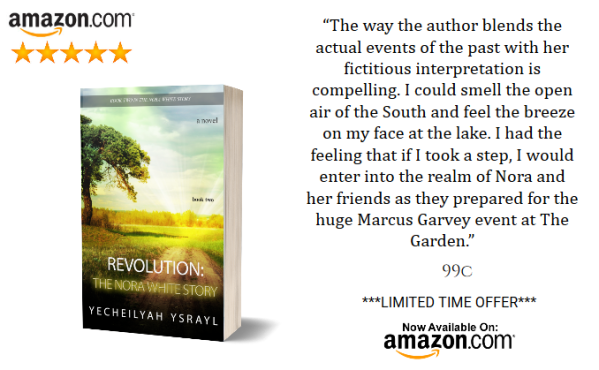
When Nora White is drugged by her friend she is forced to deal with the harsh reality of life in the North. She meets Keisha and the women catch a ride to The Den, a gambling and numbers hole-in-the-wall in Jacobsville New York. Unlike the upper echelon of Harlem, Nora’s new friends are hustlers but down to Earth and feels more like family. They take her to Liberty Hall where she is introduced to Marcus Garvey’s Universal Negro Improvement Association (U.N.I.A.). Meanwhile, Nora has no idea her father has been arrested and back home Molly is hanging on by a thread. When the community discovers the truth of the alleged crime they devise a way to get Gideon out of jail but their actions could mean life or death for everyone involved. Will Nora come to her senses and return home in time to help the family or will her naiveté lead her astray once again?

About I am Soul (poetry)

I am Soul is a short collection of poetry and prose from Yecheilyah’s PBS Blog covering Black History, Faith, Love and all things Soul. Short, sweet, historical, and spiritual.

About The Road to Freedom (novella)

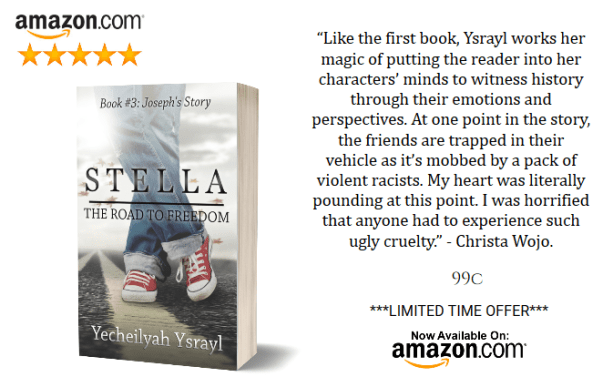
Deeply concerned about the state of Black America, a fight with his brother compels a young Joseph to leave his mother’s house and join his friends for a trip to Atlanta for SNCC’s (Student Non-Violent Coordinating Committee) second conference. Excited to live life on their own, Jo and his friends have left school and the lives they were living for a chance to become part of the movement. With no money and essentially no plan the seven friends, three black and four white, set out for the road when they are stopped by a racist cop who makes them exit the car. The teens are unaware that a mob of Klansmen also await them at the New Orleans bus terminal. Find out in the 3rd installment of the Stella Trilogy how Joseph and his friends discover the truth about themselves in the Jim Crow south on The Road to Freedom.

Hurry though, this EXCLUSIVE offer won’t last long!


>> CLICK HERE TO GRAB YOUR FAV <<<