The One Thing Self-Publishers Overlook When Publishing Print Books

I am getting book one in The Stella Trilogy ready for its March 24th release. Preparing this book led me to notice the one thing about my books I had neglected and the one thing Self-Publishers overlook when publishing print books.

Not all Self-Published books look mediocre because of poor cover design and editing. Lots of Self-Published books have excellent covers and are packaged well on the outside.

But there is one thing that separates most Self-Published paperback books from Traditionally Published paperback books in terms of quality.

I am talking about typesetting.

“Typesetting is the process of setting text onto a page. In this stage, which occurs towards the end of book production, the typesetter arranges the book’s interior to create the best reading experience.” 

– Reedsy 

The key is to have a Self-Published book indistinguishable in quality from high quality Traditionally Published and Independently Published books. The way the author or book designer arranges the text on the page has a lot to do with this.

Here are some suggestions for improving typesetting (if you are not paying someone to do it):

  • Don’t space your words out so much. You don’t need to double-space to that extent. You will know you have too much space if the text looks light. But also, don’t squish them together too tightly either. You will know this if the text looks too dark. (Try maybe 1.5 spacing).
  • There’s no need to double-space after periods. This practice came from the typewriter when characters were the same width, but with modern computers, there’s no need to do this.
  • The first paragraph of a chapter should not be indented. Subsequent chapters in a fiction book can be indented. Nonfiction books use a block style instead of an indent, where there is no indentation on the next line.
  • Don’t forget to add page numbers.
  • In fiction writing, the dialogue starts on a new line every time a new person is speaking, should be enclosed with quotation marks, and with each new line indented.

Wrong:

“Oh my gosh, Nora, really?” Lisa rolled her eyes. “I’m just saying,” debated Nora, “that word gets you lynched where I come from.”

Correct:

“Oh my gosh, Nora, really?” Lisa rolled her eyes.

“I’m just saying,” debated Nora, “that word gets you lynched where I come from.”

  • If you are not sure about font, serif font is a good choice.
  • Set your paragraph alignment to justified. Justified means the left and right edges are straight. This looks neater and is easier to read.
  • Make sure your trim size is appropriate for the size book you want to publish. The size of a typical novel is 6×9, but you may want your book to be shorter in size. Change the trim size in word by going to Layout > Size.
  • Adjust your chapter headings (you do have chapter headings, right??), so they are not too far down the page.
  • A new chapter starts on a new page.
  • When uploading your document to KDP, consider uploading a PDF copy of the MS, not a Word Doc.
  • Make sure your paperback book is not just edited but also formatted. You can use formatting software or pay someone to arrange the text for you. I prefer to pay a professional to do all this for me after the book has been edited. 
Available Now. Click Here.


It may seem small, but if you are Self-Publishing a paperback book, good typesetting makes for easy reading. This is one of those behind the scenes things that readers only notice if it’s done wrong. No one would have paid attention to the man, eating, and drinking air in Tyler Perry’s A Fall from Grace if there was food on his plate and water in his glass.

The same applies here. Readers care about the story. They are not going to pay attention to the typesetting unless it is so out of sorts it becomes distracting. 

If I open your paperback book and there’s enough space for me to write a whole diary entry between paragraphs, or it looks like a DIY your little brother put together, I am going to notice it.

It is not always a bad book cover or poor editing that brings down the quality of some Indie books. It is the typesetting or the way they print the text on the page that gives the book away.

Want more Indie Author Tips? Visit the Indie Author Basics with EC page here!
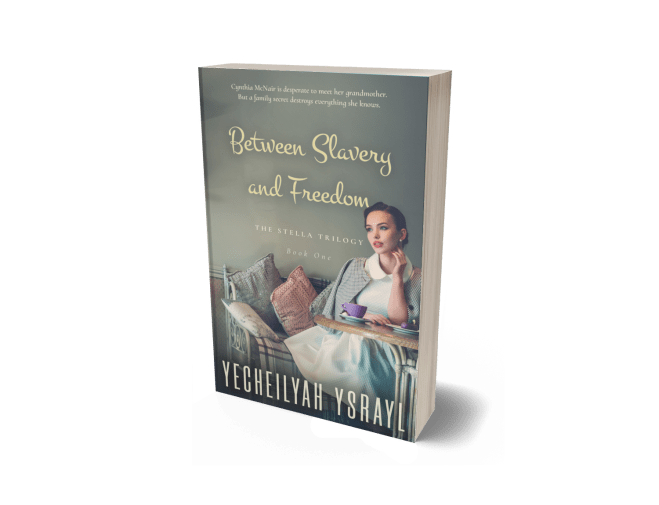
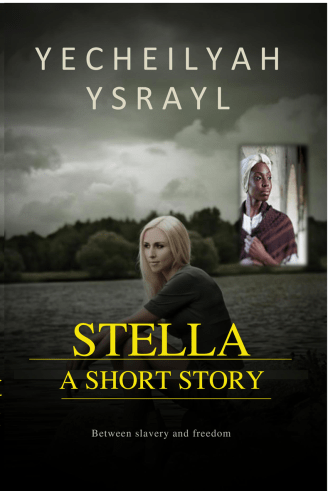
Stella: Between Slavery and Freedom (Preorder Book One)

Stella is a work of Historical Fiction and is distinctive in its focus on one woman’s road to self-discovery, against the backdrop of the African American fight for justice, racial equality, and freedom. The 3-Part series focuses on the history of one family in their struggle for racial identity. We discover in this Trilogy how three individuals living in separate periods strive to overcome the same battle, carefully knit together by one blood.

Preorder Book One Now. 3/24/2020

These books were first released in 2015 and helped elevate my writing to another level. These were not the first books I had ever written. Still, they were the first books to appeal to people outside of my circle and were my first Historical Fiction books.

I took the risk of removing them to get them re-edited, re-formatted, and the covers recreated.

I am happy with my decision and even prouder of this work. I get to relaunch these books and reach more readers of African American Historical Fiction. I am hoping to at least sell 50 copies of book one to start (at least 25 ebooks, 25, print books), and I hope you can help me with that!

Stella: Between Slavery and Freedom

In book one, Cynthia McNair and her boyfriend, Alex, express some racists’ feelings toward blacks. They visit Cynthia’s Grandmother Sidney McNair, who recounts the story of her ancestor, a slave named Stella Mae. Cynthia has no idea of her African ancestry or how deep this rabbit hole goes.

Book one is available now for preorder in digital and print. Release day is March 24th.

The preorder price is 99cents but will go up after release, so you want to take advantage of this.

Preorders are also available in paperback through my website. Paperback books are signed and will ship the first week of April.

*If you already read this series, you should know book one has an alternate ending! The story is the same, but the books are better polished, and each book flows smoothly into the next book. This time, while the books can be read alone, they are much more in a series format. You will want to read all three books to get the full picture. Well worth re-reading! 

Preorder the ebook for 99cents

Preorder a signed paperback

Mark as Want to Read on Goodreads

(Already read Stella? Mark as read and leave a review)

Revising The Stella Trilogy: A Behind the Scenes Look

Tomorrow will mark five years since I released the first book in The Stella Trilogy. Wowzers! I am celebrating by introducing the new cover to book one and two. If you haven’t heard, I removed the books from amazon for some much needed polish and am re-publishing them. To learn why check out the blog post “Quality Over Quantity: Why I Pulled My Trilogy from Amazon.”

While I changed the cover to I am Soul after its release and got a new cover to The Aftermath, my first novel (2012), I’ve never wholly revised my backlist before. The Stella Trilogy is getting an entirely new makeover, which includes editing, covers, formatting, and ISBNs. Why go through all the work for an old book?

Books do not expire. Every book is new to people who have never read it which is why it benefits Indie Authors to go back and update “older” works every now and again. Here are some things I saw needed work on Stella:

Editing – It wasn’t enough to slap a new cover on the books. I knew these books had to be revamped altogether. Like most newbie Indie Authors, I had a friend to edit the first version of these books because I didn’t have the money to pay someone. This time around, I am getting the books professionally edited.

Song Lyrics – The first book had song lyrics in it—rookie mistake. You need permission to include the words to a song in your books. I promptly removed those lyrics. I can’t afford to get sued.

DIY Covers – I like the cover to book one, but it was a DIY premade from Derek Murphy’s website, offered freely to authors. I added the image of the black woman, but the rest was unoriginal. I cringed every time I saw it on his site. Book two was more original as I purchased the winter lady image, but it was still poorly applied to the cover. I did everything in Microsoft Word, and since I didn’t know that super-thin books don’t need a spine (if there aren’t enough pages to warrant one) when the books printed the spine folded over to the front. Yuck. For this reason, new covers were something I knew I needed to get done.

Free ISBN – I am done with the free ISBN game. Listen, if you don’t include the cost of the ISBN in your book budget, you are still a beginner. Have I always purchased my own ISBN? No. ISBNs are expensive, but having your own is worth it. They (ISBNs) are also cheaper if you buy them in bulk. 10 ISBNs can cover ten different books. Applying your own ISBN number to the book ensures that your imprint name will be applied to the book. In other words, you are the publisher, not KDP, and not Lulu. This time around, all books in The Stella Trilogy will have its own ISBN so I can register the books to me.

BONUS: Alternate Ending – I am excited about adding an alternate ending to excite Stella fans who have already read the books. The conclusion to book one is not the ending of the original book one. Why the change? It is to tighten the link between all the stories for a smooth transition from one book to the next.

Lessons I learned so far:

Work with what you have until you can do better.

You don’t have to know everything to start. I didn’t. Work with what you have until you can do better. (If a free ISBN is all you have to work with right now, use it until you are able to move up. I did.) I do not regret putting Stella or my first books out there, even though they weren’t properly edited, and the covers were DIY. These books gave me my start, and the courage and the freedom to step out on my own. These books gave me my beginning, and I am forever thankful to Yah for them.

Then, when you can do better, please do it. 

The other part of this, though, is doing better once I knew better. If I produce mediocrity, I will only get mediocre results. Once you’ve stepped out there, it is okay to go back and change what you see needs work. We may not be perfect, but this doesn’t mean we cannot strive to maintain a level of excellence in all we do, even if the best we can do still falls short. We don’t have to stay at the same levels in the latter part of the journey as the first. We can tweak and correct and improve with time. We have that freedom, to sharpen, and to elevate.


About The Stella Trilogy

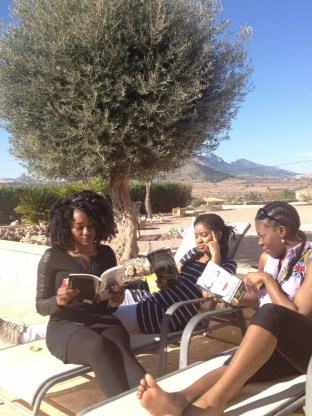
Readers reading Stella. Circa, 2015.

Stella is a work of Historical Fiction and is distinctive in its focus on one woman’s road to self-discovery, against the backdrop of the African American fight for justice, racial equality, and freedom. We discover how three individuals living in separate periods strive to overcome the same struggle, carefully knit together by one blood. The three-part series features elements of enslavement, Jim Crow, Passing, and the Civil Rights Movement.

The Effort Will Release It’s Reward (If You Do Not Give Up)

Copyright 2018 | Emily Rose Photography

I published my first book in 2008 and the first book I ever sold in 2010. But it wasn’t until 2015 that I learned to define what my author’s voice was, to establish an author platform, to reach people, and to truly understand what it meant to be an Independent Author. In the beginning, my books were poorly edited and formatted. I didn’t know anything about Amazon, reviews, buying my own ISBNs, imprints, nothing. (I wasn’t even on Social Media, so I couldn’t take advantage of this free platform).

I was green, inexperienced, and made no money. It took me five years (2010-2015) of publishing poor quality books to learn, and even now, I am still learning how to publish books the right way. Whatever fruits I reap now are the result of years of work, study, research, and doing it wrong repeatedly until I understood that practice only makes perfect if I am doing it right. It took me years to realize that publishing book after book (the wrong way) was doing nothing for my growth until I was ready to put in real work. It took me years to learn that this was a marathon and not a sprint. My point? It took me years to get here.

Dear Future Author, why do you want to publish a book? 

This question seems simple, but the answer is a lot deeper. The answer will require you to first define who you are, who you are writing for, and why what you are writing is important to those people. Are you writing to make a difference in the world? To educate, empower, lift, heal, and inform? Or do you just like the idea of being a published author?

One means chasing the “prestige” that comes with publishing books.

The other means putting in real work even when sales are low when you want to give up, and when no one is clapping, liking, or supporting you.

One means wanting to appear glamorous for the gram…

…and the other means doing the work in private, not just in public.

IF you are willing to do this and IF your intentions are genuine, then the effort will release its reward as long as you do not give up. 

Lit Mag 2020 Is On the Way

The 2020 Lit Mag Literary Magazine for Poets is on its way out! We are proud to feature last year’s Grand Prize Winner Chanelle Barnes on the cover. Volume 2, Edition 2, is scheduled to print Tuesday, March 3, 2020.

This year’s magazine features the winners of “Yecheilyah’s Annual Poetry Contest 2019”: Chanelle Barnes, BuddahDesmond, Jahkazia (Jah-kay-asia) Richardson (our 2018 Champion), Kiyana Blount, and Dondi A Springer. The mag also features the poems of select poets who participated last year.

How can you be featured in the Lit Mag Magazine? Be sure to participate in my annual poetry contests! Rules and guidelines for the 2020 competition to be announced.

Be sure to support this contest by picking up your copy of LitMag 2019 by clicking on the link below. Your contribution helps us to keep this contest going by keeping the entry fee-free or low-cost for participants, allows us to print the magazine featuring the winners, and of course, offers some dope prizes to contestants! Link below:

Get LitMag 2019 Here

Visit our 2017 Winners Here

Visit our 2018 Winners Here

Visit our 2019 Winners Here

Quality over Quantity: Why I Pulled My Trilogy from Amazon

These books may still show up but they will be completely removed (out of print) soon. They will be relaunched with new edits and covers.

The Stella Trilogy put me on in more ways than one. It was the first time I got reviews on amazon for my books (I knew nothing about amazon when I started) and the Stella Trilogy book signing made me enough money to pay my bills and then some. It was the first time I saw real money from my writing and it was all from selling paperbacks (I always sell more paperbacks than ebooks. Unconventional for some, but this is how it has been for me). I also won my first award, an appreciation award given to me by my readers.

The Stella Trilogy changed lives.
The Stella Trilogy changed minds.
The Stella Trilogy is how I widened my readership.
The Stella Trilogy helped me to level up and step outside of the box.

The Stella Trilogy was groundbreaking for me and it is precisely for this reason that I am pulling her from Amazon and my website… for further editing.

The books are undergoing makeovers, a fresh edit, and new covers. For those of you who’ve read it, you know the books are short and as my #1 priority outside of the coming poetry book and Lit Mag Magazine; I hope to have them back up by the end of this year. I am not slacking on this. Stella made a big impact, and she needs to be back up soon.

The year is 1864 in Louisiana and the story slips back in time introducing Grandma Stella’s Great grandmother, Stella Mae, age nineteen years. Stella Mae begins her story with a memory of how as a child she was forced to use the facilities designated for “niggras only.” Young Stella Mae tries to reason out why her Mama can’t walk into the front door of the general store and why they can’t use the restroom everyone else uses. Even at a young age, Stella Mae could sense the inequality in her existence. – Colleen Chesebro

I have come a long way since 2015 when the first Stella book released. As a historical series it’s important to me that the book is as superior as I can afford to make it. Now that I have my foot into the schools, I hope to one day have the series taught as part of the curriculum. I have so much hope for these books and so many visions for what they can become.

The sky is not the limit. There are no limits.

I was different. It might give you a slow start but being different is gonna carry you a long way.” – Master P

I am not a fan of most rap music and never was. I like a few old school tracks from Talib Kweli and Common, but I’ve never really been into rap marketed to my age group (although I danced to it in my teens at parties lol). I was always an R&B type of person. I still remember the days my sisters and cousins used to record music videos on VHS and fall asleep watching them. We also recorded songs from the radio on cassette tapes so we can listen to it repeatedly. Despite not being a fan of the music, I admire Percy Miller aka Master P more than any other rapper. I admire him because I think people underestimate him which is precisely why I think he does so well in his business endeavors. I admire him for his commitment to being Independent and using his faith as a catalyst to propel him forward.

Indie Authors, Don’t Be Afraid to Revise Your Backlist

With great authority comes greater responsibility. As we grow and mature in our understanding of this publishing thing, more will be required of us. I know that a poorly edited book could damage my reputation not only as a writer with influence for excellence but also as a teacher and as a lecturer.

I published the first book I ever sold in 2010 and I knew nothing. The book was not edited and had never been available on Amazon. This taught me two lessons:

  • Begin where you are. Take the first step “even if you can’t see the whole staircase” (MLK).


  • After you have taken the first step and put yourself out there, make changes as you see them. If your first book was poorly edited, take it down and get it edited. You didn’t know better at first and that’s okay. But then, once you know better, do better. Do the best you can, until you know better, to quote Maya Angelou. “Then when you know better, do better.”

Do not think for a second that we are not responsible for the knowledge we have. Do not think we are not responsible for changing our behavior as we learn and grow. The quality of the books we put out shows readers what we think of ourselves and also what we think of them. Quality must always supersede quantity. I temporarily removed these books because the quality of the work I put out is more important to me than feeding my own ego of having “published x amount of books.”

It was exciting at first to publish book after book. Like anything we do for the first time it was fresh. As I have grown and as I grow, I value more where these books are going and how they are influencing the world much more than how many of them there are.

Now, for my Stella fans:

I am not changing the core of the story. I am editing the books for better readability and understanding. I am also changing the covers so all the books in the series look the same.

About.

Stella is a work of Historical Fiction and is distinctive in its focus on one woman’s road to self-discovery, against the backdrop of the African American fight for justice, racial equality, and freedom.

The 3-Part series focuses on the history of one family in their struggle for racial identity. Discover in this Trilogy how three individuals living in separate time periods strive to overcome the same struggle, carefully knit together by one blood.

  • Between Slavery and Freedom (1)

We deal with enslavement and freedom both physically and psychologically.

  • Beyond the Colored Line (2)

We deal with passing, self-love, and racial identity. If you were a Black woman living in the Jim Crow era and light enough to pass for white, would you? 

  • The Road to Freedom (3)

We deal with the Civil Rights Movement, Freedom Rides, and the impact our choices make on the next generation.

Coming (Back) Soon

“But My Family Don’t Support my Writing”

Popular Complaint: “My family don’t support my writing.”🤷🏾‍♀️

Umm. How can I put this, your family and friends will be the least supportive of your writing (as is the case for most businesses). That’s not a bad thing entirely because they are not really your targeted audience.

New Writer:  *Smacks lips, rolls eyes.* “Okay, so what that mean?” 🙄

It means you have to find those people who are most likely to read the kinds of books you write and often, they are not family members. This specific group of people is called a targeted audience. You are not targeting everyone but focusing on one specific kind of reader. Here’s an example from words from Tyler Perry:

“I clearly believe that I’m ignored in Hollywood for sure and that’s fine. I get it. My audience and the stories that I tell are African American stories specific to a certain audience, specific to a certain group of people that I know that I grew up with and we speak a language.” – Tyler Perry

Say what you want about Perry but he has a keen understanding of his Target Audience. That’s what he is speaking of here. A specific group of people who his films/movies/TV shows are specifically for. That’s why his movies are all along the same lines in the theme. We can see that Tyler Perry makes the same movies because he is targeting a specific audience.

Personally, I am not much of a Tyler Perry fan. There are only a few of his movies I like but that’s not the point.

We can agree or disagree with his movies, but he is an excellent example of someone with knowledge of his Target Market.

When you are targeting a specific group, you are not trying to reach everyone or garner everyone’s support. Your purpose is to appeal to that specific group.

(Feel like I’m saying “specific” a lot but that’s kinda important). 

How many people at Michelle Obama’s book signing were related to her?

New Writer: “What? But those was her fans tho.” 🧐

And you have fans too if you look beyond the praise of family members who will probably never buy.

New Writer: “So you saying my mama can’t buy my book?” 💁🏾‍♀️

Your mom will probably buy your book first, but she’s not the seventeen-year-old black boy with peer pressure issues you wrote it for is she?

New Writer: “I mean naw but…”🤨

…and she’s probably not gonna leave a book review on Amazon, follow you on Goodreads, Twitter, Instagram, or subscribe to your email list and if she does, she probably won’t remember to read it.

New Writer: *smacks lips* “Dang why you gotta be all negative for?” 😒

Because the truth will set a lot of writers free from unrealistic expectations about what it means to be an author.

Loyal family/relatives may buy a book or two and they may be there to cheer you on, lift you, and support you in various ways. Families are good at heaping praises.

They love to like your posts, root you on and tell you repeatedly how they intend to buy your book and how proud they are of you. This is helpful from an encouraging point of view and it feeds the ego, but praise doesn’t sell books. How many of these people follow up? Every year the same family member asks, “where can I buy yo book?” But they never buy.

It is those non-relative readers who your book is specifically written for who will buy with consistency and read your every release, becoming avid readers and fans.

(…and I hate to use the word “fan,” by the way. *Shudders* Be a fanatic for no one.)

👉🏾How many of your genetic relatives have bought your book?

New Writer: “Lemme see, my mama got one, my cousin, boo boo nem, lil Chris…”

So what, all five of them..?

New Writer: “Oh, so you being funny?”🤔

No. I’m being real. Put it this way, would a company whose buyers don’t watch TV, make a commercial to push their product?

New Writer: “Naw that’s stupid.”🙄

🤷🏾‍♀️ So why would authors focus the bulk of their efforts on trying to sell to people who don’t read the books they write?

New Writer: “I guess I see what you saying.”😩

Now, take out some paper. You’re gonna have to write this down.

…wait, what are you doing? Put your phone down this is important. 🤦🏾‍♀️

New Writer: “Imma type it in my notepad.”

Okay but don’t be on Instagram this is important.

New Writer: I’m not dang. 🤳Go. I’m ready.”

Okay, here are a few questions you can ask yourself to help you find your readers. 

  • Who are my current readers/Who am I trying to reach? How old are they? What do they like? Where do they hang out?
  • What’s the #1 thing my readers love/need the most?
  • What problem does my book solve? What are my readers’ pains/issues/struggles/challenges?
  • What do readers gain from reading my book? What do I have to offer?
  • Who would benefit most from reading my book?
  • What makes my book unique?

My Responses to Common Complaints from New Writers is something new I am adding to this blog based on common writing and publishing questions from new Indie Writers. I thought it would be fun to answer them here in the form of dialogue. You will know the posts by the quotation marks around the complaint to differentiate it from other posts.

Did you like this first post? Do you have a common complaint I should address?

Find more articles under the Writing Tips and Resources page here.