My next collection of poetry releases this year and I have decided on the title, “My Soul is a Witness.” I want to thank the members of my email list for helping me to choose the perfect image (we had a contest featuring several images. If you are not subscribed for exclusive first-looks and sneak peeks, you may click here).
This book releases in the fall and will be available for preorder soon. Exact date to be announced.
One of my favorite movies (I have lots of favorites lol) is The Great Debaters. I love the use of language, history, and education, and it also feels like to me they are doing performance poetry, not just debating. When the movie comes on, the Negro Spiritual song, “Witness,” is being sung as the people dance.
Just as with I am Soul, My Soul is a Witness jumped out at me and I felt it in my spirit that this was the appropriate title for the book. The soulful, sacred, and riveting Negro Spiritual songs taught of freedom, of hope, of redemption, and biblical justice and righteousness. I hope these poems do the same for you. I hope that they are liberating, restoring, and reinvigorating. “My Soul is a Witness,” is poetry that reminds us that in our darkest moments, there is still hope. It reminds us that our scars do not cripple us but prepare us for a work, and that our greatest weaknesses make us strong. Here, I give you my ache and my praise. This is a love letter to our overcoming, of yours and mine. My Soul is a Witness.
I couldn’t help but think about “Vision” on the Top Floor of the World Trade Center in Baltimore. The view is a beautiful layout of the city and the binoculars let you see everything up close. That’s what 20/20 is about for me, seeing clearly.
20/20 = Perfect Vision
At this time of the year, most people are talking about their wins but I believe it is my losses that have caused the most growth and given me the most lessons. It was the letdowns, betrayals, and disappointments that have cultivated in me the strength I’ve had to endure last year and all the other years before it.
Keep Yourself Full didn’t do as well as I had thought and while it bothered me at first, I can honestly say that as of today I’m okay with it. I’ve been Self-Publishing my books for a while now and what I’ve learned is that experience brings clarity.
Hindsight is 20/20 and what I see now are the mistakes I made with this particular book, the audience I thought would be there but wasn’t, and the solace in knowing that my poetry is inspiring enough.
A ‘Snellen chart’ is an eye chart that’s used to help you determine the clarity of your distance vision. Somebody with 20/20 vision has normal acuity (sharpness or keenness of thought, vision, or hearing) meaning if they were to stand at a distance of 20 feet from the eye chart, then they would be able to clearly see each row of letters. This person has good eyesight.
What’s being said is that if you look back at situations that went poorly, you can clearly see (20/20) what you could have done better.
This entire year is 20/20 which means a time of looking back and reflecting on all I’ve done. I know the word “reflection,” is being used a lot this time of the year so it may not hit you as hard but I caution you not to let its repetitiveness water down its powerful meaning.
Reflection is serious thought or consideration but it also shows, expresses, or is a sign of something and an image of something in the mirror. To reflect is to give serious thought and consideration to ourselves, the image in the mirror. It is to look at ourselves. What do we see? What are we showing or expressing?
My philosophy (for lack of a better term) is “do you but do you intelligently.”
I believed, and still, believe, we should not just decide, but that we should make informed decisions. From this point forward it’s not just about making decisions but knowing why I am making those decisions. It’s about being intentional in every way. From this point forward, everything I do has a reason. Everything is a strategic move. From publishing a book to publishing a post.
There are projects I will retire this year and projects I will relaunch. Looking back, I can see clearly what works and what doesn’t work for my writing business.
I am flawed and imperfect. I will mess up but I am striving every day, learning, and correcting as I go along (with all the failures and pitfalls that come with it). I know these losses can do nothing but make me stronger, and wiser so that when I look back, there is nothing to regret.
The losses taught me to focus the first time around and to trust my discernment so I can see things for what they are, not for what I want them to be. The losses are a reminder to see things clearly.
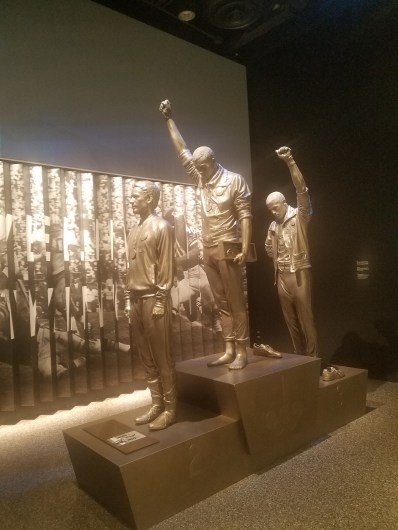
Go to my IG page here to check out more vacation pics at some awesome museums including The Smithsonian Museum of African American History and Culture. Visit me on the web at yecheilyahysrayl.com and subscribe to this blog for notification of more posts.
Title: Birth Days: Stories of Women Who Turned Difficult Beginnings into Glorious Lives
Author: Carol Massey
Print Length: 157 pages
Publisher: Pure Heart Publishing
Publication Date: November 2019
Language: English
Birth Days is exactly what its subtitle implies; it tells the tales of women who overcame adversity to lead illustrious lives. The author presents us to a number of fictional ladies who go through agonizing birth and parenting problems. Dr. Francine Young gave her child up for adoption, Lulu discovered she was expecting only two months before giving birth, Margaret had an affair with Jackson Jones (who was not her husband), and in 2027 Lulu’s grandson was elected president of Howard University.
These women’s struggles, the men they loved, and the people who supported them on their journeys are all things we have witnessed. (Like Aunt Sis, who served as Mary and Connie’s midwife and caregiver). As each lady faces her beast, readers will be interested to see what happens next. Because so many of the stories take place in the 1930s and 1940s, we can consider them historical. I particularly liked the historical tidbits that discussed how African Americans’ lives differed in the North and South.
The first story, “Two Sisters,” with Connie and Mary, Aunt Sis, and Aunt Ailene, is my favorite. I could see the mother’s sorrow over her difficult pregnancy, the family’s terror following the loss of a previous child, and their worry over Mary’s prognosis. I could understand the father’s agony as he constructed the baby’s coffin out of concern that she would pass away like the others. The home had a Color Purple vibe to it when the father returned home with Clara after renovating it later in the story.
This is not a long book, and the stories of the women and their struggles with maternity fit well within today’s society, where women, their efforts, and their lives are at the forefront. I could easily see upgrading this book to five stars with some adjustments to a few errors that impede the reading flow.
Ratings:
Plot Movement / Strength: 3/5
Entertainment Factor: 3/5
Characterization: 3/5
Authenticity / Believable: 4/5
Thought Provoking: 4/5
Overall: 3.5/5
After retiring from a 30+ year career in health and educational administration, Carol Massey had time to reflect on the people, places and events that influenced and inspired her. She wanted to pay homage to some of the women who guided, nurtured and supported her journey from childhood through college, career and life as a single mother of an African American male child. Carol, a California native, now lives in suburban Atlanta with her rescue pup, Ms. Frances.
The Houston Signing was excellent. It was different from my other signings. We had a small crowd but it felt more intimate and personal. What’s better than talking about self-love to a group of Black women? It reminded me of teaching and you know what they say “when you teach you learn twice.” One of the most important lessons I learned is the importance of telling our stories. I wish I had gone deeper into my background during the introduction. I think it would have added a bit more depth.
I was raised on the south side of Chicago in the Robert Taylor Projects, the largest housing project in the world and one of the poorest urban communities in the United States (second only to Cabrini Green). I’ve seen things most people only read about or watch in hood movies. I know what it’s like to grow up around drug addicts and gangs. I got my own war wounds. I’ve been homeless. I’ve been hungry. I know what it’s like to be depressed and sad. Keep Yourself Fullis not a regurgitation of the latest Social Media Self-love Guru. Keep Yourself Fullexist because I know what it’s like to feel empty.
This kind of vulnerability helps us to be more relatable with others and capable of helping people who are where we were to see living proof that overcoming is not just a word: it actually is possible. If we consider ourselves healed and whole, how did we get that way? What lessons have we learned? We didn’t always know what we know today and preaching and browbeating rarely works…
…but stories do.
Tell your story. Let people know how you got here. Stories help us to connect more with others. It humanizes us and makes people open to hearing our perspective.
Welcome to the blog Buddah and congratulations!Your poem, “Claiming Victory” was so uplifting it won you the #2 spot. Please tell us, what inspired this piece?
This poem was inspired by the challenges many of us face in believing in ourselves and doing what’s necessary to fulfill our purpose and achieve our dreams. Too often we think we’re not good enough. Too often we think we don’t have what it takes to make it. Too often we allow the noise, conditioning, and all the junk we’ve been fed by external forces to negatively impact our outlook and our ability to act. When we’re able to change our mindset, own all of who we are, and shed all of which hasn’t served us, we’re unstoppable. That’s when we can embrace abundance. And claim our victory!
“People get caught up on the highs, peaks, and successes They don’t see what went down in the valleys What it took to get up, get out, and rise again It’s what we’ve been through— the periods between life’s highs and lows— that make us so resilient We can’t concede We have to keep on”
-Excerpt from “Claiming Victory.”
As one of the top winners you get a full interview so go ahead and get comfortable. Can I get you anything? Coffee? Tea? Water…wine?
Now, let’s start from the top. Why don’t you go ahead and tell us your name and where you’re from.
My name is Buddah Desmond (aka BDez). I was born in Washington, DC. Was raised in P.G. County MD (primarily in Forestville, MD and Greenbelt, MD). I currently reside in Alexandria, VA.
That’s very specific Buddah lol.
LOL, yes. I know. I can’t help it. Just call me Mr. Specificity. LOL
Soo Mr. Specificity, are you employed outside of writing?
Yes, I am a User Experience (UX) professional with over 13 years of experience crafting timely, intuitive, and forward-thinking solutions to improve the overall usability / UX of websites, apps, and services for non-profit, commercial, and government clients. My specialties include user research and analysis, user-centered design, user experience design, usability testing, content strategy, and information architecture. I’m also a health and wellness coach. Finished my masters in Nutrition and Integrative Health earlier this year. I’m in the process of completing my hours and studying to become a certified Nutritionist, and in the very early stages of starting my health and wellness coaching practice.
Wow. Congratulations on all your endeavors! With all this, what was your childhood dream?
My childhood dream (and still my dream today) was to be a Renaissance man… To be able to pull from my many talents, do work that matters, and to make a difference. I’m striving to achieve this mission still to this day.
What’s your favorite TV Show? Movie?
A number of favorites here, but one show that continues to be at the top of my list is Queen Sugar. The writing, acting, cinematography, the landscape, and the issues that are addressed with each episode—it’s phenomenal. I love everything that Ava DuVernay has done. She’s a gem. A national treasure. The epitome of Black Girl Magic! In terms of film, Black Panther has been sitting at the top of my movie list since it’s opening weekend. What an inspiring, impactful, and empowering film. A classic. Ryan Coogler did that!
He did indeed. We love music on The PBS Blog. What kind of music do you like?
Music is my first love. I come from a family that deeply loves, appreciates, and respects music. A number of us, myself included, are musically inclined. I have an eclectic taste in music. I love Jazz, R&B/Soul, Hip-Hop, Gospel, Classical, Reggae, Dancehall, Afrobeat, Latin, Country, and Rock… Music is an undeniably powerful and universal art form. Life wouldn’t be the same without it.
We agree there. Speaking of the Universe, with a name like Buddah I have to ask, religious or nah?
No, I’m not religious. I’m more of a spiritual being. I believe in the Most High… The Divine Creator of our universe that ties us all together. I’ve always been fascinated by religion though, and learning about how people worship, where they worship, their sacred texts, and the similarities / differences between the guiding principles we abide by.
Let’s talk about writing a bit. Favorite writer. Go.
These questions are always tough because it’s a rarity that I can ever narrow down to just one favorite of anything. LOL!
I knew I’d get you eventually.
Okay. I’m done. Carry on.
I have so many favorite writers. Maya Angelou. Langston Hughes. Nikki Giovanni. Sonia Sanchez. Saul Williams. James Baldwin. Toni Morrison. Alice Walker. Terry McMillan. Yrsa Daley-Ward. Nayyirah Waheed. Lucille Clifton. June Jordan. Janet Mock. Ntozake Shange. Devon Franklin. Octavia Butler. Amiri Baraka. Haki Madhubuti. Zora Neale Hurston. I could keep going, but I’ll stop there.
What genre do you write in, why?
My primary genre is poetry. I also write prose, essays, short stories, song lyrics, and blogposts. There’s a universality and musicality to the language of poetry. I couldn’t deny it when I first started reading it. And definitely couldn’t deny it when I started writing it. I think Amiri Baraka said it best, “Poetry is music, and nothing but music. Words with musical emphasis.”
I absolutely agree. It’s like poetry has this ability to bring out the depth in us in ways nothing else can.
YES! Poetry gives us the freedom to get soul-deep to tell our stories in such extraordinary ways.
Soul-deep. I like that. Yess.
The beauty is that we can each write a poem in any form about the same topic, emotion, or experience, and it can be embraced and interpreted quite differently by readers. What we as writers get out of it may be worlds away from what our readers get out of it. And that’s amazing. Truly amazing. Poetry has the power to change minds, and change lives.
When did you publish your first book? What was that like?
I self-published my first volume of poetry, Prevail: Poems on Life, Love, and Politics, in June 2012 through iUniverse. The experience was exhilarating, rewarding, frustrating, so many things. When I made the decision to publish my manuscript, I had a “no turning back” attitude. I was at a point in my life where it was imperative to go all in for the things I wanted. I couldn’t be mad at anyone but myself if I didn’t put in the effort or work to make my dreams come true. And I’m grateful I did. Publishing Prevail afforded many opportunities for growth and development, reading and speaking at a number of events, and connecting with other writers, creatives, and readers alike. Not to mention, many learning lessons about building a platform, social media, and book marketing and promotion.
Prevail: Poems on Life, Love, and Politics is available now on Amazon.
What’s the most difficult thing about being a writer? The most exciting thing?
That’s a great question. Hmmm… The most difficult thing would be pushing through writer’s block. Or periods when you really want to write, but the muse, inspiration, or motivation is sorely lacking. The most exciting thing is the freedom of expression. Being able to create you own world or worlds. New possibilities. And the blessings of your work opening minds, speaking for those whose voices aren’t being heard, and making deep, meaningful connections with a larger audience.
Nice. Buddah, what is humility?
Humility is quiet confidence. It’s being comfortable in who you are, your abilities, and what you bring to the table without being rude, brash, egotistical, or narcissistic. It’s also about being open to change and possibilities. And knowing that your way, whatever it may be, is not the only way.
What is love?
Love is one of the greatest emotions. It’s more than just deep feelings for something or someone. It’s in the actions. It’s all in what you do (or don’t do). Love can be life changing. Life-saving even. It’s unconditional. As I wrote in a recent piece, “I am nothing without love. I am everything with love.”
Beautiful. Thank you Buddah for spending this time with us. We certainly enjoyed you.
Be Sure to Follow Buddah Desmond below and look out for his piece, “Claiming Victory” in the 2nd Edition Lit Mag Literary Magazine, 2020.
Hard Truth: Self-Love is not a social media movement of posting lots of pictures of ourselves on the internet.
And don’t twist my words. There is nothing wrong with posting pictures (I do it all the time).
You are allowed to post what you want.
But we also live in a time where it has become cool to post nothing but pictures of ourselves. To talk about ourselves and to make everything about us.
How many of us constantly posting pictures of ourselves actually have low self-esteem?
How many of us are seeking validation?
I don’t know when this became a trend, but it’s important to remember that a selfie is not necessarily a reflection of self-love.
Self-Care is an inside job. Most of the work is done in private and if done genuinely, has the power to show up naturally and authentically on the outside.
Self-love and self-care are also about balance. Thinking less of yourself is not humility. Low self-esteem is not humility. Constantly doubting yourself and being afraid to shine because of what other people will think of you is not humility. You are allowed to be both humble in confidence and courageous in character.
Everything in our lives, from our relationships to how we run our businesses reflects how we feel about ourselves.
Do the inside work.
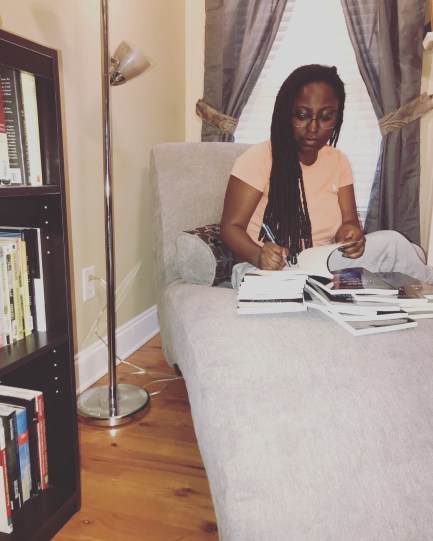
When it’s cold outside, I sit in the house, drink coffee, sign and ship books. Does one of these have your name on it?? There is still time to grab your tickets to the Texas “Keep Yourself Full” signing on Nov. 30th!! Link below.
My one and only classic 1976 original version of Roots: The Saga of an American Family
It took Alex Haley 12 years to finish Roots: The Saga of an American Family, known widely as simply, Roots. The book shot straight to the top of the bestseller charts, and the twelve-hour mini-series (Jan. 1977) was watched by 130 million people. They translated the book into 37 languages; it won a Pulitzer Prize and National Book Award, and sales soared to over 5.5 million.
This was not without controversy. No success story is. Haley had to settle a plagiarism suit out of court—that part of his story was copied from a 1967 novel, The African (The Guardian). It was also said there was no documented evidence that the alleged elder he spoke to in the Gambia had been accurate in his account of Kinte. Critics said that if Haley had written Roots as a fiction novel, there would not have been a cause for alarm. “Most of us feel it’s highly unlikely that Alex actually found the village whence his ancestors sprang”, Henry Louis Gates Jr said in 1998, calling Roots “a work of the imagination.” (But if you listen to Haley here, his story is very detailed. It is also consistent with many of his other interviews and speeches about the story of how Roots came about. This is hard to do if you are lying).
Roots is now part of history and the original 1977 TV series awakened a new generation of young Blacks to the horrors of enslavement when movies and television shows about slavery were few and far in-between (both in books and film). While it may seem an over-saturated topic now, in 1977 this was groundbreaking.
Enslaved persons had little knowledge of what Haley referred to as “family continuity.” They were sold so much that as adults they came to know little about their family lineage, where they came from and who they were. Roots was therefore something special because Blacks had come out of the Black Power movement of the 60s, had just seen the deaths of Medgar Evers, Martin King, and Malcolm X. Roots was not just the story of one man’s family but the family of all Black people who had been taken captive and robbed of their family tree and any connection to it. It would become a history lesson, a recommended educational film that Black parents will watch with their children with just as much seriousness as their parents forced them to watch The Ten Commandments. Some would even name their children Kunta Kinte.
After Roots, Octavia Butler used time travel to explore slavery in Kindred (1979), Alice Walker used an African subplot (Nettie’s life in Africa) in The Color Purple (1982) which also went on to win a Pulitzer and National Book Award, and Toni Morrison made a fugitive slave her protagonist in Beloved (1987). Beloved was voted the most influential African-American novel of the 20th century in a poll of PBS viewers. But as Frances Smith Foster has pointed out, “in terms of actual audience and effect on politics and policies, Roots has been the most influential such story in the modern era.”
As I listened to the entire 2hours of the clip linked above, I wondered why I was doing this when I had (seemingly) much more important stuff to do. That is until I came to the final hour and fifty something minutes. Here, Haley speaks about how the father’s name the babies at eight days old. In the villages, the people would not see much of the father for seven days because he was spending time with the baby to come up with a good meaningful and significant name. On the eighth day the people would gather at the family’s home. The mother would come out once hearing the signal and sit on the stool and hold the eight-day-old baby. The father would walk over, lift the infant, and whisper the name into the infant’s ear three times.
He would do this so that the infant would be the first one to know who he/she was. This resembles, to me, the ancient practice of circumcision of the male child, and naming of the child, in ancient Israelite culture (Gen 17:12) which I believe is also Black culture. For example, the Ashanti Empire was a powerful Akan empire and kingdom in what is now modern-day Ghana. Ashan was the name of a city in southern Israel. The word Ashan in Hebrew means “smoke” “smoke city” or “burning city” so that Ashanti means “the people of Ashan or the people of the smoke city”. This was a reference to the city of Ashan after the Israelites took it over during the conquest of Canaan (1 Ch 4:32, 1 Ch 6:59). The Ashanti people had many Hebrew customs and traditions as part of their way of life. For eight days after the birth of a child, it is only on the eighth day that the child receives his/her personal name.
It was here that I had discovered the purpose of my listening to this piece in its entirety. I believe this to be such a powerfully subtle telling of who we, so-called Blacks in America, truly are. For the customs of the Hebrews is something that can still be found among many African cultures such as the Ashan.
Roots is a powerful example of why we shouldn’t give up on whatever we are striving toward. It inspires me as a writer and as a person of the fruits of patience and of perseverance. While Roots has had (and continues to have) much success, remember that it took Haley 12 years to complete (one whole year from Kunta’s birth to capture… which could be a book by itself).
Think about that the next time you worry about that book taking too long to finish.










 The PBS Blog