Revising The Stella Trilogy: Crafting Authentic Historical Details

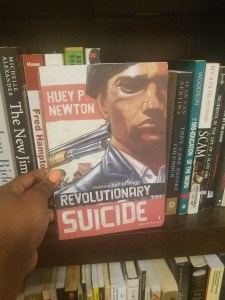
In Beyond the Colored Line, book two of The Stella Trilogy, we meet Noah Daniels who is a member of The Black Panther Party for Self-Defense. There are two books I read that helped me to conceptualize his character in the most authentic way possible: Revolutionary Suicide by Huey P. Newton and The Assassination of Fred Hampton: How the FBI and the Chicago Police Murdered a Black Panther by Jeffrey Haas.

These books helped me to capture the language and the spirit of the movement as realistically as possible. I modeled Noah’s persona after both Huey Newton and Fred Hampton. Noah uses terms like “Pig,” regarding the police like the Panthers did in the 60s, but reading Newton’s story helped me to understand this wasn’t a random term they pulled out of the sky to be derogatory.

Black Panther rhetoric like “All Power to the People,” and the concept of “pig,” came with Newton’s interest in A. J. Ayer’s logical positivism, that nothing can be real if it cannot be conceptualized, articulated, and shared. While I do not agree with this philosophy as a person of faith (because faith is the opposite of this…the belief and expectation of something even when you cannot see it), it was helpful in me understanding the Panthers on a deeper level and thus helped me to make Noah’s story more real.

Not all research needs to be included in the story so you won’t hear Noah quoting A.J. Ayer. The point of research for historical books is to help the writer to better understand the culture of the time so the characters can interact with the setting genuinely.

Historical Fiction is not an easy genre to write because while the story itself is fictional, the dialogue and personas of the characters have to be true to the time. A young person living in 1960 wouldn’t speak like a young person living in 2020. If done right, adding authentic historical details enrich the story by triggering memories of the past.

Excerpt from Chapter Ten:

“That just bugs me. We supposed to march and get hit upside the head by the pigs?” he would say in conversations with his mother when he would visit her. Unlike many young black men raised by their mothers, Noah’s mother had decided early on that her son’s narrative would be different. When he came of age, she would turn him over to be raised by his father. She could provide a lot of things, but she could not teach him how to be a man. She supported most of Noah’s radicalism, but only to an extent.

“Now don’t you go rappin’ ‘bout all that communist jive talk in here boy. Violence and hatred never helped to expand no revolution.”

“But Ma, that’s where you’re wrong. It’s not about violence. It’s about defending ourselves. Violence is only the guilt complex that exists in the minds of America.”

Mama Daniels would lift her head to the ceiling, wishing she’d said nothing.

“To say that a man is violent because he defends himself does not differ from saying a man who is being lynched and thus fighting back is himself violent because he fights back.”

“Boy, what? You know, sometimes I wish you weren’t so smart.”

Noah laughed, “’cause you know I’m right. Mama, white Americans know that they have been violent against Negroes, and they fear that one day the Negro will do unto them as they have done unto the Negro.”

The 1960s presented a new wave of leadership and identity for people of color who went from being Negroes to Blacks. Just the previous year, the heavyweight champion, Muhammad Ali refused induction into the army on both religious and political grounds. The epitome of the black power movement was the Black Panther Party, founded by Huey P. Newton and Bobby Seale. This party organized the use of self-defense in the accomplishment of black justice and was right up Noah’s alley.


Stella: Beyond the Colored Line

Get it Here.

Haven’t read book one yet? Get it here for just $0.99.

Already read these books? Don’t forget to leave a review!

For Those Who Are Sad

Photo by Ye Fung Tchen on Unsplash

Can I cradle you in the nook of my arms? If you were here, would you let me? Hold you I mean? I don’t just want a hug. I want to hold you so we cry together. Kiss the top of your forehead like a mother would. On the shoulder of comfort, let your tears drench my shirt and I will love you like an infant. Can these words hold your head up? I do not want the soft spot of your pain to blemish the fragile newness of the warrior you are becoming. Your critics will look at what you are, but I see what you can become. But you’ve got to let me do my job. Let me hold you. Cradle you in my arms with these words. Cradle you in my arms with this pen. This is not a blog. Not today. Today this is air. This is breath. This is permission to breathe. These are words wooing lullabies for the exhausted spirits of the broken.

Black History Fun Fact Friday: Guest Writers Wanted

Updated: 4/27/2020

On January 17, 2015, I started a new Blog Series in honor of Black History Month called Black History Fun Fact Friday. I planned for the series to run from January 2015 through the end of February 2015, but two badges and 70 weeks later we are still going strong.

Black History Fun Fact Friday is not just a Black History Month segment anymore. It has carved out its own space on this blog. I want to get back to publishing Black History articles every Friday and would love to have some help.

I am reaching out for help from individuals who are interested in helping to contribute to this series.

Requirements:


  • Must be at least 18+ to write for The PBS Blog.


  • Must be original work. Do not copy and paste the article from other blogs unless that blog is your own. If you have a Black History article to share that you published to your site, I welcome you to submit it for Black History Fun Facts. I have no problem with that as long as it is your work. You can also link back to it so readers can follow your blog.


  • Because of the nature of this series, interested writers must be Black/African American.


  • Topics must be relatable to the history of Blacks/African Americans, African diaspora, e.g.


  • Articles must be emailed to me for approval at least one week before publishing. If you email your article on 4/28 for example, I will publish it on 5/1 if there are no needed changes.


  • Please send articles as an attachment in a Word Document, 12p Font, Times New Roman text.


  • Please do your best to self-edit your work for basic typos/spelling/grammatical errors before submission. Grammarly and ProWritingAid are good free self-edit software programs to use.


  • Please include at least one image with the post. Canva is a good program to use to make your own images.


  • This is Black History Fun Fact Friday not Black History Opinions so do your best to submit articles covering accurate historical information. I will vet the submissions to make sure they do. If you have links to sources, please include them. If you quote someone else, please cite your source. Articles that plagiarize will not be featured on this blog. (Note: Writers, as a heads up, if you are quoting people in your Social Media graphics without giving proper credit, this is plagiarism. Putting quotation marks around the quote does not make it yours. Don’t leave off the name of the person who said it first!)


  • Please include a photo of yourself, social media handles, website, or links to books you’ve written on the topic. This will be added to the end of the post.

Benefits of Guest Blogging:


  • Increase traffic to your own website/blog
  • Build Relationships/Online Influence
  • Build Domain and Search Engine Authority
  • Capture Wider Audience (go hand-in-hand with the 1st point)
  • Develop Your Authority on a topic
  • Improve Your Writing
  • Opens the doors for paid business opportunities

Email articles to yecheilyah@yecheilyahysrayl.com.

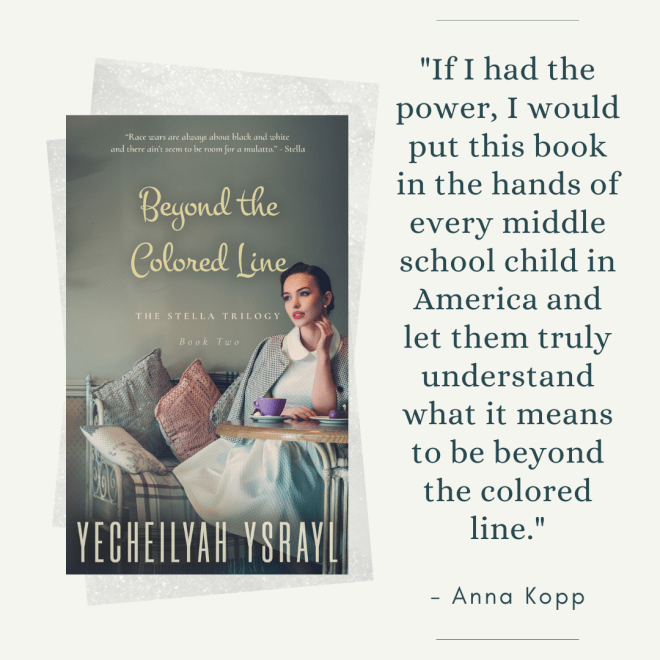
Stella: Beyond the Colored Line is Live (The Stella Trilogy Book 2)

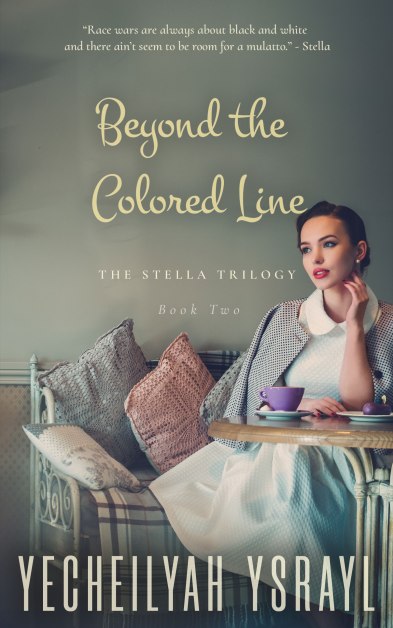
Beyond the Colored Line is LIVE
“This story retells the history of many African-American families alive today. It is a heritage rich with strife and suffering but also filled with a hope and a desire to finally grasp the freedom that has been so elusive and out of reach for so many. At times, I was forced to accept some uncomfortable truths about our American past. There is nothing wrong with that. This story makes you think about freedom and what it really means to you as a person, and as an American. I loved this story because it is through the learning of other’s journeys that we begin to learn much about ourselves. Their pain becomes our pain and we begin to see through their eyes. Stella will touch your soul with such a sweet simplicity you won’t even know it.”

– Colleen Chesebro, on Stella: Beyond the Colored Line, First Edition

About.

In book two, we dig deeper into the McNair family’s legacy. Named after her great-grandmother, Stella has a very light complexion which causes her to be the tease of her classmates. Unable to find solace among her African American contemporaries, Stella finds it challenging to adjust to a world where she is too light to be “black.” After The Great Depression of the 1930s forces Stella’s family to move to Chicago, a conversation with Aunt Sara provokes Stella to do something that will dramatically affect not just her life but the life of her children and grandchildren.


Excerpt.

1928

Daddy runs off to no one knows where on account of his life. Some racist whites had seen him and Mama together and threatened to lynch him if found, so he runs off. The community gossip is that his brothers know, but they won’t say. We weren’t alone, though, Mama and me. It seems like Mama filled the hole where Papa should have been with our whole family. The house always stayed filled with guests, my people, and peoples of my people. My granddaddy was a colored man and owned this land. My namesake, his Mama Stella, was a slave and was given this house by her owner. As the story goes, after Grandma died, I was born. Since Mama was the closest, she named me after her.

My aunts would gather around the table with my mama, and they laugh and cry most of the night about their girlhood. They would talk about what it was like being four mixed girls in Illinois. I don’t have uncles on my mother’s side, but Daddy got six brothers.

Due to the controversy around my parent’s relationship, Daddy being a Negro, and Mama being half-white, they only visit on special occasions. Uncle Roy, Daddy’s younger brother, says Mama acts differently around her sisters and that we too uppity, especially Aunt Sara. She’s the youngest of my aunties and the most spoiled. She’s the one who convinced Mama to send me to a white school in the first place, and boy was my uncles hot! They said we were breaking the law–that a Negro had no business in a white school. But Aunt Sara said I had all the right in the world since I was half white. For her, not only could I do this, I had a right to do it.

“But does the school know she a Negro?” Uncle Roy would ask.

“That’s none of the school’s business, now is it?” Aunt Sara would say, and they’d go back and forth until Mama break it up.

Not all talks were good talks. I used to sit until my eyes were red with fatigue to hear Mama and my uncles talk about all the killings that were taking place around the country, and especially in the South. I felt like I lived in two worlds, one black and one white, but none mixed. And what did that mean, mixed?

My aunties wanted to talk about education, family, career, and navigating the world as a mixed-race person, whereas Daddy’s side liked to talk about the black condition, what was going on in the black community, and what it meant to be black in America. They talked less about blacks navigating a world that they felt didn’t include them, and more about blacks redefining themselves and creating their own worlds. The conversations were intriguing and fascinating on both sides, but it left me feeling like my very body was a contradiction. Was I white? Was I black? Race wars always involved these two groups of people, and there ain’t seemed to be room for a mulatto.

“That’s what I say,” said the voice of Uncle Keith, Daddy’s second oldest brother.

“Up there in Minnesota.”

“That close?” Mama gasped.

“Yeah, that close. What woman, you living under a rock? They just had one over in DeKalb last month,” said Uncle Roy.

“It’s a crying-out-loud shame,” continued Keith. “Say they dragged the boys from the cell and a whole mob of ‘em lynched ‘em. Say it was ‘bout a thousand of ‘em.”

“My my,” said Aunt Rebecca.

There were times even I witnessed evidence of the events rocking the country. One day, Mama and I went to visit Cousin Mary in Texas and drove the truck up to a general store. We walked in, and I picked up a postcard from a rack. It was of a man hanging on a tree that supported an iron chain that lifted him above a fire. The man didn’t seem to have much of a body left. They cut his fingers off, his ears and his body was burned to a crisp. On the back of the postcard read: “This is the barbecue we had last night. My picture is to the left with a cross over it. Your son, Dan.”

I learned later the picture was of a seventeen-year-old mentally ill boy named, Johnny, who had agreed to have raped a white woman. And everybody at home still talked of the Cairo Circus of 1909, the public lynching that took place here in Illinois. I couldn’t understand why Mama was so upset about a circus until I found out what kind of spectacle it was. My aunts didn’t want anything to do with the land or the house because of events like these. They say it’s too close to slavery. No one wanted to inherit the home or the property, but Mama, and this is how I spent several years of my life living in the same house where my great-grandmother had been a slave. Mama kept the house full of guests by renting out rooms to help with her washerwoman salary.

We weren’t much of a churchgoing family, party going is more like it, unless Mama wanted to show off a new dress or hat when somebody died or needed saving and on holidays and such. Folk would come from all over southern Illinois to hang out with “Cousin Judy.” Sundays sure were fun, my second favorite day of the week. Saturdays were my favorite day of the week. It was the day for shopping, and that only meant one thing, Chicago.

First, Mama would wake me to the smell of biscuits or pancakes. This massive breakfast was to keep me full enough throughout the day, so she didn’t have to worry any about food buying. Then, she commanded me to bathe real good, paint my arms and legs with coconut oil, untie my curls, and we’d both put on our Sunday’s best and be two of the most beautiful women you’d ever seen. I was a young lady now, and shopping was the best thing for a young lady, next to boys, but you couldn’t like them in public.

You could like shopping, though, and I loved going from store to store in search of the finest. I skipped along while Mama scanned the insides of magazines for stuff she heard about from the white women whose laundry she cleaned. We would squeeze our way through crowds of people, just bumping into each other. Everyone dressed in their weekend wear and bought ice cream for their children. Some went to see the picture show, and so did Mama and me. We could buy candy or jewelry, or perhaps a new hat or two. We could drink from water fountains without a label and spend money without prejudice.

We had a good time on Saturdays because on Saturday, no one knew we were colored.
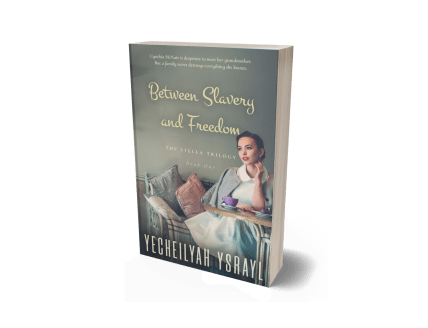
Click here for a signed paperback
of Beyond the Colored Line

*Click Here to get it on Kindle

Haven’t read book one? Get it for 99cents on Kindle here or in paperback here.
*Paperbacks ordered today will ship next week.

African American Images on Book Cover Premades!

If you’ve been following this blog for the past five years you know one of my biggest complaints has been the lack of African American/Black themed premade book covers. And guess what? I found a few!

Beetiful Book Covers

“Launched in 2013 by Stefanie Fontecha, Beetiful Book Covers offers African American premade book covers.”

Cover Your Dreams

This one is not exclusive to AFAM but I’ve seen several covers featuring black men/women. The prices are low so this may be useful for Indie Authors on a budget.

Marion Designs

This one looks a bit more upscale with professional photos.

Designs by Rachelle

It appears this site also occasionally features diverse photos in its premade covers.

Learn more about how to get the best out of premade covers and what to look for HERE


Do you know of any more we can add? Drop a comment on the table if you do and let us know!

People Will Never Forget How You Made them Feel

If there is one thing I have learned in both my personal and professional life (to include blogging) is that change is inevitable. One day you will look up and the people who were rooting for you, in the beginning, are not rooting for you any longer. As I’ve said on this blog once before, you can look up and see an entirely new group of supporters/readers.

Just as quickly as COVID-19 has swept over the world, people will pack up their support and leave you dumbfounded. What happened? What changed? Am I no longer interesting? Is the content no longer quality?

It’s easy to blame ourselves. It’s our blog, our book, our product. And while we are conscious enough to know that sometimes our circle will decrease in size, we must remind ourselves that while the support might decrease in size that doesn’t mean it doesn’t increase in quality. A lack of interest sometimes has nothing to do with us. Although it may feel like it, it’s not personal.

But as I’ve said, we are human with feelings and thoughts and emotions. We cannot help but wonder. These are the times where we will need to pick up our faith, hold on to those gifts and hold our heads higher than we’ve ever held it before. I can’t tell you why some people leave, why they unsubscribe from your life or what you did to influence this decision. What I can echo are the words from one of our favorite poets and one of my favorite quotes:

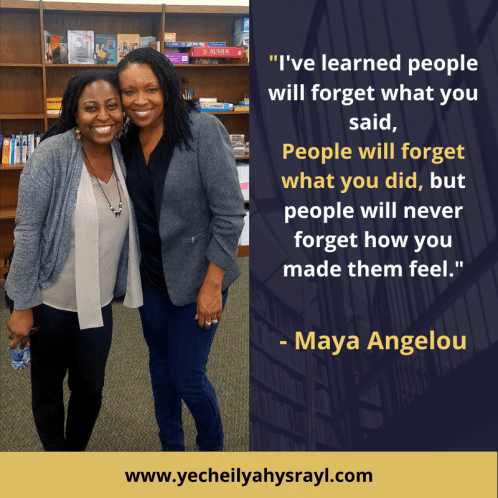
“People will forget what you did, people will forget what you said, but people will never forget how you made them feel.”

These are such powerful words to me because it’s a two-edged sword. Whether you make people feel inspired and empowered or whether you make them feel discouraged and disheartened, people will remember it.

People will leave when they’ve served the purpose in your life it meant them to serve and some of them will even forget what you’ve done. What they won’t forget is the impact you’ve had on their life, the imprint you left there and how you made them feel.

Entrepreneurship, authorship specifically, is hard and I know that in this climate “hard” doesn’t seem like a strong enough word to describe what it’s like to endure this, but I hope this message and Angelou’s words were not only encouraging for you today but that they help you persist in the troublesome areas.

One of the most important lessons I’ve learned was understanding the state of my mental health is much more important than my career because my level of self-worth and self-love is what will drive the work.

A text I received from Ms. Edwards (pictured) inspired this post; how good it felt to know someone was thinking about me. So whether it’s a text, phone call, email or DM, it doesn’t take much to be kind. Since we are all in the same boat right now, with the time you have, be sure to reach out to someone who has made an impression on you and show them you appreciate them.

Let us remember that support is a verb.

It’s National Poetry Month!

It’s National Poetry Month!
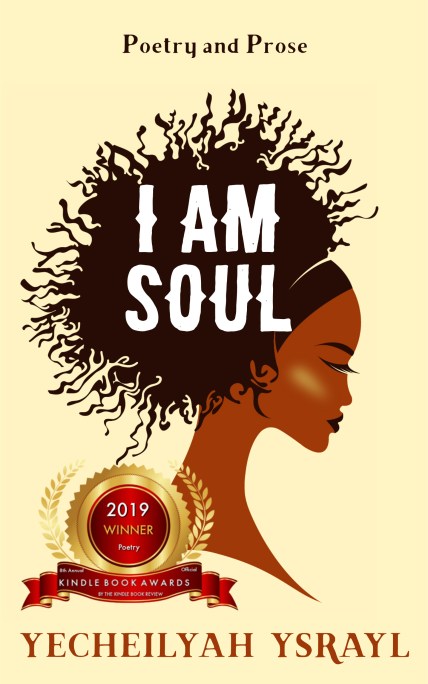
I am Soul is 99cents on Kindle and $8 in paperback through the end of April.

Signed Paperback

www.yecheilyahysrayl.com/bookstore/i-am-soul-poetry

Amazon Kindle

www.amazon.com/I-am-Soul-Yecheilyah-Ysrayl-ebook/dp/B078FS2ZJT


What are you reading or re-reading for National Poetry Month? Here’s my list so far!
  • The Collected Poetry of Nikki Giovanni (1968 – 1998)


  • Maya Angelou Poems: Just Give Me a Cool Drink of Water ‘Fore I Diiie, Oh Pray My Wings Are Gonna Fit Me Well, And Still I Rise, Shaker, Why Don’t You Sing?


  • If Only There Was Music : The Poetry of Forbidden Love by Nonnie Jules