

I think Instagram is a great place for writers because there is a prodigious reader and writing community there.
Below, you will find seven tips I put together for new writers who also enjoy using the gram. Hope it helps.
-
Tip #1: Private Page to Business Page
If you’re an author using Instagram, it’s a good idea that your author page is a business page. This will allow you to use insights and other metrics that can help you post quality content by looking beyond the number of likes and tracking things like saves, shares, demographics, and the best times to post based on when your audience is online. (You can find this under insights)
Business pages are also automatically public, which is what you want. If you are trying to build readership and engagement, your author pages should not be private. That is like having a closed sign hanging off the door of your new business. To be clear, this isn’t your personal page (unless you have turned your personal page into a business page, but we will touch on that in a second). This is your business page, and business pages should be public.
Get out of thinking anything you post on the internet is private. It’s not, and if it’s any consolation, making your profile private does not necessarily make it “safe.”
Switching to Business Account
- Although I am not a big fan of Facebook, you will need to connect it to a Facebook page to create an Instagram business page (at this writing). I know, it sucks. But IG is owned by Facebook so, go figure.
This page cannot be your personal page but a Facebook business page. If you have not already, head over to Facebook and create a Facebook page for your author business. This will make it easier when you switch over. Then, come back to your IG, click on the three bars in the upper right-hand corner and go to settings. Click on account, then scroll down until you see the option to create a business page.
Changing a Personal Page to a Business Page
If you are going to turn your personal page into a business page, there are some things you will need to do first. Some people say not to do this and to create a separate business page, but I agree with both ways with a few exceptions.
To turn your personal page into a business page, you will want to make sure you delete everything that is not in some way relatable to your business. This means you might want to delete those nudes and all fifteen pictures of your cat.
Another option is to delete everyone who is not part of your readership and unfollow people who aren’t right for your business. While it is best to create a separate business page, turning your personal page into a business page could work if you are willing to make a few adjustments.
You will also have a lot of family and friends on your personal page, and family and friends are not your target audience. The chances are that’s why you are complaining so much about not getting the support you deserve. You are trying to sell to the family instead of the strangers who want to buy from you.
Family is family, but they are not your customers. Even those who buy from you aren’t doing it for the same reasons your readers are. A family who buys from you is just trying to be supportive because they are related to you, not because they actually like to read your books. It’s a hard pill to swallow, I know, and it doesn’t apply to all family members (some of them do like your work), but the quicker you move out of the mentality that your family must support you to be successful, the more successful you will actually be because you will have embraced the strangers who are readers passionate about the kinds of books you write.
Just as author blogs differ from business blogs, I believe author social media pages differ from other business social media pages in some ways. One way is that for writers, showing off our likes, interest, and personality is all part of author branding. People buy from people they know, like, trust, and getting personal (though, not too personal…keep it clean) helps build trust.
-
Tip #2: Track Progress by Using Instagram’s Insights So You Know What’s Working and What’s Not
One of the hardest things I have found as an introvert is figuring out what other people want. The only way to know is to ask, track behavior, and pay attention to actions.
Once you’ve decided you are ready, making the switch from a private to a business page will help you track your audience’s actions and see which posts are reaching people.
When your IG page is a business page, you get to see things you won’t see on personal pages. Below are screenshots of posts from my page.
If you click on the insights (which you can see under your post on business accounts), you can see not just how many likes you got but how many people shared your post, saved your post, viewed your profile, or clicked on your website link.
This helps you to see which posts have high engagement and which posts do not.
The thing about any business social media page is that it differs from pages that you are only using to connect with family members, friends, or just hang out. On those pages, likes, shares, and follows don’t mean anything except maybe to boost your ego. On business pages, though, likes and shares are important to you understanding how your content performs – by tracking metrics over time – and is the key to developing a content strategy that works best for your audience.
As a business page on social media, the formula is typically:
Engagement =
Likes + Comments / Followers
You also see things like the number of people who viewed your profile, clicks to your website, where the people are coming from (what city/state), age range, gender, and more to consider in terms of what’s working other than counting likes, which is actually the least important form of engagement.
Let’s look at some examples of my high performing Instagram posts and how I determine they are high performing. Try not to look at the number of likes. Although that plays a part, you can see likes on everyone’s post. In this example, we are looking at what you can only see on a business page and how to increase posts’ quality.
Example #1
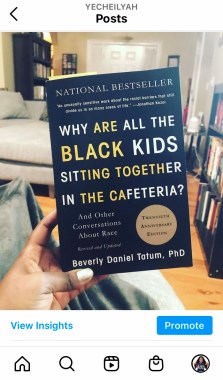
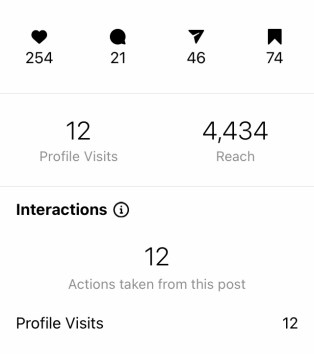
Here, the winner is the number of shares (46) and saves (74). The number of comments is next (20) and then, lastly, number of likes. Also, you will notice the number of people I reached and the number of people who clicked on my profile. Although there are more likes than saves, liking a post is last in terms of engagement.
Example #2
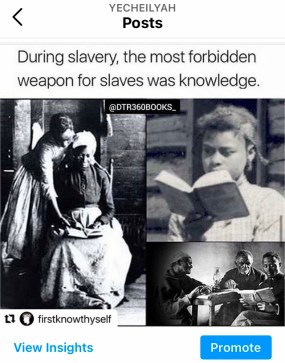
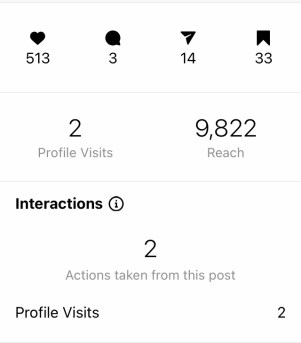
Here, there were only two profile visits but the reach was huge and so were the saves. A lot of people enjoyed this post. But I want you to notice something else.
While this post has the most likes and a higher reach, example number one is still a better post to me because it’s my own original content.
This is important.
In example two, I was reposting a black history meme from another page (you can see my credit at the bottom left…always give people credit when you share their post. You can do this easily using a repost app). The posts that are yours are always the best!
Never share more of someone else content than you do your own.
Example #3

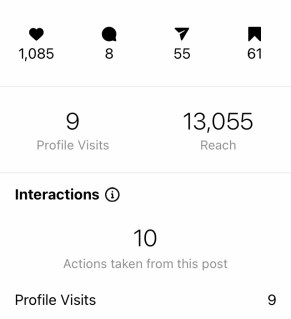
Example number three was lit. The reach is impressive, the shares and saves are outstanding, and the likes even got up there a bit. Here, everything outshined the number of comments, so while people loved the post, they didn’t have too much to say about it. I guess we all know Alice Walker by now lol.
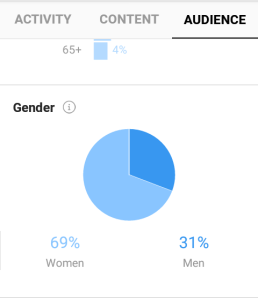
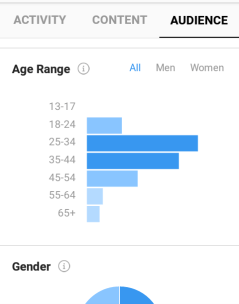

Chicago (my hometown), Atlanta, New York, Houston, and Charlotte are where the bulk of my support comes from (at this writing). I am happy to see ATL at the top since I live in Georgia and see the Chi representing. My biggest audience is made up of women, which is always good since I am a woman, and the age group is between 25-44. Let’s move on.
-
Tip #3 Use Sharp, HQ Images
Instagram’s focus is on photos, so uploading pictures that are grainy, pixelated, or include text that’s hard to read is like the IG cardinal sin. If your images look like crap, you won’t get much engagement. Trust.
Use sharp, high-quality images in all your posts. You can brand yourself by creating lovely images using Canva or PosterMyWall.
It’s also good if the images have something to do with your books or show off your personality in some way. A good practice is something I saw someone post about looking at your last nine posts. Can someone understand who you are and what you offer by these posts alone? I have been doing this (looking at my previous nine posts), and it has been a helpful reminder to pay attention to the kinds of content I post. People will see the image before seeing the caption, so the image must speak first.
-
Tip #4: Include Text/Caption with Images
Speaking of seeing the image first, people pay attention to the caption! Add some context to the image by adding a caption. Now, I have noticed many celebrities don’t do this. They often post a selfie, and leave it at that, but that’s because they are celebrities who already have a strong audience and platform. David Banner doesn’t have to include text on his images, and he will still get over a thousand likes and hundreds of comments and shares.
But you are not David Banner.
You are a new author at the beginning of an exciting journey, and you are introducing people to who you are for the first time. Use the caption to explain the images you post. It doesn’t have to be uber long and fancy, but something is better than leaving it blank.
-
Tip #5 Hashtags
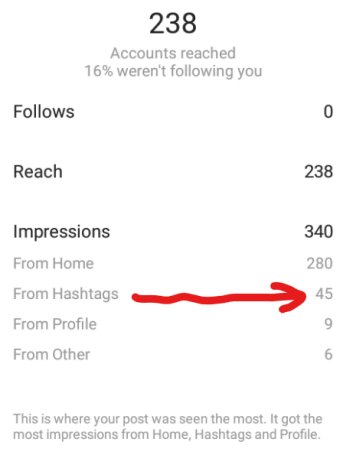
Going back to this screenshot, it appears my hashtags are working on this post, reaching 45 people alone. Hashtags don’t exist just so you can be cute but they work just like the tags you’ll use on a blog post. They are searchable on social media. If you click on your hashtag, it will take you to all the posts relevant to that hashtag. They help categorize content and track discussion topics based on keywords. You can Google the hashtags that are best for your business. It may even be necessary to research your hashtags (I did because I’m a nerd lol). There are tools available like Hashtags.org or HashtagDirectory.com that can help you. You don’t really need 50 hashtags. The most important thing is that the hashtags you use are trending and apply to your business.
Tip #6: Clean Up Your IG Bio
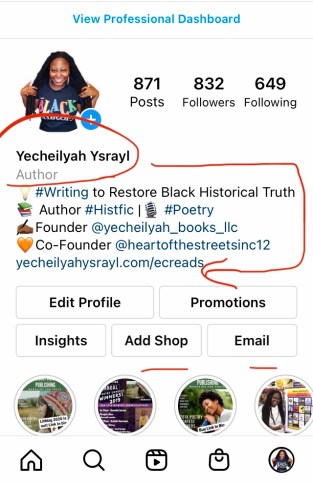
I just changed my bio again because I wanted it to reflect what I do and offer. This is one of the most critical parts of your account. Since you are limited on characters, you must quickly tell people what you have to offer in as few words as possible. As you can see, I don’t have tons of followers, so don’t think because you have less or even more, that’s the most important thing because it’s not. The number of followers doesn’t determine quality.
- Author – Make sure you let people know you are an author. Don’t be afraid. If your an author, say that.
- Tell us what you do or offer. If you’re an author, tell us the kinds of books you write.
- Be sure your website or Linktree link is in the bio.
Tip #7 Website Link in Bio
What do you want people to do once when they visit your profile? Do you want them to like, comment, and then move on with their lives? Do you want them to research something? Do you want them to buy something? What do you want people to do when they come across your page? That answer is the link you promote in your bio.
If you are using Social media for business, the end of the road isn’t your Instagram/Facebook/Twitter page. You need an author website/blog/email list and should be directing people to these sources to learn more about who you are, what you offer, and how it is beneficial to their lives.
In your bio, you may also want to include a special website link. This link is special because it can be created specifically for Instagram. Instead of posting the link to your website alone, you can create a landing page with buttons specific to where you want people to go. Instagram only allows one link, but you can post several when you:
- Set up a Linktree account where you can house several buttons, accessible through one link
Even if you don’t have a website yet, Linktree is excellent because it allows you to list more than one thing at a time. You can add buttons to your social media sites, for example. When people visit your link, they can choose where they want to go. You can also see how often people are visiting your sites. I used linktree for a while, and it’s excellent.
- You can create your own linktree-like link through your website
To get the best out of Linktree would mean using the paid version so you can customize it, but if you have your own website (that you are already paying for), you can also opt to create a page on your website that mimics the Linktree platform. This is a special page specifically for Instagram, so you don’t have to make it visible from your home page, but add the link to your IG bio. (Click here to see my page for an example)
This saves money, points people directly to your website, and promotes you and not Linktree.
Website Link + Call to action button helps direct potential readers to your books, blog, or wherever you want them to go. Remember, social media is not the end of the road. If you want people to do more than like a post, be sure to lead them somewhere they can learn more.
To Summarize:
- Make your profile public, and create a business page. Be sure to shake up your content to reflect your business profile
- Use the insights and metrics you see over time to improve your strategy and increase clicks to your website.
- Write a bio that targets what it is that you do and what you offer.
- Use sharp, high-quality images
- Use caption/text to describe images
- Use hashtags strategically, researching the ones that best apply to the kind of content you post.
- Include the link to your website in your bio or use linktr.ee for multiple links









 The PBS Blog