This weekend I had the pleasure of joining RRBC for its debut show on BlogTalkRadio “Bring on the Genres” with host Jan Sikes, and authors Balroop Singh, and D.L. Finn. We discussed the process of creating poetry. Click on the link below to hear the show. Join us as we explore this genre.
I know some of you are wondering about the effects of the Coronavirus on the book industry. Some of you have asked if you should still publish your books.
Yes, I do think you should proceed with publishing your books.
Based on the current climate, I also think it is wise for all businesses to expect some changes as a result of COVID-19, which is now a global pandemic, according to The World Health Organization. On Wednesday night, President Donald Trump also suspended travel from Europe to the US for thirty days, excluding the UK.
What we know for sure is there have been significant changes due to this virus. We have seen changes in the stock market, cruises, theme parks, tourism, sports, and travel. Factory closures in China (the world’s largest exporter, responsible for a third of global manufacturing. China accounts for more than 80% of imports of toys alone) led to a record low in the country’s Purchasing Manufacturing output. Italy, which has the world’s ninth-largest economy, is on lock-down, and the state department raised the worldwide travel advisory level to Level 3: Reconsider Travel. This advisory means there is an official warning against nonessential travel.
The NCAA men’s and women’s basketball tournaments have been canceled, the MLB suspended training, delaying opening day two weeks, the NHL suspended its season, and tons of other sports activities are being canceled.
Trillions of dollars have been wiped from the financial markets this week, and small businesses are already seeing signs of struggle as supply chains dry up. Yes, human suffering can be due to illness, but it can also be due to people not being able to pay their bills, subsequently losing their homes and going hungry.
Consider too the 24 states (more by the time this post is live) under a state of emergency.
What we are seeing is the potential unfolding of several crises, all happening at once. People are panicking and making up stuff, buying out the toilet paper for some strange reason, leaving their jobs; children are not going to school, and conferences, venues, and even sports games are being suspended until further notice.
Whether you want to believe this is media sensationalism or not, the reality is that things are different and there have been changes in the world that are affecting the lives of real people.
This post is about adjusting to these changes as a businessperson in publishing, the hope I see for authors in an age where the go-to form of entertainment (sports) is brought to its knees, and the good news in store for Self-Publishers.
Here are the changes I discovered so far in publishing. Please add on to them by commenting below on what you are hearing as well.
Book Fairs and Conferences (where large communities of people gather) are being canceled. This “social distancing,” as it is being called, includes The London Book Fair (The UK’s largest book fair event), the Bologna Children’s Book Fair, and the Leipzig Book Fair.
An employee at Amazon was diagnosed with COVID-19. The bookstores in NY have been holding up so far, I hear, but amazon workers from New York are working from home. “Sellers on Amazon’s marketplace are reportedly struggling to bring goods into the country.”
Not exactly sure if this is directly linked to the Coronavirus, but I am hearing it’s been a hard week for big publishers. Three of the big five are struggling, specifically MacMillan, Hachette, and Simon & Schuster.
Some individual authors have reported a decline in book sales since COVID-19, but some have seen an increase. There is no telling to my knowledge if there are any significant cases of falling book sales among Indies. I do know sales of apocalyptic type literature is on the rise.
There is some fraud going on too, with Amazon seeing an increase in the publishing of Coronavirus, COVID-19 books popping up out of nowhere. Read about these plagiarized books on the pandemic here (Beware of false information “infodemic” circulating about the virus).
Some Authors/Publishers are focusing on the online version of their book business to avoid contact with large groups of people. Examples include releasing digital products, blogging, and live streaming events and conferences. ALLi’s Self-Publishing Advice Conference will be online.
The good news for Indie Authors is that Self-Publishing has its strengths online. Making use of the internet by continuing to release books and digital products through author websites, blogs, live streams, and social media is a smart move in the age of COVID-19. Small book signings might be okay, but most states are now restricting larger gatherings.
My final thought is this:
If you are planning to publish a book in the next few days, few weeks, few months, my thought is to go ahead and keep to your schedule, but take the effect COVID-19 can have on small businesses seriously. Make preparations for working from home as much as possible just in case your city is the one on lockdown.
Update:
The US is officially under a National Emergency, so movement is even more limited, and there is talk of more travel bans.
Virtual Book Tours, Online Presentations and Conferences, Facebook and IG Live, Digital Products, Radio shows, Text Interviews, Online Services, Blogging, Guest Blogging, Blog Tours…are all things you can do as an author that doesn’t require face-to-face contact.
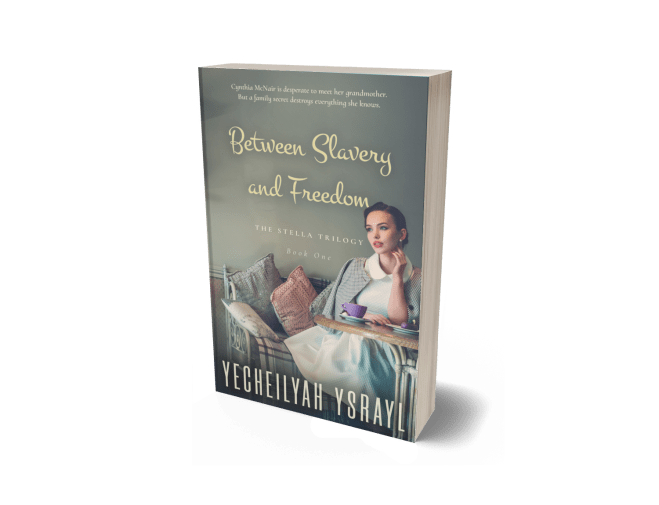
Preorder Stella: Between Slavery and Freedom today.
Don’t forget to pick up your copy of book one in The Stella Trilogy. Something tells me you’re gonna need something to read 😉
I am getting book one in The Stella Trilogy ready for its March 24th release. Preparing this book led me to notice the one thing about my books I had neglected and the one thing Self-Publishers overlook when publishing print books.
Not all Self-Published books look mediocre because of poor cover design and editing. Lots of Self-Published books have excellent covers and are packaged well on the outside.
But there is one thing that separates most Self-Published paperback books from Traditionally Published paperback books in terms of quality.
I am talking about typesetting.
“Typesetting is the process of setting text onto a page. In this stage, which occurs towards the end of book production, the typesetter arranges the book’s interior to create the best reading experience.”
– Reedsy
The key is to have a Self-Published book indistinguishable in quality from high quality Traditionally Published and Independently Published books. The way the author or book designer arranges the text on the page has a lot to do with this.
Here are some suggestions for improving typesetting (if you are not paying someone to do it):
Don’t space your words out so much. You don’t need to double-space to that extent. You will know you have too much space if the text looks light. But also, don’t squish them together too tightly either. You will know this if the text looks too dark. (Try maybe 1.5 spacing).
There’s no need to double-space after periods. This practice came from the typewriter when characters were the same width, but with modern computers, there’s no need to do this.
The first paragraph of a chapter should not be indented. Subsequent chapters in a fiction book can be indented. Nonfiction books use a block style instead of an indent, where there is no indentation on the next line.
Don’t forget to add page numbers.
In fiction writing, the dialogue starts on a new line every time a new person is speaking, should be enclosed with quotation marks, and with each new line indented.
Wrong:
“Oh my gosh, Nora, really?” Lisa rolled her eyes. “I’m just saying,” debated Nora, “that word gets you lynched where I come from.”
Correct:
“Oh my gosh, Nora, really?” Lisa rolled her eyes.
“I’m just saying,” debated Nora, “that word gets you lynched where I come from.”
If you are not sure about font, serif font is a good choice.
Set your paragraph alignment to justified. Justified means the left and right edges are straight. This looks neater and is easier to read.
Make sure your trim size is appropriate for the size book you want to publish. The size of a typical novel is 6×9, but you may want your book to be shorter in size. Change the trim size in word by going to Layout > Size.
Adjust your chapter headings (you do have chapter headings, right??), so they are not too far down the page.
A new chapter starts on a new page.
When uploading your document to KDP, consider uploading a PDF copy of the MS, not a Word Doc.
Make sure your paperback book is not just edited but also formatted. You can use formatting software or pay someone to arrange the text for you. I prefer to pay a professional to do all this for me after the book has been edited.
It may seem small, but if you are Self-Publishing a paperback book, good typesetting makes for easy reading. This is one of those behind the scenes things that readers only notice if it’s done wrong. No one would have paid attention to the man, eating, and drinking air in Tyler Perry’s A Fall from Grace if there was food on his plate and water in his glass.
The same applies here. Readers care about the story. They are not going to pay attention to the typesetting unless it is so out of sorts it becomes distracting.
If I open your paperback book and there’s enough space for me to write a whole diary entry between paragraphs, or it looks like a DIY your little brother put together, I am going to notice it.
It is not always a bad book cover or poor editing that brings down the quality of some Indie books. It is the typesetting or the way they print the text on the page that gives the book away.
Want more Indie Author Tips? Visit the Indie Author Basics with EC page here!
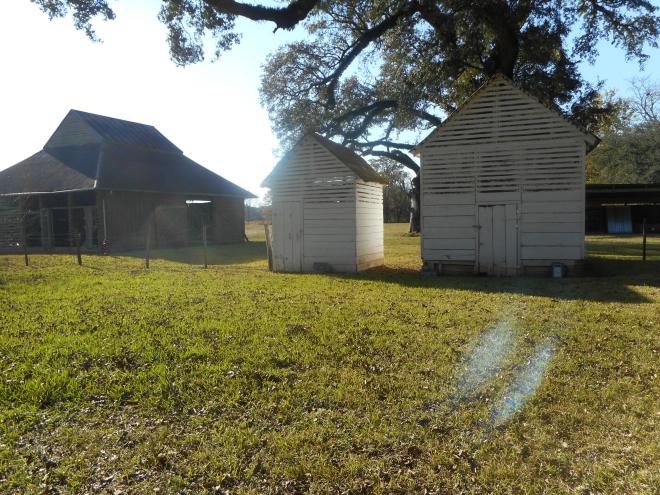
Cane River Creole National Park – Oakland Plantation, Natchitoches, Louisiana, November, 2016.
Since the meat of book one focuses on what life was like for a little girl, and then a young woman, growing up in slavery, the bulk of my research had to do with reading slave narratives and studying enslavement through the eyes of women and children.
Between Slavery and Freedom centers on Stella’s enslavement on The Saddler Plantation in Louisiana. As I introduce us to the first Stella, she is a six-year-old girl enslaved with her mother, Deborah. At this age, she is not aware that she is living property, which was typical for some enslaved children in their early years. She plays with the other children, including the slave owners’ daughter, but she does not yet understand the value of her flesh, that she could be bought, sold, traded, transferred, deeded, and gifted. Stella describes the plantation as a “big family.” She loves running through the dirt and the way it feels on her toes. She talks of childish things like eating sweet cakes, playing with Miss Carla, and trying to convince Mama, she touched the sun.
“One time, I made it where I touched the sun. It wasn’t even hot either. It didn’t feel like nothing but air. I told Mama the sun was tricking us.
“And how it do that?”
“Cause Mama. I touched it, and it ain’t burn my finger none. It feels hot, but it ain’t really.”
– Stella, Between Slavery and Freedom
Historically, enslaved children who had a “childhood” in this way realized their status gradually. Their awakened consciousness may have been signified by seeing a family member sold for the first time or being sold themselves. The research points to ten as the age where the enslaved child knew and understood that he or she was property, except in the circumstances, as I have mentioned. As soon as they were old enough, the enslaved child’s life changed, and they realized that their lives as enslaved differed greatly from the lives of the white children they once played with as small children.
Slave-owners raised southern white youth as enslavers in training. Sometimes slave-owners gifted their children an enslaved person as a pet (sometimes it was the same child they played with). Literature also played a role in the training of southern youth to not only accept slavery as a regular part of society but to prepare them to own slaves of their own. Examples of such books is The Child’s Book on Slavery; or Slavery Made Plain. In a chapter called The Duty of Learning about Slavery, it states:
“if slavery is good, we ought to help it forward…”
In a chapter called Does Color Make Slavery, it states:
“Moses and all his people, I have said, were slaves in Egypt, but they were not colored people.”
This explanation was to try to explain to the children that slavery wasn’t based on skin color, and it is a lie. Egypt is in Africa. Moses and his people were “people of color.”
In a chapter called What is a Slave, the author compares the enslaved to a horse, saying:
“Perhaps your father has a horse. That is his property. He has a right to make the horse work, only he should treat him kindly and give him good food. If the horse is his, nobody has a right to tell him he must not use the horse so. And then, if he thinks it best, he has a right to sell the horse to somebody else. Nobody has a right to forbid him. He need not go and ask even the horse, if he may have him plow the garden, or draw the wagon, for the horse would not understand him, and could not speak to him, and will never grow so old or so wise, that he can understand our words, and talk himself.”
Speaking of literature, another part of writing book one was reading many slave narratives, including Frederick Douglass An American Slave, and Up from Slavery. Other books included When I Was a Slave: Memoirs from the Slave Narrative Collection, Bullwhip Days: The Slaves Remember, and Remembering Slavery: African Americans Talk About Their Personal Experiences of Slavery and Emancipation.
Cane River Creole National Historical Park
Cane River Creole National Park – Oakland Plantation, Natchitoches, Louisiana, November, 2016.
“Some people have to take the cotton and pick out the seeds, and others have to spin and weave. They don’t do nothing but spins and weaves. Some people even had to turn the weaves into threads.”
– Stella, Between Slavery and Freedom
More profound than this is my visit to a former slave plantation at The Cane River Creole National Historical Park in Natchitoches, Louisiana.
You might ask yourself why anyone would want to visit such a place. I was writing about people living on a slave plantation and what better way to get inside their heads than to visit one.
Originally called Bermuda, the founder of Oakland was Jean Pierre Emmanuel Prud’ Homme, who began farming the land in 1785 and received a Spanish land grant in 1789. The land’s first cash crops were tobacco, indigo, and cotton. The Prud’ Hommes were the first family west of the Mississippi River to farm cotton on a large scale.
Cane River Creole National Park – Oakland Plantation, Natchitoches, Louisiana, November, 2016. Slave Quarter turned home of Sharecroppers
“Down in the quarters, every family had a one- or two-room log cabin. Mostly one room though. We had mattresses filled with corn shucks. Sometimes the men build chairs at night. We didn’t know much about having anything, though. There were a lot of cabins for the slaves, but they weren’t fitting for nobody to live in. We just had to put up with them.”
– Stella, Between Slavery and Freedom
After the Civil War, sharecropper and tenant farmers continued to live on the land until the 1970s, and slave quarters became homes to sharecroppers later. The people worked twelve hours a day, six days a week. Seeing this with my own eyes put it into perspective how the south had reconstructed slavery by returning land to former slave owners and putting former slaves back into the fields under another name. Slave codes designed to control the enslaved became black codes intended to control freedmen, and cotton pickers became sharecroppers.
Martha Ann, an enslaved Laundress, worked in this wash house in the 1850s. In the 1940s, her descendant, Martha Helaire, earned $4 an hour working here as a Laundress. All we have to do is walk a few steps to the washer and dryer.
I blogged about this visit years ago. Get the full picture and see more pics by revisiting that post here.
Living on 40 Acres of Land
Finally, part of my preparation for book one also included where I was living at the time I started writing these books.
At the time I released the first book in this trilogy, my husband and I lived in an old house owned by our elderly cousin on 40-acres of land. Over the years, we planted a garden on the property, built a chicken coop and raised chickens, owned several dogs, goats, and even a horse. My grandmother-in-law also recounted stories of when she and some cousins picked cotton on this land.
The elderly cousin and her father built the house we rented many years ago. It was an old house and an old land. It was easy for my overactive imagination to envision what it would be like if we were not renting this house from our cousin; if we were not free to live life on our own terms; if this was not the 2000s, but the 1800s, and if we were not free but enslaved. I walked the property, breathed the air, and looked up at the trees. I had dreams of black people hanging from those trees and visions of people trying to escape.
We lived on that land for five years, eventually moving away in 2015, and I had a completed manuscript.
Stella is a work of Historical Fiction and is distinctive in its focus on one woman’s road to self-discovery, against the backdrop of the African American fight for justice, racial equality, and freedom. The 3-Part series focuses on the history of one family in their struggle for racial identity. We discover in this Trilogy how three individuals living in separate periods strive to overcome the same battle, carefully knit together by one blood.
These books were first released in 2015 and helped elevate my writing to another level. These were not the first books I had ever written. Still, they were the first books to appeal to people outside of my circle and were my first Historical Fiction books.
I took the risk of removing them to get them re-edited, re-formatted, and the covers recreated.
I am happy with my decision and even prouder of this work. I get to relaunch these books and reach more readers of African American Historical Fiction. I am hoping to at least sell 50 copies of book one to start (at least 25 ebooks, 25, print books), and I hope you can help me with that!
Stella: Between Slavery and Freedom
In book one, Cynthia McNair and her boyfriend, Alex, express some racists’ feelings toward blacks. They visit Cynthia’s Grandmother Sidney McNair, who recounts the story of her ancestor, a slave named Stella Mae. Cynthia has no idea of her African ancestry or how deep this rabbit hole goes.
Book one is available now for preorder in digital and print. Release day is March 24th.
The preorder price is 99cents but will go up after release, so you want to take advantage of this.
Preorders are also available in paperback through my website. Paperback books are signed and will ship the first week of April.
*If you already read this series, you should know book one has an alternate ending! The story is the same, but the books are better polished, and each book flows smoothly into the next book. This time, while the books can be read alone, they are much more in a series format. You will want to read all three books to get the full picture. Well worth re-reading!
This song is deep. If you can’t see the video, look it up in your country. It’s called “Brenda’s Got a Baby” by Tupac. The song is based on a true story. In March of 1991, The New York Times published an article about a baby who was saved by maintenance men from a trash compactor (umbilical cord still attached) where his 12-year-old mother put him. The maintenance men heard the baby’s cries and called the police—the baby was ultimately placed in Foster Care.
The girl got pregnant as a result of being raped by her cousin. The inspiration for the song came when Tupac read the story in the NYT when he was filming the movie Juice. They filmed the music video in January 1992.
This isn’t the first time Pac’s done this either. He dedicated lyrics to Robert “Yummy” Sandifer, the 11-year-old who died in Chicago and garnered National Attention (the catalyst for the tearing down of the Chicago Projects, read more about him in my post here.) And the killing of Latasha Harlins, a 15-year-old Black girl killed by a Korean store owner in 1992, where he dedicated the song “Keep Ya Head Up”, saying in his sophomore album, “because a bottle of juice is not something to die for.” Latasha’s death, along with the beating of Rodney King that same year, became detonators of the 1992 Los Angeles riots.
Like I said on this blog before, black music and television are also part of black history. I put the most powerful lyrics (in my opinion of course) of the song in bold below.
“Now Brenda’s belly is gettin’ bigger
But no one seems to notice any change in her figure
She’s 12 years old, and she’s having a baby
In love with the molester, who’s sexing her crazy
…he left her, and she had the baby solo
She had it on the bathroom floor and didn’t know so She didn’t know what to throw away and what to keep
She wrapped the baby up and threw him in the trash heap…”
I hope you are all doing well amidst this Coronavirus mess and that you are safe. I had an emergency to take care of this morning that did not allow me to access my computer and my phone died, but for those of you wondering, yes! LitMag 2020 still releases today!
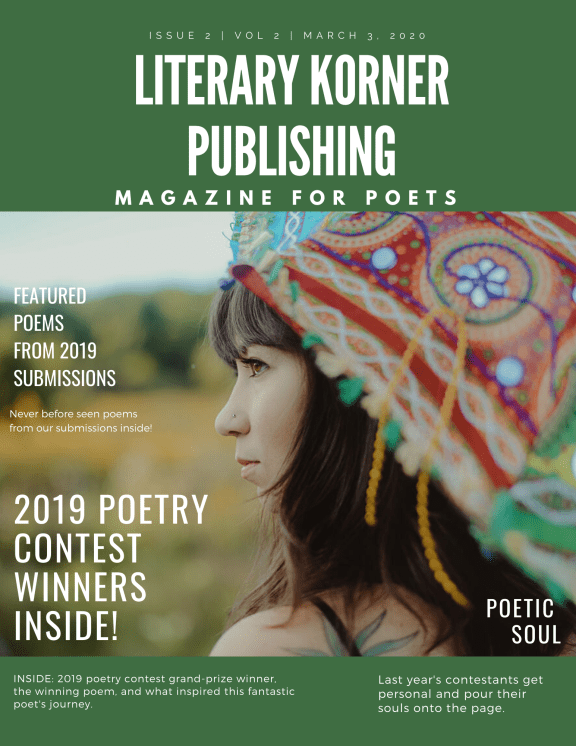
LitMag is the Literary Magazine for poets I established to feature, promote, and highlight the winners and contributors of “Yecheilyah’s Annual Poetry Contests.” It grew out of a desire to give the poets another platform to use to showcase their work outside of this blog and social media. The mag is still in its early stages of development but who knows what it can become.
LitMag 2020 is Volume 2, it is out in digital and print and available on the site (link below). This year we are featuring winners and contributors from our 2019 contest. Inside: Poems from Chanelle Barnes (she’s on the cover!) BuddahDesmond, Dondi Springer, Kiyana Blount, Jahkazia Richardson, Zerahyah Ysrayl, Karen Abah SoFloetic Jones, Ivy Mae Tolentino, and Michelle Stevens. Special thanks to Lisa W. Tetting and Tehilayah Ysrayl for their assistance with last year’s contest.








 The PBS Blog