“Come celebrate
with me that every day
something has tried to kill me
and has failed.”
– Lucille Clifton
Last week, on Saturday, October 3, 2020, I buried my mother.
On Tuesday, September 22nd, we learned she might not make it. That night, I spent the night in the basement on the couch watching Grey’s Anatomy episodes with a glass of wine. I couldn’t sleep, but you will inevitably fall asleep on the sofa when you are downstairs in my house. We’ve had the couch for a while, and it has claimed many victims who promised themselves it was not comfortable enough to tame them. I also lost service down there, and while I drifted, my phone rang and rang with no success.
Finally, I went upstairs, and my phone rang again. My heart dropped. There is only one reason people call that early. I accepted my sister’s call.
“Why are you calling me so early?” Although I already knew the answer.
“It was the twenty-third of September. That day I’ll always remember, yes I will ‘Cause that was the day that my mama died.”
The next day, September 24th, my aunt, my late dad’s sister, also passed.
I didn’t talk about it, but my Uncle John passed earlier this year on May 28th, two days after my birthday, and on June 2nd, a dear friend and brother passed.
The world also lost Kobe Bryant, Chadwick Boseman, and Thomas Jefferson Byrd, best known for his role as Luther from Set It Off. He passed away the day we buried my mother.
I need no more reminders of how fragile life is, and that’s what sticks out to me the most in my time of silence as I seek to process all this death.
I think we are all aware of the delicacy of life, but it becomes much more real when a loved one passes. It is then that we realize how insignificant we are and how precious we are, too. The insignificance is the weakness of our flesh, how it so easily topples and breaks down. The preciousness is the breath of life, without which we are lumps of clay.
It made me think about how we treat each other. It wasn’t until Yah breathed into Adam the breath of life that he became a living being. We are nothing without this power, yet we treat each other as if the breath pulsing through our veins differs from someone else’s. We treat each other as if the Almighty can’t call our spirit back at any moment.
What right do I have to mistreat someone when I return to the Earth just as they will? What right do I have to judge someone’s life or mock their pain when I know that I bleed just as they do?
What right does any of us have to think we are better than anyone else when the sun rises and falls on all of us, righteous and wicked alike?
We sometimes make so many promises to one another, such as this. We promise to be there for one another, we promise to keep in touch, and we promise to appreciate the time we have.
But these promises do not last and are only remembered at the next funeral.
Our lives are like the wind, a breeze that comes and goes. How I wish we could be consciously aware of our fragility as we live and not only in death.
Today is Throwback Thursday, and I want to revisit the discussion over the ISBN. I have not given any Indie Author tips in awhile so let’s do it.
What is an ISBN
The short definition is the ISBN is a unique number used to identify a book.
The code captures information about the book’s publisher, title, language, edition, and version. The first form of the ISBN was introduced in the 1960s by Whitaker & Sons Ltd, the British National Bibliography, and the Publishers Association, who set up the Standard Book Numbering Agency (SBNA) British publications.
The SBA then became the ISBN (International Standard Book Number) in the 1970s. It is a group of symbols that identify each book title as a unique product. The number consists of ten digits divided into four groups, usually separated by dashes or spaces, each group having a specific function.
Magazines, academic journals, and other periodicals do not get ISBNs. Instead, they are issued 8-digit ISSNs (International Standard Serial Numbers).
Purpose of the ISBN
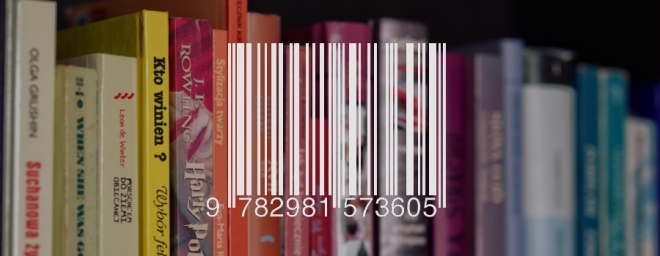
Image Cred. CanamBooks
The ISBNs principle purpose is to make the identification of any book possible.
ISBNs are not necessary for ebooks because Amazon will automatically assign the ebook an ASIN, Amazon Standard Identification Number. It’s a 10-character alphanumeric unique identifier that’s given by Amazon and its partners.
If you only intend to give copies of your book to family and friends, you don’t necessarily need an ISBN because you’re not selling the book. However, if you want to sell paperback and hardcopy books to bookstores, libraries and want readers to access it worldwide, you need the book to have an ISBN. Most retailers require ISBNs to track book inventory. Without an ISBN, you will not be found in most book stores, either online or down the street from your house. An ISBN is your first step to ensuring that your book is not lost in the wilderness.
Authors in the U.S. have two choices. Receive a free ISBN given by Amazon, Lulu, or POD (Print on Demand) of choice, or purchase an ISBN from Bowker.
Free ISBN
The advantage of the free ISBN is the author saves money. This is an option for new Self-Publishers just looking to get their feet wet. But while it’s easier to get a free ISBN, it comes with some disadvantages.
With a free ISBN, you are not technically the publisher of record. Amazon, Lulu, or whichever service issued the ISBN is the publisher.
Bought ISBN
In the U.S., getting your own ISBN is not free, and since each version of your book would need a separate ISBN (including if you want to change the book’s publisher, book title, or translate the book into a different language…authors also cannot reuse an ISBN), it can get costly.
But it’s worth it.
The advantage of owning your ISBN is that you own the rights to the book. You have control over the metadata of the book—the descriptions and categories that help libraries, bookstores, and readers worldwide discover your book and decide whether they want to purchase it. Buying your ISBNs and registering your titles ensures information about your book will be stored in the Books In Print database, opening up a world of possibilities that your book is listed with many retailers.
How to Get an ISBN
In Canada, the ISBN is free for Independent Self-Published Authors and Publishers who are Canadian residents.
If you are in the U.S., you should only buy an ISBN from Bowker, the ONLY official U.S. ISBN Agency.
If you plan to write multiple books, it’s best to choose the ten-block option as it is the most cost-effective than purchasing one ISBN. It also makes publishing the next book easier as you can now omit the cost of the ISBN from your budget for the new book.
If you only plan to write one book, though, you certainly can buy one ISBN. Do keep in mind that even if you are writing just one book, you may want to create several versions of that book (hardcopy, paperback), in which case the 10-block can still come in handy since you need a new ISBN for each version of your book.
What is an ISBN and Do I Need One?
An ISBN is a unique number used to identify the book and its data and sell hard copies worldwide. In the U.S., free ISBNs are an option but do limit the author’s ownership. No, you don’t need an ISBN for ebooks sold through Amazon because they will be assigned an ASIN anyway. And no, you don’t need an ISBN if you do not plan to sell the book.
Yes, you need an ISBN if you are publishing a paperback/hardcopy of the book, and you want the book to sell at stores, libraries, and be available worldwide. No, you do not have to purchase an ISBN through Bowker, but it is strongly recommended that you do so you can be listed as the publisher and reap the benefits of owning the metadata. No, you cannot reuse the ISBN, and yes, you need a different ISBN for each version of the book.
This post is longer than I would like, but I think the message is necessary.
If you’ve been following me online for any significant amount of time, you know I am always saying thank you or reintroducing myself to new readers. I do this because of my firm belief in the phrase, “people don’t have to support you.”
Let me tell you a story.
My husband was driving, and I was looking out the window of the passenger’s seat as we passed by the brick houses, mansions, and condos of downtown Atlanta. “This probably where most of the celebrities live,” I joked. We talked about how movies never show the city’s complete image by filming movies in less wealthy areas. Since we are both from Chicago, we talked about Chicago films where we didn’t recognize the city because it was on the side of town we have never lived.
As we drove, we passed by a fancy-looking hotel where a man stood. He leaned against his suitcase, a white sign on its top with black ink that read: “I lost everything.”
My smile faded, and my heart felt heavy as I realized he was homeless. He didn’t look like those fakes that try to scam people out of their money, either. Something about his vibe told me he was not joking. He had really lost everything.
The US economy was already bad, but since the COVID-19 Pandemic, things have gotten worse. People are out of jobs, out of money, out of homes, and out of hope. Any little they scrape together is reserved for only the most essential items. If someone spends money buying books or t-shirts, or anything that is not greatly essential (okay well, books are essential to me but I mean, like food), it means so much more to them, and they deserve a thank you.
Why EC?
Because they didn’t have to do it and sometimes, they couldn’t do it, but they invested in you.
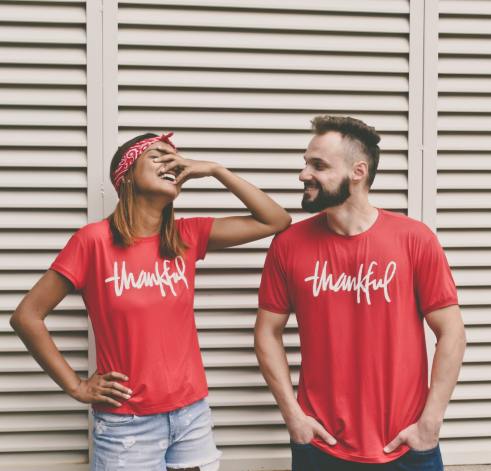
Photo by Lucas Lenzi on Unsplash
Entrepreneurship has been on the rise a lot lately, and as an entrepreneur, I think that’s a good thing. I have always stood for the underdog and will still rally around the concept of Independence. There is a humility about small, independent businesses that I love. Plus, every large company started as a small business. And since the deaths of Breonna Taylor, Ahmaud Arbery, George Floyd, and the countless black deaths, it has encouraged more people to support black-owned businesses and independent businesses.
This awakening means that while many people are struggling, many people are also thriving even amid this Pandemic. However, I am disappointed to see a lot of bullying among entrepreneurs, both large and small. Some people are shaming people with 9-5s when truth be told, most entrepreneurs in this economy have 9-5s, and their business is the real side hustle. That or their spouses have 9-5s. There’s nothing wrong with this, but some people think there is. People also throw shame when they try to bully people into supporting them.
Bully others into supporting them?
It means making people feel small and insignificant for not buying your services or product. It means threatening to cut people off because they didn’t support your business. It means neglecting to consider all the other things people have going on in their lives right now and that maybe they don’t have the extra money to spend or perhaps don’t have the time.
Image Cred. Ashkan Forouzani on Unsplash.
Ignore social media posts for a second and think about what someone may go through behind the scenes.
Maybe they cried their eyes out this morning.
Maybe they prayed on their knees, drowned in tears.
Maybe they were going to lose their home or apartment or children.
Maybe they lost their job, career.
Maybe a family member died.
Maybe people have other things on their mind that take precedence over buying your bar of soap.
And if you think someone’s being fake for wearing a smile through their storm, then you need not look passed the smile of Chadwick Boseman, who battled cancer while filming movies and never complained.
Image Cred: Creative Commons License | Chadwick Boseman and Lupita Nyong’o speaking at the 2017 San Diego Comic Con International, for “Black Panther”, at the San Diego Convention Center in San Diego, California. | Gage Skidmore from Peoria, AZ, US
I watched my sister-in-law battle and eventually perished from cancer. My dad, too, so I know what Chadwick did was not easy from personal experience. And while everyone is praising his silence now, that is not how we treat the “regular everyday people,” we know in actual life who battle in private. We call them phony for not opening up as we think they should. Sometimes people don’t talk, not because they are being fake or secretive, but because it’s just none of your business. Let’s allow people to give their testimony in their own time.
My point in all of this is that no one is obligated to spend money with a business only because it exists. Anything that anyone chooses to give, including time and information, is a gift. I always say “thank you” because people don’t have to support me.
People support businesses that offer something they need, whose message or value system aligns with their own, helps them solve a problem and companies they trust. Someone might enjoy eating bread, and you may launch a bread business, but that bread lover is still not obligated to support you. Maybe over time, once you’ve gained their trust and they’ve sampled your product, they may try it and when they do, say thank you.
Why EC?
Because they didn’t have to do it, so show some gratitude.
To better conclude this point, I will again turn to Tyler Perry as an example.
For the record, this isn’t about Perry’s personal life. I will not comment on him dressing up as a woman, Madea, or his elite status because its none of my business. I am commenting on some basic business practices I see from him as an outsider looking in that many newer entrepreneurs can learn from. Everything else is for an entirely different conversation.
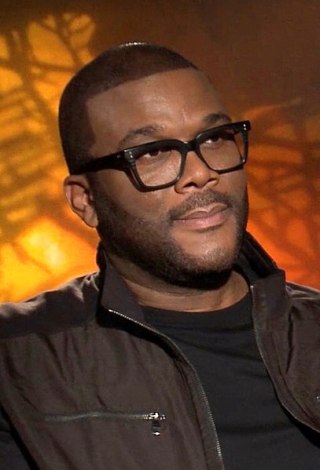
Image Cred. Creative Commons License | AMFM STUDIOS LLC | Filmmaker and actor Tyler Perry being interviewed in 2016.
From a business perspective, you see the same stories and the same actors in Tyler Perry’s films because Perry has a good understanding of his targeted audience. He knows the persona of the people who like his stuff, and he focuses on giving them what they want. Many beginner entrepreneurs can learn from this. Instead of guilt-tripping people into supporting your business and trying to sell to everyone, find your targeted audience or that specific group of people you want to reach based on shared interests and market and direct your attention to those groups.
This means that if only five people like your post, that’s a good thing because chances are those five people are genuinely interested in what you offer. Listen, I’m a damn good writer. I know this to be true. But I also know it to be true that everyone doesn’t want to read what I write, and that’s cool because I am not for everyone and everyone is not for me. I work to serve my audience no matter how small, and I appreciate all the support and time my people invest in my writing.
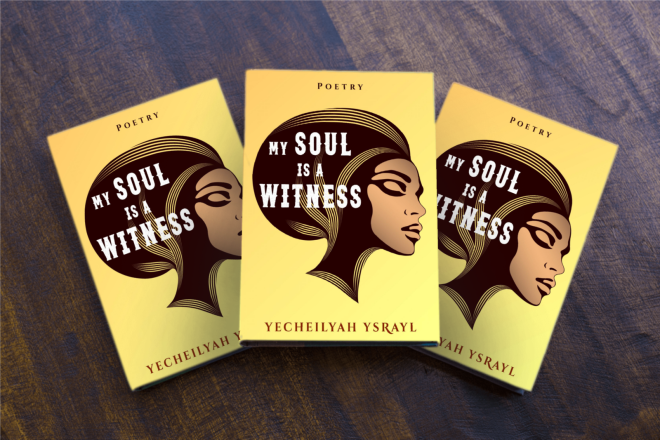
My Soul is a Witness, a collection of poems that reminds us that there is still hope in our darkest moments. Nothing we go through is without a purpose. No pain we suffer, and no trial we experience happens without reason. It all ministers to our education and the development of ourselves into the people we are ordained to become. It helps to cultivate in us a spirit of patience, faith, humility, and self-control.
Wherever you are in the world, welcome. I have been MIA a minute, and I’ve noticed an uptick of Freedom Readers to this blog. You guys are fantastic.
If you have not already done so, be sure to visit the About Page to learn more about me and this blog.
My name is Yecheilyah, pronounced e-SEE-li-yah, aka EC. It is a Hebrew name meaning Yah Lives. In case you are wondering, I was not born with this name. I follow in the footsteps of Maya Angelou, Ntozake Shange, Sonia Sanchez, Amiri Baraka, Malcolm X, Muhammad Ali, Kwame Ture, and others who are not widely known by their birth names.
At some point, I imagine these people, like I, have awakened to a truth that demanded a better version of themselves and a better way of living. Not only did they strive to change their perspective on life, but they changed their names to fit the newly developed person, they became. (I am drafting an article called “The Power of Your Name,” about the vital role our name plays in author branding. I should have it ready for you sometime next week).
Speaking of growing, this blog is so much more than what it was. It is the primary platform from which I share my work and the work of others. From our home office, living room, or bedroom, we can reach people worldwide. Isn’t that amazing? While I don’t intend to blog forever, I hope what I share here serves a purpose. With so many people home now because of this global pandemic, I take my role as writer/author/blogger even more seriously than ever. I know now more than any other time the power of the written word and its capability to change lives.
This blog runs mainly by a few weekly posts you might want to know about.
Wednesdays
The Women with Blue Eyes – I usually author poetry and black historical fiction, but I have a secret love affair with Fantasy and Sci-Fi. My first published novel (The Aftermath, 2012) was Sci-Fi. I got interested in writing in this genre after reading George Orwell’s 1984 in 2008.
The Women with Blue Eyes is a free fantasy story I have been sharing freely here on the blog. When Tina’s nephew Ronnie died, it traumatized her. It wasn’t just that he died. It was the way he died. After taking custody of Ronnie’s sisters and brother, Tina experienced supernatural phenomenons that eventually led to therapy and hallucinogenic suppressants. This didn’t help.
She meets Azbuga, an Archangel sent to tie the missing pieces together, still connecting her to Ronnie’s death.
Paschar (pu-shar), is the angel of vision, once tasked with guarding the veil between the physical world and the heavens, between consciousness and unconsciousness, between awareness and illusion. She once saw the beauty of visions from the Almighty and projected these into human consciousness. Now, she is limited, capable only of seeing physical beauty, extracting energy from mortal man, and projecting illusions. Paschar has fallen, and in a jealous rage, she attacks black men for their energy. How dare he choose them over her?
Can Tina, Jason, and Az defeat Paschar and her Legion once and for all? More black men are dying, and you can’t fight spiritual warfare with physical weapons.
This series is divided into two parts, and I am sharing freely part one, chapters 1-20. Click here to read chapters 1-17. Chapter 18 publishes next week. (Note: The Women with Blue Eyes is a Rated-R Fantasy series. You should know there is some profanity for those sensitive to cursing, and adult language).
My intent is to use this platform as a motivation for completing the series and one day turning it into a full-length novel.
Thursdays
Throwback Thursday Jams – If I was on the edge of a cliff, music would be one force pulling me back from jumping.
Okay, well, that’s a lil dramatic but, yea. I love music. Tee Hee.
So while I’m a serious person, I am also a silly and musical person. I love R&B and old school soul, and Thursdays are all about introducing you to some of my favorite throwback jams. Now, when I say throwback, I don’t mean that they are all technically throwbacks. I post music ranging from Old School (60-80s), the 90s (my fav), and the early 2000s. And sometimes I might post something new-ish because I just like it. Check out the Throwback Thursday category to jam out.
Fridays
Black History Fun Fact Friday -Black History Fun Fact Friday is a weekly blog series of articles focused on Israelite/Black/African American history. While the title of the series includes the words “Fun Facts,” not all pieces are “fun,” in the sense that is is all positive. My intention with this series is to present black history as it is without adding to or taking away from the truth, despite how brutal or uncomfortable it may be to read.
Take Sun-Down Towns, for example. The unfortunate truth is that some all-white communities today are all-white neighborhoods because they were once sun-down towns or cities where blacks were driven out and not allowed to enter after sun-down. Read more about that here.
And while this is a weekly series, we have had no new articles in a few weeks. There’s a good reason for that, and I will let you all know about that exciting bit of news later!! In the meantime, if you would like to participate, I am still accepting black history guest blog posts for this feature. Please click here to learn how to apply.
These are some top weekly posts you can get used to. In between them, I share poetry, quotes, blog, and writing tips I call Indie Author Basics with EC based on my experience as an Independent Author.
It’s almost time for me to change my Avatar’s outfit. It’s getting cooler out! Who’s ready for the fall??
The MacLeans have suffered being thrown off their land, emigrating to the New World, surviving in the forest wilderness, and losing their father Gillan in a bizarre murder. Now, ten years later, the two youngest emigrants will split the family across an ocean.
Sheena pursues a future back in Scotland with her husband Gordon Lamont. Alisdair dreams of university and a chance to reform the political system in the colony that denied him justice for his father’s death.
But the British Empire of the 1830s has yet more obstacles to throw in their path. When the only school in the province only accepts Anglican students, what will Alisdair do? When Sheena finds herself in a role of authority over families like her own, how will she cope with the isolation?
And when both their hopes of peace and stability are dealt a telling blow, how will they stay true to their fighting spirit?
STORM WRACK & SPINDRIFT is a dramatic story of family survival and personal struggle set against social upheaval. While voter enfranchisement was advancing in London, and slavery finally outlawed in the Empire, the tiny stage of rebellion in a backwoods colony farm could still have deep repercussions. Every life is precious, every decision important–which is why the early struggle for Responsible Government and other civil liberties continues to encourage us today.
I enjoyed reading about the MacLean family, especially since the author did an excellent job transporting readers to the era of the 1830s. The descriptions and dialect are authentic, and any lover of historical fiction would enjoy the natural flow of reading. I enjoyed the back-and-forth between Sheena’s experiences in Scotland and Alisdair’s challenges with the family on the farm.
I sympathized with his conflict with wanting to study law but not wanting to leave the family who needed his help. The characters are undoubtedly the stars of this book. I love children, so I am fond of Mairi and her bond with Grannie. They are so sweet together, and even though Neil (Mairi’s dad) is sad, the author does an excellent job portraying his misery. Speaking of grief, prepare yourself. This book has its moments.
I was glad to hear about the Slavery Abolition Act, which ended slavery in most British territories and freed over 800,000 enslaved Africans in the Caribbean, South Africa, and a small number of people in Canada. It received Royal Assent on August 28, 1833, and took effect on August 1, 1834. (Henry, 2020) The government compensated slave owners for the value lost from freeing enslaved people, and the character Sheena was not having it.
“And is there any proposed fund for the slaves, since by abolishing slavery, we admit we had no right to own other people in the first place?”
“Well no—”
“No, of course not.”
I liked the detail about Rhoda, Sheena, and Gordan’s widowed housekeeper participating in abolitionist demonstrations and the mention of Wilberforce’s death. William Wilberforce, a British politician, philanthropist, and pioneer of the anti-slavery movement, died in 1833. By describing Rhoda’s relationship with Wilberforce in detail and illustrating how his death affected her, the author was able to relate Wilberforce to the family on a personal basis.
While I enjoyed this story, for me, it cannot be read as a standalone novel as marketed. As the third book in the series, I felt a bit lost initially because it felt like something was missing, such as everything leading up to the MacLean’s family’s life on the farm.
The epilogue is intriguing, and I wonder if the author would consider adding another book to the series, possibly centered on the experiences of Mairi.
I’ve been working on this collection of poetry since I released I am Soul three years ago. So much as happened in that time that most of this year feels like it happened years ago. It feels like Kobe Bryant died in 2019, but then I remember that tragedy happened earlier this year. I have to remind myself that Kobe’s death is how we opened the year!
It feels like I went to Spain for the first time last year, and then I realize that it was just this past February.
Sometimes, it feels like Friday, and then I remember it is only Tuesday. I find myself looking at the calendar more just to remind myself what day it is.
This is 2020.
The most significant change is the COVID-19 pandemic. Usually, we focus on our individual struggles, trials, and tribulations, so it’s funny to think about the world around us being just as chaotic as our internal struggles. As if a global, deadly virus isn’t enough, the rest of the world is just as upside down.
Black men and women continue to be gunned down in the streets. Historical monuments are being demolished as people awaken to the truth of its origin. The traditional school experience for our babies is all but gone. Sports games do not have an audience.
Oh, and we are all walking around wearing masks and shaming people for not being “productive,” enough during a pandemic.
*Queue George Orwell’s 1984*
We are eight months into 2020, and I sense we haven’t seen anything yet.
But there is always hope.
There is no better time than to release this collection amid such a revolutionary era. Revolution only means change, and while most of the changes we’ve seen have been negative, there is a lot of good happening too. The good is harder to see because hope doesn’t make the news, but like the wind, it is there. I had my first school visit this year, where I spoke to 15 ELA classes about writing. I also had my first keynote invite and welcome this year by the Queenz Circle of ATL Bookclub before the pandemic took away the freedom of face-to-face events.
A lot has happened this year not just for me but also for you, so here’s what I’ve learned.
I’ve learned nothing we go through is without a purpose. No pain we suffer and no trial we experience happens without reason. It all ministers to our education and the development of ourselves into the people Yah ordained us to be. It helps to cultivate in us a spirit of patience, faith, humility, and self-control.
I hope these poems are a reminder that in our darkest moments, there is still hope. And I hope this collection will invigorate and renew your soul.












 The PBS Blog