Thursday Throwback Jam – Aaliyah, One In A Million

OK, so I know my throwbacks are not real throwbacks. I’m just 28 so I can only go back so far …lol joke. OK, that wasn’t funny. I do love me some old school tho (We call them “Dusty’s”).

Now, for the 4 people who saw this post earlier, I did have a different song in mind but I changed my mind. Yea, sorry. Now, excuse me while I go lip sing this to my husband.

Book Promotions @ HarsH ReaLiTy…

Calling All Authors and Aspiring Writers! Promotional Opportunities Available on Harsh Reality. Jason’s offers are very reasonable for anyone seeking to increase visibility of their work.

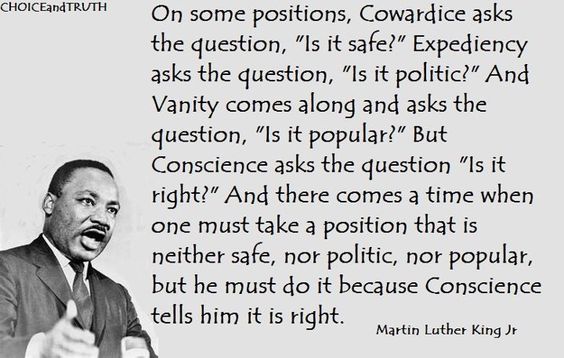
Writer’s Quote Wednesday – Because It’s Right

Welcome to another segment of Writers Quote Wednesday as hosted by Colleen of Silver Threading. Today, I take my inspiration from someone I rarely speak about. I rarely speak about him, not because he wasn’t important, but because I try to speak about people we may be less familiar with and this man, well, we are all familiar with his name.

She reads the bible but does not go to Church. She’s not a Christian.
She doesn’t eat pork but does not call on Allah. She’s not Muslim.
She speaks of black identity but shows love to all men.
She’s not Afrocentricity.
She says the Egyptians were black but she’s not Egyptology.
She says the Israelites were black but she’s not Jewish.
She advocates for positive change. She’s not political.
She’s not….she’s not…she’s not…..

People will always try and figure you out. Why do you say the things that you do? Why do you speak the way that you speak? This quote is a reminder that sometimes there is no agenda. Sometimes truth must be spoken not because it is political. Not because it is religious. Not because it is in popular demand but because it is right. I speak the truth simply because the truth is always right no matter who says it.

********

010516_2129_writersquot1

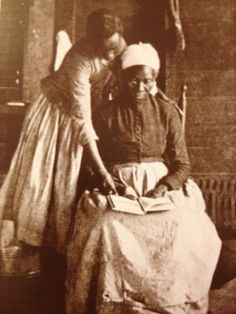
“We Slipped and Learned to Read”

5d25a2da4a0c0310961470f064550418

It is common knowledge that slaves were lawfully restricted from learning to read and write. One less commonly stated fact however, was that slaves were not completely ignorant. They could not read and write English but this did not mean they could not read and write period. As strangers in a foreign land, many African American’s had no knowledge of English or even America itself and thus had to be re-educated. Something they were restricted from as slaves.

It was obvious that slave owners understood that their control over the slave had to supersede the physical. To keep a slave in bondage, not just physically but spiritually and mentally, slave owners knew they had to invent a much stronger rope than one that wrapped itself around the Magnolia. To do this, they realized that knowledge is power and this realization became the beginning of slave codes throughout the United States that put restrictions on slaves learning to read and write. This included, most especially, reading the bible.

However, ironically, it was the reading of the bible and listening to the speech of their slave masters (who often spoke openly around blacks they assumed ignorant) that helped coach slaves into the reading process. The law was specific, reading or even teaching reading both had death penalties. Still, persistent as they were, slaves still found a way to by pass the law, slipped, and learned how to read. For many slaves reading and writing meant, if not physical freedom, mental and spiritual freedom. They could use it as a tool to escape slavery physically or write of the horrors of the institution as did many in the famous slave narratives. The following is an excerpt from a writing done by Janet Cornelius and published by Clark Atlanta University on slaves and literacy:

“Despite the dangers and difficulties, thousands of slaves learned to read and write in the antebellum south. Few left traces of their accomplishments, but 272 ex-slaves who told how they learned to read and write during slavery provide insight into the literacy process within the slave community. For slaves, literacy was a two-edged sword: owners offered literacy to increase their control, but resourceful slaves seized the opportunity to expand their own powers. Slaves who learned to read and write gained privacy, leisure time, and mobility. A few wrote their own passes and escaped from slavery. Literate slaves also taught others and served as conduits for information within the slave communication network. Some were able to capitalize on their skills and literacy as a starting point for literacy careers after slavery ended. Historians of education have drawn a distinction between bible literacy, whose prime motive was the conservation of piety and liberating literacy (slaves used the bible to learn to read), which facilitates diversity and mobility.”

– by Janet Cornelius, Phylon (1960-)

Vol. 44, No. 3 (3rd Qtr., 1983), pp. 171-186
Paper Published by: Clark Atlanta University

Formation

I wasn’t going to comment on this, but I’m tired of hearing about it so I thought I’d weigh in. Hold your breaths. In fact, you may want to click that nice x button over in the top right corner of your screen. This is not something you want to hear.

Colors have always been strong symbols. Today, almost everything can be recognized or interpreted by its color. When you see red you think stop. When you see green you think go, nature, life, wealth. When you see yellow you think sunshine, light, happiness, peace. When you see pink you think girly. And then there’s black.

beyonce-formation-halftime-640x639

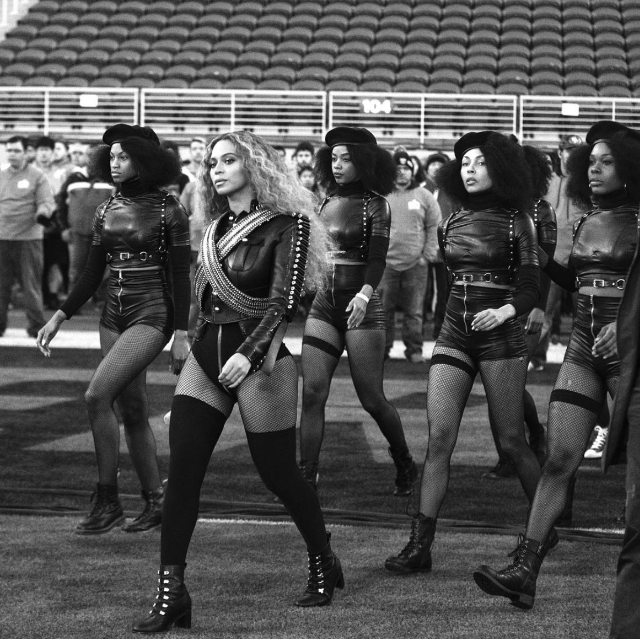
Since the Black Panthers, the color Black has been resurrected to be a symbol of power, strength, and rebellion. Rebellion against a system that has defined Black people as something dark and animalistic since the institution of chattel slavery. Today, black people who wear Black are seen as people who embrace black pride and become symbols for the African American rebellion against unjust systems.

However, everything that glitters is not gold and everyone wearing an Afro is not “revolutionary”. In witchcraft, the color black was used to indicate authority and power. It also symbolizes death, fear, and (wait for it) ignorance. Like any other symbol, when you see the color black it causes a trigger in your mind. For African Americans, it causes us to think about The Black Panther Party or Blackness in its relation to Black pride in general.

solange-crop-promo-mediumlarge

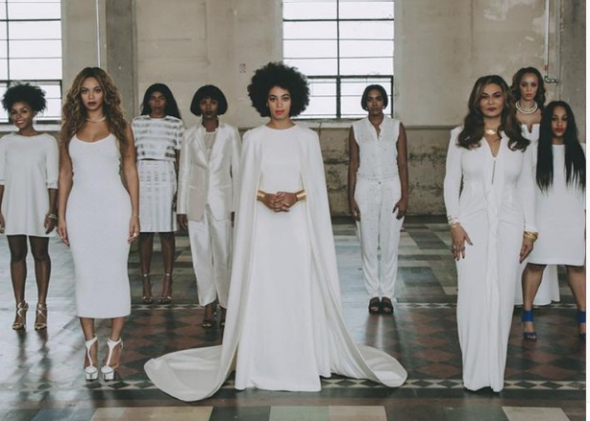
Why is Beyonce’s Formation being compared to The Black Panthers? What you saw in the half-time of the Superbowl was not a showcase of racial pride. It was not an image of strength and courage it was a coven of witches casting spells. This same thing happened back in 2014 when Solange rocked an Afro at her wedding. A group of people who are collectively worth billions of dollars held a wedding in an old crumbly building in New Orleans with chipping paint and stood like statues with blank stares. The whole thing made no sense and was the weirdest thing I’ve ever seen but because they wore Afros y’all praised it like it was something profound.

Am I a hater? Yes. I hate when people jump on bandwagons because of the appearance of something that looks positive but that they have no knowledge of. You weren’t shown Black Power, you were shown Black Cat Power and any Wiccan can tell you there’s a difference. Back in the day people worshipped the Sun and Moon and considered them Gods. Later, these worshippers associated specific animals with them. Concerning the cat, they believed certain Goddesses took the form of cats (cats are very sensitive to spirits), specifically, the Egyptian Goddesses Bast. Not only are cats sensitive to spirits, but black cats were symbolic of magic and darkness after the Goddess Diana (Known as Queen of the Witches) cult was said to have went underground.

By wearing all black, rocking Afros, and throwing clenched fist into the air you were made to believe something profound happened, just the same as when Solange threw an all white wedding. White, a symbol of purification and light. Thus this wedding gave you the perception of purity.


The Bedroom

phx-2bedroom-suite

The bedroom is the most intimate place in the house. It is not a place where everyone is invited in. It is a place of intimacy. Your time spent here is very valuable; it is your place of rest and refuge. The bedroom is representative of your mind.

My sister used this as an example yesterday and it struck a cord with me as something that would make for a much needed discussion. You see, we live in the age of information. No longer is it required to read 5,000 page encyclopedias at libraries. All you have to do now is Google what you want and technology takes care of the rest. We are in a time of knowledge and information. This can be a good thing, but it can also in many ways be a dangerous thing.

Not all information is good information and not all knowledge is good knowledge. Our minds can be so easily cluttered these days with the opinions and feelings of others or distracted by something that mean nothing. Everyone is on a quest to sound more intellectual than the next person and in the end they both give birth to foolishness. Deception wraps its arms around the four corners of the bed and hides underneath beautiful plump comforters that are outlined in gold. But what does your mind really look like? What about stress? What about being so busy that you don’t have time to live? Mental clarity is essential to a person’s overall daily operation. Are you allowing the wrong people, places, and things to occupy your mind?  Is all your business on Facebook?

A bedroom is not a kick it place. It is not a discussion place. A bedroom is an intimate place. A relaxing place. Are you letting everyone in? What’s going on in your place of refuge?

Today, visit your bedrooms. What’s there?

1. What am I doing right now that I can rejoice in?
2. What am I neglecting to do that I know is right?
3. What needs to be evaluated, examined, and then held onto or removed?

Remember, you can’t find rest in a crowded room.

Race and Rights

Malcolm-X-about-men

When did race and rights become separate entities? Since when has the black problem in America not have to do with both race and rights? Dare you to walk the streets of the 1920s and 40s and 50s with your prophet scented blood and expect to transgress the law of separatist signage. That “Whites Only” sign ain’t there by mistake. The one that says Negroes like you must order from the back door. Yo money may be colored like your skin but green has always been worth more than brown. I don’t like to have to go back to slavery. After all, it ain’t like I lived it and yet I can never forget what it feels like. But since we on the subject of feeling, I’m feeling like the same blood pulsing underneath my ancestor’s skin now pulses through mine so what they felt I feel it too. Perhaps I too was a slave long ago and its just taken me this long to find my voice. So, therefore, let me tell you something about what it means to be a slave. A slave is never granted the same rights as a free man, not a physical slave or a psychological one. An inferior race is never granted the same rights as a superior one. Thus anything that’s got to do with rights has also got to do with race. For the Black problem in America has always been centered around identity and always will be. Rights would have never been a problem if the problem wasn’t race. If the hierarchy of the superior and the less superior didn’t exist. If black people never walked around with bywords and proverbs tattooed on their skins there wouldn’t have been a need for them to watch movies in the Nigger Heaven1 of southern movie theaters. Would have been no need of me taking my seat alongside Miss Parks or Miss Morgan all them years ago. A Black Man’s rights and his race are always connected here, like the careful structure of his bones before he emerges from his mother’s womb. It’s the yearning for freedom written in his DNA. Black America’s rights have always and always will be centered around their identity because their problem is not physical it is spiritual. And because a spiritual problem has been long fought with physical weapons the condition of black people in America continues. And so their fight has always been and always will be centered around their freedom.

1. Nigger heaven, n. a designated place, usually the balcony, where blacks were forced to sit, for example, in an integrated movie theater or church as part of Jim Crow Laws.