7 Common Sense Reasons You Should Build an Email List

  1. Direct Communication

Many Indie Authors don’t see the immediate need for an email list until after a book is born. That’s because after a book is published we come to see the pertinent role emails play in driving traffic to our blogs, websites, and increasing revenue. According to The Direct Marketing Association, email marketing on average sees a 4300 percent return on investment (ROI) for businesses in the USA and according to The WordPress Beginner Guide, in our business, email lists get 10 times higher conversions than social media campaigns. One reason is because of direct communication. Also known as Electronic Mail, e-mail has been around forever as a way to directly communicate over the web.

While it’s unrealistic to think all (place number of subscribers here) of your blog followers are going to be reading your content and providing feedback, the hope is that at least half of them are. How do you know? Sure, someone may like your blog post and comment but that’s not a genuine system of measurement. A blog can have lots of followers with only a handful of views or lots of views and only a handful of feedback, and so on down the rabbit hole that is blogging. But then, ahh but then!

But then there’s the email list. Briefly, the email list is not the same as someone subscribing to your blog. When someone follows our blogs via email, they are opting in to receive email notifications of new blog posts. This is not an email list. This is someone following your blog. An email list is literally a list of email addresses and names of people who are highly interested in your content and thus gave you permission to add them to your list. The good thing about the blog is that many of those same blog subscribers can easily turn into email list subscribers. The email is essential for gazillion reasons but mainly, here is a direct line of communication. You can even monitor the open rates of your emails and see which of your subscribers are opening your mail consistently and which of them are not.

  1. Your email list subscribers are your real supporters. This means that they are the people who will actually invest money into your business

I’m not saying that the people who follow your blog or who support you already won’t support you because they’re not on your email list. I am also not saying that every email list subscriber will purchase your product(s) or open your emails. Not at all. What I am saying is that emails are personal. People get flooded with tons of emails a day and for them to give you permission to send them one is a BIG deal. How is it that some authors have people waiting for their next book? Fingers on the Buy Now button? There are many reasons but one of them that I’ve come to notice personally is the email list. I’ve noticed that many of the people on my email list are the same people who put their money where their heart is.

When people give you their email address, they are giving you permission to contact them and to connect with you on a deeper level. As a result, they are more than likely to actually purchase your next book. Not to say you should build one just for that reason, but email lists really narrow it down far as who is really true about their support and who is just doing lip service.

  1. An email list is the only communication asset that you actually own online.

I’m sure we’ve heard this a million times but its worth repeating. Of all the faith we put into Facebook, Twitter, SEO, and other things, email is the only true source of electronic communication. If all of these social networking sites come crashing down, email will prevail.   True story:

Before I really got into social media, before Facebook and before blogging I would send email shouts out to my email list of family, friends, and people who bought my books before. Many of you already know because you are one of them! Remember those days I’d email you on the release of my poetry books? Ahh, the memories.

Anywho, back to the story.

I didn’t know anything about landing pages, Lead pages,  Mailchimp or any of that. Though I’m still learning, I didn’t know a thing. Nada. Zip. Targeting those people already in my email was just common sense. It was the only way I knew to get the word out. I was green to selling books online but sometimes simplicity is wisdom. So, in not having all of the big brain marketing insight, I did the only thing that made sense: I sent promotional shouts out to my email contacts and was unknowingly doing what many email marketing services have you to pay them for.

The only difference is that I was doing it the hard way. It was  my first real stab at getting serious about my work. Once people started to email me for orders consistently (back then I was strictly paperback), I decided to create a website for the first time.

  1. Social Media is the traffic driver to your email list.

One thing I’ve admittedly not done is take as much advantage of my social media pages as I should have. Social Media is not about selling books directly, in my opinion. Obviously, we all want to sell more books online (don’t be phony, you know you wanna sell more books!) but consistently pushing buy my book links gets old eventually. Social Media is about building relationships and making connections. New relationships = visibility and reach. Visibility and reach = readership and readership is the platform.

  1. Feedback

When people subscribe to your email list they can respond to your emails just by clicking reply and give you valuable feedback. Why is it valuable? Remember, these are your real supporters. They can let you know what works and what doesn’t, helping you to create better and consistent content that targets your audience interest.

  1. Every Successful Business Has One

Name one successful business, entrepreneur or otherwise, that does not have an email list opt-in or use the old fashion style of emailing in some capacity, in general? I’ll wait. There are two reasons for this that I’ve identified in my experience dealing strictly with emails (again, before I got into social media and blogging):

#1: Email is the best form of marketing. It’s low-cost and allows companies to easily and effectively spread information about their products and services, both to existing customers and potential ones.

#2:  Our email subscriber list is the real deal. It lets you know if your business is growing or not and for Independent Authors this is massively important. Of all of the Facebook Friends, Twitter Followers, IG followers, AND blog followers your email is the truth. Why is it the truth even more so than your blog numbers? Because its targeted. Meaning, these are the group of people who are specifically interested in your content. Really interested. They didn’t just follow your blog but they took it a step further and subscribed to your personal email list.

If I had 8,000 Twitter Followers (which I don’t lol hee hee), and 1,000 email subscribers, you know what? My real number is closer to that one thousand! This isn’t to say the 8,000 aren’t genuinely interested but that these one thousand are highly likely to support versus the 8,000 because they are already tuned into the content on a personal level. You can even break it down further when you  look at open and click rates. If 1,000 people are subscribed but only 500 open the emails on a consistent basis  then those 500 are even more likely to support. But…

It’s less about the open and click rates and more about the conversion rates. That is, how many of those supporters have we converted into buyers, and how can we  aim our marketing strategies and focus toward the activities that’s going to not just increase open and click rates, but also generate revenue. Again, this isn’t to say its all about the money (because its not, its actually all about the relationship and connection) but keeping this in mind will remind you why you should never buy an email list. Apparently that’s a thing? I didn’t even know what buying an email list was but apparently instead of building a list on your own you can buy one. I’ve even read that you can rent email lists! That’s just lazy. Click Here to learn more about buying email list and why you shouldn’t because I’m getting a headache just thinking about how stupid that is.

But I digress…

So you see, email also makes it easier to track interest and thus, create relevant content:

“According to research conducted by the Direct Marketing Association, 93% of email users have opt-in relationships with a consumer brand, as opposed to 15% on Facebook and 4% on Twitter (according to Chris Brogan, president of New Marketing Labs).”

The point is that email lists remain one way to make it easy to gauge the reach of your support system. Interestingly enough, with all of the advice (and carefully strategic opinions) out there I’m surprised there isn’t more talk concerning how to build and maintain the email list.

  1. An email list gives you the opportunity to connect with people who are not active online or who are technologically deficient

“It’s true that email is fighting with other services for online communication, but it is still ubiquitous in a way that other social media networks are not. If you want to reach the majority of your audience, email is still the safest bet.”

– Smashing Magazine

I talk to my husband all the time about the differences in how I saw technology when I was just a student in Chicago versus being an adult running my own business. Back then Facebook didn’t exist, (Myspace didn’t even exist!) and I didn’t know anything about blogs. Granted, I’ve taken computer courses but although I enjoy technology, I was at a time in my life where I wasn’t into the social media thing. It was just a different world for me on so many levels. However, even though that was years ago, I am always surprised to discover how many people are still not into social media.

Aside from updating their Facebook posts, you’ll be surprised to discover that a lot of people are just unaware of how to browse the web in its basic form, and not just browse the web, but are aware of its many uses. This is where your email list can make a huge difference. Back in the day when I didn’t know much about the online scene one thing I did have was email. It was a big thing back then and guess what? It still is!

“It’s worth noting that people tend to be members of multiple social media websites simultaneously, with varying degrees of involvement, but they usually have only one or two active email addresses. The email address remains the unique identifier online; you use it to log into almost everything, so it would take a lot for it to become obsolete.” (Smashing Magazine)

People who don’t spend their lives on Facebook, Twitter, and other social outlets will have an email address for sure. (I’ve also found that people who are not online are more interested in getting hardcopy, paperback books as well as opposed to digital. It’s always wise to have your books in both formats).

Well, I am off to find something else to do but I sure do hope these tips have helped you. So, go on. Start that email list!

But wait, EC I’m not an expert…

Secret #1: Worried about what to include in your email list? Don’t! You don’t have to know EVERYTHING. No one person knows everything but we all know in part. If you’ve ever been good at something or done something that got you positive results, then you’re an expert at that thing and don’t let any so-called professional tell you any different. Expertise just means knowing more than the person you’re targeting and no one should know more about you than you.

Tidbit: You can always just start with updates as your first few emails if you’re not sure what to provide to your list. Or you can release free exclusive chapters of works you haven’t done yet or just talk about something fun like how you got started writing. Just make sure that you’re offering something of value.

Nugget: Just like with your blog posts, compose your emails in a conversational manner and avoid “preaching to the choir”. Just be cool, calm, collective, and professional. People aren’t stupid so we don’t have to speak to them like they are. Your email subscribers are special and should be handled with care. One negative of emails is that they’ve been around so long that they are easy to ignore. People unsubscribe and delete emails everyday so when we can build an email list (no matter how small), our supporters deserve all of the value we can give them. Showcase your real self. OK wait, some of you shouldn’t do that! I mean your real polite self.  I like to keep my emails fun. At the same time, there is a level of professionalism that must be maintained as well. Obviously, we don’t want to just lose all common sense  ; )

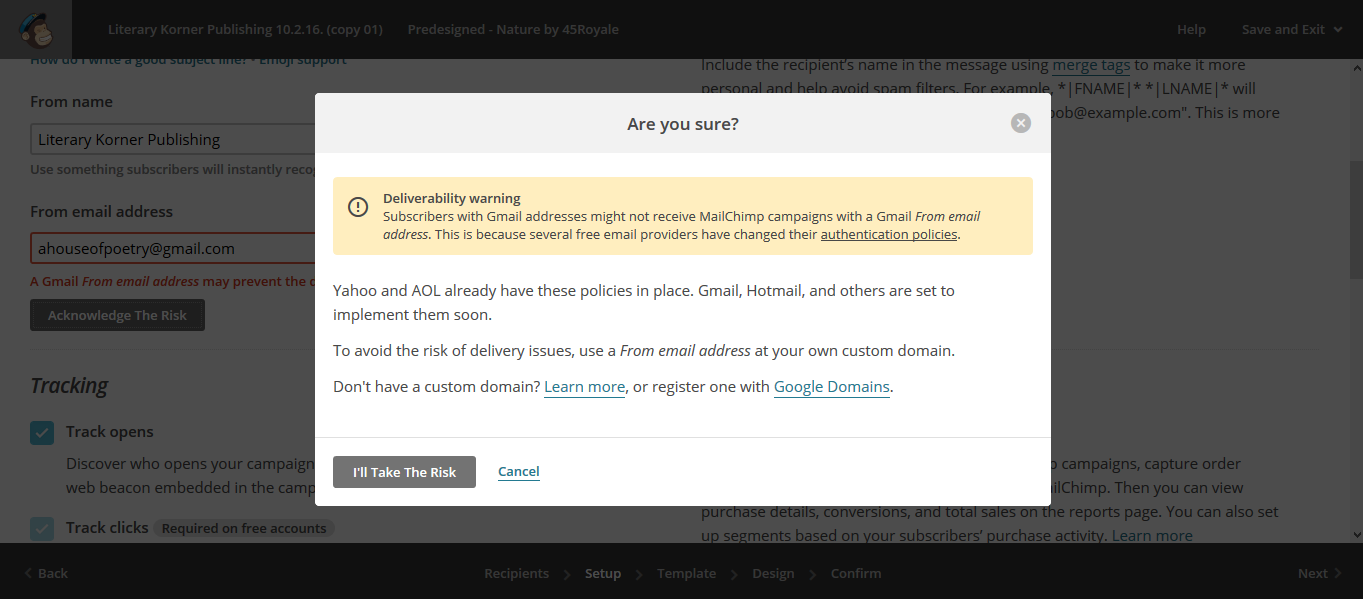
Secret #2: As much as I didn’t want to, I recently upgraded my email. I now use my own personalized business email for my email list instead of my Gmail account. Here’s why you should too if you get the following message:
 screenshot-75

In case you can’t see the words, it says:

“Subscribers with Gmail addresses might not receive Mailchimp campaigns with a Gmail from email address. This is because several free email providers have changed their authentication policies. “

What It Means

This means that if you’re using a return email address like Gmail or Yahoo and you’re also using an email service that has upgraded their authenticity policy (like Mail Chimp but not just Mail Chimp), Gmail and Yahoo may not allow those emails to go through because a lot of Spam users create bogus emails using Gmail and Yahoo email addresses (I know, boo). This may account for your low open rates as many people are probably not getting the emails.

*****

These secrets are usually reserved for my email list, but I wanted to give you the opportunity to see what you’re missing. I’m considering writing a memoir and you know what? Friday, my subscribers  received the first potential chapter! They are the first to see the unedited, raw, and uncut first chapter to what can become the book about my life (if I so decide). In fact, I’m releasing the first five chapters. (On my list? Didn’t see it? Check your email!)

I’ve talked some time ago about doing video tutorials and I’ve officially started production on my first video. I am releasing these tutorials to my email list ONLY so don’t miss out.

Just click on the image below to subscribe. You’ll be taken to my landing page where you can enter your name and email address. Easy Peezy.

Note: Entering your email means that you’re subscribing to my email list for more secrets, nuggets, tidbits, novel excerpts, sneak peeks, resources, spiritual and writing encouragement, the list goes on and on.

ATTN. I HAVE UPDATED THIS PART SINCE SOME OF THE INFORMATION, LIKE THE TUTORIAL SERIES, IS NO LONGER RELEVANT. TO SUBSCRIBE TO MY EMAIL LIST, CLICK HERE.

The First 300: How I Reached 300 Blog Followers in 3 Months

blogging

I don’t know what it is this week but I’ve been in a blog subject type of mood. Every article post idea has been about blogging. Could be the excitement still emanating from my radio show feature with Annette earlier this week –listen here- or it could be the excitement over reaching the 1,000 subscriber mark (and the crowd goes wild…. or not), but I thought I’d share my first experiences as a new blogger two years ago.

I started this blog in 2014. This post’s conception was thinking back to the early days, where I praised reaching three hundred and four hundred followers. It was fun! I even monitored the international support I received, and I was really excited about it, and I suppose before we get into it, gratitude is the real first bullet-point. My focus was on my own growth, and I celebrated that increase regardless of how other bloggers were doing.

My first blogging experience with The PBS Blog, specifically, got off to a good start, and I managed to reach 300 followers in my first three months. Here’s some of what I did. Will it work for you? Possibly, but everyone has to find their own way eventually. These points are just here to give you a start and some encouragement.

1. Resurrect Old Writings

When I started this blog, I was still blogging on WordPress under a different account. The name of that blog was A House of Poetry (you can find my silly post about cheating on that blog with The PBS Blog here), and it was a blog dedicated entirely to poetry. The thing is, it didn’t go anywhere, and I wasn’t committed to it. 

When I started this blog, I started by transferring many of my published poetry from the old blog to this blog. I also tore into some old poetry books, rewrote some older poems, and added them to this blog. My goal was to introduce myself by showcasing something I knew was a strength: poetry. Every day I published a new poem, and the faucet was on.

  1. Get Organized

I knew I could not survive too long by publishing only poetry. I had already tried that, and it didn’t work.

I got organized and, admittedly, a tad bit crazy, but I’ll speak on that next.

I decided to incorporate some features into this blog. I decided to publish three posts a day, all covering three different themes: One poem, one article or creative writing piece, and one quote.

Every day I published these to attract more than one kind of reader. Some people liked the poetry most, others the quotes, and others the written piece. I was on the road to creating variety with my blog, which is what I wanted. Many people say to have a niche, but that has not worked well for me. What I needed was quality content and to better connect with others.

  1. Consistency

As I said, I got a little crazy on this blog.

I was publishing three posts every day, six days a week. I knew I could not keep up this momentum for long, but I felt it was essential to initially establish a presence, so I tried to achieve consistency. Beginnings are difficult and challenging, but character is critical for blogging, which is developed by consistently producing valuable and relatable content.

Even if you post once a day or even once a month, it can make a big difference.

It’s important to remember my first experience with blogging was not this blog.

“If at first, you don’t succeed, dust yourself off and try again.”

I have had two blogs before this one. With this blog, I have learned how to stay true to myself while incorporating my passion into something relatable to other people. Preach art all you want, but people need to feel and relate to what you say to truly understand it since people rarely give ear to what they do not understand.

  1. Persistence

Posting a lot does not mean that I was getting feedback. All of these beginner posts got anywhere between zero to five likes and no comments. I was not sure how to engage, or what it meant to produce quality content. I knew that I had something to say and that I needed to get a good foundation under me as a beginner. What it helped me to do was to be humble. I learned to always respond to comments and to rejoice at whatever growth I got. Ten likes were golden, and because of this experience, it still is. I even take the time to open every email notification of a new like or comment. I know which of you will like what based on your like habits! Yes, I’ve gotten to know you better too.

  1. Networking

The most effective strategy was networking, or as I like to call it, the bonding process. The posting was not, and I do not think it will ever be enough. My first time seeing real feedback was when I started to follow other blogs, comment on other blogs, share content from other blogs, and interact in challenges. This is when I saw real growth. I noticed one hundred followers in one month, then another hundred, and then another. I noticed that I was getting one hundred followers a month, and by the end of my first three months, I had a lovely three hundred under me.

  1. Building

I am not sure if there is a standard with blogging, but three hundred followers were mine initially. For a long time, I considered ending this blog. Over time, I decided it may be worth keeping. As I made this decision, I also had to consider building. The building meant paying attention to many technical things I had not paid attention to before, tags, content, images, social media sharing, and networking.

No longer was it sufficient to post anything, now I had to consider a lot of background work that may help build a more significant blog. In the beginning, it was posting, the equivalent to getting myself out there, but now, if I was to continue to grow, I had to continue to do more than just post. I had to consider how important blogging was to me and how much time I was willing to dedicate to it. Now it was about more than just posting; it was about doing the work.

bitmoji638116932

Here’s to another one thousand. Maybe someday, all of this work will pay off, and I will be writing and blogging full time. Here’s to endless possibilities. Cheers.

Eight Reasons Why Writers Should Use Twitter

Though I don’t have lots of followers, I happen to love Twitter. Probably too much lol. (@ahouseofpoetry) *Comments disabled here. Please respond to the original post*

mdellert's avatarMDellert-dot-Com

If you follow me on Twitter, then you know that I have more than 5,000 followers and frequently post throughout the day.

How frequently? Every two hours. But I do take a break between 10 pm and 8 am Eastern Time.

A typical tweet has a two-hour shelf-life. That’s not much. If you want to get your content noticed—whether you’ve written it yourself or you’re retweeting someone else—you need to tweet throughout the day.

TwitterBut why Twitter?

  1. If you’re active on Twitter, it will refer a ton of traffic to your blog and website. (Twitter is my #1 source of website traffic.)
  2. There’s a large community of Indie authors on Twitter who are willing to help you promote your book and form supportive alliances. Endeavor to meet other authors in your genre, share blog posts and promote each other on Twitter.
  3. Twitter will help you market your books.
  4. Twitter is where…

View original post 293 more words

8 Ways to Avoid Stress

Woman laying in grass

  1. Take some time to sit quietly and appreciate everything that you have. Happiness is not in having more physical wealth but having less wants.
  1. Stop trying to change things that are beyond your control. Sometimes stress comes from not being able to alter those things outside of our control but trying to anyway. Stop that. You’re just going against the grain and you’re not going to win.
  1. Forgive yourself. If you make a mistake, get back up and forgive the less mature version of yourself who made it. Peace cannot exist around you if it does not first exist inside of you.
  1. Forgive those who hurt you the most. After you forgive yourself, forgive others. Instead of seeing what they did to cause you hurt, try and see them through the eyes of mercy. Sometimes people have been hurt and they pass that hurt on, try to see that. Look at them with the eyes of love instead of revenge. Excess pain is just baggage and in the words of Toni Morrison, “If you wanna fly, you gotta give up the stuff that weighs you down.”
  1. Learn to create balance in your life. Being busy is no excuse for surrendering your peace. We like to use the “I’m too busy” for everything but it just ends up being an excuse. Take breaks. Go on vacation. Date. Take some time to actually smell the flowers. In the words of Lena Horne, “It’s not the load that breaks you down, it’s the way you carry it.”
  1. In times of pressure, seek to be calm and centered instead of frustrated and angry. The calm person is the most productive person and makes the best decisions. Quick story. When I returned from a road trip last month, I thought I lost my USB or better yet, left it in Chicago, a 13 hour away drive from home. Upon realization that I’d lost the drive with all of my files and manuscript revisions (which I’d unwisely not saved anywhere else), I was actually too tired to worry about it! I literally put my worrying off. My exact words were, “I don’t have the energy to worry about this right now.” I didn’t even look for the drive. A few days went by and I knew that at some point I had to try and find it. Those things on that drive were very important after all. On the third or fourth day, I sat down in my chair and searched the place I last remembered it and found it. Just like that. By choosing to be calm and not worry instead of frenzied and out of control, I was capable of thinking clearly about where I’d last had it. I also learned a very valuable lesson. In remembering everything has a purpose, I understood that I should never save important files in just one spot.
  1. Don’t compare yourself to others, it’s the easiest way to fail. It is also the easiest way to cling to your fears. Sometimes you can be so sure something is for you until you look at how others are doing it, saying it, or have done or said it. Own what you know to be true and perfect being you. People don’t want to see how you can do something the same as others are doing it. They wanna see how you can do it differently.
  1. Speaking of comparisons, be true to yourself. Stop worrying about being accepted by others. This too can cause unnecessary stresses. Don’t dilute your light for something superficial. The light bulb may shine bright now, but it is in no comparison to the sun.

The Process of Release – Planning Book Releases in Advance

the-process-of-release

Consider this a commercial break into Laying Bricks. I’m still working on the next episode so you’ll have to wait another week. To make up for it, I decided to speak on another aspect of Self-Pub you may find useful.

What I love about book publishing, self-publishing specifically is the many new experiences I go through with each book I publish. When I look at some of my older works (which I still have available) I think “Goodness, how amateur of me!” To the point, I almost want to remove everything from the shelves and start over, but I don’t because of the way they aid in my experience and testimony, contributing to the proof of my growth as a writer. There’s so much I did not know way back when to include how to properly launch my books.

I won’t speak extensively on this topic, or at least not now. What I will say at this time is that one thing I’m learning is the importance of making some noise (OK so maybe just a few taps) as early as possible in the book release process. One of the ways to spread the word about a book is to create buzz about it before it’s released. It reminds me of something my sister always says, “Be thankful before you get your blessing. Say thank you that it’s on the way.”

Once I know for sure that I’ll publish a book, I try to begin the process of release as soon as possible. The process of release, what’s that? Well, it’s something I just made up (you can do that when you Self-Publish you know. Makeup stuff, try new things, your book, your rules).

The Process of Release (again, an EC thing) is not the same as the book publishing process. It’s part of that process sure, but it’s also a separate entity altogether. My book publishing process is when I am preparing my book for publishing. It includes first writing the book, of course, formatting, editing, revising, book cover, and everything in-between. My process of release, however, is when I am engaged in letting people know that I am going to in fact release another book. It’s the minor or major marketing and promotion I do to lead up to the book’s release. It could be as subtle as posting updates on social media, or as major as an entire campaign. The Process of Release can start as early as one year before the book is written to six months before it’s to be released.

The truth is that it’s never too early, but it can be too late. I cringe when I see debut authors release books that I never heard of. Don’t get me wrong, it’s a proud moment and I am proud of them. I do not cringe because of the book’s publication. I cringe because letting people know you have a book out on the day of release is not a good idea. And while I am no expert in the least, I do know that authors who release books their audience has been in on in some capacity has a greater chance of spreading the word in a wider capacity than those who pop up from nowhere with “My book is out!” Your book? What book? I didn’t know you were writing a book.

While I’m still learning concerning those major book release campaigns and will be soliciting the advice of many of you pros, I do know that there are some things we authors can do on the smaller scale in advance of our book’s release that may help a great deal:

The Process – People feel differently about this but if it’s your thing, go for it. One way to get the word out is to inform people of your process. Are you in the first draft stage? Have you finished your first draft? Have you met today’s word count? Are you revising? Beta readers? Editors? Let your blogger friends or social media buds know you’re cooking up something in the kitchen.

Sharing – If you’re feeling brave, share some excerpts on your blog (you do have a blog…right?). Again, people feel differently about this since not everyone wants to share their work. Some people feel it’s to an authors detriment and some feel it is to an author’s advantage. The truth is that no one really knows. The experience is different for each person and a solid list of rules for self-publishing does not exist. That said, it’s really up to you.

If you are feeling up to it, be sure your excerpts are the best of the best but don’t give away spoilers. You may go far as to be sure it’s a little bit edited for grammatical errors prior to uploading it. It may not be final, but it’s all about giving readers the best experience even at the early stages. You can use Grammarly or another program to help edit your posts.

Milestones– This is something I do a lot because it helps keep me on track. Set a series of short-term goals and share your milestones with your social media buds. Maybe you plan to have a book cover finished by the end of the year. Decide on a date for this and do a grand book cover release on your blog. When I say big, I mean be super-duper crazily excited about it. Plaster it across your social media. Use the book cover release as your official come out. People are highly visual. Use that to your advantage. This year, my book cover release will probably coincide with the official release date for my 2017 novel “Renaissance: The Nora White Story”. It will probably include social media headers and images of the book cover with the pending release date and perhaps a quote or two from advanced readers.

Flyers – Offline, print flyers of your book cover and pending release date and drop those babies off to libraries. They usually let you sit flyers around on the front desk or in the display glass (I’ve done it before). Or you can just deliver them to the people in the library directly! lol. Just don’t be rude about it.

Blog Hops, Guest Postings, Author Interviews – Believe it or not, even if you’re not talking about your book, being a guest on someone’s blog or doing an author interview can help generate buzz. Not that you should stalk people, but usually interviews end with something like, “So, what are you working on now?” I put blog hops in here because I’ve seen many authors doing it and it seems to work. Though I haven’t tried it yet. I am considering it but I’m not sure. Have you blog hopped? Tell us how it works!

Strategy – As Self-Publishers we can really do what we want with our release but I would still recommend doing so strategically. Release your book around high book reading cycles. A book reading cycle is a time where people purchase books the most or do the most reading. We’ve all heard it before: selling books are not like other businesses, nevertheless, there are ways selling books is similar to other businesses. One way is a cycle. Usually, businesses bulk up and do sales and all sorts of things around popular sales cycles. Could be a holiday or whatever the product is popular for. For your book release, consider releasing it around high reading cycles:

  • Holidays
  • Weekends
  • Summer

…and if your theme is AFAM historical in nature, February for Black History Month.

20160226_15003720160226_142617img_2995IMG_20140725_134307IMG_20140725_140547

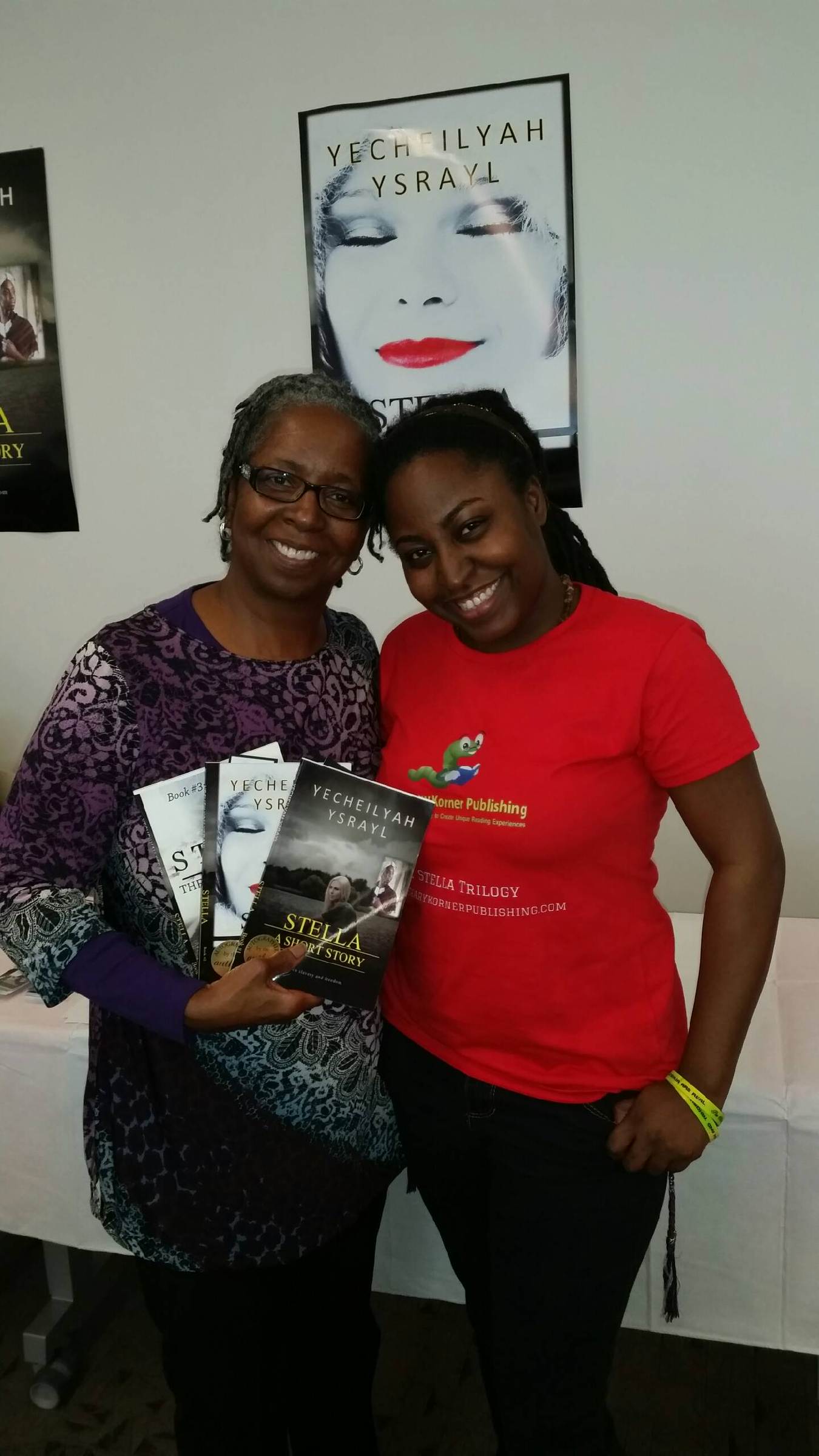
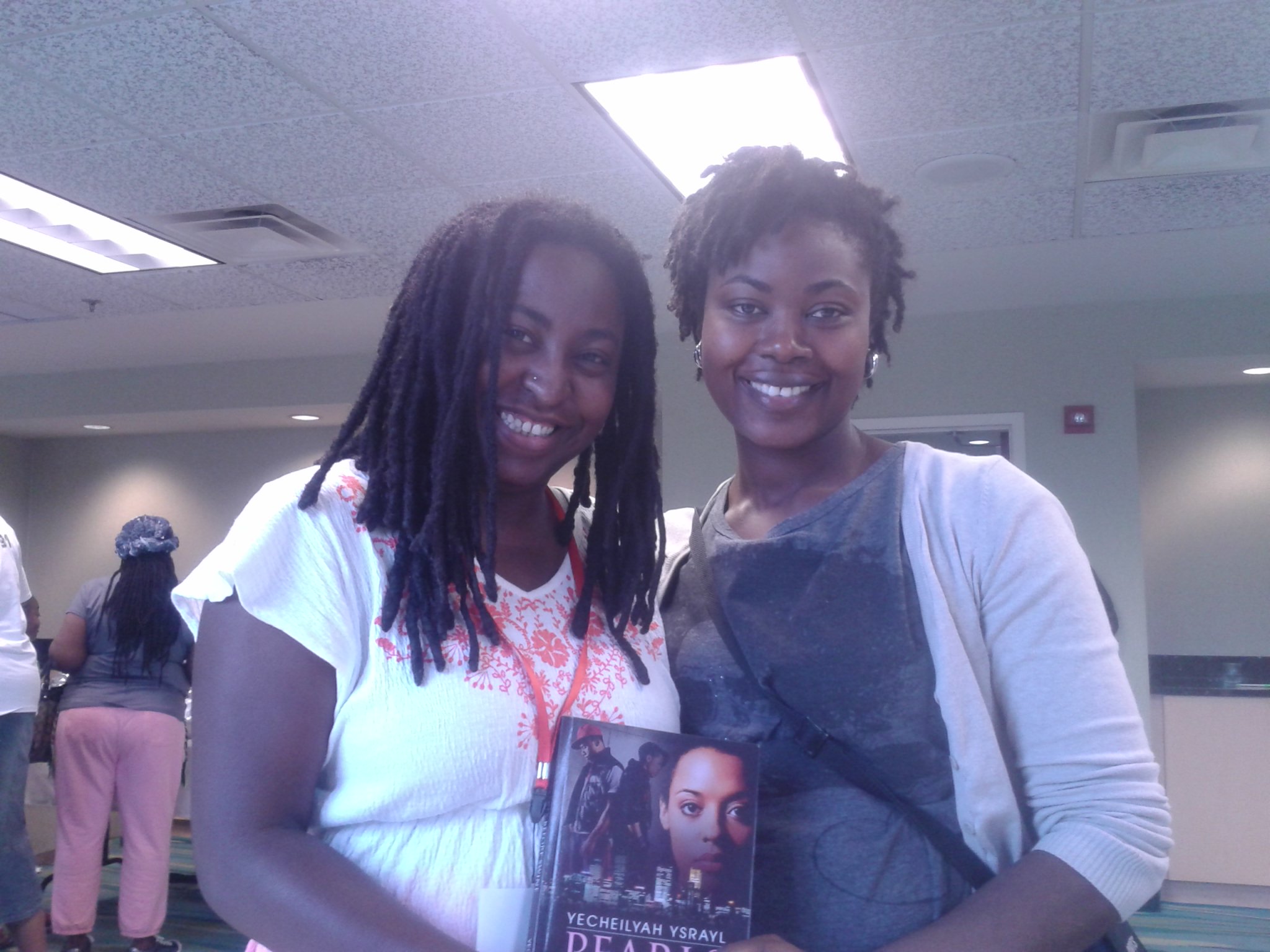
Epic Book Release – Make your book release day a special one. Since 2014 (when I started this blog and got serious about book publishing) I’ve been releasing my books online and in person on the same day. If my book goes live on Amazon on release day, I’ll spend that same day pushing paperback sells at a hotel lobby or library with book signings. This gives me a chance to speak, sign hard copies, increase total launch day sales, and takes pics of my newborn to post online. I mean my new book of course.

Things to remember when you’re up close and personal:

– Purchase books in advance of event (like 3mos in advance. Live events are more expensive since you’re renting space, possibly traveling, and purchasing items so purchase books in bulk ahead of time).

– Include promo items: Bookmarks, business cards, flyers, post cards, whatever you can bring to liven up your table and give away as gifts

– Laptop – You can use your laptop two ways: You can have your eBook page open for staunch eBook readers. They can approach your station, which you’ll have set up nice and professional like they’re applying for a job at Walmart, and they can purchase the eBook there, supervised by a personal assistant, while you sell the paperback to those wanting hardcopies.

Or, you can use your laptop to show your book trailers. Of course this is all dependent on the internet. If the place has no internet, throw a QR code on your flyers. They can scan it with their phone taking them to your site and you won’t miss a sale.

– Make sure you have change and something to carry it in, and an electronic payment method. I used Square, a credit/debit card reader you can attach to your smart phone to process card payments.

– A bunch of writing pens for autographs.

– Optional. Print large Posters of your book cover and hang them around or attach to a board so that people entering know you’re in the place to be. Have an arrow next to your lovely sign that you, the awesome author, is selling books around the corner.

– Be sure to have someone designated to take pics, a photographer or your sister with the HD camera. Trust me, you won’t have time to do it and you wouldn’t want to miss capturing the moment.

Even if you release strictly online, there are things you can do for your electronic release:

  • Giveaway – have a major giveaway (include a bookmark, business cards, and flyer in package) or something exciting.
  • Blog Release Party  – Do a blog release party or a game related to the theme of your book. You can host this on your blog or by throwing a Facebook Launch Party. To learn more about how to plan for a Fb Launch Party, google it. No, seriously, everything is on Google pretty much.
  • Start a thunderclap campaign. I did this and its great. Instead of paying for social media  people pay in a tweet or facebook post. You set a goal and those who sign up pledge a tweet or post. On the day of release, their accounts simultaneously post about your book release!

To succeed in anything, we often look at what we know but the key is what you do not know. Only when you can understand that you don’t know anything, can you come to truly understand. The Stella Trilogy is not my first work. My Self-Publishing career did not begin with The Stella Trilogy.

I’ve actually been publishing since 2008 but it wasn’t until 2014 when I realized I knew nothing about publishing, that I truly started to learn a little and it is why I am most known for Stella and consider it my best work. My hope is that my next series does better, garners more reviews, and reaches a wider audience. Now that I know I know nothing, I am ready to understand all.

The same can be said for blogging in general. Do you really know how to blog or do you just perceive to know?

In short, this is why I cover the very basics of Self-Publishing. This is why I talk about the ABC, goo-goo, gaga. Because until we can admit that we don’t know anything, only then can we begin to see. If you don’t understand the simple, how can you understand the great?

And so, I am for building strong foundations so that from there, I can build on what I build.

In closing, we want to start letting people know that yes, we are writing a book and plan to publish it at least six months before the book is to be released. Funds are limited, at least mine are! That said, it doesn’t have to be anything grandiose, but set goals. Will you get lots of reviews? Probably not. Will you sell lots of copies? Probably not. But, what if you do? The truth is you don’t really know until you try. Don’t wait three months or two weeks before the book is to be released to let people know about it. A general rule of thumb is that when you release your book, no one should be surprised.

************

Missed the first 3 episodes of Laying Bricks? This is a great time to catch up before next week!

Laying Bricks Ep 1: Guide The Bricks  (About Focusing on the Story)

Laying Bricks Ep 2: Mortar  (About the Revision)

Laying Bricks Ep 3: Cutting the Excess (More on revision with a focus on editing)

Sign- Up for my Newsletter  for a chance to read more Self-Pub Tips, Updates on my latest projects, and a free PDF of Book 1 in The Stella Trilogy: Between Slavery and Freedom.

Paperback Comeback

bitmoji-1576055561

Today on Real Talk: Paperbacks.

When I developed a passion for writing, I could not foresee what the publishing industry is like today. My vision was always to hold a book in my hands, feel the pages against my fingertips, and smell the fresh ink. It was always to see my name on the cover and read my words behind the pages. And more so, allowing others to take part in this journey by having them to read my words. With eBooks trending, it is no question what the increase and development of technology has done for authors. In short, Self-Publishing would not be where it is today. So it is without question that eBooks and Amazon Kindle has changed the game. However, I read something today that disturbed me a little bit. In one of the Facebook Writing Groups in which I am a part of, a writer was seeking advice on Book Promo. His question had to do with promoting his paperback book. One of the commenters told him he should do away with his paperback and stick to eBook only. Obviously, there is more money in the eBook game.

I do not believe this and I also do not believe this person’s advice is very wise.

As I always say, advice is subjective. It’s always personal. You can take it or leave it because not all of it may apply to you and not all of it is true. However, when it comes to advise or tips about someone’s career path or livelihood, I believe its important to know what you’re talking about. So in this case, it would have been more wise to tell the person (as many people did) to have BOTH an eBook AND paperback version of his book than to say to just do away with the hard-copy.

Many Self-Publishers underestimate the power of hard-copy in this digital world and I do think it is to our disadvantage. The truth is that the paperback has potential to earn you more money than your eBook. The reason is because there’s diversity to the paperback that the eBook just does not have. I’ll explain that more deeply later. For now, let’s look at this:

The stats tell us that the average self-published author will sell fewer than 250 books, and the average published author will sell fewer than 2,000 books. Books are now more cost-effective and easier to access, which has created a wealth of competition. Estimates tell us that one million books are published every year.”

– The Millionaires Digest

In addition, it is my belief that this less than 250 book sell has a lot to do with a reliance on strict eBook sales. I believe this because an author can sell hundreds of paper-book copies alone at a book signing. First, let us establish something about Amazon Kindle. It’s not hard to become a bestselling author. For some categories all you have to do is sell maybe 100 copies (or less) of your eBook to make the #1 spot. This, according to The Millionaire Digest, is called gaming the system:

You can pick low-competition categories in Amazon and sell as few as ten books (in a particular period) and become a “#1 Amazon best-selling” author. Authors even make their book free through Amazon’s KDP Select program and claim “bestseller” status.

While I think selling 100 books is great, 100 copies of a book sold is a failure in the Traditional Publishing world as compared to, let’s say 10,000 or 100,000 copies.  And even that, in Traditional Publishing, is funny. If a publisher printed 15,000 copies, shipped 10,000 and returned 8,000 then technically the author only “sold” 2,000 copies. This is what makes people Self-Publish. Ain’t nobody got time for all of that.

As for my personal opinion, I think one book sold is a success. If you sold 100 you’re a star in my book. But I digress.

The point is that I’m sure we all envisioned that making it to Amazon’s #1 spot requires selling much more than 100 eBooks. This isn’t to say those authors didn’t put in hard work, but that Amazon’s ranking is “iffy” to use an EC term. “Iffy” meaning ranks are not calibrated based solely on books sold alone. The truth is that Self-Publishing is hard work and for this reason many people have chosen the Hybrid Publishing method, which I actually think is interesting. I don’t have a lot of knowledge about it because I’ve yet to try Hybrid (I’m not a middle ground type person) but nonetheless, Hybrid Publishing is: 

The hybrid author is someone who has book deals with traditional presses, but also self-publishes, or publishes in some other nontraditional way. Hybrid publishing encompasses the middle ground between traditional and self-publishing.”

-Brooke Warner

Publishing using a combination of Traditional and Self-Publishing methods is an interesting thing. Though I’m Indie all the way, I don’t play the cool kid game. Traditional or Self-Pub, I like them both and I think Hybrid Publishing is on the come up. But this is precisely my point. (Though I am learning now that Hybrid Publishing is nothing more than Vanity Publishing. I don’t have the facts on that so I’ll just stick to what I know, but this is what I’ve heard.)

Because Self-Publishing is hard work, Indie Authors miss out on A LOT by opting out of print books. Someone in the group mentioned that the only people who will purchase your paperback are family members. This is also not true. According to Publishing expert Lou Aronica, self-publishers cannot afford to ignore print, as it still accounts for some two-thirds of book sales overall. “Print is not going away,” Lou said, “and outside of the US print is seriously not going to be a minority percentage anytime soon.” Lou goes on:

  • Ebooks are the preferred method of reading for a large percentage of readers and that will only get larger as the international markets reach their inflection point.

  • People won’t pay $12.99, but they’ll pay $9.99 — for e-books I’ve seen absolutely no price resistance up to $9.99. In fact $2.99 sometimes sends the wrong message. (With the exception of romance, because romance readers are different, the velocity of reading is different.)

  • It’s clear that publishers are raising e-book prices to make print more appealing.

It is clear that the increase in technology is not slowing and that authors are wise to have both an eBook and paperback copy of their book. Not only does it look more professional but you have options on sells. I’ve made over $1,000 in one night at an event selling paperback copies of my books. In fact, I make more in one day selling paperbacks than I ever did in eBooks. That’s because book promotion should go beyond social media and when it does, you need to be ready for it. It’s a lot more professional to sell a paperback to someone face to face with a business card and bookmark than it is to tell them to go to amazon and buy the eBook. Who’s to say they will remember to do that when they get home? I for one cannot afford to depend on your memories people (smile).

It is what makes publishing fun to me, hard-copies. Just this week I had to deliver some packages to the UPS Store and made a connection with the Notary there. I found it refreshingly exciting to verbally discuss my book as opposed to writing about it which I do most of the time. I started to think about public speaking and how this plays a role in book publishing.

With paperbacks, Indie Authors have the opportunity to network almost anywhere. Heck, you can sell books out of the trunk of your car if you wanted to, and set up various events to which your book is the star. As much as you need an eBook version as well, you cannot sign an eBook. As much as we’d like to push it away in the background, paperbacks are making a comeback. Well, at least in my neck of the woods.

Man using/working on laptop computer
Amazon Sale Extended. Ends. 7/21/2016. Copyright© LK Publishing

Speaking of which, I’ll be in San Antonio this weekend at The La Quinta Hotel on 850 Halm Boulevard by the airport. I’ll have copies of my books if any of you are in town. Just approach the front desk and ask for Yecheilyah. I’m in town on business from Friday to Sunday time permitting. In the meantime, I have dropped the Kindle price again and am extending the Amazon sale through Thursday. If you want to check out my writing for cheap, The Road to Freedom is available now for $0.99 until Thursday.

Book Promotion Services – How They Actually Work

I stopped by OMs place today. See what I had to say about book promo. Remember: Book Promotion sites only work if the author does. To get the most out of any promo site you choose to use is to contribute to that process.