Stella: Beyond the Colored Line is Live (The Stella Trilogy Book 2)

Beyond the Colored Line is LIVE
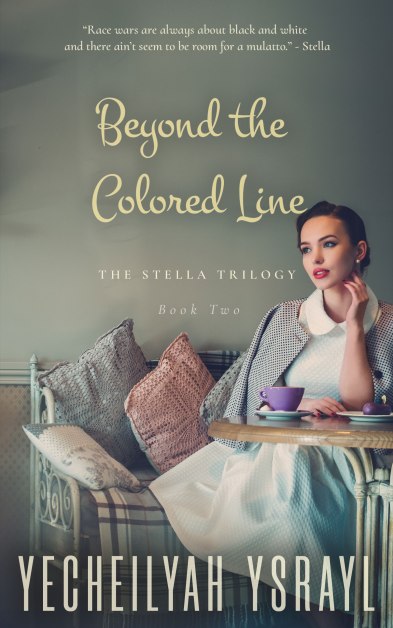
“This story retells the history of many African-American families alive today. It is a heritage rich with strife and suffering but also filled with a hope and a desire to finally grasp the freedom that has been so elusive and out of reach for so many. At times, I was forced to accept some uncomfortable truths about our American past. There is nothing wrong with that. This story makes you think about freedom and what it really means to you as a person, and as an American. I loved this story because it is through the learning of other’s journeys that we begin to learn much about ourselves. Their pain becomes our pain and we begin to see through their eyes. Stella will touch your soul with such a sweet simplicity you won’t even know it.”

– Colleen Chesebro, on Stella: Beyond the Colored Line, First Edition

About.

In book two, we dig deeper into the McNair family’s legacy. Named after her great-grandmother, Stella has a very light complexion which causes her to be the tease of her classmates. Unable to find solace among her African American contemporaries, Stella finds it challenging to adjust to a world where she is too light to be “black.” After The Great Depression of the 1930s forces Stella’s family to move to Chicago, a conversation with Aunt Sara provokes Stella to do something that will dramatically affect not just her life but the life of her children and grandchildren.


Excerpt.

1928

Daddy runs off to no one knows where on account of his life. Some racist whites had seen him and Mama together and threatened to lynch him if found, so he runs off. The community gossip is that his brothers know, but they won’t say. We weren’t alone, though, Mama and me. It seems like Mama filled the hole where Papa should have been with our whole family. The house always stayed filled with guests, my people, and peoples of my people. My granddaddy was a colored man and owned this land. My namesake, his Mama Stella, was a slave and was given this house by her owner. As the story goes, after Grandma died, I was born. Since Mama was the closest, she named me after her.

My aunts would gather around the table with my mama, and they laugh and cry most of the night about their girlhood. They would talk about what it was like being four mixed girls in Illinois. I don’t have uncles on my mother’s side, but Daddy got six brothers.

Due to the controversy around my parent’s relationship, Daddy being a Negro, and Mama being half-white, they only visit on special occasions. Uncle Roy, Daddy’s younger brother, says Mama acts differently around her sisters and that we too uppity, especially Aunt Sara. She’s the youngest of my aunties and the most spoiled. She’s the one who convinced Mama to send me to a white school in the first place, and boy was my uncles hot! They said we were breaking the law–that a Negro had no business in a white school. But Aunt Sara said I had all the right in the world since I was half white. For her, not only could I do this, I had a right to do it.

“But does the school know she a Negro?” Uncle Roy would ask.

“That’s none of the school’s business, now is it?” Aunt Sara would say, and they’d go back and forth until Mama break it up.

Not all talks were good talks. I used to sit until my eyes were red with fatigue to hear Mama and my uncles talk about all the killings that were taking place around the country, and especially in the South. I felt like I lived in two worlds, one black and one white, but none mixed. And what did that mean, mixed?

My aunties wanted to talk about education, family, career, and navigating the world as a mixed-race person, whereas Daddy’s side liked to talk about the black condition, what was going on in the black community, and what it meant to be black in America. They talked less about blacks navigating a world that they felt didn’t include them, and more about blacks redefining themselves and creating their own worlds. The conversations were intriguing and fascinating on both sides, but it left me feeling like my very body was a contradiction. Was I white? Was I black? Race wars always involved these two groups of people, and there ain’t seemed to be room for a mulatto.

“That’s what I say,” said the voice of Uncle Keith, Daddy’s second oldest brother.

“Up there in Minnesota.”

“That close?” Mama gasped.

“Yeah, that close. What woman, you living under a rock? They just had one over in DeKalb last month,” said Uncle Roy.

“It’s a crying-out-loud shame,” continued Keith. “Say they dragged the boys from the cell and a whole mob of ‘em lynched ‘em. Say it was ‘bout a thousand of ‘em.”

“My my,” said Aunt Rebecca.

There were times even I witnessed evidence of the events rocking the country. One day, Mama and I went to visit Cousin Mary in Texas and drove the truck up to a general store. We walked in, and I picked up a postcard from a rack. It was of a man hanging on a tree that supported an iron chain that lifted him above a fire. The man didn’t seem to have much of a body left. They cut his fingers off, his ears and his body was burned to a crisp. On the back of the postcard read: “This is the barbecue we had last night. My picture is to the left with a cross over it. Your son, Dan.”

I learned later the picture was of a seventeen-year-old mentally ill boy named, Johnny, who had agreed to have raped a white woman. And everybody at home still talked of the Cairo Circus of 1909, the public lynching that took place here in Illinois. I couldn’t understand why Mama was so upset about a circus until I found out what kind of spectacle it was. My aunts didn’t want anything to do with the land or the house because of events like these. They say it’s too close to slavery. No one wanted to inherit the home or the property, but Mama, and this is how I spent several years of my life living in the same house where my great-grandmother had been a slave. Mama kept the house full of guests by renting out rooms to help with her washerwoman salary.

We weren’t much of a churchgoing family, party going is more like it, unless Mama wanted to show off a new dress or hat when somebody died or needed saving and on holidays and such. Folk would come from all over southern Illinois to hang out with “Cousin Judy.” Sundays sure were fun, my second favorite day of the week. Saturdays were my favorite day of the week. It was the day for shopping, and that only meant one thing, Chicago.

First, Mama would wake me to the smell of biscuits or pancakes. This massive breakfast was to keep me full enough throughout the day, so she didn’t have to worry any about food buying. Then, she commanded me to bathe real good, paint my arms and legs with coconut oil, untie my curls, and we’d both put on our Sunday’s best and be two of the most beautiful women you’d ever seen. I was a young lady now, and shopping was the best thing for a young lady, next to boys, but you couldn’t like them in public.

You could like shopping, though, and I loved going from store to store in search of the finest. I skipped along while Mama scanned the insides of magazines for stuff she heard about from the white women whose laundry she cleaned. We would squeeze our way through crowds of people, just bumping into each other. Everyone dressed in their weekend wear and bought ice cream for their children. Some went to see the picture show, and so did Mama and me. We could buy candy or jewelry, or perhaps a new hat or two. We could drink from water fountains without a label and spend money without prejudice.

We had a good time on Saturdays because on Saturday, no one knew we were colored.

Click here for a signed paperback
of Beyond the Colored Line

*Click Here to get it on Kindle
Haven’t read book one? Get it for 99cents on Kindle here or in paperback here.
*Paperbacks ordered today will ship next week.

Revising The Stella Trilogy: Book Two – Beyond the Colored Line

Book one is out and we are on to book two!

My main challenge for book two is making sure that it stays consistent with book one. This is important for any series, but for Historical Fiction, it is even more critical.

Since writing Historical Fiction is writing set in a time that has already occurred, the details of the past must be realistic to what was going on. A good Historical Fiction book places fictional characters somewhere in a world that has already existed in a way that reads authentic. Readers should be able to reimagine what that world was like by immersing themselves in the life of the characters and the world around them. I like to think of it as a time machine, which is also what makes writing #Histfic fun to me.

Style, Language, Dialogue

Like book one, book two opens in 1996 and picks up where we left off at Mama Sidney’s house in book one. But book two also takes us back into the life of Mama Sidney, and we revisit history from the 1920s through the 60s. My focus for book two was to make sure the dialogue, language, racial and political events occurring during this time were realistic to what was happening in the world. We talk about The Great Depression and touch on the reoccurring lynchings taking place in both the north and south. We look at the brutal murder of Emmett Till, the shooting of Dr. King, Jim Crow Laws, and The Black Panther Party. While I immerse Stella in her own world, there is still the larger world to deal with and we watch how she navigates both. How does Stella’s personal identity crises correlate to the identity crises plaguing her larger community?

Racial Terminology

The biggest thing to deal with for book two is the racial classifications of blacks during this period. African Americans are the only people whose racial terminology has changed with the census. We have been “Niggers,” Negros, Coloreds, Blacks, and African Americans, and this can get confusing when trying to use the right term for the right year. This is also not to mention other racial “nicknames” we called ourselves, such as Afro-American and The New Negro.

The challenge of using the right term for the right years is because there were terms that blacks preferred to call themselves and terms used discriminately by the wider society. Although by the 60s Black Americans were preferring to be called blacks or Afro-Americans (as Malcolm X used a lot after leaving the Nation of Islam) white separatist signage still referred to us as coloreds. “Whites Only / Coloreds Only,” or “Welcome to the Colored Zone,” banners and store signs could have read.

Credited to W.E.B. Dubois and Booker T. Washington, blacks advocated for a switch from Colored to Negro in the early 1920s. As blacks redefined themselves, terms like “The New Negro,” became popular and sparked a movement that later became known as The Harlem Renaissance.

By the 1960s, though, African Americans had transitioned from being “Negros,” to “Blacks.” (Malcolm X specifically didn’t like the term Negro).

During the Black Power movement when sayings such as “I’m Black and I’m Proud,” were popular (think James Brown “Say it loud, I’m black and I’m proud!”) blacks wore their hair natural, read and published black literature and did what they thought would reconnect them with their lost heritage. In this process, many black political leaders of the time, such as Kwame Ture or Stokely Carmichael, helped to shift the terminology away from Negro and toward Black. Black publications like Ebony followed by switching from Negro to Black.

While a large majority of people still preferred Negro, “Black“ was becoming the preferred term with the New York Times and Associated Press abandoning “Negro” in the 1970s.

By the 1980s, Jesse Jackson called for a shift from Black to African American and while the change is still not as accepted or monumental as black was during the 60s, it is the term most socially acceptable when referring to black Americans.

I had to consider these changes when referring to blacks throughout this part of the book. What did they call themselves? What did society call them? How do I integrate this into the dialogue and setting realistically?

Setting, language, and dialogue is the backbone of Historical Fiction because the setting makes the story seem real and determines the character’s beliefs and actions. Not only do I strive to make the characters stand out but the culture of the time in which they live.


About Book Two:

In book two, we dig deeper into the McNair family’s legacy. Named after her great-grandmother, Stella has a very light complexion causing her to be the tease of her classmates. Unable to find solace among her African American contemporaries, Stella finds it challenging to adjust to a world where she is too light to be black.

After The Great Depression of the 1930s forces Stella’s family to move to Chicago, a conversation with Aunt Sara provokes Stella to do something that will dramatically affect not just her life but the life of her children and grandchildren.

Stella: Beyond the Colored Line will be available through my website and back up on Amazon in digital and print by April 24th. I am not putting the rest of the books up for preorder, so you’ll be able to order it immediately on 4/24.

If you have not already read book one, click one of the links below.

Amazon Kindle

Signed paperback

https://www.yecheilyahysrayl.com/bookstore/stella-between-slavery-and-freedom

The Stella Trilogy: The Research (Book One)

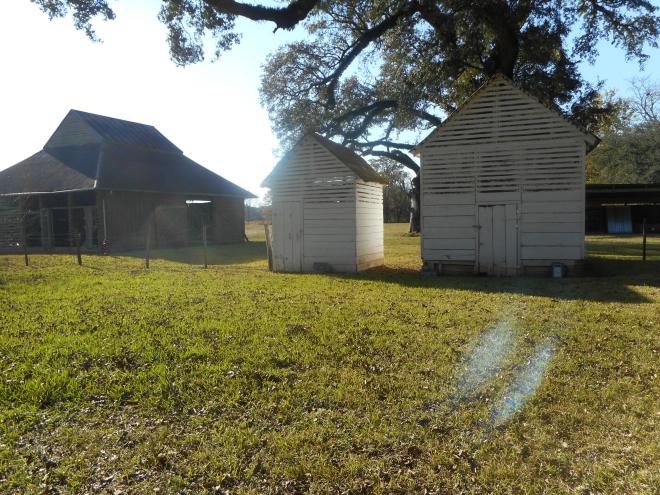
Cane River Creole National Park – Oakland Plantation, Natchitoches, Louisiana, November, 2016.

Since the meat of book one focuses on what life was like for a little girl, and then a young woman, growing up in slavery, the bulk of my research had to do with reading slave narratives and studying enslavement through the eyes of women and children.

Between Slavery and Freedom centers on Stella’s enslavement on The Saddler Plantation in Louisiana. As I introduce us to the first Stella, she is a six-year-old girl enslaved with her mother, Deborah. At this age, she is not aware that she is living property, which was typical for some enslaved children in their early years. She plays with the other children, including the slave owners’ daughter, but she does not yet understand the value of her flesh, that she could be bought, sold, traded, transferred, deeded, and gifted. Stella describes the plantation as a “big family.” She loves running through the dirt and the way it feels on her toes. She talks of childish things like eating sweet cakes, playing with Miss Carla, and trying to convince Mama, she touched the sun.

“One time, I made it where I touched the sun. It wasn’t even hot either. It didn’t feel like nothing but air. I told Mama the sun was tricking us. 

“And how it do that?”

“Cause Mama. I touched it, and it ain’t burn my finger none. It feels hot, but it ain’t really.”

– Stella, Between Slavery and Freedom

Historically, enslaved children who had a “childhood” in this way realized their status gradually. Their awakened consciousness may have been signified by seeing a family member sold for the first time or being sold themselves. The research points to ten as the age where the enslaved child knew and understood that he or she was property, except in the circumstances, as I have mentioned. As soon as they were old enough, the enslaved child’s life changed, and they realized that their lives as enslaved differed greatly from the lives of the white children they once played with as small children.

Slave-owners raised southern white youth as enslavers in training. Sometimes slave-owners gifted their children an enslaved person as a pet (sometimes it was the same child they played with). Literature also played a role in the training of southern youth to not only accept slavery as a regular part of society but to prepare them to own slaves of their own. Examples of such books is The Child’s Book on Slavery; or Slavery Made Plain. In a chapter called The Duty of Learning about Slavery, it states:

“if slavery is good, we ought to help it forward…”

In a chapter called Does Color Make Slavery, it states:

“Moses and all his people, I have said, were slaves in Egypt, but they were not colored people.” 

This explanation was to try to explain to the children that slavery wasn’t based on skin color, and it is a lie. Egypt is in Africa. Moses and his people were “people of color.”

In a chapter called What is a Slave, the author compares the enslaved to a horse, saying:

“Perhaps your father has a horse. That is his property. He has a right to make the horse work, only he should treat him kindly and give him good food. If the horse is his, nobody has a right to tell him he must not use the horse so. And then, if he thinks it best, he has a right to sell the horse to somebody else. Nobody has a right to forbid him. He need not go and ask even the horse, if he may have him plow the garden, or draw the wagon, for the horse would not understand him, and could not speak to him, and will never grow so old or so wise, that he can understand our words, and talk himself.”

Source: https://archive.org/details/ASPC0001969600/page/n5/mode/2up

Speaking of literature, another part of writing book one was reading many slave narratives, including Frederick Douglass An American Slave, and Up from Slavery. Other books included When I Was a Slave: Memoirs from the Slave Narrative CollectionBullwhip Days: The Slaves Remember, and Remembering Slavery: African Americans Talk About Their Personal Experiences of Slavery and Emancipation.

Cane River Creole National Historical Park

Cane River Creole National Park – Oakland Plantation, Natchitoches, Louisiana, November, 2016.

“Some people have to take the cotton and pick out the seeds, and others have to spin and weave. They don’t do nothing but spins and weaves. Some people even had to turn the weaves into threads.”

– Stella, Between Slavery and Freedom

More profound than this is my visit to a former slave plantation at The Cane River Creole National Historical Park in Natchitoches, Louisiana.

You might ask yourself why anyone would want to visit such a place. I was writing about people living on a slave plantation and what better way to get inside their heads than to visit one.

Originally called Bermuda, the founder of Oakland was Jean Pierre Emmanuel Prud’ Homme, who began farming the land in 1785 and received a Spanish land grant in 1789. The land’s first cash crops were tobacco, indigo, and cotton. The Prud’ Hommes were the first family west of the Mississippi River to farm cotton on a large scale.

Cane River Creole National Park – Oakland Plantation, Natchitoches, Louisiana, November, 2016. Slave Quarter turned home of Sharecroppers

“Down in the quarters, every family had a one- or two-room log cabin. Mostly one room though. We had mattresses filled with corn shucks. Sometimes the men build chairs at night. We didn’t know much about having anything, though. There were a lot of cabins for the slaves, but they weren’t fitting for nobody to live in. We just had to put up with them.”

– Stella, Between Slavery and Freedom

After the Civil War, sharecropper and tenant farmers continued to live on the land until the 1970s, and slave quarters became homes to sharecroppers later. The people worked twelve hours a day, six days a week. Seeing this with my own eyes put it into perspective how the south had reconstructed slavery by returning land to former slave owners and putting former slaves back into the fields under another name. Slave codes designed to control the enslaved became black codes intended to control freedmen, and cotton pickers became sharecroppers.

Martha Ann, an enslaved Laundress, worked in this wash house in the 1850s. In the 1940s, her descendant, Martha Helaire, earned $4 an hour working here as a Laundress. All we have to do is walk a few steps to the washer and dryer.

I blogged about this visit years ago. Get the full picture and see more pics by revisiting that post here.

Living on 40 Acres of Land

Finally, part of my preparation for book one also included where I was living at the time I started writing these books.

At the time I released the first book in this trilogy, my husband and I lived in an old house owned by our elderly cousin on 40-acres of land. Over the years, we planted a garden on the property, built a chicken coop and raised chickens, owned several dogs, goats, and even a horse. My grandmother-in-law also recounted stories of when she and some cousins picked cotton on this land.

The elderly cousin and her father built the house we rented many years ago. It was an old house and an old land. It was easy for my overactive imagination to envision what it would be like if we were not renting this house from our cousin; if we were not free to live life on our own terms; if this was not the 2000s, but the 1800s, and if we were not free but enslaved. I walked the property, breathed the air, and looked up at the trees. I had dreams of black people hanging from those trees and visions of people trying to escape.

We lived on that land for five years, eventually moving away in 2015, and I had a completed manuscript.


Preorder the ebook here for just 99cents

Preorder a Signed Paperback Here

Mark as Want to Read on Goodreads

(If you read Stella the first time around I would most appreciate you marking it as read on Goodreads!)

Revising The Stella Trilogy: Cast of Characters

I am always thinking about why Stella is so set-apart. Why are these books so effortless for me? The first time I released the series, things went smoothly, and the same is happening now. I can sit down, open Stella, and flow (or as I told a room of students, I sit down and bleed, to quote Hemingway).

A good fiction book, to me, has great character development. The characters are realistic in dialogue, how they talk to each other, what their lives are like, the decisions they make, and so on. When I am writing novels, I typically write Historical Fiction, so setting and dialogue are paramount. The setting is a significant element because the environment affects the plot and the characters. A story set in the 1800s must have language authentic to that time, and the characters must speak and interact like they are in the 1800s, not 2020.

My books tend to include a wide selection of people, some minor characters, some major characters. This is risky, but I’ve been told it’s one of my strengths. Somehow, I am capable of keeping up with everyone and letting them interact authentically.

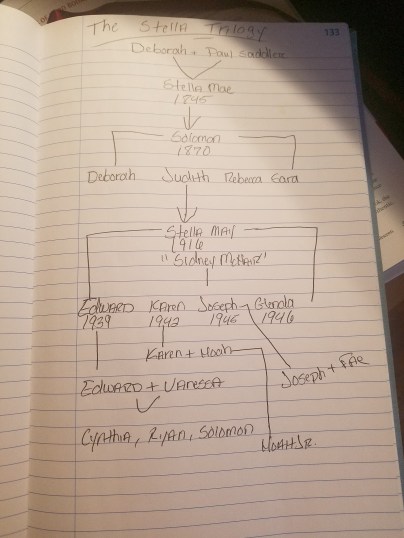
Family Tree

I’ve never fleshed out a family tree with any other series as I have with Stella, and I think it has helped with the writing. It doesn’t mean everyone in the tree are part of the central cast of characters or that I should include every detail, but it does make it easier for me when I am writing to remember who belongs to who. Stella is a short series (each book only about 100-115 pages). As Nathaniel, Hawthorne says, “Easy reading is damn hard writing.” Some may think a short book is quick and easy to write, but this is not so. It’s an easy read but requires just as much work as a full-length novel.

Let’s meet the family!

Paul Saddler and Deborah – Saddler is the owner of slaves on The Paul Saddler Plantation, including a young woman named Deborah. In 1845, Paul and Deborah had a little girl named Stella.

Stella and Solomon – Stella later gives birth to a little boy named Solomon. He is very light-skinned with jet black hair and green eyes like his father, John. Stella met John through her sister Clara, but you’d have to read book one to learn more about this awkward relationship.

Solomon – Solomon marries a white woman, and together, they have four girls: Deborah (named after Stella’s mother), Rebecca, Judith, and Sara.

Judith – It is in book two, we see that Sidney’s mother is Judith. Judith dates a black man and gives birth to a little girl she names Stella, in honor of her grandmother. But this Stella changes her name later in life (you have to read the book to find out why) to Sidney. Sidney marries a white man named Clarence McNair. Sidney and Clarence have four children: Edward, Karen, Joseph, and Glenda.

Edward – Edward marries a white woman named Vanessa, and together they have three children, Cynthia, Ryan, and Solomon. Ryan and Solomon aren’t major characters, but Cynthia is.

Karen – Karen dates a Black Panther in the 60s named Noah, and together they have a son, Noah Jr.

Joseph – Joseph marries a black woman, Fae, and together they have a boy and girl, Tanya and Micheal. It is in book three we learn what happened to Joseph after he left his mother’s house after the fight with Edward in book two, how he met Fae, and how he got mixed up in The Freedom Rides and Civil Rights Movement. His children are minor characters but add to the family tree and help to establish the depth of Jo and Fae’s relationship.

Glenda – Glenda is a single mom raising triplets, all boys.

In book one, we meet everyone here, including additional characters like Paul’s wife Elizabeth and their daughter Clara, Stella # 1’s friend Lola, Aunt Cecily, and others on the plantation.

What does writing out a family lineage as this do? 

It helps me to create vivid characters. Everyone didn’t come to me at once. I started with the first Stella and her mother, Deborah. The first time we go back to Stella’s time in book one, that first chapter is what started the series, with Stella and her mom at the store and Stella trying to tell mom she has to use the bathroom. I then went back to write what became the first chapter, with Cynthia and Alex later.

Even though the book is called The Stella Trilogy, I wanted to focus in on Cynthia in book one to explore how not passing down history can affect our children. In book two, Cynthia is two years old, and the year is 1979. In book one, we opened in 1996, and Cynthia is a young woman. The decision her dad made in ’79 causes her to grow up and not know who she is. We recount Stella’s story in book one because it is the glue that ties everything together. We then go backwards with books two and three to see just how things unfolded.

Why does Cynthia express racists thoughts toward blacks even though she has black blood? Why did Edward leave his daughter in the dark about the true nature of her race? What happened in 1979? What is Mama Sidney’s big secret? How did the history of this family get so lost? Will Stella’s legacy bring her family back together again?

One inspiration for this family tree was Roots. I love the “six degrees of separation” this groundbreaking series has to it. To learn more about the motivation of Alex Haley’s Roots, click here.


Coming March 24, 2020

About Book One:

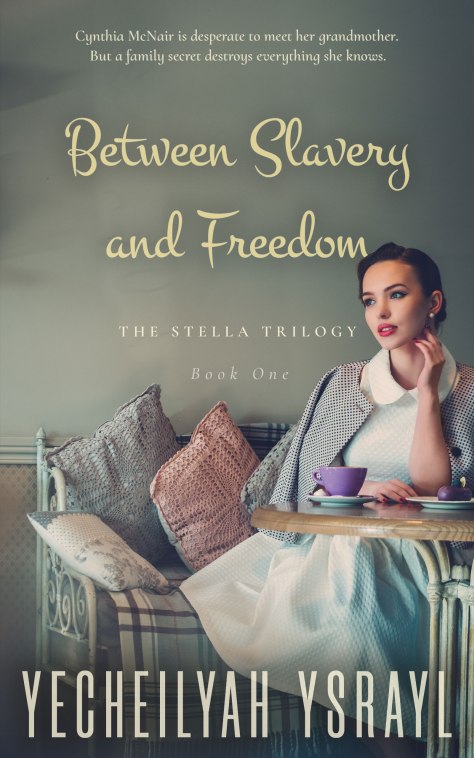
Cynthia McNair and her boyfriend, Alex, express some racist feelings toward blacks. The visit Cynthia’s grandmother Sidney McNair, who recounts the story of her ancestor, an enslaved woman named Stella Mae. Cynthia has no idea of her African ancestry or how deep this rabbit hole goes. Will she accept the truth about herself?

Revising The Stella Trilogy: A Behind the Scenes Look

Tomorrow will mark five years since I released the first book in The Stella Trilogy. Wowzers! I am celebrating by introducing the new cover to book one and two. If you haven’t heard, I removed the books from amazon for some much needed polish and am re-publishing them. To learn why check out the blog post “Quality Over Quantity: Why I Pulled My Trilogy from Amazon.”

While I changed the cover to I am Soul after its release and got a new cover to The Aftermath, my first novel (2012), I’ve never wholly revised my backlist before. The Stella Trilogy is getting an entirely new makeover, which includes editing, covers, formatting, and ISBNs. Why go through all the work for an old book?

Books do not expire. Every book is new to people who have never read it which is why it benefits Indie Authors to go back and update “older” works every now and again. Here are some things I saw needed work on Stella:

Editing – It wasn’t enough to slap a new cover on the books. I knew these books had to be revamped altogether. Like most newbie Indie Authors, I had a friend to edit the first version of these books because I didn’t have the money to pay someone. This time around, I am getting the books professionally edited.

Song Lyrics – The first book had song lyrics in it—rookie mistake. You need permission to include the words to a song in your books. I promptly removed those lyrics. I can’t afford to get sued.

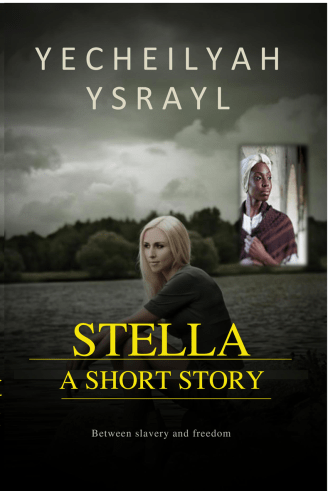
DIY Covers – I like the cover to book one, but it was a DIY premade from Derek Murphy’s website, offered freely to authors. I added the image of the black woman, but the rest was unoriginal. I cringed every time I saw it on his site. Book two was more original as I purchased the winter lady image, but it was still poorly applied to the cover. I did everything in Microsoft Word, and since I didn’t know that super-thin books don’t need a spine (if there aren’t enough pages to warrant one) when the books printed the spine folded over to the front. Yuck. For this reason, new covers were something I knew I needed to get done.

Free ISBN – I am done with the free ISBN game. Listen, if you don’t include the cost of the ISBN in your book budget, you are still a beginner. Have I always purchased my own ISBN? No. ISBNs are expensive, but having your own is worth it. They (ISBNs) are also cheaper if you buy them in bulk. 10 ISBNs can cover ten different books. Applying your own ISBN number to the book ensures that your imprint name will be applied to the book. In other words, you are the publisher, not KDP, and not Lulu. This time around, all books in The Stella Trilogy will have its own ISBN so I can register the books to me.

BONUS: Alternate Ending – I am excited about adding an alternate ending to excite Stella fans who have already read the books. The conclusion to book one is not the ending of the original book one. Why the change? It is to tighten the link between all the stories for a smooth transition from one book to the next.

Lessons I learned so far:

Work with what you have until you can do better.

You don’t have to know everything to start. I didn’t. Work with what you have until you can do better. (If a free ISBN is all you have to work with right now, use it until you are able to move up. I did.) I do not regret putting Stella or my first books out there, even though they weren’t properly edited, and the covers were DIY. These books gave me my start, and the courage and the freedom to step out on my own. These books gave me my beginning, and I am forever thankful to Yah for them.

Then, when you can do better, please do it. 

The other part of this, though, is doing better once I knew better. If I produce mediocrity, I will only get mediocre results. Once you’ve stepped out there, it is okay to go back and change what you see needs work. We may not be perfect, but this doesn’t mean we cannot strive to maintain a level of excellence in all we do, even if the best we can do still falls short. We don’t have to stay at the same levels in the latter part of the journey as the first. We can tweak and correct and improve with time. We have that freedom, to sharpen, and to elevate.


About The Stella Trilogy

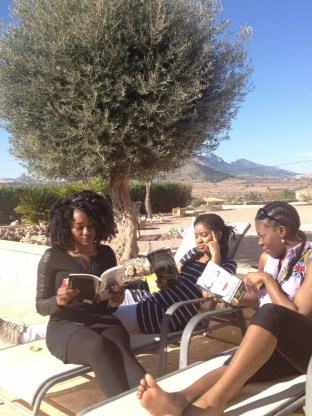
Readers reading Stella. Circa, 2015.

Stella is a work of Historical Fiction and is distinctive in its focus on one woman’s road to self-discovery, against the backdrop of the African American fight for justice, racial equality, and freedom. We discover how three individuals living in separate periods strive to overcome the same struggle, carefully knit together by one blood. The three-part series features elements of enslavement, Jim Crow, Passing, and the Civil Rights Movement.

Quality over Quantity: Why I Pulled My Trilogy from Amazon

These books may still show up but they will be completely removed (out of print) soon. They will be relaunched with new edits and covers.

The Stella Trilogy put me on in more ways than one. It was the first time I got reviews on amazon for my books (I knew nothing about amazon when I started) and the Stella Trilogy book signing made me enough money to pay my bills and then some. It was the first time I saw real money from my writing and it was all from selling paperbacks (I always sell more paperbacks than ebooks. Unconventional for some, but this is how it has been for me). I also won my first award, an appreciation award given to me by my readers.

The Stella Trilogy changed lives.
The Stella Trilogy changed minds.
The Stella Trilogy is how I widened my readership.
The Stella Trilogy helped me to level up and step outside of the box.

The Stella Trilogy was groundbreaking for me and it is precisely for this reason that I am pulling her from Amazon and my website… for further editing.

The books are undergoing makeovers, a fresh edit, and new covers. For those of you who’ve read it, you know the books are short and as my #1 priority outside of the coming poetry book and Lit Mag Magazine; I hope to have them back up by the end of this year. I am not slacking on this. Stella made a big impact, and she needs to be back up soon.

The year is 1864 in Louisiana and the story slips back in time introducing Grandma Stella’s Great grandmother, Stella Mae, age nineteen years. Stella Mae begins her story with a memory of how as a child she was forced to use the facilities designated for “niggras only.” Young Stella Mae tries to reason out why her Mama can’t walk into the front door of the general store and why they can’t use the restroom everyone else uses. Even at a young age, Stella Mae could sense the inequality in her existence. – Colleen Chesebro

I have come a long way since 2015 when the first Stella book released. As a historical series it’s important to me that the book is as superior as I can afford to make it. Now that I have my foot into the schools, I hope to one day have the series taught as part of the curriculum. I have so much hope for these books and so many visions for what they can become.

The sky is not the limit. There are no limits.

I was different. It might give you a slow start but being different is gonna carry you a long way.” – Master P

I am not a fan of most rap music and never was. I like a few old school tracks from Talib Kweli and Common, but I’ve never really been into rap marketed to my age group (although I danced to it in my teens at parties lol). I was always an R&B type of person. I still remember the days my sisters and cousins used to record music videos on VHS and fall asleep watching them. We also recorded songs from the radio on cassette tapes so we can listen to it repeatedly. Despite not being a fan of the music, I admire Percy Miller aka Master P more than any other rapper. I admire him because I think people underestimate him which is precisely why I think he does so well in his business endeavors. I admire him for his commitment to being Independent and using his faith as a catalyst to propel him forward.

Indie Authors, Don’t Be Afraid to Revise Your Backlist

With great authority comes greater responsibility. As we grow and mature in our understanding of this publishing thing, more will be required of us. I know that a poorly edited book could damage my reputation not only as a writer with influence for excellence but also as a teacher and as a lecturer.

I published the first book I ever sold in 2010 and I knew nothing. The book was not edited and had never been available on Amazon. This taught me two lessons:

  • Begin where you are. Take the first step “even if you can’t see the whole staircase” (MLK).


  • After you have taken the first step and put yourself out there, make changes as you see them. If your first book was poorly edited, take it down and get it edited. You didn’t know better at first and that’s okay. But then, once you know better, do better. Do the best you can, until you know better, to quote Maya Angelou. “Then when you know better, do better.”

Do not think for a second that we are not responsible for the knowledge we have. Do not think we are not responsible for changing our behavior as we learn and grow. The quality of the books we put out shows readers what we think of ourselves and also what we think of them. Quality must always supersede quantity. I temporarily removed these books because the quality of the work I put out is more important to me than feeding my own ego of having “published x amount of books.”

It was exciting at first to publish book after book. Like anything we do for the first time it was fresh. As I have grown and as I grow, I value more where these books are going and how they are influencing the world much more than how many of them there are.

Now, for my Stella fans:

I am not changing the core of the story. I am editing the books for better readability and understanding. I am also changing the covers so all the books in the series look the same.

About.

Stella is a work of Historical Fiction and is distinctive in its focus on one woman’s road to self-discovery, against the backdrop of the African American fight for justice, racial equality, and freedom.

The 3-Part series focuses on the history of one family in their struggle for racial identity. Discover in this Trilogy how three individuals living in separate time periods strive to overcome the same struggle, carefully knit together by one blood.

  • Between Slavery and Freedom (1)

We deal with enslavement and freedom both physically and psychologically.

  • Beyond the Colored Line (2)

We deal with passing, self-love, and racial identity. If you were a Black woman living in the Jim Crow era and light enough to pass for white, would you? 

  • The Road to Freedom (3)

We deal with the Civil Rights Movement, Freedom Rides, and the impact our choices make on the next generation.

Coming (Back) Soon

Writer’s Wednesday – Beyond the Colored Line

Sooo. Yea. One reason I don’t like saying what I am going to do is because I end up not doing it (don’t ever say what you will do. Bad idea.) So, when I said Chapter 3 of The Men with Blue Eyes was coming this week I did not anticipate not finishing it. But yea, it’s not finished. So, this week I am sharing a Chapter from my novella “Beyond the Colored Line” (2015) instead. Enjoy.


September 4, 1923

“You’s white.”

Margaret and Josephine had their hands on their hips again, Josephine taking the lead role as always. The wind felt soft against their skin and swayed the handmade dresses in all directions, hovering well below her long, skinny legs.

Her pony tails were twists that never really wanted to stay together. Stella got lost for a minute. Slightly envious. She wished her hair was as thick as Josephine’s. But instead hers could never keep a braid. School had just started at Crestwood Elementary of Belvedere City, just south of Boone County Illinois and already Stella could see this would not be a good year. Same as always.

“I’m not white; I’m Negro, same as you.”

Josephine rolled her eyes, “You look white. You sound white. I thinks you white.”

The girls laughed. Meanwhile, Stella’s blood boiled. Her hazel eyes darkened, blonde hair glistened in the sun, and the blush of anger showed quickly in the space of her cheeks and around her ears.

“You’s white ‘cause we say you’s white,” said Margaret.

“That’s right”, co-signed Josephine, “what kind of name is Stella anyway? What, you some kind of slave?”

“Naw, said Margaret, “she ain’t no slave, she massa.”

Josephine turned her head toward Margaret and laughed in her ear but Margaret saw it coming from her peripheral.

“Josephine!” she yelled. But it was too late. Stella was already on top of Josephine pulling her neatly pressed hair and slamming her face into the dirt. She could hear the screams of the teachers nearby calling her name but she just couldn’t stop.

“I’m not white! I’m not white! I’m the same as you!” she yelled, hot tears streaking down her face.

Josephine was crying now as Margaret tried to peel Stella off her.

“I’m Negro the same as you!” she yelled, slamming Josephine’s face into the ground, the screams from the teachers nearing, inaudible to the anger that consumed her.

Later that Day

Judith stood by the door, tapping her foot impatiently against the hardwood floor as she burned a hole in the back of Stella’s head who sat silently on the sofa, her head down.

“You’re going to have to learn to control yourself Stella.”

“But Mom—”

“Did I ask you to say a word?” Scolded Judith, opening the door at the same time. She expected her guest and opened before she could knock. Mrs. Velma Connor, Stella’s teacher, walked in.

“Good Afternoon, I’d like to apologize again for what happened today. May I offer you some coffee?”

“Never mind that”, said Velma, “I don’t specs to be here long.”

“Well”, said Judith, “let me offer you to a seat then.”

The women walked over to the sofa. Judith sat beside Stella as Velma took the sofa across from them and cleared her throat.

“Stella seems to be having a difficult time adjusting. Her temper is far too easily tickled, if you catch my meaning.”

I do”, said Judith.

“We think perhaps she would be better off in a more comfortable environment. Somewhere more of her liking, if you catch my meaning.”

Judith straightened and looked Velma in her sparkling blue eyes, “Not exactly.”

“Well, Ms. May, the accusations from some of the children are hard to ignore.”

“What accusations?”

“Well, you know. Children will be children,” Velma laughed, “It’s just that they don’t take very well with our kind. Surely you ‘d prefer for Stella— “

“Our kind?” interrupted Judith.

“Why, yes.”

“You don’t have to say anything more Mrs. Conner”, said Judith standing. The fair-skinned woman smoothed the apron hanging from her waist and walked to the door. Opening it, she turned to Stella.

“Stella Mae?”

“Yes mama?”

“Go on upstairs so me and your teacher can talk.”

“Yes ma’am”, said Stella, hurrying up the stairs.

Velma remained seated, “Is there a problem?”

Judith smiled, “No. There’s no problem but I do want you to leave my house.”

Velma’s cheeks turned red as she stood, pointing her nose in the air and strolling toward the door. Her face cringing a scowl.

“By the way, the school has placed Stella under suspension, you understand why.”

“Oh, I do”, said Judith, “you see, defending ourselves, is what we’re taught.”

Confusion washed over Velma’s face as she stared into the green eyes of the white woman in front of her, disgusted that she would stoop so low as to lay with one of them.

“What we’re taught? I’m not sure I follow.”

“Oh yes,” said Judith, “It’s one of the first things my Negro father taught me. You know, our kind I guess.”

The pink rushed to the woman’s nose as she hurried out the door.

And that’s how things had been for us growing up. I couldn’t understand what made Mama so strong. She loved Daddy with every bone in her body but society would never have of it. Mama was Negro sure enough as she was white but Papa didn’t trust it. Being with the love of his life was just too costly for him I guess. I thought about Papa that day and all the days afterward as I stood at the top of the stairs, and watched as my mother waved goodbye to my racist teacher with a smile on her face.

– Stella


This book is available now on Amazon.

Get it free in exchange for an honest review. Email me HERE


“Stella: Beyond the Colored Line is a fascinating walk through the ages–from slavery, to segregation, to the black power movement, to modern times. Through the eyes of one mixed race woman, the author touches on major events in African American history, allowing the reader to experience them in real time. The story deepens when Stella decides to live as a white woman and raise her children as whites. As her family grows and develops within a changing society, Stella and her children reveal complex perspectives and attitudes that make it clear that it doesn’t matter who your ancestors were. Nothing is just simply black or white.”

– Christa Wojo.,

Amazon Customer Review