Tightening Up the Business Structure of Your Writing

I have had this post sitting in my drafts since October 2019. I didn’t want to publish it until I had tightened up my own business structure and then Corona hit and I thought, “Maybe this isn’t appropriate right now” and I put it off. I have a habit of meditating on what I have to do throughout the day before I get up from the bed. This morning I thought, “Wait a minute, this could actually be the perfect time to present this information.”

Even though there aren’t many people working and the world is sick, this could be the perfect time for us to plan, organize, and restructure some things. The other day we cleaned out a closet that had served as the junk closet since we moved in, and Moshe (Husband) organized the garage. These days, we are paying attention to things we have neglected to give much attention to. Why not include our writing business too? Whether you will use this information now or later, this is an excellent time to give it some thought.

In the Beginning

For Self-Publishing a book, things are relatively easy in the beginning. You create a KDP account, connect your bank account (so you can get paid your royalties) and you are set. You can also create a PayPal account to collect funds from books bought through your website or blog and get a card reader to accept payments on the go, such as at book signings.

UPDATE: Card readers are becoming more outdated as apps like Cash App and Zelle become increasingly popular. I highly recommend authors to have a Cash App for book signings and festivals.

Next Level

Depending on your financial situation, it may be necessary to level up if you’ve been at this awhile.

How do you level up from this basic structure? How do you go from author to authorpreneur?

Author + Entrepreneurial Practices = Authorpreneur

An authorpreneur is an author with entrepreneurial practices. 

If publishing a book is like opening a business, you can do things to make sure you are running it like one.

It’s not 2008 and Self-Publishing is not what it used to be. The standards are higher.

Anyone can publish a book today (even if they aren’t good writers), by uploading a Word Document or PDF to Amazon’s Kindle Direct Publishing. In the past, this has brought down the quality of the prestigious process of book publishing and, specifically, Indie Book Publishing. Today, though, the stigma attached to Self-Publishing is fading, and authors who publish top-quality material are being separated from those who do not.

With the current Pandemic ravaging the world, realizing the value of Indie Publishing, social media, and doing business online is apparent now more than ever. A lot of brick and mortar bookstores are closed, and some will not reopen.

The basic system I started this post out as is good initially, but the Indie Author who goes beyond the bare minimum will set themselves apart from the pack.

Create a business name/structure that is legal and connected to a business bank account.

When your business grows, you will discover how important it is to have a legal business structure. It has done wonders for me and helps me keep up with how much is coming in and going out, which helps me have a realistic picture of my ROI or return on investment.  You work hard to write these books, publish them and spend good money to get them out into the world. Don’t let all this hard work go to waste.

You can get away with using a Pseudonym or creative business name at first, but if you are serious about using that name for specific projects, you will need it to be legit. What happens if someone sends you a check in your fake business name and you have not made it legal? Without a business bank account in that name, you will not be able to cash it.

    • Decide if you want to be a Sole Proprietorship, LLC, Corporation, Non-Profit (if you publish books for charity) or any other structure that suits you.

* Most people do not recommend a Sole Proprietorship, but it will work just fine. I am all about keeping things simple.

  • Set up a business bank account – You can set up your bank account once you have your business structure in place and monitor just how much is coming in from your book sales and other author endeavors separate from other forms of income. You will get a business debit/bank card and checks to use for your business. You can even establish a line of credit.
  • Creating a business structure can motivate you because you get to see your writing as a real business and not just a fancy play-name. You can get logos made if you want and do transactions under this name which comes in handy when completing W-9 forms and other paperwork that may be required for you to get paid.

Stay Legally Compliant

  • With a business structure, you will need to keep your business compliant with state and federal business laws. The requirements will vary based on your business structure. (For instance, the conditions are more strict for corporations than LLC’s). An example is that you may have to file once a year with a filing fee of maybe $30 to stay in compliance. The process is not tedious, and you may even be able to do it online. For details on staying compliant, you can visit the small business administration website here.

If you don’t stay compliant your business will fall into an inactive status.

Publish Your Books Under Your Own Imprint

Once you have your legal business structure and business bank account in place, it is time to publish your books like you own your business.

  • Buy Your ISBNs – The ISBN is a unique identifier for a book issued by an ISBN registration agency. In the US, this agency is Bowker.* In some other countries, the ISBN is free, but in the US they are not. They are expensive, so it’s best to buy them in bulk if you can. You can buy a block of ten which would cover ten separate paperback or hardcopy books. KDP, Lulu, and other POD (Print on Demand) companies do provide ISBNs for free if you absolutely cannot afford to buy one

But…

Free assigned ISBNs belong to the company that issues it, such as KDP or Lulu. This means they (KDP/Lulu/Other said company) are listed as the publishers of that book, not you.

*There are tons of fake ISBN companies out there. If you are in the US, be sure you purchase your ISBN from Bowker.

Once you have your own company, you will want to have your books listed under your company name. If you are the publisher, you should be listed as the publisher. If ownership is important to you, buying your own ISBNs is something you might want to look into.

With your company name legalized, your business structure secure, your EIN in hand, your bank account set up, and books under your ISBN, you have positioned yourself as a serious business person. It is now easier than ever for high-profile people to do business with you.

It’s easy to go the free route, but free is limiting, and it does not always set you apart. Creating an actual business complete with the necessary paperwork makes it easier for you to stay organized, file taxes, rise above the crowd, and stand out as a professional author.

Extra Tips

  • Your work is under copyright protection the moment it is created. Don’t let scam publishing companies fool you by saying “Keep 100% of Your Copyright.” This means they are promising you something you already have. For publishing rights (different from copyright) all you have to do is buy your own ISBN. If you want to go the extra mile and register a copyright with the copyright office you can do that inexpensively at copyright.gov.
  • When tightening up your writing business, be sure you have both a paperback and a digital version of your book available.

I talk a lot about paperbacks because a). I have personally done better with paperbacks and b). authors can sell paperbacks through their own author website along with cool author swag and things instead of relying only on Amazon. However, that doesn’t negate the importance of having digital versions of your book available too. We are living in a digital age, and with everything being online, authors without digital books will be left out. Brick and Mortar bookstores without an online presence are struggling right now.

For those who sell paperbacks, consider lowering your print book price if you do not see sales. I love buying paperbacks from Indies, but a lot of them are also costly. I am not saying you can’t raise your price (I have a separate post about that here), that there aren’t people who will buy at that price, or that your book isn’t quality enough to sell that price.

I am only saying to be realistic.

Who is buying a $30 (plus s&h) 100-page paperback from an unknown first-time Self-Published Author?

Do what works for you, but make sure you are being practical.

Photo by LinkedIn Sales Navigator on Unsplash

When I first drafted this post, I watched a video of Tyler Perry advising entrepreneurs. I am not a big Perry fan, but when people are advising about business, I listen. Perry talked about entrepreneurs learning when to let go. Here, he meant letting go of business practices that no longer serve you once your business grows. He spoke of not being so used to how it has always been done that we are not open to change. For example, Perry’s sister used to keep receipts in a folder, but as Tyler’s business grew, that kind of accounting system no longer worked for taxes. Not when you have over 400 employees.

As professional Indie Authors, we must have the same mindset. This may not be ideal for everyone, but if you fit one of these categories a legal business name and account may be worth it:

  • You’ve been publishing awhile and you are making a significant income from your books and services.
  • You want to separate your personal funds (finances from your day job or other income) from your book business.
Want more Indie Author Tips? Visit the Indie Author Basics with EC page here!


My Author Presence online now looks like this. Please take note of the new twitter handle and Facebook Page.
👉Instagram: @yecheilyah
👉Twitter: @yecheilyah

#RRBC Bring on the Genres: Poetry

This weekend I had the pleasure of joining RRBC for its debut show on BlogTalkRadio  “Bring on the Genres” with host Jan Sikes, and authors Balroop Singh, and D.L. Finn. We discussed the process of creating poetry. Click on the link below to hear the show. Join us as we explore this genre.

>>Click Here to Join Us<<

Revising The Stella Trilogy: Cast of Characters

I am always thinking about why Stella is so set-apart. Why are these books so effortless for me? The first time I released the series, things went smoothly, and the same is happening now. I can sit down, open Stella, and flow (or as I told a room of students, I sit down and bleed, to quote Hemingway).

A good fiction book, to me, has great character development. The characters are realistic in dialogue, how they talk to each other, what their lives are like, the decisions they make, and so on. When I am writing novels, I typically write Historical Fiction, so setting and dialogue are paramount. The setting is a significant element because the environment affects the plot and the characters. A story set in the 1800s must have language authentic to that time, and the characters must speak and interact like they are in the 1800s, not 2020.

My books tend to include a wide selection of people, some minor characters, some major characters. This is risky, but I’ve been told it’s one of my strengths. Somehow, I am capable of keeping up with everyone and letting them interact authentically.

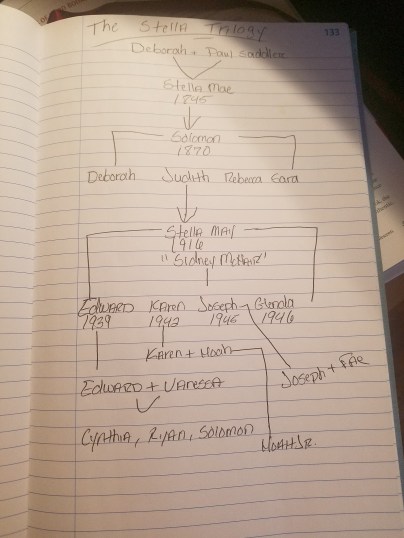
Family Tree

I’ve never fleshed out a family tree with any other series as I have with Stella, and I think it has helped with the writing. It doesn’t mean everyone in the tree are part of the central cast of characters or that I should include every detail, but it does make it easier for me when I am writing to remember who belongs to who. Stella is a short series (each book only about 100-115 pages). As Nathaniel, Hawthorne says, “Easy reading is damn hard writing.” Some may think a short book is quick and easy to write, but this is not so. It’s an easy read but requires just as much work as a full-length novel.

Let’s meet the family!

Paul Saddler and Deborah – Saddler is the owner of slaves on The Paul Saddler Plantation, including a young woman named Deborah. In 1845, Paul and Deborah had a little girl named Stella.

Stella and Solomon – Stella later gives birth to a little boy named Solomon. He is very light-skinned with jet black hair and green eyes like his father, John. Stella met John through her sister Clara, but you’d have to read book one to learn more about this awkward relationship.

Solomon – Solomon marries a white woman, and together, they have four girls: Deborah (named after Stella’s mother), Rebecca, Judith, and Sara.

Judith – It is in book two, we see that Sidney’s mother is Judith. Judith dates a black man and gives birth to a little girl she names Stella, in honor of her grandmother. But this Stella changes her name later in life (you have to read the book to find out why) to Sidney. Sidney marries a white man named Clarence McNair. Sidney and Clarence have four children: Edward, Karen, Joseph, and Glenda.

Edward – Edward marries a white woman named Vanessa, and together they have three children, Cynthia, Ryan, and Solomon. Ryan and Solomon aren’t major characters, but Cynthia is.

Karen – Karen dates a Black Panther in the 60s named Noah, and together they have a son, Noah Jr.

Joseph – Joseph marries a black woman, Fae, and together they have a boy and girl, Tanya and Micheal. It is in book three we learn what happened to Joseph after he left his mother’s house after the fight with Edward in book two, how he met Fae, and how he got mixed up in The Freedom Rides and Civil Rights Movement. His children are minor characters but add to the family tree and help to establish the depth of Jo and Fae’s relationship.

Glenda – Glenda is a single mom raising triplets, all boys.

In book one, we meet everyone here, including additional characters like Paul’s wife Elizabeth and their daughter Clara, Stella # 1’s friend Lola, Aunt Cecily, and others on the plantation.

What does writing out a family lineage as this do? 

It helps me to create vivid characters. Everyone didn’t come to me at once. I started with the first Stella and her mother, Deborah. The first time we go back to Stella’s time in book one, that first chapter is what started the series, with Stella and her mom at the store and Stella trying to tell mom she has to use the bathroom. I then went back to write what became the first chapter, with Cynthia and Alex later.

Even though the book is called The Stella Trilogy, I wanted to focus in on Cynthia in book one to explore how not passing down history can affect our children. In book two, Cynthia is two years old, and the year is 1979. In book one, we opened in 1996, and Cynthia is a young woman. The decision her dad made in ’79 causes her to grow up and not know who she is. We recount Stella’s story in book one because it is the glue that ties everything together. We then go backwards with books two and three to see just how things unfolded.

Why does Cynthia express racists thoughts toward blacks even though she has black blood? Why did Edward leave his daughter in the dark about the true nature of her race? What happened in 1979? What is Mama Sidney’s big secret? How did the history of this family get so lost? Will Stella’s legacy bring her family back together again?

One inspiration for this family tree was Roots. I love the “six degrees of separation” this groundbreaking series has to it. To learn more about the motivation of Alex Haley’s Roots, click here.


Coming March 24, 2020

About Book One:

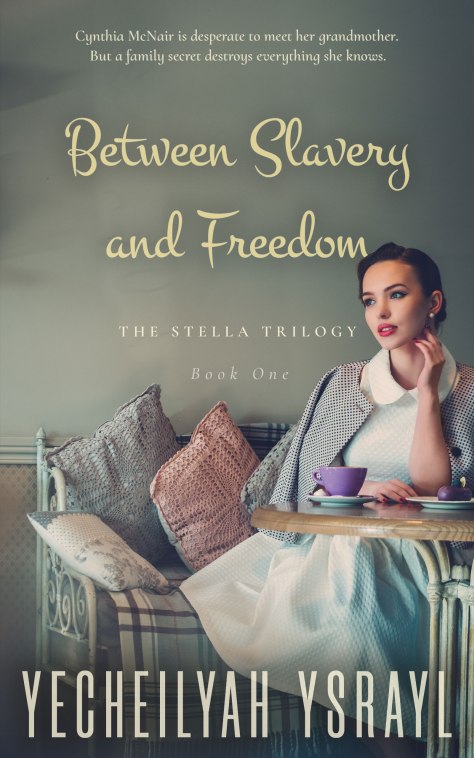
Cynthia McNair and her boyfriend, Alex, express some racist feelings toward blacks. The visit Cynthia’s grandmother Sidney McNair, who recounts the story of her ancestor, an enslaved woman named Stella Mae. Cynthia has no idea of her African ancestry or how deep this rabbit hole goes. Will she accept the truth about herself?

Revising The Stella Trilogy: A Behind the Scenes Look

Tomorrow will mark five years since I released the first book in The Stella Trilogy. Wowzers! I am celebrating by introducing the new cover to book one and two. If you haven’t heard, I removed the books from amazon for some much needed polish and am re-publishing them. To learn why check out the blog post “Quality Over Quantity: Why I Pulled My Trilogy from Amazon.”

While I changed the cover to I am Soul after its release and got a new cover to The Aftermath, my first novel (2012), I’ve never wholly revised my backlist before. The Stella Trilogy is getting an entirely new makeover, which includes editing, covers, formatting, and ISBNs. Why go through all the work for an old book?

Books do not expire. Every book is new to people who have never read it which is why it benefits Indie Authors to go back and update “older” works every now and again. Here are some things I saw needed work on Stella:

Editing – It wasn’t enough to slap a new cover on the books. I knew these books had to be revamped altogether. Like most newbie Indie Authors, I had a friend to edit the first version of these books because I didn’t have the money to pay someone. This time around, I am getting the books professionally edited.

Song Lyrics – The first book had song lyrics in it—rookie mistake. You need permission to include the words to a song in your books. I promptly removed those lyrics. I can’t afford to get sued.

DIY Covers – I like the cover to book one, but it was a DIY premade from Derek Murphy’s website, offered freely to authors. I added the image of the black woman, but the rest was unoriginal. I cringed every time I saw it on his site. Book two was more original as I purchased the winter lady image, but it was still poorly applied to the cover. I did everything in Microsoft Word, and since I didn’t know that super-thin books don’t need a spine (if there aren’t enough pages to warrant one) when the books printed the spine folded over to the front. Yuck. For this reason, new covers were something I knew I needed to get done.

Free ISBN – I am done with the free ISBN game. Listen, if you don’t include the cost of the ISBN in your book budget, you are still a beginner. Have I always purchased my own ISBN? No. ISBNs are expensive, but having your own is worth it. They (ISBNs) are also cheaper if you buy them in bulk. 10 ISBNs can cover ten different books. Applying your own ISBN number to the book ensures that your imprint name will be applied to the book. In other words, you are the publisher, not KDP, and not Lulu. This time around, all books in The Stella Trilogy will have its own ISBN so I can register the books to me.

BONUS: Alternate Ending – I am excited about adding an alternate ending to excite Stella fans who have already read the books. The conclusion to book one is not the ending of the original book one. Why the change? It is to tighten the link between all the stories for a smooth transition from one book to the next.

Lessons I learned so far:

Work with what you have until you can do better.

You don’t have to know everything to start. I didn’t. Work with what you have until you can do better. (If a free ISBN is all you have to work with right now, use it until you are able to move up. I did.) I do not regret putting Stella or my first books out there, even though they weren’t properly edited, and the covers were DIY. These books gave me my start, and the courage and the freedom to step out on my own. These books gave me my beginning, and I am forever thankful to Yah for them.

Then, when you can do better, please do it. 

The other part of this, though, is doing better once I knew better. If I produce mediocrity, I will only get mediocre results. Once you’ve stepped out there, it is okay to go back and change what you see needs work. We may not be perfect, but this doesn’t mean we cannot strive to maintain a level of excellence in all we do, even if the best we can do still falls short. We don’t have to stay at the same levels in the latter part of the journey as the first. We can tweak and correct and improve with time. We have that freedom, to sharpen, and to elevate.


About The Stella Trilogy

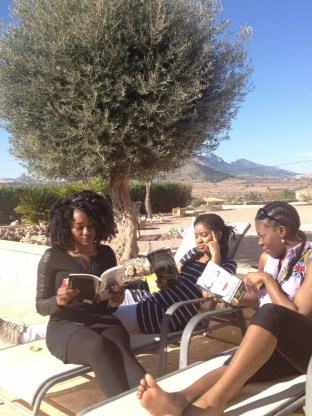
Readers reading Stella. Circa, 2015.

Stella is a work of Historical Fiction and is distinctive in its focus on one woman’s road to self-discovery, against the backdrop of the African American fight for justice, racial equality, and freedom. We discover how three individuals living in separate periods strive to overcome the same struggle, carefully knit together by one blood. The three-part series features elements of enslavement, Jim Crow, Passing, and the Civil Rights Movement.

Lit Mag 2020 Is On the Way

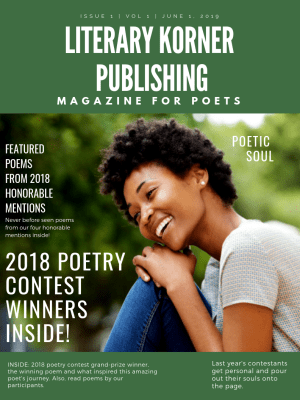
The 2020 Lit Mag Literary Magazine for Poets is on its way out! We are proud to feature last year’s Grand Prize Winner Chanelle Barnes on the cover. Volume 2, Edition 2, is scheduled to print Tuesday, March 3, 2020.

This year’s magazine features the winners of “Yecheilyah’s Annual Poetry Contest 2019”: Chanelle Barnes, BuddahDesmond, Jahkazia (Jah-kay-asia) Richardson (our 2018 Champion), Kiyana Blount, and Dondi A Springer. The mag also features the poems of select poets who participated last year.

How can you be featured in the Lit Mag Magazine? Be sure to participate in my annual poetry contests! Rules and guidelines for the 2020 competition to be announced.

Be sure to support this contest by picking up your copy of LitMag 2019 by clicking on the link below. Your contribution helps us to keep this contest going by keeping the entry fee-free or low-cost for participants, allows us to print the magazine featuring the winners, and of course, offers some dope prizes to contestants! Link below:

Get LitMag 2019 Here

Visit our 2017 Winners Here

Visit our 2018 Winners Here

Visit our 2019 Winners Here

How Permanent is this Grief?

Photo by Carl Heyerdahl on Unsplash

Something about sorrow sounds spiritual. It sounds like awakenings and revelations. Sounds like pacts and promises. Sounds contradicting too, like hope and despair are twins. We want to shackle ourselves to change. Something about sorrow got us questioning our own mortality. But how permanent is this grief? Where are we two years from now? Is this feeling fleeting? Will we forget our own deaths could be just as close as Kobe’s? Right now is good. It’s all reflection-like. Our throats are full of emotion and saltwater. Only time will tell if this is real or just another ode to the people we worship as Gods. Today, forgiveness is an anthem we sing each morning. Kisses adorn the faces of our loved ones, and the heavens ain’t heard these many prayers since the last celebrity died. And yet I ask myself how permanent is this grief? What have we learned?

There are people we know and love that are close. We can reach out and touch them. Now. Today. Will we? Some of us will Tupac this young man’s legacy while forgetting the promises we made to ourselves to be better people outside of the internet. We will forget those feel-good words we concocted when the world was in mourning. The “every day ain’t promised,” and “hug the ones you love,” we spit into the air as if life has promised our names won’t be the next one carved into the next hashtag. Like our pictures won’t be the ones swarming the internet like the locust currently congregating in East Africa.

Yea, something about sorrow sounds spiritual. Got us thinking about life and truth and family and love. But will this last? How permanent is this grief? That is the question. 

Nourish Your Offline Relationships

Photo by Priscilla Du Preez on Unsplash

Would you know if your friend is feeling down if he/she didn’t post about it? Would you know when his/her birthday was if Facebook didn’t tell you? Would you have the information necessary to congratulate those you love on their achievements, like weddings, and graduations if they didn’t post about it?

How well do we know the people we call friends?

Yesterday was my husband’s birthday and birthdays always have me thinking about relationships and social media. A few years back I had deactivated my Facebook a few days before my birthday. I didn’t feel like being bothered with accolades from people who hadn’t spoken to me since my last birthday. An interesting thing happens when I do this: The people who know me most will call or text me. Then, at the conclusion of the day I’ll post something on social and out of the woods will come those who thought they knew me and yet didn’t know something as basic as the date of my birth.

I had one person I considered a sister call me three days after my thirtieth birthday. There’s no harm in this. I’m not that sensitive. People don’t have to stop their lives for me. Reach out when you can. What I found odd is not that she called three days later. What was odd is that she thought she had called on my actual birthday. I found this odd because I thought we were closer than that. I had known the woman over ten years. We had lived with one another at some point, interacted with one another’s children, dined together, laughed, and had deep conversations. This wasn’t just any sister, this was someone I thought knew me well. Well enough to know my birthday is not May 29th. It doesn’t surprise me that today, we are no longer in touch.

But don’t get distracted. This is not about birthdays.

This is about the work we put or do not put into relationships now that Social Media automates our lives. Now that there is “an app for that” some of us have become lazy in our interactions with one another.

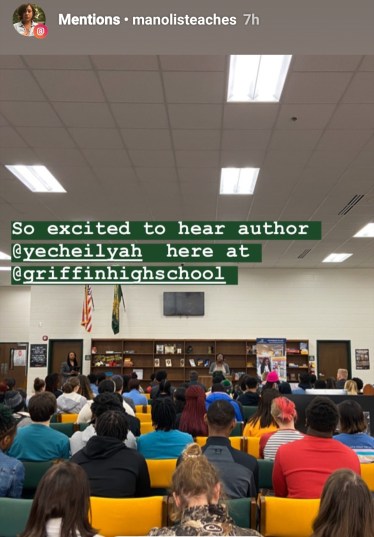
I had the pleasure of visiting Griffin High School last weekend. I spoke to four classes of tenth and eleventh graders about writing, publishing, and my journey as an author. I love young people. I love their innocence and straightforwardness. I love their non-sugarcoating questions. Many of them asked me if I “made a lot of money,” and “how do I deal with criticism?” It swelled my heart to have the pleasure of being there with them. One student asked me if I thought the ebooks would overtake paperbacks. I told him that while digital has enhanced writing in many ways, I think the paperback is here to stay.

Digital books are convenient when I am eagerly expecting reading a book and I don’t want to wait for the paperback to come in the mail. It’s fast and quickly satisfying. Buying a paperback book costs more and takes patience but when it comes there is something immensely gratifying about holding the book in my hands and turning the pages. A feeling I do not get when I read digitally. When I can look in someone’s eyes and talk with them as I did last week, answer their questions, hear their concerns, sign their books organically, hug them and take pictures with them, nothing online can compare to that experience. That human experience.

Let’s say digital books represent social media and paperbacks represent real life. While it may be easier to wait for a notification to tell you that your loved ones are “feeling sad” it is much more productive to hear their voice on the other end of the phone or to give them an inspiring word through text. It is even more fruitful to see them face-to-face, to hear their voices, and look into their eyes. Some things you will never know about a person from their social media pages. If they are like me, quiet, reserved and private, you will only get the basics. Facebook may tell you when it’s my birthday or notify you when I am traveling or checking into a restaurant but for those personal, heartfelt thoughts? There’s no app for that.

Nourish your offline relationships. To nourish someone is to feed them deeply with something good for them. It means to give them something that will encourage them to live well. When you do this, you do not make assumptions about anything you see in the virtual reality. You are not easily offended because someone “didn’t tell you” they were traveling or gathering or graduating. You already know these things because you have built a real-life relationship with the people you love and that bond is stronger than any post, tag, or “Friendversary” that pops up in your Facebook memories.