Yecheilyah’s Book Reviews – The Weight of Salt by Sandra Montanino

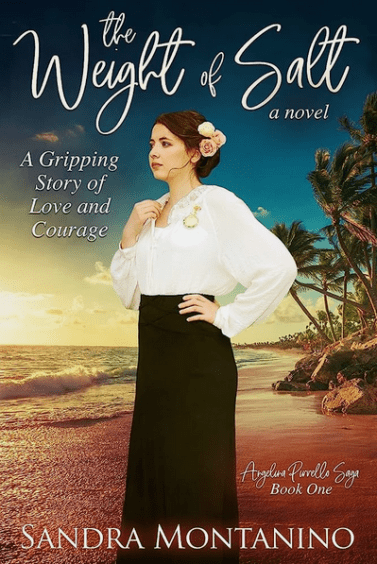
Title: The Weight of Salt: A Gripping Story of Love and Courage (Angelina Pirrello Saga Book 1)

Author: Sandra Montanino

Publisher: Edwards Publishing; 1st edition

Published: January 13, 2021

Pages: 358


The Weight of Salt follows a Sicilian Italian family as they make their way through early 1900s America via the perspective of fifteen-year-old Angelina Pirello. In detail and filled with such emotion you’d think you were in the room, the author opens with Angelina watching her mother give birth for the seventh time. We are in Ybor, Florida, and the year is 1906.

The midwife is not very helpful, the baby is breached, and the doctor is delayed because of other patients since his wife won’t tell him that the Pirellos need assistance.

The reader’s exploration of Sicilian culture, religion, and family life begins with this event. Since the family is deeply Catholic, I sensed from the beginning that Angelina would be unique. She first rejects the idea that her infant brother (the one who passed away during birth) cannot enter paradise and will remain in limbo. The doctrine holds that everyone has Adam and Eve’s original sin, which must be washed away via baptism. However, unbaptized infants who pass away live in limbo and are not entitled to the gates of heaven.

Angelina is floored, and we see glimpses of her impending rebellion against tradition.

As fate would have it, she falls in love with someone her father, Domenico disapproves of. He then tries to give her an arranged marriage. Meanwhile, he is hiding college letters.

A lot is going on here, and there’s something in this book for everyone.

In the beginning, Angelina getting into a fight with the doctor’s wife (yes!) had me dying laughing. (Like, ma’am, why are you fighting this little girl?) For romance lovers, Angelina and Fabian will scratch that itch. For history buffs, there’s something in it for us too. Angelina learns the story of her parents and neighbors’ arrival at Ellis Island and how her neighbor’s family (not being wealthy) endured long lines and cruel examinations.

This book is lengthy, and you would want to savor it slowly. I enjoyed it mainly because it gave me a break from nonfiction, which I’ve been writing and reading a lot lately. (I’ve missed fiction!) It is complex, with numerous facets, themes, fully realized characters, and a masterfully structured narrative. Readers who prefer historical romance should definitely check it out, but historical fiction fans will also love it.

Ratings:

  • Plot Movement / Strength: 5/5
  • Entertainment Factor: 4/5
  • Characterization: 5/5
  • Authenticity / Believable: 4/5
  • Thought Provoking: 5/5
    Overall Rating: 5 / 5 stars

Grab Your Copy of The Weight of Salt Here

Salt


To have your book reviewed on this blog apply here. The registry is open UNTIL AUGUST 1ST!

Be sure to apply BEFORE August even if your book releases after if you want a review on this blog.

Stay tuned for our next dope read!

Yecheilyah’s Book Reviews is a reputable review service that features writers from all over the world, both traditionally and independently published. We are listed on Kindlepreneur as a top-tier book review blog and Reedsy as one of their vetted active book blogs that provide insightful, excellent book reviews.

*Books are read in the order they are received.


Black History through Poetry

I hope you are all doing well and all that good stuff. I have not blogged much lately because I am working on The Women with Blue Eyes and tons of other projects, including our 4th Annual Poetry Contest I want to get underway next month.

If you are new here, welcome to The PBS Blog! This is a great time for you to learn more about who I am through my most recent interview

Below is a snippet of the interview and links with WRDE-TV, an affiliate of CBS. Also find links to Fox 34 and WBOC, affiliate of NBC. (If you read one, you’ve read the others cause it’s the same article, just on different platforms.)

Interview Snippet:

What’s your best piece of advice for readers who desire to find success in their life?

Y: Faith without works is dead, so my best advice is to do your work. Get on your knees and pray and then get on your feet and work. I hate to sound so overly simplistic, but sometimes things are a lot simpler than we make them out to be. We must be willing to do the work necessary to manifest all that we believe we can achieve. Belief is good, but alone it is not enough so I cannot tell you to just believe in yourself. You must prove this belief with action. What you say you believe is one thing, but what you do exposes who you really are. Whatever it is you say you want, you must act on it for it to become a reality.

Not only must we love ourselves and believe in our ability, but we must also be prepared to do the work necessary to turn the unseen into the seen. Consistency is also key because while actions speak louder than words, consistency speaks louder than both. These skills Yah has blessed us with are not intended to serve only us. They are meant for us to multiply. This is possible when we combine a steadfast belief with a compelling work ethic.

Speaking of success, what does the word mean to you?

Success to me means to genuinely enjoy what you do with your life without sacrificing your authenticity. It means to multiply your gifts to serve as many people as is destined for as long as the breath of life is in your body and you are walking this earth. To do so with as much grit and love as possible, and to do it all while staying true to your integrity.

Read more at one of these links:

FOX 34: https://www.wdfxfox34.com/story/43500189/author-and-poet-yecheilyah-ysrayl-teaches-black-history-through-powerful-poetry

WRDE: https://www.wrde.com/story/43500189/author-and-poet-yecheilyah-ysrayl-teaches-black-history-through-powerful-poetry

WBOC: https://www.wboc.com/story/43500189/author-and-poet-yecheilyah-ysrayl-teaches-black-history-through-powerful-poetry


Read I am Soul or My Soul is a Witness? Don’t forget to leave an honest review! Links below.

Click here to review (or buy for 99cents!) I am Soul

Click here to review (or buy) My Soul is a Witness

“The Day You Plant the Seed is Not the Day You Eat the Fruit”

I learned a lot revising The Stella Trilogy, but the most important lesson I learned is, “the day you plant the seed is not the day you eat the fruit.” I don’t know who the original author is of this saying, and I know there are many versions of the same quote.

This means to me, the first time you get an idea is not the same time you will bring it forward. I had wanted to revise The Stella Trilogy for a long time, but it was hard to imagine taking the time to launch a book that has already released, let alone three. It was hard to imagine having the resources to produce three new covers, edit three separate books, format them, and all that other jazz.

But the day you plant the seed is not the day you eat the fruit.

I had to wait until I had the time and resources to get it done.

Then, I had to put it in my mind that once I began, I would have to keep going. This meant no waiting two and three months between books. If I was going to release book one, books two and three had to be right behind it.

And I’m sort of a slow writer.

It’s incredible to realize that what we put into our mind can manifest as we planned it if we are disciplined and patient enough.

It’s even more incredible to know that although a man plans his way, Yah guides his steps. (Prov. 16:9)

I wanted to release these books back to back, and I am thankful that I could accomplish what I set out to do.

It was hard for me to see the purpose of this endeavor at first, but revising these books helped me to see visions of another series using the same characters from The Stella Trilogy (something like a spin-off) with Joseph’s children.

Isn’t that amazing? Maybe revising this story wasn’t about what was already there, so much as what can grow from it.

I am excited about where these visions will take me and so happy to have you here with me.


Book 3 in The Stella Trilogy,
The Road to Freedom, is ready for you.

About.

Book three follows Stella’s son Joseph after a fight with his brother compels a young Joseph to leave his mother’s house and join his friends for a trip to Atlanta for the Student Non-Violent Coordinating Committee’s (SNCC) second conference. Excited to live life on their own, Jo and his friends have left school and the lives they were living for a chance to become part of the movement. With no money and virtually no plan, the seven friends, three black and four white, set out for the road when they are stopped by a racist cop who makes them exit the car. The teens are unaware that a mob of Klansmen await them at the New Orleans bus terminal. Find out in the third installment of the Stella Trilogy how Joseph and his friends discover the hard way that freedom has never been free.

*Click Here to Get The Road to Freedom

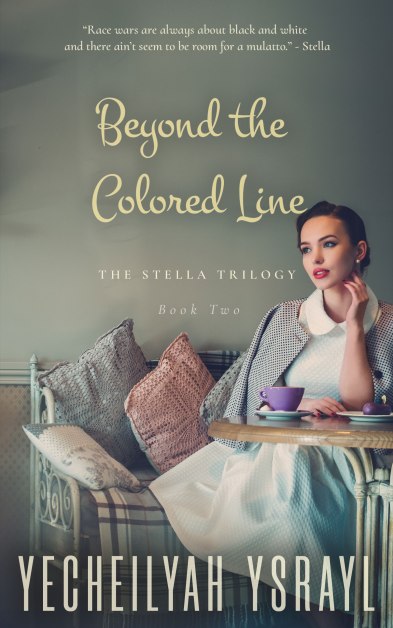
Stella: Beyond the Colored Line is Live (The Stella Trilogy Book 2)

Beyond the Colored Line is LIVE
“This story retells the history of many African-American families alive today. It is a heritage rich with strife and suffering but also filled with a hope and a desire to finally grasp the freedom that has been so elusive and out of reach for so many. At times, I was forced to accept some uncomfortable truths about our American past. There is nothing wrong with that. This story makes you think about freedom and what it really means to you as a person, and as an American. I loved this story because it is through the learning of other’s journeys that we begin to learn much about ourselves. Their pain becomes our pain and we begin to see through their eyes. Stella will touch your soul with such a sweet simplicity you won’t even know it.”

– Colleen Chesebro, on Stella: Beyond the Colored Line, First Edition

About.

In book two, we dig deeper into the McNair family’s legacy. Named after her great-grandmother, Stella has a very light complexion which causes her to be the tease of her classmates. Unable to find solace among her African American contemporaries, Stella finds it challenging to adjust to a world where she is too light to be “black.” After The Great Depression of the 1930s forces Stella’s family to move to Chicago, a conversation with Aunt Sara provokes Stella to do something that will dramatically affect not just her life but the life of her children and grandchildren.


Excerpt.

1928

Daddy runs off to no one knows where on account of his life. Some racist whites had seen him and Mama together and threatened to lynch him if found, so he runs off. The community gossip is that his brothers know, but they won’t say. We weren’t alone, though, Mama and me. It seems like Mama filled the hole where Papa should have been with our whole family. The house always stayed filled with guests, my people, and peoples of my people. My granddaddy was a colored man and owned this land. My namesake, his Mama Stella, was a slave and was given this house by her owner. As the story goes, after Grandma died, I was born. Since Mama was the closest, she named me after her.

My aunts would gather around the table with my mama, and they laugh and cry most of the night about their girlhood. They would talk about what it was like being four mixed girls in Illinois. I don’t have uncles on my mother’s side, but Daddy got six brothers.

Due to the controversy around my parent’s relationship, Daddy being a Negro, and Mama being half-white, they only visit on special occasions. Uncle Roy, Daddy’s younger brother, says Mama acts differently around her sisters and that we too uppity, especially Aunt Sara. She’s the youngest of my aunties and the most spoiled. She’s the one who convinced Mama to send me to a white school in the first place, and boy was my uncles hot! They said we were breaking the law–that a Negro had no business in a white school. But Aunt Sara said I had all the right in the world since I was half white. For her, not only could I do this, I had a right to do it.

“But does the school know she a Negro?” Uncle Roy would ask.

“That’s none of the school’s business, now is it?” Aunt Sara would say, and they’d go back and forth until Mama break it up.

Not all talks were good talks. I used to sit until my eyes were red with fatigue to hear Mama and my uncles talk about all the killings that were taking place around the country, and especially in the South. I felt like I lived in two worlds, one black and one white, but none mixed. And what did that mean, mixed?

My aunties wanted to talk about education, family, career, and navigating the world as a mixed-race person, whereas Daddy’s side liked to talk about the black condition, what was going on in the black community, and what it meant to be black in America. They talked less about blacks navigating a world that they felt didn’t include them, and more about blacks redefining themselves and creating their own worlds. The conversations were intriguing and fascinating on both sides, but it left me feeling like my very body was a contradiction. Was I white? Was I black? Race wars always involved these two groups of people, and there ain’t seemed to be room for a mulatto.

“That’s what I say,” said the voice of Uncle Keith, Daddy’s second oldest brother.

“Up there in Minnesota.”

“That close?” Mama gasped.

“Yeah, that close. What woman, you living under a rock? They just had one over in DeKalb last month,” said Uncle Roy.

“It’s a crying-out-loud shame,” continued Keith. “Say they dragged the boys from the cell and a whole mob of ‘em lynched ‘em. Say it was ‘bout a thousand of ‘em.”

“My my,” said Aunt Rebecca.

There were times even I witnessed evidence of the events rocking the country. One day, Mama and I went to visit Cousin Mary in Texas and drove the truck up to a general store. We walked in, and I picked up a postcard from a rack. It was of a man hanging on a tree that supported an iron chain that lifted him above a fire. The man didn’t seem to have much of a body left. They cut his fingers off, his ears and his body was burned to a crisp. On the back of the postcard read: “This is the barbecue we had last night. My picture is to the left with a cross over it. Your son, Dan.”

I learned later the picture was of a seventeen-year-old mentally ill boy named, Johnny, who had agreed to have raped a white woman. And everybody at home still talked of the Cairo Circus of 1909, the public lynching that took place here in Illinois. I couldn’t understand why Mama was so upset about a circus until I found out what kind of spectacle it was. My aunts didn’t want anything to do with the land or the house because of events like these. They say it’s too close to slavery. No one wanted to inherit the home or the property, but Mama, and this is how I spent several years of my life living in the same house where my great-grandmother had been a slave. Mama kept the house full of guests by renting out rooms to help with her washerwoman salary.

We weren’t much of a churchgoing family, party going is more like it, unless Mama wanted to show off a new dress or hat when somebody died or needed saving and on holidays and such. Folk would come from all over southern Illinois to hang out with “Cousin Judy.” Sundays sure were fun, my second favorite day of the week. Saturdays were my favorite day of the week. It was the day for shopping, and that only meant one thing, Chicago.

First, Mama would wake me to the smell of biscuits or pancakes. This massive breakfast was to keep me full enough throughout the day, so she didn’t have to worry any about food buying. Then, she commanded me to bathe real good, paint my arms and legs with coconut oil, untie my curls, and we’d both put on our Sunday’s best and be two of the most beautiful women you’d ever seen. I was a young lady now, and shopping was the best thing for a young lady, next to boys, but you couldn’t like them in public.

You could like shopping, though, and I loved going from store to store in search of the finest. I skipped along while Mama scanned the insides of magazines for stuff she heard about from the white women whose laundry she cleaned. We would squeeze our way through crowds of people, just bumping into each other. Everyone dressed in their weekend wear and bought ice cream for their children. Some went to see the picture show, and so did Mama and me. We could buy candy or jewelry, or perhaps a new hat or two. We could drink from water fountains without a label and spend money without prejudice.

We had a good time on Saturdays because on Saturday, no one knew we were colored.
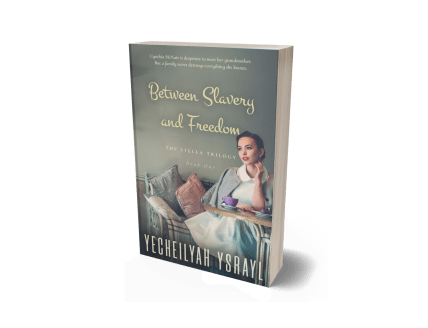
Click here for a signed paperback
of Beyond the Colored Line

*Click Here to get it on Kindle

Haven’t read book one? Get it for 99cents on Kindle here or in paperback here.
*Paperbacks ordered today will ship next week.

Revising The Stella Trilogy: Book Two – Beyond the Colored Line

Book one is out and we are on to book two!

My main challenge for book two is making sure that it stays consistent with book one. This is important for any series, but for Historical Fiction, it is even more critical.

Since writing Historical Fiction is writing set in a time that has already occurred, the details of the past must be realistic to what was going on. A good Historical Fiction book places fictional characters somewhere in a world that has already existed in a way that reads authentic. Readers should be able to reimagine what that world was like by immersing themselves in the life of the characters and the world around them. I like to think of it as a time machine, which is also what makes writing #Histfic fun to me.

Style, Language, Dialogue

Like book one, book two opens in 1996 and picks up where we left off at Mama Sidney’s house in book one. But book two also takes us back into the life of Mama Sidney, and we revisit history from the 1920s through the 60s. My focus for book two was to make sure the dialogue, language, racial and political events occurring during this time were realistic to what was happening in the world. We talk about The Great Depression and touch on the reoccurring lynchings taking place in both the north and south. We look at the brutal murder of Emmett Till, the shooting of Dr. King, Jim Crow Laws, and The Black Panther Party. While I immerse Stella in her own world, there is still the larger world to deal with and we watch how she navigates both. How does Stella’s personal identity crises correlate to the identity crises plaguing her larger community?

Racial Terminology

The biggest thing to deal with for book two is the racial classifications of blacks during this period. African Americans are the only people whose racial terminology has changed with the census. We have been “Niggers,” Negros, Coloreds, Blacks, and African Americans, and this can get confusing when trying to use the right term for the right year. This is also not to mention other racial “nicknames” we called ourselves, such as Afro-American and The New Negro.

The challenge of using the right term for the right years is because there were terms that blacks preferred to call themselves and terms used discriminately by the wider society. Although by the 60s Black Americans were preferring to be called blacks or Afro-Americans (as Malcolm X used a lot after leaving the Nation of Islam) white separatist signage still referred to us as coloreds. “Whites Only / Coloreds Only,” or “Welcome to the Colored Zone,” banners and store signs could have read.

Credited to W.E.B. Dubois and Booker T. Washington, blacks advocated for a switch from Colored to Negro in the early 1920s. As blacks redefined themselves, terms like “The New Negro,” became popular and sparked a movement that later became known as The Harlem Renaissance.

By the 1960s, though, African Americans had transitioned from being “Negros,” to “Blacks.” (Malcolm X specifically didn’t like the term Negro).

During the Black Power movement when sayings such as “I’m Black and I’m Proud,” were popular (think James Brown “Say it loud, I’m black and I’m proud!”) blacks wore their hair natural, read and published black literature and did what they thought would reconnect them with their lost heritage. In this process, many black political leaders of the time, such as Kwame Ture or Stokely Carmichael, helped to shift the terminology away from Negro and toward Black. Black publications like Ebony followed by switching from Negro to Black.

While a large majority of people still preferred Negro, “Black“ was becoming the preferred term with the New York Times and Associated Press abandoning “Negro” in the 1970s.

By the 1980s, Jesse Jackson called for a shift from Black to African American and while the change is still not as accepted or monumental as black was during the 60s, it is the term most socially acceptable when referring to black Americans.

I had to consider these changes when referring to blacks throughout this part of the book. What did they call themselves? What did society call them? How do I integrate this into the dialogue and setting realistically?

Setting, language, and dialogue is the backbone of Historical Fiction because the setting makes the story seem real and determines the character’s beliefs and actions. Not only do I strive to make the characters stand out but the culture of the time in which they live.


About Book Two:

In book two, we dig deeper into the McNair family’s legacy. Named after her great-grandmother, Stella has a very light complexion causing her to be the tease of her classmates. Unable to find solace among her African American contemporaries, Stella finds it challenging to adjust to a world where she is too light to be black.

After The Great Depression of the 1930s forces Stella’s family to move to Chicago, a conversation with Aunt Sara provokes Stella to do something that will dramatically affect not just her life but the life of her children and grandchildren.

Stella: Beyond the Colored Line will be available through my website and back up on Amazon in digital and print by April 24th. I am not putting the rest of the books up for preorder, so you’ll be able to order it immediately on 4/24.

If you have not already read book one, click one of the links below.

Amazon Kindle

Signed paperback

https://www.yecheilyahysrayl.com/bookstore/stella-between-slavery-and-freedom

Stella: Between Slavery and Freedom (Preorder Book One)

Stella is a work of Historical Fiction and is distinctive in its focus on one woman’s road to self-discovery, against the backdrop of the African American fight for justice, racial equality, and freedom. The 3-Part series focuses on the history of one family in their struggle for racial identity. We discover in this Trilogy how three individuals living in separate periods strive to overcome the same battle, carefully knit together by one blood.

Preorder Book One Now. 3/24/2020

These books were first released in 2015 and helped elevate my writing to another level. These were not the first books I had ever written. Still, they were the first books to appeal to people outside of my circle and were my first Historical Fiction books.

I took the risk of removing them to get them re-edited, re-formatted, and the covers recreated.

I am happy with my decision and even prouder of this work. I get to relaunch these books and reach more readers of African American Historical Fiction. I am hoping to at least sell 50 copies of book one to start (at least 25 ebooks, 25, print books), and I hope you can help me with that!

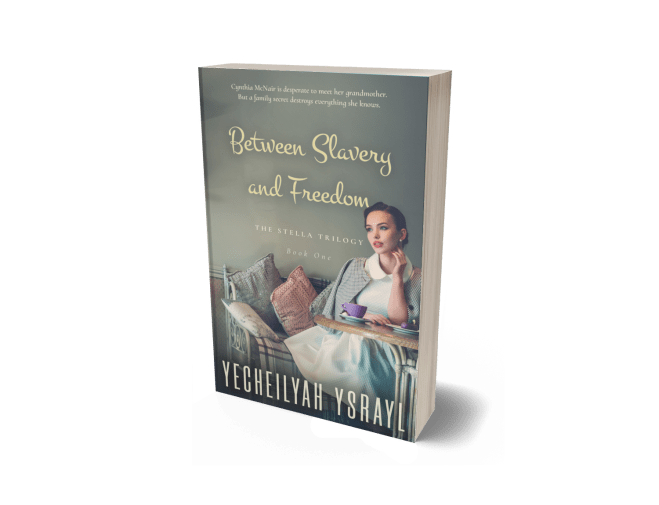
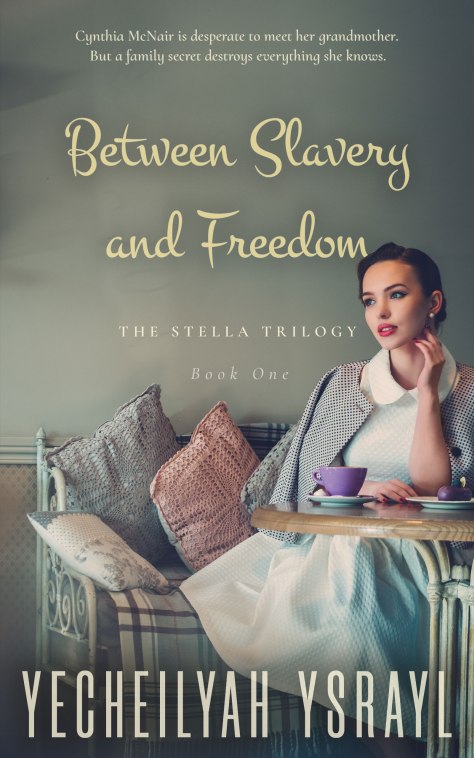
Stella: Between Slavery and Freedom

In book one, Cynthia McNair and her boyfriend, Alex, express some racists’ feelings toward blacks. They visit Cynthia’s Grandmother Sidney McNair, who recounts the story of her ancestor, a slave named Stella Mae. Cynthia has no idea of her African ancestry or how deep this rabbit hole goes.

Book one is available now for preorder in digital and print. Release day is March 24th.

The preorder price is 99cents but will go up after release, so you want to take advantage of this.

Preorders are also available in paperback through my website. Paperback books are signed and will ship the first week of April.

*If you already read this series, you should know book one has an alternate ending! The story is the same, but the books are better polished, and each book flows smoothly into the next book. This time, while the books can be read alone, they are much more in a series format. You will want to read all three books to get the full picture. Well worth re-reading! 

Preorder the ebook for 99cents

Preorder a signed paperback

Mark as Want to Read on Goodreads

(Already read Stella? Mark as read and leave a review)

Revising The Stella Trilogy: Cast of Characters

I am always thinking about why Stella is so set-apart. Why are these books so effortless for me? The first time I released the series, things went smoothly, and the same is happening now. I can sit down, open Stella, and flow (or as I told a room of students, I sit down and bleed, to quote Hemingway).

A good fiction book, to me, has great character development. The characters are realistic in dialogue, how they talk to each other, what their lives are like, the decisions they make, and so on. When I am writing novels, I typically write Historical Fiction, so setting and dialogue are paramount. The setting is a significant element because the environment affects the plot and the characters. A story set in the 1800s must have language authentic to that time, and the characters must speak and interact like they are in the 1800s, not 2020.

My books tend to include a wide selection of people, some minor characters, some major characters. This is risky, but I’ve been told it’s one of my strengths. Somehow, I am capable of keeping up with everyone and letting them interact authentically.

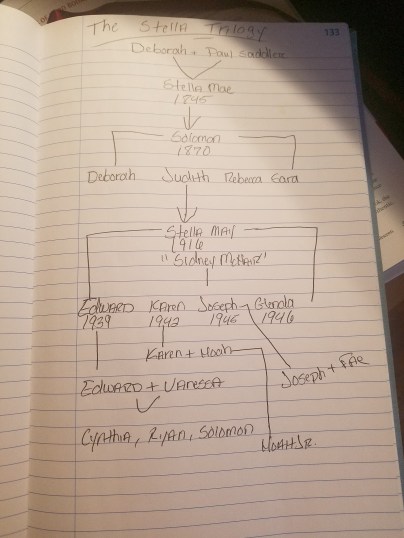
Family Tree

I’ve never fleshed out a family tree with any other series as I have with Stella, and I think it has helped with the writing. It doesn’t mean everyone in the tree are part of the central cast of characters or that I should include every detail, but it does make it easier for me when I am writing to remember who belongs to who. Stella is a short series (each book only about 100-115 pages). As Nathaniel, Hawthorne says, “Easy reading is damn hard writing.” Some may think a short book is quick and easy to write, but this is not so. It’s an easy read but requires just as much work as a full-length novel.

Let’s meet the family!

Paul Saddler and Deborah – Saddler is the owner of slaves on The Paul Saddler Plantation, including a young woman named Deborah. In 1845, Paul and Deborah had a little girl named Stella.

Stella and Solomon – Stella later gives birth to a little boy named Solomon. He is very light-skinned with jet black hair and green eyes like his father, John. Stella met John through her sister Clara, but you’d have to read book one to learn more about this awkward relationship.

Solomon – Solomon marries a white woman, and together, they have four girls: Deborah (named after Stella’s mother), Rebecca, Judith, and Sara.

Judith – It is in book two, we see that Sidney’s mother is Judith. Judith dates a black man and gives birth to a little girl she names Stella, in honor of her grandmother. But this Stella changes her name later in life (you have to read the book to find out why) to Sidney. Sidney marries a white man named Clarence McNair. Sidney and Clarence have four children: Edward, Karen, Joseph, and Glenda.

Edward – Edward marries a white woman named Vanessa, and together they have three children, Cynthia, Ryan, and Solomon. Ryan and Solomon aren’t major characters, but Cynthia is.

Karen – Karen dates a Black Panther in the 60s named Noah, and together they have a son, Noah Jr.

Joseph – Joseph marries a black woman, Fae, and together they have a boy and girl, Tanya and Micheal. It is in book three we learn what happened to Joseph after he left his mother’s house after the fight with Edward in book two, how he met Fae, and how he got mixed up in The Freedom Rides and Civil Rights Movement. His children are minor characters but add to the family tree and help to establish the depth of Jo and Fae’s relationship.

Glenda – Glenda is a single mom raising triplets, all boys.

In book one, we meet everyone here, including additional characters like Paul’s wife Elizabeth and their daughter Clara, Stella # 1’s friend Lola, Aunt Cecily, and others on the plantation.

What does writing out a family lineage as this do? 

It helps me to create vivid characters. Everyone didn’t come to me at once. I started with the first Stella and her mother, Deborah. The first time we go back to Stella’s time in book one, that first chapter is what started the series, with Stella and her mom at the store and Stella trying to tell mom she has to use the bathroom. I then went back to write what became the first chapter, with Cynthia and Alex later.

Even though the book is called The Stella Trilogy, I wanted to focus in on Cynthia in book one to explore how not passing down history can affect our children. In book two, Cynthia is two years old, and the year is 1979. In book one, we opened in 1996, and Cynthia is a young woman. The decision her dad made in ’79 causes her to grow up and not know who she is. We recount Stella’s story in book one because it is the glue that ties everything together. We then go backwards with books two and three to see just how things unfolded.

Why does Cynthia express racists thoughts toward blacks even though she has black blood? Why did Edward leave his daughter in the dark about the true nature of her race? What happened in 1979? What is Mama Sidney’s big secret? How did the history of this family get so lost? Will Stella’s legacy bring her family back together again?

One inspiration for this family tree was Roots. I love the “six degrees of separation” this groundbreaking series has to it. To learn more about the motivation of Alex Haley’s Roots, click here.


Coming March 24, 2020

About Book One:

Cynthia McNair and her boyfriend, Alex, express some racist feelings toward blacks. The visit Cynthia’s grandmother Sidney McNair, who recounts the story of her ancestor, an enslaved woman named Stella Mae. Cynthia has no idea of her African ancestry or how deep this rabbit hole goes. Will she accept the truth about herself?