I am excited to be on the finishing end of this book and start to send out ARC copies.
If you are familiar with the Black History Fun Fact Friday series, this book is that series in book form, only much more polished and with more information.
Beyond that series, what inspired the book?
We are particularly familiar with the names of Dr. Martin Luther King Jr., Rosa Parks, Frederick Douglass, Harriet Tubman, Langston Hughes, and Zora Neale Hurston. These outstanding leaders had a lasting impression on Black Americans’ history.
But two questions stick out:
How much do we really know about them?
What are some names and histories of other leading Black people and events we are unfamiliar with.
I am looking for:
Black / African American readers passionate about Black history
Readers of any ethnicity who love Black history
History buffs in general
Readers willing to leave an Amazon review of the book when it releases
What to Do Now
Please email me at yecheilyah@yecheilyahysrayl.com if you are interested in beta reading to receive a copy.
The cutest black history children’s book, I See You HBCU is the ideal resource for parents who want to teach their young children about the importance and influence of historically black colleges and universities.
Beautifully illustrated and just 30 pages, little Ahman discovers a box marked “HBCU” while helping his parents carry boxes as they move into their new, larger home. He is bitten by the curiosity bug as he asks his mom and dad what the letters stand for.
He is in for an exciting lesson on Historically Black Colleges and Universities, from how they helped Black students to fit in when we couldn’t go to the same schools as whites to how Edward Waters College was the first HBCU in Florida.
The story centers on an adorable African American family, and the graphics are reminiscent of Boondocks by Aaron Mcgruder. As they respond to Ahman’s inquiries, the mother and father are kind and patient with him. You might feel like a young child on the sofa as your parents dance to the memories of their historically black institutions.
By the end of the book, the author adds an extensive list of HBCUs as a guide for readers!
This is an excellent book to start the conversation about higher education from an African American perspective if you have kids under 10. I think of this as the first of several books that will follow Ahman’s journey. Let’s hope the author feels the same way!
Ratings:
Age Appropriate for Content: 5/5
Storyline: 5/5
Illustrations: 5/5
Child Self and Self-Identity: 5/5
Thought Provoking: 5/5
Overall Rating: 5 / 5 stars
To have your book reviewed on this blog apply here. The registry is open for a limited time.
Stay tuned for our next dope read. Next up:
Lifeline of a Soul: The Life-Changing Perspective I Gained While Teaching Entrepreneurship to Prisoners
Yecheilyah’s Book Reviews is a reputable review service that features writers from all over the world, both traditionally and independently published. We are listed on Kindlepreneur as a top-tier book review blog and Reedsy as one of their vetted active book blogs that provide insightful, excellent book reviews.
On October 16, 2022, I posted a video of things you didn’t know about MLK to TikTok and Instagram. I followed this with a video of women who refused to give up their seats on public transportation before Rosa Parks on October 26th.
And my social media has not been the same since.
My TikTok account increased from 200+ followers when I posted the videos to 1K.
The Rosa Parks video has over 200K views, 30K likes, and over 3K shares on TikTok.
The MLK video is up 57K views, 7K likes, 948 saves, and over 1K shares on Instagram.
But this has not been without controversy.
Since posting the videos, I have experienced attacks on me personally and Dr. King’s legacy. I am okay with this. It comes with the territory.
When telling the truth, the truth teller must expect push back. Prepare your heart for testing. Otherwise, should you wish not to receive negative feedback, do nothing and say nothing.
If you wish to be liked by everyone and not change the world, don’t. Sit on your hands and be quiet.
My calling does not require me to do the latter.
I only have a few questions for those who find fault in me, Dr. King, the videos, and anything I put out.
What have you done to move the needle forward for the advancement of anything?
When you call out Dr. King’s discrepancies and highlight his sins over his triumphs, do you ask yourself what you have done?
Do you consider in your own heart the skeletons in your own closet that no one knows about but you and YAH?
Do you consider your own flaws in your tearing down of someone else?
What programs did you start? What rally did you attend? How many people have you fed? How many people have you clothed?
Is trolling people online and preaching from Facebook and Black Twitter the extent of your ministry? Is debating doctrine on YouTube the catalyst of your movement?
What real work have you done? Whose life was made better by your presence?
We should ask ourselves these questions before critiquing someone else’s mission.
Don’t let your food get cold worrying about what’s on someone else’s plate.
And, for the record, my post was not about Dr. King, the Christian God, and the symbol of white sympathy that this society has made him out to be. My post was about a better understanding of Dr. King, the man, his positive actions, and how his activism has been largely watered down.
Kyrie Irving is in hot water for posting a link to the documentary Hebrews to Negroes: Wake Up Black Americato his Twitter account. The movie is a film adaption of the Independently Published book by the same name. It is alleged that the movie has much antisemitism in it, (I disagree but that’s a different post), and Irving has since taken the tweet down and apologized to the Jewish community via an Instagram post.
This post is about how he found the documentary and what Indie Authors can learn about platforms.
Kyrie Irving found the documentary by researching Yahweh on Amazon, saying that’s what his name translates into. According to this interview, he typed the name in the search engine, and the movie came up.
Many Indie Authors have long-cut ties with Amazon, which is their business. What I hope we can gain is an understanding of how people search for information, namely books, and the role that it plays for us as authors.
Photo by Ricardo Esquive
Amazon is not a distributor or bookstore. Amazon is a retailer that sells many things but is known for books. They are known for books because, in addition to selling books, they operate a Self-Publishing arm called Kindle Direct Publishing or KDP. Amazon is so very well connected with books that bookstores hate them, and people who think of buying a book (and now movies) turn to Amazon almost instinctively.
Amazon is also the world’s second-largest search engine, with Google being the first.
“Amazon, with 54 percent of product searches taking place, is the world’s largest search engine for e-commerce. Technically, Amazon is the second largest search engine in the world excluding Google.”
Decoding the World’s Largest E-commerce Search Engine: Amazon’s A9 Algorithm
When someone wants to search for a book and does not want to visit an offline bookstore like Barnes and Noble, where will they search first?
Today (11/2022), it is a #1 Bestseller with tons of new reviews. Yes, he searched for the movie, but the book is a #1 Bestseller.
All because a rich and famous celebrity tweeted the link.
And this celebrity found it on the second largest search engine in the US.
The Point
When deciding what platforms to put your book on, consider not what you want but what readers want.
When your average reader wants to look up a movie, topic, or book, they are not going to Smashwords. They are not going to Draft2Digital. They are not even going to Goodreads like that. They are also not flooding B&N.com, though they’ll visit the brick-and-mortar bookstore (catch that).
When people (not necessarily people who are always on the internet and are familiar with the book world but everyday people with jobs who happen to want to buy something) want to look up information, they go to Google and Amazon.
Photo by Andrea Piacquadio
Ignoring this is just not good business sense, except that your goal is not to make money from your books or bring a whole lot of awareness to it, which is cool. Not everyone publishes a book for these reasons.
(It is also not wrong to be on the other platforms, also known in the Indie community as “going wide.” It means you are not exclusive to Amazon but have your book available at other online retailers, which is awesome. I go wide myself. At the risk of steering away from the topic, that’s a post for a different day.)
However, for those of you Self-Publishing books you want people to buy, not being on Amazon is not bad or wrong, but it is leaving a lot of money (and exposure) on the table.
This post is a nudge to consider more strongly the platforms you wish to sell your book (if you are selling it).
It is a reminder to go to the places where your potential reader will most likely hang out.
That is the message.
Kyrie Irving found Hebrews to Negroes and made it a bestseller by posting the Amazon link (without a caption) because the book was sitting on a platform where readers are most likely to search for books.
Go where your readers are most likely to hang out, and search for books like yours.
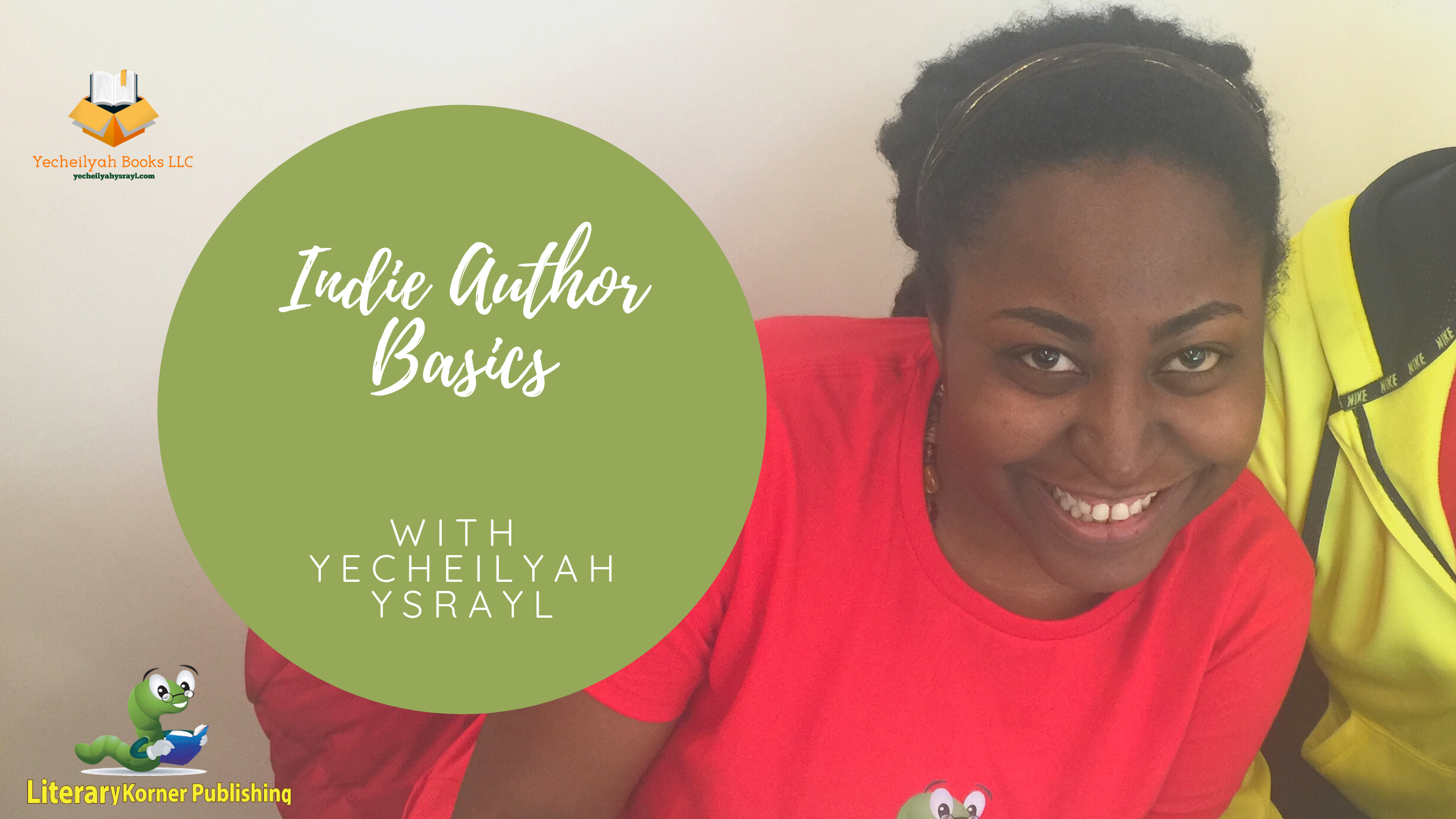
Indie Author Basics simplifies and streamlines the Self-Publishing Process so authors can Self-Publish high-quality books without pulling out their hair.
Yesterday marked the 59th Anniversary of the bombing of the sixteenth street baptist church that killed four little girls on September 15, 1963, in Birmingham, Alabama. After revisiting revisions for the book, I realized I hadn’t included a chapter on this story. You’ll have to get the deeper details later. For now, here are five things we didn’t learn about that tragedy.
Bombings Were Common in Black Homes and Churchs At That Time
Part of the shock and awe factor was the audacity of someone to bomb a church. But, this wasn’t the first time a bombing had taken place. African Americans lived in constant fear as bombs and riots erupted during summer. On December 25, 1956, the KKK bombed the home of civil rights activist Reverend Fred Shuttlesworth. Fifty dynamite explosions occurred in Birmingham between 1947 and 1965, giving the city its nickname “Bombingham.”
Campaign to End Community Integration
The bombings started as a campaign by white people to stop Black people from moving into all-white neighborhoods. Governor George Wallace and Birmingham’s Commissioner of Public Safety Eugene “Bull” Conner went the extra mile in their fight to keep the south segregated. The starting point of many marches, the Sixteenth Street Baptist Church was a target because it was where civil rights activists held many meetings during the 1960s.
The Fifth Little Girl
A fifth little girl was injured but survived. We don’t hear much about Sarah Collins Rudolph, but she was the sister to Addie Mae Collins and was present in the basement with the girls during the explosion. She was blessed to survive, though she lost her right eye.
The Two Little Black Boys
Sadly, the four girls weren’t the only tragedy that happened that day. Shortly after the church bombing, someone killed two black boys, Johnny Robinson Jr. and Virgil Ware. In the book, we’ll dig deeper into their story and what led to their deaths.
A Separate Service
With over 8,000 attendees and Dr. King giving the eulogy, Carole Robertson’s family opted out of the joint funeral and held a separate, private funeral for her. I can’t say that I blame them. What’s worse than seeing the small casket of your now deceased daughter but also having to see the three coffins of her friends?
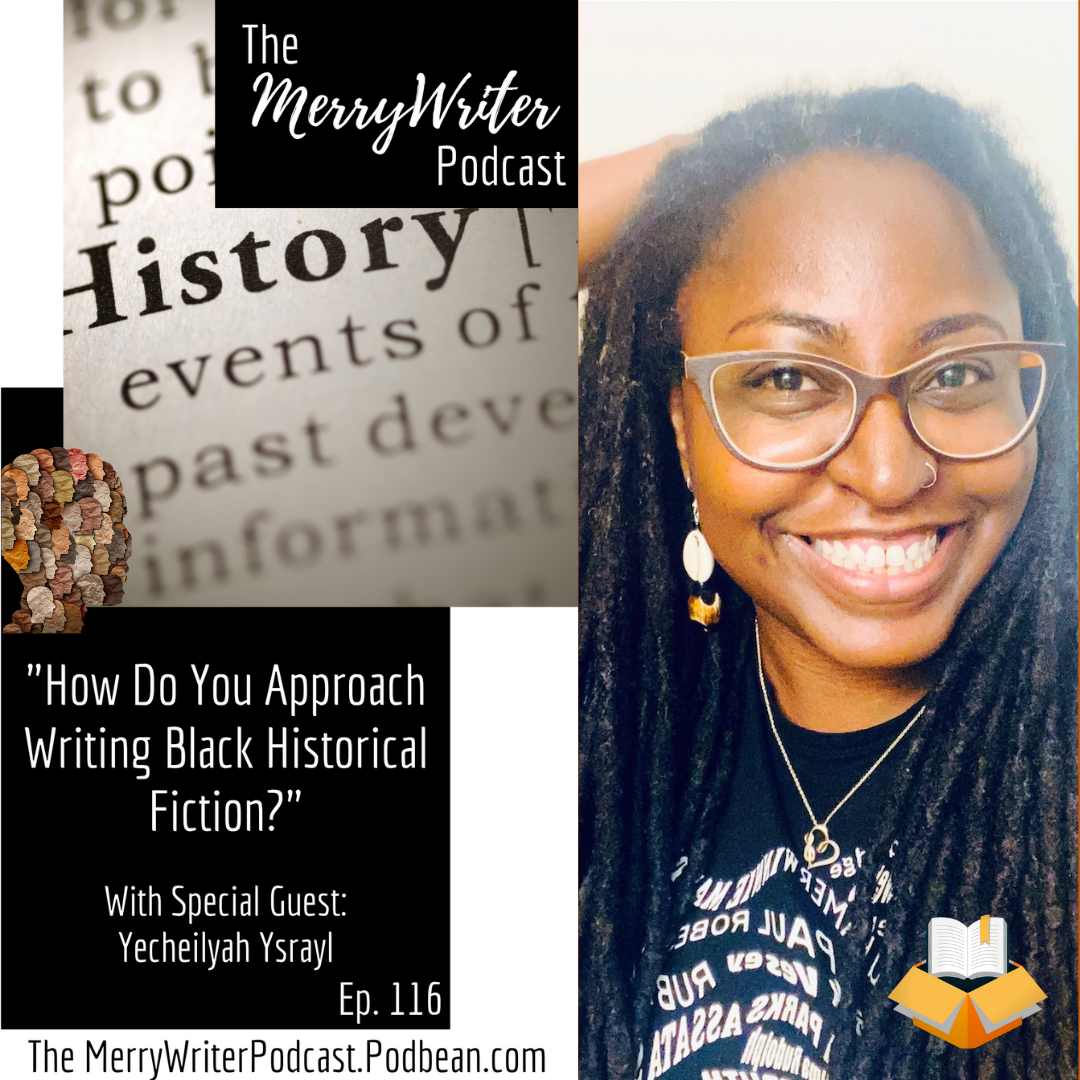
I got to sit with Ari Meghlen and Rachel Poli of The Merry Writer Podcast on writing Black Historical Fiction. Check it out at one of the links below.
EPISODE SHOW NOTES
Have you ever tried writing diverse characters and didn’t know where to start? Or maybe you want to dive deeper into historical fiction? This week, author Yecheilyah Ysrayl joins Rachel in discussing how to approach writing black historical fiction with plenty of tips, advice, and fun conversation. As always, thanks for listening, and let us know your thoughts in the comments below!
There are times when Black authors find themselves fighting against those who wish them to edit their soul. Take the salt out the meat. Take the voice out the work, and leave it seasonless. To quote Honorée Fanonne Jeffers, “People still have a white, western idea of how intellect is ‘spose to walk in the world.”
Let it not be lost that how Black people speak, including how we write, has been under fire since the days they forbade us to read and write. Considering us fools (and hoping we’d believe we were), they told us our language was broken. Told us massa was some jumbled version of master to justify our alleged stupidity and inhumanness. (Note: Massah is a Hebrew word meaning burden or oppressor. We called them what they were.)
The audacity to dilute language rich in culture by “correcting” it is just as brutal as stripping away someone’s name and replacing it with your own. What does your Ph.D. in poetry have to do with my grandmother’s tongue?
The way our slang terms do not always mirror what is heard or written within collegiate circles.
The way proverbs and parables roll off the tongue only to be shackled to some white scholars’ standards of brilliance. He think it’s nonsense how Jay Jay and Man Man ‘nem talk about how they be chillin. Or how Aunt Lou tells one of her grandchiren to go wrench off this spoon. She puts her hands on her hips, waves and says ‘How you?’ (She means it the way she says it, leaving out the ‘are.’)
The way the world attempted to tuck knowledge away from us, hide from us its secrets. (Though, we already knew them.)
Black writers do not need to sacrifice their soul or shapeshift into white standards of intellect to create something beautiful. They need only to be who they are and let the words be seasoned.












 The PBS Blog