Black Indie Readers: African American Historical Fiction is Important Too

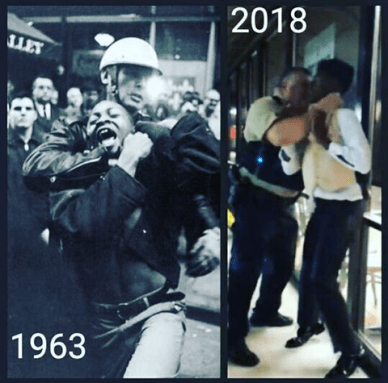
Kanye West, Waffle-House, Childish Gambino, Roseanne, and elderly Black women being manhandled by police is but a snippet of what’s going on. I can turn on my television or more precisely, open my computer, and see a similar scene as a 1960s protest march. I see people sitting in again at restaurants, I see people marching down the streets, I see cops fighting young black boys, and I hear of black bodies being found hanging from trees again (often ruled as suicides.)

This is America.

They say a people without knowledge of its past are doomed to repeat it. I wonder how many of us realize that the past is repeating itself? And I am reminded this is why I write the kinds of stories that I write and why I think Black Historical Fiction is important (and also maybe a tad bit underrated). Often, I see Romance, Urban Fiction and Street Lit praised as the epitome of Black Literature among many Self-Publishers / Indie Authors and Indie readers. But let’s not forget that black history is important too, and should not be left out of the Indie Author revolution.

After my most recent book release, I was amazed at how many people (Israelites, so-called African Americans, Blacks) didn’t know who Marcus Garvey was, what the Universal Negro Improvement Association was, or could make the Marcus and Malcolm connection in the book. (More on this later but briefly, Malcolm X father was a follower of Marcus Garvey and Malcolm’s nickname was Red among other names. I named Nora’s boyfriend after Malcolm X in his honor and gave him some of his characteristics.)

I know that many of us have been awakened to the true knowledge of who we are and have reclaimed parts of our lost, ancient and biblical heritage. We are waking up in droves and understanding the important role that identity plays in the state of Black America today. I am talking about the Hebrew Israelite movement and the number of people returning to the bible as a source, not of religion, but of black history and instruction on how to live on the earth. But that does mean we should toss aside our history in this land as unimportant since it has all played a role in who we are and where we stand today.

To be a true educator, you must first be educated and with extensive knowledge of what you’re teaching and if this is history, it’s even more critical to understand it all. (I am no one special and I don’t know everything. I am only repeating what I have already told myself about how important it is that I study history. All of it.)

Yes, it’s important to know who Moses was, King Solomon, Queen Esther, King David, and all the prophets, prophetesses and servants (who were all Black). But, it’s also important to know who Mansa Musa was and his influence in Timbuktu, Queen Yaa Asantewaa (Phonetic spelling Yah asante wah), Haitian Revolutionary, Toussaint L’Ouverture, Hannibal, Nat Turner, Marcus Garvey, Ida B. Wells and so on. These are the people whose shoulders we stand on and knowing their stories are still important. As well as other facts. If we talk about the European Slave Trade let’s also talk about Islamic slavery. If we talk about white slave owners, let’s also discuss Jewish and Native American slave owners as well.

History is important in general because if you don’t know what happened before, how can you properly arm yourself against ensuring that the bad things do not happen again? You cannot focus on repeating only the good things if you don’t know what is good.

Dear Black Indie Readers, African American Historical Fiction is important too.

“Once you change your philosophy you change your thought pattern. Once you change your thought pattern, you change your attitude. Once you change your attitude, it changes your behavior pattern. And then you go on into some action.” – Malcolm X

“A people without the knowledge of their past history, origin and culture is like a tree without roots.” – Marcus Garvey
———————————————————————————————————–
For more Black History Fun Facts, be sure to visit the Black History Fun Fact Friday page and to follow this blog for Black History all year around! Revolution, part 2 in The Nora White Story is also now available on Amazon. Free with Kindle Unlimited.

Black History Fun Fact Friday – Anna Murray Douglass

Today, we are taking a look at a woman whose husband we know well. Frederick Douglass is well-known but his first wife is not. For the sake of time, I am combining sources from various articles since I have not had the chance to put something together for you this week. Enjoy.


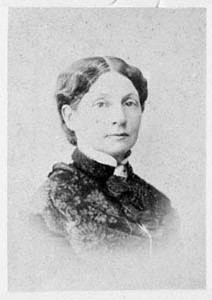
Anna_Murray-Douglass-210x300
Anna Murray Douglass

Frederick and Anna met in 1838, when he still went by the surname Bailey and she by Murray. The daughter of enslaved parents in rural Maryland around 1813, Anna was the first of her siblings to be born free after her parents were manumitted (set free). She lived with her parents until the age of 17, at which point she headed for Baltimore and found work as a domestic helper. Over the years she managed to earn and save money; the vibrant community of more than 17,000 free blacks in the Maryland city organized black churches and schools despite repressive laws restricting their freedoms. When she met Frederick—historians disagree on the when and where their acquaintance occurred, but it may have been in attending the same church—she was financially prepared to start a life with him. But first, he needed freedom.

By borrowing a freedman’s protection certificate from a friend and wearing the disguise of a sailor sewn by Anna, Frederick made his way to New York City by train (possibly spending Anna’s money to buy the ticket, says historian Leigh Fought). Once there, he sent for Anna and they were married in the home of abolitionist David Ruggles. According to Rosetta, Anna brought nearly everything the couple needed to begin their life together: a feather bed with pillows and linens; dishes with cutlery; and a full trunk of clothing for herself.

– Source: The Hidden History of Anna Murray Douglass

In 1837, Frederick met a free Black woman, Anna Murray, who was born in 1813. Her parents had been freed before she was born, and Anna worked as a laundress and a housekeeper. Anna used her savings and sold a bed to pay for train tickets for Frederick, which he used to escape to freedom. She also sewed a sailor outfit for him, which he wore as a disguise. Fredrick had tried to escape before, but it was not until Anna helped him that he escaped successfully.

Once Frederick got to New York, Anna joined him and they married and moved to New Bedford, Massachusetts. They had five children together. When they moved to Rochester, New York, she turned their home into an Underground Railroad stop, providing shelter for runaway slaves en route to Canada.

Motto_frederick_douglass_2-190x300
Frederick Douglass

As Frederick became more involved in activism, their relationship became more strained. Anna could barely read and write, and felt out of place among Frederick’s friends. His friends, most of whom were highly educated and intellectual, openly looked down on Anna (to his credit, he vigorously defended her against any who suggested she was not a worthy wife). Anna enjoyed being part of the Black community in New Bedford, but in 1847 Frederick moved the family, and as his circle of friends widened, hers diminished. Anna was also tormented by rumors that Frederick had affairs during his many travels. On two occasions, Frederick had women he was rumored to be sleeping with move into Anna’s house, causing controversy between the couple and within Frederick’s political community.

-Source: Real Life Romance: Frederick Douglass, Anna Murray, and Helen Pitts

While Frederick began his climb as an abolitionist orator, Anna cared for their children, born between 1839 and 1849: Rosetta, Lewis, Frederick, Charles, and Annie. In 1847, they moved to Rochester, New York, where Frederick began publishing his newspaper, the North Star.  The gulf between Anna and Frederick widened over the years; she could barely read and write and was rarely a part of his activist life and growing circle of prominent white and black abolitionist colleagues.  After the death of their youngest child, Annie, in 1860, Anna’s health steadily deteriorated. She died on August 4, 1882 at their home, Cedar Hill, across from Washington, D.C.  She was carried back to Rochester, New York, where she was buried in Mount Hope Cemetery.

– Source: The Black Past Remembered

Helen_Pitts-212x300
Helen Pitts Douglass

One year after Anna’s death, Frederick remarried. His second wife was Helen Pitts. She was born in 1838. Her parents were abolitionists, and she was an ardent abolitionist and suffragette. In 1880, her family moved next door to the Douglass family, and Helen assisted Frederick with his work. She also worked as a clerk and co-edited a women’s rights magazine.

Their marriage was quite a scandal. Helen was white and twenty years younger than Frederick. His children felt the marriage disrespected their mother. Frederick and Helen’s friends were shocked because they felt the marriage was too sudden and because they were worried about the race and age differences. Helen’s family cut off contact with her altogether, and their local society was appalled that a black man and white woman were married at all.

Helen Pitts’ response: “Love came to me, and I was not afraid to marry the man I loved because of his color.”

Frederick’s response: “This proves I am impartial. My first wife was the color of my mother and the second, the color of my father.”

-Source: Real Life Romance: Frederick Douglass, Anna Murray, and Helen Pitts


EC thoughts: I feel kind of sad for Anna and I can’t help but to wonder why Frederick, intelligent as he was, did not teach her to read and write. Did she not want to learn? Or did he not want to teach her? We can only speculate.

Writer’s Wednesday – Writers, Poets, Leaders


It’s Writer’s Wednesday and I am promoting the amazing contributors to this year’s second annual poetry contest! These women are not just writers but they are leaders in their own right and a great inspiration to me personally. They each have their own flava and style that I love. They are funny, inspiring, and driven. Be sure to check out their blogs to get to know them better!

“It’s life through my lens and I’m happy to share it with others.”
– Dr. K.E. Garland

Be sure to follow Kathy on her outstanding blog at
www.kwoted.wordpress.com/

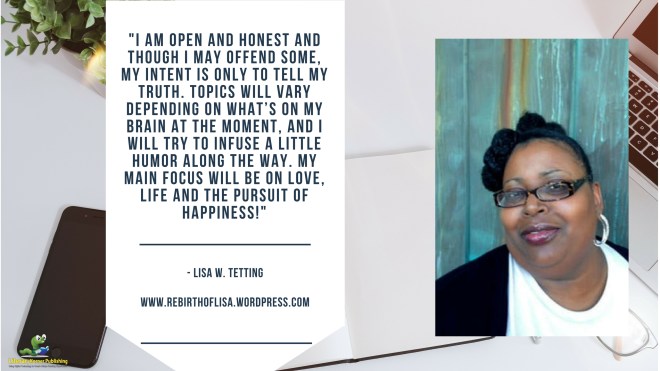
“My main focus will be on LOVE, Life and the pursuit of Happiness!”
– Lisa W. Tetting

Be sure to follow Lisa’s amazing blog at www.rebirthoflisa.wordpress.com

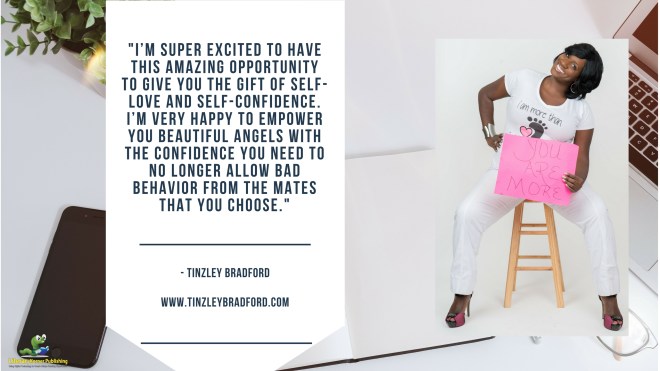
“I want you to be in a happy place in your love life by paying attention to your mind, body and soul and the things you allow to enter into them.”
– Tinzley Bradford

Be sure to follow Tinzley’s informative blog at
http://www.tinzleybradford.com/dating-blog/

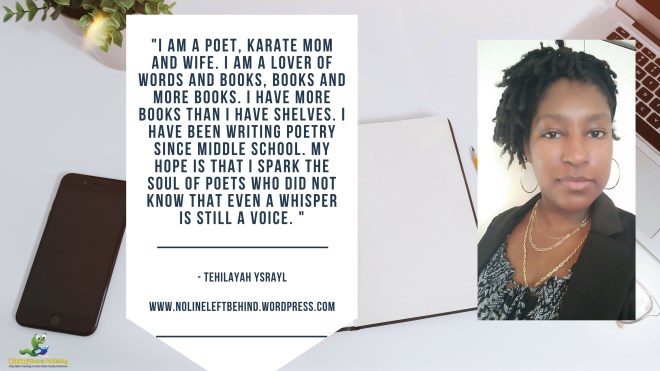
“My hope is that I spark the soul of poets who did not know that even a whisper is still a voice. “- Tehilayah Ysrayl

Be sure to follow Tehilayah’s new blog at www.nolineleftbehind.wordpress.com


Details on how you can enter this year’s contest, the rules, guidelines, AND prizes we’re awarding to the winners is all being revealed next week! Stay glued.

From your host, Yecheilyah Ysrayl.

Black History Fun Fact Friday (late post) – William Monroe Trotter


First, I want to say that Birth of a Movement is a good documentary on Netflix and is the inspiration behind this post.

We are familiar with the name W.E.B. Dubois but I do not hear much concerning  William Monroe Trotter and that’s a shame. While I do not agree with his dissension with Booker T. Washington (I admire Washington, obviously), I do admire Monroe’s drive to stop a movement that ultimately led to a resurgence and second wave of one of the most terrorist groups in America, The Klu, Klux, Klan.

William Monroe Trotter was an African American newspaper editor and real estate businessman in Boston, Massachusetts born on April 7, 1872, in Chillicothe, Ohio. Raised in Hyde Park, Boston, his father, James, was a writer and former civil rights lieutenant who worked in real estate. Trotter excelled in academics growing up, becoming his predominantly-white high school’s class president and attending Harvard University in the early 1890s. He was a friend of W.E.B. Dubois who also attended Harvard alongside him. The friends graduated in 1895, the same year that Booker T. Washington delivers the famous 1895 Atlanta Compromise Speech.

Trotter was an early activist for Black Civil rights and produced similar Civil Rights results in 1915 as that of the 1960s marches. He was an early opponent of Booker T. Washington (sigh… I just think Booker had a point but whatever), and in 1901 founded the Boston Guardian, an independent African-American newspaper, as a vehicle to express that opposition.

In 1905, Trotter joins W.E.B. DuBois in founding the Niagara Movement, the precursor to the NAACP. However, Trotter did not agree entirely with the organization. The NAACP’s top officers were white men and it only made sense to Trotter that the National Association for the Advancement of “Colored” People is run and operated by “Colored” people. It was not. The NAACP was founded by Jews and ran by the same. For this, Trotter decided to part with the organization. Instead, he founded his own organization called The National Equal Rights League. He also co-founded the Boston Literary and Historical Association (the oldest nationwide human rights organization founded in Syracuse, New York in 1864 dedicated to the liberation of black people in the United States) with colleague George Forbes and established The Guardian newspaper. The publication pushed for Black equality.

Trotters most famous acts of Civil Rights is his stand against David Wark Griffith’s,  landmark film, The Birth of a Nation, a racists play turned movie by author Thomas Dixon. Originally called The Clansmen, the book turned play became a massive bestseller. It also had the endorsement of The White House as it was screened at the house and praised as “History as Lightening” (Wilson).

Trotter began a campaign against Dixon’s play turned film when it opened in Boston in 1910, which portrayed the Ku Klux Klan as heroes. While his protests succeeded in closing the production, The Clansmen changed its name to The Birth of a Nation and in April 1915 was scheduled to open in Boston. Trotter rushed back to lead protests against the film. In April, the Tremont Theatre was denying African American’s admission, to include Trotter. When blacks refused to leave the lobby, plainclothes police moved in, sparking a fight. Trotter and ten others were arrested; other protests took place both inside and outside the theater. It resulted in a mini-riot. Trotter, united with other African-American community members, could not get the film banned in Boston. Interestingly enough, Booker T. Washington dies later this year, November of 1915 in Tuskegee Alabama.

The KKK had a revival for a decade after 1915, especially in industrial cities and the Midwest. In 1919, Trotter appeared at the Paris Peace Conference in an unsuccessful effort to have the organization outlaw racial discrimination. But, in 1921, Trotter was successful in shutting down new screenings of The Birth of a Nation in Boston. He also led demonstrations against events, plays, and films that glorified The Ku Klux Klan. William Monroe Trotter died on April 7, 1934, in Boston.

Far as finances is concerned, it’s still unknown exactly how much The Birth of a Nation grossed, but it did very well in sales. D.W. Griffith is still recognized as the man who pioneered modern cinematic techniques with his use of advanced camera and narrative techniques. Griffith is also one of the founders of the Academy of Motion Picture Arts and Sciences and  popularized the use of the close-up shot and his skill is still taught in film school. Meanwhile, in the 1920s, his film The Birth of a Nation continued to spark a resurgence of the Klu Klux Klan, which produced a second wave in Atlanta, Georgia, inspired by the film. This terrorist organization would go on to terrorize millions of blacks over the years.

New lynching Memorial Evokes Terror of Victims

Visitors to the new National Memorial for Peace and Justice first glimpse them, eerily, in the distance: Brown rectangular slabs, 800 in all, inscribed with the names of more than 4,000 souls who lost their lives in lynchings between 1877 and 1950.

Each pillar is 6 feet (2 meters) tall, the height of a person, and made of steel that weathers to different shades of brown. Viewers enter at eye level with the monuments, allowing a view of victims’ names and the date and place of their slaying.

As visitors descend downward on a slanted wooden plank floor, the slabs seemingly rise above them, suspended in the air in long corridors, evoking the image of rows of hanging brown bodies.

The memorial and an accompanying museum that open this week in Montgomery are a project of the nonprofit Equal Justice Initiative, a legal advocacy group in Montgomery. The organization says the two sites will be the nation’s first “comprehensive memorial dedicated to racial terror lynchings of African Americans and the legacy of slavery and racial inequality in America.”

READ MORE HERE

PRE-ORDER – Revolution: The Nora White Story 2 (paperback only)

I am beyond elated to inform you that I have finally set a release date for Revolution: The Nora White Story Book Two and that it is available now for pre-order in paperback. We’re releasing book eleven on May 30th, four days after my 31st birthday. (If you have not read book one, Renaissance is on a $0.99 ebook sale on Amazon.) I feel good about this one. I do believe the wait was well worth it. Its been almost a year since we released book one and needless to say, I am thrilled to finally be on the finishing end of this project.

About.

When Nora White is drugged by her friend she is forced to deal with the harsh reality of life in the North. She meets Keisha and the women catch a ride to The Den, a gambling and numbers hole-in-the-wall in Jacobsville New York. Unlike the upper echelon of Harlem, Nora’s new friends are hustlers but down to Earth and feels more like family. They take her to Liberty Hall where she is introduced to Marcus Garvey’s Universal Negro Improvement Association (U.N.I.A.).

Meanwhile, Nora has no idea her father has been arrested and back home Molly is hanging on by a thread. When the community discovers the truth of the alleged crime they devise a way to get Gideon out of jail but their actions could mean life or death for everyone involved. Will Nora come to her senses and return home in time to help the family or will her naiveté lead her astray once again?

PRE-ORDER REVOLUTION HERE.

A New Generation of African-American-Owned Bookstores

After a steep decline, the number of black-owned independent bookstores is growing.


Mahogany Books opens in Washington D.C.

When Troy Johnson began tracking the number of black-owned bookstores in the U.S. in 1999, there were more than 325. By 2014, that number had dwindled to 54, a decline of 83%.

“They were closing left and right, and the major ones were struggling,” said Johnson, who runs the African American Literature Book Club, an online book database. Today, Johnson estimates, there are at least 108 black-owned independent stores, a number of which have opened in the past six months, marking a substantial reversal. “Last year was the first year I added more stores to the list than I took away,” he noted.

The surge in black-owned indie bookstores is notable at a time when both bookselling and publishing are wrestling with issues of workforce diversity.

Read through to the ORIGINAL article HERE.