Black History Fun Fact Friday – Anna M. Mangin

Born in October of 1854 in Louisiana, Anna invented a kitchen tool she called a pastry fork.

The system of patents for inventions was not easy for African Americans at the time. Enslaved people were not considered people, they were not US citizens, and the rights of the US constitution did not apply to them. Consider the Dred Scott Decision where enslaved Scott unsuccessfully sued for him and his family’s freedom (they were eventually freed on May 26, 1857). This made it difficult for even free blacks to secure patents on their inventions, making it easy for their work to be stolen or attributed to someone else.

Of all the inventions by African Americans, we can just about imagine how much more this contribution would be if full credit had been given to those who were not considered worthy to receive it. Consider the following inventions:

  • The Clock (Benjamin Banneker)
  • The Traffic Signal (Garret Morgan
  • The Ironing Board (Sarah Boone)
  • The Mailbox (Phillip Downing)
  • The Sanitary Belt/Maxi Pad Precursor (Beatrice Davidson Kenner)
  • The Artificial Heart Pacemaker Control Unit (Otis Boykin )
  • The Closed Circuit Television Security (leading to the home security system) Marie Van Brittan Brown
  • The Modern Home-Video Gaming Console (Gerald A. Lawson)

We can go on and on.

Anna’s story is special because she was one of few blacks to receive a patent for her invention of the pastry fork.*

The Pastry Fork was an older version of the wisp and other electronic mixers today as it automatically mixed without manual effort. This tool had many uses, including beating eggs, thickening foods, making butter, mashing potatoes, making salad dressings, and most pastry dough, which was difficult on the hands and wrists.

Anna filed an application for a patent of her Pastry Fork in July of 1891 and was awarded the patent on March 1, 1892.

*Martha Jones was the first black woman to obtain a US Patent.


Learn more black history by reading more articles on the Black History Fun Fact Friday page here. Have a black history fun fact of your own? Submit your article for a blog feature by emailing it in a Word Doc attachment to yecheilyah@yecheilyahysrayl.com. Read the submission guidelines here.

Throwback Thursday Jams: Rick James and Teena Marie – Fire and Desire

This my song ya’ll. Rick and Teena’s voice together is electric…Even though I can’t look at Rick James without laughing thanks to Dave Chapelle.  He flyer than me in those red thigh-high boots 😂🤣

For Those Who Are Sad

Photo by Ye Fung Tchen on Unsplash

Can I cradle you in the nook of my arms? If you were here, would you let me? Hold you I mean? I don’t just want a hug. I want to hold you so we cry together. Kiss the top of your forehead like a mother would. On the shoulder of comfort, let your tears drench my shirt and I will love you like an infant. Can these words hold your head up? I do not want the soft spot of your pain to blemish the fragile newness of the warrior you are becoming. Your critics will look at what you are, but I see what you can become. But you’ve got to let me do my job. Let me hold you. Cradle you in my arms with these words. Cradle you in my arms with this pen. This is not a blog. Not today. Today this is air. This is breath. This is permission to breathe. These are words wooing lullabies for the exhausted spirits of the broken.

Writers Wednesday – Chapter 9: The Women with Blue Eyes


Chapter 9: “The Car Accident”


Jason kissed Amarie on the cheek.

“Be good,” he commanded.

Alright ma, I’m out,” he said, hugging his mother. Dad had already said his goodbyes and was at the dog track by now. Jason shook his head. That man and the dog track. He had given him some good advice though. Mainly, that he shouldn’t trust that woman and that he was stupid for even going over there. He will give the lecture on “a woman’s ways.” Jason’s dad thought women were sneaky and often did more dirt than men. Every woman except his wife, that was.

“She probably tried to hoodoo yo ass. I’d stay away from her,” he had said. Jason laughed at the thought. Dad had his way of warning you. Jason wasn’t sure what it was, but he was glad he had left when he did. Besides, it wasn’t like he was going to ever see her again, anyway. He entered his car parked in his parent’s driveway and honked the horn as he drove out and down the street. He was driving for a while when he came to a stoplight.

Jason picked up his cell and typed.

“See what the fellas doing.”

A horn went off behind him. “Move it buddy!”

“Aiight, aiight,” he said, noticing the light was green.

Jason knew he shouldn’t try to text while driving, but he did it anyway and he figured everyone did. Jason had confidence that he was careful, casting his eyes on the road and back down to the phone. He never missed a beat. I’m good at this, he thought as he put the finishing touches on his text. The sound of a screeching car, honking horns, and the smell of rubber tires sounded around him as his car jolted forward, knocking the cell out of his hand.

“Oh shit!” he sounded as he pulled over.

The cars around him slowly pulled away, nosy drivers going 5mph to see the damage. Jason exited the car as another car pulled up behind him.

“Damn,” he said at the dent in the back. The driver of the other car parked behind him. He glanced up. It was a woman. Figures. In Jason’s mind, women couldn’t drive. He didn’t believe that in a sexist type way. It was just what he observed from women he knew and the women he dated. He loved his mom, but he didn’t think she knew how to drive either.

The woman stepped out of her car wearing black, fitted slacks, a white blouse, and high-heeled shoes. Her hair was pinned up on the top of her head, and her earrings were pearl studs. Those slacks filled out in the back. Jason stared.

“I’m so sorry. I don’t know what happened,” complained the woman.

You slammed into my shit is what happened. “It’s not too bad,” he lied, exhaling, hands in his pockets. He noticed the woman was staring at the car with a blank facial expression. She looked like she didn’t know what to do. He took his hands out of his pockets and held it out for her.

“I’m Jason.”

The woman pulled her eyes away from the car, perked up, and took his extended hand. “Oh, sorry. I don’t know where my mind is these days. Tina. Nice to meet you.”

Her hands were soft and melted into his palm like butter. This is not the time, Jason said to his hardening manhood. Just her hands alone had turned him on. This was different. But after what had happened with that other woman, he had to keep it together. She would probably try to hoodoo him too. He quickly let her hand go.

“Umm.” Tina dug into her purse and retrieved a card. “I guess we can exchange insurance info until the cops get here.”

“Yea, mine is in the car. I’ll get it for you.” Jason turned away to retrieve his information. While getting it out of the glove box he noticed the woman had also returned to her car. She appeared to be shaking her head in frustration. Jason exited the car and walked up to Tina’s car. She was talking to her GPS. He frowned. That was kind of weird. He didn’t think they worked that way. Maybe hers was broken. Or maybe she was one of those hoodoo women.

“Those things are the worst,” he said, and Tina jumped at his voice.

“Didn’t mean to scare you. Are you alright?”

The woman threw the GPS in the backseat and straightened up, exiting the car to stand next to him.

“Yea, I’m sorry again. This is a mess.”

“It’s okay. Here’s my card. Police should be here any minute now. I’m supposed to meet up with some friends. I wish they would hurry up.”

Tina took Jason’s card and gave him hers. “I know right?”

Jason and Tina engaged in small talk as the time passed and Jason became more and more frustrated. It had been almost thirty minutes and no sign of the cops. Jason looked at his phone.

“Man, where the hell they at?”

At his complaint, the red and blue lights appeared in the distance as the sound of sirens resounded.

“About damn time.”

Tina bit her lip. “Listen, this is my fault. I’m sorry again. I didn’t mean to make you miss your friends.”

Damn would she stop apologizing.

“It’s all good. Do me a favor, though?”

“Yes, anything,” she said perking up.

“Stop apologizing!” he laughed, watching her cheeks turn red. She was brown skinned, so it was super cute.

Damn she cute.

“Okay, I hear you. I’ll stop apologizing,” she smiled.

***

Tina’s hands wouldn’t stop shaking. She hoped Jason didn’t hear her talking to Az through the GPS. He was a pain in her butt.

“Let me make it up to you,” she said.

Jason smirked and Tina’s heart fluttered.

“Are you asking me out?” he asked, eyebrow raised, dimple piercing his cheeks.

Tina looked down, blushing. “I guess I am.”

Jason rubbed his hands together.

“Wow, never had a girl ask me on a date before.”

Tina hit his arm, “That’s right because I’m a woman.”

Jason stepped back, holding his chest, “Dang woman, is that how you treat all your dates? You violent.”

They laughed.

“I guess everything is okay here?”

Tina and Jason looked at each other and then back to the officer. They didn’t even see him walk up. He held a pen and clipboard in his hands.

“Yea, we good,” said Jason, cutting his eyes at Tina.

“Who hit who?” asked the officer. He sounded irritated.

Jason nodded at Tina, “She hit me.”

“Give a sista up just like that huh?”

“You did hit me though. Twice,” he said rubbing his arm.

Tina shook her head and Jason winked.

The cop cleared his throat and Jason pulled his attention away from Tina.

“Where do I sign officer?”

Turn right on green.

Tina’s nerves returned and she perked up at the sound of the GPS. Uh oh. Az.

While Jason signed papers, she took the time to return to the car and reach for the device in the backseat.

“I knew you’d find a way,” sounded the  device

“Az?”

“Hitting his car was brilliant,” said the GPS lady.”

Tina relaxed. It was definitely Az.

“Yea, well, just wait until he finds out I did it on purpose and that our meeting was no accident. He’ll hate me forever.”

She glimpsed at Jason from the window of her car. He looked up at her and smiled. She smiled back, halfheartedly. Chicago police were slow, especially for minorities. Her little trick should keep him away just long enough to keep him from meeting up with those friends Az already said were doomed. Tina sighed. She had saved the man. Her work here was done.

Or so she thought.


Chapter 10 “The El Che Steakhouse Murders”

Are you new to this series? Click here to start from chapter one.

Black History Fun Fact Friday: Guest Writers Wanted

Updated: 4/27/2020

On January 17, 2015, I started a new Blog Series in honor of Black History Month called Black History Fun Fact Friday. I planned for the series to run from January 2015 through the end of February 2015, but two badges and 70 weeks later we are still going strong.

Black History Fun Fact Friday is not just a Black History Month segment anymore. It has carved out its own space on this blog. I want to get back to publishing Black History articles every Friday and would love to have some help.

I am reaching out for help from individuals who are interested in helping to contribute to this series.

Requirements:


  • Must be at least 18+ to write for The PBS Blog.


  • Must be original work. Do not copy and paste the article from other blogs unless that blog is your own. If you have a Black History article to share that you published to your site, I welcome you to submit it for Black History Fun Facts. I have no problem with that as long as it is your work. You can also link back to it so readers can follow your blog.


  • Because of the nature of this series, interested writers must be Black/African American.


  • Topics must be relatable to the history of Blacks/African Americans, African diaspora, e.g.


  • Articles must be emailed to me for approval at least one week before publishing. If you email your article on 4/28 for example, I will publish it on 5/1 if there are no needed changes.


  • Please send articles as an attachment in a Word Document, 12p Font, Times New Roman text.


  • Please do your best to self-edit your work for basic typos/spelling/grammatical errors before submission. Grammarly and ProWritingAid are good free self-edit software programs to use.


  • Please include at least one image with the post. Canva is a good program to use to make your own images.


  • This is Black History Fun Fact Friday not Black History Opinions so do your best to submit articles covering accurate historical information. I will vet the submissions to make sure they do. If you have links to sources, please include them. If you quote someone else, please cite your source. Articles that plagiarize will not be featured on this blog. (Note: Writers, as a heads up, if you are quoting people in your Social Media graphics without giving proper credit, this is plagiarism. Putting quotation marks around the quote does not make it yours. Don’t leave off the name of the person who said it first!)


  • Please include a photo of yourself, social media handles, website, or links to books you’ve written on the topic. This will be added to the end of the post.

Benefits of Guest Blogging:


  • Increase traffic to your own website/blog
  • Build Relationships/Online Influence
  • Build Domain and Search Engine Authority
  • Capture Wider Audience (go hand-in-hand with the 1st point)
  • Develop Your Authority on a topic
  • Improve Your Writing
  • Opens the doors for paid business opportunities

Email articles to yecheilyah@yecheilyahysrayl.com.

Black History Fun Fact Friday – The Short Family

This is a real-life case of living beyond the colored line. It starts when a black man named O’Day Short and his family moved to a racist area of Fontana, California, in 1945. Here’s a bit of history behind Fontana:

  • The Ku Klux Klan established its headquarters in Fontana.
  • KKK Grand Wizard George Pepper and White Aryan Resistance (WAR) leader Tom Metzger claimed Fontana and the Inland Empire as their California Eastern Territory for White Supremacy.
  • Hells Angels Biker Gang originated in Fontana
  • Hells Angels and Nazi Low Riders (NLR), flourished in the city of Fontana, with no consequences from the Fontana P.D.
  • Many incidents of discrimination and hate crimes were unsolved and poorly investigated

Fontana has a long history of racism and discriminatory policies, so it is no surprise that blacks were not allowed south of the area. The saying went: “Base Line is the Race Line.” Southern Fontana can be best described as a “Sun-down town,” towns blacks were not allowed after dark. When the sun went down, any black person found in a “Sundown Town,” risked lynching. Read more about Sundown Towns in an older post here.

Carol Ann and Barry Short, along with their parents Helen and O’Day Short, died in a suspicious fire on Dec. 16, 1945, after crossing the color line in Fontana. | Inland Valley Daily Bulletin

When O’Day Short, his wife, and two children moved onto land in an all-white area, neighbors threatened them to leave that neighborhood and occupy one of the ghetto neighborhoods where the town allowed blacks to live.

One interesting thing about the Short family is that they were fair-skinned and many believe this is how they got to purchase the property in the first place. O’Day moved his family into the half-finished home. It is said the man who sold him the land where the house was being built did not know he was black.

When people complained, O’Day got a visit from the sheriff to leave the property. The Sheriff offered to buy the house back, but O’Day refused. The sheriff warned that the “vigilante committee,” will not be pleased. They recorded the visit by the Sheriff in the Sheriff’s office in San Bernardino. According to the report, Short described the threats to the Federal Bureau of Investigation (F.B.I). On December 6, 1945, Short also reported the threats to the Los Angeles Sentinel, an African American Newspaper.

On, December 16, 1945, not even a full month after the Short’s moved in and ten days after the reports, the Short home exploded in fire, the family inside.

Helen Short, 35, and her daughters Barry, 9, and Carol Ann, 7 died.

O’Day, 40, lived long enough to be taken to the hospital. A month later, on January 22, 1946, he also died.

They have linked the cause of the fire to an oil lamp O’Day was lighting when the tragedy occurred. The interesting thing about these reports is they didn’t mention that the Shorts were black, not in 1946 or later when the story resurfaced.

The NAACP hired an arson investigator later to investigate the story. The investigator reported that the kerosene lamp was found and almost intact, determining the fire was set, from the exterior.

I decided the Short Family would be the subject of this week’s fun fact because of the limited information that can be found on them. It was many years later before the NAACP launched their investigation and people even knew their story.


Read more Black History Fun Facts here.

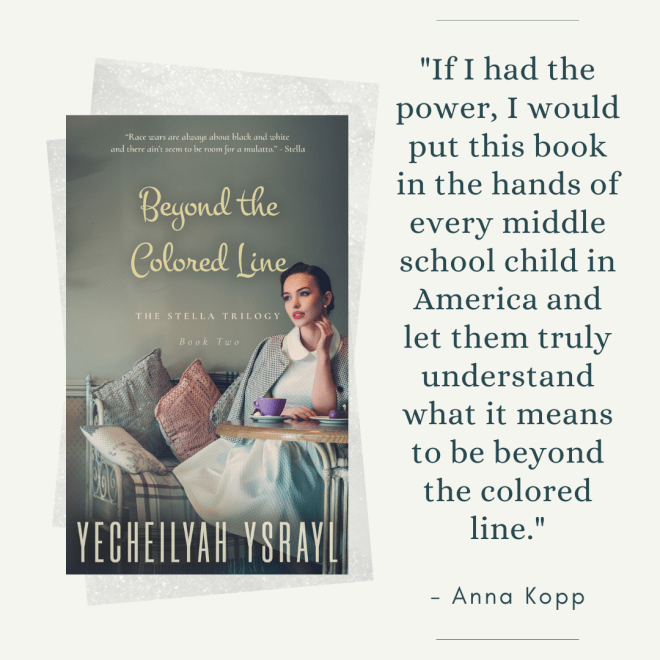
Read  Stella: Beyond the Colored Line, my historical fiction account of what life was like for blacks beyond the colored line here.

Stella: Beyond the Colored Line is Live (The Stella Trilogy Book 2)

Beyond the Colored Line is LIVE

“This story retells the history of many African-American families alive today. It is a heritage rich with strife and suffering but also filled with a hope and a desire to finally grasp the freedom that has been so elusive and out of reach for so many. At times, I was forced to accept some uncomfortable truths about our American past. There is nothing wrong with that. This story makes you think about freedom and what it really means to you as a person, and as an American. I loved this story because it is through the learning of other’s journeys that we begin to learn much about ourselves. Their pain becomes our pain and we begin to see through their eyes. Stella will touch your soul with such a sweet simplicity you won’t even know it.”

– Colleen Chesebro, on Stella: Beyond the Colored Line, First Edition

About.

In book two, we dig deeper into the McNair family’s legacy. Named after her great-grandmother, Stella has a very light complexion which causes her to be the tease of her classmates. Unable to find solace among her African American contemporaries, Stella finds it challenging to adjust to a world where she is too light to be “black.” After The Great Depression of the 1930s forces Stella’s family to move to Chicago, a conversation with Aunt Sara provokes Stella to do something that will dramatically affect not just her life but the life of her children and grandchildren.


Excerpt.

1928

Daddy runs off to no one knows where on account of his life. Some racist whites had seen him and Mama together and threatened to lynch him if found, so he runs off. The community gossip is that his brothers know, but they won’t say. We weren’t alone, though, Mama and me. It seems like Mama filled the hole where Papa should have been with our whole family. The house always stayed filled with guests, my people, and peoples of my people. My granddaddy was a colored man and owned this land. My namesake, his Mama Stella, was a slave and was given this house by her owner. As the story goes, after Grandma died, I was born. Since Mama was the closest, she named me after her.

My aunts would gather around the table with my mama, and they laugh and cry most of the night about their girlhood. They would talk about what it was like being four mixed girls in Illinois. I don’t have uncles on my mother’s side, but Daddy got six brothers.

Due to the controversy around my parent’s relationship, Daddy being a Negro, and Mama being half-white, they only visit on special occasions. Uncle Roy, Daddy’s younger brother, says Mama acts differently around her sisters and that we too uppity, especially Aunt Sara. She’s the youngest of my aunties and the most spoiled. She’s the one who convinced Mama to send me to a white school in the first place, and boy was my uncles hot! They said we were breaking the law–that a Negro had no business in a white school. But Aunt Sara said I had all the right in the world since I was half white. For her, not only could I do this, I had a right to do it.

“But does the school know she a Negro?” Uncle Roy would ask.

“That’s none of the school’s business, now is it?” Aunt Sara would say, and they’d go back and forth until Mama break it up.

Not all talks were good talks. I used to sit until my eyes were red with fatigue to hear Mama and my uncles talk about all the killings that were taking place around the country, and especially in the South. I felt like I lived in two worlds, one black and one white, but none mixed. And what did that mean, mixed?

My aunties wanted to talk about education, family, career, and navigating the world as a mixed-race person, whereas Daddy’s side liked to talk about the black condition, what was going on in the black community, and what it meant to be black in America. They talked less about blacks navigating a world that they felt didn’t include them, and more about blacks redefining themselves and creating their own worlds. The conversations were intriguing and fascinating on both sides, but it left me feeling like my very body was a contradiction. Was I white? Was I black? Race wars always involved these two groups of people, and there ain’t seemed to be room for a mulatto.

“That’s what I say,” said the voice of Uncle Keith, Daddy’s second oldest brother.

“Up there in Minnesota.”

“That close?” Mama gasped.

“Yeah, that close. What woman, you living under a rock? They just had one over in DeKalb last month,” said Uncle Roy.

“It’s a crying-out-loud shame,” continued Keith. “Say they dragged the boys from the cell and a whole mob of ‘em lynched ‘em. Say it was ‘bout a thousand of ‘em.”

“My my,” said Aunt Rebecca.

There were times even I witnessed evidence of the events rocking the country. One day, Mama and I went to visit Cousin Mary in Texas and drove the truck up to a general store. We walked in, and I picked up a postcard from a rack. It was of a man hanging on a tree that supported an iron chain that lifted him above a fire. The man didn’t seem to have much of a body left. They cut his fingers off, his ears and his body was burned to a crisp. On the back of the postcard read: “This is the barbecue we had last night. My picture is to the left with a cross over it. Your son, Dan.”

I learned later the picture was of a seventeen-year-old mentally ill boy named, Johnny, who had agreed to have raped a white woman. And everybody at home still talked of the Cairo Circus of 1909, the public lynching that took place here in Illinois. I couldn’t understand why Mama was so upset about a circus until I found out what kind of spectacle it was. My aunts didn’t want anything to do with the land or the house because of events like these. They say it’s too close to slavery. No one wanted to inherit the home or the property, but Mama, and this is how I spent several years of my life living in the same house where my great-grandmother had been a slave. Mama kept the house full of guests by renting out rooms to help with her washerwoman salary.

We weren’t much of a churchgoing family, party going is more like it, unless Mama wanted to show off a new dress or hat when somebody died or needed saving and on holidays and such. Folk would come from all over southern Illinois to hang out with “Cousin Judy.” Sundays sure were fun, my second favorite day of the week. Saturdays were my favorite day of the week. It was the day for shopping, and that only meant one thing, Chicago.

First, Mama would wake me to the smell of biscuits or pancakes. This massive breakfast was to keep me full enough throughout the day, so she didn’t have to worry any about food buying. Then, she commanded me to bathe real good, paint my arms and legs with coconut oil, untie my curls, and we’d both put on our Sunday’s best and be two of the most beautiful women you’d ever seen. I was a young lady now, and shopping was the best thing for a young lady, next to boys, but you couldn’t like them in public.

You could like shopping, though, and I loved going from store to store in search of the finest. I skipped along while Mama scanned the insides of magazines for stuff she heard about from the white women whose laundry she cleaned. We would squeeze our way through crowds of people, just bumping into each other. Everyone dressed in their weekend wear and bought ice cream for their children. Some went to see the picture show, and so did Mama and me. We could buy candy or jewelry, or perhaps a new hat or two. We could drink from water fountains without a label and spend money without prejudice.

We had a good time on Saturdays because on Saturday, no one knew we were colored.

Click here for a signed paperback
of Beyond the Colored Line

*Click Here to get it on Kindle

Haven’t read book one? Get it for 99cents on Kindle here or in paperback here.
*Paperbacks ordered today will ship next week.