
We were fiveeee steps! lol
The Mistake
This poem was inspired by Maya Angelou’s “We Wear the Mask,” and Paul Laurence Dunbar’s “Mask.”

We define grief as tears, not smiles
heartbreaking groans, and complaints
an emotion-gripped body that bends and aches
a display of physical pain is how we mistake
what it means to grieve.
We lookout for people who are visibly sad
a distraught tone of voice, a mind gone mad
a person who neglects to eat, but drinks
or maybe have a hard time falling asleep.
The physical signs of a distressed soul are what we see for ourself
and to this, we say, “careful now, of your mental health.”
But what of the people who are not so physically troubled?
They wake up each morning
their heads held high.
They could wallow in self-pity but prefer to fly.
They spread their cheeks, so we see their teeth,
and somehow, deep underneath the grief, they smile.
Their shoulders do not droop or bow or lean,
and from their eyes, no tears be seen.
We run to them for advice, and in their ears, we spill our guts
“They are pillars of strength, no matter what,”
we say
and this is the mistake.
Right there in those smiling faces, see the invisible rock.
The chains of depression’s coffles
it’s whips and lash and knock
its uninvited entry when our smiling support goes home
and lay their pillars on their pillows
before crying themselves to sleep.
In a world as destructive as this one,
they need not make it known
that even the happiest person
still cries and loathes and moans.
Even the most joyous of us, with praise smeared on our lips
have some load to carry,
we wish to be helped with.
But if physical anguish is the only measurement
by which we weigh grief
then these people don’t have a chance
of attaining such release.
And yet, where would we be without these rays of light
who helps us, if for a moment, to believe all is right?
Where would we be without people with such faith?
Those who pull us from the grave,
even as they stand on the edge of death and wait?
Too solid to bend and too proud to break.
They go on permitting us to believe
pain is but a physical thing.
This is the mistake.
FREE Ways to Support Your Favorite Indie Authors
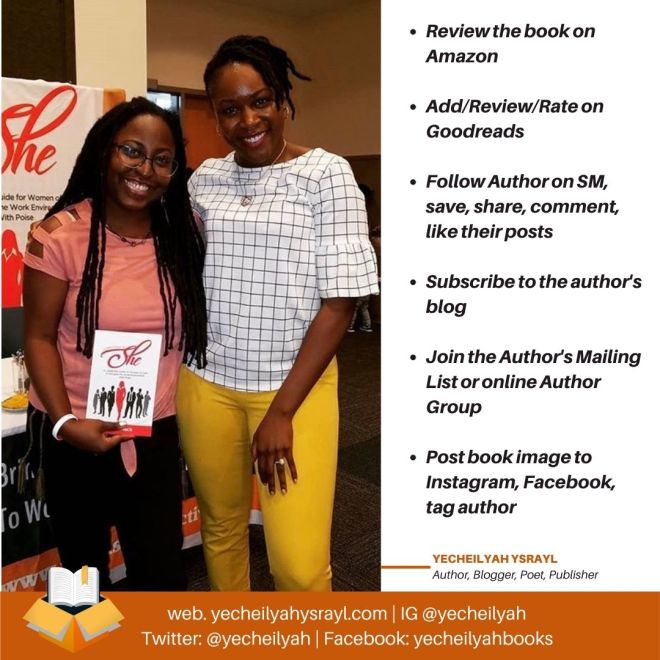
Buying books written by Independent Authors is a terrific way to show support, and word of mouth is still a powerful way to make sure other people know of an author’s work without spending money. There are tons of ways to do this online.
Review the book on Amazon – Amazon is still a powerhouse and trusted source of content for readers. It’s easy to send a review via email, DM, or to post about the book on Social Media. While I am confident, the writer will appreciate any form of support, reviewing a book on Amazon will undoubtedly give the author more exposure. Amazon is the third-largest search engine with Google first and YouTube second. But then, “if we exclude YouTube as part of Google, Amazon is technically the second largest search engine in the world.” (E-Commerce SEO). Suffice it to say Amazon reviews are a great way to support your favorite author, boost their exposure, and act as a great social proof form. In short, an honest, legitimate Amazon review will help an Indie Author go far. In the words of Michael LeBoeuf, “a satisfied customer is the best business strategy of all.”
Just because someone bought a book doesn’t mean they read it. Leaving reviews is a great way to show the author that you read the book, whether you enjoyed it or not.
Click here to review My Soul is a Witness on Amazon
Rate/Review Book on Goodreads – While many people are no longer fans of Goodreads (and I’ve fallen off a bit there myself), do remember that it’s a platform full of people who love to read and talk about books! Granted, some people reviewing here are rude, but that’s certainly not everyone. Goodreads is still an excellent platform to use as an online word of mouth to discuss books read. It also allows for the sharing of reviews for books not posted to Amazon for whatever reason. If you don’t have the book, you can utilize the Want to Read button to add it to your bookshelf. Adding a book will show up on your page, exposing the book to your followers/friends. If an author is hosting a giveaway entering the contest will also mark their book Want to Read and add it to your shelf.
Note to authors: I have heard stories about people taking advantage of authors hosting giveaways on Goodreads when it involves paperback books. Please research this on your own as I have no first-hand experience with it, but I’ve heard complaints.
Click here to add My Soul is a Witness on Goodreads
Follow the Author on Social Media – Through social media, you get to learn more about the author outside of books. Many authors post pictures of their family, friends, and pets. Authors share their daily routines, hold contests, and take readers behind the scenes. Readers can interact directly with their favorite authors by sharing a post, saving a post, commenting on a post, and liking a post. All of this helps contribute to helping spread the author’s message without spending a dime.
Like/Follow me on Facebook Here
Subscribe to the Author’s Blog – Following the author’s blog (if they have one) is an extension of following them on social media. Writers have the space to share so much more about themselves and their life’s work and inspirations through blogging. It is a great way to network and become privy to new material as writers tend to publish sneak peeks and short stories to their blogs before they publish them. Writers also post their publishing process in detail on their blogs. You may be inspired to write your own book and learn a thing or two.
Click that lovely subscribe button to follow this blog
Join the Author’s Mailing List or Author Group – Joining the author’s mailing list or author group opens up an opportunity to get to know the author on a much more personal level. You are interacting with them behind the scenes, sort of speak. An author may go live so you can see their face, hear their voice, and interact with them in real-time. Authors explain the deeper meanings behind their stories, answer questions, host private, exclusive contests, and much more. Joining the author behind the scenes in this way shows you trust them with your email address and are ready to commit on a deeper level.
Click here to Join my Author Mailing List
Post Image of Book on Instagram / Facebook – Posting images of the author’s book – or pictures of you and the author at an event – to IG and Facebook (tag the author) is an excellent public display of support. It helps leverage the author’s exposure through cross-promotion. One of your followers interested in that book will potentially follow the author, purchase a copy of the book, review the book, and become a new fan. They may post the book image to their page, and the process repeats itself as one of their followers may find themselves interested in the book. It is a beautiful and selfless display of support and strengthening of the author’s network and the Indie Author community in general.
There are so many ways to support the Indie Author community. I have mentioned these previously, but one crucial component sets this list apart as making a real difference for your favorite authors:
Participation.
Following someone on social media, subscribing to their blog, or joining their email list or author group means nothing without an active commitment to engage.
My Soul is a Witness is Out. Be sure to grab your copy today and remember to leave a review when you have finished reading! 🙂
The Fragility of Life

“Come celebrate
with me that every day
something has tried to kill me
and has failed.”
– Lucille Clifton
Last week, on Saturday, October 3, 2020, I buried my mother.
On Tuesday, September 22nd, we learned she might not make it. That night, I spent the night in the basement on the couch watching Grey’s Anatomy episodes with a glass of wine. I couldn’t sleep, but you will inevitably fall asleep on the sofa when you are downstairs in my house. We’ve had the couch for a while, and it has claimed many victims who promised themselves it was not comfortable enough to tame them. I also lost service down there, and while I drifted, my phone rang and rang with no success.
Finally, I went upstairs, and my phone rang again. My heart dropped. There is only one reason people call that early. I accepted my sister’s call.
“Why are you calling me so early?” Although I already knew the answer.
“It was the twenty-third of September. That day I’ll always remember, yes I will
‘Cause that was the day that my mama died.”
The next day, September 24th, my aunt, my late dad’s sister, also passed.
I didn’t talk about it, but my Uncle John passed earlier this year on May 28th, two days after my birthday, and on June 2nd, a dear friend and brother passed.
The world also lost Kobe Bryant, Chadwick Boseman, and Thomas Jefferson Byrd, best known for his role as Luther from Set It Off. He passed away the day we buried my mother.
I need no more reminders of how fragile life is, and that’s what sticks out to me the most in my time of silence as I seek to process all this death.
I think we are all aware of the delicacy of life, but it becomes much more real when a loved one passes. It is then that we realize how insignificant we are and how precious we are, too. The insignificance is the weakness of our flesh, how it so easily topples and breaks down. The preciousness is the breath of life, without which we are lumps of clay.
It made me think about how we treat each other. It wasn’t until Yah breathed into Adam the breath of life that he became a living being. We are nothing without this power, yet we treat each other as if the breath pulsing through our veins differs from someone else’s. We treat each other as if the Almighty can’t call our spirit back at any moment.
What right do I have to mistreat someone when I return to the Earth just as they will? What right do I have to judge someone’s life or mock their pain when I know that I bleed just as they do?
What right does any of us have to think we are better than anyone else when the sun rises and falls on all of us, righteous and wicked alike?
We sometimes make so many promises to one another, such as this. We promise to be there for one another, we promise to keep in touch, and we promise to appreciate the time we have.
But these promises do not last and are only remembered at the next funeral.
Our lives are like the wind, a breeze that comes and goes. How I wish we could be consciously aware of our fragility as we live and not only in death.
What is an ISBN and Do I Need One for My Book?
Today is Throwback Thursday, and I want to revisit the discussion over the ISBN. I have not given any Indie Author tips in awhile so let’s do it.
What is an ISBN
The short definition is the ISBN is a unique number used to identify a book.
The code captures information about the book’s publisher, title, language, edition, and version. The first form of the ISBN was introduced in the 1960s by Whitaker & Sons Ltd, the British National Bibliography, and the Publishers Association, who set up the Standard Book Numbering Agency (SBNA) British publications.
The SBA then became the ISBN (International Standard Book Number) in the 1970s. It is a group of symbols that identify each book title as a unique product. The number consists of ten digits divided into four groups, usually separated by dashes or spaces, each group having a specific function.
Magazines, academic journals, and other periodicals do not get ISBNs. Instead, they are issued 8-digit ISSNs (International Standard Serial Numbers).
Purpose of the ISBN
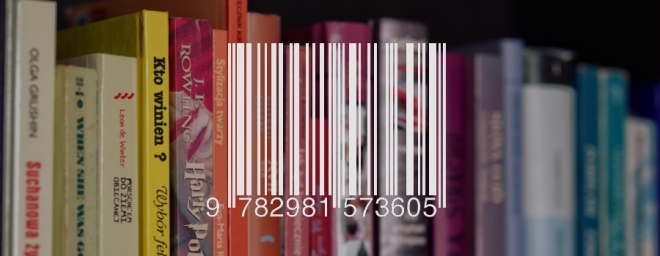
The ISBNs principle purpose is to make the identification of any book possible.
ISBNs are not necessary for ebooks because Amazon will automatically assign the ebook an ASIN, Amazon Standard Identification Number. It’s a 10-character alphanumeric unique identifier that’s given by Amazon and its partners.
If you only intend to give copies of your book to family and friends, you don’t necessarily need an ISBN because you’re not selling the book. However, if you want to sell paperback and hardcopy books to bookstores, libraries and want readers to access it worldwide, you need the book to have an ISBN. Most retailers require ISBNs to track book inventory. Without an ISBN, you will not be found in most book stores, either online or down the street from your house. An ISBN is your first step to ensuring that your book is not lost in the wilderness.
Authors in the U.S. have two choices. Receive a free ISBN given by Amazon, Lulu, or POD (Print on Demand) of choice, or purchase an ISBN from Bowker.
Free ISBN
The advantage of the free ISBN is the author saves money. This is an option for new Self-Publishers just looking to get their feet wet. But while it’s easier to get a free ISBN, it comes with some disadvantages.
With a free ISBN, you are not technically the publisher of record. Amazon, Lulu, or whichever service issued the ISBN is the publisher.
Bought ISBN
In the U.S., getting your own ISBN is not free, and since each version of your book would need a separate ISBN (including if you want to change the book’s publisher, book title, or translate the book into a different language…authors also cannot reuse an ISBN), it can get costly.
But it’s worth it.
The advantage of owning your ISBN is that you own the rights to the book. You have control over the metadata of the book—the descriptions and categories that help libraries, bookstores, and readers worldwide discover your book and decide whether they want to purchase it. Buying your ISBNs and registering your titles ensures information about your book will be stored in the Books In Print database, opening up a world of possibilities that your book is listed with many retailers.
How to Get an ISBN
In Canada, the ISBN is free for Independent Self-Published Authors and Publishers who are Canadian residents.
If you are in the U.S., you should only buy an ISBN from Bowker, the ONLY official U.S. ISBN Agency.
If you plan to write multiple books, it’s best to choose the ten-block option as it is the most cost-effective than purchasing one ISBN. It also makes publishing the next book easier as you can now omit the cost of the ISBN from your budget for the new book.
If you only plan to write one book, though, you certainly can buy one ISBN. Do keep in mind that even if you are writing just one book, you may want to create several versions of that book (hardcopy, paperback), in which case the 10-block can still come in handy since you need a new ISBN for each version of your book.
What is an ISBN and Do I Need One?
An ISBN is a unique number used to identify the book and its data and sell hard copies worldwide. In the U.S., free ISBNs are an option but do limit the author’s ownership. No, you don’t need an ISBN for ebooks sold through Amazon because they will be assigned an ASIN anyway. And no, you don’t need an ISBN if you do not plan to sell the book.
Yes, you need an ISBN if you are publishing a paperback/hardcopy of the book, and you want the book to sell at stores, libraries, and be available worldwide. No, you do not have to purchase an ISBN through Bowker, but it is strongly recommended that you do so you can be listed as the publisher and reap the benefits of owning the metadata. No, you cannot reuse the ISBN, and yes, you need a different ISBN for each version of the book.
Want more Self-Pub tips? Check out more posts here.
My Soul is a Witness is out!! Grab it at the link below.
90s Throwback Thursday Jams- TLC – Unpretty
I learned from their documentary on Netflix that this started as a poem written by Tionne “T-Boz.”
Why I Say “Thank You” (and why you should too)

This post is longer than I would like, but I think the message is necessary.
If you’ve been following me online for any significant amount of time, you know I am always saying thank you or reintroducing myself to new readers. I do this because of my firm belief in the phrase, “people don’t have to support you.”
Let me tell you a story.
My husband was driving, and I was looking out the window of the passenger’s seat as we passed by the brick houses, mansions, and condos of downtown Atlanta. “This probably where most of the celebrities live,” I joked. We talked about how movies never show the city’s complete image by filming movies in less wealthy areas. Since we are both from Chicago, we talked about Chicago films where we didn’t recognize the city because it was on the side of town we have never lived.
As we drove, we passed by a fancy-looking hotel where a man stood. He leaned against his suitcase, a white sign on its top with black ink that read: “I lost everything.”
My smile faded, and my heart felt heavy as I realized he was homeless. He didn’t look like those fakes that try to scam people out of their money, either. Something about his vibe told me he was not joking. He had really lost everything.
The US economy was already bad, but since the COVID-19 Pandemic, things have gotten worse. People are out of jobs, out of money, out of homes, and out of hope. Any little they scrape together is reserved for only the most essential items. If someone spends money buying books or t-shirts, or anything that is not greatly essential (okay well, books are essential to me but I mean, like food), it means so much more to them, and they deserve a thank you.
Why EC?
Because they didn’t have to do it and sometimes, they couldn’t do it, but they invested in you.
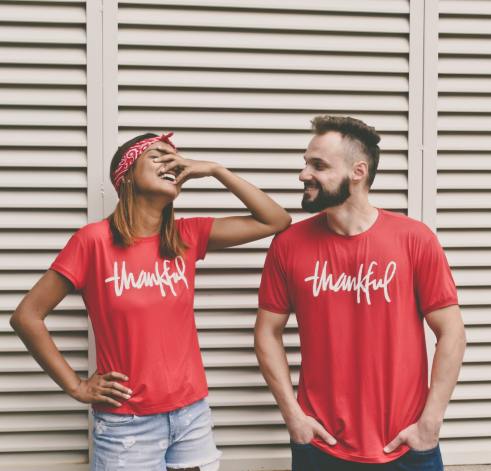
Entrepreneurship has been on the rise a lot lately, and as an entrepreneur, I think that’s a good thing. I have always stood for the underdog and will still rally around the concept of Independence. There is a humility about small, independent businesses that I love. Plus, every large company started as a small business. And since the deaths of Breonna Taylor, Ahmaud Arbery, George Floyd, and the countless black deaths, it has encouraged more people to support black-owned businesses and independent businesses.
This awakening means that while many people are struggling, many people are also thriving even amid this Pandemic. However, I am disappointed to see a lot of bullying among entrepreneurs, both large and small. Some people are shaming people with 9-5s when truth be told, most entrepreneurs in this economy have 9-5s, and their business is the real side hustle. That or their spouses have 9-5s. There’s nothing wrong with this, but some people think there is. People also throw shame when they try to bully people into supporting them.
Bully others into supporting them?
It means making people feel small and insignificant for not buying your services or product. It means threatening to cut people off because they didn’t support your business. It means neglecting to consider all the other things people have going on in their lives right now and that maybe they don’t have the extra money to spend or perhaps don’t have the time.

Ignore social media posts for a second and think about what someone may go through behind the scenes.
- Maybe they cried their eyes out this morning.
- Maybe they prayed on their knees, drowned in tears.
- Maybe they were going to lose their home or apartment or children.
- Maybe they lost their job, career.
- Maybe a family member died.
Maybe people have other things on their mind that take precedence over buying your bar of soap.
And if you think someone’s being fake for wearing a smile through their storm, then you need not look passed the smile of Chadwick Boseman, who battled cancer while filming movies and never complained.

I watched my sister-in-law battle and eventually perished from cancer. My dad, too, so I know what Chadwick did was not easy from personal experience. And while everyone is praising his silence now, that is not how we treat the “regular everyday people,” we know in actual life who battle in private. We call them phony for not opening up as we think they should. Sometimes people don’t talk, not because they are being fake or secretive, but because it’s just none of your business. Let’s allow people to give their testimony in their own time.
My point in all of this is that no one is obligated to spend money with a business only because it exists. Anything that anyone chooses to give, including time and information, is a gift. I always say “thank you” because people don’t have to support me.
People support businesses that offer something they need, whose message or value system aligns with their own, helps them solve a problem and companies they trust. Someone might enjoy eating bread, and you may launch a bread business, but that bread lover is still not obligated to support you. Maybe over time, once you’ve gained their trust and they’ve sampled your product, they may try it and when they do, say thank you.
Why EC?
Because they didn’t have to do it, so show some gratitude.
To better conclude this point, I will again turn to Tyler Perry as an example.
For the record, this isn’t about Perry’s personal life. I will not comment on him dressing up as a woman, Madea, or his elite status because its none of my business. I am commenting on some basic business practices I see from him as an outsider looking in that many newer entrepreneurs can learn from. Everything else is for an entirely different conversation.

From a business perspective, you see the same stories and the same actors in Tyler Perry’s films because Perry has a good understanding of his targeted audience. He knows the persona of the people who like his stuff, and he focuses on giving them what they want. Many beginner entrepreneurs can learn from this. Instead of guilt-tripping people into supporting your business and trying to sell to everyone, find your targeted audience or that specific group of people you want to reach based on shared interests and market and direct your attention to those groups.
This means that if only five people like your post, that’s a good thing because chances are those five people are genuinely interested in what you offer. Listen, I’m a damn good writer. I know this to be true. But I also know it to be true that everyone doesn’t want to read what I write, and that’s cool because I am not for everyone and everyone is not for me. I work to serve my audience no matter how small, and I appreciate all the support and time my people invest in my writing.
And for that, I say thank you.

My Soul is a Witness is Available
Check it out below. (thank you!
 The PBS Blog