Self-Publishing – Laying Bricks Ep 2: Mortar

Laying Bricks(1)

“You cannot build your hopes upon unstable foundations and expect a product of longevity.”

– Audrey Prim,

Quote From heyygurrlheyy.wordpress.com

Sure, there are other things we’ll need to do: paint the walls, add furniture, and hire professionals but not now, not while laying bricks.

Execution is vital in going from an idea to something that is actually tangible. Goals are great, but alone they’re not enough. Written down, they are merely plans. Plans are awesome. But a plan that is not backed by action becomes fruitless.  Laying bricks is excellent, but it is not enough. No, you can’t just write, sorry. I wish it was that easy. Wait, actually, it is!

It is if you take your time. If we are to build a strong house, there are other things that we must do with these bricks besides lay them. In our first unofficial episode, we spoke about focusing on one brick and how to lay it properly. We got through the laying part but if the brick is not held together, then the entire foundation is weak and the house will crumble.

Applying Mortar – Revisions and Feedback

19rv8q

Writing the story is important. It is your guide, your first brick. But we have all lived long enough to know that you can’t just stack bricks, you need something to hold them together. As much as we’d like to all just have fun, this is a business after all.

Safety Tip: When working with mortar, always wear gloves and a mask or respirator.

Before applying mortar, you’d need to protect yourself. This just means you’ll need to be prepared to battle self-doubt and rejection because this step requires revisions and feedback. If your first brick is the story, then how do you know if that story is any good? Surely we cannot depend on our own selves to determine the quality of work. I mean, are we brilliant? Yes, of course. But we are also too close to the work.

I’m not going to pretend your first draft isn’t everything, it is. It took lots of time and research. It is everything, but it’s not EVERYTHING! See how exciting the last everything was? First drafts are like the play-dough you just want to play with and get all “authorly” and say stuff like “yaasss”. However, we can’t just give readers dough now can we? We have to mold it into something and to do this properly, you’ll need a little bit of help.

Discover the tools you need to apply a generous amount of feedback to each layer of the brick. This may require:

  1. Beta Readers
  2. Advanced Review Readers
  3. Writing Critique Groups
  4. Facebook Writer Groups

Click Here for 40 Places to Find a Critique Partner

Who Will Help You Improve Your Writing

I know. It sounds funny speaking about revisions so early on. The truth is that no first draft is ready to be published. The truth is that your manuscript will need revisions. But, how do you know what needs to be revised?

The job of these people listed is to provide constructive feedback. When it came time to participate in The Curiouser Author Society’s Critique day, whew! Nervous is not the word, I was terrified. However, when I finally did upload my novel’s first chapter and allowed this group of people to read it, I was pleasantly surprised. It was like a weight was lifted from my shoulders. Sure, I thought it was good but could I really depend on my own critique? Not really. Now that others read it and provided feedback I knew it was good. Granted, it wasn’t great (at this stage you don’t get to great yet… there were things I needed to fix), but I was confident that it wasn’t poor either which boosted my confidence as a writer. I’m telling you from experience, it is enough fuel to finish the book indeed!

Here are a few things to look for during revision:

  • Contradictions  – Usually writers start off strong in the beginning but then you get to the end and its like, “Where they do that at?” Look for contradictions in your characters behaviors or setting or anything. Is she wearing red shoes? I thought she hated red tho? Stuff like that.
  • Flow and Pace – If you skip it, chances are it needs to be skipped.
  • Destroy – I’ll speak more on this in the next episode but it is part of the revision process. To fix some things means you have to break it down to build it up. So if the shoe fits, yeah, some parts of your story will need to be utterly destroyed. Recently, I just had to cut an entire chapter from my WIP. Ouch.
  • One Thing at a Time – So is the whole point of this series. We’re not focused on the in depth stuff. In this series we’re focusing on the basics. When you perfect the basics you can build upon what you build. On the other hand, without a strong foundation none of the other stuff will matter. So, back to it. Revise in stages, fixing one thing at a time. Don’t rush. Remember, this is  a process. We’re not building a straw house. We’re building  a brick house.
  • Show and Tell – Check for moments you told instead of showed and vice verse. I won’t elaborate here since I plan to publish a separate post on it, but just be sure you understand the difference between telling vs. showing. Personally, I think good writers show and tell. There’s an ongoing debate in the writing world about Showing vs. Telling but here’s the secret: don’t show us everything! As a result of the show vs. tell debate authors are now showing us everything but their booty cheeks. That’s not what show vs. tell means and makes the story sound just as boring as my example. It’s called Storytelling for a reason. You are supposed to tell a story. The difference is in balancing the amount of telling and showing. Straight action doesn’t work no more than no action. Your characters just can’t be running all over the place, they need quite, emotional times too.
  • Grammar / Punctuation – This is last not because its not important. It’s just that this goes more into the next episode. But, there are still mistakes you can catch during your revision you may not have seen before. Especially those caught by your betas.

Sure, everyone’s opinions are just that, opinions. Additionally, opinions vary for each person. Still, it helps to have an extra set of eyes to validate some things for you as you revise your script. If you think you can really do it all yourself, then maybe you are not ready to build a house. (Ever watched those home reconstruction shows? Do you see how much work that is? Now, imagine one person doing it. Sheesh). The extra set of eyes are not to dictate your script, change the vision, or slam your work.

The extra eyes are just to help you along the revision process before you go in for the edit. So, “butter” that brick with mortar by recruiting additional sets of eyes to read your manuscript. They may be useful in locking each brick into place and to release any unnecessary plot bubbles that may be underneath all the glitter and glam.

Next– Removing Excess

Next, we’ll talk about removing the excess in your Self-Pub brick laying process. Find out what to do when you get your scripts back from readers. After you’ve gotten the book critiqued, now what? Stay Tuned.

Be sure to subscribe to my email newsletter for more tips, updates on my upcoming projects, free excerpt chapters and articles not yet published to this blog, book promotions, and more.

Disclaimer. Everything I share on Self-Publishing is always based on my own experience and research because I believe you can’t advise people on stuff you haven’t really tried. It’s just best if you’ve walked those shoes. So, that said I do not profess to be an expert. There are too many of them out there for you to glean from. Now, should you find information on this blog useful? Whoo hoo! Go for it.

Missed the first episode? See Laying Bricks Ep 1: Guide The Bricks


Yecheilyah Ysrayl is the YA, Historical Fiction author of The Stella Trilogy. She is currently working on her next book series “The Nora White Story” about a young black woman writer who dreams of taking part in The Harlem Renaissance movement and her parents struggle to accept their traumatic past in the Jim Crow south. “Renaissance: The Nora White Story (Book One)” is due for release spring, 2017. For updates on this project, sneak peek of chapters and the pending book cover release for this project, be sure to follow this blog and to subscribe to Yecheilyah’s email list HERE.

4 Simple Ways Not to Headline Your Blog Post

Blog Posts

I’m writing you on my phone as I am in the midst of travel. This is my second city this weekend, transitioning from The Windy City to Memphis TN before back home again. So you’ll have to excuse any grammatical errors in this post. I’ll edit this later (don’t judge me).

Last year, I wrote an article on 5 Creative Ways to Headline Your Blog Post.

Today, I feel compelled to follow up. No, I’m not a blog expert. I am however tired of seeing poor blog headlines. A blog is not your personal diary. A blog is public. Yes, this means hundreds and thousands of people are potentially reading it. Yes, this means you may want to rethink your presentation. No, having thousands of followers doesn’t mean you’re doing it right either.

I know people blog for fun, that’s cool. I also know people blog privately. I don’t understand that. Blog and private just aren’t compatible. Nothing online is private, not even what you think you deleted. Think of a newspaper headline. Your blog is today’s newspaper. Its also your first impression.

#1. Capitalize

At minimum, be sure to capitalize the first letter in your first word and the first letter in your last word.

Ex. I love Cookies

I tend to capitalize the first letter in all of my words (with the exception of a “to” here or a “the” there). It looks neat and professional this way.

Ex. I Love Cookies

#2. Spelling

If you proofread nothing else, proofread your headlines. If words in your headline aren’t spelled correctly its a bad first impression to the rest of the article. Blog Headlines are the first thing that draw readers in. In every post I open daily, it begins with my interest in the title. What makes me click onto the blog site? The title alone begs me to ask one question: “Why should I read this NOW?”

#3. Ditch The Hashtags

I know I’m gonna get a lot of flak for this but it is what it is and like I say, there are no rules for blogging. At least not that I know of. However, too many Hashtags in a headline are annoying.

Hashtags are great when it comes to sharing on social media, yes, but when you read news articles online, rarely do they include hashtags. It just looks extremely unprofessional in my humble opinion. Hashtags don’t belong in blog titles, they belong in the tag section of the post. Will they drive more attention? For social sites like Twitter, sure. Like I said, I’m no expert so I’m not saying it doesn’t work. Yes, your post title will come up if someone searches that hashtag. Possibly. And yes, word on the street is that hashtags help with auto tweets. The question is, however, if it works, just how effective is it?

I have not, to date, discovered data that indicates usage of hashtags in the blog title increases the visibility of the post beyond the tags we already have. Understand what I am saying here. I am not saying they don’t increase visibility. I am saying that thought Hashtags makes it useful for social sharing, there is no data that I’ve seen that indicates this these Hashtags (those in the headline) produces a better result  than tagging your blog post the traditional way. That is, attaching them to the tag portion of the post in the WP dashboard. The problem is not one or maybe even two hashtags. The thing that makes them so unattractive is the four, five, and six hashtags as the headline to a post.

Four, five, and ten hashtags in a blog post is a turn off. One hashtag is OK if you must include tags.

I know we use them to draw more attention to our blogs, but coming up with attractive blog headlines is part of the experience and using hashtags just seems like a cop out, especially for writers. Writing is what you do. Come up with an attractive blog headline for your post instead of a bunch of sloppy looking and unexciting tags.

#4. Too Lengthy

Entire quotes, complete sentences, and whole paragraphs don’t belong in blog post headlines. Its extremely unattractive to readers and makes us exhausted before getting to the article. The purpose is to create blog headlines that make us click on to your blog site. If you’ve given us the entire post in a title, what’s the point? Keep in mind also that even if we like the quote, we can do this through the reader. This means though liking the post, we have not visited the blog which defeats the purpose or at least to me.

I don’t just want you to preview me, I want to gain views by producing quality content that compels readers to click on to my blog site. If readers enjoy their visit with me, I hope to gain subscribers. I am not here to play games. I am here to win. Are you?

No, the Internet Has Not Killed the Printed Book

No, Technology Has Not Killed the Printed Book.
Books line the walls on at Common Grounds, in DeKalb, Ill., in August. KATIE SMITH / DAILY CHRONICLE, VIA ASSOCIATED PRESS

“Even with Facebook, Netflix and other digital distractions increasingly vying for time, Americans’ appetite for reading books — the ones you actually hold in your hands — has not slowed in recent years, according to a study by the Pew Research Center.

Sixty-five percent of adults in the United States said they had read a printed book in the past year, the same percentage that said so in 2012. When you add in ebooks and audiobooks, the number that said they had read a book in printed or electronic format in the past 12 months rose to 73 percent, compared with 74 percent in 2012.”

Click Here to Keep Reading

Lost to History – Unfamiliar Faces: Francis E.W. Harper

frances-ellen-watkins-harper-448

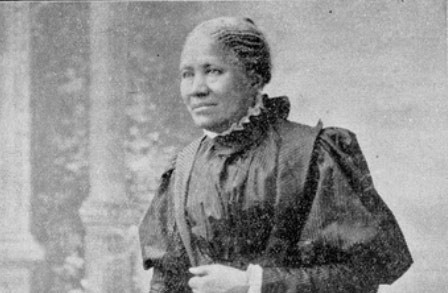
Maya Angelou, Toni Morrison, Richard Wright, and Zora Neale Hurston are among many peoples list of powerful writer influences. Throw in Ralph Ellison, James Baldwin, Alice Walker, Octavia Butler, and Langston Hughes and you have a dream team of the world’s most quoted, most copied, and most talked about black writer contributors of all time. A name you won’t hear is Francis Ellen Watkins Harper, poet, author, and abolitionist.

“My home is where eternal snow Round threat’ning craters sleep, Where streamlets murmur soft and low And playful cascades leap. Tis where glad scenes shall meet My weary, longing eye; Where rocks and Alpine forests greet The bright cerulean sky.” – Forest Leaves, Yearnings for Home by Frances E.W. Harper

Frances was a writer and poet born free to free parents in Baltimore and attended a school for blacks that was ran by her Uncle. Frances wrote poems and went on to publish her first collection in 1845, Forest Leaves. Years later, Frances taught domestic duties at Union Seminary in Ohio which was run by John Brown, the devout abolitionist who held strong opposing views of slavery. Brown, a white man, was a conductor of The Underground Railroad and The League of Gileadites, an organization established to help runaway slaves escape to Canada. As a result, naturally Frances got involved in the abolitionist movement and The Underground Railroad becoming a lecturer who went on tours with such men as Frederick Douglas.

In 1854, Frances published Poems of Miscellaneous Subjects, which featured one of her most famous works, “Bury Me in a Free Land”, and in 1859 made literary history with “Two Offers” which made her the first African-American female writer to publish a short story.

Harper died of heart failure on February 22, 1911, in Philadelphia, Pennsylvania.

This Month in History – August

THis MonthIn BlackHistory

  • 1834 – Slavery was abolished throughout the British Empire – Slavery Abolition Act 1833 came into effect.
  • August 2, 1850 – The start of The Underground Railroad, a network of secret routes and safe houses used by 19th-century enslaved people in the United States in efforts to escape to free states and Canada. The Underground Railroad was neither underground nor a railroad. It got its name because its activities had to be carried out in secret, using darkness or disguise, and because railway terms were used by those involved with system to describe how it worked. Various routes were lines, stopping places were called stations, those who aided along the way were conductors and their charges were known as packages or freight.
  • August 2, 1924 – James Baldwin, author of Go Tell It On The Mountain, The Fire Next Time, and Another Country, is born.
  • August 3, 1800 – Gabriel Prosser, a literate enslaved blacksmith, planned a large slave rebellion in the Richmond  area in the summer of 1800. Information regarding the revolt was leaked prior to its execution, and he and twenty-five followers were taken captive and hanged in punishment.
  • August 4, 1901 – Jazz trumpet player Louis Armstrong was born in New Orleans, Louisiana. Known as “Satchmo,” he appeared in many films and is best known for his renditions of It’s a Wonderful Worldand, Hello, Dolly.Three young civil rights workers, James Chaney, Andrew Goodman and Michael Schwerner, were found murdered and buried in an earthen dam outside Philadelphia, Mississippi.
  • August 5, 1962 – Nelson Mandela imprisoned.
  • August 11, 1841– Frederick Douglass, an escaped slave, spoke before an audience in the North for the first time.
  • August 11, 1965 – Watts Riots: In Los Angeles, racial tension reaches a breaking point after two white policemen fight with a black motorist suspected of drunk driving. An angry crowd gather near the corner of Avalon Boulevard and 116th Street to watch the arrest and soon grew angry by what they believe to be another incident of racially motivated abuse by the police. A riot kicks off and lasts for five days (ending on the 16th) with 34 dead and 1,032 injured.
  • Roots author Alex Haley was born in Ithaca, New York. His Pulitzer Prize-winning novel, published in 1976, explored seven generations of his family from its origins in Africa through slavery in America and eventual hard-fought freedom. Roots was translated into 37 languages and also became an eight-part TV miniseries in 1977 which attracted a record American audience and raised awareness concerning the legacy of slavery. A remake of Roots aired in on May 30, 2016.
  • August 18, 1859 – Harriet Wilson’s Our Nig is first novel published by a black writer.
  • August 20, 1619 – 1st known African Americans (approx. 20) land at Jamestown Virginia aboard Dutch vessel then sold or traded into servitude for supplies.
  • August 21-22 1831 – In Southampton County, Virginia, on August 21-22, 1831, Nat Turner, led the first slave revolt of magnitude. The revolt was crushed, but only after Turner and his band had killed some sixty whites and threw the South into panic. After hiding out, Turner was captured on October 30, 1831, and hanged in Jerusalem, Virginia, on November 11th. Thirty other blacks were also implicated and executed. It was not until John Brown’s raid on Harpers Ferry, Virginia, in 1859 that another slave revolt became known.
  • August 21, 1971 – George Jackson assassinated by prison guards during a Black prison rebellion at San Quentin on August 21, 1971. Three prison guards were also killed during that rebellion and prison officials charged six Black and Latino prisoners with the death of those guards. These six brothers became known as the San Quentin Six.
  • August 23, 1926 – Carter Woodson, historian, author, inaugurated Negro History Week and later producer of the Negro History Bulletin. Negro History Week would later be known, as it is today, as Black History Month.
  • August 25, 1908 – National Association of Colored Nurses founded.
  • August 26, 1900: Hall Woodruff was born. He was a nationally known print-maker, draftsman and painter and a leading artist of the Harlem Renaissance. He died in 1980.
  • August 27, 1935 – Mary McLeod Bethune founds the National Council of Negro Women.
  • August 28, 1955 – While visiting family in Money, Mississippi, 14-year-old Emmett Till from Chicago, is brutally murdered for flirting with a white woman four days earlier. His assailants–the white woman’s husband and her brother–made Emmett carry a 75-pound cotton-gin fan to the bank of the Tallahatchie River and ordered him to take off his clothes. The two men then beat him nearly to death, gouged out his eye, shot him in the head, and then threw his body, tied to the cotton-gin fan with barbed wire, into the river. (Duet. 28:49-50)
  • August 28, 1888 – Granville T. Woods patents railway telegraphy.
  • August 29, 1920 – Saxophonist Charlie “Bird” Parker born
  • August 30, 1967 – Thurgood Marshall ~ became first Black Supreme Court Justice
  • August 30, 1838 – The first African American magazine, Mirror of Freedom, begins publication in New York City.
  • August 31, 1836 – Henry Blair patents cotton planter (also patented a corn planter), and became the second African American to hold a United States patent.

Self-Publishing – Ep 1 Laying Bricks

My husband and I would like to build our own home one day. Building your own home can be one of the most exciting projects you can undertake. It can also be one of the most frustrating projects. Though rewarding, actually getting to the point of building can take many years to accomplish. However, breaking the process down into smaller pieces can make things go a lot smoother. Saving money, building credit, learning the proper ways to find a location, designing the home, acquiring the correct permits, tools, equipment, and breaking ground. By the time you actually start to build the house many years have passed. Self-Publishing is in many ways just the same. Before you build a house, you have to lay the bricks. Masonry, like Self-Publishing, isn’t a simple task but with the right tools, it can run smoothly.

When I step back and look at the publishing industry as a whole and all of the information that is out there, I want to scream. OK, maybe not scream. I’m not a screaming person, but I do want to pull out a few locs.

19rfo8

It actually makes me happy to know that I knew none of this when I first started writing. Why? I probably would not have chosen to publish a book, let alone self-publish it. The truth is in most of our lives we are blinded from the full picture of the vision in order to a). ensure we will step outside of our comfort zones and b). grow into the person who can achieve said goal. Let’s face it, 15-50% of people are introverted. According to Best Selling Author of Quite: The Power of Introverts in A World That Can’t Stop Talking, former corporate lawyer and self-professed introvert Susan Cain defines introverts as people who “like more quiet, less stimulating environments”.

In other words, Introverts are people who are shy and prefer not to be around lots of people (Although many argue shyness is not really introversion, let’s just keep it simple shall we? Let’s just say that shyness is a kind of introversion, whereas the individual responds differently to outside stimulation, particularly socially). In short, it’s easy for most of us to get overwhelmed with all of the constantly changing information out there. Sometimes it’s stressful just thinking about it. But then there is something we’re all forgetting: It is all a process.

If you don’t realize the small progressions in your life, how can you ever see the larger ones? If you don’t celebrate each small moment, how can you get to the greater ones?

If you try to look at this as an entire piece, you’ll never get anywhere, for no one ever moved a mountain all at once. Trying to follow everyone’s advice and stay up to date on every piece of information is not only bad strategy, but it will also wear you out. Instead, focus on one brick and how to lay it properly. Then focus on another one and another and another…you get the point. Sure, hubby and I would love to build a house but first we have to purchase land. Before we purchase land, we have to get approved for loans. At this stage, I am not designing a house and picking out decorations. Right now we’re focused on building credit and saving money.

Guide The Bricks – Write The Story

basic-writing

Technically, your first brick is the Author Platform (a piece of land in which you’ve already established in which to build on), but I have decided not to talk about that today. There are already a gazillion posts, articles, and experts far more knowledgeable than I already talking their heads off about Author Platforms. However, if you can’t engage an audience your platform will falter. Your personality, area of expertise (which is what your books are built on), and ability to engage people is a big part of the platform building process. We have to give readers what they want and what they want is good stories. All of this starts with your skill set as a writer. Many authors have to get a few books under their belt before their platform really starts to blossom. This means your first brick is not the platform. Your first brick is really the story.

When writing the book, focus on doing it right. Block yourself out from all of the noise going on around you. Tempting, yes, but at the end of the day book publishing is about the story. If you can’t write a story that people will want to read, then you my friend do not have a career. Research is great at this stage of the process but try to limit it to research that’s going to help your story. Read books A LOT and look into information that deals with the construction of a story. Look into how to show and not tell, build a story arc, perfect character development, setting, etc. (Yes, I use etc. when I’ve ran out of things to say. Why else?) A mason’s line acts as a guide for setting bricks in perfectly straight rows. This is your story. A writer’s ability to capture an audience is what builds an audience! It sets things in motion and acts as a guide to the other important steps further along in the process.

***

So far in the poll, many of you stated you’d like to receive more Self-Pub tips from The PBS Blog which was humbling for little ole me. As someone who is still learning, I am honored that you’d want to hear more of my ramble. Anywho, this was followed by Black History, and Life Tips / Inspirational. I am excited because these are some great categories!

I am in the process of introducing some new things here that I hope you’d love. First, a series called Laying Bricks. In it, we’ll discuss how to take the Self-Publishing world on, one brick at a time by focusing on perfecting the basics.

Next– The Mortar

Next, we’ll talk about the mortar aspect of your Self-Pub brick laying process. After you’ve written the book, now what? Stay Tuned.

Be sure to subscribe to my email newsletter for more tips, updates on my upcoming projects, free excerpt chapters and articles not yet published to this blog, book promotions, and more.

Disclaimer. Everything I share on Self-Publishing is always based on my own experience and research because I believe you can’t advise people on stuff you haven’t really tried. It’s just best if you’ve walked those shoes. So, that said I do not profess to be an expert. There are too many of them out there for you to glean from. Now, should you find information on this blog useful? Whoo hoo! Go for it.

In Case You Missed It: Popular PBS Self-Pub Tips:


Yecheilyah Ysrayl is the YA, Historical Fiction author of The Stella Trilogy. She is currently working on her next book series “The Nora White Story” about a young black woman writer who dreams of taking part in The Harlem Renaissance movement and her parents struggle to accept their traumatic past in the Jim Crow south. “Renaissance: The Nora White Story (Book One)” is due for release spring, 2017. For updates on this project, sneak peek of chapters and the pending book cover release for this project, be sure to follow this blog and to subscribe to Yecheilyah’s email list HERE.