I realize I’ve been a bit MIA lately. Not just on this blog but on social media in general. I have a lot that requires my full attention, which is professional work and personal work. I am in that transition place where I am learning to be patient with understanding what’s next for me, between that place of gratitude for what is but seeking continual growth.
In any event, I am still here, and I do want to try harder to check in with your blogs. I’ve fallen off in the blog world, and I really need to get back to it.
But I am still here. I am well, and I hope you are well too and continue to be so.
To catch up with me, please check out my latest interview in Shoutout Atlanta.
They reached out to me last month, and I enjoyed working with them for the second time.
Click on the link below to read in full, and be sure to share if you feel so inclined!
“If you are silent about your pain, they’ll kill you and say you enjoyed it.”
Zora Neale Hurston
Friday, November 13, 2020
It felt like I had given birth with nothing to show for it.
I was lying on my back in the emergency department of Wellstar Paulding Emergency Hospital with my legs open, my feet in the stirrups. I prayed the doctors examining and whispering over my vajayjay would hurry up. At first, it was just one doctor, but her face did not do a good job of concealing her concern. I could tell the amount of blood was overwhelming her. She called in someone else, and before I knew it, there were three doctors down there.
“Press down like you are having a bowel movement,” said one of them. She looked like she was in charge, and I was instantly terrified.
“What?”
“Just a little bit. Press down.”
So basically, you are telling me to push. Push what? OMG.
I pressed down until she said stop, and I could see them trying to stop the bleeding. I felt like I was on an episode of Grey’s Anatomy.
I was thirteen years old in the summer of 2000, and my dad was sick and dying of cancer. The adults decided we should not witness his last days and sent us to Mississippi with our big sister. (My twin sister Tracey and me are the youngest of my dad’s crew, our other sibling’s already well into adulthood.) Here, at my sister’s house, I had the experience of my first period, and it was not modest or merciful. It came in as if it had been here before and stayed for a full seven days.
No one had explained menstrual cycles to me, we were not being taught about it in school yet, and my sister was at work. Shocked, I cried as Tracey looked on in astonishment. We were terrified. We knew about it, but we did not fully understand it. My stepmother predicted mine would come soon, and every time she brought it up, I would get upset.
“What you gonna do? Stop it from happening? You gonna be the first woman to not have a period?”
I sat on the edge of her bed, brought my eyebrows together, wrinkled my forehead, and curled my lips up with eyes that said, “Yup.”
In my mind, I really thought I could stop it. That’s because I had no idea why it needed to happen in the first place.
We eventuallyfound my sister’s pads, but no one had taught us how to put them on, so I stuffed my panties with tissue and waited until my sister got home.
Sadly, my story is not unique. When it comes to the woman’s body, many topics are considered so taboo they are rarely talked about or spoken of at all. Not even in the home. Sexual intercourse, the vagina, pregnancy, abortion, birth control, and menstrual cycles are topics people shy away from, like some kind of disease, leaving many women to learn through experience. Often, traumatic experiences.
“I was around 13 when I asked my Aunt about sex because a lot of my friends at school were talking about it. Instantly, she asked why I’m around those kinds of friends and why I would ever ask that kind of question. She went on to tell me that I shouldn’t be having sex until I’m married and mentioned that I shouldn’t have a boyfriend either. I knew for sure that I was never going to come to her again.”
Afia, 18, of Pawtucket, RI
In the Black community, girls are sometimes shamed for even bringing these subjects up. When my stepmother scolded me for being upset about periods, she didn’t know she was setting me up to be ashamed of it. She never talked about how natural it was for women or asked me why the thought of it made me so upset in the first place.
The teachable moment had passed, and like Afia, I knew I would never come to my stepmother to discuss periods. And, for a long time, I did not even like to say that word. I had developed a deep shame about it.
According to Netflix’s new series, The Principles of Pleasure, one name used to refer to the woman’s external parts back in the day was the Latin term Pudendum, from the verb Pudere, meaning “to make ashamed.”
“…let me know, and we can go get something,” my Aunt said loud enough for us to hear in the other room.
She drank and played cards as they discussed prom and prom night. Her insinuation that if we planned to have sex, we should let her know “so we can go get something” was the extent of what I assumed was “the talk” about sex and birth control. There was no explanation of what she was even talking about. We were also already having sex by then. Not only did her comment make us ashamed to discuss sex with her at all, but Auntie was a couple of years too late anyway.
But parents are people too, and “it’s difficult to recreate experiences that were not modeled for us, and many Black parents of today grew up with inaccurate and negative messages about sex,” says Melissa Carnagey, founder of Sex Positive Families, an organization that supports parents in having sexual health talks with their children.
Tracie Gilbert, Ph.D., Training and Technical Assistance Manager at Answer, which publishes Sex, Etc. had this to say about why some Black adults may not talk to their children about sex:
“Black parents being nervous about talking with their daughters about sex is not only common but historically influenced by the desire to protect them from racism and white supremacist ideas about Black sexuality. Historical tropes about Black people included that they were hypersexual and had loose morals.”
But this is not exclusive to Black women. All women have experienced similar traumatic experiences surrounding sex, menstrual cycles, and birth control.
These myths could be why some adults (like my Aunt, stepmother, and Afia’s Aunt) avoid the conversation altogether.
Like periods and sex, infertility is another topic many women do not openly talk about. As someone who has struggled with it for years, I hope to break the silence by sharing my experience.
How my menstrual cycle started would set the tone for the future of a tumultuous relationship between me and my reproductive system.
November 13, 2020
“Yes, she’s miscarrying,” said the doctor-in-charge.
As an Indie Author, I understand the pressure of writing and publishing books. Here are some tips to help you stay calm during the storm. I planned on giving several tips at a time. However, our first took up most of the space, so I have to break this down into two parts.
Get Out of Your Immediate Environment
This past weekend was my first time out of the house in a long time. Part of this cabin fever was that I could not go out due to doctor’s orders. I have not publicly spoken about the details yet, but I had an emergency surgery to treat an ectopic pregnancy in February. I won’t go into detail because I have an entire blog series coming about it. I will say that the physical recovery was long, and I found myself getting depressed.
Even after my stitches healed, I knew I was still a mess emotionally. I told my husband I needed to get out of the house. I didn’t care where we went, and it didn’t have to be anywhere far, but I needed to go. And if he didn’t want to go, I was going by myself.
I was being dramatic, but I was also serious.
This was totally my idea. I saw some kids doing it and thought, why not? Lol
We decided to visit Florida (the parts that aren’t too far away from us, like Jackson and St. Augustine). We just packed up and left, and I feel highly refreshed having taken that trip. We took a boat cruise, inhaled the fresh air, walked up 219 stairs of the Lighthouse, went out to dinner, drank wine, and acted like two High School kids with no curfew. This unplanned trip turned into one of our best romantic getaways.
But you do not have to visit another city.
Getting out of your environment can also mean changing where you write. I am notorious for going to the library and Barnes and Noble on a whim. When I get tired of my home office, I go somewhere else to work. I will even go sit at the kitchen table. Even something as simple as that can spark creativity.
Changing where you write is a healthy way of boosting your creative morale when you feel low, and this is not just my opinion.
“A walk in the fresh air and sunshine will release those beautiful endorphins, which boost happiness, and studies have shown that moving your body can even alleviate symptoms of depression. What’s more, physical activity outdoors and “exposure to nature” are known to have positive effects on your mental health.”
Ernest Hemingway drew inspiration for much of his work from his time in Spain and France.
Aldous Huxley, the author of Brave New World, moved from the U.K. to the U.S. in his 40s to branch out into screenwriting.
Mark Twain, who sailed around the coast of the Mediterranean in 1869, wrote in his travelogue Innocents Abroad that travel is “fatal to prejudice, bigotry, and narrow-mindedness.”
And Alex Haley’s research for Roots took him across the Atlantic. (The book took twelve years to write, but that’s part of tip #2. We’ll dive into not stressing out about the time it’s taking you to finish your book.)
If you are in a creative funk, consider changing your environment. Traveling is an excellent way to do that. Although I didn’t bring my laptop (or a pen and pad), I still wrote on my phone’s notepad. I now have two new poems and a funny short about a conversation between my stomach, brain, and heart I wrote in my hotel room. It starts with my stomach asking why I ate cold pizza and my brain and heart arguing over whether I was drunk or not.
It is as hilarious as it sounds.
I am already planning my next trip out of the country this time. I am excited at all the creative revelations I’ll gain from it.
People don’t tell new Indie Authors that publishing a book does not mean people will buy it. That is why the moment you decide you are writing your book must be the moment you also start building your community.
Building a reader community is important because it is the first step toward getting your book noticed by the people who want to read it.
Put plainly: when you focus on connecting with people, you attract a tribe of people ready and excited to buy your book when it drops.
This is critical for Indie Authors, in particular, who do not always have access to the same kind of exposure as authors who publish with publishing houses or small presses with bigger budgets.
No, people will not buy your book just because you posted the link.
No, people will not buy your book just because you’re their favorite cousin.
And no, people will not buy your book because you tell them to.
Please also consider that even if your favorite cousin does buy your book, it doesn’t guarantee that they will:
Actually read the book
Review the book
Join your email list
Subscribe to your blog
Engage with your social media
Be repeat customers
Your real tribe, primarily strangers interested in what your book is about turned avid readers you have built a relationship with, will move differently than the family members you are begging to buy from you.
Here are some things you can do to help find your tribe :
Share your writing process.
Give updates on where you are in that process (draft, revisions, editing)
Talk about your inspirations and motivations
Talk about your challenges
Post excerpts from the book to social media
Start a blog
Start building your email list
Educate people about the book you are writing
Share the book cover when it’s ready
Talk about life outside of books and writing. What are your other interests?
Talk about your favorite books and authors
I agree. Building community is not about working tirelessly trying to convince people to read your book who would rather spend that $5 at Starbucks. That’s exhausting and is the frustration of many Indie Authors. That’s that pulling teeth part of the game everyone hates. Suppose building your community feels like you are pulling teeth. In that case, it is probably because you are begging people to support you who are not interested. Do them and yourself a favor and let them go in peace.
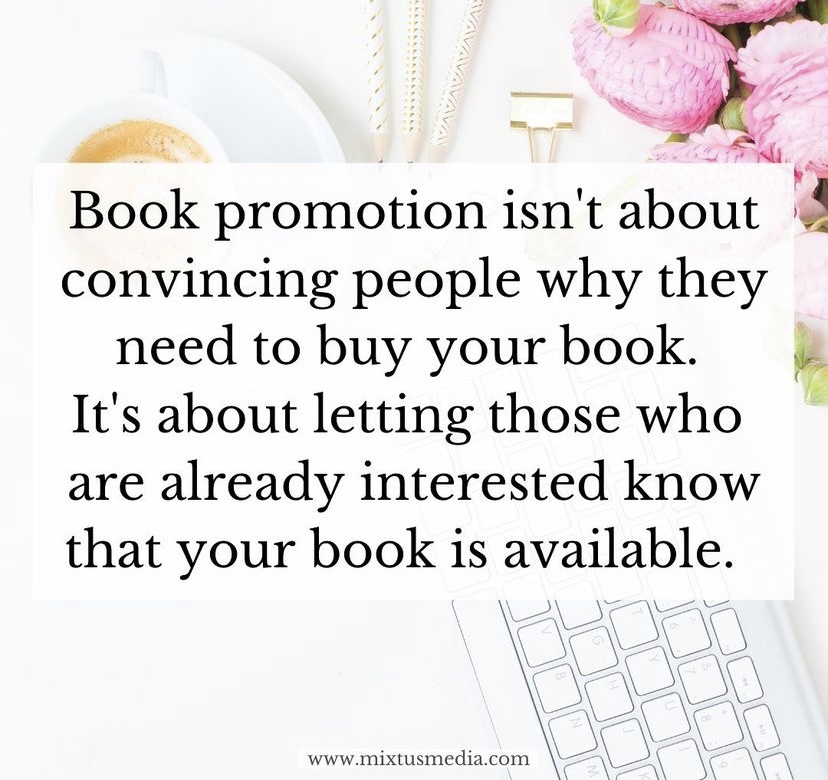
What it is about, as Jenn stated, is letting the people already interested in your book know it exists.
I am not trying to get people who are not poetry readers to read my poetry book to put this into perspective. That is not to say I won’t convert some people (tee hee). Still, I am looking for people who are already into poetry, black poetry by black women to be precise.
By sharing our likes, dislikes, challenges, and experiences and connecting with people of like mind, we find people with similar interests as our own. Then, we make the added effort to show up in the places where these people may hang out so we can connect with them on or offline. Maybe your tribe is on Facebook a lot. Maybe they are on YouTube, Instagram, Clubhouse, Twitter, and so on.
It’s 2022, and Indie Publishing has come a long way. Gone are the days of posting links to social media hoping someone will bite. This is known as “Hope Marketing,” or the hope for a sale. This doesn’t help us build community, sell books, or establish meaningful relationships.
Focusing on people who are already into what you are writing will have a tribe of people waiting to buy your next book and save you a lot of time and heartache.
Remember, it is much easier to market to an already interested audience than an audience who you have to convince.
And most important of all, have fun!
Connecting with people is not supposed to be tedious. Building a reader community doesn’t have to feel like work. That takes the fun out of it. Just be yourself and share your journey. The people who are meant to be part of that journey will notice.
One of the first signs that someone is new to publishing is their obsession with copyright.
Everyone at some point thinks about ways to protect what they have built, but obsessing over the possibility of someone stealing your work is one sure way of waving your hands in a crowded room and shouting, “Hey, everyone! Newbie here!”
“People who are paranoid about the theft of an unpublished manuscript or who obsess about somebody “stealing their ideas” red-flag themselves as amateurs.”
Anne R. Allen
You Can’t Copyright an Idea
Pixabay
Despite how brilliant I am sure you are, your book idea is not unique in the sense that no one has heard of it in some form before, and you cannot copyright an idea. According to Section 102(b) of US Copyright Law:
“In no case does copyright protection for an original work of authorship extend to any idea, procedure, process, system, method of operation, concept, principle or discovery, regardless of the form in which it is described, explained, illustrated or embodied in such work.”
Us Copyright Law
In the US, Your Work is under Copyright the Moment It Is Created
Since January 1, 1978, American Copyright laws have stated that anything you produce is automatically under copyright. That’s right, at creation. Whether you typed it up in Word on your computer or published it in a book, it is automatically under copyright and lasts for life plus 70 years:
“Your work is under copyright protection the moment it is created and fixed in a tangible form that it is perceptible either directly or with the aid of a machine or device.”
“In general, for works created on or after January 1, 1978, the term of copyright is the life of the author plus seventy years after the author’s death. If the work is a joint work with multiple authors, the term lasts for seventy years after the last surviving author’s death.”
But remember, this is optional. You do not need to do this for your work to be considered under copyright, though it can be helpful in the event of a lawsuit:
“In general, registration is voluntary. Copyright exists from the moment the work is created. You will have to register, however, if you wish to bring a lawsuit for infringement of a US work. See Circular 1, Copyright Basics, section “Copyright Registration.”
US Copyright Office
“Copyright exists automatically in an original work of authorship once it is fixed in a tangible medium, but a copyright owner can take steps to enhance the protections of copyright, the most important of which is registering the work. Although registering a work is not mandatory, for U.S. works, registration (or refusal) is necessary to enforce the exclusive rights of copyright through litigation.”
You also don’t need to send a copy of your manuscript to yourself. Also known as “Poor Man’s Copyright,” this would not stand up in court if a lawsuit is in play and does not replace registration.
“The practice of sending a copy of your own work to yourself is sometimes called a “poor man’s copyright.” There is no provision in the copyright law regarding any such type of protection, and it is not a substitute for registration.”
Us Copyright
Warning: Registering your unpublished work with the Copyright Office can set you up to be scammed because scammers sometimes scroll the copyright database for unpublished work to snag. Click here to learn more. I recommend reading the whole thing but scroll to the bottom for this particular part. Publish the book first, and then register the copyright.
You Don’t Need an LLC to Self-Publish a Book
Photo by Anna Shvets from Pexels| I don’t get the obsession with LLCs these days , but you don’t need one to Self-Publish a book.
Suppose you find you are making a significant amount of money from your self-published books, and it becomes necessary to separate your business and personal accounts. In that case, creating an LLC is ideal. However, it is unnecessary to pay money to form an LLC to self-publish a book when you are just starting. Consider the fees associated with applying for and keeping an LLC.
Remember that the LLC serves the purpose of operating as a separate legal entity and that you, personally, won’t be responsible for any debts the LLC incurs. But that’s not usually necessary with self-publishing because it is low risk. By low-risk, I mean you do not start out making tons of money, or at least not the kind of money that would warrant you to separate your accounts.
I operate under an LLC because I do other things outside of publishing, such as coaching, book reviews, interviews, and other services I provide. However, I have only had an LLC for about a year now. Until then, I operated under my legal government name just fine.
As I cannot reiterate enough, there are tons of scams out there, so it’s important to remember that you do not need to pay someone thousands of dollars to “maintain your copyright.” As we have already established, copyright belongs to you when you create the work, and you can register it through the copyright website for thirty bucks.
However, if you wish to maintain your publishing rights and have your own imprint, buy your own ISBN. This will ensure you publish books under your name or company name. This means the book will point to you as the publisher, not Amazon. In this way, you use Amazon as a printer or the platform you use to print physical copies of your book and house your book online, but the rights to the book belong to you.
Can you Self-Publish a book without buying an ISBN? Yes, you can. Amazon’s Kindle Direct Publishing, Lulu, and many others will allow you to choose to use one of their free ISBNs. ISBNs in the US are not cheap (they are free in Canada), so this is ideal for many beginning publishers. However, I highly recommend buying your own.
You have complete control over what is entered in your book’s metadata—that is, the descriptions and categories that help libraries, bookstores, and readers worldwide discover your book and decide whether they want to purchase it. In today’s digital world, your book’s metadata can hugely impact its chances of being found and purchased by your target audience. This would mean a lot to self-published authors, who do not have a traditional publisher’s marketing and distribution capabilities to fall back on.
As you will be the publisher of record, your ISBN will remain unchanged even if you change your publishing service company or publish with multiple companies.
Any individual or organization with specific orders or inquiries regarding your book will approach the publisher of record; you would rather this be you instead of your publishing service company.
If you plan on writing several books, it makes sense to take on the mantle of a publisher and have your own constant publishing imprint on your books.
“Your ISBN is the identification number that is tied to you and your book. If you use an identification number tied to a business that could go under (because remember, a free ISBN belongs to them), you risk your book not being available for purchase. This is an even bigger concern if you are using a Vanity Publisher. They could easily disappear, and you will have to start over on the publishing front.”
If you are going to be constantly paranoid and obsessed with copyright and worrying that people will steal your book or idea of a book, you are not ready to Self-Publish. You might feel better going the traditional route. However, if you are ready to publish Independently, you have to relax on the copyright stuff. It is going to be okay. Go ahead and register it with the copyright office and publish the book. You will be fine.
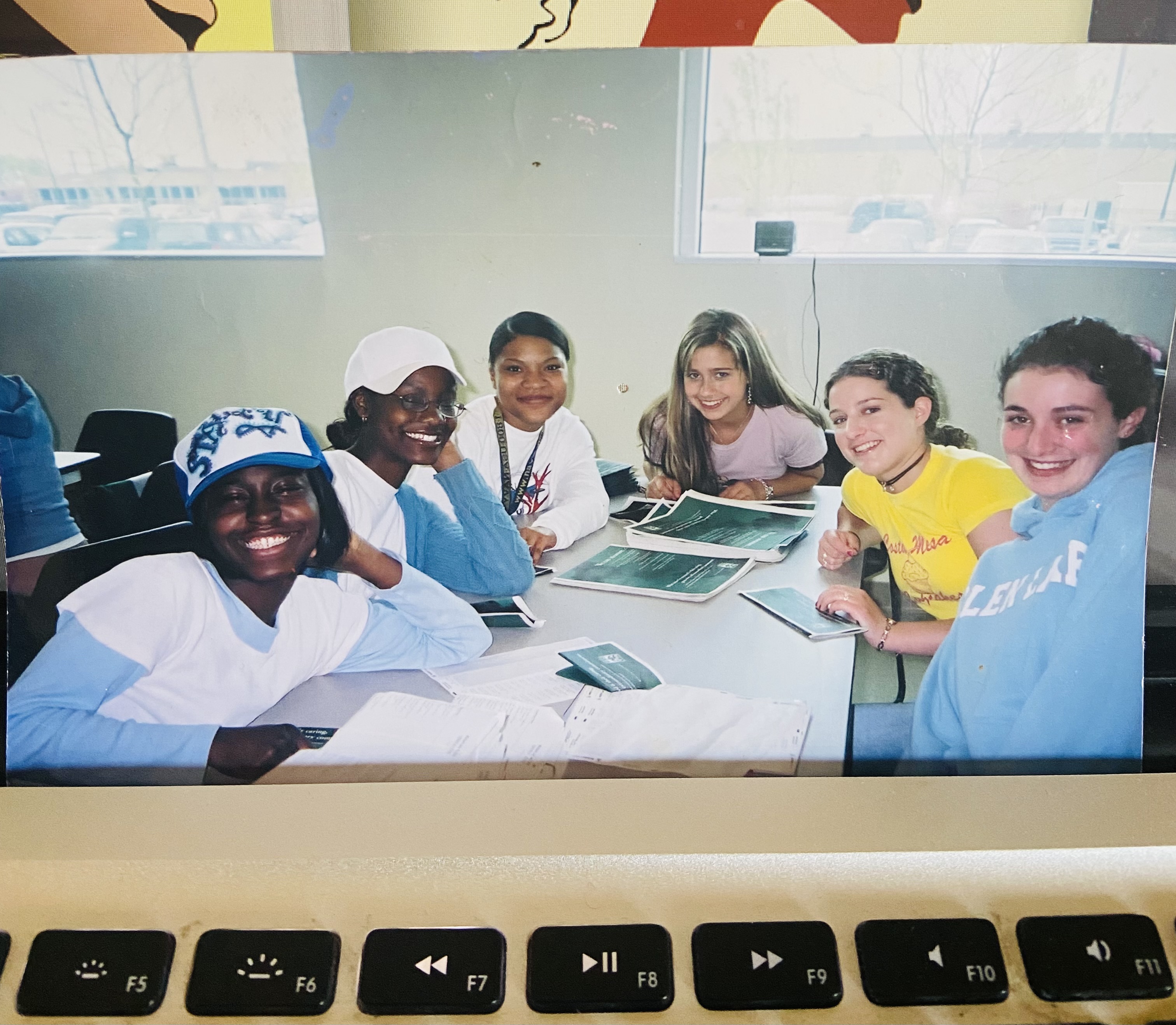
Harper High School Pen Pal Program, circa 2005-ish, Locale: Downtown Chicago
Although I tried out once, I was not a cheerleader in high school. I had danced before as part of a community program at Hamilton Park on Chicago’s south side with my twin sister and our cousin. We were taught handstands, traditional African dances (I am not sure of the tribe), and tap dancing. We traveled to put on shows and everything.
But dancing was not for me.
Over the years, as my twin and cousin got deeper into it (joining Pom-Pom teams and creating dances from the latest hits), I grew out of it.
Instead, I read books, wrote in my diary, and joined all the “boring” programs at school.
It didn’t take long to realize I was not like everyone else. The things my peers found exciting did not move me.
What I didn’t realize at the time was how these seemingly boring activities were stepping stones to sharpening my writing skills and preparing me for a career as a writer.
Writing School Plays:During my Sophomore and Junior years, the school employed a group of other students and me to participate in a program where we had to write and perform plays for the school. I do not remember the program’s name, but this was my first official writing job.
Pen Pal Program:The photo above is from a pen pal program between our High School on the south side and a school on the north side. We wrote letters to our pals and introduced ourselves. Next, they filmed us introducing ourselves on camera and swapped it with the other school. And then, finally, we all met up in person in downtown Chicago. This was the first day we all met, and the event concluded with a camping trip in Wisconsin.
The Yearbook Team: I was actually the only member of the yearbook team that year, lol. Everyone thought it would be boring, but I thought it would be fun, and it was. Not only did I get out of class to film assemblies, but I got to follow Arnie Duncan (then the CEO of Chicago Public Schools) and Jessie Jackson around with the camera, snapping pictures that would be featured in the book.
UMOJA Spoken Word Poetry Group: I was part of a poetry group called UMOJA Spoken Word my Sophomore year. (UMOJA is the Swahili word for unity.) I was already writing poetry, but this group taught me how to go deeper by introducing the mechanics of the craft.
When I found this photo, I realized that everything I did led to this moment and that everything I do today is also leading somewhere greater.
I don’t know about you, but the fact that our past has shaped us for today and our today is shaping us for our tomorrow is fascinating to me. It is one of the reasons I love history.
The next time you feel inadequate or frustrated with your journey, whatever journey that may be, I hope this inspires you to look back at those special moments in your life. Remember that you are only stepping stones away from where you are destined be.
Check out my latest interview with Mack Tight Radio. Be Sure to Like and Share!
Title: Living in the Land of I am: Your Life Journey Reveals Your Purpose Author: Tiffany James Publisher: Encourage Touch Enterprise ASIN: B07SB68C1F Publication date: May 22, 2019 Print length: 158 pages
Living in the Land of I am: Your Life Journey Reveals Your Purpose is a hopeful read about the importance of embracing your authentic self and operating in that truth. According to the author, losing our identity also means relinquishing the authority given to us to fulfill our purpose. (p. 67)
I enjoyed the author’s testimony, examples, and analogies to expand on her point further. We are invited into her world and we learn the many things she overcame and how we too can live in that land of I am, that is our truest self. We learn there is beauty in acknowledging and accepting one’s set-apartness.
My favorite example is the one of Simba from Disney’s 1994 animated feature film, The Lion King. The story of how he was born into royalty and stood proud and strong in that purpose until the death of his father Mufasa made him lose his voice was very nicely recounted.
When Simba meets Pumbaa and Timon and starts basking in what looks like a carefree life, the author reminds us that while he seems happy, he forgets that he was born to be a King. Now a grown lion, Simba has been reduced to a confused, scared, angry, and hurt little cub (p.37). When he returns to fulfill his purpose, he becomes the strong and mighty lion he was born to be. I thought this laid a strong foundation for the rest of the book.
I was not a big fan of the author’s Christian views because I’m not a Christian. Still, overall, I found the book to be a great reminder of the importance of standing in our truth and being authentically and unapologetically ourselves.










 The PBS Blog