The Ultimate Guide – Chapter 16

That first picture is funny lol. Great post. Post quote: “The author that thinks he can edit his own work has a fool for a client.”

Unknown's avatarDon Massenzio

snobPhoto credit: www.businessesgrow.com

The Snobbery of Traditional Publishing

During a recent weekend, my seven year old daughter had an event with her dance group at a local street festival. As we walked around and looked at the various tables, we happened upon an author of children’s books who had some of her work displayed on a table. My daughter saw the books and we stopped at the table and listened to this friendly, grandmotherly figure tell us about her books.  They were based on the antics of her grandson and looked very nicely illustrated.

SPBHPhoto Credit: www.creativereview.co.uk

We were about to move on when my wife blurted out that I had written some novels.  The author’s first question was not about the genre or the titles. Her first question was, “who’s your publisher?” Before I could get the words DSM Publications (my initials are DSM) out of my mouth, my wife told…

View original post 935 more words

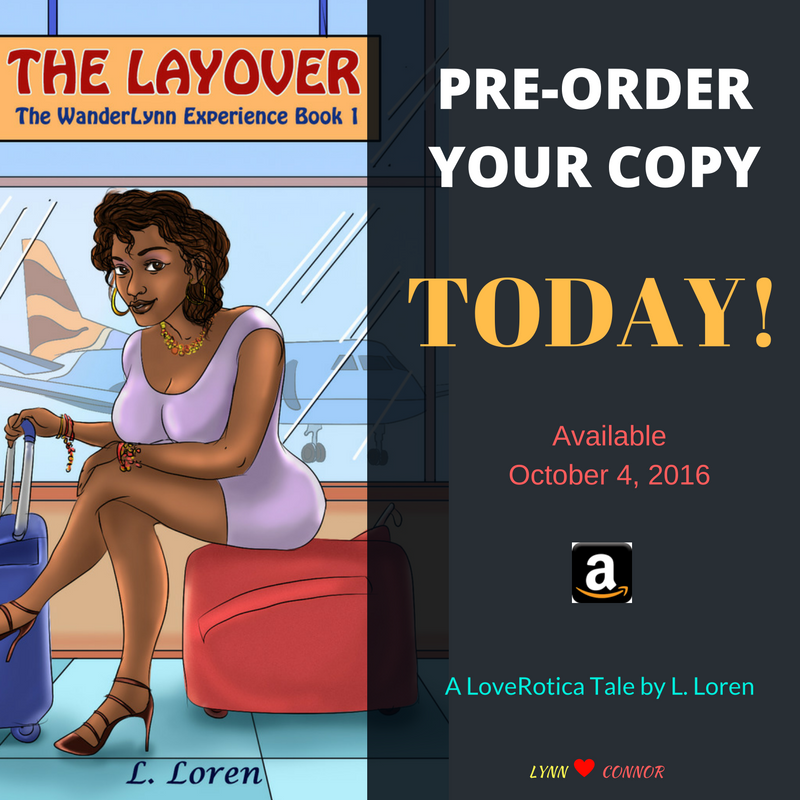
The Layover – Pre-Order

Congrats Lisa! Join me in the support of this amazing author! Put your pre-orders in. I got mine, you better get yours!

Lisa W Tetting's avatarLisa W. Tetting

Hi Lovies,

Just a quick note to let you know my latest book The Layover – Book 1 in The WanderLynn Experience Series, is now available for pre-order on Amazon! Get it for the low price of $1.99!!!

Click Here to reserve your copy now!

Thanks guys and remember

View original post

8 Things to Do Before Publishing Your Next Blog Post

blog-growth-update1-800x675

Below are some great links from This Mama Learns Blog to help us become better bloggers! I discovered her on Pinterest yesterday and her blog is super cute! I love the way she has branded her colors and incorporated her images all professional and fun looking. Below are articles I found helpful. Enjoy:

8 Things to Do Before Publishing Your Next Blog Post

You’re running behind on your newly acquired content schedule.

You dash out the last few lines of your next post in a flurry of activity, half an hour after you should have been in bed.

Then you hit Publish.

*yawn* Time for bed.

Okay, you know there are a few things you probably should’ve done first, but you can do it later right?

Umm…

What just happened here? This hypothetical blogger (ok, ok… it was me), just put an arbitrary schedule before producing quality content.

Not cool.

Keep Reading http://thismamalearns.com/8-things-to-do-before-publishing-your-next-blog-post?utm_source=twitter&utm_medium=social&utm_campaign=SocialWarfare

5 Secrets to Help You Look Like A Pro Blogger (even if you only started, like, yesterday)

No one likes looking like they were born yesterday, right? First impressions count, so when people visit your blog, you want to have your best foot forward.

I made my first blog in 2011. It was about tween fashion (it seemed like a good idea at the time), it was eyes-bleedingly cyan and I think I used Comic Sans. Sounds like a candidate for ugliest website of the year!

Luckily, times have changed and the overall standard of new blogs has greatly improved.

But there are still a few mistakes that new bloggers make that give themselves away. Here are 5 things you can implement on your blog right now to make you look like a pro.

Keep Reading http://thismamalearns.com/how-to-look-pro-blogger

How to Launch Your Blog with a Bang

Ever launched a blog expecting to make a big splash but… nothing happened?

You were sending post after post out into the ether. No readers (not even your mom), no comments, no shares.  Why?

It wasn’t that your content wasn’t good.

And it wasn’t that you weren’t blogging frequently enough.  You were working your fingers to bone every day getting out another post.

Maybe you were even employing a bit of SEO and churning out awkward blog headlines like How to choosing a domain name (did I do that? oops!)

It doesn’t have to be this way. You can launch a successful blog and have readers from day 1.

Keep Reading http://thismamalearns.com/launch-your-blog-with-a-bang

Beginner Bloggers Guide to Networking

Are you holding back from networking with other bloggers because you feel like your blog just isn’t ‘good enough’?

Have you joined a few Facebook groups (like I told you about in this post), but been too shy to speak up because you’re afraid you’ll get laughed at for not knowing the secret blogger handshake?

Do you read blogging tips about how to get more traffic and think YEAH I need to do that, but secretly you’re terrified to have people actually read your blog?

Let me let you in on a little secret:

I’ve SO been there.

Keep Reading http://thismamalearns.com/beginner-bloggers-guide-to-networking

Self-Publishing – Laying Bricks Ep 4: The Pathway

Laying Bricks(1)

People lay bricks for many different reasons. Whether you are building for a brick home, a drive through, or storefront, the process is the same. Like mathematics, as long as you have the basic formula for masonry you can succeed in brick laying. As long as you remember to add, subtract, multiply, and divide you can solve any seemingly complex mathematical equation. Unless of course you’re like me and you hate math.

Nonetheless, Self-Publishing is the same way. Once you’ve established the basics of building a book, you can do so repeatedly and that is what this series is all about. Everything else is just an add on. You may have built a house but it doesn’t have to stay the way you built it. You can add rooms, roofing, or extra bathrooms if you want.

Now that we’ve written a well written story, gotten it edited, beta read, and critiqued, now what?

Advanced Reviews, Pre-Launch

This episode took me a little longer. It took me longer because writers can do this in many different ways. Self-Publishing doesn’t have any official rules and for that this step can in fact also include marketing and promotion. To keep things simple, let’s just focus on building the book first. So, in this episode of Laying Bricks it is time to pull out your multipurpose hat.

Advanced Book Reviews

Once your book is the way it was meant to be, it is time to send it off for advanced reviews. This process is most important as it helps you to garner reviews in advanced. In this way, by the time the book is released, your reviews can help the book to sell. With Indie’s doing everything themselves, reviews give us room to depend on some outside help.

When deciding who you want to review your book, there are a few things to keep in mind:

Genre – Not a neccessity, but can be very helpful. When someone reviews your book who is actually part of that books genre— let’s say a fan of Historical Fiction reviewing your HistFic masterpiece—you have a better chance at expanding your audience. This isn’t to say anyone can’t review you at all, just that those of your genre makes it that much better. When you desperately send your book out to anyone, you increase your chances of marketing your book to the wrong audience.

Desperation – Speaking of desperation, don’t be desperate. I know, desperate times cause for desperate measures! However, take some time and be a little strategic about who you send your books out to. Target people who are not only in your genre but who have a passion for books with a genuine love for reading. Visit their websites and blogs to make sure they’re a real person, that they’ve reviewed books before, and that their subscriber number is decent. Listen, don’t get the wrong idea here. I’m not saying it’s all about the numbers because its not. I’m saying you want to get the most of the experience.

While we all have to start from somewhere, quality attracts quality. The whole point of reviews is to help the author. That said, make sure there’s enough of that reviewers’ blog traffic to make a difference for your book in some way. If you choose to pay for a review, make sure the prices are reasonable and that the person or company is well-established. There are lots of frauds out there and people taking advantage of Self-Publishers and you wouldn’t want to cause any unwanted attention to your Amazon account.

Follow The Rules – Every serious Book Reviewer has a list of rules and regulations to accompany their services. Paid or not paid, Reviewers must have a policy in place. This is important because books take up a lot of time. As much as I love to read, I cannot possibly read every single book that comes my way. In addition, though reading books is personal, even it requires some order.

  • Research the reviewer < Make sure they are real people and not weirdos. Yes, weirder than me.
  • Submit your request exactly as their policy states.
  • Pay special attention to the books they do not accept so you don’t get an email back and become that guy. Or girl.
  • Address the reviewer by name, make it personal. Try not to sound thirsty or in other words, desperate (even if you are).
  • Follow their blog, follow their social media. Make sure this reviewer’s energy and the vibe is fitting for your book. This isn’t to say reviewers don’t read a wide range of material, it’s just about you the author being strategic and getting the most out of the experience.
  • Consider the reviewers time. Yes, they are agreeing to read books for free but you aren’t the only person in the world. Reviewers get tons of emails a day from Indie Authors requesting reviews. Keep in mind that there may be a line. As such, if your book is 300 or more pages, don’t expect that reviewer to finish it in two weeks. If you have a deadline, be sure to contact the reviewer far enough in advance to meet your deadline and be realistic about it. Reviewers may read fast on their own leisure time, but to review a book is to study it enough to give sensible feedback. No, it’s not an academic assignment or anything but it’s not a race either. Give people time to really read it if you want to get the most logical feedback. If you want us to scan it and throw some stuff together, we can do that too. Your choice.
  • Don’t be rude. With the exception of a few because I know there are some, most of us to include yours truly, do not promise 5-star reviews. In fact, we are not reading your book in exchange for a glowing review at all. If the book is not up to par do not expect to be lied to unless of course, that’s your thing. If a reviewer gives you a low rating, don’t curse them out. Try to understand that whether the book was good or not they invested something they can never get back: Their time. They’ve done you a great service. Take the advice and use it to further perfect your work.

Pre-Launch Strategy

First, what is a pre-launch strategy? According to The Marketing People:

“Premarketing is the foundation stage of any marketing plan to enable business development. Prior to any marketing, SEO or social marketing, this step ensures that you have the right brand. The right website, stationery, brochure/catalog and other related sales and marketing tools in place. To ensure you capitalize on your ongoing marketing and sales team activity.”

In addition to garnering advanced reviews, you need something to do while your book is being read. This is a great time to start pre-launch strategies.

I hope that by now you’ve already established a few things:

  • Blog / Website
  • Email Newsletter
  • Social Media Accounts

If you do not already have these stop writing right now. Yes, step away from the computer, put the pen down and grab the laptop. Now go to your room young man / lady. Yes, you. Close the door and don’t come out until you have social media accounts up, a blog or website, and an email newsletter.

When I first started publishing, I followed the following trend:

  • Write book
  • Publish Book
  • Tell people about book (quietly)
  • Wait for people who I didn’t tell about the book to find me

This isn’t wrong necessarily (well, the last one is), it’s just out of order a bit. It’s not how you promote, it’s when. Marketing and Promoting your book when it comes out should just be one aspect of it. In last week’s article Planning Book Releases in Advance, we spoke a little bit about this. That is, planning for your books arrival at least six months to one year in advance. Plan for your books release before, during, and after the book is written.

If you haven’t done so, no worries, there is hope.

If you have not taken the time to plan pre-launch strategies for your book, do so now while your book is being read.

  • Build a Fan Base

OK, so your book isn’t out yet but what are you doing to prep people for it? This is a question I ask myself every day.

Social media is not really about selling books even if you’re like me with an online bookstore. Social media is about building relationships. As a result, these relationships lead to sales in an indirect kind of a way. Writers of books are supposed to be experts on the subject matter in which they are writing. This means that writers can utilize other writing methods to help draw attention to their book without constantly talking about the book itself.

No matter what your area is, sharing insight on that topic helps to build trust and interest in people. Writing flash fiction or sharing excerpts helps people to get used to your voice and style, posting articles, news clips, and other things help people to understand your passion and focus as well. As a result, they’ll be interested to see what that book is about.

There’s no guarantee they will want to buy the book but a relationship has formed and relationships are what you want.

  • Special Offers

While your book is being read, you can also offer something exclusive in preparation for your books release. Let’s face it, everybody wants to be exclusive and official (lbs). Make people feel special by giving something away ahead of time. Though a pre-order of your book is nice (especially a signed hardcopy), try to do something different. Give away a small journal, amazon gift card or Starbucks gift card. Whatever it is, put some effort into it. Let your genuine love for the people shine through (people can tell if you’re just being phony because you want them to buy your book). If you give away a book, make it an exclusive super-duper official one. Make sure we know that only the best of the best can qualify for this baby here.

  • Book Cover Design

We’ll speak more about this next week, but this is a good time to get started on that book cover design!

Remember: Pre-Marketing is the first stage to business development. As an Indie Author, you are that business.

I know its not much, but I sure do hope that this information has been helpful. As always, I am following my own advice and am passing along information in my journey as I learn. I am always humbled at whomever wishes to join me.

Be sure to subscribe to my email newsletter for more tips, updates on my upcoming projects, free excerpt chapters and articles not yet published to this blog, book promotions, and more.

Next– Let’s Paint the House!

Next, we’ll talk about decorating your brick house. 

Disclaimer. Everything I share on Self-Publishing is always based on my own experience and research because I believe you can’t advise people on stuff you haven’t really tried. It’s just best if you’ve walked those shoes. So, that said I do not profess to be an expert. There are too many of them out there for you to glean from. Now, should you find information on this blog useful? Whoo hoo! Go for it.

Missed the first three episodes?

Laying Bricks Ep 1: Guide The Bricks

(About Focusing on the Story)

Laying Bricks Ep 2: Mortar

(About the Revision)

Laying Bricks Ep 3: Cutting The Excess

(About Editing)

Hot PBS Self-Publishing Topics to Date:


Yecheilyah Ysrayl is the YA, Historical Fiction author of The Stella Trilogy. She is currently working on her next book series “The Nora White Story” about a young black woman writer who dreams of taking part in The Harlem Renaissance movement and her parents struggle to accept their traumatic past in the Jim Crow south. “Renaissance: The Nora White Story (Book One)” is due for release spring, 2017. For updates on this project, sneak peek of chapters and the pending book cover release for this project, be sure to follow this blog and to subscribe to Yecheilyah’s email list HERE.

8 Ways to Avoid Stress

Woman laying in grass

  1. Take some time to sit quietly and appreciate everything that you have. Happiness is not in having more physical wealth but having less wants.
  1. Stop trying to change things that are beyond your control. Sometimes stress comes from not being able to alter those things outside of our control but trying to anyway. Stop that. You’re just going against the grain and you’re not going to win.
  1. Forgive yourself. If you make a mistake, get back up and forgive the less mature version of yourself who made it. Peace cannot exist around you if it does not first exist inside of you.
  1. Forgive those who hurt you the most. After you forgive yourself, forgive others. Instead of seeing what they did to cause you hurt, try and see them through the eyes of mercy. Sometimes people have been hurt and they pass that hurt on, try to see that. Look at them with the eyes of love instead of revenge. Excess pain is just baggage and in the words of Toni Morrison, “If you wanna fly, you gotta give up the stuff that weighs you down.”
  1. Learn to create balance in your life. Being busy is no excuse for surrendering your peace. We like to use the “I’m too busy” for everything but it just ends up being an excuse. Take breaks. Go on vacation. Date. Take some time to actually smell the flowers. In the words of Lena Horne, “It’s not the load that breaks you down, it’s the way you carry it.”
  1. In times of pressure, seek to be calm and centered instead of frustrated and angry. The calm person is the most productive person and makes the best decisions. Quick story. When I returned from a road trip last month, I thought I lost my USB or better yet, left it in Chicago, a 13 hour away drive from home. Upon realization that I’d lost the drive with all of my files and manuscript revisions (which I’d unwisely not saved anywhere else), I was actually too tired to worry about it! I literally put my worrying off. My exact words were, “I don’t have the energy to worry about this right now.” I didn’t even look for the drive. A few days went by and I knew that at some point I had to try and find it. Those things on that drive were very important after all. On the third or fourth day, I sat down in my chair and searched the place I last remembered it and found it. Just like that. By choosing to be calm and not worry instead of frenzied and out of control, I was capable of thinking clearly about where I’d last had it. I also learned a very valuable lesson. In remembering everything has a purpose, I understood that I should never save important files in just one spot.
  1. Don’t compare yourself to others, it’s the easiest way to fail. It is also the easiest way to cling to your fears. Sometimes you can be so sure something is for you until you look at how others are doing it, saying it, or have done or said it. Own what you know to be true and perfect being you. People don’t want to see how you can do something the same as others are doing it. They wanna see how you can do it differently.
  1. Speaking of comparisons, be true to yourself. Stop worrying about being accepted by others. This too can cause unnecessary stresses. Don’t dilute your light for something superficial. The light bulb may shine bright now, but it is in no comparison to the sun.

Show and Tell – The Show vs Tell Debate Critiqued

A wise man once asked a simple question: “What is water?”

A few people gave their answers. Some said “H2O”. Some said, “a transparent liquid found in lakes, oceans, and seas.” Other’s said, “a chemical substance.”

The man smiled. “None of the above.”

The people’s brow buried deeper into their foreheads and their mouths twitched, “what?”

“Don’t give me the name or what you’ve been told it is made of,” said the man.

“Tell me what it is.”

writing-desk2

****

Self-Publishing is a lot like life, there is a question behind everything we think we know. There’s a lot of advice in the Indie Author community. What if I told you that not all of it was good advice? Or shall I say, not all of it is wise advice? It may be useful advice, but is it wisdom? Do we actually know what water is? We do not.

What is the most talked about thing in this community? What is that thing that people just can’t stop talking about? Yes, the Author Platform is one, but what’s another? That’s right, “Show, Don’t Tell.”

Hold on to your seats. A lot of you are not going to like this:

What if I told you this was not very good advice?

I didn’t say it wasn’t useful advice. Advice is subjective like that.

Let’s establish the facts. New authors indeed tend to lean more toward telling than showing and this is a problem for readers because it makes the story difficult to get into. The author’s purpose is to make the reading as easy and as effortless as possible.

Please, for the love of all that is set-apart, make sure your script does not read:

“I walked up to the coffee machine. I grabbed the pot. I walked over to the sink. I filled the pot with water. I put the pot back and turned on the machine. Brandon calls me from the other room. What does Brandon want?”

Everyone say it with me:

“Don’t tell me the moon is shining; show me the glint of light on broken glass.”

Anton Chekhov

Great advice.


I sympathize with staunch “Show, Don’t Tell-ers” because I’ve come into contact with many books that sound just like that example. All the author did was told me what was happening (like one big summary) and bored me to death. My brains shifted in my skull, turned into liquid and oozed from my temples. Gross, right? You don’t want to gross your reader’s people.

Here is wisdom: Show AND Tell.

  • Showing – Writing vividly with detailed images, sensory information, and/or dramatized action
  • Telling – Writing in abstract summaries or simple statements

It is the secret no one is talking about.

Or, almost nobody.

Kristen Kieffer wrote a most excellent post on balancing show and tell and I will quote her in this post because ya know, no need to reinvent the wheel. Though I’d already written this article as a newsletter for my email list long before I read Kristen’s article, I am glad I eventually came across it as it further solidifies my point and now I can use some of her examples as a reference. Kristen Lamb says:

“As writers we are often guilty of too much brain-holding, of coaching the reader. We want to control every emotion, perception and description yet often less is more. When we leave blank space for the reader to fill in, the fiction can have room to blossom into something unplanned for. The story becomes richer and the experience more visceral because it transforms into an echo of the audience’s self-projection. Thus instead of one fixed interpretation, we get countless.” – Kristen Lamb

Aside from both Kristen’s and a few others, few people are talking about this aspect of balancing show and tell. Because of the show vs. tell debate authors are now showing us everything but their booty cheeks. That’s not what show means and makes the story sound just as boring as too much telling. It’s called Storytelling for a reason. You are supposed to tell a story.

The difference is not eliminating telling. You don’t want to show and not tell. You want to balance the amount of telling and showing. The straight action works no more than no action. Your characters just can’t be running all over the place, they need quiet, emotional times too. Balance is key.

Storytelling came from the oral traditions of passing along information by word of mouth. It is the days where your grandmothers and great-grandmothers told the stories of their childhoods. It’s when you sat at their knees to learn of the world that existed before you.

The easiest way to understand this is remembering that Telling gives us the statement, in other words, tells us something is done. Whereas showing is the demonstration of how something is done. That said, why is Anton’s example so popular?

“Don’t tell me the moon is shining; show me the glint of light on broken glass”.

 –Anton Chekhov

When I first read this quote, I pictured a triangular piece of glass that fell from a window and is now sitting on a street corner under the moon. It rained earlier, so it sprinkles the glass with droplets of water. I can tell by the position of the glass and the tiny pieces of gravel because something bad happened. This caused the glass to shatter and yet, there is the light shining through all the brokenness. The story is not over because there is hope.

The moon is shining, tells me what is happening, but the glint of light on broken glass shows me how it happened. (Or at least how I imagine it happened.) It is a demonstration versus information. Don’t tell me they shot the woman in a restaurant. Show me the sweat on the palms of her hands and underneath her armpits, the perspiration sliding down her temples; the tears rolling down her cheeks, and the shakiness of her hands as the pistol is pointed at her head.

Telling is Just as Important

In the words of Steven Moore, who left a comment on the article 5 Examples of Bad Writing Advice from Great Authors:

“You should only provide enough detail so the reader can participate in the creative process by forming their own ideas about characters.”

Telling is just as important as showing and it is because of this being left out that makes “Show, don’t tell”, strange advice. It just doesn’t explain the entire matter. I need not know every single thing that is happening in the restaurant. You don’t have to show me the fly on the windowsill if it’s not relevant to the story.

A general rule of thumb is to show only when it has something to do with the story. Bernice McFadden does a most excellent job at this in This Bitter Earth. Everything mentioned in this book connected somehow. There is nothing mentioned that is insignificant to the story and no question that is not answered by the end of the novel.

Telling is making a statement without the drama. “She touched the pillow.” That’s telling. We don’t learn how she touched the pillow or what she thought when she touched the pillow, we are just told she did and it’s enough. We need not overdramatize her touching of the pillow.

It’s a matter of knowing when to show and when to tell.

Let’s refer to an example in Kristen Kieffer’s article:

Too much showing:

“His eyes were like the sea during a storm, dark blue and tumultuous. His jaw was chiseled like marble, his nose sharp and strong. His golden locks glimmered in the sunlight as he carried the boxes, ropy arm muscles rippling beneath the crimson fabric of his t-shirt.”

I enjoyed reading that actually, but, I am learning something as well. Because I love poetry, I can sometimes show too much! Good thing we have beta readers and editors. Moving on…

Too much telling:

“His eyes were dark blue. His shirt was crimson red. He had a prominent jaw and big muscles. I watched him as he walked into the office, holding a box with his name on it.”

As you can see, too much telling is BORING. My brain is shifting…

Showing and Telling:

“His eyes were dark blue, as tumultuous as a storm at sea, a stark contrast to his cheery crimson shirt. He had that classic Adonis look so many girls admired. Chiseled jaw, strong nose, ropy muscles, I admired them all as he carried his box of belongings into the office.”

“His eyes were dark blue (statement), as tumultuous as a storm at sea (description), a stark contrast to his cheery crimson shirt (description). He had that classic Adonis look so many girls admired (statement). Chiseled jaw (description), strong nose (description), ropy muscles (description), I admired them all as he carried his box of belongings into the office (statement).”

Now that’s a tasty description. Want to create the same in your writing? Kristen advises we use the following formula:

1 Statement + 2-3 descriptions = Balanced writing

I love this advice and will be incorporating this nugget of wisdom in my own writing.