I published my first book in 2008 and the first book I ever sold in 2010. But it wasn’t until 2015 that I learned to define what my author’s voice was, to establish an author platform, to reach people, and to truly understand what it meant to be an Independent Author. In the beginning, my books were poorly edited and formatted. I didn’t know anything about Amazon, reviews, buying my own ISBNs, imprints, nothing. (I wasn’t even on Social Media, so I couldn’t take advantage of this free platform).
I was green, inexperienced, and made no money. It took me five years (2010-2015) of publishing poor quality books to learn, and even now, I am still learning how to publish books the right way. Whatever fruits I reap now are the result of years of work, study, research, and doing it wrong repeatedly until I understood that practice only makes perfect if I am doing it right. It took me years to realize that publishing book after book (the wrong way) was doing nothing for my growth until I was ready to put in real work. It took me years to learn that this was a marathon and not a sprint. My point? It took me years to get here.
Dear Future Author, why do you want to publish a book?
This question seems simple, but the answer is a lot deeper. The answer will require you to first define who you are, who you are writing for, and why what you are writing is important to those people. Are you writing to make a difference in the world? To educate, empower, lift, heal, and inform? Or do you just like the idea of being a published author?
One means chasing the “prestige” that comes with publishing books.
The other means putting in real work even when sales are low when you want to give up, and when no one is clapping, liking, or supporting you.
One means wanting to appear glamorous for the gram…
…and the other means doing the work in private, not just in public.
IF you are willing to do this and IF your intentions are genuine, then the effort will release its reward as long as you do not give up.
I always get excited when I return to Historical Fiction writing. A little history and a spill of black ink, and I am gone. I am floating between centuries and languages and culture clashes. My heart races to the images still all muddled and exciting and pacing footsteps in my head. Historical figures are brushing passed me on the street and staring me down back alleyways. Don’t know if I’ll have time to whisper to A.D. King* that his brother’s not forgotten, but also, neither is he. I am speeding passed him and drifting further. I caught a glimpse of “Satchmo’s” face and a hanging tree in the same wind. Covered my mouth, though, that couldn’t stop the taste of death on my tongue. Almost choked on Billy’s voice. These fluctuations of pitch are giving me chills, that and the horn screaming at me from across the tracks where the Jazz club is housing The New Negro Movement, soon to be known widely as The Harlem Renaissance. I better catch the next train back to 2020. Jean Toomer is headed this way, and I am dangerous with this pen.
*A.D. King (Alfred Daniel Williams King) was the brother of Dr. Martin Luther King Jr. He drowned in the family’s swimming pool 15 months after MLK, but his death is largely forgotten. As his body was being taken to the morgue on July 20, 1969, Neil Armstrong and Buzz Aldrin were walking on the moon.
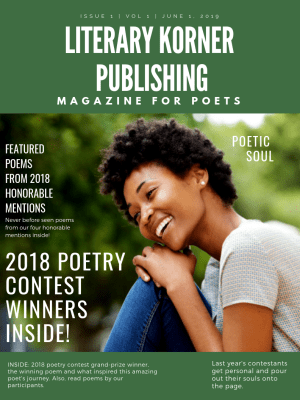
The 2020 Lit Mag Literary Magazine for Poets is on its way out! We are proud to feature last year’s Grand Prize Winner Chanelle Barnes on the cover. Volume 2, Edition 2, is scheduled to print Tuesday, March 3, 2020.
This year’s magazine features the winners of “Yecheilyah’s Annual Poetry Contest 2019”: Chanelle Barnes, BuddahDesmond, Jahkazia (Jah-kay-asia) Richardson (our 2018 Champion), Kiyana Blount, and Dondi A Springer. The mag also features the poems of select poets who participated last year.
How can you be featured in the Lit Mag Magazine? Be sure to participate in my annual poetry contests! Rules and guidelines for the 2020 competition to be announced.
Be sure to support this contest by picking up your copy of LitMag 2019 by clicking on the link below. Your contribution helps us to keep this contest going by keeping the entry fee-free or low-cost for participants, allows us to print the magazine featuring the winners, and of course, offers some dope prizes to contestants! Link below:
Last week, I planned on introducing a new Black History Fun Fact Friday. I also planned on revealing the cover to the poetry contest magazine to my social media (which I will do tomorrow, time permitting). This was a busy week for me (more than usual). This isn’t to say that “busy” is a measure of importance, but last week was a hectic one for both my personal and professional life. But also, it was a good busy (more like a focused busy). I got a lot done and gained some clarity. And although I still have emails, I haven’t responded to and travel to prepare for I am sitting down in the few hours I have here before running errands to talk to you guys and send an important message to my email list.
I find that how we direct our focus determines what will show up based on how we have prioritized. Those things we put first or last will naturally manifest in our life and align based on what we give more or less attention. If I know I have coursework due on Wednesday, for example, but I scroll social media until the final hour of when the work is due, chances are I won’t do well, and it won’t be because I am ignorant or incompetent. It will be because I did not set my coursework as a priority this week and give myself time to think through the assignment. Instead, I scrolled social media, which means I have set it as a priority over my coursework and are thus reaping the consequences of that choice. It doesn’t make it social media’s fault, and it doesn’t make social media an evil entity, but it was not the proper decision on this day.
I use social media because it’s an easy example, but I believe this can apply to anything from business practices to relationships and friendships.
What are you sacrificing?
I realized that whatever we pay attention to means sacrificing something else in its place. If we focus too much time on gossip and negativity, we are sacrificing something else in its place. If we spend too much time on social media, we are sacrificing something else in its place. Sometimes the sacrifice is not all bad; it makes sense depending on what is a priority at the moment. Sacrificing an hour of work to sleep and refresh is not a bad thing because, with rest, we can have better clarity to do the job. Surrendering a TV show to post something of value and substance to social media that will help someone else is not a bad thing. You see, I also learned this week that our priorities might change from day to day. What was most crucial yesterday may not be most important today.
From this point forward, I will be more conscious of what I am sacrificing when I am spending my time doing something because I know that whatever I focus my attention will manifest based on those things of which I have set as a priority.
Instead of saying, “I don’t have time,” I will say, “what am I willing to sacrifice to get this done? What am I willing to give up to do this?”
Something about sorrow sounds spiritual. It sounds like awakenings and revelations. Sounds like pacts and promises. Sounds contradicting too, like hope and despair are twins. We want to shackle ourselves to change. Something about sorrow got us questioning our own mortality. But how permanent is this grief? Where are we two years from now? Is this feeling fleeting? Will we forget our own deaths could be just as close as Kobe’s? Right now is good. It’s all reflection-like. Our throats are full of emotion and saltwater. Only time will tell if this is real or just another ode to the people we worship as Gods. Today, forgiveness is an anthem we sing each morning. Kisses adorn the faces of our loved ones, and the heavens ain’t heard these many prayers since the last celebrity died. And yet I ask myself how permanent is this grief? What have we learned?
There are people we know and love that are close. We can reach out and touch them. Now. Today. Will we? Some of us will Tupac this young man’s legacy while forgetting the promises we made to ourselves to be better people outside of the internet. We will forget those feel-good words we concocted when the world was in mourning. The “every day ain’t promised,” and “hug the ones you love,” we spit into the air as if life has promised our names won’t be the next one carved into the next hashtag. Like our pictures won’t be the ones swarming the internet like the locust currently congregating in East Africa.
Yea, something about sorrow sounds spiritual. Got us thinking about life and truth and family and love. But will this last? How permanent is this grief? That is the question.
The inspiration for today’s topic comes from a heated discussion ongoing from an episode of the TV show The Real. The Real is a talk show that prides itself on being centered on conversations on current events, fashion, family, relationships, and celebrity news. The show’s hosts include Jeannie Mai, Adrienne Bailon, Tamera Mowry-Housley, Loni Love, and now Amanda Seales. The show’s hook is presenting real topics, having real discussions, and giving very real opinions. However, some audiences do not find the show as authentic as it prides itself to be, and Loni’s comments add a lot of fuel to that fire.
Co-host Loni Love found herself in some hot water over her comments about Black men, cheating, and slavery. Here is a clip of what was said:
“I don’t speak for the Black community, but I do think a lot of Black men…they really don’t know how to have true, faithful relationships. They think because they have money…because they have power that they can treat women any kind of way….What is happening is that we are still dealing with the point of slavery, and we are descendants of slavery, and because our families were broken up, we still do not know how to have…together, cause our families were broken up…”
She failed, in my opinion, to clearly articulate her point, but she is receiving backlash nonetheless. Her comment opened the door for further discussion on this topic. I would like to use it as the catalyst for exploring what relationships were like for enslaved men and women and whether there is any truth in Loni’s statement.
Questions to ponder as you read:
Should we isolate Black men as cheaters who use money and power to take advantage of women?
Is it fair to use slavery to support the theory that Black men, in particular, have a problem being faithful in relationships?
Are we descendants of slaves? Or are we descendants of people who were enslaved?
Family separation became increasingly common during the antebellum period, and being sold on the New Year was common. Widely known as “Hiring Day” — or “Heartbreak Day,” as the Black abolitionist journalist William Cooper Nell described it — enslaved people spent New Year’s Eve waiting, wondering if their owners would rent them out to someone else, which would split up their families. (Waxman, O, 2019)
“Hiring Day” was part of the larger economic cycle in which most debts were collected and settled on New Year Day,” says Alexis McCrossen, an expert on the history of New Year Eve and New Year Day and a professor of history at Southern Methodist University, who writes about Hiring Day in her forthcoming book Time’s Touchstone: The New Year in American Life.
Enslaved people were bought and sold like cattle, and auctioneers appraised women based on their ability to reproduce. Women who birthed children during slavery were called “breeders,” and their children were referred to as the “increase.” The mother and father of the “increase” could have been a legitimate couple, or they could have been forced together.
Black people were not people in this sense; they were commodities. Their bodies had a price tag. Slave-masters/owners could mortgage, loan, trade, or exchange the enslaved body. “The nature of exchanging enslaved people meant that this seller was open to the idea of getting them back, perhaps after the child reached a certain age and the mother was no longer breastfeeding.” (Berry, D, pp 20)
Enslaved men, women, and children incurred interest, and even in death, the enslaved body was traded and sold, many of them ending up on the tables of medical schools for hands-on medical research. Slave farms existed, where Black men and women were raped and forced to have sex with one another. “The South,” writes Sublettes, co-author of The American Slave Coast: A History of the Slave-Breeding Industry, not only produced tobacco, rice, sugar, and cotton as commodities for sale; it produced people.”
“Because slaves were property, Southern slave owners could mortgage them to banks and then the banks could package the mortgages into bonds and sell the bonds to anyone anywhere in the world, even where slavery was illegal. Thomas Jefferson bragged to George Washington that the birth of black children was increasing Virginia’s capital stock by four percent annually.”
– The American Slave Coast: A History of the Slave-Breeding Industry
Enslaved couples were not married or in a relationship in the same way men and women are married or in a relationship today. Since this is a personal part of enslaved life, it’s difficult for historians to say how these relationships worked or did not work.
“Research into the intimate areas of slaves’ lives has proven problematic for historians because the typicality of private sentiments is always hard to establish, and within slave testimony such as the WPA narratives, the reference to issues of marital discord, abuse, or adultery is rare.”
Emily West(2004)Tensions, Tempers, and Temptations: Marital Discord Among Slaves in Antebellum South Carolina,American Nineteenth Century History,5:2,1-18,DOI: 10.1080/1466465042000257837
What we know is that it was illegal for Blacks to marry in the traditional sense, that many of them were forced together for breeding, and that some enslaved couples did not live on the same plantation. There’s something else we know: due to the complex and brutal system of slavery, relationship bonds between Black men and women (that weren’t forced or instituted by the slave owner) were strong. “Marital ties created bonds that warrant attention equal to the bonds of motherhood.” (Berry)
Enslaved couples who married under slavery loved each other deeply because there was no guarantee they wouldn’t be sold away from one another. Take the story of Tamar, an enslaved woman from Camden County, North Carolina, who ran away several times, was sold several times, and had her children sold multiple times. According to her brother’s testimony, Tamar “traveled by night, and hid herself in the woods.” (Berry) While in hiding, she had more children with her husband. Pregnancy, in this case, could have resulted from genuine love and marital affairs.
In The Chords of Love: Legalizing Black Marital and Family Rights in Postwar Texas, Crouch tells the story of Fannie, a slave woman who wrote a loving letter to her husband. “I haven’t forgot you,” she writes, “nor I never will forget you as long as the world stands.” (Crouch, B, Journal of African American History)
“…it’s not across the board because what is happening is that we are still dealing with the point of slavery. And we are descendants of slavery and because our families were broken up…” – Loni Love
Is there a correlation between a Black man who cheats and the enslaved Black man who was forced to have sex with and impregnate lots of women without attachment or commitment? Has this trauma passed down through generations caused Black men to perpetuate similar behaviors as were required during slavery? Is this what Loni Love of The Real was trying to communicate?
Certainly, we have all inherited both good and toxic behaviors from our ancestors in one way or another. Today, many Black families say they eat pork because “at slavery times that’s all we had to eat, so we made food taste good by trying things out,” says Big Mama in the 1997 movie Soul Food.
But Black people aren’t the only people who eat pork, nor are we the only people who are known for eating pork.
“Cheating is a matter of choice. And when you cheat it is a choice that you as a man are making to feed your ego. It has nothing to do with your boys not being around. It has nothing to do with men working too hard. It’s not a matter of race. Men make choices and cheating is always a poor choice because it’s ego-driven.”
– Charlamagne tha God
While there are certainly questionable actions we’ve picked up from being enslaved people, there is no evidence that directly links Black men cheating to slavery. Cheating is not a trauma-based response from slavery that causes Black men to be untrustworthy and unfaithful more than any other race. Men and women of all races and backgrounds make poor choices that cause them to cheat for one reason or another.
What further complicates things is that Adrienne adds that this is true “Across the board,” which is a good point. This could have been an opportunity for further clarity, historical context, and teaching. Still, Loni cuts her off, further clarifying her point that she is specifically talking about Black people and, in particular, Black men:
“No, it’s not across the board because what is happening is that we are still dealing with the point of slavery. And we are descendants of slavery and because our families were broken up we still do not have a idea of how to have…together, families were broken up…”
We are not descendants of slavery.
We are the descendants of a people who were enslaved.
If it’s true that because of slavery Black men struggle with fidelity, then we also have to say something about the white slave masters who raped and forced Black men and women to breed. And we have to talk about the white slaveowners who cheated on their white wives with Black women.
Black men during slavery did not have the same capacity to cheat as men and women have today. Marriage during slavery did not mean the couple could exercise fidelity because they did not have the right to their own bodies. While married, the wife may have had children by the master after being raped by him and the husband could have also fathered more children through force. The only guarantee was the love each had for one another and the hope that they could see each other as often as was allowed and cultivate some sense of normalcy for their families (as normal as was possible under slavery).
Is it fair to say, “Lots of white men beat their wives because they are the descendants of slave-owners and masters who beat their slaves?” Is it ever fair to make generalizations about a group of people, gender, or race?
Imagine the frustration of being a Black man in America, honorable and striving only to look and see your own woman (The Black Woman) consistently publicly declare to the world that you are not capable of doing right.
“Black men everyday are dealing with our character being shamed.”
– Willie D
If we say, “Black men don’t know how to be faithful because we are still dealing with the point of slavery,” we miseducate people on the history of our enslavement. Next, we alienate Black men, assume Black women and other races of people (across the board) don’t cheat, and throw Black men under the bus.
Books I recommend for further research on Slave Breeding and Blacks used as Commodities:
The American Slave Coast: A History of the Slave-Breeding Industry by Ned and Constance Sublette
The Price for Their Pound of Flesh: The Value of the Enslaved, from Womb to Grave, in the Building of a Nation by Daina Ramey Berry
Medical Apartheid: The Dark Experimentation on Blacks from Colonial Times to the Present by Harriet A. Washington
These books may still show up but they will be completely removed (out of print) soon. They will be relaunched with new edits and covers.
The Stella Trilogy put me on in more ways than one. It was the first time I got reviews on amazon for my books (I knew nothing about amazon when I started) and the Stella Trilogy book signing made me enough money to pay my bills and then some. It was the first time I saw real money from my writing and it was all from selling paperbacks (I always sell more paperbacks than ebooks. Unconventional for some, but this is how it has been for me). I also won my first award, an appreciation award given to me by my readers.
The Stella Trilogy changed lives.
The Stella Trilogy changed minds.
The Stella Trilogy is how I widened my readership.
The Stella Trilogy helped me to level up and step outside of the box.
The Stella Trilogy was groundbreaking for me and it is precisely for this reason that I am pulling her from Amazon and my website… for further editing.
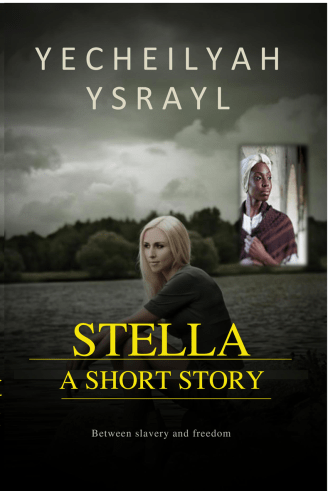
The books are undergoing makeovers, a fresh edit, and new covers. For those of you who’ve read it, you know the books are short and as my #1 priority outside of the coming poetry book and Lit Mag Magazine; I hope to have them back up by the end of this year. I am not slacking on this. Stella made a big impact, and she needs to be back up soon.
The year is 1864 in Louisiana and the story slips back in time introducing Grandma Stella’s Great grandmother, Stella Mae, age nineteen years. Stella Mae begins her story with a memory of how as a child she was forced to use the facilities designated for “niggras only.” Young Stella Mae tries to reason out why her Mama can’t walk into the front door of the general store and why they can’t use the restroom everyone else uses. Even at a young age, Stella Mae could sense the inequality in her existence. – Colleen Chesebro
I have come a long way since 2015 when the first Stella book released. As a historical series it’s important to me that the book is as superior as I can afford to make it. Now that I have my foot into the schools, I hope to one day have the series taught as part of the curriculum. I have so much hope for these books and so many visions for what they can become.
The sky is not the limit. There are no limits.
I was different. It might give you a slow start but being different is gonna carry you a long way.” – Master P
I am not a fan of most rap music and never was. I like a few old school tracks from Talib Kweli and Common, but I’ve never really been into rap marketed to my age group (although I danced to it in my teens at parties lol). I was always an R&B type of person. I still remember the days my sisters and cousins used to record music videos on VHS and fall asleep watching them. We also recorded songs from the radio on cassette tapes so we can listen to it repeatedly. Despite not being a fan of the music, I admire Percy Miller aka Master P more than any other rapper. I admire him because I think people underestimate him which is precisely why I think he does so well in his business endeavors. I admire him for his commitment to being Independent and using his faith as a catalyst to propel him forward.
Indie Authors, Don’t Be Afraid to Revise Your Backlist
With great authority comes greater responsibility. As we grow and mature in our understanding of this publishing thing, more will be required of us. I know that a poorly edited book could damage my reputation not only as a writer with influence for excellence but also as a teacher and as a lecturer.
I published the first book I ever sold in 2010 and I knew nothing. The book was not edited and had never been available on Amazon. This taught me two lessons:
Begin where you are. Take the first step “even if you can’t see the whole staircase” (MLK).
After you have taken the first step and put yourself out there, make changes as you see them. If your first book was poorly edited, take it down and get it edited. You didn’t know better at first and that’s okay. But then, once you know better, do better. Do the best you can, until you know better, to quote Maya Angelou. “Then when you know better, do better.”
Do not think for a second that we are not responsible for the knowledge we have. Do not think we are not responsible for changing our behavior as we learn and grow. The quality of the books we put out shows readers what we think of ourselves and also what we think of them. Quality must always supersede quantity. I temporarily removed these books because the quality of the work I put out is more important to me than feeding my own ego of having “published x amount of books.”
It was exciting at first to publish book after book. Like anything we do for the first time it was fresh. As I have grown and as I grow, I value more where these books are going and how they are influencing the world much more than how many of them there are.
Now, for my Stella fans:
I am not changing the core of the story. I am editing the books for better readability and understanding. I am also changing the covers so all the books in the series look the same.
About.
Stella is a work of Historical Fiction and is distinctive in its focus on one woman’s road to self-discovery, against the backdrop of the African American fight for justice, racial equality, and freedom.
The 3-Part series focuses on the history of one family in their struggle for racial identity. Discover in this Trilogy how three individuals living in separate time periods strive to overcome the same struggle, carefully knit together by one blood.
Between Slavery and Freedom (1)
We deal with enslavement and freedom both physically and psychologically.
Beyond the Colored Line (2)
We deal with passing, self-love, and racial identity. If you were a Black woman living in the Jim Crow era and light enough to pass for white, would you?
The Road to Freedom (3)
We deal with the Civil Rights Movement, Freedom Rides, and the impact our choices make on the next generation.







 The PBS Blog