
Tag: self-publishing
The Road to Freedom – On Sale 7/12 – 7/19
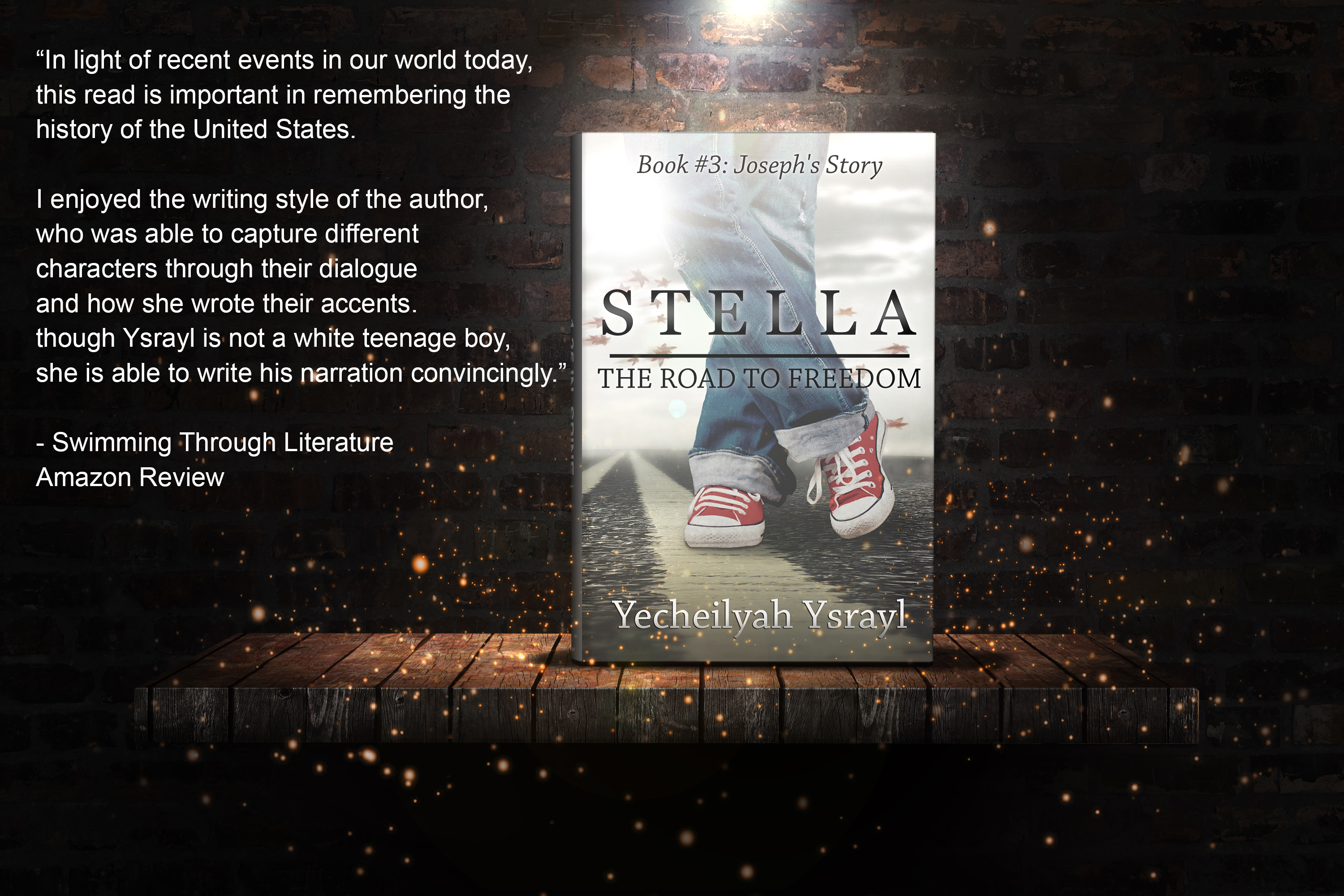
Hi guys! Guess what’s on sale today? The Road to Freedom will be just $1.99 from now until next Tuesday, July 19, 2016. Just click on the button below to check it out. Buy or read the reviews for a better understanding of what the final book in The Stella Series is about.

Self-Publishing: The Business of Writing 101 (6 Basics)
When I published my first book, I didn’t see my writing as a business. It was just me doing what I’ve always wanted to do. However, as I began to learn and as I continue to learn, I quickly discovered why Self-Publishing requires so much work: It’s a business.
That doesn’t take away from the fun of it, but the realization did help me to become more organized. I quickly learned why no one was buying: I wasn’t working! Writing is working, technically, and I was doing plenty of that. However, I was not working on the skill of writing, researching my industry, understanding tips to help me to write better books, promoting, marketing, and everything in-between. I was writing, sure. But the business of writing? I didn’t even know it existed. I was a writer and that was all. When I got into the business of writing however, that’s when I became an author.
From The Online EC Dictionary:
Writer – (noun) a. a person who writes b. a person who writes stories, letters, books, manuscripts, manuals, c. a creative person who enjoys writing things down d. an artist who paints pictures with words
Self-Published Author (noun) – a. a person who finances, publishes, markets, and promotes their writing; b. a writer whose job is to publish books, may include attending book signing events, interviews, applying for grants, entering contests, etc., c. entrepreneur d. writer who paints pictures with words and then sends them out into the world.
The Business of Writing 101: The Basics
- Author Platform – This is by far the most important part of your journey. BEFORE you publish your book, make sure you have either a blog or website that showcases your writing and personality to some extent. This is the most powerful way for people to get to know you. Why should people get to know you? Because you are not just a writer. You are going from Writer to Self-Pub Author my friend. No longer do you just paint pictures with words, but you are about to send them out into the world. But first, you need to introduce yourself to all of your potential readers. (I suppose you don’t need to start a blog but in my experience this blog plays a critical role (more so than a website and FB) in helping me to run my writing business by giving me a platform where I can receive instant feedback and constructive criticism on my work before I publish. I mean, look at all those faces subscribed to The PBS Blog, we can’t let them down now can we?) Below are the 10 Best Blog Websites of 2016:
- WordPress (Yes, we’re number one baby!)
- Tumblr
- Blogger
- Medium
- Svbtle
- Live Journal
- Weebly
- Postach.io
- Pen.io
- Ghost
- Social Media – Set up your social media pages BEFORE publishing your book, not after. Primarily, set up a Facebook Page or Group, Instagram, and Twitter account. These are the 3 basic social platforms but do not be deceived by the hype: They may not all work for you. Play around with what’s out there and stick to the one that works for you. YouTube is another platform, and Pinterest is another. I’ve found Twitter is my best home base. By Home Base I mean that place where I receive the most interaction. For you that may be Facebook or Instagram. Find the right platform for you, not for others. In fact, you want to be on the platform your readers are on. This means identifying your Target audience and then placing yourself in the places they are. In any event, start your social media craze before your books is born. This will give you another easy way to share your writing and also connect with others.
- Newsletter – Place a newsletter sign up form on your blog or website and start to collect emails early on. How to ensure people are actually reading your emails is a separate post. Right now we’re focusing on the basics and basically, get that newsletter up and running early on. Some people say not to worry about the newsletter if you have a blog. I say do worry about it. Look at it this way: Your email list is a permanent tool because if your website goes down or your blog or your social media pages you still have access to the group of readers who love your work. By collecting emails, you can reach people on a most personal level (Tip: Don’t sound all businessy (< Yes, made up word) in your emails. Let your personality shine. People like to connect with other people so be yourself). The link below is a good start for researching the email newsletter service that is right for you:
The 25 Best Email Marketing Newsletters and Apps
- Investment – Save your money. I know, not a lot of people talk about this when it comes to Self-Pub and it was the furthest thing from my mind when I set out to publish my first book but you can do better than I did. It’s a mistake to think about the financial aspect of book publishing during the publishing process. Everyone remember the 6 ps? Say it with me: “Proper Planning Prevents Pissed Poor Performance.” There’s nothing like a strong foundation and so yes, save your sheckles. Investment doesn’t have to be a scary term. It’s not like you’re buying stocks. Investment just means to put money toward a product, or service for profitable or material gain. I don’t like fancy smanshy words so let’s keep it simple: You’re saving money to go toward your writing to increase the chances of you making a profit because as with any business you have to be willing to invest in your work. You will need to pay for book cover design, editing, formatting, and the cost of print books, business cards, book marks, and promotional items (all of which increases the books chances of selling and i.e. you making a profit). While there are tons of free ways to produce all of these to some extent, for a truly professional outcome it’s going to cost you some investment. Let’s face it, no one wants their books to look bootleg. Createspace’s available book cover freebies? I don’t think so. There’s just too many Self-Pub books to read to take the easy route. Cover design is the difference between me deciding to read your book and make a sandwich. (The most important investment is time. At the end of the day the books that sell are the books that are well written. At the end of the day it is still about the story so make sure you’re putting time into your writing).
The most important investment is time. Make sure you’re putting time into your writing.- Tweet This
- Streams of Income – Authors aren’t rich. Well, most of us aren’t (Can’t speak for you six figure Indie Author makers. Y’all better work!) So, for this reason, if you’re deciding to quit your job and write books, first you need to take the time to invest the money you have into your book publishing business. Yes, I said publishing business. No, I won’t explain, we’ve been over this. Writing is a business. So, back to the point, before you throw in the towel you may want to seek grants or enter contests where the prize is large sums or even small sums, of money. The most wise thing however, is to take the money you’re making from your 9-5 and invest it into your writing. (I think those with jobs who want to write books are in a great position. You have the financial resources to save!) Writing a book doesn’t mean you can’t get a part time job or offer other services that is going to put money in your pocket to dedicate to your books. One of the first things you’ll notice as you begin your journey is that the money you do make from writing books is going to often go back toward your work. Everything made is going to go back in and it’s going to be many years before you start to see some real profits. However, you can avoid the feast of famine with proper planning, investment, and multiple streams of income.
Cover design is the difference between me deciding to read your book and make a sandwich. – Tweet This
- Less Talk, More Action – I’m a workaholic for a reason. In fact, many entrepreneurs are. There’s a saying I try to always keep in mind as I work. It helps keep me motivated and planting seeds: “Bad boys hit hard, but move silent”. Self-Publishing is the “IT” thing right now. Everyone wants to show that they’ve written a book even though the reality is that not everyone has the skill. While it’s exciting to boast of having written a book, make sure you’re also sharpening your writing skills, and doing the hard labor on the back end that ensures proper presentation and production of the end product. Make sure that your books are actually reaching people. I’m not saying to quit because no one read your book because that’s not the reason (I’d hope) that you write in the first place. What I am saying however, is that I love to write, but I refuse to keep pushing out work without also monitoring the growth and development of that work. As part of the Self-Publishing process, I do not just write books and neither should you. I also study the writing field, calculate the financial cost of publishing a book, surround myself with professional men and women who could help me, surround myself with family members and friends who will support me, and write books that will expand conversations and start discussions.
Bad boys hit hard, but move silent. – Tweet This
Before The Week Ends: Book Review Registry

Before the week ends, I’d like to inform my Authors reading that I have set up an online Book Review Registry to make it easier for you to sign your books up for a review. Book reviews are free. The readers fee doesn’t kick in until October 3rd so if $20 is not something you would like to pay in exchange for an honest review (completely understandable. I’m not trying to get rich or anything) you can always sign up NOW while there are no fees. I have decided to charge a fee only to cover time. I love reading, I love writing, and I love promoting authors. Unfortunately, my time would not allow me to do it as often as I’d like. The little time I do have require me to be as organized as possible to ensure I’ll get them done. I don’t want to promise anyone anything I can’t deliver on. My last book review showed me just how tight my time is and I barely met the authors deadline. Anywho, go ahead and register your book at the link below and thank you in advance for your support:
“It takes a minimum of 5 Amazon reviews and an average 3.5 rating to really start to see changes in book sales for Indie Authors.” – EC
 BOOK REVIEW REGISTRY
4 Reasons Why a Book is Still of The Utmost Importance in a Digital World
Great posts on hardcopies vs digital. I will always be of the opinion that Authors should have hardcopy versions of their books as well.

As digital media has expanded at a dizzying pace and social media outlets have grown, certain pundits have suggested books would diminish in importance. Mobile devices and shorter attention spans would create an environment where books would not matter as much as the onslaught of information and innumerable choices available at our fingertips every moment. Certainly reading habits have morphed as digital options have increased, but despite these changes, books are as important as ever because their very form enables them to impact lives in ways no digital media can. Here are four reasons why I believe that is so.
A book is permanent
With so many media forms today, like Snap Chat or Instagram, the information or images conveyed are instantaneous, but soon forgotten after the next tidbit fills the feed. Not so with a book. The very form of a book means it can be preserved and revisited…
View original post 403 more words
Everything Must Move – What Watching Movies Taught Me About Writing
This post was conceived while watching one of my favorite movies. Thus, as usual, it is based on my personal experience. So anyway, to the point…
I found myself paying attention to what was going on in the background of this particular scene in this movie instead of what the leading characters were doing. To better understand this, I challenge you to do the same. Choose one of your favorite movies, what’s going on in the backdrop? An old man is laughing with his wife. The waiter is walking away from a table, she looks down at the notepad before walking away. Behind her, the bartender throws a bottle into the air before catching it with his other hand and pouring the liquor into the long line of glasses in front of him. The waiter walks up to the bar, picks up two of the many glasses and walks them over to her table. The old man and his wife smile while nodding thank you.
What just happened? What happened is that there’s an entire event taking place in the backdrop of what’s happening in the forefront. Though not the center of attention, everyone in the scene moves. Though not the primary characters, everyone in the scene is doing something.
While working on my next project, I’ve found it helpful to make sure that everyone in the scene from the smallest to the greatest has something to do, or has a goal they want to achieve (despite how small). There shouldn’t be any stick men and women. If we are at dinner, the people behind Nora’s table should be laughing or talking. Not so that it’s overwhelming, she is the leading lady after all, but they shouldn’t just be sitting there. There should be movement. For instance, in A Beautiful Mind, John Nash sits on a bench in front of the University. With him is his old roommate and together they sit there and talk. As they are speaking, there are people walking by, students, professors, and faculty members. And as the camera zooms in and pans around, we notice the people are looking at John oddly.
For those of you who’ve seen the movie or who are familiar with the man John (this movie is based on a true story, Nash just passed recently matter of fact) you know that John Nash suffered from a severe case of schizophrenia. His college friend does not really exist. From the first time viewer’s perspective, John is just sitting there talking to an old friend. But if you notice the people in the backdrop, they are not just walking by, they are walking by and staring. Why? You assume its because John has always been a little, well, off kilter. Weird. Odd. By the end of the movie however, you realize that the people are staring because John is sitting on a bench talking to himself. They are staring because there is really no one there. Though not the center of attention, even these people have a purpose for being. In this case, they are hints that help lead up to the end of the movie so that it all makes sense.
I’m not saying writing fiction and writing a movie script is the same thing because its not. What I am saying is that everything around us can be useful to help us in our writing. Who says we can’t use non-conventional means to build on creativity? After all, that’s what creativity is anyway, inventing new ways to do things.
Since working on The Renaissance (my 2017 novel project) I’ve been using this technique (making sure everyone in the scene has a purpose) and its really been helping in my development of the story. It helps me to ensure that everything is accounted for and that there are no loose ends. From the protagonist, to the lady swatting at a fly standing behind her, everyone has a goal or a reason for being. Everyone and everything moves.

Why Do Authors Need a Copyright?
Excellent need-to-know information from Colleen. I’ve noticed that lots of people have been the victims of stolen work lately. It may be wise for all Self-Publishers to include copyright cost in our book launch plans.
 The PBS Blog