When I started this blog and chose “truth is stranger than fiction,” as the tagline, it was puzzling to people. Someone even reached out to correct, me, saying, “don’t you mean the truth is stronger than fiction?”
No. Stranger is the word I meant.
What it seeks to communicate is that nothing we can create can be as unusual as what we find in actual life, and speaks metaphorically of the unsettling realness of truth—the “strangeness” of reality. You think something is weird until you find out just how deep the rabbit hole goes. You think my blog name and the tagline is strange until you understand what it means.
Everything that is happening right now, I could quickly put in a novel. Except, there is no story I can conjure up that would be equivalent to the real-life terror that blacks face and have faced every day in this country.
As someone who writes Black Historical Fiction, there is a strangeness about what’s going on because what happened in the 60s is still happening. And as I place my fictional characters amid events that actually happened, I realize that I am a character in the present world, a world that mirrors the one passed. Our children and their children will read about what happened this year, and they will ask the question, “what was it like living in a world with civil unrest because of the mistreatment of blacks during a pandemic?”
The first five months of 2020 have been brutal on every level, and we are living in what will one day be part of America’s history, and it must not be lost to us that we are part of that history.
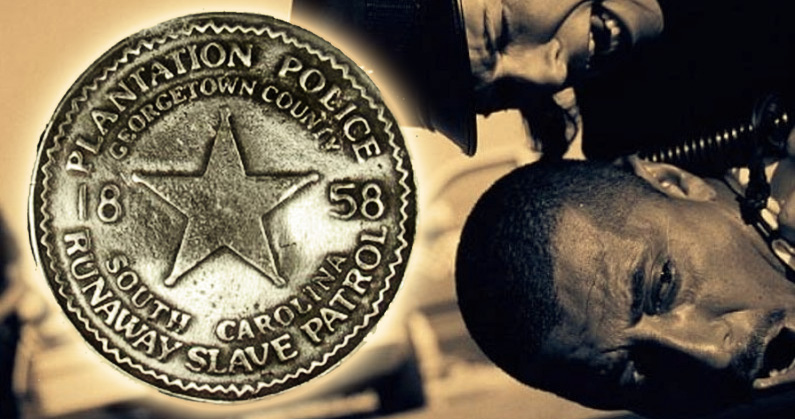
If America were a house, racism would be the foundation on which this house sits. People don’t want to hear that many of the founding fathers were slave-owners. They don’t want to hear about the Slave Patrols turned southern police departments. People don’t want to hear that dismantling systemic racism means to dismantle that system. And people certainly do not want to hear about the spiritual connections between the afflictions blacks have endured, their real identity and heritage, and their place in America.
But there is no one way of looking at everything that’s going on, but this is also what makes writing a powerful tool for shedding light on these truths, exposing prejudices, and breaking down barriers, and eventually whole systems.
Everyone can’t be on the ground. I won’t say “on the front lines,” because I don’t believe there is one way to be on the front lines. The term comes from the military line or part of an army that is closest to the enemy. To be on the “front line” means to be closeted to the enemy, which is usually depicted as physically facing him. But there are other ways to face the enemy, and one way is to write with accuracy.
Write the truth. Write it as raw and as bloody as it is in real life. Pass down stories to the next generation that will teach them the truth about who they are. Take Toni Morrison, for example, who in the 60s and 70s chose to publish the books of black writers telling the truth and exposing lies. Books play a significant role in educating a people, and miseducation has a lot to do with what is and is not, written in books.
Writers are, therefore, also on the front lines and in a powerful way. In the words of Nina Simone, “you can’t help it. As far as I’m concerned, an artist’s duty is to reflect the times.”
As devastating as things are right now, what black writers write today, be it a poem or blog post or scholarly article, can make a difference in the next world.
This post was originally published under another blog series Unfamiliar Faces: Lost to History. Due the current climate I have revised this post and re-categorized it under Black History Fun Facts.
Originally Published: July 14, 2015
Revised May 29, 2020
The tragic murder of George Floyd, who sadly joins the ranks of several unarmed black men killed by the police, has sparked outrage, protests, and unrest. Images and footage of the officer, Derek Chauvin (who had 18 prior complaints against him according to the Minneapolis Police Department’s Internal Affairs), kneeling on Floyd’s neck as he repeated the too familiar phrase, “I can’t breathe!” is both horrifying and heartbreaking.
In response to the looting taking place by protesters of Floyd’s death, American President Donald Trump went on to call the looters “Thugs,” commenting that “when the looting starts, the shooting starts.” The phrase comes from a 1967 quote used by Miami’s police chief, Walter Headley, in 1967, when he addressed his department’s “crackdown on … slum hoodlums,” according to a United Press International article from the time.
From the killing of Emmett Till in 1955 that sparked the Civil Rights Movement, to the bombing of the Sixteenth Street Baptist Church killing those four little girls in Birmingham Alabama in 1963 (Addie Mae Collins, 14, Cynthia Wesley, 14, Carole Robertson, 14, and Carol Denise McNair, 11). From the 1965 Watts Riots that broke out over Marquette Frye, to the police officers who beat Rodney King in 1991 and the riots that broke out over their acquittal. From the killing of Trayvon Martin, Micheal Brown, Ahmaud Aubrey, Breonna Taylor and many others, Black people are frustrated and crying out for redemption.
Today, we look at the racists’ roots in American policing.
Slave Patrols had three functions: to chase, apprehend, and return the enslaved who had run away to their “owners,” to organize terror to deter slave-revolts and to maintain discipline for slave-workers who were subject to violence if they broke plantation rules. These organizations evolved into southern police departments whose job was to control the freed slaves who were now working as laborers and to enforce the Jim Crow segregation laws that denied freed people certain human rights.
“Early American police departments shared two primary characteristics: they were notoriously corrupt and flagrantly brutal. This should come as no surprise in that police were under the control of local politicians. The local political party ward leader in most cities appointed the police executive in charge of the ward leader’s neighborhood. The ward leader, also, most often was the neighborhood tavern owner, sometimes the neighborhood purveyor of gambling and prostitution, and usually the controlling influence over neighborhood youth gangs who were used to get out the vote and intimidate opposition party voters. In this system of vice, organized violence and political corruption it is inconceivable that the police could be anything but corrupt (Walker 1996).” – Dr. Gary Potter
Slave Patrollers were white men who rode around on horseback carrying guns, rope, and whips, ready to capture the enslaved. Their job was also to enforce the pass system, a pass, or ticket, signed by the slave master that authorized the enslaved to travel. Without this pass, an enslaved person could be beaten, and beatings sometimes happened even when the person had a pass, eerily similar to black men and women who are beaten, choked, gunned down, and stepped on even when they have done nothing wrong.
In her book, Slave Patrols: Law and Violence in Virginia and the Carolinas, Sally Hadden writes, “a mounted man presents an awesome figure, and the power and majesty of a group of men on horseback, at night, could terrify slaves into submission.” Many members of the black community still refer to large police vehicles as “patty-wagons,” a play on the former “paddyrollers,” which was also a nickname for Slave Patrols.
Run, nigger, run; the pateroller catch you, Run, nigger, run, almost dawn. Run, nigger, run; the pateroller catch you, Run, nigger, run, almost dawn.
Source: Wolf Folklore Song – RUN NIGGER RUN, THE PATEROLLER CATCH YOU (RUN, NIGGER, RUN) sung by Joe Pat| Also found in Randolph, Vol. II, #264; Brown, Vol. III, #457| Source: http://web.lyon.edu/wolfcollection/songs/patrun1287.html
As K. B. Turner , David Giacopassi & Margaret Vandiver remark in Ignoring the Past: Coverage of Slavery and Slave Patrols in Criminal Justice Texts, “the literature clearly establishes that a legally sanctioned law enforcement system existed in America before the Civil War for the express purpose of controlling the slave population and protecting the interests of slave owners. The similarities between the slave patrols and modern American policing are too salient to dismiss or ignore. Hence, the slave patrol should be considered a forerunner of modern American law enforcement.”
Policing, in general, has a long history. So, it is not historically accurate to claim that policing came from slave patrols in and of itself.
“Policing—enforcing the law, preventing crime, apprehending criminals—has a very long tradition of existence. I don’t know where it started, but for our purposes, we can note that Augustus Caesar, born in 27 B.C., created the cohortes urbanae near the end of his reign to police Ancient Rome. Policing in England takes rudimentary form with Henry II’s proclamation of the Assize of Arms of 1181. In the 1600s, England established constables and justices of the peace to oversee them. The Metropolitan Police Act created the first recognizable police force in the U.K. in 1829.” – Jonah Goldberg
On its face, the idea of policing is not a bad thing, and we can even go so far as to say it is needed. Whether we refer to it as policing or not, communities need people who can protect them from people wishing to do them harm. The problem occurs when the laws being enforced are also laws that dehumanize certain groups of people or when the crimes being prevented are humans rebelling against unjust systems and when the criminals being apprehended are murdered in the process. The need for just policing is not the argument. The argument here is that modern American practices of policing are similar to the activities of slave patrollers.
Today’s Black History Fun Fact Friday is from Joseph Ward.
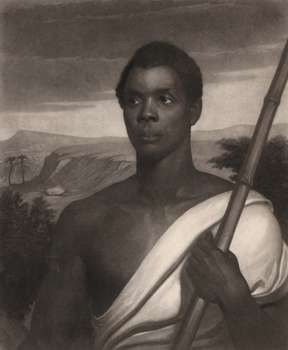
Ward has prepared for us the inspiring story of Madison Washington, a formerly enslaved man who had escaped successfully and fled to Canada. Washington returned to Virginia to free his wife but was recaptured and put on a slave ship in Richmond, Virginia. Guys, Washington is the real-life Django Unchained! Not only does he free his wife, but many others.
Madison Washington was a man born into slavery in Virginia who escaped but risked his freedom to help free his beloved Susan. Washington is described as having extraordinary African features, superb leadership qualities, and a fierce spirit. They considered him a fugitive for escaping slavery and heading north to Canada, eventually finding work with a farmer named Mr. Dickenson. Even as a small child Madison would rebel against the inhumane treatment of him his slave masters, but rebellion eventually earned Washington his place in history.
Around the age of twenty Washington would meet the love of his life, the beautiful Susan, who he would make his wife. He planned to escape from slavery to free himself and his wife, but his plans didn’t work out. To prevent himself from being sold away from his wife, Madison escaped from the farm and hid in the surrounding woods for months. While in hiding he could keep an eye on his wife, he also began planning to lead a rebellion. His plans once again failed, and he eventually traveled north to Canada to live in free lands.
While in Canada Washington’s plan was to get a job and save enough money to buy the freedom of his wife Susan. He was becoming discouraged in carrying out his plans because he realized it would take five years to raise the money needed to free his wife. Washington made his mind up that he would return into the grasp of slavery to free his Susan. Mr. Dickenson the farmer tried his best to persuade Washington to take another course of action. He eventually left Canada with his wages and his freedom papers, heading south to Virginia. He could reach an area close to the farm where his wife was held but had to conceal his identity to prevent him from being captured.
Washington was still considered a fugitive, and anyone who recognized him would have blown his cover. Being a man of tact and organization, Washington carried miniature files and saws within the lining of his coat; these would help him break out of any chains used to restrain him. “Liberty is worth nothing to me while my wife is a slave,” said Washington as he held conversations with fellow travelers who tried to convince him to abandon his plans.
As Washington traveled closer to the farm that held his wife, he was forced to travel at night for fear of being recognized by someone. He found temporary shelter in the woods near the farm and tried to get information about her but was unsuccessful. One night while in hiding, he heard singing off in the distant woods; the singing was coming closer and closer to where he was hiding. As he investigated the singing, he became a part of the singing, there he learned that he stumbled upon a “corn shucking.”
A “corn shucking” was a mass gathering of slaves who pealed loads of corn, and after pealing the corn they were able to have a huge dinner with whiskey and dancing, which was provided by the owner of the plantation where the corn shucking took place. Washington refused to eat the food for fear of being discovered. He also was very careful to ask only a few questions and remain in the shadows. At the corn shucking, he learned that his wife had not been sold and was still on the old farm.
Being too eager to see his wife, Washington entered the parameter of the farm but was spotted by an overseer. The overseer then alerted the other white overseers on the farm. The first three men to approach Washington was struck in the face and knocked to the ground unconscious. Eventually, Washington was subdued, shipped to Richmond, Virginia, and sold to the slave owners Johnson and Eperson. New Orleans was the destination for The Creole, a slave ship controlled by Captain Enson and owned by Johnson and Eperson.
Washington and one-hundred and forty-four other slaves were loaded upon The Creole along with other cargo the men were shipping to New Orleans. As they loaded the slaves upon The Creole, the men were placed in one cabin and the women were placed in another. For fear of rebellion, the men were heavily chained, and Washington particularly was chained to the floor of the cabin. The women were not chained and were able to roam their cabin freely.
As Washington lay chained to the floor, his attitude was rather jovial than the expected gloom the other slaves displayed. The overseers didn’t know that while Washington was displaying a docile and cooperative attitude; he was secretly picking the men he would use to overthrow The Creole. They also didn’t know that Washington still carried his mini saws and files within the lining of his coat to use when the time was right.
In 1841, on the ninth day of the voyage, The Creole encountered rough seas which made several slaves very sick. Because some slaves were sick, the overseers did not watch them properly, this created the perfect opportunity for Washington and his men to attack. Washington used his mini saw and file to free himself and at least eighteen other men. Once free, the slaves found weapons and made their way to the deck where the ship’s crew was stationed. When the slaves attacked the ship’s crew it was unexpected, and it startled the crew, the men barley moved to make them easy targets for the slaves.
Hewell, the Black slave driver, and others from the crew drew their guns and shot some slaves. Washington spotted Hewell shooting his gun, approached him from behind, and struck him in the head, wounding him severely. Washington led his men into battle with iconic flair, fueling his men to earn their victory; the slaves then dominated the crew and gained control of The Creole. Washington’s men wanted to kill the remaining crew members who were still alive, but Washington allowed no more killing. He was not interested in killing the men, only gaining the freedom of his people and his wife.
The next morning, Madison Washington was named “Captain Washington,” commander of The Creole, by his men. That same morning, Washington requested that the cook prepare a wonderful meal for the men and women who were once captives on the ship. This meal would be the first time the men and women would see each other. Little did Washington know his beautiful wife Susan was one of the women held in the cabin on The Creole. As they served the meal, enslaved men and women mingled for the first time as free human beings. Washington and Susan spotted each other and shared a passionate, tearful reunion. After years of being separated because of slavery, Madison and Susan Washington were once again husband and wife.
Madison Washington and his men defeated the crew of the Creole, and Washington ordered that the men not be killed and their wounds treated. Once the wounds of the white men healed they tried to regain control of the ship but were defeated once more. Because of the bravery and brilliance of Washington, one-hundred, and forty-four, people could gain their freedom upon The Creole. The Creole didn’t make it to New Orleans, instead, Washington and his men landed in Nassau, Bahamas because they learned it was a free island. Washington was determined to free his wife, and his determination and love for his wife led to him freeing others he did not know.
The Story of Madison Washington and The Creole is a story many of us have never heard before; a man of African lineage who embraced freedom could not only change history but change the lives of others. This story is important because it shows that once organized black people can gain their freedom. It also exemplifies the commitment of a black man to his black wife, which is counter to the normal narrative which usually degrades the black family. If we unite and trust each other we can make the impossible, possible.
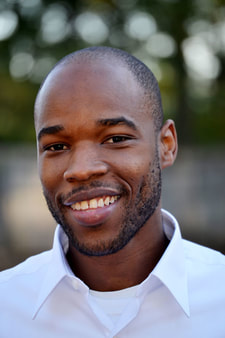
Joseph A. Ward is a graduate of Florida A&M University (FAMU) and holds a Bachelor’s degree in Psychology. Ward is a graduate of the “New Hope Program” with the Florida Department of Health (DOH) in Leon County and has served as a co-facilitator of the program for over seven years, teaching life and professional skills to underprivileged persons. In addition to co-facilitating this program, he also helped establish the FAMU chapter of Men of Strength (MOST) and currently serves as its co-facilitator.
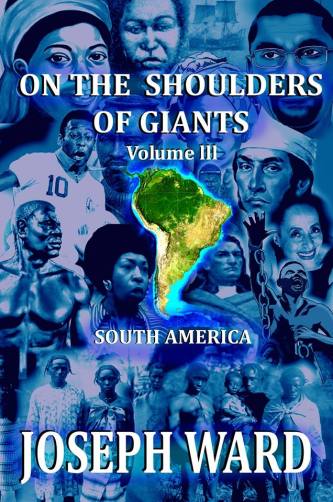
Over the past 14 years, Mr. Ward has dedicated himself to studying the history and the culture of the African diaspora. He is the founder of On the Shoulders of Giants, Inc., author of On the Shoulders of Giants Vol: 1 North America, and On the Shoulders of Giants Vol: 2 Central America. He is also the host of The Freedom Train Podcast Series and The Fix Sports Podcast.
Mr. Ward’s commitment to his community has proven him to be a reputable teacher, coach, trainer, and motivator. He is dedicated to uplifting and educating individuals around the world while helping to create mindsets and environments which foster greatness.
I am gearing up to release the last book in The Stella Trilogy, The Road to Freedom. After this book drops the series will be complete. Whoo hoo!
But what’s that saying? The real work begins after you release the book? Yea, that.
I don’t know who said it first, but there are no lies told here.
As book three is on its way out, I would like to draw more attention to books one and two by getting some book reviews in. As you guys know, these books were originally published in 2015-2016 but due to major editorial and formatting issues, I have had to take them down and relaunch them. One major risk of taking them down was losing the little reviews the books had. That was a risk I was willing to take if it meant a better reading experience. There are over three thousand followers of this blog. I am hoping I can get a few of you to help.
I just thought I’d ask. What’s that other saying? “Closed mouths don’t get fed.”
If you have read any of these books, it would mean everything if you could review them on amazon. Review book one here. Review book two here.
If you have never read these books and would like to receive an ARC copy, it would delight me to send it to you.
Comment below, contact me through the contact form or email me directly at yecheilyah@yecheilyahysrayl.com.
Born in October of 1854 in Louisiana, Anna invented a kitchen tool she called a pastry fork.
The system of patents for inventions was not easy for African Americans at the time. Enslaved people were not considered people, they were not US citizens, and the rights of the US constitution did not apply to them. Consider the Dred Scott Decision where enslaved Scott unsuccessfully sued for him and his family’s freedom (they were eventually freed on May 26, 1857). This made it difficult for even free blacks to secure patents on their inventions, making it easy for their work to be stolen or attributed to someone else.
Of all the inventions by African Americans, we can just about imagine how much more this contribution would be if full credit had been given to those who were not considered worthy to receive it. Consider the following inventions:
The Artificial Heart Pacemaker Control Unit (Otis Boykin )
The Closed Circuit Television Security (leading to the home security system) Marie Van Brittan Brown
The Modern Home-Video Gaming Console (Gerald A. Lawson)
We can go on and on.
Anna’s story is special because she was one of few blacks to receive a patent for her invention of the pastry fork.*
The Pastry Fork was an older version of the wisp and other electronic mixers today as it automatically mixed without manual effort. This tool had many uses, including beating eggs, thickening foods, making butter, mashing potatoes, making salad dressings, and most pastry dough, which was difficult on the hands and wrists.
Anna filed an application for a patent of her Pastry Fork in July of 1891 and was awarded the patent on March 1, 1892.
*Martha Jones was the first black woman to obtain a US Patent.
Learn more black history by reading more articles on the Black History Fun Fact Friday page here. Have a black history fun fact of your own? Submit your article for a blog feature by emailing it in a Word Doc attachment to yecheilyah@yecheilyahysrayl.com. Read the submission guidelines here.
On January 17, 2015, I started a new Blog Series in honor of Black History Month called Black History Fun Fact Friday. I planned for the series to run from January 2015 through the end of February 2015, but two badges and 70 weeks later we are still going strong.
Black History Fun Fact Friday is not just a Black History Month segment anymore. It has carved out its own space on this blog. I want to get back to publishing Black History articles every Friday and would love to have some help.
I am reaching out for help from individuals who are interested in helping to contribute to this series.
Requirements:
Must be at least 18+ to write for The PBS Blog.
Must be original work. Do not copy and paste the article from other blogs unless that blog is your own. If you have a Black History article to share that you published to your site, I welcome you to submit it for Black History Fun Facts. I have no problem with that as long as it is your work. You can also link back to it so readers can follow your blog.
Because of the nature of this series, interested writers must be Black/African American.
Topics must be relatable to the history of Blacks/African Americans, African diaspora, e.g.
Articles must be emailed to me for approval at least one week before publishing. If you email your article on 4/28 for example, I will publish it on 5/1 if there are no needed changes.
Please send articles as an attachment in a Word Document, 12p Font, Times New Roman text.
Please do your best to self-edit your work for basic typos/spelling/grammatical errors before submission. Grammarly and ProWritingAid are good free self-edit software programs to use.
Please include at least one image with the post. Canva is a good program to use to make your own images.
This is Black History Fun Fact Friday not Black History Opinions so do your best to submit articles covering accurate historical information. I will vet the submissions to make sure they do. If you have links to sources, please include them. If you quote someone else, please cite your source. Articles that plagiarize will not be featured on this blog. (Note: Writers, as a heads up, if you are quoting people in your Social Media graphics without giving proper credit, this is plagiarism. Putting quotation marks around the quote does not make it yours. Don’t leave off the name of the person who said it first!)
Please include a photo of yourself, social media handles, website, or links to books you’ve written on the topic. This will be added to the end of the post.
Benefits of Guest Blogging:
Increase traffic to your own website/blog
Build Relationships/Online Influence
Build Domain and Search Engine Authority
Capture Wider Audience (go hand-in-hand with the 1st point)
Develop Your Authority on a topic
Improve Your Writing
Opens the doors for paid business opportunities
Email articles to yecheilyah@yecheilyahysrayl.com.
This is a real-life case of living beyond the colored line. It starts when a black man named O’Day Short and his family moved to a racist area of Fontana, California, in 1945. Here’s a bit of history behind Fontana:
The Ku Klux Klan established its headquarters in Fontana.
KKK Grand Wizard George Pepper and White Aryan Resistance (WAR) leader Tom Metzger claimed Fontana and the Inland Empire as their California Eastern Territory for White Supremacy.
Hells Angels Biker Gang originated in Fontana
Hells Angels and Nazi Low Riders (NLR), flourished in the city of Fontana, with no consequences from the Fontana P.D.
Many incidents of discrimination and hate crimes were unsolved and poorly investigated
Fontana has a long history of racism and discriminatory policies, so it is no surprise that blacks were not allowed south of the area. The saying went: “Base Line is the Race Line.” Southern Fontana can be best described as a “Sun-down town,” towns blacks were not allowed after dark. When the sun went down, any black person found in a “Sundown Town,” risked lynching. Read more about Sundown Towns in an older post here.
Carol Ann and Barry Short, along with their parents Helen and O’Day Short, died in a suspicious fire on Dec. 16, 1945, after crossing the color line in Fontana. | Inland Valley Daily Bulletin
When O’Day Short, his wife, and two children moved onto land in an all-white area, neighbors threatened them to leave that neighborhood and occupy one of the ghetto neighborhoods where the town allowed blacks to live.
One interesting thing about the Short family is that they were fair-skinned and many believe this is how they got to purchase the property in the first place. O’Day moved his family into the half-finished home. It is said the man who sold him the land where the house was being built did not know he was black.
When people complained, O’Day got a visit from the sheriff to leave the property. The Sheriff offered to buy the house back, but O’Day refused. The sheriff warned that the “vigilante committee,” will not be pleased. They recorded the visit by the Sheriff in the Sheriff’s office in San Bernardino. According to the report, Short described the threats to the Federal Bureau of Investigation (F.B.I). On December 6, 1945, Short also reported the threats to the Los Angeles Sentinel, an African American Newspaper.
On, December 16, 1945, not even a full month after the Short’s moved in and ten days after the reports, the Short home exploded in fire, the family inside.
Helen Short, 35, and her daughters Barry, 9, and Carol Ann, 7 died.
O’Day, 40, lived long enough to be taken to the hospital. A month later, on January 22, 1946, he also died.
They have linked the cause of the fire to an oil lamp O’Day was lighting when the tragedy occurred. The interesting thing about these reports is they didn’t mention that the Shorts were black, not in 1946 or later when the story resurfaced.
The NAACP hired an arson investigator later to investigate the story. The investigator reported that the kerosene lamp was found and almost intact, determining the fire was set, from the exterior.
I decided the Short Family would be the subject of this week’s fun fact because of the limited information that can be found on them. It was many years later before the NAACP launched their investigation and people even knew their story.













 The PBS Blog