High Expectations

Well said. I enjoyed reading this. Post quote:

“Building a career as an author is a marathon not a sprint and anyone who expects instant results is likely to wind up disillusioned and disappointed.”

ellieholmesauthor's avatar

When you launch yourself off on a career as an indie author you need to have expectations of what you would like to achieve.

expectations Expectations vs Reality by Kristian Bjornard courtesy of Flickr Creative Commons licensed by CC BY-SA 2.0

https://flic.kr/p/7ys8nH  https://goo.gl/laq7O1

It’s good to have dreams but a dash of reality wouldn’t go amiss.

Writing a book takes a long time. Marketing a book takes a long time. Building a career as an author is a marathon not a sprint and anyone who expects instant results is likely to wind up disillusioned and disappointed.

Houses that are built to last have strong foundations. Create your brand with the future in mind. I was given some sage advice when I started out. I was told to assume it would take three years and/or five books to reach a point where things were ticking over career wise. The smart money…

View original post 401 more words

Quick Tips for Paperback Page Numbering

Most valuable tutorial on numbering your print books.

jorobinson176's avatarLit World Interviews

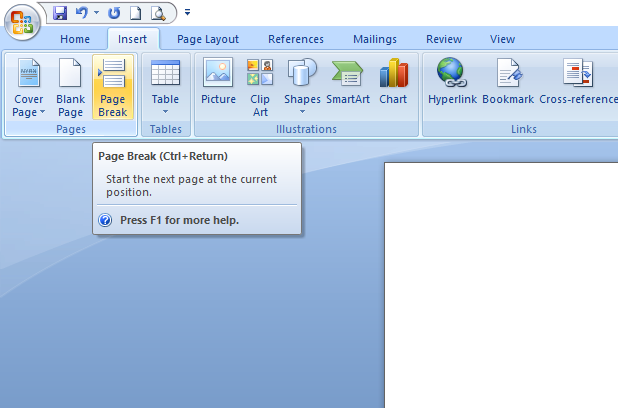
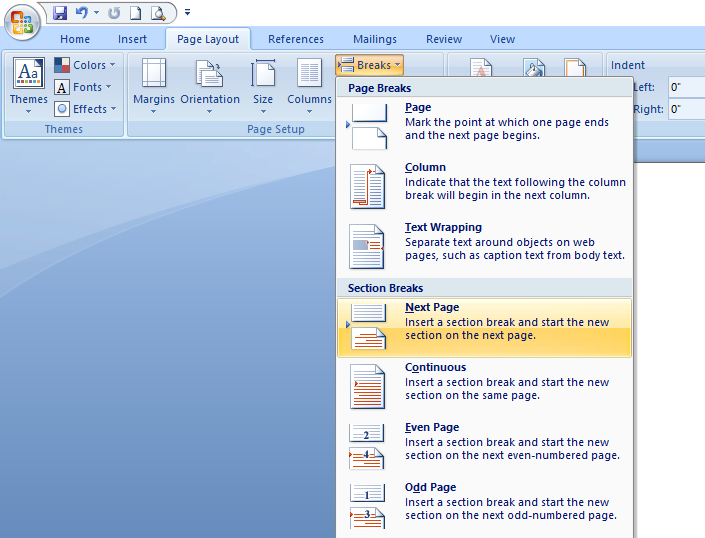
When numbering the pages of your paperback manuscript, the thing quite a lot of Indies have trouble with is that they use Page Breaks rather than Section Breaks. A Page Break is just that—starting a new page within the same section of a book. With a Section Break you can have totally different numbers and Headers and Footers for each section. The way to ensure that your numbering doesn’t bounce back from the first chapter of your book to the front matter is to get rid of all the Page Breaks in first pages and replace them with Section Breaks.

page-break
Section Break after title page, and again after the table of contents, and every other page you have in your front matter.

section-break
Then double click into your Headers and Footers up to and including the first page of your first chapter, and unlick Link to Previous. This will ensure that…

View original post 208 more words

Amazon’s New Reviewing Rules – Could it Affect Authors in the Future?

Very interesting.

C thehappymeerkat's avatarHappymeerkatreviews

Sorry re-posting this had an error posting it, sorry if you saw that error 😮

amazon-447033_1280

Today Amazon.com has banned all reviews for free and discounted products unless they are done via Amazon’s Vine program.  The reasons for this are clear and understandable but what implications will this have for future selling on amazon and while books are currently exempt from this, will they always be?

I’ve been reviewing on amazon UK for nearly two years now.  I started out reviewing video games and colouring books.  For those who have read more of my blog you’ll know that reviewing items on amazon gave me a way to cope with a traumatic event I suffered.  A way to keep my mind off of everything that had happened and to focus on something else.  I began by reviewing items I’d bought but once my ranking had reached a certain level I was approached…

View original post 1,563 more words

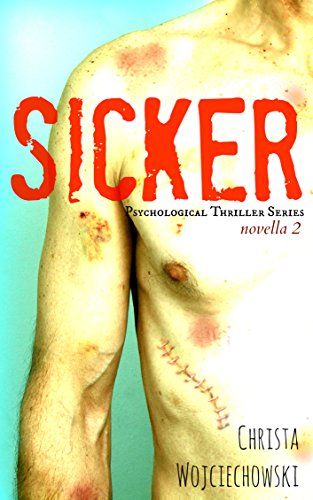
Yecheilyah’s Book Reviews – SICKER by Christa Wojo.

Title: SICKER – Psychological SICK Series Book Two

Author: Christa Wojciechowski

Print Length: 107 pages

Page Numbers Source ISBN: 1533513538

Publication Date: April 13, 2016

Language: English

ASIN: B01CWGKIL0


I’m amazed that John can be even sicker in book two of Christa’s psychological thriller than in the first book. If you’re new to this blog, you can read my review of book one in this series here.

In book one, we pick up where Susan Branch left off, having just learned the truth about her husband’s ongoing ailments. Because of these circumstances, she was deprived of a fulfilling marriage and a feeling of self. These ailments compromised the most private aspect of her: her thinking. A disease brought on by a sick person robbed her of what may have been.

John’s secret is so bizarre that Susan is caught up in a wrath that consumes her and is forced to question her own sanity. As a medical professional, how could she miss so many of the signs that revealed the true nature of her husband’s illness? How could such an illness, so much more superior than physical bruises, have gone unnoticed?

Sicker focuses on the source of John’s obsession as he recounts a childhood riddled with sadness, loneliness, and trauma.

While my first impression from the first book was that he was mentally unstable, book two offers much more insight, changing my initial judgments. As crazy as this sounds, I almost feel sorry for John. This book made me think about the importance of love in our lives. The need to feel loved and be loved is critical to our operation and balanced and healthy individuals. People denied the privilege of this love become the same people we deem crazy in mental institutions. The truth is, it doesn’t matter whether you grew up with a silver spoon in your mouth or a plastic spoon; everyone everywhere at some point in their lives needs love, without which we are no longer human beings and can, therefore, be driven to do unspeakable things.

Ratings:
Plot Movement / Strength: 5/5
Entertainment Factor: 4/5
Characterization: 4/5
Authenticity / Believable: 5/5
Thought Provoking: 5/5
Overall Rating: 5 / 5 stars

SICKER is available  now!

51mpd8lj4xl

Be Sure to Follow Christa Online:

Bloghttp://christawojo.com/

Twitter: http://www.twitter.com/@christawojo

Facebook: Facebook.com /WebbellaChrista 

***********

bitmoji1135651783

Need a review? Apply for one here.

Show and Tell – The Show vs Tell Debate Critiqued

A wise man once asked a simple question: “What is water?”

A few people gave their answers. Some said “H2O”. Some said, “a transparent liquid found in lakes, oceans, and seas.” Other’s said, “a chemical substance.”

The man smiled. “None of the above.”

The people’s brow buried deeper into their foreheads and their mouths twitched, “what?”

“Don’t give me the name or what you’ve been told it is made of,” said the man.

“Tell me what it is.”
writing-desk2

****

Self-Publishing is a lot like life, there is a question behind everything we think we know. There’s a lot of advice in the Indie Author community. What if I told you that not all of it was good advice? Or shall I say, not all of it is wise advice? It may be useful advice, but is it wisdom? Do we actually know what water is? We do not.

What is the most talked about thing in this community? What is that thing that people just can’t stop talking about? Yes, the Author Platform is one, but what’s another? That’s right, “Show, Don’t Tell.”

Hold on to your seats. A lot of you are not going to like this:

What if I told you this was not very good advice?

I didn’t say it wasn’t useful advice. Advice is subjective like that.

Let’s establish the facts. New authors indeed tend to lean more toward telling than showing and this is a problem for readers because it makes the story difficult to get into. The author’s purpose is to make the reading as easy and as effortless as possible.

Please, for the love of all that is set-apart, make sure your script does not read:

“I walked up to the coffee machine. I grabbed the pot. I walked over to the sink. I filled the pot with water. I put the pot back and turned on the machine. Brandon calls me from the other room. What does Brandon want?”

Everyone say it with me:

“Don’t tell me the moon is shining; show me the glint of light on broken glass.”

Anton Chekhov

Great advice.


I sympathize with staunch “Show, Don’t Tell-ers” because I’ve come into contact with many books that sound just like that example. All the author did was told me what was happening (like one big summary) and bored me to death. My brains shifted in my skull, turned into liquid and oozed from my temples. Gross, right? You don’t want to gross your reader’s people.

Here is wisdom: Show AND Tell.

  • Showing – Writing vividly with detailed images, sensory information, and/or dramatized action
  • Telling – Writing in abstract summaries or simple statements

It is the secret no one is talking about.

Or, almost nobody.

Kristen Kieffer wrote a most excellent post on balancing show and tell and I will quote her in this post because ya know, no need to reinvent the wheel. Though I’d already written this article as a newsletter for my email list long before I read Kristen’s article, I am glad I eventually came across it as it further solidifies my point and now I can use some of her examples as a reference. Kristen Lamb says:

“As writers we are often guilty of too much brain-holding, of coaching the reader. We want to control every emotion, perception and description yet often less is more. When we leave blank space for the reader to fill in, the fiction can have room to blossom into something unplanned for. The story becomes richer and the experience more visceral because it transforms into an echo of the audience’s self-projection. Thus instead of one fixed interpretation, we get countless.” – Kristen Lamb

Aside from both Kristen’s and a few others, few people are talking about this aspect of balancing show and tell. Because of the show vs. tell debate authors are now showing us everything but their booty cheeks. That’s not what show means and makes the story sound just as boring as too much telling. It’s called Storytelling for a reason. You are supposed to tell a story.

The difference is not eliminating telling. You don’t want to show and not tell. You want to balance the amount of telling and showing. The straight action works no more than no action. Your characters just can’t be running all over the place, they need quiet, emotional times too. Balance is key.

Storytelling came from the oral traditions of passing along information by word of mouth. It is the days where your grandmothers and great-grandmothers told the stories of their childhoods. It’s when you sat at their knees to learn of the world that existed before you.

The easiest way to understand this is remembering that Telling gives us the statement, in other words, tells us something is done. Whereas showing is the demonstration of how something is done. That said, why is Anton’s example so popular?

“Don’t tell me the moon is shining; show me the glint of light on broken glass”.

 –Anton Chekhov

When I first read this quote, I pictured a triangular piece of glass that fell from a window and is now sitting on a street corner under the moon. It rained earlier, so it sprinkles the glass with droplets of water. I can tell by the position of the glass and the tiny pieces of gravel because something bad happened. This caused the glass to shatter and yet, there is the light shining through all the brokenness. The story is not over because there is hope.

The moon is shining, tells me what is happening, but the glint of light on broken glass shows me how it happened. (Or at least how I imagine it happened.) It is a demonstration versus information. Don’t tell me they shot the woman in a restaurant. Show me the sweat on the palms of her hands and underneath her armpits, the perspiration sliding down her temples; the tears rolling down her cheeks, and the shakiness of her hands as the pistol is pointed at her head.

Telling is Just as Important

In the words of Steven Moore, who left a comment on the article 5 Examples of Bad Writing Advice from Great Authors:

“You should only provide enough detail so the reader can participate in the creative process by forming their own ideas about characters.”

Telling is just as important as showing and it is because of this being left out that makes “Show, don’t tell”, strange advice. It just doesn’t explain the entire matter. I need not know every single thing that is happening in the restaurant. You don’t have to show me the fly on the windowsill if it’s not relevant to the story.

A general rule of thumb is to show only when it has something to do with the story. Bernice McFadden does a most excellent job at this in This Bitter Earth. Everything mentioned in this book connected somehow. There is nothing mentioned that is insignificant to the story and no question that is not answered by the end of the novel.

Telling is making a statement without the drama. “She touched the pillow.” That’s telling. We don’t learn how she touched the pillow or what she thought when she touched the pillow, we are just told she did and it’s enough. We need not overdramatize her touching of the pillow.

It’s a matter of knowing when to show and when to tell.

Let’s refer to an example in Kristen Kieffer’s article:

Too much showing:

“His eyes were like the sea during a storm, dark blue and tumultuous. His jaw was chiseled like marble, his nose sharp and strong. His golden locks glimmered in the sunlight as he carried the boxes, ropy arm muscles rippling beneath the crimson fabric of his t-shirt.”

I enjoyed reading that actually, but, I am learning something as well. Because I love poetry, I can sometimes show too much! Good thing we have beta readers and editors. Moving on…

Too much telling:

“His eyes were dark blue. His shirt was crimson red. He had a prominent jaw and big muscles. I watched him as he walked into the office, holding a box with his name on it.”

As you can see, too much telling is BORING. My brain is shifting…

Showing and Telling:

“His eyes were dark blue, as tumultuous as a storm at sea, a stark contrast to his cheery crimson shirt. He had that classic Adonis look so many girls admired. Chiseled jaw, strong nose, ropy muscles, I admired them all as he carried his box of belongings into the office.”

“His eyes were dark blue (statement), as tumultuous as a storm at sea (description), a stark contrast to his cheery crimson shirt (description). He had that classic Adonis look so many girls admired (statement). Chiseled jaw (description), strong nose (description), ropy muscles (description), I admired them all as he carried his box of belongings into the office (statement).”

Now that’s a tasty description. Want to create the same in your writing? Kristen advises we use the following formula:

1 Statement + 2-3 descriptions = Balanced writing

I love this advice and will be incorporating this nugget of wisdom in my own writing.

Meet a Book Reviewer

Wow, I’m truly honored! Special thank you to Linda for introducing me!

Linda G. Hill's avatar

I’m writing this quick post to introduce you all to Yecheilyah Ysrayl, a book review blogger, author, and all-round nice gal here on WordPress. It’s not just because she reviewed my novelette, All Good Stories, and gave it 5 stars, I’m writing about her because she gives great (and helpful) reviews. In a market so full, it’s hard to choose what to read, isn’t it? We really need reviews these days that go beyond the minimalistic, “I liked it,” to know what we’re investing our money in. Because money doesn’t grow on trees. Neither do books anymore, for that matter. (Sorry for the cheesy joke, I’ve been watching too much Stephen Colbert.)

If you’d like to check out Yecheilyah’s reviews, you can find a great example by clicking here. (Spoiler alert: it’s mine. It’s a really fantastic review!)

And even more importantly, if you’d like her to review YOUR…

View original post 51 more words

Reading to Write – Message for Aspiring Authors

hieu-le-unsplash-woman-reading-1024x683

Earlier this week, as I scrolled through my email, I came across my girl Lisa’s Guest Blog Post  on the importance of having a good story line when writing erotica.First, I invite you to check out Lisa’s post (especially if you’re an Erotica writer) to get a better understanding of what I’m about to say. Lisa drew me in and nailed it. I’ll definitely be reading up on her upcoming series. Check her post out here.

One of the reasons I don’t review Erotica (I do read it occasionally, I just don’t review it) is because I’ve had bad experiences with Indie Author writers of this genre and not just Erotica but also Urban Fiction. Many of the writers who are emerging now showcase a variety of books that have bomb book covers and invite you in to read. Sometimes I just sit back and scroll through Google looking at book covers! They’re really nice. In fact, that’s what happened to me. This one cover was so enticing I just had to see what the book was about. Then, I got into the book and I’ve never been able to finish it. Needless to say, I was turned all the way off.

When I finished reading Lisa’s post a thought struck me, “They’re not reading.” It occurred to me that there are many people who write strictly from their own experiences and backgrounds, which is great no doubt, but is it enough? Are the stories really up to par? Or is it just that relatable aspect that we love and support? From a genuine writing perspective, are these books well written? Many of them are. But many of them are not.

I love how many of these books capture the gritty realness, but I’d be remised if I didn’t mention that I also see that something is missing. That missing link is reading. Many new writers, especially of Urban Fiction though not strictly UF, do not read books to write books.  In addition,  many of us are just not broadening our reading shelves. Many writers who write these books only read these kinds of books. This isn’t a bad thing but for writers, is this enough? The truth is no, it’s not. Don’t get me wrong, I enjoy UF and applaud Urban Fiction’s impact on the increased reading of teens. Because of Street Lit, for instance, black teens are coming into libraries, checking out books, and increasing the number of books read.  However, for Indie Authors venturing into this genre reading books that are actually not well written, this provides for those readers no nurturing of the skill.

If you plan to write a book, it’s not enough just to read the kinds of books that you love. It occurred to me, after reading Lisa’s post, that there’s a host of young writers writing books who have never been readers and never plan to.

Note: There is NO such thing as being a writer who does not like to read. This is not judgement. This is fact. It is the same as saying that you like to teach elementary school but you don’t like children. How can you ever learn to write if you don’t read? Anyone can write and I encourage many young writers to do just that. However, to craft, a story of your own that is truly engaging will require you to study how other writers have done it. This can only be done by reading other writers.

Reading helps writers with:

Story Structure and Dialogue Tags

I didn’t learn about how to structure a basic story from a classroom, I learned it from a book. Writer’s don’t have to have a Masters in English or a Bachelors in Creative Writing. All we have to do is read more. It was books that taught me about dialogue tags before I knew what they were (not college). Sure, I didn’t know what it was called, but I did know how they were to be written.

“Writing in The Guardian, Dan Hurley pointed to recent studies confirming that the relationship between reading and intelligence is so close that it could be symbiotic. Listing out three types of intelligence most recognized by psychologists, Hurley stated that people who read overall performed better on all fronts.”

Why do you think brothers come home from Prison geniuses? All they did was read.

Plot

Speaking of story structure, a lot happens to a reader subconsciously that is then spilled into his / her writing. When a person reads, he or she is processing everything about that book to include the plot. You can learn how to write a good plot even if you haven’t been in school. Even if you knew nothing about the grammatical rules and even if you don’t understand it. Read more and you will learn from your teachers in ink: Authors.

Vocabulary

Study the language of the book and the style of the writer. Look at the vocabulary, how does the writer use the words? As a writer words are your everything anyway so you want to know how to use them. Don’t just read books to hurry up and finish them just so that you can say that you read it. Take your time with it so you can study it. Pay attention to what the author did with the words, how they made you feel, the symbolism, and multiple meanings. I have books I’ve been reading for a while now because I am studying them. I need to take my time and process how this bestselling author delivers.

Inspiration

I hear a lot about inspiration in the blogosphere but did you know that reading is the secret weapon of inspiration? Yes! Whenever you get writer’s block or can’t decide what to do next, read. It’ll jump start the creative juices. There is a way this works, though: As you read and come up with ideas, write them down! Remember, don’t just read, study what you read. Reading is the most powerful form of research for a writer.