I am no longer surprised to find purpose in the people I meet. I am being guided to certain people for a reason. When I complimented Michelle on her Afro at the She Wins Conference last year, I had no idea she had such a rich backstory. When I did a video about the real Great Debaters, I didn’t know Michelle had also attended Wiley College!
Here are some fun facts I learned from her essay: “GROWING UP ON THE ‘COLORED’ SIDE OF THE BORDER:
Meet Michelle Petties, whose grandmother and aunt attended Wiley College, a historically Black college depicted in the 2007 film The Great Debaters, starring Denzel Washington. If you follow me on TikTok, I made a video about the real debaters that you can find under my Must Watch playlist. Michelle also attended Wiley in 1974.
Photo Credit: Michelle Petties | The author’s childhood home at 1208 E. Travis St., formerly known as Border Street.
Michelle was born and raised in Marshall, Texas, on Border Street (now Travis St), which served as a literal line of separation between the Black community situated south of the street and the white one on the north.
Photo Credit: Michelle Petties | The author (third from right, second row) at Sam Houston Elementary School in 1965.
In the fall of 1965, Michelle became one of the first Black students to integrate Sam Houston Elementary School.
A library worker denied her entrance because she was not a “mammal.” “If that sounds strange to you,” said Michelle, “imagine how it sounded to a young Black girl growing up at a time when segregation was still very much a part of the culture.”
Photo Credit: Michelle Petties | George Foreman, perhaps Marshall, Texas’s most famous son, meets President Lyndon B. Johnson in 1968. LBJ’s wife, Lady Bird Johnson, was born on a former plantation in Karnack, Texas, which is considered the Greater Marshall area.
Publishing a poetry collection differs from publishing a novel or nonfiction book. One main reason is the editing; poets must pay special attention to this.
When looking for an editor for our poetry collections, we must ensure they know how poems work. Some poems, for example, are not intended to be grammatically correct. They might include lowercase letters where they would not normally be and play with conventions of spelling, layout, and typography.
An editor of poetry must be a critical reader and familiar with current trends in poetry publication. They must work closely with the poet to understand what is deliberate and what is not. A good editor will point out grammatical errors and ask if they are intentional—frequently, they will be, but it is a good editor’s job to ask.
Poetry editors must be willing to respect the intention of the poet. They must exercise restraint in those areas where they think a piece should be corrected when the poet did not intend it to be. It is also helpful to know whether the poem respects the conventions of the form or deviates deliberately. For instance, if there is a misstep in the rhyme scheme, it should be flagged in case the poet wants to adjust it.
In short, authors who self-publish poetry must find editors who are knowledgeable about how poems work. It would be even better if the editor were also a poet.
I’ve been writing poetry since I was twelve years old, but it wasn’t until I joined the UMOJA Spoken Word group in High School that I truly understood it and how to fuse the words on the page with my voice to bring them to life.
At the time, I didn’t know much about Kwanzaa or its meaning, let alone that UMOJA was the first principle. Lasting for seven days, Kwanzaa was initiated by Dr. Maulana Karenga in 1966, with each day representing a practice. Umoja, the first principle of the Nguzo Saba, focuses on unity on the first day, December 26th. According to Karenga, “during Kwanzaa, we practice the candle lighting ritual called ‘lifting up the light that lasts,’ based not only on the history of our people in practice but also on the sacred teachings of our ancestors.”1
Although I don’t celebrate holidays today, 2 I appreciate the breadcrumbs sprinkled throughout my life that helped me to later identify my purpose, which will always go back to restoring the forgotten heritage to the forgotten people. As one who does not believe in coincidences, I think it’s important, maybe even wise, to notice those tiny steppingstones throughout our lives that molded or mold us into the people we are today.
An example of breadcrumbs could be me joining the Umoja poetry group, meeting my husband in an African American studies class, and marrying him in February, Black History Month. We did not intend to do this as we did not have a wedding. We mutually decided to elope on what we thought was a random day during a random month.
I now know nothing is random. I do not believe that things just happen.
As we prepare to end another year and embrace a new one,3 I challenge you to think more deeply about the things that have happened in your past and that happen now and see if you can make connections between them and your purpose. Consider that there is more to those coincidences and Deja Vu moments we’ve been taught to toss to the wind. This is not only a fun reflection activity, but it can also be helpful for those who do not yet know their purpose or mission.
It takes a deep spiritual maturity to appreciate things we’ve experienced and see their connection to who we are now without condemnation of that thing or ourselves. Sure, you know what you know, but you didn’t always have that understanding. Once upon a time, you needed to be guided to where you are today. Those are the breadcrumbs.
Ten, twenty, maybe even thirty years from now, we will see hints given to us today that helped guide us to wherever we are in the future.
And in the future, we will smile and nod in recognition of those stepping stones we were too preoccupied with life to notice but that led us to where we are.
“Celebrating Kwanzaa in Difficult and Demanding Times: Lifting Up the Light that Lasts.” Dr. Maulana Karenga. Los Angeles Sentinel, 12-26-24. ↩︎
I appreciate and respect Kwanzaa for what it is, but I don’t participate in its associated rituals. ↩︎
For the extra-woke people out there, yes, I know a new year technically does not begin in the dead of winter but in spring. However, we will still measure the time based on the Gregorian calendar’s two thousand and twenty-fifth year. You still have to report back to work, and your children will still return to school in January something 2025. Thus, I will use the measurement of time most familiar with today for clarity. Let’s not be Pharisees about this.↩︎
Something devastating is happening, a bone-chilling, frightening thing.
The children are dying.
In this year alone, I have learned of the deaths of four young people, three of them children under 25 years old. All of them were from people I know; they were firstborns, the first fruits of their mother’s wombs.
It has made me reflect deeply on how we foster future generations while remembering old ones. As a history buff, I understand how easy it is to dwell on the past. However, I’ve realized that the past, present, and future are inextricably linked; if we ignore one, we disregard the others.
I had the fortunate opportunity to speak with my husband’s great-aunts this past weekend as we mourned the death of their sister, our grandmother. They are all in their 70s and 80s, so I asked them what advice they have for the next generation. Almost everyone said to listen to the elderly. Essentially, you should obey your mother and father. Today, many may refer to this as honoring the ancestors. Whatever phrase you use, the broad consensus is to listen to those who came before you.
Growing up on a farm, where they grew and raised everything they ate, I got the impression they weren’t just saying this because they were elders but that it was a genuine conviction in which they truly believed.
Growing up, many of us heard the warning: “Honor your mother and father so your days are prolonged on the earth.”
I think about the depth of this as I watch the children perish.
One of my favorite poems from Nikki Giovanni is “Always There Are the Children.”
For me, it is a reminder that we do not live forever in these bodies. We will pass on one day, but there will always be children. What we pour into them while we live determines whether there will be more Nikki Giovannis and Maya Angelous.
Unfortunately, we live in a world obsessed with two things: appreciating people only once they’ve passed and only once they have become great. Rarely do we recognize the process and honor the in-between spaces. Seldom do we honor the becoming.
This robs the children.
And the children are not just minors in small bodies; we are the children, too. We are also daughters and sons, and I hope that we learn to nourish ourselves in the same way that those who came before us were nursed, and that we do so early on, rather than waiting until we are thought to have made it, because we are born worthy.
“We prepare the way with the solid nourishment of self-actualization we implore all the young to prepare for the young because always there will be children.”
Social media is a necessary tool for connecting in today’s world and it is a must for all businesses to have a social media presence in some capacity.
There are people whose entire livelihoods are built into their social media accounts. Platforms like TikTok, Instagram, Facebook and now Threads have become creator economies where high performing content gets you paid.
But what happens if you are hacked, the app malfunctions, or in the case of TikTok, the app is banned? Now all that work you’ve done and all those people you connected with are gone in an instant.
That’s why I believe authors should focus as much energy into building their own communities.
Community Membership Website
Outside of meeting up with people in person, community membership platforms are the next best thing. I am a member of a few, and I love that the person has their own social app, which they control. There are paid membership sites like Mighty Networks and Skool, and free ones like Discord. The only reason I don’t have one of my own is because I am already managing so many websites, including this blog. Otherwise, I would definitely consider it.
Blogging
This blog has helped me tremendously in my work, and Imma stick beside her.
Email List
By email list, I do not necessarily mean an author newsletter that reads like an ad. These newsletters usually have updates on the author’s latest books and events and usually go out once a month or so. (Pretty much whenever the author has a new book out.)
However, most author newsletters are boring, long, and cluttered with too many images.
The emails I am talking about are where the author speaks to their readers like friends. They might share thoughts on what’s happening in the world lately, how they feel, or offer an inspiring story. They might also throw in an update, but not so many that it becomes a billboard for their books. These emails might come out several times a month, and readers are okay with them because they are fun and inviting.
These emails are usually simple and sent using third-party providers like Mailerlite or Mailchimp. They give people the option to unsubscribe if they want, which is kinda legal. If you are sending out mass spammy marketing emails with no way for people to unsubscribe, you are breaking privacy laws.
Text List
By text list, I mean a professional text line for your business, not your personal number. This can be used to offer short, quick updates, alerts for sales, or an inspiring quote. Personally, I don’t have a text line, nor do I want one, but it is an option. Many businesses use them and do well.
In-Person Meet-Ups
This one is pretty self-explanatory. In person meetings, workshops, and events will always provide a special kind of value you won’t find online and I don’t think we should neglect them. Zoom meetings can also be a great way for meeting up to see people face to face.
As for socials, remember to back up your content, download your data, and save viral moments like videos you might want to repurpose later!
I have witnessed friendships and relationships that bloomed beautifully only to die a harsh and painful death. I saw roses grow from cracks in concretes and then plucked prematurely by those who were supposed to water them. I have watched flowers starve and wings clipped. I have seen Kings slandered and soldiers slain symbolically, their characters lynched. I have observed how secrets spill into the streets when people no longer want to keep them. I have watched Queens shatter other Queens’ crowns instead of fixing them. I have seen people with tribes of men suddenly walking alone. I have witnessed safe spaces become hazard zones. Is it better to have connected and lost or not connected at all?
What would happen if this blog faded away into oblivion? Would it even make a sound?
As mentioned, I am reviving the Stella series with a fourth book! For those who have not read the first three books, I’ll share excerpts, nuggets, and tidbits as we prepare for the fourth installment. Today, we are refamiliarizing ourselves with some of the family. Enjoy!
Stella May
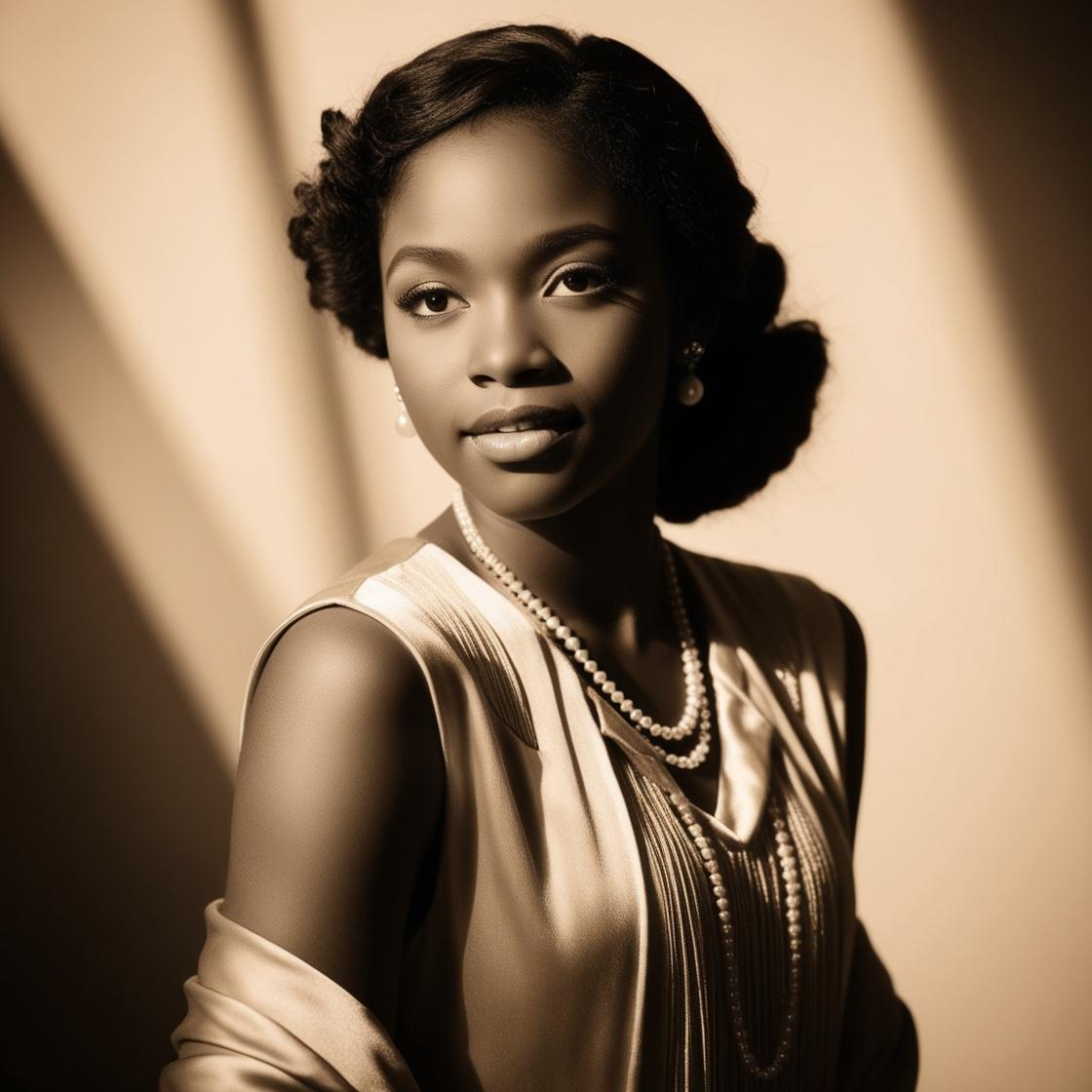
Born in 1845, Stella is the daughter of a Black woman named Deborah on Paul Saddler’s Plantation in Shreveport, Louisiana. From a young age, she can remember running through cotton fields and being loved by her family. To young Stella, life is simple and fun. She eats sweet cakes, plays with her friend Carla, and helps the grownups by carrying buckets of water to the field. Stella discovers she is a slave for the first time after Deborah’s unexplained death. Now, she learns the hard way the difference between slavery and freedom.
Solomon Curtis May
Solomon has no speaking roles, but his existence is essential for the family timeline. Solomon Curtis May is Stella’s only son, born in the fall of 1870 after she was sexually assaulted by the husband of her mistress. Solomon falls in love with a white woman and marries her after inheriting land outside Chicago. They have four girls: Deborah, named for his grandmother, Judith, Rebecca, and Sara.
Judith May
Solomon’s daughter Judith married a Black man and gave birth to a baby girl she named Stella after her grandmother. However, after enduring much teasing and discrimination for her mixed features, Judith’s daughter copes with this trauma by denying part of her ancestry. She changes her name from Stella to Sidney McNair and passes for white. After marrying a white man and having his children, Sidney lives her life on the other side of the color line.
Sidney McNair
Her aunt Sara influenced Sidney to pass for white and learn to enjoy her privileges. Sidney marries a wealthy white man named Clarence McNair, and they have four children: Edward, Karen, Joseph, and Glenda, whom they raise as white.
However, when she finally reveals the truth to her adult children in 1979, the shock of their real identity is a betrayal that stretches across generations.
Karen and Noah
Sidney’s daughter Karen McNair falls in love with a young Black man named Noah Daniels. He is a leading member of the Black Panther Party and thinks he’s dating a white girl. At this time, Karen also does not know that she is mixed race, although she has many more African American features than her siblings. The couple endures many trials because of their perceived interracial union. Together, they have a son, Noah Jr, who has a much more significant role as an adult in book four.
Edward McNair
Of all Sidney’s children, her sons are the most conflicted by their mother’s betrayal. Carrying many characteristics of his father, Clarence, Edward has not only lived his life as a white man but has also enjoyed the privileges of doing so and cannot come to grips with his new reality. In brief, Edward does not want to be Black, and his daughter, Cynthia, does not yet know about her true identity because of her father’s secrets.
However, although he appears to reject his heritage, something in Edward’s subconscious won’t allow him to completely forget it. We see this when he names his youngest son after his great-grandfather, Solomon.
Joseph McNair
Joseph is also conflicted about his mother’s decisions, but goes in another direction. Still under the illusion that he is just a white boy, he nevertheless feels sympathy for the plight of Blacks and fights for their freedom with his friends during the 1960s.
Unlike Edward, Joseph wishes he were Black. He grew up to marry a Black woman named Fae, and together, they have two children, a boy named Michael and a girl named Tanya.
Introducing Tanya and Michael…
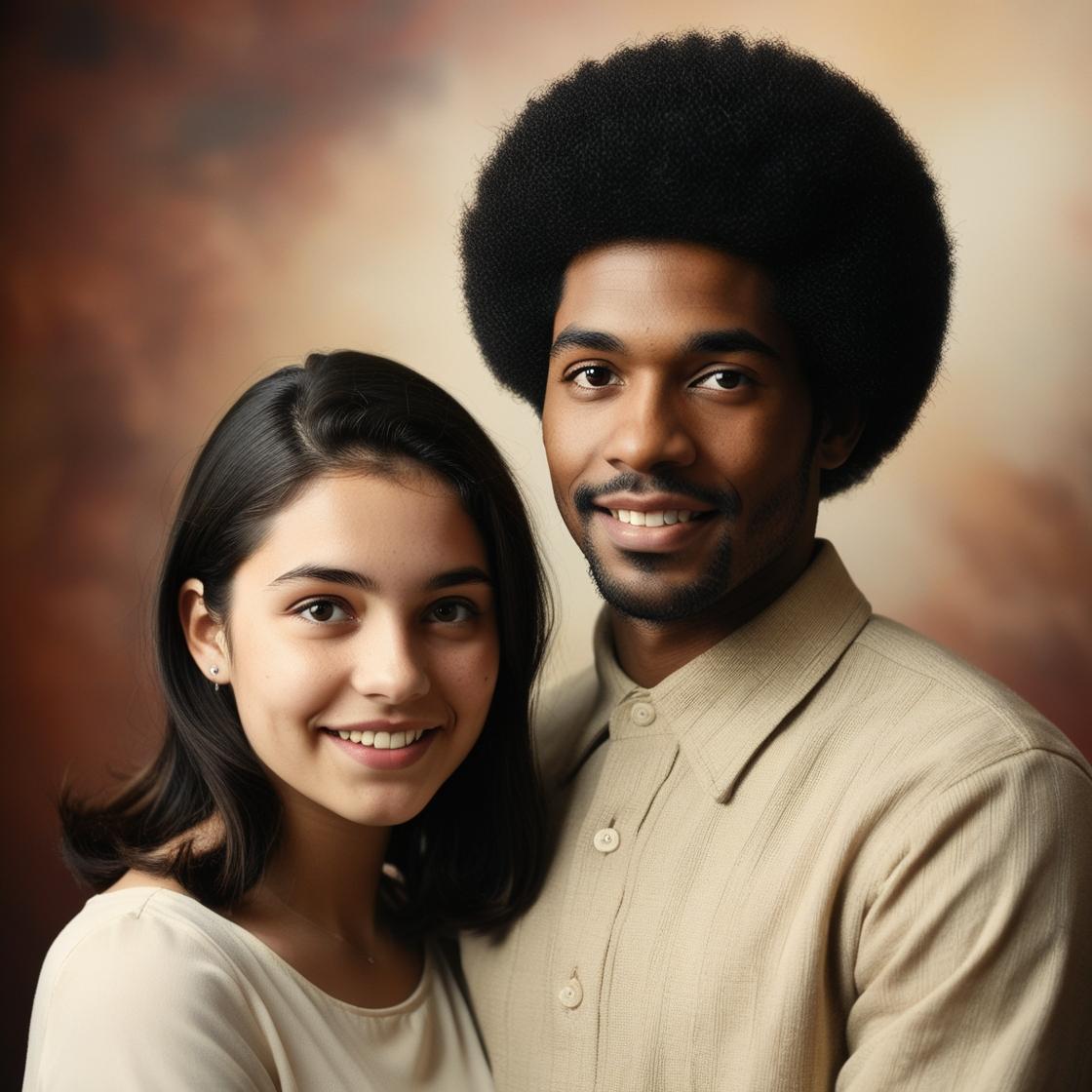
Born in the early 90s, Tanya and Michael are the children of Joseph and Fae and are young adults in the early 2000s. They face the challenge of defining themselves in a society shaped by their father’s choices and haunted by the truths Stella once fought to conceal.
In book three, they are small children, but in book four, they are young adults. In his part, we weave together the struggles of a new generation to find their voice, identity, and place in a world still wrestling with its past. The echoes of Stella’s decisions resound, reminding us that even as times change, the threads of heritage and truth remain unbroken.









 The PBS Blog