On Fear

I don’t exist out of thin air.

I didn’t just pop up out of nowhere teaching this through Google and YouTube University.

I teach this because I’ve lived through it.

And, while much of what I discuss is well-known on the tail end of 2023, it wasn’t when I first started. Self-publishing has been around for ages, but Print-On-Demand was new, and no one was talking about it, let alone their journey.

Without that first book, there would be no I am Soul or any other book.

I self-published my first book in 2010, and it was trash.

But I was 23 and unafraid.

There is something to be learned from young people.

The content was good, but the production was poor.

I knew nothing about editing, book cover art, or proper formatting.

Every mistake that could be made by self-publishing a book, I have made it and then some over the years.

But even though the book was far from perfect, I still sold copies. And even though I didn’t know what I was doing, my youthfulness had armed me with the boldness to put it out there anyway.

“Take the risk or lose the chance.”

I remember being at my in-laws house in Memphis. My husband had told my nephew:

“You can do anything if you believe it. You can climb that wall if you wanted to.”

Do you know what this five-year-old did?

He proceeded to climb the walls.

The fact that he could fall had never crossed his mind. And if it did, he didn’t care.

As we age and experience the brutality that is sometimes this life, we become more afraid.

This causes us to overthink until fear paralyzes us into not taking action.

And now, we are afraid to move forward because we are afraid to fail. In many ways, this also means we are afraid to learn!

“The fear will become your weakness if you don’t overcome it.” – Yecheilyah

I cannot say if I would have taken that leap of faith, the proof of what is not seen, had I known everything there was to know about book publishing. It would not have been perfect enough for me.

The most insightful lessons you will learn is through doing the work.

Don’t let overthinking paralyze you into not taking action.


Check out more Indie Author Basics articles here.

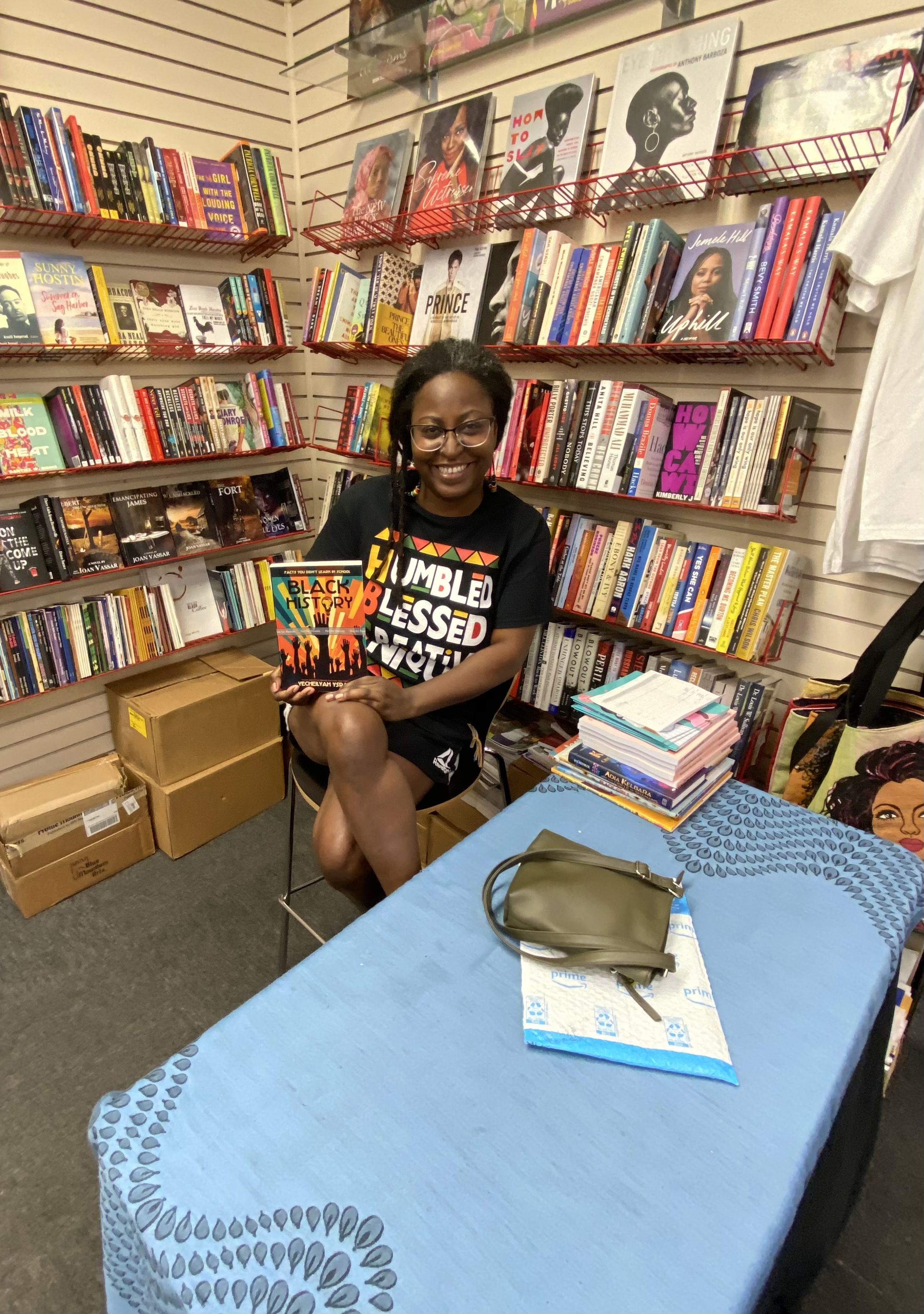
Preorder Your Copy of Black History Facts You Didn’t Learn in School Here!

http://www.blkhistorybook.com | 2.24.24

The Best Advice is Lived Experience

Photo by Ivan Samkov

I saw an Ad on Facebook where the person was telling authors that selling their books on Amazon is a waste of time and that they should sell directly from their website.

And, if you buy the course for $89.95, he’ll teach you exactly how to do it.

Be careful with this kind of advice.

It’s not even that it’s bad, but it is unbalanced.

Questions.

How many people visit your author’s website monthly? Not your blog, your static author website?

How many author websites do YOU visit regularly?

When you think about a book you want to buy, what is the first thing that comes to mind?

For me, the answer is not from the author’s website but from Amazon, and if I am going offline, I am hitting up Barnes and Noble or my local Independent bookstore.

Photo by Ivan Samkov

I have always advocated for author websites because they allow authors to track leads.

You can collect data to keep in touch with readers, like email addresses and phone numbers—something you can’t do through Amazon, which doesn’t show who bought the book. You only know if that person leaves a review.

But I wouldn’t consider Amazon a waste of time when they are the number one go-to for people looking to buy books.

This person’s perspective lacks balance. Authors can have books available through their websites and on Amazon. Also, consider everyone’s journey is different:

  • Some authors need help to afford or do not want to pay for a website, which requires buying a domain name, paying for e-commerce, and the percentage your cart of choice (say Stripe) takes out of every transaction. Meanwhile (at the time of this writing), setting up an Amazon Author Central page is free.
  • And some authors prefer to add a website outside of Amazon to track leads because they understand that a book is a product. And individuals don’t have products; businesses do. These authors see the value in their books not as the end but as the beginning of a thriving and profitable business, and businesses have websites. 

What I Recommend:

The best advice is lived experiences, and I recommend that everyone do what feels right with their souls. Otherwise, we risk stifling an author’s creativity and rob them of the opportunity to learn.

  • To increase traffic to your static website or landing page, promote it. Let people know the option to buy directly from you is available. Offer your books as signed copies and throw in some book swag. People do buy from author websites if you let them know.
  • Use your blog as your website. Because they are updated often with posts, they get much better SEO and traffic than static sites. You can set it up for free right here on WordPress. You don’t have to buy a domain unless you want to. (I did because I’m extra, lol.) It is also a great way to build community.
  • If you opt out of a website, set up your Amazon Author Central so you can send people there to buy your books and follow you. People who follow you on Amazon will get an email the next time you publish a new book!
  • Experiment! Test things out. Take risks. Sometimes we don’t know what we like because we’ve never stepped outside the box. Let experience be your teacher.

Should You Put Your Book Up for Preorder? It Depends.

What is a preorder?

A pre-order is when you make a book available for purchase before its official release date—typically a week to a year in advance.

Traditionally, publishers have books available for preorder as early as six months to a year in advance. They do it because strong pre-sales tell retailers the book will be in high demand, affecting the number of books stocked at stores and allowing them to make bestseller lists.

Self-published authors can learn from this, not necessarily to make the bestsellers list but to gauge interest in their new book and give them time to market/promote it.

I believe studying the traditional publishing model can help Indie Authors become better self-publishers in some areas, but that’s a conversation for a different day.

By putting my book up for preorder, I have not only made early sales but already have a bookstore interest in stocking it. (I am also aiming for schools. We’ll see how this goes!)

Reasons for setting up preorders depend on your marketing strategy, which could be:

  • To gauge interest in the book based on preorder sales
  • To increase sales ranking
  • To get the proof copy of the book into the hands of early reviewers, bookstores, and organizations
  • To give you time to market /promote the book (on/offline)
  • To prepare your audience for the next book in a series
  • To build excitement and anticipation

Preorders that tend to do well

Authors with several books published and larger audiences tend to do better with preorders because they already have people waiting for their next book.

Even if the author has a small audience, preorders can be good if the book is in high demand. It is one of the reasons I put my black history book up for preorder so early.

I’ve built up enough hype and awareness for the book that people were already looking for it on Amazon and asking where they could buy it. Putting it up for preorder ensures I take advantage of the opportunity to catch interested readers while the book is on their minds.

blkhistorybook.com

Authors writing a series also do well. They might offer the first book at a discount and then have the next book on preorder. People who love the first book in the series will likely buy the next one.

Preorders that don’t do as well

First-time authors who don’t have an audience do not always do well with preorders and might benefit from just releasing the book. As stated, preorders are more useful for experienced authors because they already have an audience.

It is also not a good idea to set up preorders if you’re not able to commit to a publication date in advance.

The most important thing to remember is that you have much more flexibility and creative control as an independent author than if you were traditionally published. You can play around with different strategies and see what works.

Cover Reveals

Cover reveals are fun and all, but they serve no real purpose if people can’t buy the book or preorder it on the spot. I recommend holding off on showing the cover until you are ready or almost ready to accept orders.

Promoting Preorders

Although preorders are a beneficial marketing strategy for some authors, it is also a lot of work. Here are my top tips:

  • Consider running your preorders for a shorter time than the traditional model. Just because your celebrity authors release books on preorder a year in advance doesn’t mean you have to. We are Indies. We do what we want. (*wink*) Yours can be as short as two weeks to a month before release. Also for Amazon, the preorder only counts on the day of the order. This means that the longer the preorder period, the harder it is to sustain a high ranking on that book. (If your goal is to achieve a high ranking.)
  • Preserve most of your energy for when the book is out. Too many authors get hung up on the release date and wear themselves out. Remember that your book will sell for weeks, months, and years afterward, so pace yourself. If your preorders are through Amazon, you still receive your royalties per their regular royalty payment schedule after your book is published anyway, not before.

This is my first experience running a lengthy campaign, but I’m saving most of my energy for when the book comes out. Those of you who know me are aware that I rarely do anything without a purpose. Because I anticipated my schedule would be hectic toward the end of the year, I postponed the release until the new year. I’ll put it to the test and, of course, report back!


Check out more Indie Author Basics articles here.

Preorder Your Copy of Black History Facts You Didn’t Learn in School Here!
http://www.blkhistorybook.com | 2.24.24

What Indie Authors Can Learn from Jada Pinkett-Smith’s Book Launch

As an author, I cannot help but to look at the book marketing side of celebrity book launches of this magnitude. And, because it’s such a controversial launch, I want to give a disclaimer.

Disclaimer: This post is not about dissecting the morality of Will and Jada Pinkett Smith, condoning how she has gone about her launch, or suggesting authors expose their personal lives. Rather, we can use a viral book launch as an example of how we can strategize when rolling out our launches.

In today’s post, we look at a few lessons we can learn from Jada’s book launch that you don’t have to be a millionaire author to implement.

Timing

The timing of Jada’s bombshell about her and Will’s separation contributed to even more interest in the book than she already had. As the Smiths likely anticipated, the public ate it up and left no crumbs.

Indie authors might discover that releasing content (of their own discretion, not necessarily so personal) at specific times can enhance reception and reach. Authors should plan their book releases, publication dates, and marketing efforts carefully and strategically.

Establishing a Platform & Leveraging Existing Platforms

It might seem that Jada’s recent revelations are new, but between her Red Table Talk show (where she discussed personal matters openly) and her Instagram lives, Jada has long established herself as someone who has raw and open conversations as part of her personal brand.

Indie authors can learn from this by sharing content on their social media platforms that give insight not only into their books but also about them as a person. Again, at their own discretion.

Kerry Washington is an example of someone who is in the public eye, but who lives a private life. She does not show her children on social media and we also hardly ever see her husband.

Jada also used other platforms to her advantage, spilling the tea on other people’s talk and radio shows. Indie authors have the same option. Consider guest blogging or cross-promoting with other authors.

Sneak Peeks That Pique Interest

Tupac Shakur has evoked strong emotions in fans since his death in September of 1996. Jada Pinkett Smith is well aware of this, and she is well aware that any comments she makes about him or her relationship with Will are bound to go viral. Jada fed us the information she wanted us to know and controlled the narrative through a traditional media interview.

Indie authors can learn from this by strategically choosing which parts of the book to discuss publicly before release. While some authors worry about giving their books away, the right information can do more to help rather than hinder a book’s success.

While the cover is essential, its the content inside of the book that keeps us reading. The cover pulls us in, but the story makes us stay.

Whether you’ve already published your book or are writing one, educating us about your topic and even revealing minor tidbits about what’s INSIDE the book can help garner more interest.

Are there any bookish lessons you’ve observed from celebrity authors? Let’s discuss in the comments!


Check out more Indie Author Basics articles here.


Preorder Your Copy of Black History Facts You Didn’t Learn in School Here!

http://www.blkhistorybook.com | 2.24.24

Self-Publishing: Understanding Copyright and Distribution

Copyright

First-time self-publishers often worry about copyright or that someone will steal their idea. This is typically the first sign of a novice self-publisher.

However, new and established authors might worry about someone stealing their books now that AI is here.

First, you should know that you own the copyright to your book at the moment of creation.

This is why it’s irrelevant for vanity presses to tell you that you keep 100% of your rights as a perk to working with them. You already have it.

But, if you want to take it a step further, you can obtain an official copyright through the US copyright office (copyright.gov) and receive a Library of Congress number, which allows librarians to catalog your book at LOC.gov.

Note: If you plan to request US Library of Congress (LOC) cataloging, be sure to assign the ISBN well in advance of publication to allow for LOC processing time.

Photo by lil artsy

Keep in mind that the ISBN has nothing to do with the copyright or the ownership of the work. It is also not connected to the Library of Congress cataloging. The ISBN is simply a number identifying the book and who published it.

It is important for self-publishers because we want to be listed as the publisher of record. That is why we self-published: to be in total creative control of the process and our own publishers.

Seeing the name of who published the book might not be a big deal to readers or authors who intend to stick to selling their books online, but for authors who wish to get the attention of booksellers or to sell their books in bulk to larger corporations, it is a bigger deal. Booksellers find it too inconvenient if the book is not returnable through Ingram (the book distributor, not IngramSpark the self-publishing arm). Although KDP’s extended distribution actually goes through Ingram, one of the main reasons why retailers don’t want to stock titles published by Amazon is that they are not returnable.

And Amazon is their biggest competitor.

Frankly, bookstores can care less about Amazon or that you are an Amazon bestseller.

Free ISBNs could also restrict your distribution options.

Distribution

Copyright is not to be confused with distribution rights.

Like traditional publishing, self-publishers want their books available through multiple channels. They want to control the distribution of their book.

In its simplest form, distribution rights is the right to make your book available to the customer.

When you are signed with a publisher, you must go through them to get copies of your book.

When you are your own publisher, you can order as many author copies of the book as you want and decide where your book shows up.

For print books, for example, it means going from your printer to a retailer or directly to your reader.

In the case of ebooks, this can entail sticking to Amazon exclusively or using an aggregator like Draft2Digital to make your work available at a variety of stores, including Barnes and Noble, Apple iBooks, and Books-A-Million.

For distribution to bookstores,* small publishers and self-publishers do not typically have the manpower to use a full-service distributor like traditional publishers who can warehouse and distribute large book print runs. Thus, we usually opt for a wholesale distributor such as Ingram because it is best suited to print-on-demand (POD) printing.

*Having your book on Ingram Spark does not necessarily mean bookstores will order copies of your self-published book from Ingram.

The best practice is to self-publish through Amazon’s KDP for Amazon and then publish separately through Ingram and other platforms.

In other words, you don’t have to be concerned about someone stealing your book concept. Every book has already been written. Your perspective is the key ingredient. The way you write it is what makes it unique. Nobody else can write like you. Additionally, your book was already protected by copyright when it was written. For more security or peace of mind, you can also purchase a copyright through copyright.gov.


Check out more Indie Author Basics articles here.


Preorder Your Copy of Black History Facts You Didn’t Learn in School Here!
http://www.blkhistorybook.com | 2.24.24

Yecheilyah’s Book Reviews – In Search of a Salve: Memoir of a Sex Addict by KE Garland

Title: In Search of a Salve: Memoir of a Sex Addict

Author: KE Garland

Publisher: New Reads Publications

Published: September 26, 2023

Pages: 326


“I was nine years old when I figured out that if I squeezed my legs together hard enough, it would create the most electrifying pulsation, in the general area my mother, her mother, and her mother called our “killa cricket.”

-KE Garland

In Search of a Salve snatches us into the author’s world with the rawness of a Sister Souljah book. Like Winter Santiaga, KE Garland has no sugarcoated, watered-down stories to tell you.

Unlike Winter, Kathy’s story is no fairytale.

The author takes us through the series of tragic incidents that led to her preoccupation with sex, including child-on-child molestation, car accidents, and the death of her adoptive mother. Garland expertly reveals how she utilized sex as a salve for a wound she wasn’t completely aware even existed, leading her down a path of multiple sex partners and abortions.

However, don’t assume this book is about the author’s naughty antics. This memoir stands out because it doesn’t only list regrettable events and bad decisions. What’s important is the linkages between how trauma impacts the body, permeates the mind, and results in addiction.

“I didn’t cheat because I had a vanilla sex life. I cheated to escape the discomfort of trauma.”

-KE Garland

We learn how cognitive therapy helped the author to pay more attention to her thinking and the meaning of key terms like exhibitionism or the urge to show yourself to others in public. These explanations helped me better understand the author’s actions beyond the physical, such as the disconnect that exists when the mother-child bond is broken early in life, resulting in a dysregulated nervous system.

1695663292

“No oxytocin. No emotional bonding. No maternal attachment. Emotionally dysregulated….I began life, like most babies, listening for the sound of my mother’s voice and never found it, and I’d never stop longing for her.”

-KE Garland

This book prompted me to have more compassion for the lived experiences of people who struggle with addictions that society has deemed as nothing more than an immoral decision, but that is much more layered. As Garland searched for a salve, I, too, discovered insight into questions about my own trauma, belonging, and motherhood.

“I was motherless and it hurt whenever I didn’t have one to show up for me.”

-KE Garland

KE Garland courageously uses her story as a catalyst for further instruction about not only sex addiction but addiction in general.

In Search of a Salve will break your heart, pierce your soul, and then soothe you with knowledge about sex, trauma, despair, and the root of these behaviors beyond poor life decisions.

IMG-7478

Ratings:

  • Strong Introduction: 5/5
  • Authenticity / Believable: 5/5
  • Organization: 5/5
  • Thought Provoking: 5/5
  • Solid Conclusion: 5/5

Overall: 5/5

It’s Release Day!!

Grab Your Copy of In Search for a Salve Here

In Search of a Salve_Book_Cover

Yecheilyah’s Book Reviews is a reputable review service that features writers from all over the world, both traditionally and independently published. We are listed on Kindlepreneur as a top-tier book review blog and Reedsy as one of their vetted active book blogs that provide insightful, excellent book reviews.

*Books are read in the order they are received.

*The Review registry for 2023 is closed.


Dear Self-Published Author, You Have Options!

While Amazon’s Kindle Direct Publishing is excellent, there are other options for print-on-demand publishing that self-published authors can explore.

Draft2Digital

Draft2Digital is a gem. D2D is an aggregator that distributes your books to major retailers online, from Barnes and Noble to Apple iBooks to Baker & Taylor. They have merged with Smashwords and now also offer a paperback option. The upload procedure is simple and efficient. Your only issue is if your book still needs to be formatted. You should finish, edit, and format your text before uploading it.

I have only used their ebook service so I cannot comment on the quality of the paperback, but it is an option for self-publishers who don’t want to use Amazon. Also, the speed of making your book available everywhere online is top-tier.

Ingram Spark

Ingram is another option, although the upload process is slightly more complicated. However, it is set up that way because Ingram is a distributor designed to get your book into bookstores.

During the process, you’d want to think about things like your wholesale price (usually 40%), and you will need an ISBN. While Ingram does offer a free one, I highly recommend Indie authors own their ISBN.

Buying them in bulk (assuming you will self-publish more than one book) from Bowker can save a ton of money. I haven’t had to buy one in three years. I am using Ingram for the hardcover version of my book (which requires a different ISBN than the paperback), and I was able to use one of the numbers I still have left.

Note: Do not give away your ISBNs unless you are a publisher. Your number is like your book’s social security number and is attached to your name or the company you registered under. Thus, you will be the publisher of the record.

Photo by Pixabay

An exciting thing about Ingram Spark is its choice of paper. As experienced self-publishers know, you can choose your paper, usually white or creme, during uploading on Amazon. However, with Ingram, you have another choice. You can select Groundwood, an eggshell paper typically used in traditionally published mass-markets.

Note: I recommend using Amazon separately.

Upload your files for ebook using Kindle Direct Publishing like you normally would to put your book on Amazon. Then, use the other programs for the other retailers. If you do this, do not check the expanded distribution box on Amazon.

Example: If using D2D or Ingram and your ebook is already published on Amazon, you do not need to check the Amazon box during set-up.

Bookbaby

For independent authors who want to self-publish but don’t have the time to look for editors and cover artists, Bookbaby is a possibility. By offering you publication packages for cover design, ebook conversion, ISBN, and even marketing, Bookbaby serves as a self-publisher assistant or vanity publisher.

Any publishing that demands payment is regarded as vanity publishing despite being verified and far more professional. Pay attention to the features supplied with each tier when using Bookbaby because it is also rather pricey and not all packages include editing. Remember that even if they include books with each bundle, ordering your own books through Amazon’s KDP or Ingram will save you a lot more money.

I’ve seen from other authors that their print quality is pretty good. So, though I have not used them, and have my concerns about their prices, they are an option.

Lulu

Lulu is a possibility. However, it’s not my first pick. Early on, I utilized them for The Stella Trilogy and my volumes of poetry. Your book can be distributed via Lulu to several online retailers. The pricing of the books is substantial, and I don’t like their customer support method. The paperbacks’ quality is great and solid, though. Additionally, their upload procedure is quite simple. Again, they are an option, albeit I wouldn’t make them my first pick.

48 Hour Books

Now 48 Hour Books is what I like to call a hidden gem. They are an organization that prints bookstore-quality books. They work as a book printer and offer book templates, editing resources, self-publishing, and more. Imagine if Amazon’s KDP went down; 48hr books would be a great resource for printing your books. They also sell ISBNs and Barcodes, though I only recommend buying ISBNs from Bowker.

I have not used them, but I want to in the future to investigate their quality. From what I see, the paperbacks are top-notch.


Remember that you are not limited to the mainstream or most popular option when you embark on your self-publishing path. You may always assess what best aligns with your vision and objectives. You are not constrained to a single viewpoint either. Whether you hire a publisher or outsource, you are free to publish your book however you see fit.


Check out more Indie Author Basics articles here.


Preorder Your Copy of Black History Facts You Didn’t Learn in School Here!

http://www.blkhistorybook.com | 2.24.24