This page will tell you all you need to know about how to schedule a review from me.
Note: The registry is currently closed and won’t reopen until 2021. Reviews you see until then are reviews from authors who scheduled them months ago. (Or books I have read on my own time.)
Again, please read the Book Review Policy in full. Do not email me before reading the policy and do not send requests through this blog’s contact form.
Title: Dawn of The Dragon: The Dawn Series Book 2
Author: Aundriel H Washington
Print Length: 177 Pages
Publisher: Aundriel’s Press
Publication Date: September 15, 2020
What if you saw a giant blue dragon in your neighbor’s backyard?
That’s how fantasy writer Aundriel Washington kicks off chapter one of book two in the Dawn series. With a 129 ft wingspan and standing twenty-five feet tall, Xavgon blocks the sun. Riding on his back is the central character Kalera, who draws some unwanted attention as she lands her dragon on Rocheblave Street in New Orleans. The police, National Guard, FBI, and military surround Kalera and her dragon. The girl and her creature, whom she refers to as her son, are coming from the Zaylen Realm, the world Kalera got sucked into in book one, Palera Dawn.
Xavgon freezes time to give them a chance to figure out how to escape the authorities. They run into the house of Kalera’s boyfriend Zaron and are joined by Musfall, her friend, and voodoo priest. They must find their way back to Zaylen to defeat Zaylen’s ruler, King Ager. To do this, they set out on a mission to Gros Cave, the door to Zaylen. Their first mission is to go to the Saint Louis Cathedral, where Musfall’s priest friend is a cave diver. Together, Kalera, Xavgon, Zoran, Musfall, and Kalera’s dog Rome, set out on a mission that takes them through a whirlwind of adventure and revelation.
This book maintains good action. I love the first chapter-opening, which reminded me of the movie Bright with Will Smith. I can imagine the authorities terrified as they surround a residential area where a large, fire-breathing creature has landed. Dawn of the Dragon is book two in a series, and for this, I don’t think the author needs a prologue. The way chapter one opened is good enough to capture and maintain the reader’s attention.
The author also did an excellent job of recounting what happened in book one so that readers new to this book can understand how all of this started. I also enjoyed how Xavgon communicated with Kalera telepathically. When she thinks about Harriet Tubman, for example, the dragon asks, “who is Harriet?” It helped the magical aspect of the book come to life.
My book review registry is still CLOSED. These are reviews booked before the unexpected loss of my mom. I will be reopen for new submissions at a later time. Be sure to visit the Blog Book Review Policy page here to learn more.
I came across this excellent article this morning on identifying author scams and publishing companies to avoid. Click on the read more here link below for the full article.
“The great thing about publishing with major retailers is that it’s almost always free! And unless you’re 100% technophobic, you shouldn’t have much of a problem uploading your book to Amazon or Kobo or Apple Books within a few quick minutes. There is often value in working with a professional to optimize your blurb and your metadata or perfecting your author bio, but getting your book listed on Amazon is not something you need to pay for.”
The author probably spent a heck of a lot more time writing the story than you took to read it, no matter how slow you think you are, so why not take a few minutes to record your feelings about it.
I can’t write long fancy reviews like those I see on book review blogs
You don’t have to, Amazon, for example, only ask you to use a minimum of 25 non repeating words.
I can’t express myself very well
No-one is asking you to produce a literary masterpiece, start off with things you liked, didn’t like or a mix of both about the book, e.g.,
Buying books written by Independent Authors is a terrific way to show support, and word of mouth is still a powerful way to make sure other people know of an author’s work without spending money. There are tons of ways to do this online.
Review the book on Amazon – Amazon is still a powerhouse and trusted source of content for readers. It’s easy to send a review via email, DM, or to post about the book on Social Media. While I am confident, the writer will appreciate any form of support, reviewing a book on Amazon will undoubtedly give the author more exposure. Amazon is the third-largest search engine with Google first and YouTube second. But then, “if we exclude YouTube as part of Google, Amazon is technically the second largest search engine in the world.” (E-Commerce SEO). Suffice it to say Amazon reviews are a great way to support your favorite author, boost their exposure, and act as a great social proof form. In short, an honest, legitimate Amazon review will help an Indie Author go far. In the words of Michael LeBoeuf, “a satisfied customer is the best business strategy of all.”
Just because someone bought a book doesn’t mean they read it. Leaving reviews is a great way to show the author that you read the book, whether you enjoyed it or not.
Rate/Review Book on Goodreads – While many people are no longer fans of Goodreads (and I’ve fallen off a bit there myself), do remember that it’s a platform full of people who love to read and talk about books! Granted, some people reviewing here are rude, but that’s certainly not everyone. Goodreads is still an excellent platform to use as an online word of mouth to discuss books read. It also allows for the sharing of reviews for books not posted to Amazon for whatever reason. If you don’t have the book, you can utilize the Want to Read button to add it to your bookshelf. Adding a book will show up on your page, exposing the book to your followers/friends. If an author is hosting a giveaway entering the contest will also mark their book Want to Read and add it to your shelf.
Note to authors: I have heard stories about people taking advantage of authors hosting giveaways on Goodreads when it involves paperback books. Please research this on your own as I have no first-hand experience with it, but I’ve heard complaints.
Follow the Author on Social Media – Through social media, you get to learn more about the author outside of books. Many authors post pictures of their family, friends, and pets. Authors share their daily routines, hold contests, and take readers behind the scenes. Readers can interact directly with their favorite authors by sharing a post, saving a post, commenting on a post, and liking a post. All of this helps contribute to helping spread the author’s message without spending a dime.
Subscribe to the Author’s Blog – Following the author’s blog (if they have one) is an extension of following them on social media. Writers have the space to share so much more about themselves and their life’s work and inspirations through blogging. It is a great way to network and become privy to new material as writers tend to publish sneak peeks and short stories to their blogs before they publish them. Writers also post their publishing process in detail on their blogs. You may be inspired to write your own book and learn a thing or two.
Click that lovely subscribe button to follow this blog
Join the Author’s Mailing List or Author Group – Joining the author’s mailing list or author group opens up an opportunity to get to know the author on a much more personal level. You are interacting with them behind the scenes, sort of speak. An author may go live so you can see their face, hear their voice, and interact with them in real-time. Authors explain the deeper meanings behind their stories, answer questions, host private, exclusive contests, and much more. Joining the author behind the scenes in this way shows you trust them with your email address and are ready to commit on a deeper level.
Post Image of Book on Instagram / Facebook – Posting images of the author’s book – or pictures of you and the author at an event – to IG and Facebook (tag the author) is an excellent public display of support. It helps leverage the author’s exposure through cross-promotion. One of your followers interested in that book will potentially follow the author, purchase a copy of the book, review the book, and become a new fan. They may post the book image to their page, and the process repeats itself as one of their followers may find themselves interested in the book. It is a beautiful and selfless display of support and strengthening of the author’s network and the Indie Author community in general.
There are so many ways to support the Indie Author community. I have mentioned these previously, but one crucial component sets this list apart as making a real difference for your favorite authors:
Participation.
Following someone on social media, subscribing to their blog, or joining their email list or author group means nothing without an active commitment to engage.
My Soul is a Witness is Out. Be sure to grab your copy today and remember to leave a review when you have finished reading! 🙂
Today is Throwback Thursday, and I want to revisit the discussion over the ISBN. I have not given any Indie Author tips in awhile so let’s do it.
What is an ISBN
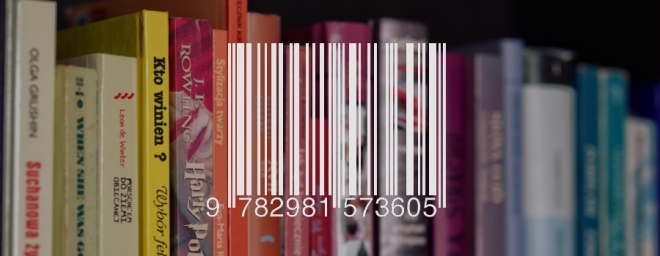
The short definition is the ISBN is a unique number used to identify a book.
The code captures information about the book’s publisher, title, language, edition, and version. The first form of the ISBN was introduced in the 1960s by Whitaker & Sons Ltd, the British National Bibliography, and the Publishers Association, who set up the Standard Book Numbering Agency (SBNA) British publications.
The SBA then became the ISBN (International Standard Book Number) in the 1970s. It is a group of symbols that identify each book title as a unique product. The number consists of ten digits divided into four groups, usually separated by dashes or spaces, each group having a specific function.
Magazines, academic journals, and other periodicals do not get ISBNs. Instead, they are issued 8-digit ISSNs (International Standard Serial Numbers).
Purpose of the ISBN
Image Cred. CanamBooks
The ISBNs principle purpose is to make the identification of any book possible.
ISBNs are not necessary for ebooks because Amazon will automatically assign the ebook an ASIN, Amazon Standard Identification Number. It’s a 10-character alphanumeric unique identifier that’s given by Amazon and its partners.
If you only intend to give copies of your book to family and friends, you don’t necessarily need an ISBN because you’re not selling the book. However, if you want to sell paperback and hardcopy books to bookstores, libraries and want readers to access it worldwide, you need the book to have an ISBN. Most retailers require ISBNs to track book inventory. Without an ISBN, you will not be found in most book stores, either online or down the street from your house. An ISBN is your first step to ensuring that your book is not lost in the wilderness.
Authors in the U.S. have two choices. Receive a free ISBN given by Amazon, Lulu, or POD (Print on Demand) of choice, or purchase an ISBN from Bowker.
Free ISBN
The advantage of the free ISBN is the author saves money. This is an option for new Self-Publishers just looking to get their feet wet. But while it’s easier to get a free ISBN, it comes with some disadvantages.
With a free ISBN, you are not technically the publisher of record. Amazon, Lulu, or whichever service issued the ISBN is the publisher.
Bought ISBN
In the U.S., getting your own ISBN is not free, and since each version of your book would need a separate ISBN (including if you want to change the book’s publisher, book title, or translate the book into a different language…authors also cannot reuse an ISBN), it can get costly.
But it’s worth it.
The advantage of owning your ISBN is that you own the rights to the book. You have control over the metadata of the book—the descriptions and categories that help libraries, bookstores, and readers worldwide discover your book and decide whether they want to purchase it. Buying your ISBNs and registering your titles ensures information about your book will be stored in the Books In Print database, opening up a world of possibilities that your book is listed with many retailers.
How to Get an ISBN
In Canada, the ISBN is free for Independent Self-Published Authors and Publishers who are Canadian residents.
If you are in the U.S., you should only buy an ISBN from Bowker, the ONLY official U.S. ISBN Agency.
If you plan to write multiple books, it’s best to choose the ten-block option as it is the most cost-effective than purchasing one ISBN. It also makes publishing the next book easier as you can now omit the cost of the ISBN from your budget for the new book.
If you only plan to write one book, though, you certainly can buy one ISBN. Do keep in mind that even if you are writing just one book, you may want to create several versions of that book (hardcopy, paperback), in which case the 10-block can still come in handy since you need a new ISBN for each version of your book.
What is an ISBN and Do I Need One?
An ISBN is a unique number used to identify the book and its data and sell hard copies worldwide. In the U.S., free ISBNs are an option but do limit the author’s ownership. No, you don’t need an ISBN for ebooks sold through Amazon because they will be assigned an ASIN anyway. And no, you don’t need an ISBN if you do not plan to sell the book.
Yes, you need an ISBN if you are publishing a paperback/hardcopy of the book, and you want the book to sell at stores, libraries, and be available worldwide. No, you do not have to purchase an ISBN through Bowker, but it is strongly recommended that you do so you can be listed as the publisher and reap the benefits of owning the metadata. No, you cannot reuse the ISBN, and yes, you need a different ISBN for each version of the book.
The MacLeans have suffered being thrown off their land, emigrating to the New World, surviving in the forest wilderness, and losing their father Gillan in a bizarre murder. Now, ten years later, the two youngest emigrants will split the family across an ocean.
Sheena pursues a future back in Scotland with her husband Gordon Lamont. Alisdair dreams of university and a chance to reform the political system in the colony that denied him justice for his father’s death.
But the British Empire of the 1830s has yet more obstacles to throw in their path. When the only school in the province only accepts Anglican students, what will Alisdair do? When Sheena finds herself in a role of authority over families like her own, how will she cope with the isolation?
And when both their hopes of peace and stability are dealt a telling blow, how will they stay true to their fighting spirit?
STORM WRACK & SPINDRIFT is a dramatic story of family survival and personal struggle set against social upheaval. While voter enfranchisement was advancing in London, and slavery finally outlawed in the Empire, the tiny stage of rebellion in a backwoods colony farm could still have deep repercussions. Every life is precious, every decision important–which is why the early struggle for Responsible Government and other civil liberties continues to encourage us today.
I enjoyed reading about the MacLean family, especially since the author did an excellent job transporting readers to the era of the 1830s. The descriptions and dialect are authentic, and any lover of historical fiction would enjoy the natural flow of reading. I enjoyed the back-and-forth between Sheena’s experiences in Scotland and Alisdair’s challenges with the family on the farm.
I sympathized with his conflict with wanting to study law but not wanting to leave the family who needed his help. The characters are undoubtedly the stars of this book. I love children, so I am fond of Mairi and her bond with Grannie. They are so sweet together, and even though Neil (Mairi’s dad) is sad, the author does an excellent job portraying his misery. Speaking of grief, prepare yourself. This book has its moments.
I was glad to hear about the Slavery Abolition Act, which ended slavery in most British territories and freed over 800,000 enslaved Africans in the Caribbean, South Africa, and a small number of people in Canada. It received Royal Assent on August 28, 1833, and took effect on August 1, 1834. (Henry, 2020) The government compensated slave owners for the value lost from freeing enslaved people, and the character Sheena was not having it.
“And is there any proposed fund for the slaves, since by abolishing slavery, we admit we had no right to own other people in the first place?”
“Well no—”
“No, of course not.”
I liked the detail about Rhoda, Sheena, and Gordan’s widowed housekeeper participating in abolitionist demonstrations and the mention of Wilberforce’s death. William Wilberforce, a British politician, philanthropist, and pioneer of the anti-slavery movement, died in 1833. By describing Rhoda’s relationship with Wilberforce in detail and illustrating how his death affected her, the author was able to relate Wilberforce to the family on a personal basis.
While I enjoyed this story, for me, it cannot be read as a standalone novel as marketed. As the third book in the series, I felt a bit lost initially because it felt like something was missing, such as everything leading up to the MacLean’s family’s life on the farm.
The epilogue is intriguing, and I wonder if the author would consider adding another book to the series, possibly centered on the experiences of Mairi.



 If not, why not?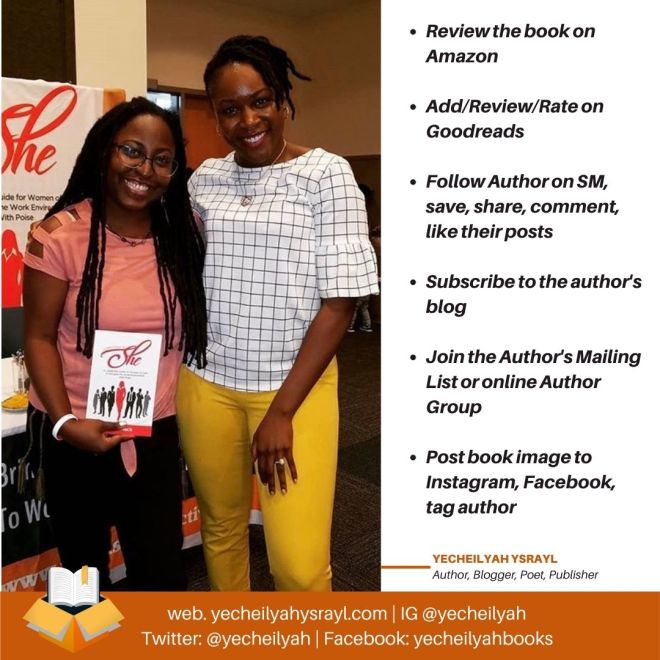

 The PBS Blog