I was sitting here thinking about how I got to this place of advocating for the restoration of Black history. If it were solely up to me, I would have chosen a less taxing, less unrewarding cause to advocate for.
However, in the words of Nina Simone, “I have no choice in the matter. An artist’s duty, as far as I am concerned, is to reflect the times.”
In school, I was not a student who loved history, and I certainly had no plans to teach it when I grew up.
Unlike other professions where a mistake can be smoothed over, history leaves no room for error. The slightest slip can draw the sting of a thousand voices ready to correct, dismiss, or condemn.
I’ve experienced people debating a point in a video or article they didn’t even finish watching or reading. Yet, here they are, flying Delta to the comment section to respond.
It’s like people talk with their mouths open, the meat still in between their teeth, droplets of spittle sky rocking out of their mouth from food they have not chewed properly, let alone swallowed.
In a time where many of the Civil Rights that Black people fought for are being stripped away, there is no safety net when the facts slip.
Still, I show up.
I press record and publish with hands slick from sweat, skin raw from the invisible cuts of criticism, and keep offering what my people literally bled to learn.
Even when I wonder why I’m doing this, I keep moving forward, not because it’s always fun. It is not. As the saying goes: “Heavy is the head that wears the crown.”
I move forward because I must, and because, to quote Toni Morrison, “This is precisely the time when artists go to work. There is no time for despair, no place for self-pity, no need for silence, no room for fear. We speak, we write, we do language. That is how civilizations heal.”
And so, while it is not always exciting, it is worth it.
I march on, a pen in my hand, a computer in my lap, and a calling in my heart.
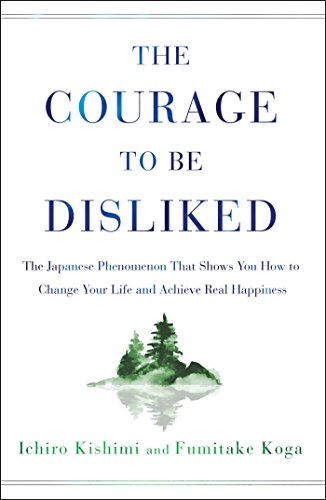
Title: The Courage to be Disliked: The Japanese Phenomenon that Shows You How to Change Your Life and Achieve Real Happiness Author: Ichiro Kishimi and Fumitake Koga Publisher: Atria Books Published: May 8, 2018 Page: 289
Written by Japanese writer Fumitake Koga and philosopher Ichiro Kishimi, in The Courage to be Disliked, an older man who adheres to Adlerian psychology and Greek philosophy has a conversation about life with a young man who is frustrated with life and thinks it’s unfair. Their discussion is built on the question of whether we choose to be happy. The dialogue-based style makes me think of modern-day interactions between young people and older generations and our own inner dialogues about life. (Neither person is named throughout the book.)
The young person’s argument that the world is confusing is an example of their discussion. The philosopher responds by asserting that we make the world complex, not that everything is complicated. He contends that life is subjective, and because we each see the world differently, it’s impossible to share our world with anyone else. The philosopher’s responses are simple, leaving you to wonder why you hadn’t considered it that way. I also appreciated how the young man’s genuine inquiries allowed the author to instruct through the philosopher.
The main takeaway from Kishimi and Koga is that unhappy people wind up living other people’s lives by chasing approval. They give up their own hopes, dreams, and aspirations in favor of conforming to others’ expectations. An example would be a young person who wants to be an author deciding to instead go to medical school to please his parents, whose wish is for him to be a doctor.
He must muster up the courage to deal with his parents’ disapproval of his decision to follow his literary ambitions.
Over the course of five discussions, the philosopher explains to his student how each of us can choose our own path in life, free from the constraints of the past and the expectations of others.
While I can’t entirely agree with the part about how trauma, according to Adlerian psychology, does not exist (and the dialogue style throughout the book does not particularly appeal to me), it is still a terrific inspirational read if you are interested in philosophy and psychology or want to know why people believe the way they do. The discussion will inspire you to evaluate life from a unique angle, possibly one you haven’t thought about before.
Yecheilyah’s Book Reviews is a reputable review service that features writers from all over the world, both traditionally and independently published. We are listed on Kindlepreneur as a top-tier book review blog and Reedsy as one of their vetted active book blogs that provide insightful, excellent book reviews.
Title: Oblivion Black Author: Christa Wojciechowski Publisher: Christa Wojciechowski Published: August 8, 2022 Page: 387
In this psychological romance, Ona Price nearly dies from a heroin overdose on the streets of Manhattan. As she shoots up in a McDonald’s where she and her Puerto Rican friend Jojo purchased the narcotics, this art school dropout almost kills herself. Fearful of losing her daughter to addiction, Ona’s mom Donna determines she should live with her aunt Vivian or aunt Vee in New Hope.
Ona is required to go there and attend weekly NA meetings in addition to taking daily dosages of the drug methadone to deal with the withdrawals. She gets into a flow but eventually finds her new life and routine mundane, so she looks for work. On her first attempt, she gets hired as the assistant to renowned Russian artist Antoni Azarov, also known as The Hands of God.
Immediately I sensed something was amiss. She got the job too easily, and there is something off about the boss. Azarov appears distant, arrogant, and unkind. A magnificent artist, he fashions clay into the bodies of beautiful women from the models sitting naked before him, creating a gorgeous statue. But, while Ona doesn’t like him at first, his coldness melts as the two soften to one another over cigarette breaks, and she becomes accustomed to working with him and Oz, the Black man who hired her and is like a father to Azarov. The physical link is evident between Antoni and Ona as she cuddles up against him on the back of his Ducati and sips bottles of wine at his affluent house, where she would spend many nights.
Yet, despite the growing tension, Antoni won’t touch her, and when she tries to touch him, he flings her across the room like a rag doll.
Either the man is gay or otherworldly.
This is the third book I’ve read from this author, and it is another psychological masterpiece. As someone who grew up around addicts, I can say the way Christa brings us into the world of addiction is strikingly accurate, from withdrawal symptoms to what addicts are willing to do for another hit. I also adored how diverse this novel is. Even though the author is not Black, she accurately captures the characteristics of the Puerto Rican youngster Jojo and the elder Black man Oz. Their identities didn’t come across as contrived or overly dramatic.
Speaking of characters, there is also the wealthy Panamanian from El Chorrillo. I enjoyed snobbish Sonia’s edge. Sure, she’s a harlot, but her story and character have depth. In my mind’s eye, she appears to be a real person with a past that has shaped who she is today. This story really starts to take off when she enters the picture. This wealthy wife purchases Antoni’s sculpture of Ona for ten million dollars. Determined to have The Hands of God put his hands on her body, Mrs. Sonia Orlyk is more than willing to pose naked in front of the extraordinary man in full glory.
Mr. Orlyk is a wealthy drunk his wife is no longer interested in.
But Sonia’s lust and seduction with Antoni Azarov go too far. Despite the fact that he is a brilliant artist, the tragedy that has characterized his life is beyond his control. Now Ona is about to be swept up in her boss’s drama while fighting her own demons. The dealer outside the clinic and Jojo, who is out of jail but back on drugs and wants to see her, are just two examples of the dangers of relapse lurking around every corner. She is already skipping meetings.
This book is not as dark as I thought it would be based on the description and cover, but the message is deep and layered. It is about the worst kind of darkness, the internal kind we cannot always see in others and even ourselves. It is what happens when our childhood traumas, unhealed and unchecked, follow us into adulthood. It is the study of the human mind and its addiction to drugs, lust, love, fame, and even art.
“Lovesickness. It was worse than dopesickness. Antoni was more dangerous than heroin.” – Ona Price
-Christa Wojciechowski
Oblivion Black is a lengthy read, but you won’t be able to put it down or forget about the characters.
Ratings:
Plot Movement / Strength: 4/5
Entertainment Factor: 4/5
Characterization: 5/5
Authenticity / Believable: 4/5
Thought Provoking: 5/5
Overall Rating: 4/ 5 stars
To have your book reviewed on this blog apply here. The registry is open for a limited time.
Stay tuned for our next dope read, part two in the Sculptor series.
Yecheilyah’s Book Reviews is a reputable review service that features writers from all over the world, both traditionally and independently published. We are listed on Kindlepreneur as a top-tier book review blog and Reedsy as one of their vetted active book blogs that provide insightful, excellent book reviews.
In her CNN interview with Anderson, Gorman spoke about the power of words and all the research that went into her poem, such as reviewing texts from poets of previous inaugurations and studying other orators like Frederick Douglass.
“I did a lot of research ever since I found out I was going to be the inaugural poet in late December. Really doing a deep literature dive of other orators.”
I highlight this because research is not a word we hear often associated with poetry, but the best poets do it. It is not only about stringing some rhymes together. The best poets are avid researchers, readers, and students.
While writing “The Hill We Climb,” the poet listened to music that helped put her “in a historic and epic mind-set,” including soundtracks from “The Crown,” “Lincoln,” “Darkest Hour,” and “Hamilton.”
“I wasn’t trying to write something in which those events were painted as an irregularity or different from an America that I know,” said Gorman of the events of January 6th. “America is messy. And I have to recognize that in the poem. I can’t ignore that or erase it.”
I think we can all agree that Maya Angelou had talent, but Angelou also studied the art. In her muteness, she listened to how people spoke, the inflection of their voices, the way their arms and hands moved. She listened to the black ministers and the melody of the preachers, musicians, and performers. She read books of all kinds, traveled to different countries, and learned other languages.
What is the lesson here?
Good poetry is a good study. It is more than the rhyme of a creative mind, but how that creativity can take elements of real life, history, and experience and weave it together with language that is so fluid and precise that it enters the heart and goes right down to the soul.
Lesson #2: When You Are Not Writing/Speaking, Read
In the five years, Angelou was mute, she read every book in the black school library and every book she could get from the white school library. She memorized James Weldon Johnson, Paul Lawerence Dunbar, Countee Cullen, and Langston Hughes. She memorized Shakespear, whole plays, and fifty sonnets. Angelou memorized Edgar Allen Poe and all the poetry.
When Angelou decided to speak, she had a lot to say and many ways to say it.
Gorman is also a reader.
“When she’s not watching cooking shows, Gorman copes with isolation by reading books to prepare her for that future. She picked up former President Obama’s “A Promised Land” the day it came out. She’s also reading Michel-Rolph Trouillot’s “Silencing the Past: Power and the Production of History,” which interrogates long-standing historical narratives from the Haitian Revolution to the Alamo.”
Lesson #3: Learning from Others
I am not going to say that I agree with every lyric of Gorman’s “The Hill We Climb.” Still, I enjoyed the intelligence of the delivery, the poetic techniques used, the alliteration, and the metaphoric skill. I have listened to other poems of Amanda’s, and I love the sound of her voice and the movement of her hands at pivotal points. It is not overly dramatic but poised and elegant.
At the Roar, Grand Slam Gorman said, “The air smelled of Hollywood and desperation.” Gorman’s enunciation of words and clarity of speech speaks to her comprehension of the information. Rather from her speech impediment or the love of poetry, you can tell that Gorman has studied language, and it comes through beautifully in her speech.
Maya Angelou has one of the most powerful voices I had ever heard. We are so blessed that she did not stay silent! What I noticed about Angelou was how she did not limit her reading. Maya embraced different voices and cultures, and I believe this nurtured her perspective so that it stretched wide, and from her poetry, you can hear the wisdom of understanding shine through.
Lesson number three is perhaps the most important one of all.
You do not have to agree with everything someone says or does to learn from them. Remember that Yah spoke to Balaam through the mouth of a donkey. (Numb. 22:28)
Lol. These bitmojis are just funny to me
“I am the daughter of black writers. We are descended from freedom fighters who broke their chains and changed the world. They call me.”
That’s right. Greenwood Dist is named after the Greenwood District of North Tulsa, home of the renowned Black Wallstreet. [You can learn more about Black Wallstreet in an older version of Black History Fun Fact Friday here.]
Greenwood Dist. is passionate about “proving that a black-owned business can celebrate black excellence while still making the market’s dopest clothing.” Greenwood believes that “fashion, culture, media, and art can and SHOULD help advocate and ensure that people’s voices are heard. Black culture is the biggest determinant of what’s “cool” and popular. Our culture determines everything from the way society talks to the brands that are popular.”
And I’m here for it ya’ll!
Like this “I am Black History,” shirt and those dope sweaters at the top? There are many more like it! Shop Greenwood Dist. by clicking the link below.
👇🏾👇🏾👇🏾
Be sure to use discount code Soul at checkout for 10% off!!
Blount is a hard working, dedicated and strong single mother who is on a journey of living through self love, self awareness and true divinity. She is seeking her true purpose and living it to make an impact on the world.
“Keep watching me I’m coming like the Lioness of the jungle
Hunting the wanting of my universal platform
Perspiring strength while I join the revolution for my evolution
Fighting my way through the shed layers of my old self”
-Excerpt from “Lioness Strength”
Kiyana! Good to have you back.
Lioness Strength is such a powerful title and we are excited to read the whole piece in next years Literary Magazine. For now, please tell us, what inspired your poem?
The major life changes that I had to endure this year led me to a path of realizing I needed to love myself more. Even though much had happened, I used those down moments to build myself back up and be the Goddess I am. Now I am working towards building my empire and legacy to leave my mark and leave for my SonShine to carry.
Right now I have my own business of promoting a healthy lifestyle and providing whole food natural products to help aid in weight loss and a healthy, natural you from the inner to the outer.
Eating healthy is big right now. How does this relate to or help you with your writing?
Working on my inner has really helped me to express externally. Taking the healthy approach along with strengthening myself spiritually and emotionally has made it easier for me to tap into my art and connect with my poetry on another level! I read my poetry and see the growth from being an unhealthy me to working towards and being closer to a better version of me inside and out.
Beautiful. Any books in the works Kiyana?
I am not a published author YET but I am working on some pieces. Peace, love and light Kings and Queens! You’ll see me soon!
You heard it here first people! Look for her. She’s coming.
For some reason I can’t reblog from my mobile anymore.
However, that’s not why you’re here…
Do be sure to check out my latest article on The Story Reading Ape Blog at the link below. We are covering some basic history on The Harlem Renaissance movement, to include what no one talks about.
Click through to the original post at the link below.
Don’t forget to pick up your copy of Renaissance and if you’ve read it, and you’re so obliged to do so, I’d be honored if you could leave an honest review!










 The PBS Blog