Have you ever been tired of saying that you’re sorry? Can’t courage your way out of this weakness; can’t forklift this stain out of your chest; can’t shatter these words into dust, drive them to the deepest ocean and wave them goodbye. After all, demons are easy to kill, for they coward under the strength of your words, melt under the banner of your truth. But I am no superwoman, not yet anyway. The law of my tongue half written, a scorching painting left unfinished. But I’m sorry sounds like broken English too distorted to be deciphered, so the flesh of my skin crawls away from the filth of this apology. My knees are stitched against the backbone of my breast, my arms stapled around these, my head tucked tightly inside of me. I am twisted. What kind of forgiveness got me in this fetal position? At some point a change has got to come. I have not the time to keep traveling on repeat; the same old album forgetting to change it’s tune; a dangling sacrifice. The birth and death of me are these apologies; both the resurrection and artwork of my eulogy. I have just had enough of these wretched…. I’m sorry’s.
Recipe Sunday: Spinach, Onion, and Swiss Frittata
I know, Recipe Sunday is mad late, but, better late than never is what they say. I am dying to get into this one though. I decided to switch it up a bit so this is a breakfast recipe. You can however make it a dinner if you’re a 24 hour breakfast eater like me. I’ll make pancakes and eggs for dinner in a heartbeat. But enough about me, you will need:
2 Teaspoons canola oil
2 Cups vertically sliced onion
4 Cups baby spinach leaves
8 Large eggs, lightly beaten
¼ teaspoon salt
¼ teaspoon black pepper
3 (3/4th cup) shredded Swiss cheese
1. Pre-heat oven to 400 degrees.
2. Heat a 10-inch ovenproof skillet over medium heat. Add oil; swirl to coat. Add onion; sauté 10 minutes or until tender. Add spinach; cook 2 minutes, stirring just until spinach withers.
3. Combine eggs, salt, and pepper. Pour egg mixture over vegetables in pan; cook until edges begin to set, about 2 minutes. Gently lift edge of egg mixture, tilting pan to allow uncooked egg mixture to come in contact with the pan. Cook 2 minutes or until egg mixture is almost set. Sprinkle with cheese.
4. Bake at 400 degrees for 8 minutes or until center is set. Transfer frittata to a serving platter immediately; cut into shape of choice and devour. 🙂
To Feel
Black History Fun Facts: Ray Charles
Starting tonight, I am launching a new Blog Series:
Black History Fun Facts
…that will come to you every Friday from now on through February. This post will be a list of Fun Facts about the cultural, archeological, biblical, or historical identity of African Americans. Sometimes it will be a bio, sometimes it will be an amazing invention, and sometimes it will be a book or movie recommendation.
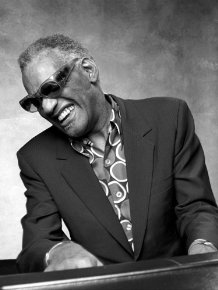
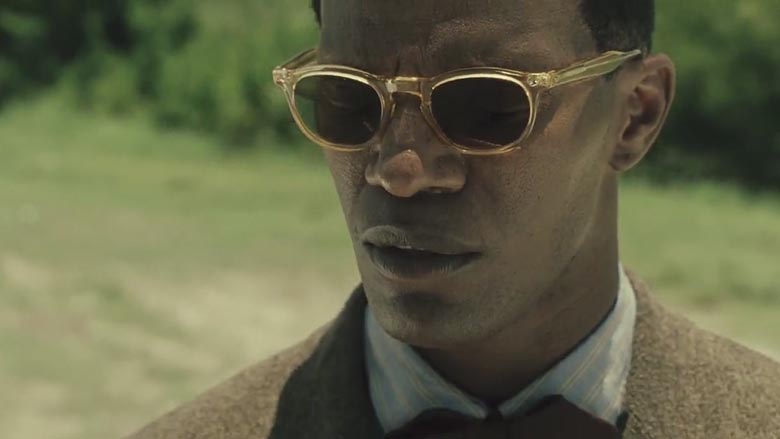
My Black History Fun Fact for today is Ray Charles and the movie Ray starring Jamie Fox on the life of Ray Charles. Released in 2004, this is one of my favorite movies. The story is about the life and career of the legendary rhythm and blues musician Ray Charles, from his humble beginnings in the South, where he went blind at age seven after the death of his little brother, to his rise to stardom during the 1950s and 1960s. I like it more because of his talent and life than his rise to fame; the musical genius of Ray and the emotional complexity of the story, which is hard not to love. Here are some fun facts:
Ray Charles Robinson was born on September 23, 1930, in Albany, Georgia. His father, a mechanic, and his mother, a sharecropper, moved the family to Florida when he was an infant. One of the most traumatic events of his childhood was witnessing the drowning death of his younger brother.
Soon after his brother’s death, Charles gradually began to lose his sight. He was blind by the age of 7, and his mother sent him to a state-sponsored school, the Florida School for the Deaf and the Blind in St. Augustine, Florida—where he learned to read, write and arrange music in Braille. He also learned to play piano, organ, sax, clarinet and trumpet. The breadth of his musical interests ranged widely, from gospel to country, to blues.
Charles’s mother died when he was 15, and for a year he toured on the “Chitlin’ Circuit” in the South. While on the road, he picked up a love for heroin.
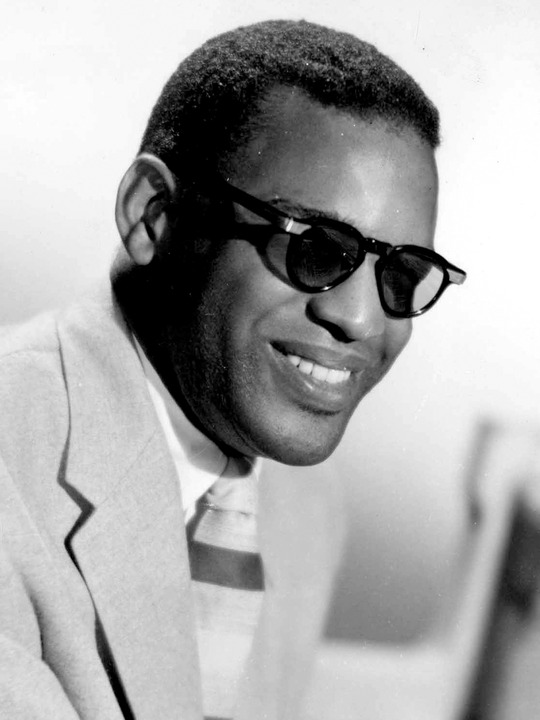
At the age of 16, Charles moved to Seattle. There, he met a young Quincy Jones, a friend and collaborator he would keep for the rest of his life. Charles performed with the McSon Trio in 1940s. His early playing style closely resembled the work of his two major influences—Charles Brown and Nat King Cole. Charles later developed his distinctive sound.
By 1953, Charles landed a deal with Atlantic Records. He celebrated his first R&B hit single with the label, “Mess Around.”
The year 1960 brought Charles his first Grammy Award for “Georgia on My Mind,” followed by another Grammy for the single “Hit the Road, Jack.” For his day, he maintained a rare level of creative control over his own music. Charles broke down the boundaries of music genres in 1962 with Modern Sounds in Country and Western Music. On this album, he gave his own soulful interpretations of many country classics. While thriving creatively, Charles struggled in his personal life. He continued to battle with heroin addiction. In 1965, Charles was arrested for possession.
In 2003, Charles had to cancel his tour for the first time in 53 years. He underwent hip replacement surgery. While that operation was successful, Charles soon learned he was suffering from liver disease. He died on June 10, 2004, at his home in Beverly Hills, California. During his lifetime, Charles recorded more than 60 albums and performed more than 10,000 concerts.
Ray Charles was a pioneer of soul music, integrating R&B, gospel, pop and country to create hits like “Unchain My Heart,” “Hit the Road Jack” and “Georgia on My Mind.” A blind genius, he is considered one of the greatest artists of all time.
Self-Publishing: Just Write

I’ve heard enough criticism of Indie Authors and self-published books to last a lifetime and for the most part, I agree with them. I believe a lot of self-published books are low in quality. I think the editing and proofreading of some of these books suck, and I think some of the book cover designs are far from eye-catching. But I also believe we are overlooking one major detail:

Many books that are published by big Publishing Companies have some of these same problems, but no one is going to talk about that because after all, who wants to stand against St. Martin’s Griffin? No one will talk about these poorly written, and sometimes poorly edited books published by some of the most famous Publishing Companies. It is because these books have the reputation of professionalism. They are backed by publishing houses with teams of support systems that Indie Authors simply do not have. Is this an excuse? Of course not. But what I would like to suggest to Indie Authors is this: JUST WRITE.
Produce a professional product and keep producing. Your content may suck at first but you will never please everyone so just write. Write and invest in the professional quality material. Identify the readers who like what you write and engage them. Self-Publishing is a slow game. So don’t go into get rich or die trying. I would even suggest you have another career on the side for bills sake and livelihood because it will be awhile before you start making real money from your book sells. This will not only assist you in life outside of writing, but it will help you to invest in your own writing. You should never solely depend on your writing career financially starting out because everybody knows writers do not make much money. Traditional Publishing or Self-Publishing, we are not ballers so don’t set yourself up for disappointment by raising the stakes too high. Ambition is great, but this is a slow process in which Indie Authors need continual improvement by producing plenty of books.
It is at this point that you will need to identify your writing goals. What is it you want from self-publishing a book? Is it to make the New York Times Bestsellers list? Is it to entertain your circle of friends only? Why are you self-publishing a book? This is a question only you can answer and depend on what that answer is you will have to take it from there. Your motivation, however, will have to be deeper than making money. I’m not talking about finding god and all that extra stuff. This ain’t church. I’m talking about your personal inspiration because whatever that inspiration is it will have to be the driving force behind your will to keep going. There will be frustration after frustration in an industry to which, despite failure, you must continue to produce. It’s exciting initially because you’ve published a book, which is a huge accomplishment, Yay!! Go You! But what now?
You set it up in your mind that the money will start pouring in and it doesn’t happen. That’s because it doesn’t work like that. Not even for writers who traditionally publish. As I’ve stated, a lot of Self-Published books suck for various reasons but don’t let the industry fool you:
Traditionally published books do too.
You think these books are automatic bestsellers? You think they’re striking gold? Nope. That’s the illusion but I’m here to tell you: writers don’t make money. At least not at first. Not Self-Published writers or Traditionally Published writers and you can take that to the bank and cash it.
So what do I propose? Do you throw in the towel? Do you do away with that manuscript? Do you stop here? No. You pass go, collect $200 and use it to keep writing. Whether your aspiration is to publish traditionally or Self-Publish, just write. But dedicate yourself to it. Here are a few tips to help get you started:
– Good Editing / Proofreading
– Nice Book Cover Design (FYI: Most major publishing houses buy multiple stock images from places like Getty images and combine them using Photoshop. Wanna know the secret to that nice book cover? I just told you).
– Formatting
– Easy to Follow Structure
– Jaw dropping opening scene
Keep it simple, keep it professional, and keep it coming. Don’t worry too much about the formalities and all that extra stuff these so called professionals keep telling you because your story probably does suck to them, but that don’t mean it’s not a masterpiece to someone else.
Just keep Writing.
Remember Your Name
Emotional Response
Everyone is made up of emotions. I have them. You have them. We all have them. We are human, and as such we feel. In a sense we are always reacting based on our emotions. Whether we research information or gather enough facts to deem us intelligent, for the most part majority of us will still respond emotionally. If we’re angry we will project an action accordingly. If we are sad our environment will be soaked up with gloom. If we are excited our blog post may just burst forth in a joyous frenzy and perhaps we’ll make a mistake or two. Our excitement may move us too fast or in another direction. Whatever the case may be, chances are your next move will be less based on the facts and more so based on emotion. The problem with this is that reacting emotionally can do away with logic. It takes the simple and makes it far more complicated. It blurs the vision and steers into the direction of flesh and bone and feel and touch rather than common sense. Open doors become blocked by people shouting and pointing fingers. They curse and stomp and accuse and it ignites a fire under you. You curse and stomp and accuse them back, pointing your fingers in their faces because after all, mama ain’t raise no fool, no fear, no punks grew up in her house. Yet all the while the door is open, hanging tirelessly upon its hinges for you to walk through it. Suddenly there is no door, there is no opportunity, just you and emotion yelling and screaming at a mere image of your very self. The next time you feel yourself responding emotionally to a situation stop and count the facts. Try to understand that reason is first invisible until we are ready to accept it for what it is. I guarantee that you will eventually see the door.