I wasn’t gonna share this article (except to my Facebook and Twitter page), but I loved what Kristina was saying so much I just had to share it here as well. If you’re still trying to decide on Self-Publishing or not this article should clear some things up for you. I am always talking to new Self-Publishers about the importance of platform so I found the following statement an important one to share:
The assumption that traditional publishers will do all of your marketing for you is one of the biggest myths when it comes to traditional publishing. The more a publisher pays for a book, the bigger the marketing budget. Unfortunately, unless you already have a big platform, it’s pretty unlikely you’ll get a fat cheque or a decent marketing budget. Publishers pay more for celebrity books—and market them heavily—because they already have an audience. They know the books will sell if they reach the right people. The lower the risk, the happier they are to invest.
I think it’s a good idea for Indie Authors (myself included) to seek to learn more about the publishing industry as a whole (to include Traditional Publishing even if we aren’t seeking that route) because it can help us to better understand the business of publishing, such as the importance of having a platform, and can possibly help us to better sell and market our books. For example, “Most agents and publishers—particularly the bigger ones—won’t even consider you unless you already have a social media following of a few thousand. This shows them that you already have a fan base that will buy the book, and there’s already a market out there for you and your book(s).” (source: https://www.writerscookbook.com/indie-publishing-vs-traditional-publishing/)
I think Self-Publishers can benefit from this same kind of information. We may not be seeking agents but we do still need readers and the bigger the platform, the better our chances of finding those readers. Just a thought.
feeding you words that I know you do not want to hear
but I wouldn’t be much of a friend if I didn’t tell you the truth
about how the world loves you.
The world will love you
only after the soil hugs your flesh
when the breath leaves your body for that place it will now call home
the world will bring you home
on the backs of T-Shirts
and tattoos that kiss cuzo’s flesh
in a frame on grandmother’s wall
and in museums
popularize your name in a post
speak to you in a language that you will never understand
and in a voice that you will never hear
the world will love you
later
after the fact
like they did messiah
on their living room walls
force a crown of thorns around your head
sacrifice your body to social media
hang you
on their Facebook walls
hashtag your legacy
in cyberspace
they will celebrate you
like they never even did at birth
I warn you
they will throw you parties
bigger than anything your eyes could behold
hold you
in their memories like a nightmare
from which they cannot awake
you will haunt them
and they will love it
the world will love you in caskets
and in prayers
tell you secrets in the grave
they will confide in you
like a man to a woman’s hips
when the world loves you back
it is in flowers
and candlelight vigils
it is in marches, street corners, and pictures
the world will love you in laughter
and in memorials
in memory and regret
and I apologize that I have to be the one to tell you this
after all, you woke up today optimistic
but I wouldn’t be much of a friend if I didn’t tell you the truth
about how the world loves you
only in death.
This poem is inspired by “When the Hood Loves You Back” by Steven Willis. You can watch the video to my poem below. Don’t forget to subscribe to the channel for notifications of more poems.
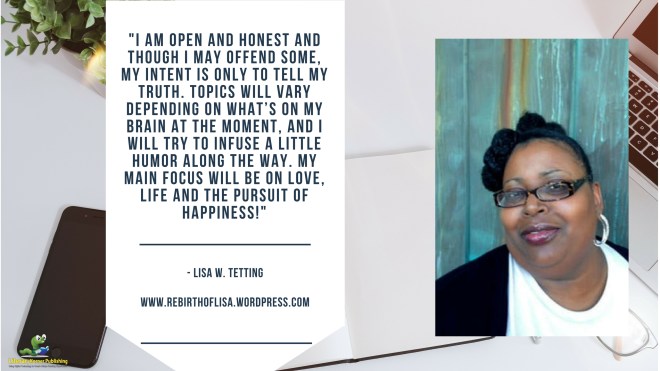
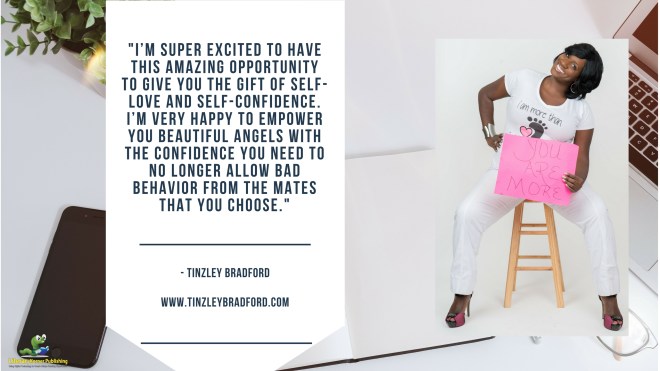
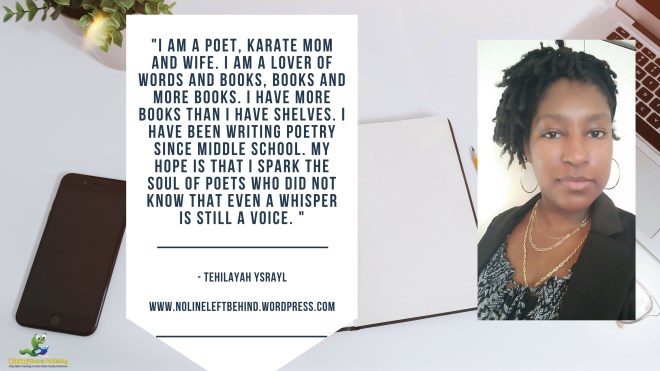
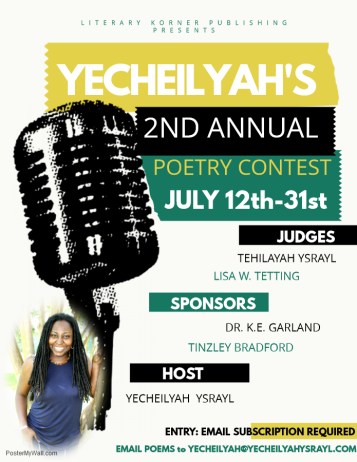
It’s Writer’s Wednesday and I am promoting the amazing contributors to this year’s second annual poetry contest! These women are not just writers but they are leaders in their own right and a great inspiration to me personally. They each have their own flava and style that I love. They are funny, inspiring, and driven. Be sure to check out their blogs to get to know them better!
“It’s life through my lens and I’m happy to share it with others.” – Dr. K.E. Garland
“I want you to be in a happy place in your love life by paying attention to your mind, body and soul and the things you allow to enter into them.” – Tinzley Bradford
Details on how you can enter this year’s contest, the rules, guidelines, AND prizes we’re awarding to the winners is all being revealed next week! Stay glued.
It’s no longer National Poetry Month but ya’ll know it’s always time for poetry around here! All or Nothing (read it here) is now available. Listen below and don’t forget to subscribe!
Thank you for taking this Vlogging journey with me! It’s never easy stepping out and I appreciate your support. Be sure to subscribe for notification of newly added poems.
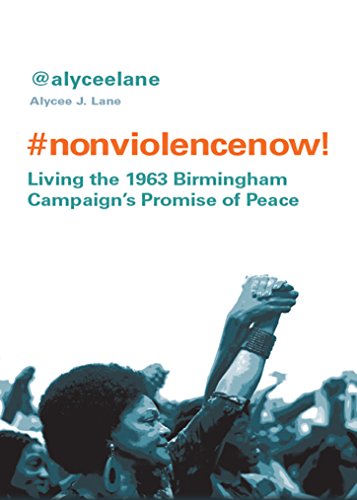
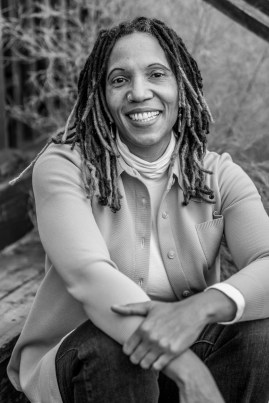
Today I’d like to extend a warm welcome to Alycee Lane. Welcome to The PBS Blog! Let’s get started.
What is your name and where are you from?
My name is Alycee Lane and I’m from Buffalo, New York.
Nice, I’ve been to New York once. What is the most annoying habit that you have?
I laugh loudly at my own jokes, including the ones I tell in my own head.
Lol. What was your childhood dream?
My childhood dream was to be a doctor who would cure cancer. That dream ended when, at the age of six, I was spanked vigorously for having poured my secret cure into my mother’s milk at the dinner table.
Oh wow. You rebel you. What skill would you like to master?
I really would like to master playing the saxophone, but I’d actually have to learn how to play the saxophone.
Lol. I love it. What would be the most amazing adventure to go on?
I think it would be amazing to venture off to Antarctica. On the other hand, I left Buffalo, New York for a reason (spoiler: it wasn’t because of buffalo wings).
Speaking of wings, what’s your favorite food?
Anything with pork, which is why being a vegetarian, is pretty damn hard.
Oh Alycee. That was not the right answer. Anything but pork! Don’t do it lol. What kind of music do you like?
I can’t get enough of jazz and blues.
What do you wish you knew more about?
Black holes. The idea of them really blows my mind.
In your own words, define racism.
Voting for Donald Trump.
LOL. What TV channel exists but really shouldn’t?
FOX NEWS. FOX NEWS. FOX NEWS. FOX NEWS. FOX NEWS. FOX NEWS.
Are you religious Alycee?
Yes. I attend Bedside Baptist every Sunday (this is one of those moments when I am laughing at my own joke).
Rofl. You are a trip. Let’s talk about my favorite subject. How long have you been writing? Tell us a little bit about the journey thus far.
I have been writing earnestly since 2012, though I had written some academic papers before then. A few months before my dad died in 2010, he asked me, “when are you going to write?” He knew it was my life aspiration. What he didn’t know at the time, however, was that, in my mind, I had decided to let that dream go. I was done. When I reflect on that moment, I’m inclined to believe that, on some spiritual level, he did know that I had given up. Those who are facing death often see and know things quite clearly. And if they’re your parents…well, then they see through you as well. I remember shrugging, in that way children do when they’ve been caught. The question bothered me enough that, two years later, when my mother’s health began to fail, I was writing like crazy.
In some ways, then, my writing has been a journey through grief, as well as a return to who I really am – the person whom my father clearly knew and saw. For that reason, the journey has also been a powerful one.
That’s powerful. What’s the most difficult thing about being a writer?
The most difficult thing about being a writer is keeping a muzzle on the little critic who sits on my shoulder and pretends to be my muse. The most exciting thing is creating that perfect sentence, the one that sounds right.
“Once I was willing to step out of the closet and be completely vulnerable – to expose myself knowing that I could very well become (even more) an object of hate and of violence from people who looked like me and from those who didn’t– once I allowed myself to be that raw, I became absolutely and devastatingly powerful.”
I don’t know. It is. I think I would talk too much if I didn’t write. Or –or, I would finally learn how to play the sax.
I understand that you specialized in African American literature and culture of the civil rights and black power movements. You also explore political issues through the prism of Martin Luther King, Jr.’s philosophy of nonviolence. I love the Panthers as well as Dr. King. What attracted you to this kind of work? Can you tell us a little bit about your inspirations?
Okay, so not the easiest questions for someone who’s spent the whole day with a five-year-old.
Lol. Answer the question Alycee!
I come from a very political family, so I naturally gravitated toward studying the literature and culture of the CR/BP movements (plus, I am old enough to remember the Free Angela Davis movement, and I used to shout “Black Power” out of my school bus window while being bused across town. To this day, I remember the “White Power” sign that hung from one of the houses I passed every day to get to my integrated school).
So, my main inspirations were my parents, as well as my brothers and sister. Then there were my professors at Howard University, mainly Patricia Jones Jackson and Claudia Tate, from whom I took Howard’s first Black Women Writers class. I went to Howard intending to matriculate for law school and ended up leaving there with a Ph.D. on my mind. Good teachers can do that to you. Also among my influencers: Valerie Smith, Richard Yarborough, and Kim Crenshaw.
Oh, yeah: Toni Morrison, Barbara Smith, Alice Walker, Gloria Anzaldua, Cheri Moraga, Audre Lorde, Sweet Honey in the Rock, John Coltrane, Sarah Vaughn, Nina Simone. Countless women I have loved and who have loved me.
With regards to my blog writing: an “ex” did me two favors. The first was gifting me a collection of King’s work. The second was keeping a copy of Buddhist monk Thich Nhat Hanh’s Peace is Every Step in her bookcase. Reading both radically changed this deconstructionist’s heady, cynical life. Having said that, I like to think that I arrived at this place of a commitment to nonviolence and engaged Buddhist practice through the influence of the Panthers, Fanon, Malcolm X, and others.
Now, my five-year-old is my main inspiration. Every day she teaches me how much work I have to do. There’s nothing more humbling than having someone who has been on earth for merely 1800+ days tell you that you don’t know anything about nothin’. Just plain dumb.
If you had one superpower that could change the world, what would it be?
My superpower would be this: I would make men cry simply by showing them the hand. Why this power? Because I suspect that much of the world’s violence can be attributed to the fact that too many men are unable to cry, to live from the heart, to be vulnerable, to be tender.
What genre do you write in, why?
I primarily write nonfiction, though I suspect this is a cop-out. I don’t know – I’m kind of with Arandati Roy on this: these are not the times for fiction.
I disagree, there is always a time for Fiction!
Alycee, thank you for spending this time with us! We enjoyed you.
Alycee Lane is an Oakland, California-based writer and blogger.
A graduate of Howard University, Alycee studied English literature and later obtained her Doctorate of Philosophy from UCLA, where she specialized in African American literature and culture of the civil rights and black power movements. From 1995 to 2003, she served as an Assistant Professor of English at the University of California, Santa Barbara, after which she obtained her Juris Doctor from UC Berkeley (Boalt Hall).
Alycee has also written a number of scholarly and other articles on subjects ranging from the Black Panther Party to mitigation evidence in death penalty cases to climate change. In 1993, she was awarded the Audre Lorde Quill Award from the Black Gay and Lesbian Leadership Forum for the essays and interviews that she produced for BLK, a news magazine dedicated to the African American gay and lesbian community, as well as for her work as editor of Black Lace, the first ever African American lesbian erotic magazine.
Be sure to Follow Tehilayah’s new blog! Tehilayah is an inspiring author and poet working on her first book. She is also a contributor to my 2nd Annual Poetry contest!
Like any journey there are uncertainties. But how would we know what the journey holds if we do not at least try to experience it. Introductions are always awkward and sometimes uneasy so we will just jump into it.
My name is Tehilayah (pronounced, Te-hil -la -yah). Simple right? My name means, “Song of Praise to Yah”. Can you believe that I like singing. Yes, I sing everything. I make everything a song. For example, I sang instructions to my children to get ready for bed. Yes, there was a whole song. I personally thought it was cool but the look on my children’s faces said otherwise. It’s the side of me that’s goofy and carefree. I am a wife to an amazing and supportive man who pushes me to step out my comfort zones. Sometimes I can be a bit stubborn but I…






 The PBS Blog