How to Get Early Book Reviews for Your Self-Published Book

Imagine you are traveling and looking for a nice hotel. You have a choice between two that look promising.

One has 100 stars, receives some glowing reviews on its site, and even has reviews on Google Maps.
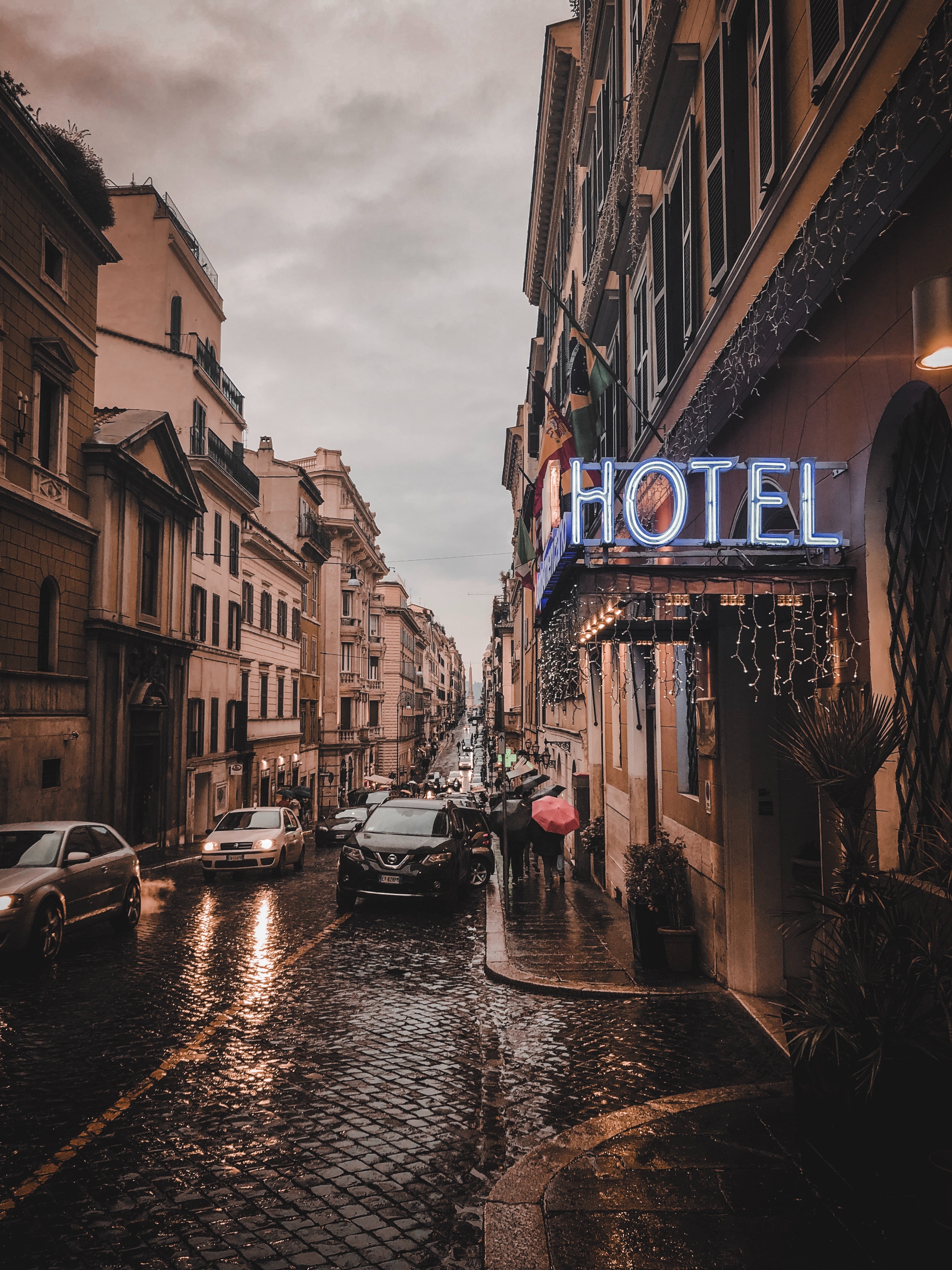
Photo by Bruno Maceiras

The other hotel looks nice from the pictures, but it doesn’t have a website, and you don’t know anyone who’s been.

You know very little about the amenities, and there is only one review.

Your only guideline comes from the very basic description on a third-party website that popped up when you Googled hotels.

Which hotel are you going to choose?

Books work in a similar way.

Book reviews are just as critical as book sales in the publishing world. They provide social proof that helps the right readers find and purchase your book.

Although our focus is on Self-Publishing, this is also true for traditionally published authors. Like with social media, publishers want to see if your book has an audience, a demand, and what you do to build awareness. Book reviews can help with that.

Start Early

The best way to garner book reviews for your book is to start at least 4-6 months (closer to six months) before the book releases. If you are a traditionally published author, your publisher will likely handle this by sending your book out for early reviews. If you are a self-published author, you can do the same.

Beta Readers

Recruiting beta readers is one of the most common methods. A beta reader is someone who reads a book before it is published in order to point out errors and make suggestions for improvements, usually without being paid. In essence, they serve as a test reader.

You want to recruit people who read within your book’s genre. Be careful only recruiting family and friends. You want people to read your book who will be honest and unbiased.

Give your readers instructions on what you expect from them. Let them know they will receive a free copy of the unfinished book and that you’d like them to leave a review on Amazon or Goodreads when it is released. If you want to use their feedback on graphics for social media, say that.

A beta reader acts as a proofreader, your last line of defense before sending the book out into the world.

But, careful not to allow beta readers to change your story. While they can offer suggestions for improvements, a beta reader is not and should not replace an editor. While they can point out obvious typos, they should be looking at the big picture. What’s working? What feels weak? What makes sense in your head but doesn’t translate to the page?

You can find beta readers (paid and not paid) within your social circle (start with your email list or blog followers) on Fiverr, Reedsy, and Upwork to name a few.

Book Bloggers

What the heck is a book blogger?

A book blogger is a blogger who reads and reviews books because they love it! Most book bloggers do this for free, and others (like me) charge a fee. Like most bloggers, I used to review books for free. However, book bloggers receive tons of requests, which can become overwhelming. My list grew significantly after I had reviewed more than 30 books, been highlighted on Reedsy and Kindlepreneur, and established myself as an active, professional reviewer. Either I would stop reviewing books or charge a fee and limit my time. I chose the latter.

As you dig into book review blogs, check on these three things first:

  1. Is the site active? Has the blogger published a post within the last month or so?
  2.  Do they have a policy with instructions on how to apply for a review? Submitting your book according to this policy is imperative if you want to be noticed.
  3.  Do they charge for reviews, and if so, how much? You want to be prepared for any fees (this should be part of your book marketing strategy).
  4.   Are they currently accepting queries? If they’re closed at the moment, it could be months before you hear back from them — if at all.

For more on how to look for book bloggers, check out Shayla Raquel’s post here.

ARC Review Services

Recruiting readers can be like pulling teeth. Thankfully, there are paid options. Beta Readers and ARC are sometimes used interchangeably. Short for Advanced Readers Copy ARC is an early version of the book sent to readers to review before the book is released. There are several paid ARC services (such as Booksiren, Bookfunnel), but they can get pricey. Still, if you have a few coins saved, Google ARC Review Services to choose which fits your budget.

Amazon Early Review Program

The Amazon Early Reviewer Program is Amazon’s internal launch program that incentivizes customers who have already purchased a product to leave a review.

Wait…
Now, Amazon. You told us we aren’t allowed to incentivize reviews and post to your site. It’s okay when you do it. It’s a problem when we do it.

Anywho, here’s what you need to know about the program from Jungle Scout:

  • The Amazon Early Reviewer program allows a seller to submit one of their product SKUs (stock keeping unit) to be promoted by Amazon for review by a specific, pre-vetted reviewer.
  • The program costs $60 per SKU. However, you aren’t charged until you get one review or one year has passed, whichever comes first.
  • The product should receive between 1-5 reviews from reviewers who have been handpicked by Amazon. 
  • Reviewers are chosen for the program because they have “no history of abusive or dishonest reviews” and they meet all of Amazon’s “eligibility criteria.” 
  • Once program reviewers leave feedback, Amazon marks the review with an orange badge that reads “Early Reviewer Program.”

I have never participated in this program, but it is an option. If you know more about this or have used it, let me know!

Ask for the review at the back of the book!

Add a short, direct request for the reader to leave a review after they are finished reading as the last page of the book. Something simple like: “I’d love to hear your opinion about this book! Please consider leaving an honest review on the platform of your choice.” Something like that.

Additionally, if someone in your network has read your book, you may send them an email asking for their review. Direct requests are sometimes more effective than mass emails asking for volunteers. It seems thoughtful and personal.

So, how many beta readers, book bloggers, and early reviews should I strive for?

As many as you are able, but I would strive for at least 10-20 Amazon reviewwithin the first two months after your book release date. That shows your book has traction with real readers. You can also share those reviews (as stated) on social media graphics as social proof.

Be sure that you inform your beta readers/book bloggers to post their early reviews to the book’s Amazon page when it drops.


Need More Reviews? Check out my book review policy. I am currently open for a limited time!

Check out the Indie Author Basics archive here for more.

Reading is the Easiest Way to Study Writing

Photo by Christina Morillo

I can tell right away when a book is self-published by a writer who does not read (or does not do it often enough).

No shade to audiobooks, but when I say reading is how we study how to write, I mean reading physical books.

And when I say study, I mean don’t just read the book, but also:

  • Take notes as you read.
  • Highlight important facts or things that catch your attention.
  • Look up the definitions of words you don’t know.
  • Notice the structure of the paragraph, line breaks, and dialogue.

Consider picking up a copy of a physical book at least once a month and reading it through till the end. It will help you to become a better writer.

And if you don’t have time to read at least one book a month, you have no business writing books in the first place.

And don’t try and fake it because your writing will give you away!

If reading is how we study how to write, our writing also displays how much or little we read.

Introduce Yourself: Introducing Guest Author Terry Lister

IN

Please help me extend a warm welcome to Terry Lister.

Welcome to the PBS Blog!


What is your name and where are you from?

My formal title is The Honorable Terry Lister, FCA, MBA, JP. While l had to work very hard to be given these titles, today l am retired. And in retirement, l have more or less retired my titles. I live in a much more relaxed manner than that under which l was burdened when l was working.

Nice. And where are you from?

I am from the beautiful island of Bermuda. We, Bermudians, believe that everyone has heard of us and thus knows where our island is but l know that both of these beliefs are false. We are an extremely small island located in the Atlantic some 700 miles from North Carolina. I have lived in Bermuda all my life except for ten years when l studied and worked in Ontario, Canada. The title The Honorable is due to my serving as a member of the Bermuda legislature for 21 years including ten years as a Minister of Government. I retired in 2014 and immediately took on my most enjoyable task of my life, that of being a slow solo traveler.

What was your childhood dream?

What I do today was always a dream for me but before I could get to it life stood in the middle. I had to get educated and I had to have a job, preferably one that paid lots of money. Growing up black in Bermuda meant that any black male who did not seek a career in the trades would have three choices: doctor, lawyer or teacher. Not wanting to do any of these, I was stumped until one day when asked for the 100th time I responded by saying I wanted to be an accountant. The questioner was floored, never had a little black boy said he wanted to be an accountant. Seeing the reaction this answer produced, I said it every time from about 12 on. It didn’t matter that I had no idea what an accountant did, I just knew it had to be special by the reaction of my questioners.

By the time I needed to make an informed response and I found out what an accountant did, I was so on it and that is what I became. By the age of 27 I was a partner in the Bermuda firm of Deloitte, becoming the first black person to be a partner in a then Big 8 Bermuda audit firm. So I made my dream come true and I never regretted this. The FCA behind my name is a special recognition in my profession given to a small number of the members due to distinguished service to the profession and the community.

Notes_230405_220659_fcb
Terry outside Bascillica, Ivory Coast

Wow. What an amazing and inspiring story.

62737

What would be the most amazing adventure to go on or that you’ve been on?

Given that I am a full time traveler, I have been on many amazing adventures. However, if required to name one I would say it would be trekking Mountain Gorillas in Uganda.

Wait, what?

7709

Your stories get better and better! Go on, tell us more.

As we were starting to leave the Gorillas and head out, one quickly came down a tree and landed very close to me. The guides tried to act calm but I could see some degree of fear. However, I acted as calmly as I could and waited for the gorilla to wander off. Got some great shots! While I do enjoy writing, travel is my first passion and many of the experiences I have had were simply mind blowing.

Wow. I bet. So, what state or country do you never want to go back to?

To date l have been to 95 countries…

Say whattt??

60411

Just about every country has something about it that makes me wish I could go back. However, the one place I will not go back to is Tunisia. This northern African country was recently in the news about their behavior towards black Africans. I was there for 12 days in 2019. I was not treated with any warmth most of the time, often I had to fuss with taxi drivers to get them to take me where I wanted to go and, worst yet, I had an incident with the police who detained me for several hours for the crime of walking along a country road going to see a point of interest. There was a nasty undercurrent as I moved through various parts of the country and for that reason I would not return.

I’m so sorry you had to go through that craziness. Thanks for the heads up!

Let’s get into your publishing journey. When did you publish your first book?

Immersed in West Africa

I published my first book, Immersed in West Africa, in August 2019 just two months before my bad experience in Tunisia. My wife had organized a launch party which went really well and the book should have been off to a great start. However, we had selected a launch date and refused to move from it. The result was the publisher rushed the book and it was not a good product. Some of the attendees who bought books that night have chosen to not buy any books since which l find to be such a disappointment. When l realized the extent of the problem we sat down and fixed the flaws and put out another copy which has sold well. Beyond that this book has won 12 awards. Today, l am very proud of my first book, Immersed in West Africa.

And proud you should be. It is a wonderful and informative read. I’m glad you didn’t give up and re-released it.

What takes up too much of your time?

The most time consuming part of my writing is the marketing of the books. I am not a known author so l have to work every day to keep my books in front of people. It is both very time consuming and very challenging. Naturally, my genre is Travel and l write about my travels. So l cannot say, “enough of this, I am going to be a sci-fi writer.” Therefore I use up many hours doing things to get my books in front of potential readers.

Who is your favorite historical figure?

When l started high school way back in the dark ages, as my children would say, my class was taught Latin. Little did we learn but some of us took to the stories especially the Punic Wars and General Hannibal. He became and remains my favorite historical figure. When l went to Tunisia I went to see the remains of his city, Carthage. Consistent with the removal or destruction of many other creations of Black Africans prior to colonization, there was little to see while throughout Tunisia there are many Roman sites from the same and slightly later time period.

So, is the Honorable Terry Lister a political man?

Am I political? Does a horse drink water!

12296

Yes, l served 21 years in the legislature of my country from 39 to 60. These were the peak years of my work life so it is impossible to not be political. However, I see my role today as observer and scribe. I spend very little time in political discussions or arguments as I was expected to do for the previous 21 years. My experience does make me well prepared to observe and to ask questions as l travel along.

You’re amazing.

94156

Thank you, Terry Lister, for spending this time with us.We enjoyed you!


Notes_230405_220709_e86
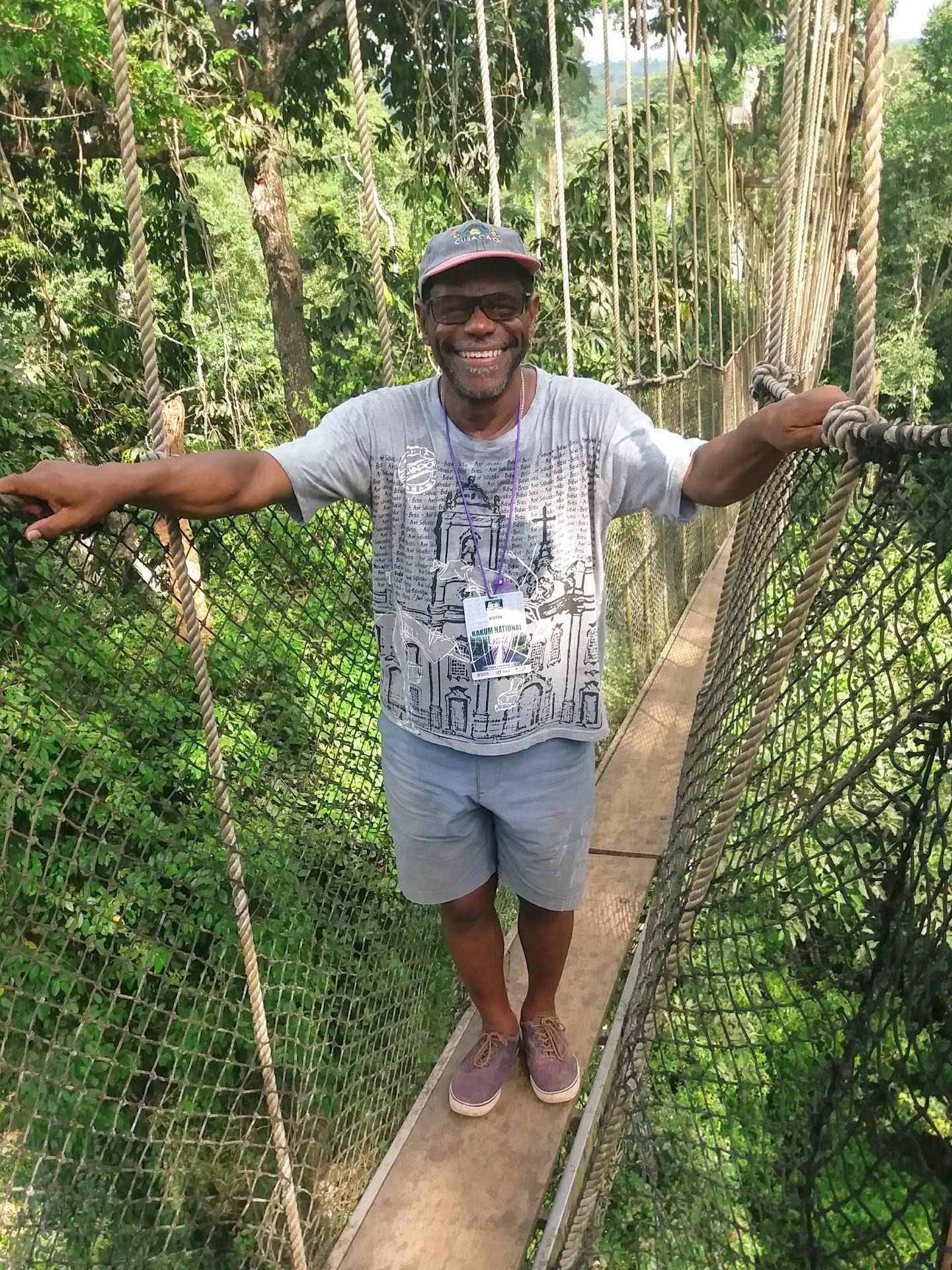
Terry Lister on the Skywalk at Kakum Nationsl Park in Ghana

Traveler and author Terry Lister enjoys both. Prior to this, he worked as a realtor, a minister in the Bermudan government, and a partner in the accounting firm Deloitte. However, he had always desired to travel, so in 2014, at the age of 60, he decided to retire and started traveling alone.

Lister had visited 48 nations when he retired, but since then, he has visited 50, staying in each for a week to six weeks. It’s been a journey! His first book, Immersed in West Africa, chronicled eight weeks of action-packed travel across five different West African nations. He has now traveled to 18 more countries in Africa and authored four more books.

While he is off the road, Mr. Lister enjoys unwinding with a good book, which must be historical or biographical. Although Terry would like to read more books in different genres, there are enough excellent novels in his field to keep him reading. He always has a few travel books in progress in anticipation of his upcoming trip.

Before leaving, Terry says he undertakes much research to identify activities that visitors are not always aware of. There is little time to be bored for this wanderer. He enjoys playing football and cricket in his spare time-cricket and football being his games. So little time to be bored!

Check out my review of Immersed in West Africa Here!

And Be Sure to Follow and Support Mr. Lister online!


Are you an author? Looking for more exposure? Learn more about my Introduce Yourself Feature HERE.

Author Vending: Things to Consider Part I: Audience

I’ve been vending at events since 2018 when the owner of A Cappella Books refused to stock my self-published book and instead told me to get my name out there. He explained how hard it would be for me to sell my book in-store when no one knew who I was.

I wasn’t offended but encouraged, and I have since attended many events as a vendor to put myself out there. From his advice, I have also since been stocked in four stores in the Georgia area (Marietta, Morrow, Atlanta).

There is a message in this to revisit later, but for now, let’s talk about author vending.


Atlanta Decatur Book Festival

For independent authors, taking part in an event as a vendor can be lucrative (and I don’t just mean this financially). Utilizing the platform of another person will help you promote your books and business to a wider audience.

However, if we are not careful, it can also be an overly expensive and frustrating experience.

In this series, I share some of my experiences as an author vendor and some things to watch out for. In part one, I want to talk about the importance of the audience.

Audience

Author vending is not just about making money. It is also an opportunity to get in the room and build with others of like mind. But the ability to sell your books or services is still crucial.

You will have a harder time selling books if the event has little to nothing to do with books or your industry.

If you are vending at a conference or organization that is not conducive to people being able to walk around and network, this can also hinder you from making sales.

For example, in 2019, I attended MogulCon as a vendor. The event was nice but not a good place for author vendors. The tables were small, and the space was narrow. It was fitting for a business-type conference but not for my books, author swag, and large banner.

This was awkward. I didn’t know the set-up was going to be this way. I didn’t do my homework.

MogulCon was okay, but from an author vending perspective, it was a waste of money.

If I had known, I could have made it work by leaving the banner at home and bringing a briefcase instead.

Do Your Homework

When deciding to vend, understand what kind of event it is and the audience you will serve. Also, consider what kind of crowd you are looking at. You want to make sure there are enough people to network with and possibly make some money (or at least make your vending fee back.) And because the organization will likely not tell you your business isn’t a good fit, this is homework you will have to do yourself.

Crowd size is included in this. Does the event even have enough attendees for you to make a pitch, or is the host merely looking to maximize their profit from the few vendors they are able to bring in?

This is good practice for speaking engagements as well. Once, I was asked to speak at an event and prepared what I would say. But when I showed up, there were a lot of children. The host had not mentioned it was family-themed, and I had not intended to speak to kids. It could have been better organized, but I could have also done my homework on the host.

Events where you can engage with people are a plus!

So what kind of event is fitting for authors?

It depends on what your goal is for attending said event, but I believe that book festivals and conferences—that focus on books and literature—are the best because you won’t have to compete with the lady over there selling shea butter.

You can also target events that center around the theme of your book. Although many businesses were vending at the poetry life fest, it was appropriate for me to go because I write poetry. And to be true to my brand, I exclusively highlighted my poetry books. I only brought the books that were on topic.

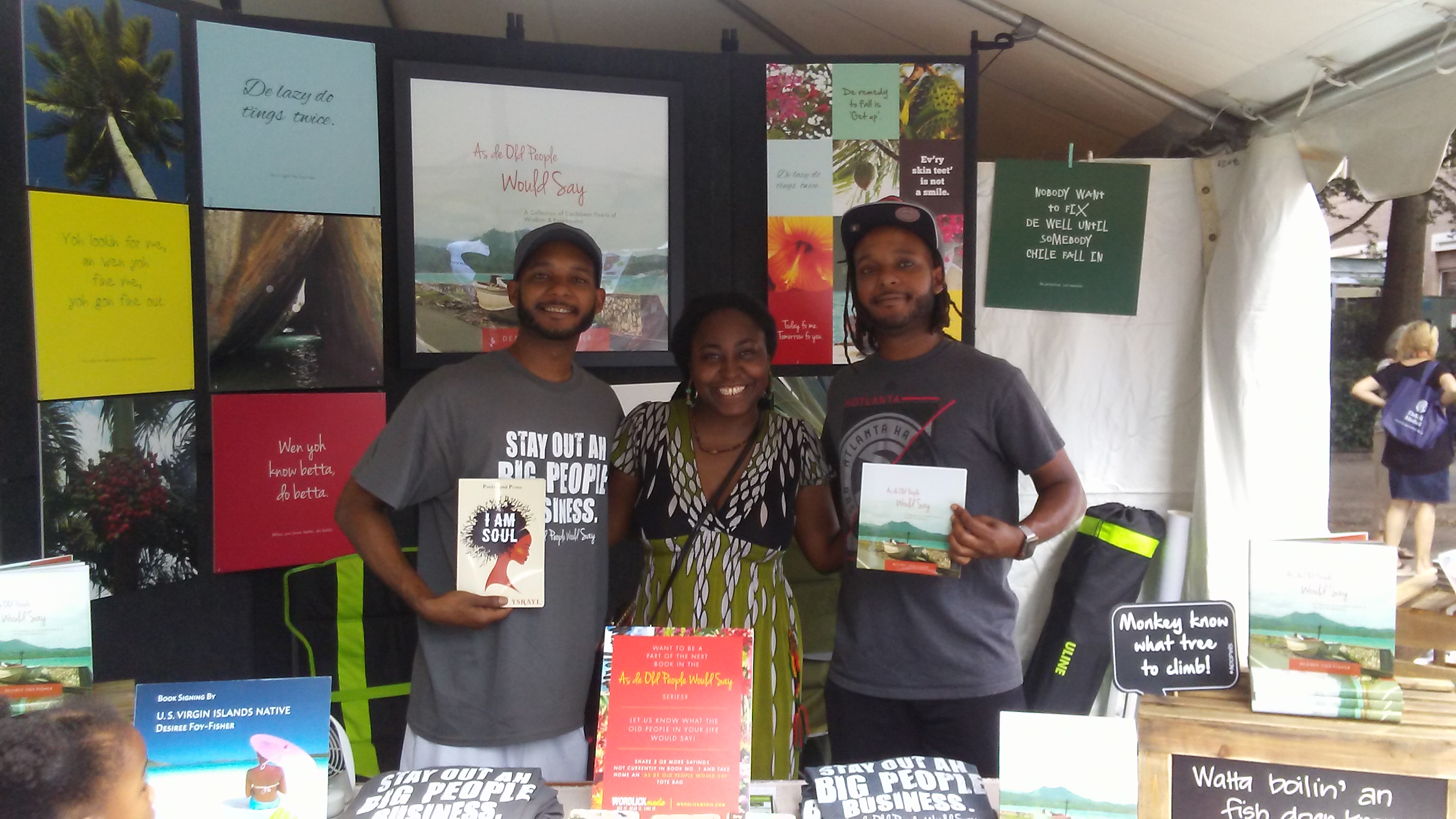
Unlike MogulCon, the Poet Life Fest was best suited for my brand. My girl here is even matching the banner, ha!

Nowadays, there are a lot of requests for vendors because the income from the vending fee helps the organization pay for other expenses. When signing up, be strategic and intentional about who you work with.

It’s about being discerning and allowing that spiritual compass to lead you to the places you are ordained to be.

In part two, we’ll discuss the financial side of author vending and how to decide whether it’s worthwhile because the fees can be very expensive.


Check out more Indie Author Basics articles here.

Remember to Back Up Your Content!

Photo by Anna Pou

I logged into my WordPress dashboard this morning, and my last 5-6 posts were gone, including paid book reviews.

Can you hear my heart breaking?

Thankfully, after about thirty minutes, they showed up!

My face after deleting my tweets cause I thought the links were dead.
Photo by MART PRODUCTION

Too bad I had already deleted the tweets to what I thought were now dead links. Way to go, Yecheilyah.

A glitch, maybe, but the scare was real!

Chile, I almost cried.

Then I put my big girl panties on and understood today’s message.

ALWAYS back up your content!

Make sure your photographs, graphics, videos, and articles are stored in a folder on your computer or on a USB drive. Before composing your posts in WordPress, it’s simpler to write them in a Word document (or whichever program you prefer) and save them to your computer.

Never depend on ONE social platform to reach your audience

I have never been a fan of putting all my eggs in one basket, and this experience reemphasized the importance. I am all for monogamy, but cheating on your other social media profiles with a backup plan is okay, lol.

It is not a smart idea to rely only on one platform, whether we’re talking about Instagram bugs or if US companies and content creators will no longer be able to use TiKTok. (Are you following the case with them? Back those videos up!)

Keep your options open and stay as informed of all the developments as you can. Even if we disagree with AI, for instance, it would be a bad idea to ignore how it is affecting the book publishing industry and how authors and publishers create and distribute their works.

Email is still useful

If these social media apps change their policies, having an email list can let you stay in touch with your customers, business partners, and author friends. Twitter and Instagram have already started using paid verified badges. Even further, Twitter claims that those who earned their blue checks will soon have to pay to keep them.

Wait, what??
Photo by Pavel Danilyuk

It is not farfetched to say that we might one day have to pay to use these apps. If that’s not your flavor, you will want to maintain contact with your people somehow.

Blogs are great alternatives to email lists since subscribing to someone’s blog mean you get an email for every update anyway.

If you simply use your blog, however, always refer back to point one and backup your blog content.

After all, we don’t own WordPress either.


Interested in joining my email list for updates you won’t get here or anywhere else?

Click Here!

If you only want updates on poetry contests, be sure to check poetry contest updates only when you get to the form!

Hang in there guys! Chat soon.

Baby Steps Still Move Us Forward

Photo by Juan Pablo Serrano Arenas

I am proud of myself for making it through this week. Since returning from Chicago, I have felt jet lagged because of the time change and have experienced some pain.

For those who don’t know, I live with a steel plate in my right thigh from being hit by a car when I was ten. Occasionally, it causes pain with the weather changes. No worries. It’s not as intense as it used to be. At least now I can predict when it will rain—little ole me, a superhero this whole time.

But as much as I wanted to stay in bed all yesterday, I got my butt up, put something on my stomach, and took my vitamins. I didn’t have it to do my walk so I finished reading a book.

Not only did I finish the book, but I wrote and drafted the review that I am scheduling for next week. (Ya’ll are gonna like this one!)

Next, I edited a video of a podcast I did weeks ago and posted a reel to one of my Instagram pages. I also drafted a post for my second page and drafted this blog post.

After responding to some emails and checking on some clients I closed my laptop, showered, and snuggled up with hubby for a movie.

Moral.

Just because you didn’t do everything on your to-do list or work yourself into an early grave does not mean you are not being productive. All those little things add up.

I fully intended on taking the day off. Instead, I just took baby steps.

Because baby steps still move us forward.

Avoiding Plagiarism

There is a reason why you cannot edit your own book, even if you are an editor. This is because quality editing involves more than fixing spelling and grammar mistakes.

These days, there’s an AI for that.

Professional editors also help you to avoid plagiarism.

Plagiarism – to steal and pass off (the ideas or words of another) as one’s own use (another’s production) without crediting the source; to commit literary theftpresent as new and original an idea or product derived from an existing source.

Most people don’t purposefully copy others works. They do not intend to use another person’s ideas or words as their own.

But this is exactly what occurs without mentioning the source of your material.

You are in danger of plagiarism anytime you present an idea, words, or quotes you got from someone else without citing them.

Suppose your work becomes popular—what we all hope for—and someone discovers that you have purposefully or carelessly used their words without their consent or crediting them. In that case, you could be subject to legal action, ruining your image as a writer.

A professional editor protects against this by noting where a citation is needed in your work.

On social media, this frequently occurs and without repercussion. However, if you do this in your book and then publish it, you can suffer grave consequences.

Solutions

  • Use end notes or footnotes to guide the reader to the back of the book, where you would have a notes section. In this notes section are your sources.
  • Remember that some sources require you to get permission before you print them. If you cannot get permission, consider removing the source altogether.
  • Also remember that nonfiction books intended to teach are not about personal opinion. It is about facts, proving and supporting those facts.

Just because self-publishing makes book publication quicker than traditional publishing, it does not absolve the self-publisher from the penalties associated with committing such literary violations.

Be sure to employ a qualified editor to prevent you from publishing a work rife with typographical, grammatical, and plagiarism errors.

Check Out More Indie Author Basics Here

Indie Author Basics streamlines and simplifies self-publishing so you can publish high-quality books without pulling out your hair.