While I’ll be writing, I’m not participating in National Novel Writing Month (NaNoWrMo) but I bet you are!
Congrats. If you are, perhaps this post is of double interest.
This summer, I wrote a blog post on:
8 Simple Ways to Go from Author to Authorpreneur
In it, I gave a few basic bullet points on how to transform your writing into more of a business model. Since many of you enjoyed it, today, I’d like to follow up with preparing to publish the actual book.
In my first post, I defined an Authorprenuer as:
“A play on Entrepreneur, an Authorprenur is an author who has turned their work as a writer into a full-blown business.”
While every writer should adopt some elements of business (since writing is a business after all), Authorprenuership is distinct in that as an author you are interested in more than writing and publishing books alone, but that you’d like to incorporate other business models as well, either based on your book or that utilize other skills that you have. It means that you are interested in merging elements of writing with entrepreneurship, which is another definition of Authorprenuer.
What is a Business Plan?
A business plan, in brief, is a written document on the plans, goal, and overall creative vision of the business. It is what you plan to do and how you plan to do it. It includes an Executive Summary, Market Strategy, Company Description and so on.
Of course, you don’t need all of this for your book. What I’d like to share is not for you to create an entire complicated business plan, but for you to take elements of the business plan and apply it to the pre-launch strategy of each book that you write.
Disclaimer. The Book Business Plan has nothing to do with whether you’re a bestseller and nothing to do with how many reviews or books you have. Any writer, even the writer who has not yet published, can create a Book Business Plan. It’s just another way to help to keep you organized.
-
Name Your Book
Obviously, the first thing you want to do is come up with a name for your book. If it helps, you can skip this part and come back to it later. The Book Business Plan isn’t intended to go by any order in particular, just to help in the process.
Naming your book is very important as industry experts cite the books title as the second most effective way to hook a potential reader (Book Cover Art is the first). It may help to move onto the next point first to help you to come up with the title. Just be sure to come back to this step and to take it seriously. Give it some serious thought.
-
Write a Log-Line for Your Book
I love log-lines and they are usually my first step to writing a book. Log-Lines help me to get an understanding of what the book is about before I start to write and it is almost always just the push I need to get words on the page. I got into writing them when I was studying how to write a screenplay. Log-Lines also help authors to learn how to pitch. (I like to time myself! Can I describe my book in under 60 secs?)
According to Wikipedia:
“A log line or logline is a brief (usually one-sentence) summary of a television program, film, or book that states the central conflict of the story, often providing both a synopsis of the story’s plot, and an emotional “hook” to stimulate interest. A one-sentence program summary in TV Guide is a log line.”
A log-line refrains from using character names (not all, but most) and giving away spoilers. Below are some examples of log-lines from movies:
Logline #1 – The extraordinary story of a thoroughbred racehorse – from his humble beginnings as an under-fed workhorse to his unlikely rise and triumphant victory over the Triple Crown winner, War Admiral. – Seabiscuit
Logline #2 – A 17th Century tale of adventure on the Caribbean Sea where the roguish yet charming Captain Jack Sparrow joins forces with a young blacksmith in a gallant attempt to rescue the Governor of England’s daughter and reclaim his ship. – Pirates of the Caribbean
Logline #3 – After segueing from a life of espionage to raising a family, Gregorio and Ingrid Cortez are called back into action. But when they are kidnapped by their evil nemesis, there are only two people in the world who can rescue them… their kids! – Spy Kids
Logline #4 – Toula’s family has exactly three traditional values – “Marry a Greek boy, have Greek babies, and feed everyone.” When she falls in love with a sweet, but WASPy guy, Toula struggles to get her family to accept her fiancée, while she comes to terms with her own heritage. – My Big, Fat, Greek Wedding
Logline #5 – A young man and woman from different social classes fall in love aboard an ill-fated voyage at sea. – Titanic
-
Write Your Book Summary
“A book summary is a brief written piece describing the main points of a book. For non-fiction works, the summary usually briefly describes each main point covered in the book and the author’s conclusions. For fiction works, the summary describes the plot, main characters and theme.”
Next, write a summary of your book. This is your “Business Description” part. Personally, I do this after I’ve written some of the book and have an idea of how the story is coming together, but that’s not usually recommended. The best thing to do according to most people is to write your summary before you write the book, it just doesn’t work that way for me. I’m not going to tell you to do what most people do. I’ll just say to do what works best for you. Writing usually starts pretty much after the log-line for me.
Either way, a summary of your book is a great addition to your books business plan and can help you to start the book if you have not already. This gives you a chance to expand on the log-line and it also helps to get a greater understanding of the story.
-
Book Marketing Budget
One of the most important things for me to write down and to seriously organize is my Book Marketing Budget because when push comes to shove, how much money it will take me to make this book available is going to be a major determining factor. Why? Because I’m broke. (Why else?) No matter how little it will take to publish your book, it’s going to cost something in the end (even if it’s just the cost of your print books). So, the next part of your book business plan is the marketing budget.
It will help determine your options for publishing and marketing this book.
Open a Word Document or Excel Spreadsheet and document the cost of everything you need to produce this book and I mean everything. How much will the book cover cost, cost of print books, bookmarks, business cards, that PO Box you talked about getting, and funds that will go toward promotional products and whatever marketing you will do.
Total cost of Publishing This Book $_______________
-
Book Marketing Strategy
Of course, if you have a Book Budget then you need a marketing strategy.
The purpose of your marketing strategy should be to identify and then communicate the benefits of your book to your readers. Your purpose here is to deliver value and to create long-term relationships.
I don’t like to get too technical, confuses me. So, to make this simple (as you want your plan to be as easy to read and understand as possible. Remember, this is for your eyes only after all), begin your marketing strategy by looking at your strengths, weaknesses, opportunities and threats. This will make your previous plans make more sense.
For instance, if your goal is 50 reviews on launch day but you have not established an author platform yet or you’re already a few weeks from launch (which will make it impossible for people to finish the book in time, let alone review it), then this is a weakness toward you being able to realistically achieve this goal. You can therefore go back and tweak your goal. Maybe you’ll strive for eight reviews or ten.
- My Strengths
- My Weaknesses
- My Opportunities
- My Threats
-
Publishing Timeline
My favorite and most exciting one is Publishing a Timeline for my book (because it means publication is near!) Not publish as in post it to your blog or anything, but just something you write down and keep to yourself. In this timeline, you are listing the goal for this book on a month by month or week by week timeline. We’ve all heard that long-term goals are a series of short term goals. Do not try and move the whole mountain, but carry it away one pebble at a time.
Your mini goals can be a lot of things: a title by a certain date, book cover art completion, a certain number of advanced reads, editorial completion. You choose.
When making these decisions, be sure to use S.M.A.R.T. goals here — they should be specific, measurable, achievable, realistic, and time-sensitive.
Publishing Timeline
______________
Goal: Write your goal for this book here. Be as specific as possible.
Production Starts By Review Copies Sent Book Released By
-
Executive Summary
In a business plan, the executive summary is first but it helps to write it last. Write down your plans for this book. This is for your eyes only so make it simple. Some questions to consider: Which platform will you use to publish? Will you publish this book in eBook and paperback or one or the other? Will you purchase your own ISBN Number or use Createspace freebies? How much is book cover design for this book? How will you go about garnering reviews before, during, and after the book releases? What marketing strategies will you do to get the book noticed? When will, this book be released? Will you host a party? Book signing?
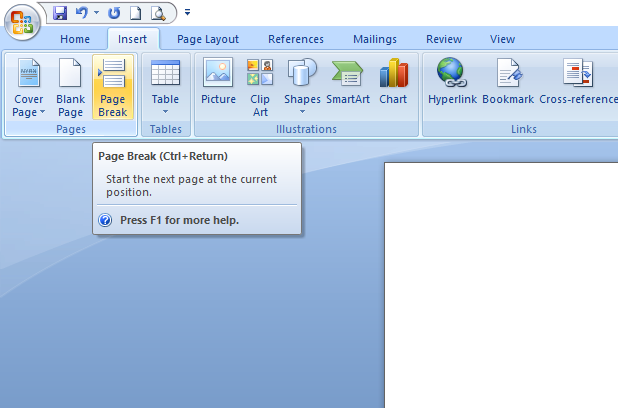
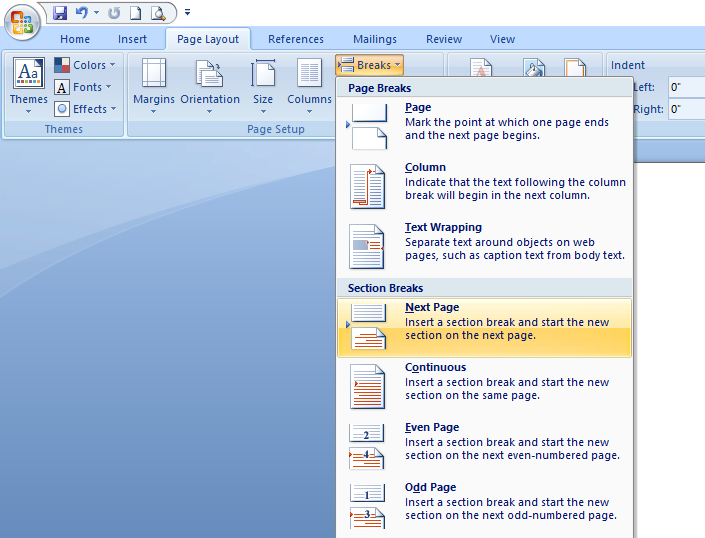
When you are finished writing the executive summary, copy all of this in a Word Document and put the Executive Summary at the top of the page, followed by the other bullet points.
Save this as a PDF document and store it away in your files. Edit it whenever you are working on a new book to reflect that book specifically. You can even title your plans after that book so you don’t mix it up with the others.
Refer to your plan anytime you need a reminder or a little push in getting your book published.
UPDATE: This post has been updated. Instead of the form (which I’ve deleted due to issues) simply use the contact page and I will send you a FREE sample Business Plan Layout for Your Book!



 Expectations vs Reality by Kristian Bjornard courtesy of Flickr Creative Commons licensed by CC BY-SA 2.0


 Note: This article can apply to ANYONE just starting a business, not just writers, who would like to understand more about platform building. Just replace writer / author with your profession.


 The PBS Blog